Route guide for visitors throughout Catalonia – Barcelona – Costa Brava – Catalan Pyrenees – Personalized experiences – Customized tour guide services – A small tribute to the wonderful city and land that saw us born – Transforming experiences into unforgettable memories - Magic Dreams Collection: exclusive universes inspired by Salvador Dalí and Gaudí. Niche perfumes, jewelry, lithographs, and collectible items celebrating the Mediterranean spirit.
In the heart of Sant Gervasi, at 282 Muntaner Street, lies a green treasure of the city of Barcelona: the gardens of the Fundación Julio Muñoz Ramonet. Originally designed in 1916 by the French landscape architect Jean-Claude Nicolas Forestier, who introduced the concept of the …
At the foot of Plaza de España stands Arenas de Barcelona, an icon of urban transformation — a space where past and present engage in dialogue through architecture, culture, and emotion. Built in 1900 by architect August Font i Carreras in Neo-Mudéjar style and promoted …
Some places surprise us with their history, others with their beauty, and some with their ability to convey a sense of calm even when they are located right in the heart of the city. Turó Park combines all three qualities.
Located in the Sarrià-Sant Gervasi district, next to Avenida Diagonal and just a few minutes’ walk from Plaça Francesc Macià, this elegant garden is one of those corners of Barcelona where you can escape the pace of the city for a while without actually leaving it behind.
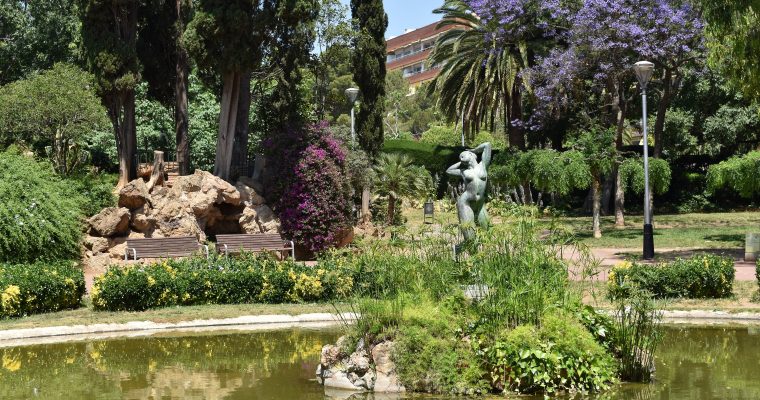
Among centuries-old trees, magnolias, palm trees, laurels and holm oaks, a small pond covered with water lilies creates one of the most peaceful areas of the park. Around it, sculptures dedicated to musicians, writers and artists can be discovered, while different poems invite visitors to stop, read and contemplate.
Today’s Turó Park is much more than a garden.
It is a place where nature, art, music, literature and history coexist within just a few square metres.
A Former Amusement Park
To understand today’s Turó Park, we have to travel back to the beginning of the 20th century.
In 1912, land belonging to the Bertrand-Girona family became home to a large amusement park called Turó Park. At the time, it became one of the best-known leisure destinations in Barcelona.
The park featured various attractions and entertainment options aimed particularly at the city’s affluent society. Among them were the famous Venetian gondolas, as well as shows, dances and other recreational activities.
Barcelona was very different during those years. The city was growing rapidly, while the land surrounding the park still contained large areas of greenery and undeveloped spaces.
The amusement park eventually closed its doors in 1929, during a period of major urban transformation in Barcelona. The Bertrand-Girona family subsequently reached an agreement with the City Council that allowed part of the land to be preserved as public space, while other areas were developed.
The amusement park disappeared, but its name remained.
And a few years later, a new chapter began.
Nicolau Maria Rubió i Tudurí and the Birth of the Garden
In 1934, the City Council commissioned architect, landscape designer and urban planner Nicolau Maria Rubió i Tudurí, one of the key figures in the history of modern landscape design in Barcelona, to transform the site.
Rubió i Tudurí conceived the new space as something very different from an ordinary ornamental garden.
His intention was to create a place where nature and people could coexist, combining elements of Mediterranean gardens with influences from the English landscape tradition.
The result was an elegant garden that was also welcoming and designed to be enjoyed.
The vegetation, paths, resting areas, pond and sculptures were integrated into a harmonious setting in which each element has its own presence without disturbing the overall balance.
The present-day park was inaugurated in 1934 and dedicated to the poet and writer Eduard Marquina, becoming one of the most distinctive public gardens in 20th-century Barcelona.
A Garden Designed for Walking
One of Turó Park’s greatest virtues is that it does not need monumental buildings to be special.
Its beauty reveals itself gradually as you walk.
The paths pass through different types of vegetation, allowing visitors to discover corners that change with the seasons. In spring, flowers and water lilies bring colour to the landscape; during the warmer months, the shade of the trees turns the park into a particularly pleasant refuge; and in autumn, the vegetation takes on new shades that completely transform some of its paths.
Among its most characteristic species are holm oaks, magnolias, palm trees, laurels, poplars and carob trees, together with other ornamental species.
One of the best-known specimens is the centuries-old carob tree, a living witness to the transformation of this area and to the evolution of a Barcelona that, within just a few decades, went from being surrounded by farmland and private estates to becoming the great city we know today.
A Small Botanical Treasure
Turó Park can also be discovered as a genuine urban botanical garden.
There is a botanical route that allows visitors to appreciate the diversity of plants and observe its trees, shrubs, flowers and other species in greater detail.
Among its different environments are the magnolia parterre, the area surrounding the oval pond, the holm oak grove, various shrub areas and other landscaped spaces.
This botanical diversity is not accidental.
It forms part of Rubió i Tudurí’s landscape concept, in which vegetation was intended to play a leading role and visitors could experience different sensations as they moved through the garden.
The Water-Lily Pond
One of the park’s most recognisable features is its oval pond.
Surrounded by trees and vegetation, the water creates one of the most peaceful corners of Turó Park. During spring and summer, water lilies cover part of its surface and help create an almost idyllic atmosphere.
The benches around the pond make this one of the favourite places to sit, read or simply watch life unfold around the park.
It is no coincidence that Turó Park is considered one of Barcelona’s particularly pleasant places for reading. The combination of water, vegetation, shade and silence creates an atmosphere that feels completely different from the streets surrounding it.
For a few minutes, the city seems far away.
A Park Dedicated to Music and Poetry
But if there is one feature that particularly distinguishes Turó Park from other gardens in Barcelona, it is its relationship with music, literature and poetry.
The park is dedicated to the poet Eduard Marquina and contains several sculptures associated with prominent figures from Catalan and European culture.
Along the so-called poetry route, visitors can discover different sculptures and panels featuring literary texts.
Among the writers represented along this itinerary are names such as Federico García Lorca, Fernando Pessoa, Dylan Thomas, Sylvia Plath, Walt Whitman, Narcís Comadira, Salvador Espriu, Joan Vinyoli and Alfonsina Storni, among others.
The walk through the park therefore becomes a small journey through literature.
There is no need to enter a library or visit a museum.
Poetry appears outdoors, among the trees.
Pau Casals: Music Transformed into Sculpture
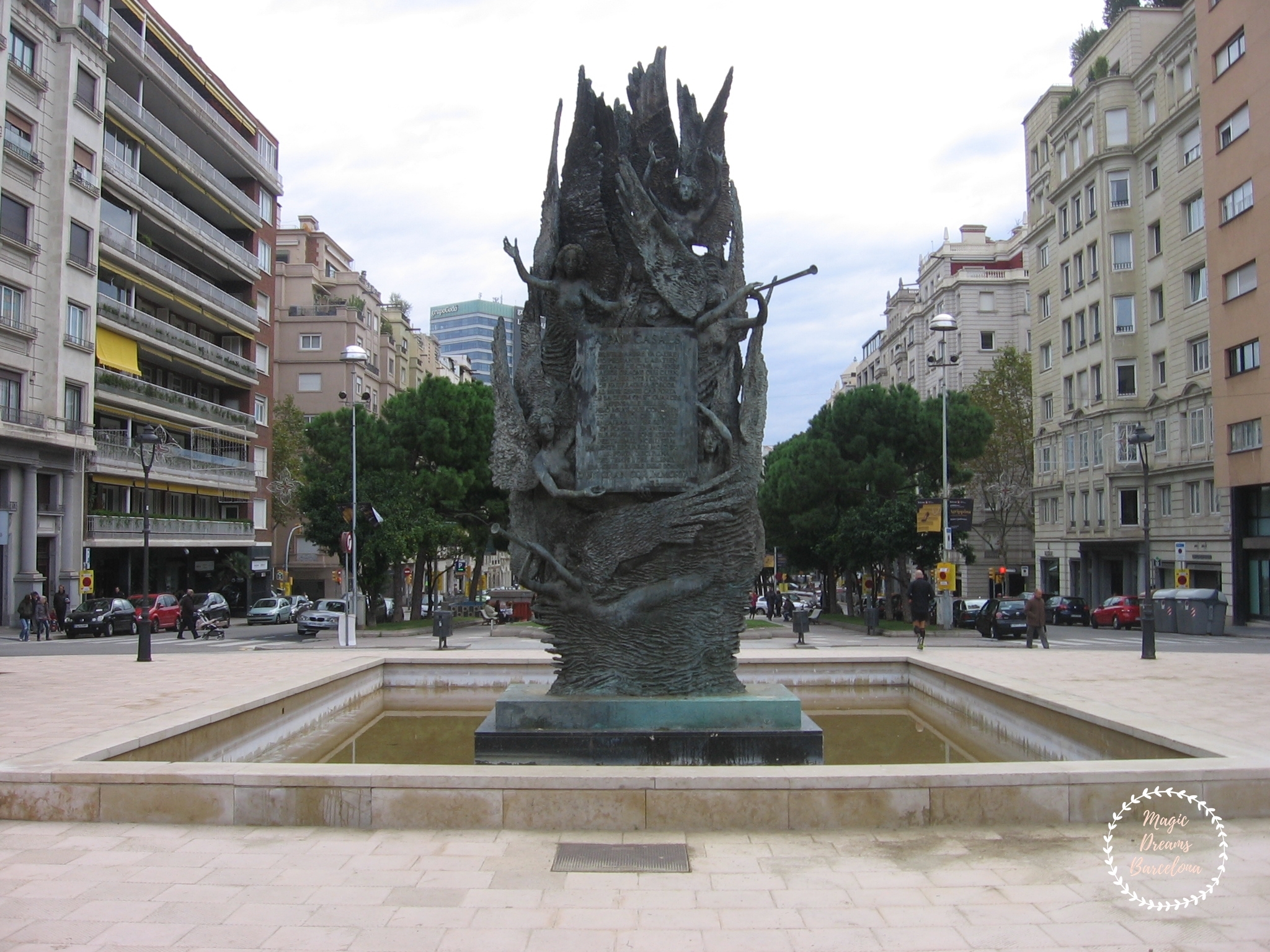
One of the most important works in Turó Park is the sculpture dedicated to the great Catalan cellist Pau Casals.
Created by Apel·les Fenosa, the sculpture forms part of the park’s artistic heritage and pays tribute to one of the most internationally recognised figures in Catalan music.
Casals was much more than an extraordinary musician.
His life and career were deeply connected to the defence of peace, culture and freedom, making him a figure of considerable international importance.
Finding his tribute in a garden dedicated precisely to music and poetry reinforces the cultural identity of Turó Park.
Francesc Viñas and the Operatic Tradition
Another important sculpture is dedicated to tenor Francesc Viñas, created by sculptor Josep Clarà.
Viñas was one of the great voices of Catalan and Spanish opera in the late 19th and early 20th centuries, with an important international career.
His presence means that music is represented in Turó Park from different perspectives: from Pau Casals’s instrumental performances to the world of opera and the human voice.
La Ben Plantada and Eugeni d’Ors
In the park’s meadow stands another of its best-known works:
La Ben Plantada, by Eloïsa Cerdan.
The bronze sculpture refers to the character created by writer and philosopher Eugeni d’Ors in his celebrated work La Ben Plantada.
The sculpture was placed in the park in 1961 and has gradually become one of its most recognisable features.
Its location in the meadow allows visitors to contemplate it within the surrounding landscape, following one of the fundamental principles of the park’s design: sculptures should not function merely as isolated monuments, but as an integral part of the garden.
La Biga de la Font de l’Aurora
Another artistic feature worth discovering is La Biga de la Font de l’Aurora, created by Joan Borrell i Nicolau.
Located along the axis of the magnolia parterre, the composition depicts a quadriga and is one of the park’s most striking sculptural elements.
Its history is particularly interesting, as it originated from a sculptural ensemble associated with the former gardens in the Gràcia area.
It is one of those details that can easily go unnoticed during a quick walk, but becomes especially fascinating once its history is known.
An Artistic Route Through the Park
In addition to the sculptures dedicated to Pau Casals, Francesc Viñas and Eugeni d’Ors, Turó Park contains other works that turn a walk through the garden into a small artistic route.
Among them is Un Oiseau, by French artist Jean-Michel Folon.
The combination of works from different periods and by different artists means that visitors can experience the park from a different perspective each time.
One visit might focus on the vegetation.
Another on the sculptures.
Another simply on sitting beside the pond.
And another can become a small literary journey following the poems installed throughout the garden.
A Place for Reading and Tranquillity
Some parks invite us to exercise.
Others are designed primarily for families.
Turó Park has a different personality.
Its layout, mature trees and various resting areas make it particularly suitable for quiet walks, reading or simply enjoying a few moments of disconnection.
Its proximity to Diagonal makes this feeling even more remarkable.
You only have to pass through one of its entrances for the noise of the traffic to become partially softened by the surrounding vegetation.
It is precisely this combination of central location and tranquillity that makes Turó Park one of the most special gardens in Barcelona’s upper city.
The Café at Turó Park
At the heart of the park, surrounded by trees, there is a pleasant café and restaurant with a terrace.
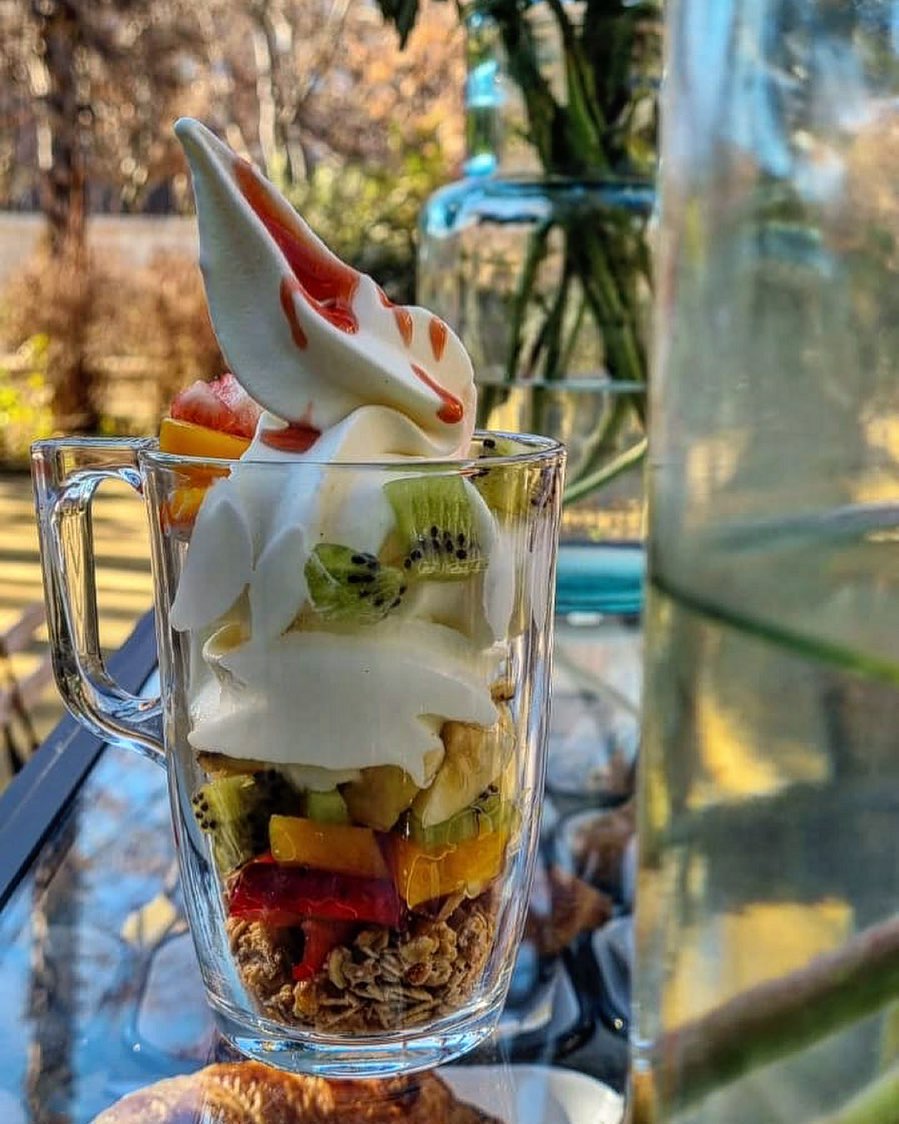
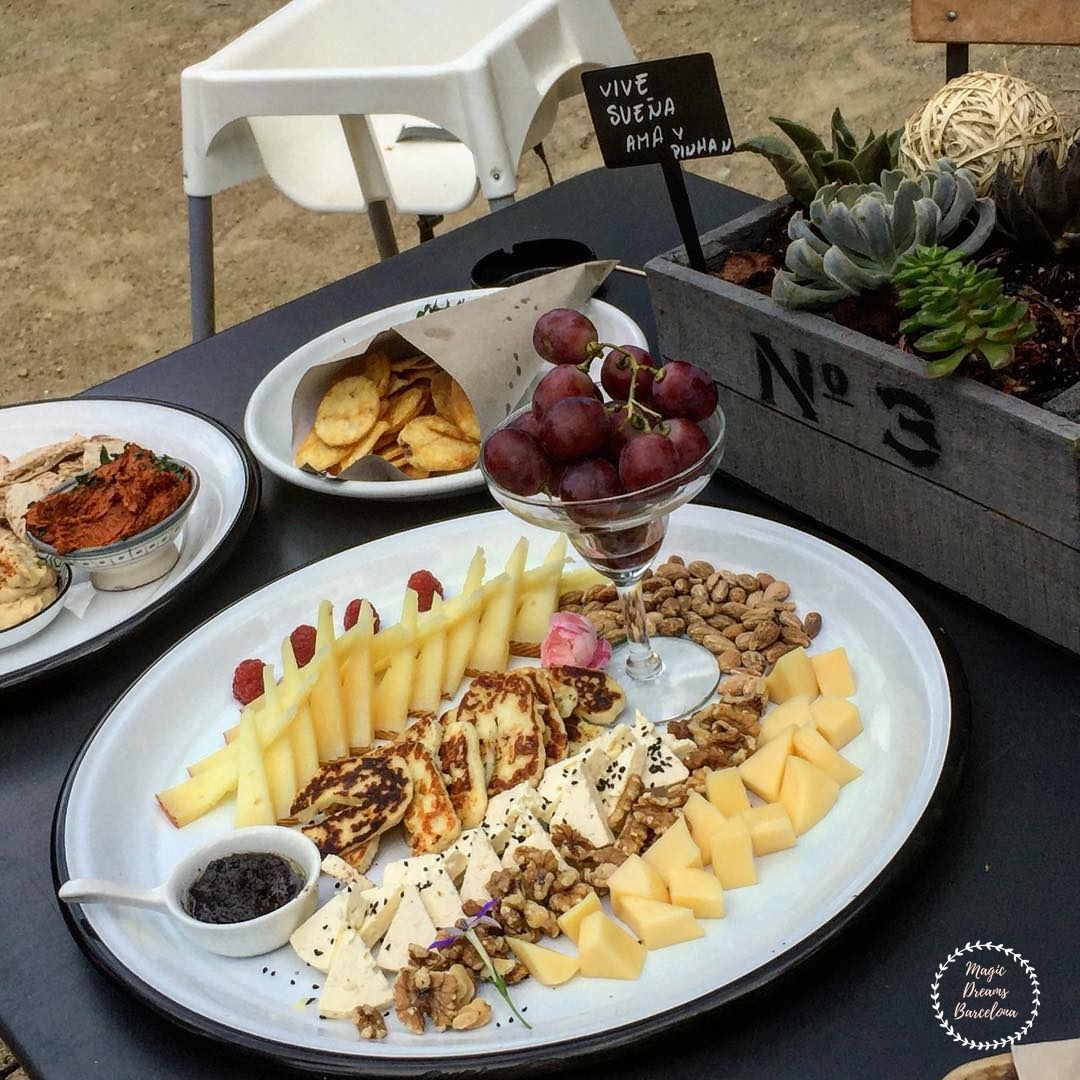
The well-known Pinhan offers the perfect place to take a break during your walk, enjoy a coffee, have breakfast, enjoy brunch, eat something or simply sit down for a drink while taking in the garden.
The terrace is particularly pleasant when the weather is good.
After exploring the sculptures, discovering the pond and walking among the magnolias, sitting beneath the trees allows you to extend the experience without having to leave the park.
It is one of those small pleasures that can turn a simple visit into a special moment.
A Park to Discover in Every Season
One of the advantages of Turó Park is that it is constantly changing.
Spring brings the gardens to life and is one of the best times to see the water lilies and seasonal blooms.
Summer is ideal for enjoying the shaded areas and the café terrace.
Autumn transforms the vegetation and creates a more intimate atmosphere, with different shades appearing throughout the trees.
Winter, although more subdued in terms of vegetation, allows visitors to appreciate the structure of the garden, its sculptures and the landscape design that is often partially hidden during the rest of the year.
There is therefore no single perfect time to visit.
Each season offers a different Turó Park.
A Park Integrated into Barcelona’s Everyday Life
Turó Park is not an isolated garden.
It is part of everyday life in this neighbourhood of Barcelona.
Surrounding it are some of the city’s most elegant residential areas, as well as shops, restaurants, hotels, cultural centres and major avenues.
Its location makes it easy to combine a visit to the park with a walk along Avinguda Diagonal, Plaça Francesc Macià, Sant Gervasi-Galvany or Sarrià.
It can also become part of a broader itinerary exploring the architecture and green spaces of this part of Barcelona.
Turó Park and the City’s Architecture
A visit to the park can also be an opportunity to discover the relationship between landscape and architecture that characterises this part of Barcelona.
The area surrounding Turó Park contains a wide variety of interesting residential buildings and examples of architecture from the late 19th century, early 20th century and contemporary period.
This makes it possible to create an itinerary combining gardens, architecture, urban design and heritage.
The experience is particularly appealing to visitors who want to discover a side of Barcelona beyond its major tourist landmarks.
Here, you will not find the crowds of the Sagrada Família or Park Güell.
Instead, you discover another Barcelona:
the Barcelona of gardens, elegant neighbourhoods, cafés, residential architecture and everyday life.
A Park Designed to Protect Its Heritage
Turó Park also has a particular feature related to coexistence and the protection of its environment.
It has traditionally been regarded as one of Barcelona’s first public parks to introduce specific restrictions regarding dogs, due to the need to protect both its vegetation and its sculptural heritage.
To facilitate coexistence, the City Council created a dedicated dog area of more than 1,000 square metres a few minutes from the park.
Today, the city’s official information identifies a dog area associated with the Turó Park facilities, so it is advisable to check the current regulations before visiting.
This reflects something important: Turó Park is not simply a place to pass through, but a garden whose natural and artistic heritage requires special care.
A Park for the Whole Family
Although its atmosphere particularly invites peaceful walks, Turó Park also includes spaces designed for different activities.
The municipal facilities include a children’s play area, table tennis tables, public toilets and spaces for outdoor activities and performances.
Throughout the year, the park also hosts different cultural events and family activities.
Its character is therefore not exclusively contemplative.
It is also a place for people to meet.
Culture in the Open Air
One of the most interesting characteristics of Turó Park is precisely its ability to combine the garden with culture.
Throughout the year, concerts, performances and activities for different audiences are organised.
The current municipal programme includes music, theatre, circus, family activities and other cultural initiatives.
In a way, this brings back part of the entertainment spirit that was already present on these grounds when the amusement park operated here.
The difference is that today’s attractions have been replaced by music, theatre, poetry, nature and culture.
How to Get to Turó Park
Turó Park is located at Avinguda de Pau Casals, 19, in the Sarrià-Sant Gervasi district.
Its location next to Plaça Francesc Macià and Diagonal makes it very easy to include in an itinerary around this part of Barcelona.
One of the simplest options is to reach Francesc Macià and continue walking along Avinguda de Pau Casals.
It can also be reached by several bus routes and other forms of public transport.
For those exploring Barcelona on foot, the park is particularly interesting because it can easily be combined with different itineraries through Sarrià-Sant Gervasi and along Diagonal.
Opening Hours
The park is open to the public, with opening hours that vary depending on the time of year.
During the summer schedule, from 1 April to 31 October, it is generally open from 8:00 a.m. to 9:00 p.m.
During the winter schedule, from 1 November to 31 March, it is generally open from 8:00 a.m. to 7:00 p.m., although closing times may be adjusted according to daylight hours.
Before planning a special visit, particularly if you wish to attend a cultural event, it is advisable to check the latest opening hours and programme.
What to Do After Visiting Turó Park
One of the great advantages of this park is its location.
After exploring it, you can continue your walk towards Plaça Francesc Macià and Diagonal, discover some of the area’s buildings and shops, or head towards Sarrià and Sant Gervasi.
You can also turn the visit into a gastronomic experience by combining your walk through the park with breakfast, brunch, lunch or dinner at one of the nearby establishments.
For architecture lovers, the area also offers numerous examples of residential and Modernist buildings.
In this way, Turó Park can become the starting point for a much broader day dedicated to discovering one of the most elegant and peaceful sides of Barcelona.
Turó Park as a Refuge Within the City
Perhaps Turó Park’s greatest attraction cannot be measured in square metres or by the number of sculptures it contains.
Its true value lies in the feeling it creates.
Entering the park means moving from one of Barcelona’s busiest urban areas into a space where the sound of the trees, the water in the pond and the birdsong become more noticeable.
It is a place to walk slowly.
To read a few pages.
To sit on a bench.
To contemplate a sculpture.
To discover a poem.
To enjoy a coffee.
To have a conversation.
Or simply to do nothing for a while.
And in a major city, that is a genuine privilege.
A Place Where Nature and Culture Come Together
Turó Park represents a particular way of understanding public space.
It is not simply about planting trees and creating paths.
It is about creating a place where nature can coexist with art and culture, and where people can find somewhere to rest, meet and enjoy themselves.
That idea remains present almost a century after the garden was created by Rubió i Tudurí.
The trees have grown.
The city has changed.
Buildings have occupied the land that once surrounded the park.
But Turó Park continues to offer what it was originally designed to provide:
a small green refuge within Barcelona.
Turó Park: A Walk Through Music, Poetry and Nature
Visiting Turó Park is not simply about discovering another park in Barcelona.
It means discovering a small part of the city’s history.
It means remembering that an amusement park once stood here and was part of Barcelona’s social life for almost two decades.
It means discovering the work of Nicolau Maria Rubió i Tudurí and his vision of landscape design.
It means walking among magnolias, holm oaks, palm trees and centuries-old trees.
It means contemplating the pond and its water lilies.
It means discovering sculptures dedicated to Pau Casals, Francesc Viñas, Eugeni d’Ors and other artists.
It means encountering the poetry of writers from different countries and generations.
And above all, it means discovering that there are still places in Barcelona where it is possible to stop time for a while.
Discover Turó Park with Magic Dreams Barcelona
Discovering Barcelona can be much more than visiting its most famous landmarks.
The city can also be found in its gardens, neighbourhoods, small stories and those hidden corners that often go unnoticed by first-time visitors.
Turó Park is one of those places.
At Magic Dreams Barcelona, we design private and personalised experiences that allow you to discover Barcelona from a different perspective, combining heritage, culture, nature, gastronomy and those small experiences that make it possible to truly get to know a city.
We can turn a walk through Turó Park into part of a much more complete experience around Sarrià-Sant Gervasi, Diagonal and Barcelona’s more elegant and lesser-known side.
We take care of the organisation, transportation, visits, gastronomic experiences, activities and all those small details that allow you to enjoy the experience without worrying about the logistics.
Because we believe that travelling and discovering a city is not simply about arriving somewhere.
It is about how you experience it, what you feel, what you learn and which memories remain afterwards.
And perhaps Turó Park is precisely one of those places that reminds us that sometimes, to discover something extraordinary, we do not need to travel very far.
We simply need to know where to look.
Magic Dreams Barcelona
Unique experiences to discover extraordinary places, enjoy nature, explore our culture and create memories that last a lifetime.
Detalle en la cafetería del Pinhan en el Turó Park.
A Francesc Viñas, de Josep Clarà.
Picnic en Pinhan.
Platos del Pinhan.
Platos del Pinhan.
Perspectiva desde el Pinhan.
Detalle en la cafetería del Pinhan en el Turó Park.
Where History, Art, and the Mediterranean Lifestyle Converge Plaça de Catalunya is the epicentre of Barcelona, a vibrant meeting point where the historic district of Ciutat Vella meets the modern Eixample neighbourhood. Considered one of the city’s most iconic public spaces, the square connects some …
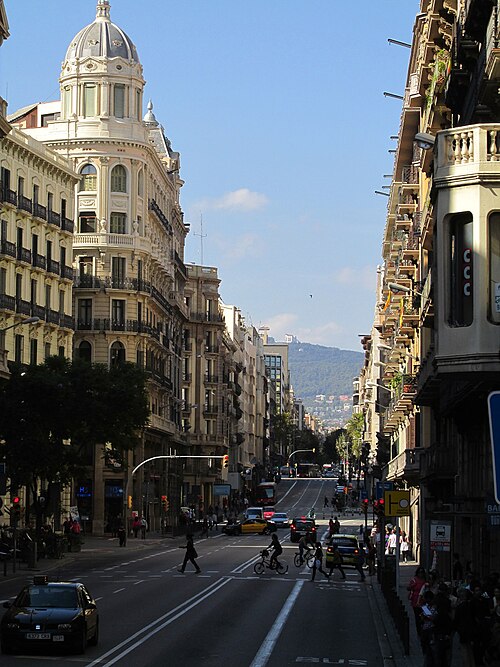
Discover one of Barcelona’s historic avenues, its landmark buildings, and the best places to eat while exploring the city’s historic centre. Via Laietana is one of Barcelona’s most distinctive avenues. Located in the heart of Ciutat Vella, it connects the area around Plaça d’Urquinaona with …
Descubra una de las avenidas históricas de Barcelona, sus edificios emblemáticos y los mejores lugares donde comer durante un paseo por el centro histórico.
Vía Layetana es una de las avenidas más singulares de Barcelona. Situada en el corazón de Ciutat Vella, conecta el entorno de la plaza de Urquinaona con el paseo de Colom y el antiguo puerto, atravesando una zona donde conviven la historia medieval, la arquitectura del siglo XX y la vida cotidiana de la ciudad.
Con aproximadamente un kilómetro de longitud, esta avenida es mucho más que una vía de comunicación. Su trazado refleja una transformación urbana que modificó profundamente el centro histórico de Barcelona y dejó una huella permanente en sus barrios, sus edificios y su paisaje arquitectónico.
A lo largo de Vía Layetana encontrará construcciones monumentales, antiguas sedes bancarias, edificios institucionales y establecimientos gastronómicos para diferentes gustos y presupuestos. A pocos minutos a pie también podrá descubrir el Barrio Gótico, el Palau de la Música Catalana, el Mercat de Santa Caterina y las calles históricas de El Born.
Para quienes desean conocer Barcelona más allá de sus monumentos más destacados, recorrer Vía Layetana es una oportunidad para comprender la evolución de la ciudad y disfrutar de su patrimonio cultural y gastronómico.
¿Dónde está Vía Layetana?
Vía Layetana está situada en el distrito de Ciutat Vella, el centro histórico de Barcelona, en Cataluña.
La avenida conecta la plaza de Urquinaona, al norte, con el paseo de Colom, al sur, cerca del frente marítimo. Su posición permite acceder fácilmente a varios de los barrios y espacios culturales más importantes de la ciudad.
El Barrio Gótico: situado al oeste de la avenida, conserva calles medievales, plazas históricas y la Catedral de Barcelona.
Sant Pere, Santa Caterina i la Ribera: al este, están los antiguos barrios artesanales y comerciales, además del conocido entorno de El Born.
La Catedral y la plaza de Sant Jaume: concentran algunos de los principales testimonios de la historia religiosa, política e institucional de Barcelona.
El frente marítimo: desde el extremo sur podrá continuar hacia el antiguo puerto y el paseo de Colom.
Gracias a esta localización, Vía Layetana constituye un excelente punto de partida para una visita a pie por el centro histórico.
La historia de Vía Layetana: de la ciudad medieval a la Barcelona moderna
Los orígenes de un gran proyecto urbano
Para comprender la historia de Vía Layetana debemos situarnos en la Barcelona de finales del siglo XIX.
En aquella época, buena parte del centro histórico estaba formada por calles estrechas, barrios densamente poblados, talleres artesanales, mercados, edificios religiosos y antiguas residencias. Aunque este entramado urbano era el resultado de siglos de historia, algunas zonas presentaban problemas de hacinamiento y unas condiciones de habitabilidad deficientes.
La expansión de Barcelona más allá de sus antiguas murallas impulsó nuevas formas de planificación urbana. El proyecto del Eixample, diseñado por Ildefons Cerdà, planteaba una ciudad con calles amplias, manzanas regulares y mejores condiciones de circulación.
Sin embargo, el casco antiguo seguía teniendo una estructura difícil de adaptar a las nuevas necesidades de movilidad y a las ambiciones comerciales de una Barcelona en plena transformación.
Durante el siglo XIX surgieron distintas propuestas para reformar el centro histórico. Entre ellas destacó el proyecto de reforma interior de Àngel Baixeras, aprobado en 1889, que contemplaba la apertura de grandes vías para mejorar las comunicaciones urbanas.
La futura Vía Layetana se convertiría en una de las intervenciones más importantes de aquella época.
1908: el inicio de las obras
El 10 de marzo de 1908 empezaron oficialmente las obras de apertura de Vía Layetana, en un acto presidido por el rey Alfonso XIII.
La transformación no fue inmediata. El proyecto se desarrolló durante décadas y la construcción del conjunto de la avenida se prolongó hasta 1958.
Las consecuencias para la ciudad fueron enormes. Entre 1908 y 1913 se demolieron cerca de trescientos edificios, y más de dos mil familias se vieron afectadas por las obras.
Desaparecieron calles antiguas, viviendas y construcciones de valor histórico, y se alteró profundamente la estructura de determinados barrios medievales.
La apertura de la avenida tuvo, por tanto, dos dimensiones que conviene tener presentes.
Por un lado, mejoró las conexiones entre el centro de Barcelona y el puerto, creó un nuevo eje de circulación y favoreció la instalación de bancos, empresas e instituciones. Por otro, provocó la desaparición de parte del patrimonio urbano y modificó la vida de infinidad de vecinos.
Esta tensión entre modernización y conservación patrimonial es esencial para entender Vía Layetana.
De avenida comercial a espacio urbano contemporáneo
Durante la primera mitad del siglo XX, Vía Layetana adquirió un carácter monumental y comercial. Sus edificios reflejaban las aspiraciones de una Barcelona que quería consolidarse como centro económico y proyectar una imagen de modernidad.
Actualmente, la avenida sigue evolucionando. La transformación urbana culminada en 2025 ha reforzado su función como espacio de conexión entre barrios, con mejoras para los peatones y la movilidad sostenible.
Vía Layetana constituye así un ejemplo de cómo las ciudades revisan su pasado y adaptan sus espacios públicos a las necesidades de cada época.
Los edificios emblemáticos de Vía Layetana y su entorno
El edificio histórico de Correos
En el extremo meridional de la avenida, cerca del paseo de Colom, está situado el histórico edificio de Correos, una construcción representativa de la arquitectura institucional del primer tercio del siglo XX.
Su escala monumental y su presencia urbana reflejan la importancia que adquirieron los servicios públicos durante la modernización de Barcelona.
El edificio permite comprender cómo las nuevas avenidas se concibieron no solo como vías de circulación, sino también como escenarios para instituciones que debían transmitir solidez, prestigio y modernidad.
El Palau de la Música Catalana
A pocos minutos a pie de Vía Layetana está situado el Palau de la Música Catalana, una de las obras más destacadas del modernismo catalán.
Diseñado por el arquitecto Lluís Domènech i Montaner e inaugurado en 1908, el edificio destaca por sus mosaicos, sus esculturas, sus vidrieras y su extraordinaria decoración floral.
Uno de sus elementos más impresionantes es la claraboya de vidrio que preside la sala de conciertos y permite que la luz natural forme parte de la experiencia arquitectónica.
El Palau de la Música Catalana fue declarado Patrimonio Mundial por la UNESCO en 1997. Su historia está estrechamente vinculada al desarrollo cultural de Cataluña y a la importancia que adquirieron las asociaciones corales y musicales a principios del siglo XX.
Le recomendamos contemplar tanto la fachada como el interior mediante una visita guiada, si desea apreciar todos sus detalles arquitectónicos.
La Catedral de Barcelona
La Catedral de la Santa Cruz y Santa Eulalia situada en el Barrio Gótico, al oeste de Vía Layetana.
Su construcción se inició en el siglo XIII y continuó durante varios siglos. El templo constituye uno de los principales testimonios del pasado medieval de Barcelona y permite descubrir el papel de la religión, las instituciones civiles y los gremios en el desarrollo de la ciudad.
El claustro, las capillas y las calles de su entorno ofrecen un recorrido por distintas etapas de la historia de barcelona.
La plaza de Sant Jaume
La plaza de Sant Jaume es uno de los centros políticos e institucionales más importantes de Cataluña.
En ella se están situados el Palau de la Generalitat de Catalunya y el Ayuntamiento de Barcelona. A lo largo de los siglos, la plaza ha sido escenario de acontecimientos políticos, celebraciones públicas y manifestaciones ciudadanas.
Su proximidad a Vía Layetana permite incorporar fácilmente esta visita a una ruta por el centro histórico.
El Mercat de Santa Caterina
Al este de Vía Layetana está situado el Mercat de Santa Caterina, un mercado histórico que combina tradición comercial y arquitectura contemporánea.
Su cubierta ondulada, decorada con piezas cerámicas de múltiples colores, es uno de sus rasgos más destacados. La remodelación fue proyectada por el equipo de Enric Miralles y Benedetta Tagliabue.
El mercado representa la continuidad de una tradición profundamente arraigada en Barcelona: el mercado como lugar de abastecimiento, encuentro vecinal y transmisión de la cultura gastronómica.
Es una parada especialmente recomendable si desea descubrir los productos frescos y la vida cotidiana de los barrios históricos.
El Born y las calles medievales
Al este de Vía Layetana, las calles de Sant Pere y la Ribera conducen hacia El Born, una zona donde conviven edificios históricos, antiguas calles comerciales, tiendas independientes, restaurantes y espacios culturales.
El contraste con la escala monumental de Vía Layetana es muy interesante. Basta alejarse unos metros para encontrar un entramado urbano más estrecho e irregular, que conserva parte del carácter de la Barcelona medieval.
4. La arquitectura de Vía Layetana: una avenida que cuenta la historia de Barcelona
La arquitectura de Via Laietana es uno de sus principales atractivos.
Muchas de sus construcciones tienen fachadas simétricas, ornamentación pétrea, entradas monumentales, cornisas decorativas y balcones cuidadosamente integrados en la composición del edificio.
El conjunto refleja la voluntad de crear una nueva avenida comercial y financiera dentro del centro histórico, con una imagen urbana diferente de la trama medieval del entorno.
A lo largo del recorrido encontrará edificios de distintas etapas del siglo XX. Algunos tienen elementos historicistas y ornamentales, mientras que otros responden a una arquitectura comercial más funcional y monumental.
Para apreciar la avenida, le recomendamos observar los detalles de las fachadas, los portales, los relieves y las proporciones de los edificios. También merece la pena detenerse a comparar la amplitud de Vía Layetana con las estrechas calles medievales que se abren a ambos lados.
La avenida no representa un único estilo arquitectónico: es el resultado de varias décadas de transformación urbana y de distintas formas de entender la modernidad.
La transformación actual de Vía Layetana
En los últimos años, Vía Layetana ha experimentado una importante remodelación destinada a mejorar el espacio público y facilitar los desplazamientos a pie.
La transformación busca reforzar la conexión entre el Barrio Gótico y los barrios de Sant Pere, Santa Caterina y la Ribera, al tiempo que favorece la movilidad sostenible y la actividad comercial local.
Entre los objetivos del proyecto están la mejora de los pasos peatonales y la creación de espacios más agradables para caminar, descansar y encontrarse.
La nueva configuración de la avenida, cuya transformación se hizo realidad en 2025, forma parte de una visión urbana que concede mayor importancia a la calidad del espacio público.
Para el visitante, estos cambios facilitan la posibilidad de incorporar Vía Layetana a una ruta cultural a pie. No obstante, antes de realizar el recorrido conviene consultar la información municipal si necesita conocer las condiciones específicas de circulación o accesibilidad.
Dónde comer en Vía Layetana: restaurantes para diferentes gustos y presupuestos
Vía Layetana y su entorno ofrecen alternativas para disfrutar de una comida informal, probar cocina italiana o mexicana, descubrir platos mediterráneos o reservar una experiencia de alta gastronomía.
La Central Hamburguesería
Dirección de referencia: Via Laietana, 45, Barcelona. Presupuesto orientativo: 10–20 € por persona. Especialidad: hamburguesas y comida informal.
La Central es una opción práctica para quienes desean disfrutar de una hamburguesa durante un recorrido por el centro histórico.
Su propuesta se centra en las hamburguesas artesanales, preparadas con producto fresco y pan elaborado según la receta del establecimiento.
Dirección de referencia: Vía Layetana, 46, Barcelona. Presupuesto: consultar la carta vigente. Especialidad: churros y chocolate.
Una churrería es una parada ideal para desayunar o merendar durante una visita a pie por el centro histórico.
Los churros con chocolate forman parte de una tradición gastronómica popular muy arraigada en España. Son habituales en desayunos, meriendas y encuentros informales, especialmente durante los meses más fríos.
Dirección de referencia: Vía Layetana, 41, Barcelona. Presupuesto orientativo: 20–30 € por persona. Especialidad: cocina italiana.
Luigi Ristorante es una selección como una alternativa para quienes prefieren una comida sentados a la mesa en un entorno céntrico.
Su localización permite mezclar el almuerzo o la cena con un paseo por la arquitectura comercial de Vía Layetana y las calles históricas de Ciutat Vella.
Dirección: Vía Layetana, 49, Hotel Ohla Barcelona. Presupuesto: depende del menú y las bebidas; consulte la carta vigente. Especialidad: alta gastronomía contemporánea.
Caelis es la propuesta más orientada a una experiencia gastronómica especial dentro de esta selección.
El restaurante está vinculado al chef Romain Fornell, cuya cocina contemporánea fusiona tradición, técnica e innovación.
Caelis representa la evolución de Barcelona como destino internacional de alta cocina y ofrece una experiencia en la que la gastronomía ocupa un lugar central.
Puede consultar los menús, las condiciones de reserva y los horarios en la web oficial de Caelis.
Ruta a pie por Vía Layetana: historia, arquitectura y gastronomía
Un itinerario de medio día por el centro histórico
Puede recorrer Vía Layetana y su entorno en una mañana o una tarde, adaptando la ruta al tiempo disponible y a sus intereses.
Parada 1. Plaça d’Urquinaona
Empiece en el extremo norte de la avenida. Desde aquí podrá observar la conexión entre el centro urbano moderno y los barrios históricos.
Parada 2. Paseo arquitectónico por Vía Layetana
Recorra la avenida en dirección sur. Observe las fachadas, las entradas monumentales, las cornisas y los detalles ornamentales que reflejan la transformación urbana del siglo XX.
Parada 3. Palau de la Música Catalana
Dedique unos minutos a descubrir uno de los edificios más destacados del modernismo catalán. Si desea conocer el interior, consulte las visitas disponibles.
Parada 4. Catedral de Barcelona y plaza de Sant Jaume
Desvíese hacia el Barrio Gótico para descubrir la arquitectura medieval y el centro histórico de las instituciones políticas de Cataluña.
Parada 5. Mercat de Santa Caterina
Diríjase hacia el este para admirar la cubierta del mercado y explorar sus calles cercanas.
Parada 6. Almuerzo o pausa gastronómica
Vuelva a Vía Layetana y elija un restaurante de la selección, comprobando previamente su dirección, horarios y carta.
Parada 7. Continuación hacia el frente marítimo
Termine el recorrido en dirección al paseo de Colom y el antiguo puerto, donde el centro histórico se abre al paisaje marítimo de Barcelona.
Esta ruta puede ampliarse con visitas culturales o reducirse si prefiere centrarse en la arquitectura y la gastronomía.
Descubra Barcelona con Magic Dreams Barcelona
En Magic Dreams Barcelona creemos que la mejor manera de descubrir una ciudad es ir más allá de sus monumentos más conocidos.
Nuestras experiencias personalizadas fusionan patrimonio cultural, arquitectura, botánica, historia, arte, gastronomía local y el descubrimiento de los detalles menos evidentes.
Organizamos experiencias a medida en Barcelona y sus alrededores, así como excursiones de un día, escapadas de fin de semana y estancias más largas en el Pirineo catalán y la Costa Brava.
Nuestras propuestas pueden incluir rutas históricas a pie, visitas a jardines y espacios naturales, experiencias gastronómicas, pícnics personalizados e itinerarios diseñados según sus intereses.
Ofrecemos actividades en español, catalán e inglés, con otros idiomas disponibles bajo petición.
Descubra Vía Layetana con Magic Dreams Barcelona y viva la ciudad a través de sus historias, su arquitectura, sus sabores y esos pequeños detalles que a menudo pasan inadvertidos.
An extraordinary botanical landscape between Montjuïc Mountain and the Mediterranean Sea On the southern slopes of Montjuïc Mountain, bathed in Mediterranean sunlight and sheltered from cold winds, lie the Mossèn Costa i Llobera Gardens, one of Barcelona’s most remarkable botanical spaces. Dedicated primarily to xerophytic …
A Walk Through Port History and the Mediterranean The Moll de la Fusta is one of the most emblematic spaces along Barcelona’s waterfront. Located opposite the historic city centre, next to Port Vell, this promenade represents much more than a pleasant area by the sea. …
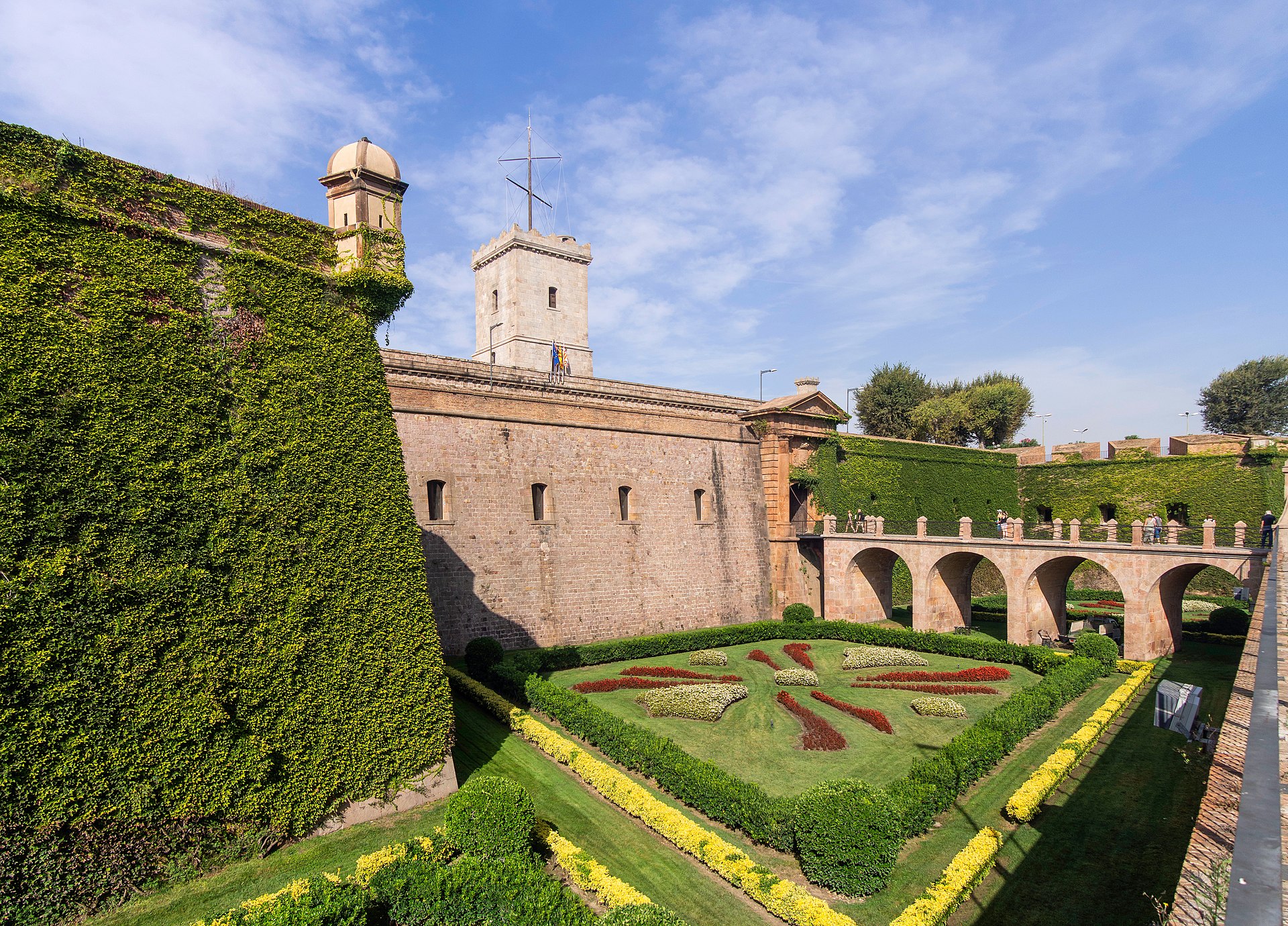
At the top of Montjuïc Mountain, overlooking the port, the sea, and much of the city of Barcelona, stands one of the most important and historically significant fortresses in Catalonia: Montjuïc Castle.
Situated approximately 173 metres above sea level, this impressive defensive complex occupies a privileged strategic position from which Barcelona can be viewed in virtually every direction.
But Montjuïc Castle is much more than an impressive viewpoint. Its walls preserve more than four centuries of history, and the site has served as a military fortress, prison, scene of conflicts, museum, and, today, a heritage and cultural space open to the public.
Its history is closely connected to the history of Barcelona and Catalonia itself. A visit allows you to explore its courtyards, moats, bastions, and different rooms while discovering some of the city’s most important—and also most difficult—historical episodes.
Where Is Montjuïc Castle?
Montjuïc Castle is located at the highest point of Montjuïc Mountain, within the Sants-Montjuïc district, in the Poble-sec neighbourhood.
The address is:
Carretera de Montjuïc, 66 08038 Barcelona
The complex is located high above the Port of Barcelona and offers extensive views over the city, coastline, and surrounding areas.
Its location explains the military importance it held for centuries. From the summit of Montjuïc, it was possible to visually control both the city and the port, as well as the main access routes to Barcelona.
The History of Montjuïc Castle
The history of Montjuïc Castle began long before the fortress we know today existed.
At the summit of the mountain there was an old watchtower or “farell”, used to monitor the surrounding territory and warn of possible threats.
It was during the Reapers’ War, in 1640, that the authorities of Barcelona ordered the construction of an initial fortification around the old tower.
The first fort was built very quickly. According to historical documentation, construction took approximately thirty days, creating a quadrangular enclosure protected by four half-bastions and a moat.
This first fortification would become the origin of today’s Montjuïc Castle.
The Battle of Montjuïc in 1641
The new fortification played an important role almost from its earliest years.
On 26 January 1641, during the Reapers’ War, the event known as the Battle of Montjuïc took place. The forces defending Barcelona repelled an attack by the troops of Philip IV.
The elevated position of the mountain and the fortification made it possible to control one of the main access routes to Barcelona.
During the following decades, the small fort was expanded and modified until it gradually became a much more important fortress.
The Great Transformation of the 18th Century
The appearance we see today mainly dates from the major renovation carried out during the 18th century.
After the War of the Spanish Succession, the fortification acquired a permanent military function and became one of the main control points in Barcelona.
The military engineer Juan Martín Cermeño was responsible for a major remodelling project that began in the mid-18th century.
The works completely transformed the old fort, creating a fortress adapted to the topography of the mountain, with an irregular layout, four large bastions, a covered way, moats, military facilities, and defensive systems designed for artillery.
It is essentially this 18th-century fortress, with various later modifications, that we can visit today.
A Fortress That Was Also Used to Bombard Barcelona
The history of Montjuïc Castle is not limited to the defence of the city.
At different times during the 19th and 20th centuries, the fortress was also used to control and suppress insurrectionary movements.
Barcelona was bombarded from Montjuïc on several occasions during the 19th century, and the site was used as a prison for trade unionists, anarchists, and revolutionaries.
It also played a role during the Tragic Week of 1909.
During the Spanish Civil War, the castle once again had military functions and was subsequently used as a military prison and the site of court-martial proceedings.
Lluís Companys and the Historical Memory of the Castle
One of the best-known episodes in the contemporary history of Montjuïc Castle is connected to Lluís Companys, President of the Government of Catalonia.
On 15 October 1940, Companys was executed by firing squad at the castle by the Franco dictatorship.
Today, this episode forms part of the site’s historical memory and is one of the elements that helps us understand the castle not only as a military monument, but also as a place of remembrance.
From Military Museum to Public Space
During the 20th century, the castle continued to have military functions.
In 1963, a Military Museum was opened within the complex.
Later, Montjuïc Castle officially came under municipal ownership in 2007. The military museum was closed and the site was recovered for the city.
Since then, Barcelona City Council has managed the complex as a heritage, cultural, and historical-memory space.
What Can You Visit Inside Montjuïc Castle?
A visit allows you to explore much of the fortress’s defensive structure and discover its different spaces.
Among the most interesting places are:
the entrance bridge;
the main façade;
the Santa Eulàlia moat;
the parade ground;
the four bastions;
the terraces and viewpoints;
the covered way;
the interior rooms;
the former military areas;
the Interpretation Centre;
and temporary exhibitions.
General admission also includes access to the temporary exhibitions and the permanent exhibition at the Interpretation Centre.
The Entrance Bridge and Façade
One of the first elements you encounter when arriving is the impressive entrance to the fortress.
The bridge crosses the Santa Eulàlia moat and leads to the castle’s monumental entrance.
The current main façade forms part of the defences designed during Cermeño’s 18th-century renovation. The complex includes a monumental Neoclassical gate and various defensive elements.
It is one of the most interesting places to begin understanding the military architecture of the site.
The Parade Ground
Once through the entrance, we reach one of the central spaces of the fortress: the parade ground.
It is a large open space around which different areas of the castle were organised.
The major 18th-century renovation created a central building around this courtyard, with rooms intended for the governor and the garrison.
Today, it remains one of the most recognisable spaces in the complex and also serves as a starting point for various activities and tours.
The Four Bastions
One of the most interesting architectural features of Montjuïc Castle is its bastions.
The fortress has four large defensive structures located at its corners:
Sant Carles Bastion
Santa Amàlia Bastion
Velasco Bastion
Llengua de Serp Bastion
Their purpose was to reinforce the fortress’s defences and allow different angles to be controlled using artillery.
Some of these areas also offer extraordinary views of Barcelona and the coastline.
The Covered Way
Around the fortress we find what is known as the covered way, which forms part of the external defence system.
Walking through these spaces provides a much better understanding of how an early modern fortification worked and how its different defensive lines were organised.
It is also one of the places where the star-shaped design of the fortress can be appreciated most clearly.
The Montjuïc Castle Interpretation Centre
For those who want to truly understand the history of the monument, one of the most interesting visits is the Montjuïc Castle Interpretation Centre.
The permanent exhibition explains the evolution of the mountain and the fortress through different historical sections.
It covers subjects such as the old watchtower, the first fort of 1640, the transformation of the fortress, its defensive function, and its subsequent role as a prison and site of repression.
The renovated rooms incorporate original remains, audiovisual materials, and various resources designed to explain the history of the monument.
The Best Views of Barcelona
One of the great attractions of the visit is undoubtedly its location.
From the terraces and elevated areas of the castle, you can see:
the Port of Barcelona;
the Mediterranean Sea;
the coastline;
central Barcelona;
the Collserola mountain range;
Baix Llobregat;
and different parts of the metropolitan area.
The castle’s position, approximately 173 metres above sea level, provides a very different panoramic view of the city.
It is worth setting aside some time during your visit simply to stop and enjoy the scenery.
How Long Do You Need to Visit Montjuïc Castle?
For a relaxed visit, we recommend allowing approximately one and a half to two hours.
If you also want to take a guided tour, explore the Interpretation Centre in detail, enjoy the views, and take your time walking around the different defensive structures, you can easily spend two to three hours.
You can also combine the visit with other attractions in Montjuïc and turn it into a half-day or even a full-day excursion.
Montjuïc Castle Opening Hours
The current opening hours for 2026 are as follows:
March to October
Every day: 10:00 am to 8:00 pm.
November to February
Every day: 10:00 am to 6:00 pm.
Ticket sales end before closing time, and exhibitions and educational activities finish approximately half an hour before closing.
The castle is closed on 25 December and 1 January.
How Much Does It Cost to Enter Montjuïc Castle?
For 2026, the admission prices are:
General admission: €12
Reduced admission: €8
The reduced rate applies to certain groups, including children aged 8 to 12, unemployed people, and certain holders of cards and accreditation.
There are also various circumstances in which admission is free.
These include:
every Sunday from 3:00 pm onwards;
the first Sunday of each month;
children under 8;
holders of certain accreditations;
professional tour guides working in the course of their duties;
certain accredited teachers;
members of ICOM and the Associació de Museòlegs de Catalunya;
and other groups covered by Barcelona City Council regulations.
For this reason, before purchasing a ticket, it is advisable to check whether you qualify for one of these admission options.
Family Activities: Treasure Hunt
The castle also organises activities designed for families.
One of them is a treasure hunt, a type of scavenger hunt in which participants must solve puzzles and explore different corners of the fortress.
The activity is mainly aimed at children aged 6 to 12 accompanied by their families.
It begins in the parade ground, where participants receive a backpack containing instructions and materials.
At the end, participants receive a certificate.
The activity is scheduled on weekends and public holidays and participation is free, although the applicable admission fee for the site must be paid when required.
Temporary Exhibitions and Activities
In addition to the permanent exhibition, the castle hosts temporary exhibitions and various cultural activities.
The programme may include:
historical exhibitions;
photography routes;
guided commentary tours;
educational activities;
workshops;
family activities;
and events related to historical memory.
For this reason, if you are planning a specific visit, we recommend checking the castle’s programme before travelling, as some activities are occasional and require prior registration.
How to Get to Montjuïc Castle by Public Transport
There are several ways to reach the castle.
By Bus 150
One of the easiest options is to take bus route 150, which connects Plaça d’Espanya with Montjuïc Castle.
The stop is Castell.
This is a particularly practical option for visitors who want to reach the entrance directly without having to walk uphill.
By Metro, Funicular and Cable Car
Another option is to travel to Paral·lel using Metro lines L2 or L3.
From there, you can take the Montjuïc Funicular to the Parc de Montjuïc area and then continue with the Montjuïc Cable Car.
The cable car travels between Parc de Montjuïc and the castle, offering spectacular views during the ascent.
Important
Public transport timetables may change depending on the time of year, and services may be interrupted due to maintenance or construction work.
For example, TMB states that the Montjuïc Funicular has different timetables depending on the season. Between 30 March and 25 October 2026, it operates from 7:30 am to 10:00 pm on weekdays and from 9:00 am to 10:00 pm on Saturdays, Sundays, and public holidays.
Montjuïc Cable Car: 2026 Prices
The cable car is one of the most spectacular ways to reach the castle.
The published 2026 fares are:
Adult return: €17.10 online / €19 standard fare
Children aged 4 to 12 return: €11.70 online / €13 standard fare
Children under 4: free
A single ticket costs:
Adult: €12
Children aged 4 to 12: €10
Single tickets are sold only at the ticket office.
The journey begins at Parc de Montjuïc and reaches the castle directly, with no intermediate stops on the way up. On the return journey, there is an option to stop at the Mirador del Alcalde.
Montjuïc Cable Car Opening Hours
In 2026, the published opening hours are:
January–February: 10:00 am–6:00 pm
March–May: 10:00 am–7:00 pm
June–September: 10:00 am–9:00 pm
October: 10:00 am–7:00 pm
November–December: 10:00 am–6:00 pm
On 25 December, 1 January, and 6 January, the service operates from 10:00 am to 2:30 pm.
Can You Drive to Montjuïc Castle?
Yes. You can drive up Montjuïc using Carretera de Montjuïc.
The address to enter into your navigation system is:
Carretera de Montjuïc, 66, Barcelona.
However, bear in mind that parking near the castle is limited.
There is a free parking area near the mountain, from which you need to continue on foot for approximately 10 minutes to reach the castle.
For this reason, if you are visiting by car—especially on weekends, public holidays, or dates with special events—we recommend arriving with plenty of time.
You should not rely on finding a parking space directly next to the entrance.
Where to Park Near Montjuïc Castle
One of the parking options indicated for access by car is Pàrquing del Sot, from which the castle is approximately a ten-minute walk away.
There are also different parking areas elsewhere on Montjuïc, although the distance to the castle may be considerable.
For a conventional tourist visit, therefore, bus 150 may be much more convenient if you do not want to worry about finding parking.
Can You Walk Up to the Castle?
Yes.
Montjuïc has different paths and streets that allow you to walk up to the castle.
The climb can be an interesting option for those who want to combine their visit with a walk through the gardens and other areas of the mountain.
However, keep in mind that there is a significant incline, and during the hottest months walking during the middle of the day can be demanding.
We recommend bringing water, comfortable shoes, and sun protection.
Is Montjuïc Castle Accessible?
The site offers accessibility measures, and activities can be adapted for people with disabilities.
The castle’s educational programme states that activities can be adapted for people with disabilities and that resources are available in different languages, including Spanish, Catalan, English, and Catalan Sign Language, upon request.
For specific accessibility needs, it is advisable to contact the castle in advance to confirm the route and available services.
What Else Can You Visit in Montjuïc?
One of the advantages of visiting the castle is that you can take the opportunity to discover many other places on the mountain.
Nearby you will find:
Montjuïc Cable Car
Jardins de Miramar
Mirador del Alcalde
Joan Miró Foundation
National Art Museum of Catalonia
Lluís Companys Olympic Stadium
Poble Espanyol
Botanical Garden
Teatre Grec
and various gardens and viewpoints.
The cable car connects the Parc de Montjuïc area with the castle, making it possible to combine several of these attractions during the same day.
How Much Does a Complete Visit to Montjuïc Cost?
The budget depends on how you organise your day.
A basic visit to the castle costs €12 per adult.
If you add a return cable car ticket, the transport costs €17.10 per adult when purchased online.
Therefore, combining general admission to the castle with a return cable car ticket would cost approximately €29.10 per adult, excluding other expenses.
If you also want to take a guided tour, eat in the area, or visit other museums and monuments, the total budget will increase.
What Is the Best Time to Visit Montjuïc Castle?
If you want to avoid the busiest times, visiting first thing in the morning can be a good option.
Another possibility is to visit the castle in the afternoon and make the most of the final opening hours to enjoy the views.
During the summer months, the castle remains open until 8:00 pm, allowing visitors to explore it when temperatures are more pleasant.
On Sundays from 3:00 pm onwards, admission to the castle is also free, although this period may coincide with a higher number of visitors.
What Should You Bring to Montjuïc Castle?
Although this is an urban attraction, we recommend bringing:
comfortable shoes;
water;
sun protection during the warmer months;
a cap or hat;
a camera;
and some time to enjoy the terraces and viewpoints.
If you are planning to combine the castle with a route through Montjuïc, the gardens, or the cable car, comfortable footwear is especially recommended.
Is Montjuïc Castle Suitable for Children?
Yes.
The combination of walls, moats, courtyards, views, and defensive structures can be particularly appealing to younger visitors.
In addition, the castle’s programme includes family activities such as the treasure hunt, designed for children approximately 6 to 12 years old accompanied by family members.
A good option is to combine the visit with the Montjuïc Cable Car, as the journey itself can become an experience for the whole family.
A Different Kind of Visit: History and Memory
Montjuïc Castle should not be viewed simply as a beautiful fortress from which to take photographs of Barcelona.
It is a place that brings together different chapters of the city’s history.
Here, visitors can understand the development of early modern fortifications, the strategic importance of Montjuïc, military conflicts, the use of the site as a prison, and the episodes of repression and historical memory that took place within its walls.
The Interpretation Centre helps to put these events into context and understand why the castle continues to hold a special place within Barcelona’s heritage.
Monumento a los Caídos, Foso de Santa Elena, Castillo de Montjuïc, Barcelona – By Canaan – Own work, CC BY-SA 4.0, https://commons.wikimedia.org/w/index.php?curid=43307824.
Castillo de Montjuic (Barcelona), el baluarte de San Carlos desde la muralla de Marina – By Enric – Own work, CC BY-SA 4.0, https://commons.wikimedia.org/w/index.php?curid=130254236.
Castillo de Montjuic (Barcelona), el semibaluarte sur y el puerto desde el revellín – By Enric – Own work, CC BY-SA 4.0, https://commons.wikimedia.org/w/index.php?curid=130257376.
Castillo de Montjuic (Barcelona), puente sobre el foso, al fondo el baluarte de San Carlos – By Enric – Own work, CC BY-SA 4.0, https://commons.wikimedia.org/w/index.php?curid=130257655.
Monumento als Caiguts del Fossat, Castell de Montjuïc, escultura dels germans Oslé – By Enric – Own work, CC BY-SA 4.0, https://commons.wikimedia.org/w/index.php?curid=130257057.
Armaduras en el antiguo museo militar del castillo de Montjuïc – By Jordiferrer – Own work, CC BY-SA 3.0, https://commons.wikimedia.org/w/index.php?curid=19034130.
Museo Militar del Castell de Montjuïc – By Silar – Own work, CC BY-SA 4.0, https://commons.wikimedia.org/w/index.php?curid=143135814.
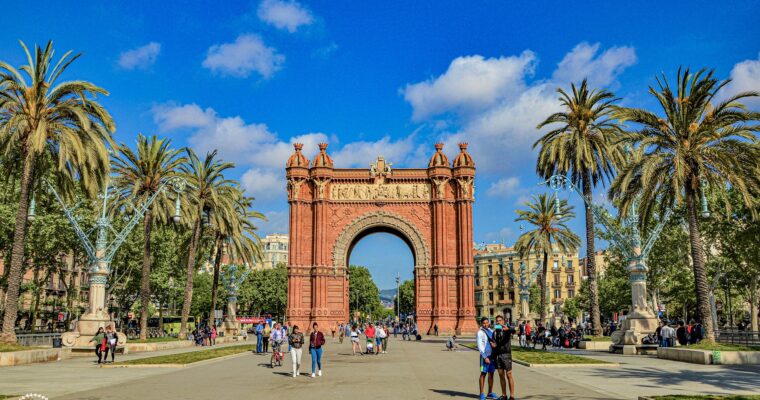
The Arc de Triomf of Barcelona is one of the city’s great monumental landmarks and one of the most important witnesses to the Barcelona that, at the end of the 19th century, was beginning to transform itself into a major European capital. Built in 1888 …
A Masterpiece of Catalan Gothic Architecture, Where History, Art and Spirituality Come Together Barcelona Cathedral, officially known as the Cathedral of the Holy Cross and Saint Eulalia, is one of the most emblematic monuments of the Catalan capital and one of the finest expressions of …
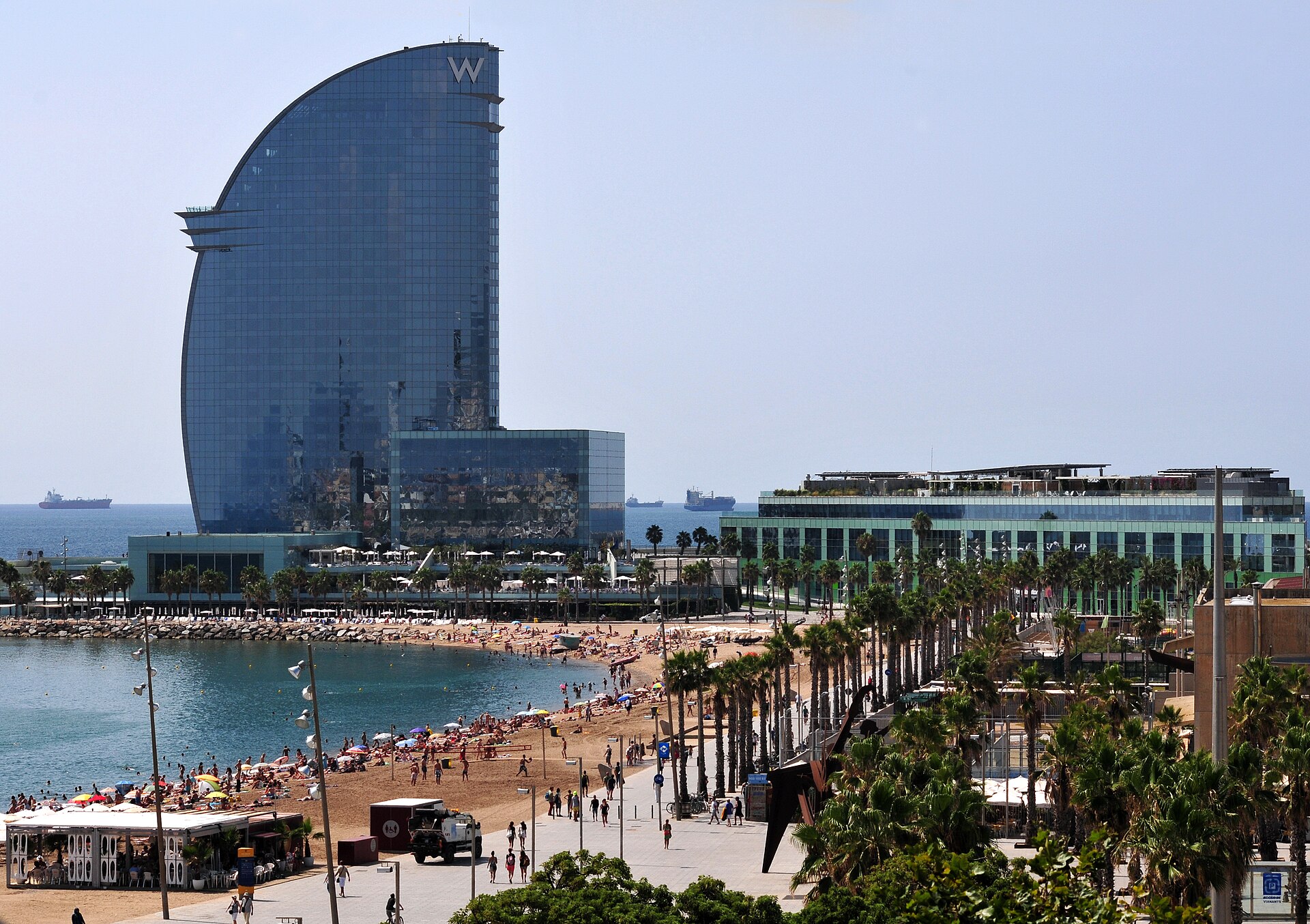
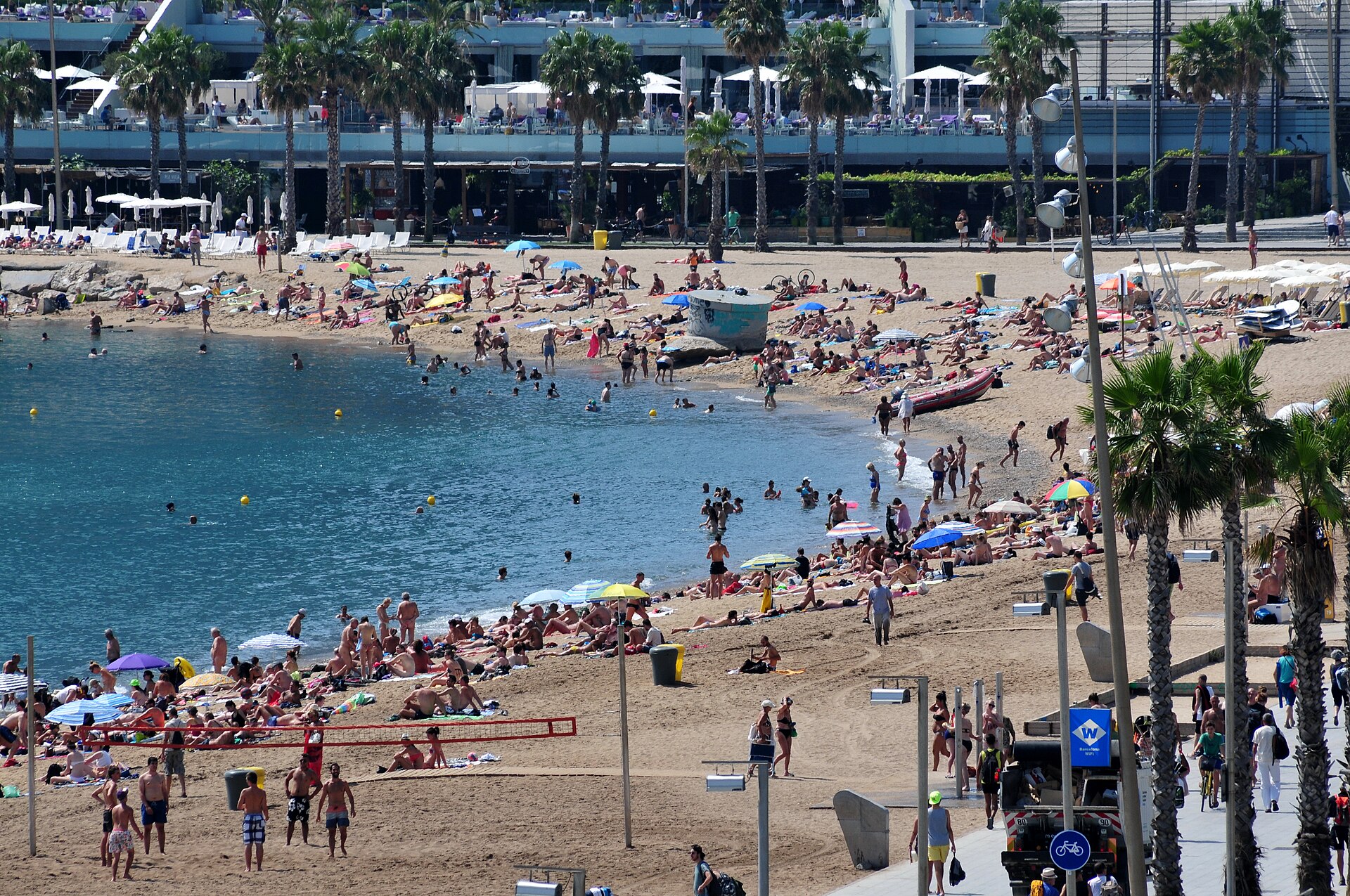
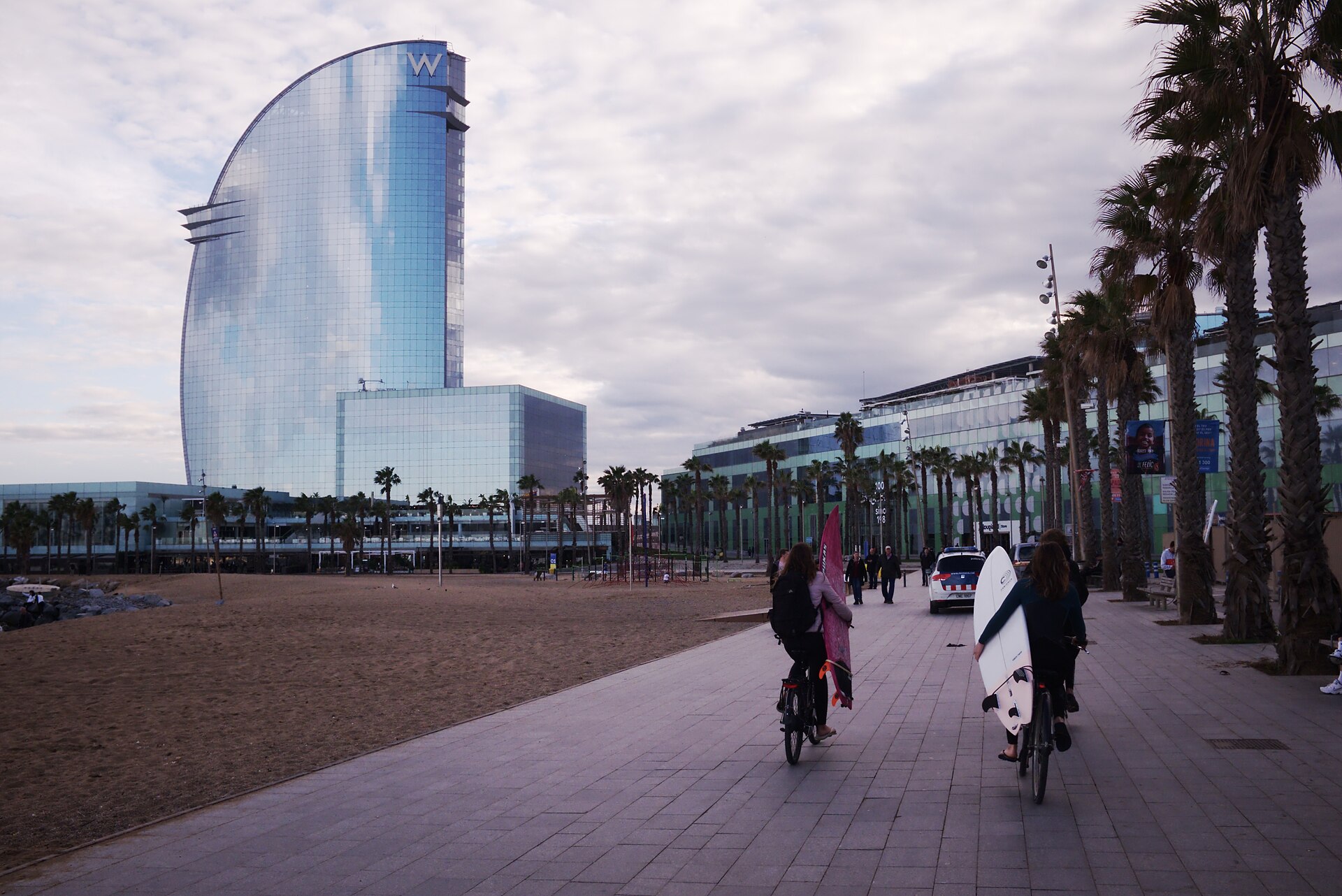
San Sebastián Beach, also known as Platja de Sant Sebastià, is one of the most traditional spots along Barcelona’s coastline. Located at the western end of Barceloneta, next to the port and at the foot of the iconic W Barcelona Hotel, it is a beach with a long-standing connection to the city’s maritime history.
Long before Barcelona became one of the Mediterranean’s major tourist destinations, this area was already a meeting point between the city and the sea. Some of the first establishments dedicated to sea bathing were developed here, and over time the beach became one of the most popular places to enjoy Barcelona’s coastline.
Today, San Sebastián combines tradition with an urban atmosphere. It offers bathing facilities, sports areas, restaurants, promenades and convenient connections with central Barcelona. Its proximity to Barceloneta also makes it easy to combine a visit to the beach with a meal, a walk through the neighborhood or a visit to Port Vell.
If you are planning to visit this beach, below you will find all the information you need.
Where is San Sebastián Beach?
San Sebastián Beach is located in the Ciutat Vella district, in the Barceloneta neighborhood, at the western end of Barcelona’s coastline.
Its official address is Passeig Marítim de la Barceloneta – Oriol Bohigas, 2.
It is the westernmost of Barcelona’s beaches and is located next to Sant Miquel Beach and Barceloneta Beach. Together, they form almost one continuous stretch of sand, making it difficult for many visitors to notice exactly where one beach ends and the next begins.
The beach is approximately 645 meters long and covers more than 32,000 m².
At one of its ends stands the famous W Barcelona Hotel, popularly known as the Hotel Vela because of its distinctive sail-shaped silhouette.
Its location is one of its greatest attractions: from the sand, you can enjoy views of the Mediterranean while, just a few minutes away on foot, you can reach the streets of Barceloneta, Port Vell and some of Barcelona’s main tourist attractions.
A beach with more than a century of history
Barcelona’s relationship with sea bathing began long before the city’s transformation into a major tourist destination during the 20th century.
During the 19th century, various bathing establishments began appearing along the beaches of Barceloneta. These facilities allowed Barcelona residents to get closer to the sea at a time when bathing in open waters was not yet part of everyday life for most of the population.
The bathing establishments were particularly associated with the wealthier classes and offered a combination of bathing, leisure and additional services.
Among the historic bathing establishments in Barceloneta were La Deliciosa, La Sirena, Astillero, Orientales and San Sebastián.
The history of the San Sebastián Baths reached one of its most important moments in 1928, when a large bathing complex designed by architect Antoni Millàs was inaugurated.
The building was inspired by the grand bathing establishments of the French Riviera and offered swimming pools, water slides and various leisure facilities. It also included a café-restaurant, a large ballroom and concert hall, and even a garage.
The baths played an important role in Barcelona’s leisure culture at the time and helped establish this part of the city as one of its main areas associated with the sea.
Over the decades, Barcelona’s urban development completely transformed the coastline. The major redevelopment of the waterfront that began in the 1980s restored the beaches for public use and turned the seafront into one of the city’s most important public spaces.
What is San Sebastián Beach like today?
San Sebastián is a large urban beach that is very popular with both residents and visitors.
Its character is different from that of a natural beach far from the city. Here, the Mediterranean directly meets buildings, sports facilities, restaurants, promenades and the port.
Available facilities include:
Showers and foot-washing stations.
Public toilets.
Accessible toilets.
Access ramps.
A designated bathing area.
Breakwater safety markers.
Information signage.
Lifeguard stations.
Children’s play areas.
Volleyball nets.
Benches and litter bins.
Lifeguard and rescue services.
Environmental information.
Public-address system.
Bicycle parking.
Restaurants and bars.
It is therefore a particularly convenient beach for anyone looking to have a wide range of services within easy reach.
How to get to San Sebastián Beach from central Barcelona
One of San Sebastián’s main advantages is that you do not need a car to get there.
From Plaça de Catalunya
From Plaça de Catalunya, you can head towards Via Laietana and continue in the direction of Barceloneta. From there, walk towards the seafront.
Depending on your exact starting point, the walk can take approximately 25–30 minutes.
From the Gothic Quarter
If you are in the Gothic Quarter, you can head towards Port Vell and continue along the seafront towards Barceloneta.
It is one of the most pleasant routes, particularly at sunset.
By metro
The most convenient metro station for reaching this area is Barceloneta, on Line L4.
From the station, you will need to continue on foot towards the seafront. The route is straightforward and allows you to walk through the Barceloneta neighborhood before reaching the sea.
Another option is to use public transport connections around Port Vell and continue walking.
By bicycle
Barcelona has cycle lanes and bicycle parking facilities around the beaches. San Sebastián Beach itself provides bicycle parking among its services.
For sightseeing, cycling can be particularly convenient if you also want to explore the entire waterfront afterwards.
By car
You can also reach the beach by car, although we would not recommend this option if your sole purpose is to visit the beach.
Barceloneta is a busy area and finding street parking can be difficult, particularly during the summer months.
If you need to use a car, it is preferable to use a parking facility.
Where to park near San Sebastián Beach?
One of the closest options is Saba Bamsa Barceloneta car park, located at Carrer del Baluard, 27.
It has 272 spaces, is open 24 hours a day and provides accessible parking spaces, a lift and electric vehicle charging points. The currently published rate for a car is €4.20 per hour.
Another option is BSM Hospital del Mar car park, with access from Passeig Marítim de la Barceloneta, 23–31. The currently published rate for cars is €3.90 per hour.
There are also other parking facilities around the city center and El Born.
Tip: If you are visiting Barcelona during the high season, planning or locating a parking facility in advance can save you considerable time. For a stay of several hours, public transport is usually more practical and economical than looking for parking close to the waterfront.
Are there restaurants at San Sebastián Beach?
Yes. The area has restaurants, bars and establishments located directly on the beach or just a few meters from the sand.
One of the establishments most directly associated with the beach is La Deliciosa beach bar, located at Passeig de Joan de Borbó, 81, practically on San Sebastián Beach.
Its menu includes tapas, Mediterranean cuisine and dishes designed for sharing. Some prices include:
Mediterranean gilda: €3.
Cantabrian anchovies: €6.50.
Coca bread: €4.50.
Croquettes: €12.
Calamari: €16.50.
Prawns: €15.50.
Salads: around €16.
Burgers: €18.
Desserts: approximately €6.50–8.
Cocktails: around €15.
Its current opening hours are approximately 10:00 a.m. to 10:00 p.m. every day, although it is always advisable to confirm the opening hours before visiting, particularly outside the high season.
If you are looking for a more affordable option or would prefer to move a few minutes away from the sand, Barceloneta offers a wide range of Mediterranean restaurants, tapas bars and seafood restaurants.
For example, Mesón Barceloneta, on Passeig de Joan de Borbó, offers Mediterranean cuisine and is open from Wednesday to Sunday.
You can also find options such as Mar Beach Restaurant Bar, in Plaça del Mar, which combines dining with a beach atmosphere, or Arenal Restaurante, located on Passeig Marítim.
For a more casual meal and a moderate budget, La Deliciosa allows you to eat tapas and sharing dishes. For a full meal directly by the sea, the budget can be considerably higher.
How much does it cost to eat?
As a general guide, you can expect to spend:
Budget meal: €15–25 per person.
Mediterranean meal with several dishes: €25–40 per person.
Seafront meal with drinks, starters and main courses: €35–50 or more per person.
At establishments located directly opposite the beach, the views and location can increase the price.
Are the restaurants open all year round?
The Barceloneta area remains active throughout the twelve months of the year, so you will find restaurants open outside the summer season as well.
However, it is important to distinguish between permanent restaurants in the neighborhood and seasonal beach bars or establishments located directly on the sand.
These seasonal businesses may have different opening calendars and hours depending on the time of year.
Therefore, if you visit the beach in autumn or winter, it is best to check the opening hours of your chosen establishment in advance.
Is San Sebastián Beach a nudist beach?
The answer requires a small clarification.
San Sebastián is not an exclusively nudist beach, but the area closest to the W Barcelona Hotel has traditionally been frequented by people who practice nudism.
If you prefer a conventional bathing environment, you can use the areas closer to Barceloneta.
If you practice nudism, however, you should be aware that this is an area integrated into an urban beach rather than an isolated naturist beach.
Is smoking allowed on the beach?
No.
Barcelona’s beaches are smoke-free areas, and smoking on the beach has been prohibited since July 30, 2022. The regulations provide an exception for the areas occupied by seasonal beach bars, known as guinguetes.
The measure aims particularly to reduce cigarette-butt litter and improve the environmental quality of the coastline.
Are dogs allowed?
San Sebastián Beach is not Barcelona’s designated dog-friendly beach.
The city provides a specific dog area at Llevant Beach during the period and under the conditions established by the City Council.
Therefore, if you are travelling with your pet, it is important to check the current regulations in advance and not assume that dogs can freely access Sant Sebastià.
Is the beach accessible?
Yes.
Barcelona’s beaches have various accessibility measures, and San Sebastián offers access ramps, adapted showers and accessible toilets.
The municipal network also provides reserved parking spaces and accessible routes from the parking area to the dry beach. Wooden walkways allow visitors to get closer to the water.
In addition, during the bathing season, assistance services are available for people with disabilities and diverse functional needs.
The availability of specific resources may depend on the season and service hours.
What wildlife can be found at San Sebastián Beach?
Although this is a completely urban beach, the Mediterranean waters surrounding Barcelona are home to a notable variety of marine life.
In the coastal waters, you may encounter small fish, mollusks, crustaceans and different organisms associated with the seabed.
Barcelona’s beaches have also been used for marine biodiversity monitoring and educational projects. Species have been documented at Sant Sebastià Beach through marine wildlife observation initiatives.
Coastal fish such as white seabream and mullet can be found along Barcelona’s coastline, together with small crustaceans and other invertebrates.
Jellyfish may also appear, particularly during certain periods of the year.
Their presence depends on currents, wind, temperature and Mediterranean conditions, so it is impossible to predict whether jellyfish will be present on a particular day.
If you notice a concentration of jellyfish, the safest option is to check the beach signage and follow the lifeguards’ instructions.
Water quality
The sanitary quality of Barcelona’s beach water is monitored.
Between April and September, the Barcelona Public Health Agency carries out weekly sampling of bathing water and sand at the city’s ten beaches, including Sant Sebastià.
This allows different parameters related to water quality to be monitored and possible incidents to be detected.
Water quality can change following periods of heavy rain or other circumstances, so it is always advisable to check the latest conditions before swimming.
Which flag does the beach have?
The bathing flag is not fixed throughout the year.
Its color depends on sea conditions and the safety recommendations at the time:
Green flag: swimming permitted and favorable conditions.
Yellow flag: swimming with caution.
Red flag: swimming prohibited.
For this reason, it would not be correct to state that San Sebastián permanently has a particular flag.
The best option is to check the signage displayed at the beach before entering the water.
You can also check the latest information about Barcelona’s beaches.
Does San Sebastián Beach have a Blue Flag?
This is another point where it is important not to confuse different concepts.
The Metropolitan Area of Barcelona provides information about Sant Sebastià’s services, facilities and characteristics, while Barcelona Sostenible currently indicates “Blue Flag: No” for this beach.
Therefore, San Sebastián should not be described as a Blue Flag beach without specifying the relevant year and award.
Can you visit the beach all year round?
Yes.
The beach itself, as a public space, can be enjoyed throughout the year. What changes depending on the season is the range of services available.
During the bathing season, lifeguard services, information, cleaning, showers, sun loungers, umbrellas and seasonal establishments are expanded.
Outside the summer months, the beach remains a pleasant place to walk, exercise, enjoy the sea or visit the restaurants in Barceloneta.
A sign that Sant Sebastià remains active even in winter is the traditional First Swim of the Year, organized by Club Natació Atlètic-Barceloneta every January 1. In 2026, the event celebrated its 27th edition.
What can you do near San Sebastián Beach?
A visit to Sant Sebastià can easily be combined with other iconic places in Barcelona.
Barceloneta
The old fishing neighborhood is perfect for walking through its narrow streets, discovering small shops and relaxing at one of its terraces.
Port Vell
From the beach, you can walk towards Port Vell and continue along the waterfront to Maremagnum.
Sant Sebastià Tower
Nearby is the historic tower associated with Barcelona’s former aerial transport system over the port.
The Port Cable Car departs from this area, connecting the port surroundings with Montjuïc and offering one of Barcelona’s most interesting panoramic views.
W Barcelona Hotel
The building, popularly known as the Hotel Vela, has become one of the architectural icons of Barcelona’s coastline.
Its presence visually marks one end of the beach.
Sports clubs
San Sebastián also maintains an important sporting tradition linked to the sea.
Nearby are Club Natació Atlètic-Barceloneta and Club Natació Barcelona, both of which offer sports facilities and activities related to swimming and water sports.
What is the best time to visit San Sebastián Beach?
It depends on the type of experience you are looking for.
Spring
A pleasant time for walking, having a drink on a terrace and enjoying the coastline without the heavy crowds of summer.
Summer
The ideal time if your main goal is swimming and enjoying all the beach services, although this is also the busiest season.
Autumn
The weather is often still pleasant and visitor numbers decrease. It is a good season for combining the beach with gastronomy.
Winter
Although temperatures do not always allow for swimming, the beach remains an excellent place to walk beside the Mediterranean, take photographs and discover Barceloneta from a different perspective.
San Sebastián Beach: Barcelona’s Most Historic Mediterranean Shore
San Sebastián Beach represents one of the oldest connections between Barcelona and the Mediterranean.
This is where sea bathing began to become popular, where some of the city’s great bathing establishments were built, and where much of the maritime and sporting tradition that still characterizes Barceloneta developed.
Today, more than a century later, the setting is very different, but the essence remains.
The sea is still the main attraction, now accompanied by the seafront promenade, sports clubs, restaurants, the W Barcelona Hotel and the everyday life of one of Barcelona’s best-known neighborhoods.
For this reason, Sant Sebastià is more than just an urban beach. It is a place where Barcelona’s maritime history, Barceloneta’s local life and the Mediterranean come together.
A visit can begin with a swim, continue with a walk through the old fishing neighborhood and end with a Mediterranean meal overlooking the sea.
Playa de San Sebastián – By Ralf Roletschek – Own work, GFDL 1.2, https://commons.wikimedia.org/w/index.php?curid=34883111.
Playa de San Sebastián – By Nicolas Vigier from Spain – Barcelona, CC0, https://commons.wikimedia.org/w/index.php?curid=132065451.
Casa Batlló is one of the masterpieces of Antoni Gaudí and one of Barcelona’s most famous buildings. Located on Passeig de Gràcia, in the heart of the Eixample district, this extraordinary building is one of the great landmarks of Catalan Modernism and forms part of …
The Jardins de Vil·la Amèlia (Vil·la Amèlia Gardens) are one of those green spaces in Barcelona that can easily go unnoticed by many visitors, despite being located in one of the city’s most elegant neighbourhoods. Situated in Sarrià-Sant Gervasi, these gardens preserve part of the …