Route guide for visitors throughout Catalonia – Barcelona – Costa Brava – Catalan Pyrenees – Personalized experiences – Customized tour guide services – A small tribute to the wonderful city and land that saw us born – Transforming experiences into unforgettable memories - Magic Dreams Collection: exclusive universes inspired by Salvador Dalí and Gaudí. Niche perfumes, jewelry, lithographs, and collectible items celebrating the Mediterranean spirit.
The summit of Barcelona where history, nature and entertainment come together Tibidabo, the highest part of the city of Barcelona, stands at 575 metres above sea level, offering an incomparable perspective of the city, the Mediterranean Sea and the surrounding hills. This remarkable place combines …
An iconic promenade between two of Barcelona’s landmarks Avinguda Gaudí is one of Barcelona’s most distinctive, elegant, and harmonious promenades. Located in the Eixample district, this pedestrian avenue connects two of the great masterpieces of Catalan Modernism: the Sagrada Família and the Hospital de Sant …
La Barceloneta is one of Barcelona’s most iconic and evocative neighbourhoods. Located in the Ciutat Vella district, this former fishing quarter retains a unique identity shaped by the Mediterranean, fishing traditions and the urban evolution of a city that has always found one of its defining characteristics in the sea.
With its distinctive triangular shape, La Barceloneta stretches between Port Vell, the Mediterranean coastline and the Port Olímpic area. Its narrow, straight streets, traditional buildings, squares and beaches create a singular urban landscape where everyday life coexists with historical heritage and the cosmopolitan energy of Barcelona.
The beaches of Barceloneta, Sant Sebastià, Sant Miquel and Somorrostro are all part of this privileged setting, where the blue horizon, architecture and maritime culture merge into a single experience. Here, the city opens itself to the sea and reveals one of its most authentic sides: welcoming, luminous and deeply Mediterranean.
The Origins and History of a Neighbourhood with a Maritime Soul
Until the mid-18th century, the area now occupied by La Barceloneta was virtually uninhabited. Its history is closely linked to the military and urban transformations Barcelona underwent following the War of the Spanish Succession. After the construction of the military Citadel, ordered by Philip V, many residents of the La Ribera neighbourhood lost their homes and needed somewhere new to settle.
La Barceloneta was created in response to this need. From 1753 onwards, a new urban settlement began to develop on land reclaimed from the sea, around the former area of Maians Island. The project was conceived according to the principles of Enlightenment urban planning, with a regular layout of straight streets and orderly blocks adapted to the requirements of the period.
The first homes were modest, small in size and designed for a working-class population. Fishermen, sailors, merchants and artisans found a place here to live and practise their trades. Over time, the neighbourhood’s proximity to the port also encouraged the development of shipbuilding, metalworking and maritime commerce.
The original urban layout remains one of La Barceloneta’s most distinctive features. As you walk through its streets, you can still discover former fishermen’s houses, simple façades, narrow balconies and buildings that preserve the human scale of a neighbourhood originally designed for a community closely connected to the sea.
During the 19th and 20th centuries, population growth and urban development gradually transformed the residential fabric. Many of the original homes were subdivided to accommodate more residents, a reality that explains the presence of the well-known quarts de pis, small dwellings that form part of the neighbourhood’s architectural and social memory.
Nevertheless, La Barceloneta has managed to maintain its own personality, even through the major transformations associated with Barcelona’s preparations for the 1992 Olympic Games. The redevelopment of the coastline, improvements to public spaces and the opening of new areas beside the sea restored prominence to the city’s waterfront and established La Barceloneta as one of its main meeting places.
The Seafront Promenade: A Boulevard Between City and Sea
Today, the Barceloneta Seafront Promenade is one of the most vibrant and representative spaces along Barcelona’s coastline. Its pedestrian walkways, cycle lanes, terraces and open views of the horizon allow visitors to enjoy the Mediterranean from different perspectives, whether through a leisurely stroll, a sporting activity or a gastronomic experience by the water.
At dawn, runners and cyclists make their way along the coast as the first light illuminates the façades and the surface of the sea. During the day, the beaches become gathering places for residents and visitors alike. At sunset, golden hues transform the landscape, while the sea breeze invites people to pause and contemplate the horizon.
Life along the promenade extends into its restaurants, bars and beach bars, where Mediterranean cuisine takes centre stage. Fish, seafood, rice dishes and tapas are all part of a culinary tradition closely connected to the maritime environment. Beyond its gastronomic offerings, this area reflects Barcelona’s ability to integrate leisure, sport and culture into its everyday relationship with the sea.
One of the coastline’s most distinctive artistic landmarks is El Peix, the monumental golden sculpture designed by Frank Gehry for the Port Olímpic area. Its metallic structure changes colour depending on the light, evoking the movement of a fish and becoming one of the most recognisable images of contemporary Barcelona.
This artistic landmark symbolises the city’s transformation and the dialogue between architecture, design and landscape. Just a few minutes from the historic neighbourhood, the waterfront offers a complementary perspective on Barcelona: a city that preserves its memory while continually reinventing its spaces.
The Beaches of La Barceloneta: Four Ways to Experience the Mediterranean
The beaches are an inseparable part of this neighbourhood’s identity. Each has its own atmosphere and offers a different way to discover Barcelona’s relationship with the sea.
Barceloneta Beach is one of the city’s best-known and busiest beaches. Its proximity to the historic centre and lively atmosphere make it a popular place for walking, exercising, sunbathing or enjoying a meal overlooking the Mediterranean. Its image is closely intertwined with everyday life in Barcelona.
Sant Sebastià Beach, located at the western end of the urban coastline, is renowned for its long bathing tradition. At the beginning of the 20th century, sea bathing became an increasingly popular leisure activity in Barcelona, initially associated with certain social groups. The beach retains its historical connection with bathing culture and nautical activities.
Sant Miquel Beach takes its name from the Church of Sant Miquel del Port, one of the neighbourhood’s most important historic buildings. Located between Sant Sebastià and Barceloneta beaches, it offers a direct connection between the urban heritage and the coastal landscape.
Somorrostro Beach holds a particularly significant place in the city’s collective memory. Until the mid-20th century, this stretch of coastline was home to a shantytown where thousands of people lived in conditions of extreme hardship. Carmen Amaya, one of the most internationally celebrated figures in flamenco, was born there. The restoration of the name Somorrostro represents a tribute to the history of that community and to Barcelona’s social memory.
Despite their differences, these beaches share one essential characteristic: they are deeply integrated into the life of the city. They are places for relaxation and socialising, but also settings in which to understand Barcelona’s evolution and its relationship with the Mediterranean.
Sant Miquel del Port: The Spiritual Heart of La Barceloneta
Located in Plaça de la Barceloneta, the Church of Sant Miquel del Port is one of the landmarks that best represents the neighbourhood and is essential to understanding its origins.
Construction began in 1753, and the church was completed in 1755 under the direction of military engineer Pedro Martín Cermeño. It was designed to meet the spiritual needs of the new community and quickly became a focal point of religious and social life in La Barceloneta.
Its Baroque façade is arranged into several architectural sections and orders, creating a sober and balanced composition. The central section features a statue of Saint Michael the Archangel. The current sculpture, created by artist Emili Colom, was installed in 1992 to replace the original, which was destroyed during the Spanish Civil War.
The interior retains an architecturally interesting layout organised around a centralised plan and a dome that encourages natural light to enter the space. The interplay of geometry, illumination and restrained ornamentation creates an intimate atmosphere, contrasting with the lively streets and seafront promenade outside.
The church’s history also reflects the neighbourhood’s own challenges. During the Spanish Civil War, it suffered damage and lost artistic and monumental elements. Its subsequent restoration helped preserve an essential part of La Barceloneta’s historical heritage.
Visiting Sant Miquel del Port means connecting with the memory of a community that has built its identity around work, coexistence and the sea since the 18th century. Its presence in the square reminds us that, before becoming one of Barcelona’s most popular destinations, La Barceloneta was, above all, a neighbourhood of residents.
Tradition and Contemporary Life
La Barceloneta is much more than a place from which to admire the sea. It is also a lived-in neighbourhood, where everyday life continues to unfold among its streets, markets, small shops and restaurants.
Its maritime character can be felt in the proximity of the port, its culinary culture and the memory of occupations connected with fishing. Although maritime activities have evolved and fishing operations are now concentrated in specific port facilities, the historical relationship between the neighbourhood and the sea remains central to its identity.
Walking through its streets reveals a more intimate side of Barcelona: laundry hanging from balconies, neighbours chatting in squares, simple façades and small local businesses coexisting with newer gastronomic venues. This blend of tradition and modernity is part of La Barceloneta’s charm, but it also highlights the importance of preserving its residential character in the face of tourism pressure and urban change.
Among the places that enrich the surrounding area are the Church of Sant Miquel del Port, La Barceloneta Market and the cultural spaces located along the waterfront. Nearby, the Museu d’Història de Catalunya offers a broad perspective on the historical evolution of Catalonia, while Barcelona Aquarium is dedicated to marine life and the study and conservation of aquatic ecosystems.
The nearby Sea Campus of Pompeu Fabra University also deserves attention, strengthening the presence of scientific research and knowledge in this part of the city.
The variety of these places allows visitors to discover La Barceloneta from multiple perspectives: historical, architectural, gastronomic, scientific and cultural. Every route reveals another layer of its identity and demonstrates that its appeal extends far beyond the beach.
Maritime Gastronomy: Flavours That Tell Stories
La Barceloneta’s cuisine is an essential part of its cultural heritage. For generations, the proximity of the port and fishing activities have influenced the neighbourhood’s culinary traditions, with fish, seafood and rice dishes taking centre stage.
Among the preparations most closely associated with maritime tradition are seafood rice dishes, fideuà—a noodle-based dish similar to paella—grilled fish and stews that capture the flavours of the Mediterranean. Tapas, preserves and simple preparations complete a gastronomic offering that combines traditional home cooking with contemporary interpretations.
The experience is about more than the food itself; it is also about the setting: a terrace overlooking the sea, a table on a quiet street or a restaurant where seasonal, locally sourced ingredients are showcased.
To discover this side of the neighbourhood, it is worth alternating between the establishments along the seafront and the smaller restaurants tucked away in the inner streets. This makes it possible to appreciate the different ways Barcelona’s culinary traditions are interpreted, from familiar recipes to contemporary creations featuring modern techniques and imaginative presentation.
In this way, gastronomy becomes a means of connecting with local history. Every recipe tells a story about the surroundings, the ingredients available and a culture that has transformed its relationship with the sea into an expression of identity.
Restaurante Salamanca: Maritime Tradition and Mediterranean Flavours by the Sea
In the heart of La Barceloneta, just a few steps from the beach, Restaurante Salamanca is one of those establishments that form part of Barcelona’s gastronomic heritage. Founded in 1969 by Silvestre Sánchez, it began as a modest bar and traditional eatery in premises known as Can Rosith. Originally from Salamanca, its founder wanted to pay tribute to his homeland by naming the restaurant after his native city. Over the years, the family business grew into a recognised destination for Mediterranean and seafood cuisine, maintaining a philosophy centred on quality ingredients, generous portions and warm, personal service.
Its gastronomic offering combines Mediterranean flavours with Castilian specialities. Highlights include seafood paella, traditional seafood rice dishes, fresh fish and seafood platters, alongside a selection of Iberian cured hams and cold cuts from Salamanca and quality meat dishes. This combination makes it an appealing choice for a traditional meal by the sea, a family celebration or a special group gathering.
The menu offers options for different tastes and budgets. As a guide, seafood paella is priced at €17.95 per person. For those seeking a more comprehensive dining experience, the restaurant offers group menus costing approximately €55.50 to €80 per person, depending on the selection. These menus are subject to group booking conditions, so it is advisable to confirm the available options before making a reservation.
Another attraction is its location at 34 Carrer de Pepe Rubianes, in the heart of La Barceloneta and close to the seafront promenade. The atmosphere is cosmopolitan, with a terrace and several dining rooms where guests can enjoy a relaxed meal after exploring the neighbourhood or strolling along the Mediterranean.
The restaurant also offers a particularly convenient service for visitors arriving by car: a valet parking service operated by its own staff. It also advertises one hour of complimentary parking and a voucher for one free hour at the SABA car park located at 27 Carrer del Baluard. To benefit from these options, guests must request the relevant ticket or voucher at the restaurant. The SABA parking promotion is subject to conditions and does not apply to the daily set menus.
Restaurante Salamanca ultimately represents a distinctly Barcelona approach to dining: seafood, traditional recipes, hospitality and a long history connected to the evolution of La Barceloneta. It is an appealing choice for anyone wishing to round off a visit to the neighbourhood with a traditional culinary experience in a setting where the Mediterranean remains the main attraction.
A Walking Route to Discover the Most Authentic Side of La Barceloneta
The best way to get to know La Barceloneta is to explore it at a leisurely pace, combining a walk through its inner streets with visits to its squares, architectural heritage and coastline.
A suggested route can begin in Plaça de la Barceloneta, beside the Church of Sant Miquel del Port, before continuing through the traditional streets to observe the 18th-century urban layout. From there, the walk can lead towards the market and dining areas, where the neighbourhood’s everyday life reveals itself in small details.
The walk can then continue to the seafront promenade and beaches, following the coastline and stopping at viewpoints that offer the best views of the Mediterranean. Depending on the pace and available time, it is also possible to include the Port Vell area, the Museu d’Història de Catalunya or Port Olímpic.
At dawn, the neighbourhood offers a peaceful atmosphere and particularly soft light. By mid-morning, the streets and terraces begin to fill with activity. In the late afternoon, the seafront becomes a privileged setting for watching the sunset and observing how the landscape changes as night falls.
Each time of day reveals a different Barceloneta: one shaped by heritage and memory, another by gastronomy and social life, and another by the quiet beauty of the sea.
Magic Dreams Barcelona: Exclusive Experiences to Embrace the Essence of the Mediterranean
At Magic Dreams Barcelona, we transform visits to La Barceloneta and the rest of the city into intimate, sensory and deeply emotional experiences, designed for those who wish to discover Barcelona beyond the obvious.
Our philosophy is to connect visitors with the essence of each place, bringing together history, architecture, culture, nature and gastronomy through personalised, carefully designed experiences.
Our exclusive services include:
Private, personalised tours of La Barceloneta, Port Vell and Barcelona’s coastline, accompanied by native guides specialising in history, architecture, art and symbolism.
Sensory experiences by the sea, featuring live music, Mediterranean scents, selected readings and bespoke gastronomic offerings designed to create memorable moments.
Signature picnics and personalised dining experiences on selected beaches, in urban gardens or at private venues, featuring high-quality products and a choice of beverages, including non-alcoholic wines and cavas.
Nature and urban biodiversity tours, accompanied by specialists in botany and ornithology, to discover the ecological richness of the coastline and its surroundings.
Professional photography sessions, designed to capture every experience and turn travel memories into lasting images.
Creative and wellbeing workshops, ranging from introductions to traditional Catalan cuisine to artistic experiences inspired by trencadís mosaic and Gaudí’s creative universe.
Exclusive gastronomic tours of Barcelona, combining traditional recipes, local produce and innovative culinary creations.
Private one-day or multi-day escapes to the Costa Brava and the Catalan Pyrenees, discovering other landscapes and cultural expressions of Catalonia.
Elegant accommodation and premium experiences in the heart of the city, tailored to each visitor’s style and preferences.
Every experience with Magic Dreams Barcelona is a carefully curated journey in which every detail matters, allowing the city to be felt, understood and remembered.
La Barceloneta embodies this philosophy exceptionally well. Its heritage, gastronomy and landscape provide the perfect setting for experiences that go beyond conventional itineraries and invite visitors to establish a personal connection with Barcelona.
La Barceloneta: A Way to Understand Barcelona
La Barceloneta is much more than one of the city’s best-known seaside neighbourhoods. It bears witness to a history of transformation, a community that has built its identity beside the Mediterranean and a Barcelona that has learned to open itself to the world without entirely losing its roots.
Its streets bring together traces of 18th-century urban planning, the memory of fishermen, religious architecture, the flavours of maritime cuisine and the energy of a contemporary city that regards its waterfront as one of its most treasured spaces.
Its true essence emerges when you look beyond the familiar images: in the details of a façade, the stillness of a square, the light reflected on the water or the conversation shared over a meal beside the sea.
At Magic Dreams Barcelona, La Barceloneta is one of our most cherished settings. It is a place where history merges with the senses, where heritage is discovered through experience and where the Mediterranean reminds us that travelling also means pausing, observing and connecting.
Because in La Barceloneta, Barcelona expresses one of its most authentic essences: a city open to the sea, proud of its history and always ready to offer new ways of experiencing it.
Hidden among the gentle slopes of the Sarrià-Sant Gervasi neighborhood, the Jardins de la Tamarita represent one of the most elegant and tranquil green spaces in Barcelona. Far from the urban bustle, these gardens invite visitors to discover a universe where landscape architecture, Mediterranean botany, …
A Walk Through Port History and the Mediterranean The Moll de la Fusta is one of the most emblematic spaces along Barcelona’s waterfront. Located opposite the historic city centre, next to Port Vell, this promenade represents much more than a pleasant area by the sea. …
Un paseo entre la historia portuaria y el Mediterráneo
El Moll de la Fusta es uno de los espacios más emblemáticos del litoral de Barcelona.
Situado frente al centro histórico, junto al Port Vell, este paseo representa mucho más que una agradable zona junto al mar.
Es el resultado de una de las grandes transformaciones urbanas de la Barcelona contemporánea.
Durante siglos, este lugar estuvo estrechamente vinculado a la actividad portuaria, al comercio y al movimiento de mercancías.
Hoy es un espacio abierto al ciudadano donde conviven el Mediterráneo, la arquitectura, la gastronomía, la cultura y la vida urbana.
Caminar por el Moll de la Fusta significa recorrer una parte fundamental de la historia de Barcelona.
Es contemplar el lugar donde la ciudad volvió a mirar hacia el mar.
Y también comprender cómo Barcelona consiguió transformar un antiguo espacio portuario en un nuevo paisaje urbano.
¿Qué es el Moll de la Fusta?
El antiguo muelle de Bosch i Alsina
El nombre oficial del espacio es Moll de Bosch i Alsina, aunque prácticamente todo el mundo lo conoce como Moll de la Fusta.
El sobrenombre está relacionado con la actividad que históricamente tuvo esta zona, vinculada al almacenamiento y distribución de madera.
El muelle forma parte del histórico Port Vell, el antiguo puerto de Barcelona.
Actualmente, el espacio constituye uno de los puntos más integrados entre la ciudad y el mar.
Palmeras, paseos, terrazas, embarcaciones y grandes perspectivas hacia el Mediterráneo crean un paisaje urbano muy diferente del que existía hace apenas unas décadas.
Los orígenes marítimos de Barcelona
Una ciudad que nació mirando al Mediterráneo
La relación entre Barcelona y el mar es mucho más antigua que el actual paseo.
La zona del actual Port Vell está situada en el entorno del antiguo puerto de la ciudad romana.
El litoral fue durante siglos un espacio fundamental para el comercio y para la actividad económica de Barcelona.
La evolución del puerto acompañó el crecimiento de la ciudad.
Con el desarrollo comercial e industrial de los siglos XVIII, XIX y XX, las instalaciones portuarias fueron adquiriendo cada vez mayor importancia.
Muelles, almacenes, tinglados, vías ferroviarias y áreas de carga ocuparon progresivamente este frente marítimo.
Durante mucho tiempo, el puerto fue principalmente un espacio de trabajo.
El ciudadano estaba físicamente cerca del mar, pero no necesariamente podía disfrutar de él.
Esta separación entre ciudad y puerto cambiaría radicalmente durante las últimas décadas del siglo XX.
El Moll de la Fusta antes de su transformación
Cuando el puerto era un lugar de trabajo
Durante buena parte del siglo XX, el área que hoy conocemos como Moll de la Fusta tenía una imagen completamente diferente.
Los grandes tinglados portuarios ocupaban buena parte del espacio.
El movimiento de mercancías, el transporte ferroviario y la actividad industrial definían el paisaje.
Hasta los primeros años de la década de 1980, el acceso ciudadano estaba muy limitado.
Los antiguos tinglados fueron desapareciendo progresivamente durante los años sesenta, pero el espacio portuario continuó separado de la vida urbana.
La transformación posterior tendría por objetivo precisamente romper esta barrera.
No se trataba solamente de embellecer el puerto.
Se trataba de devolver el mar a la ciudad.
1981: Barcelona vuelve a abrirse al mar
El inicio de una nueva relación entre ciudad y puerto
Uno de los momentos decisivos llegó en 1981.
Con motivo de la celebración del Día de las Fuerzas Armadas, el Puerto Autónomo permitió el acceso de los ciudadanos al muelle de Bosch i Alsina.
Era la primera vez en más de setenta años que el puerto se abría de esta manera a la ciudad.
Aquel gesto tuvo una importancia mucho mayor de la que podría parecer.
Barcelona empezaba a recuperar físicamente su relación con el Mediterráneo.
El puerto dejaba de ser exclusivamente un espacio de actividad económica y empezaba a convertirse también en un espacio ciudadano.
Al año siguiente, el puerto y el Ayuntamiento encargaron al arquitecto Manuel de Solà-Morales un proyecto de ordenación del muelle y de su entorno urbano.
El proyecto también contemplaba la reorganización del tráfico del paseo de Colón.
Manuel de Solà-Morales y la nueva imagen del Moll de la Fusta
Arquitectura para volver a mirar al mar
El proyecto de Manuel de Solà-Morales fue mucho más que una intervención estética.
La idea era crear un nuevo espacio público junto al agua y, al mismo tiempo, resolver la compleja relación entre el puerto, el tráfico y el centro histórico.
Las obras se desarrollaron entre 1983 y 1985.
El resultado fue un paseo abierto junto al mar, acompañado por palmeras y conectado visualmente con la ciudad.
La intervención se convirtió en uno de los primeros grandes ejemplos de recuperación urbana del litoral barcelonés.
El proyecto del Moll de la Fusta está considerado uno de los puntos de partida de la posterior transformación del Port Vell.
La gran transformación olímpica
Barcelona 1992 cambia la relación con el mar
La candidatura y posterior designación de Barcelona como sede de los Juegos Olímpicos de 1992 aceleraron un proceso de transformación urbana que ya había comenzado.
La ciudad necesitaba recuperar espacios degradados, mejorar sus infraestructuras y proyectarse hacia el Mediterráneo.
El Moll de la Fusta se convirtió en una pieza fundamental de este proceso.
La experiencia de recuperar el muelle ayudó a impulsar una transformación mucho más amplia del Port Vell.
En 1988 se creó la Gerencia Urbanística Port 2000 y, al año siguiente, se aprobó el Plan Especial del Port Vell.
El objetivo era mantener el carácter portuario de la zona, pero introducir nuevos usos comerciales, turísticos, culturales y ciudadanos.
El Moll de la Fusta había demostrado que era posible.
Del puerto industrial al Port Vell
Una nueva forma de entender el litoral
La transformación del Moll de la Fusta no fue un proyecto aislado.
Formó parte de una estrategia mucho más amplia para recuperar el antiguo puerto.
En su entorno se iniciaron nuevos espacios urbanos y equipamientos.
El Moll d’Espanya incorporó nuevos usos comerciales y de ocio.
La Rambla de Mar creó una nueva conexión peatonal sobre el agua.
El Maremagnum se convirtió en uno de los nuevos polos de actividad.
El Aquarium de Barcelona añadió una dimensión educativa y turística.
En el Moll de Barcelona, el World Trade Center reforzó la relación entre el puerto y la actividad empresarial internacional.
Barcelona estaba construyendo un nuevo frente marítimo.
El Moll de la Fusta y los Juegos Olímpicos
El mar como escenario de la nueva Barcelona
Los Juegos Olímpicos de 1992 consolidaron la transformación del litoral.
La renovación no se limitó al Port Vell.
Barcelona creó nuevas playas, recuperó espacios industriales y desarrolló el Puerto Olímpico y otras zonas del frente marítimo.
El resultado fue una nueva geografía urbana.
La ciudad que durante décadas había dado la espalda al mar empezó a utilizar el litoral como uno de sus principales espacios públicos.
El Moll de la Fusta fue uno de los primeros capítulos de esta transformación.
Los famosos chiringuitos del Moll de la Fusta
Una nueva vida junto al mar
La transformación también tuvo una dimensión gastronómica y social.
En la década de 1980 se construyeron cinco pequeños establecimientos sobre el paseo.
El Ayuntamiento convocó en 1987 un concurso para adjudicar estos espacios, concebidos como nuevos locales de restauración.
Entre las propuestas había una champañería, un restaurante, una croissanterie, una cervecería y una marisquería.
Los establecimientos empezaron a funcionar en 1988.
Aquellos locales se convirtieron rápidamente en parte de la nueva imagen del Moll de la Fusta.
Barcelona descubría una nueva forma de disfrutar del puerto.
La gastronomía, las terrazas, la arquitectura y las vistas al mar empezaban a formar parte de la experiencia urbana.
La famosa gamba de Barcelona
Una escultura convertida en icono
Entre los elementos más recordados de aquella época está la famosa Gamba diseñada por Javier Mariscal.
La escultura coronaba el restaurante Gambrinus y se convirtió rápidamente en uno de los símbolos populares del nuevo litoral barcelonés.
La enorme figura de la gamba pertenece al recuerdo visual de la Barcelona preolímpica y olímpica.
Su estética desenfadada encajaba perfectamente con la nueva imagen internacional que la ciudad estaba construyendo.
La escultura continúa siendo uno de los elementos más destacados asociados al Moll de la Fusta y al paisaje del Port Vell.
Una transformación que no fue perfecta
La evolución de un espacio urbano
La historia del Moll de la Fusta también demuestra que las grandes transformaciones urbanas necesitan tiempo.
El proyecto inicial pretendía convertir el espacio en una gran zona de paseo, ocio y restauración.
Sin embargo, durante los años posteriores aparecieron diferentes problemas relacionados con los usos nocturnos, los establecimientos y la relación entre el paseo y las grandes infraestructuras viarias.
Durante un tiempo, el espacio perdió parte del protagonismo que había tenido inicialmente.
La apertura de nuevos equipamientos en otras zonas del Port Vell también modificó los flujos de visitantes.
La ciudad volvió a intervenir.
Una nueva reforma
Más sombra, más vegetación y más espacio para caminar
A inicio del siglo XXI, el Moll de la Fusta volvió a transformarse.
Los antiguos restaurantes fueron eliminados y el paseo adquirió una imagen más tranquila.
Se incorporaron nuevos árboles, pavimentos, pérgolas, zonas de sombra y bancos orientados hacia el mar.
La intención era reforzar nuevamente la función de paseo y estancia.
La intervención recuperó algunos elementos de la historia reciente del lugar y buscó convertirlo en un espacio más amable para el peatón.
La evolución demuestra cómo Barcelona ha ido adaptando progresivamente su litoral a las necesidades de sus ciudadanos.
El Moll de la Fusta hoy
Un espacio donde Barcelona encuentra el Mediterráneo
Actualmente, el Moll de la Fusta es uno de los grandes espacios públicos del Port Vell.
Su posición es privilegiada.
Desde aquí se puede contemplar el Mediterráneo mientras, al mismo tiempo, se disfruta de una perspectiva extraordinaria del centro histórico.
A un lado aparece el perfil de Ciutat Vella.
Al otro, el puerto y sus embarcaciones.
Más allá se extiende la línea marítima de Barcelona.
El paseo permite caminar, descansar, disfrutar de actividades, asistir a eventos y observar la actividad del puerto.
El Port de Barcelona señala que el espacio acoge actualmente acontecimientos y actividades de gran afluencia, entre ellos celebraciones de La Mercè y otros eventos públicos.
Un balcón frente al Mediterráneo
Una de las mejores perspectivas urbanas de Barcelona
Una de las grandes virtudes del Moll de la Fusta es su capacidad para ofrecer diferentes perspectivas de la ciudad.
Desde el paseo es posible mirar hacia:
La Rambla
La gran arteria peatonal del centro histórico conduce hacia el puerto y conecta el corazón de Barcelona con el Mediterráneo.
El Monument a Colom
La columna dedicada a Cristóbal Colón se convierte en uno de los grandes puntos de referencia visual del frente marítimo.
Montjuïc
En dirección suroeste, la montaña aparece como telón de fondo de la ciudad.
La Barceloneta
Hacia el otro lado se extiende el paisaje marítimo que conduce hacia el antiguo barrio marinero y las playas.
El Port Vell
Las embarcaciones y marinas recuerdan constantemente que este espacio continúa siendo un puerto repleto de vida.
La arquitectura del Moll de la Fusta
Infraestructura convertida en paisaje urbano
La arquitectura del Moll de la Fusta tiene una característica particular.
No busca competir con los grandes monumentos históricos.
Su valor está precisamente en cómo organiza el espacio.
La relación entre diferentes niveles, el paseo, las infraestructuras viarias, las palmeras, el mobiliario urbano y el agua crea una experiencia espacial muy característica.
El proyecto de Manuel de Solà-Morales introdujo una nueva forma de entender el frente marítimo.
La infraestructura dejó de ser exclusivamente funcional para convertirse también en espacio público.
Esta idea tendría una enorme influencia en la transformación posterior del litoral barcelonés.
El Moll de la Fusta y la ciudad contemporánea
Uno de los grandes ejemplos de transformación urbana de Barcelona
La importancia del Moll de la Fusta no reside únicamente en su belleza actual.
Su verdadero valor está en lo que representa.
Antes de su transformación, el puerto funcionaba principalmente como una infraestructura industrial separada de la ciudad.
Después, empezó a convertirse en un espacio ciudadano.
Esta transformación forma parte de una de las grandes historias urbanas de Barcelona durante las últimas décadas del siglo XX.
La ciudad recuperó progresivamente su litoral.
Se crearon nuevos espacios públicos.
Se conectaron barrios.
Se recuperaron playas.
Se transformaron antiguas áreas industriales.
Y el Mediterráneo pasó a ocupar un lugar central en la imagen contemporánea de Barcelona.
Un paseo entre historia y vida cotidiana
Donde el pasado portuario sigue presente
A pesar de su transformación, el Moll de la Fusta no ha perdido completamente su pasado.
Todavía pueden percibirse las huellas de la antigua actividad portuaria.
Las estructuras del puerto.
Los edificios históricos.
Las embarcaciones.
Los antiguos almacenes.
Las grandes infraestructuras.
Todo recuerda que este fue durante mucho tiempo un lugar de trabajo.
La diferencia es que hoy este patrimonio se experimenta desde una perspectiva completamente diferente.
Ya no como trabajador del puerto.
Sino como ciudadano, viajero, fotógrafo o visitante.
Gastronomía junto al mar
El Mediterráneo también se saborea
La gastronomía forma parte inseparable de la experiencia del Port Vell.
En los alrededores del Moll de la Fusta encontramos restaurantes, terrazas y espacios donde disfrutar de la cocina mediterránea mientras se contempla el puerto.
Es una zona especialmente atractiva para quienes desean combinar una visita cultural con una experiencia gastronómica.
Pescados.
Mariscos.
Arroces.
Tapas.
Cocina catalana.
Productos mediterráneos.
Y una copa frente al mar.
Barcelona ofrece aquí una de sus fusiones más características:
historia, arquitectura, gastronomía y Mediterráneo.
El Moll de la Fusta al atardecer
Cuando la ciudad cambia de color
Uno de los mejores momentos para descubrir el paseo es durante las últimas horas de la tarde.
La luz comienza a suavizarse.
Las fachadas del centro histórico adquieren tonos cálidos.
El Mediterráneo refleja el cielo.
Las embarcaciones comienzan a iluminarse.
Y el paseo adquiere una atmósfera mucho más tranquila.
Es un momento especialmente recomendable para la fotografía.
También para caminar sin prisa.
O simplemente sentarse y contemplar Barcelona.
El Moll de la Fusta de noche
Barcelona iluminada frente al mar
Por la noche, el paseo adquiere otra personalidad.
Las luces del Port Vell crean reflejos sobre el agua y el perfil urbano se transforma.
La proximidad del centro histórico permite continuar fácilmente el recorrido hacia las Ramblas, el Barrio Gótico o la Barceloneta.
Para quienes buscan una experiencia nocturna más relajada, el Moll de la Fusta ofrece una alternativa interesante a las zonas más concurridas de la ciudad.
Eventos y vida cultural
Un espacio activo durante todo el año
El Moll de la Fusta no es únicamente un lugar para caminar.
Su gran superficie permite acoger eventos, celebraciones y actividades de gran formato.
A lo largo del año, el Port Vell se convierte en escenario de propuestas culturales, festivas, gastronómicas y marítimas.
Las celebraciones de La Mercè y diferentes acontecimientos vinculados al puerto forman parte de la programación que utiliza este espacio ciudadano.
El puerto también mantiene una fuerte relación con la actividad náutica.
En 2026, por ejemplo, los muelles de la Fusta y Marina Port Vell forman parte de los espacios del Salón Náutico Internacional de Barcelona, una cita histórica del calendario náutico de la ciudad.
El Moll de la Fusta y el Port Vell
Dos nombres para entender una misma transformación
Es importante distinguir entre el Moll de la Fusta y el Port Vell.
El Port Vell es el conjunto más amplio del antiguo puerto situado frente a Ciutat Vella.
El Moll de la Fusta, oficialmente Moll de Bosch i Alsina, es uno de sus espacios centrales.
Desde aquí se puede continuar el recorrido hacia diferentes áreas del puerto.
Hacia la Rambla de Mar.
Hacia el Moll d’Espanya.
Hacia el Maremagnum.
Hacia el Moll de Barcelona.
O en dirección a la Barceloneta.
Esto convierte al Moll de la Fusta en un excelente punto de partida para explorar el frente marítimo.
Qué ver cerca del Moll de la Fusta
Una ruta para descubrir el centro marítimo de Barcelona
Una visita al Moll de la Fusta puede combinarse fácilmente con otros lugares emblemáticos.
01 · Monument a Colom
Uno de los grandes símbolos del puerto de Barcelona.
02 · La Rambla
La avenida histórica que conecta el centro de la ciudad con el mar.
03 · Barrio Gótico
Un laberinto de calles medievales, plazas y edificios históricos.
04 · Port Vell
El antiguo puerto convertido en uno de los grandes espacios públicos de Barcelona.
05 · Maremagnum
Centro comercial y de ocio situado al final de la Rambla de Mar.
06 · Aquarium de Barcelona
Uno de los grandes equipamientos dedicados al mundo marino de la ciudad.
07 · Barceloneta
El antiguo barrio marinero y uno de los lugares más característicos del litoral barcelonés.
08 · Palau de Mar
Antiguo edificio comercial portuario que actualmente alberga, entre otros espacios, el Museu d’Història de Catalunya.
Una ruta histórica por el litoral
De la antigua Barcino a la Barcelona contemporánea
El Moll de la Fusta puede entenderse como una especie de resumen de la evolución de Barcelona.
Aquí podemos imaginar el antiguo puerto romano.
Después, el puerto comercial.
Más tarde, el puerto industrial.
Posteriormente, el espacio portuario cerrado a la ciudadanía.
Y finalmente, el paseo marítimo contemporáneo.
Pocos lugares de la ciudad permiten comprender de una manera tan clara la transformación de la relación entre Barcelona y el Mediterráneo.
Fotografía en el Moll de la Fusta
Un escenario privilegiado para descubrir Barcelona
El paseo ofrece infinidad de posibilidades para la fotografía urbana.
Las palmeras crean líneas de perspectiva.
El agua aporta reflejos.
Los edificios históricos forman el fondo.
Las embarcaciones añaden movimiento.
Y la luz mediterránea transforma el paisaje durante todo el día.
Entre las imágenes más interesantes encontramos:
El Monument a Colom desde el paseo.
Las embarcaciones del Port Vell.
La Rambla de Mar.
El perfil de Ciutat Vella.
Montjuïc al atardecer.
Los reflejos nocturnos sobre el agua.
La escultura de la Gamba.
Las palmeras del paseo.
La actividad marítima del puerto.
El Moll de la Fusta como experiencia mediterránea
Mucho más que un paseo
El verdadero atractivo del Moll de la Fusta está en la experiencia.
Caminar junto al mar.
Sentir la brisa mediterránea.
Observar las embarcaciones.
Descubrir la arquitectura histórica.
Sentarse en una terraza.
Contemplar el atardecer.
Escuchar el movimiento de la ciudad.
Y entender que este mismo lugar fue durante generaciones un espacio de trabajo portuario.
La transformación resulta especialmente fascinante porque permite experimentar físicamente la evolución de Barcelona.
Una de las grandes historias urbanas de Barcelona
Cuando una ciudad recuperó su mar
La historia del Moll de la Fusta es, en realidad, una historia sobre la transformación de Barcelona.
Durante décadas, el puerto y la ciudad vivieron separados.
A partir de los años ochenta, esa relación empezó a cambiar.
El Moll de la Fusta fue uno de los primeros espacios donde Barcelona experimentó una nueva manera de relacionarse con el Mediterráneo.
Después llegaron el Port Vell renovado, las playas olímpicas, el Puerto Olímpico y las posteriores transformaciones del litoral.
El resultado es la Barcelona marítima que conocemos hoy.
Por eso, caminar por el Moll de la Fusta no significa solamente disfrutar de un paseo bonito.
Significa caminar sobre una de las páginas más importantes de la historia urbana reciente de Barcelona.
¿Desea descubrir el Moll de la Fusta con nosotros?
Barcelona desde el mar, la historia y la arquitectura
En Magic Dreams Barcelona, creemos que los lugares más interesantes de una ciudad no siempre son los que aparecen primero en las guías.
A veces, para comprender Barcelona, hay que observar cómo se relacionan sus calles con el mar, sus edificios con la historia y sus espacios públicos con la vida cotidiana.
Nuestro guía nativo, especializado en historia, arquitectura, arte, botánica y ornitología, puede acompañarle en una experiencia privada por el Moll de la Fusta y el Port Vell, adaptando el recorrido a sus intereses.
Podemos diseñar una experiencia que fusione el frente marítimo con el Barrio Gótico, Las Ramblas, Barceloneta, Montjuïc o la arquitectura modernista, creando una jornada completamente personalizada.
También podemos incorporar experiencias gastronómicas, restaurantes seleccionados, fotografía profesional, picnics privados con mantelería y catering, salidas en yate, floristería, músicos, propuestas románticas y otras experiencias diseñadas especialmente para cada visitante.
Para quienes desean conocer Barcelona desde una perspectiva más profunda, también ofrecemos recorridos centrados en la historia portuaria, arquitectura, arte, gastronomía, naturaleza y evolución urbana de la ciudad.
Cada experiencia se diseña a partir de los intereses del visitante, desde una propuesta Premium hasta una experiencia completamente personalizada.
El Moll de la Fusta no es solamente un paseo frente al mar. Es el lugar donde Barcelona volvió a encontrarse con el Mediterráneo.
Perspectiva superior del Port Vell, con el paseo del Moll de la Fusta en la parte izquierda – By Diliff – Treball propi, CC BY-SA 3.0, https://commons.wikimedia.org/w/index.php?curid=5952307.
En la parte alta de la montaña de Montjuïc, dominando el puerto, el mar y buena parte de la ciudad de Barcelona, encontramos una de las fortalezas más importantes y cargadas de historia de Cataluña: el Castillo de Montjuïc. Situado a unos 173 metros sobre …
From bullring to a stage for music and culture At the intersection of Gran Via de les Corts Catalanes and Carrer de Marina stands one of Barcelona’s most distinctive buildings. The Monumental Bullring, known simply as La Monumental, has been part of the city’s architectural, …
From the Great Roman Road to the Heart of the Contemporary City
There are streets in Barcelona that simply cross the city.
And there are others that, when we walk along them, seem to contain several cities at once.
Via Augusta belongs to the second category.
Today we know it as an important artery running through the western part of Barcelona, connecting the area around Avinguda Diagonal with Sarrià and the routes leading towards Collserola. But hidden behind its modern name lies a much longer history: ancient roads, the expansion of the municipalities of the old Pla de Barcelona, the birth of the Sarrià railway, the covering-over of the railway tracks, and the transformation of former rural and residential areas into the city we know today.
Its name comes from one of the great roads of the Roman world.
But the Via Augusta we see today should not simply be understood as a preserved Roman road.
Its history is much more complex.
It is the story of how Barcelona has gradually been built upon its own roads.
The Roman Via Augusta
A road that crossed Hispania
Long before modern Barcelona existed, Rome had created an extraordinary communications network linking cities, territories, ports, and agricultural areas throughout the Empire.
Among these great routes was the Via Augusta, one of the principal roads of Hispania.
Its route connected the Mediterranean territories of the peninsula with Rome and reached Gades, present-day Cádiz, following much of the western Mediterranean coast.
Around Barcelona, the Roman road network connected Barcino with other cities and settlements along the coast.
Archaeological evidence confirms that a coastal branch of the Via Augusta connected Blandae — Blanes —, Iluro — Mataró —, Baetulo — Badalona — and Barcino.
The road was not merely infrastructure for travellers.
Goods, people, soldiers, agricultural products, and news travelled along it.
In reality, it was one of the great structures that made the Roman world function.
The Arrival of Rome in Barcelona
Barcino becomes part of a network of roads
The foundation of Barcino took place approximately between 15 and 10 BC, during the reign of Emperor Augustus.
The new colony was given the name Colonia Iulia Augusta Faventia Paterna Barcino and was incorporated into the Roman territorial network.
Barcelona’s position was particularly advantageous.
The city was beside the Mediterranean, on a fertile plain, and close to important land routes.
Rome did not build its cities in isolation.
It connected them.
And Barcino became part of that network.
Different roads led out from the city towards other parts of the territory, while the main routes connected it with the rest of Hispania.
The Via Augusta and Roman Barcelona
A connection that can still be traced beneath the city
One of the great misconceptions when discussing the Via Augusta is to imagine that the present-day avenue preserves exactly the same route as the Roman road throughout its entire length.
The reality is much more interesting.
The historic Via Augusta had different routes, branches, and modifications, and the development of Barcelona meant that roads were transformed over the centuries.
Archaeological research has made it possible to locate remains of the Roman road at different points within today’s urban fabric.
One of the most interesting examples was discovered around the present-day Mercat de Sant Antoni, where remains of the Via Augusta were documented together with structures from the founding period of Barcino and funerary monuments.
At that time, the road passed through areas that lay outside the city walls.
And here another fascinating element of Roman Barcelona appears.
The Dead Also Lived Beside the Roads
The Via Augusta as a funerary landscape
For the Romans, roads were not merely places of transit.
They were also places of memory.
Roman law prohibited burials within cities, so necropolises were generally located beside the roads leading towards the urban gates.
This explains the existence of several funerary areas around Barcino.
At today’s Plaça Vila de Madrid, for example, an important Roman funerary road has been preserved, with burials located alongside an ancient road. The area was used between the 1st and 3rd centuries AD.
Visitors entering or leaving the city would therefore encounter tombs and funerary monuments on both sides of the road.
It was a way of keeping the dead present.
The road connected the living with the memory of those who had died.
When the Roman City Disappeared
The transformation of the roads
With the disappearance of the Roman Empire, the road network did not vanish overnight.
The roads continued to be used.
Some lost importance.
Others were modified.
Some sections were absorbed into new medieval streets and roads.
Barcelona slowly grew around its historic centre and, for centuries, the territory beyond the city walls consisted of fields, vegetable gardens, vineyards, farmhouses, and small settlements.
The ancient network of roads continued to shape that geography.
The city was still far from becoming the enormous Barcelona we know today.
The Road to Sarrià
Before the great buildings came fields and farmhouses
For centuries, the territory west of Barcelona was essentially rural.
Sarrià was an independent settlement, surrounded by fields and country houses.
Its historic centre developed around the church of Sant Vicenç and a network of roads connecting the settlement with Barcelona and neighbouring territories.
Today’s Sarrià still preserves traces of that past.
Barcelona did not incorporate Sarrià until 1921, making it the last of the former municipalities of the Pla de Barcelona to become part of the city.
But before Sarrià became part of Barcelona, something happened that would forever change the history of what would eventually become Via Augusta.
The railway arrived.
The Birth of the Sarrià Railway
The railway revolution of the 19th century
In 1863, the Barcelona–Sarrià Railway was inaugurated.
The line originally operated with steam locomotives and connected Barcelona with the then-independent municipality of Sarrià.
The arrival of the railway profoundly transformed this part of the city.
Where there had previously been roads, fields, and rural properties, a new infrastructure appeared, capable of rapidly transporting people between Barcelona and the surrounding municipalities.
The railway became one of the great engines of urbanisation.
And its route would eventually determine the shape of the future Via Augusta.
The Old Carril
The street that was not yet called Via Augusta
Before receiving its present name, part of the route was known as Carrer del Carril.
The name was not accidental.
The Sarrià railway ran through this area, and its presence profoundly affected everyday life.
The tracks crossed the territory at ground level and, in certain sections, ran through a cutting.
Residents needed bridges and crossings to get across them.
The urban landscape was divided by the railway.
And for decades, the train became an inseparable part of life in these neighbourhoods.
Historical documentation from the Farró district shows how the old Carrer del Carril was directly associated with the railway route and how various bridges were built to allow communication between neighbourhoods.
The Railway That Changed the City
An infrastructure that eventually created a new avenue
The Sarrià Railway enjoyed considerable success.
In 1905 it was electrified and converted to standard gauge.
But Barcelona’s growth was making the existence of surface railway tracks increasingly problematic.
The city was expanding.
The former municipalities were gradually being incorporated.
The Eixample was advancing.
Housing was multiplying.
And the railway line that in 1863 had represented progress was beginning to become, in an increasingly dense city, a physical barrier.
The solution would be radical:
the railway would be placed underground.
1929: Barcelona Puts the Railway Underground
The birth of a new city above the tracks
The transformation became particularly significant with the covering-over of the Sarrià Railway.
In 1929, the underground section between Plaça Catalunya and Muntaner was inaugurated, running beneath Balmes and the area corresponding to the future Via Augusta.
The change was enormous.
Where there had previously been tracks, level crossings, fences, and bridges, there was now the possibility of creating a new avenue.
The operation was not simply a transport project.
It also changed land values.
Former areas of villas and gardens gradually began to be transformed into higher-density residential districts.
The city was expanding towards Sarrià and Sant Gervasi.
1931: The Name Via Augusta Appears
An ancient Roman memory for a new avenue
The name Augusta began to be used officially in 1931.
The current designation Via Augusta was subsequently approved on 20 August 1940.
The choice was not accidental.
Barcelona was reclaiming, in its street names, the memory of the great Roman road that had formed part of the territory’s history.
The new name thus created a symbolic bridge between two completely different eras.
On one side stood the Rome of Augustus.
On the other was the modern Barcelona that had just radically transformed its railway and urban structure.
The new avenue had an ancient name.
But it was becoming a completely modern street.
An Avenue Built on Infrastructure
From railway to urban landscape
Over the following decades, the urbanisation of Via Augusta completely transformed the landscape.
The old railway tracks disappeared from the surface.
The level crossings ceased to exist.
Railway bridges were replaced.
And new pavements, buildings, and urban spaces began to appear.
The operation was not merely about mobility.
It also transformed land values.
Former areas of villas and gardens gradually gave way to higher-density residential districts.
The city expanded towards Sarrià and Sant Gervasi.
From Bourgeois Villas to Large Buildings
The transformation of Sant Gervasi
During the late 19th and early 20th centuries, many areas of Sant Gervasi and Sarrià were residential districts favoured by Barcelona’s bourgeoisie.
There were villas with gardens, large estates, farmhouses, and summer residences.
The arrival of the railway had greatly improved communications.
And putting the railway underground opened up new possibilities for urban development.
During the second half of the 20th century, many of these former properties disappeared, making way for apartment buildings.
The transformation was particularly intense from the 1960s onwards.
The former landscape of gardens and large plots gradually became the residential landscape that characterises much of Sant Gervasi today.
Via Augusta and Sarrià
The entrance to one of Barcelona’s historic neighbourhoods
As it moves westwards, Via Augusta approaches the historic centre of Sarrià.
Here the scale of the story changes.
We are no longer dealing solely with a modern urban avenue.
We are entering the territory of an ancient settlement that maintained its own identity for centuries.
Historic Sarrià can still be recognised through its small squares, narrow streets, traditional houses, and buildings connected with its past.
Via Augusta forms part of the landscape surrounding this historic centre and lies close to some of the former natural boundaries that shaped the territory.
It is one of those places in Barcelona where a major contemporary avenue merges with the memory of an ancient settlement.
The Porta de Sarrià
A symbolic gateway to the former municipality
At the junction of Via Augusta and Passeig de la Bonanova stands a particularly significant contemporary sculpture.
It is the Porta de Sarrià, created by Emili Armengol and inaugurated in 1993.
The sculpture functions symbolically as a gateway into the historic centre of Sarrià and establishes a relationship between this historic neighbourhood and Sant Gervasi.
It is an appropriate image for understanding Via Augusta.
A street that for centuries was a road.
A road that became a railway.
A railway that eventually became an avenue.
And an avenue that still functions as a gateway between different Barcelonas.
The Second Great Transformation
When Via Augusta grew again
The history of Via Augusta did not end when the railway was placed underground.
Throughout the 20th century it continued to transform.
The railway infrastructure itself continued to expand and change, while the city developed new transport systems.
In 1953, the underground extension of the railway between Muntaner and Sarrià was inaugurated.
The old relationship between railway and street continued to evolve.
The surface was increasingly freed from railway infrastructure, and Via Augusta gradually acquired its contemporary urban configuration.
Towards Collserola
Via Augusta becomes more than just an avenue
The most recent transformation took Via Augusta even farther.
During the second half of the 20th century, plans were developed to extend it towards the access routes to Collserola and Vallvidrera.
The development of the ring roads and new road infrastructure turned this area into a key connection between Barcelona and Vallès.
Today’s Via Augusta reaches towards the entrances to the Vallvidrera Tunnels, becoming part of a communications network completely different from the one that existed when the Sarrià Railway ran at ground level.
The ancient Roman road had been a territorial infrastructure.
Centuries later, the modern Via Augusta once again fulfilled a similar function:
connecting Barcelona with the territory around it.
A Street Between Gràcia and Sarrià-Sant Gervasi
Two urban worlds along a single route
Today, Via Augusta runs mainly through the districts of Gràcia and Sarrià-Sant Gervasi.
Its route connects very different environments.
From the area around Avinguda Diagonal to Sarrià and the approaches to Collserola, the character of the street constantly changes.
There are commercial areas.
There are residential buildings.
There are former bourgeois districts.
There are educational facilities.
There are railway stations.
And there are still corners where we can sense the landscape of Barcelona’s former outskirts.
This variety is precisely one of its greatest riches.
Via Augusta Underground
The city we cannot see
Perhaps one of the most fascinating aspects of Via Augusta is that much of its modern history is literally beneath our feet.
While we walk along the surface, the trains of the Ferrocarrils de la Generalitat de Catalunya run beneath the avenue.
Today’s railway infrastructure is the descendant of the old Sarrià Railway that began operating in 1863.
Street and railway still share the same urban space.
They simply do so on different levels.
History has not disappeared.
It has simply been hidden underground.
The Via Augusta of Buildings
Architecture that tells the story of the 20th century
Walking along Via Augusta also allows us to observe Barcelona’s architectural evolution.
Along its route are residential buildings, former facilities, buildings associated with the bourgeoisie of Sant Gervasi, and later architecture that progressively replaced the old villas.
The property development of the second half of the 20th century was particularly intense in the areas that had been freed following the covering-over of the railway.
Via Augusta thus evolved from a space dominated by tracks and low-density land into one of the major residential arteries of upper Barcelona.
The Street That Preserves Three Barcelonas
Rome, the railway, and the modern city
If we look carefully at Via Augusta, we can discover at least three major historical layers.
The first is Rome.
It is the memory of the Via Augusta, Barcino, and the great communications network that crossed Hispania.
The second is the railway.
It is the old Sarrià Railway, the surface tracks, level crossings, bridges, and the process of putting the railway underground.
The third is contemporary Barcelona.
It is today’s avenue, its buildings, shops, stations, gardens, and its connection with Collserola.
Three different cities.
One territory.
A Street That Cannot Be Understood by Looking Only at the Street
History lies beneath, around, and behind it
Via Augusta is one of those places where Barcelona’s history does not necessarily appear in the form of a monument.
We do not find a great Roman wall preserved in plain sight.
We do not see a complete former railway station.
We cannot see the tracks that once crossed this territory for decades.
But we can reconstruct all of it if we know how to look.
The curve of the street.
The position of certain buildings.
The depth of the stations.
The historic neighbourhoods.
The connections with Sarrià.
The names of the streets.
The archaeological remains of ancient Barcelona.
Everything forms part of the same urban story.
From Roman Road to 21st-Century City
More than two thousand years of roads
The history of Via Augusta demonstrates something essential about Barcelona.
Cities are not built from scratch.
They are layered.
A road can become a highway.
A highway can become a street.
A railway line can disappear underground.
And a modern avenue can be built above it.
Yet the shape of the territory often preserves the memory of what existed before.
The ancient Via Augusta was a fundamental infrastructure of Roman Hispania.
Centuries later, the Sarrià Railway transformed the same landscape.
And eventually the modern Via Augusta once again became a major connecting artery.
What We Can Discover by Walking Along Via Augusta
A different route through Barcelona
Walking along Via Augusta allows us to observe some of the great changes Barcelona has experienced.
We can begin around Avinguda Diagonal and head west.
Along the way we encounter the urban landscape of Gràcia and Sant Gervasi, former residential areas, facilities, and railway stations that recall the history of the Sarrià Railway.
Further on, the street leads us towards Sarrià.
And here it is worth leaving the main avenue for a few minutes and entering the historic centre.
The contrast is extraordinary.
Within a few minutes we can move from a major urban artery of the 20th and 21st centuries into small streets that preserve the memory of the former settlement of Sarrià.
How to Discover Via Augusta with Different Eyes
Barcelona is easier to understand when we know what came before
The next time you pass along Via Augusta, perhaps it is worth stopping for a few minutes.
Look at the street.
Observe its curves.
Think about the railway tracks that once existed here.
Imagine the trains entering the old stations.
Then imagine the fields, farmhouses, and villas of Sant Gervasi.
And further back still, imagine Roman travellers moving through the territory of Barcino.
Via Augusta is not simply an avenue.
It is a layering of roads, infrastructures, and cities.
And perhaps that is precisely what makes it so fascinating.
Via Augusta and Roman Barcelona
A history that we can still follow
Roman Barcelona remains visible in many parts of the city.
The MUHBA preserves and explains different sites connected with Barcino, from the city walls and the ancient urban layout to the roads and funerary areas surrounding the colony.
Via Augusta should be understood within this broader landscape.
Not simply as a modern street that happens to bear a Roman name.
But as part of a much older territorial history.
A history that connects Barcelona with the Mediterranean, with Hispania, and with the great road network built by Rome.
The History of Barcelona in a Single Avenue
From the Roman Empire to the Ferrocarrils
There are few streets that can explain so many urban transformations through a single route.
Via Augusta tells us about Rome.
It tells us about Barcino.
It tells us about medieval roads.
It tells us about the former municipalities of Sant Gervasi and Sarrià.
It tells us about the arrival of the railway in 1863.
It tells us about putting the tracks underground.
It tells us about the expansion of Barcelona.
It tells us about 20th-century residential architecture.
And it also tells us about contemporary Barcelona, connected with Collserola and Vallès.
Ultimately, it is a street that encapsulates an extraordinary part of Barcelona’s evolution.
Via Augusta: A Journey Through the History of Barcelona
More than two thousand years beneath our feet
The next time you walk along Via Augusta, remember that you are crossing a territory that has constantly changed.
There were roads here.
The railway ran here.
There were fields and large estates here.
Ancient municipalities grew here.
A new avenue was built here.
And long before all of that, Rome created one of the great roads that structured Hispania.
Perhaps the real magic of Barcelona lies precisely here:
walking along an apparently modern street and discovering that beneath it lie centuries of stories that continue to form part of the city.
Via Augusta does not simply preserve a Roman name.
It preserves something much more important:
the memory of how Barcelona learned to grow by following its own roads.
Water, Light, and Music in One of the Great Works of Modern Barcelona The Magic Fountain of Montjuïc, known in Catalan as Font Màgica de Montjuïc, is one of Barcelona’s outstanding expressions of engineering, architecture, and urban spectacle. Designed by engineer and lighting specialist Carles …
Where History Sails Towards the Mediterranean Future Port Vell is one of the oldest and most symbolic spaces in Barcelona’s relationship with the sea and remains, in 2026, one of the great places where the city meets the Mediterranean. It was Barcelona’s first major permanent …
Elegance, Architecture and Lifestyle in the Heart of Barcelona
Passeig de Gràcia is one of Barcelona’s most iconic boulevards, an elegant avenue where history, architecture and cosmopolitan living come together in perfect harmony. Stretching from Plaça de Catalunya to Avinguda Diagonal, it is home to some of the city’s most remarkable examples of Modernist architecture, including Casa Batlló and La Pedrera (Casa Milà) by Antoni Gaudí, as well as magnificent buildings by Josep Puig i Cadafalch and Lluís Domènech i Montaner.
Today, Passeig de Gràcia is a showcase of art, culture and urban energy, where Barcelona’s architectural heritage coexists with sophistication, design and the rhythm of contemporary life.
An Exceptional Location
Our Aparthotels in the Heart of Barcelona
Our carefully selected aparthotels are ideally situated in this privileged setting, just a few steps away from some of the city’s most iconic landmarks.
This exceptional location allows our guests to immerse themselves in the heart of Barcelona’s luxury, style and vibrant urban lifestyle, enjoying the freedom to discover the city at their own pace and return whenever they wish to a space designed for relaxation and well-being.
Staying on Passeig de Gràcia means experiencing Barcelona from one of its most exclusive perspectives, with architecture, culture and city life becoming a natural part of every day.
The Charm of Passeig de Gràcia
Fashion, Gastronomy and Cosmopolitan Living
The avenue and its surroundings offer an exceptional blend of sophistication and warmth. Fashion boutiques, designer stores, charming cafés, gourmet restaurants, art galleries and all essential amenities are just moments away.
Everything you need is within easy reach, without sacrificing the authentic charm that defines this unique neighbourhood.
Strolling along its pavements, admiring a Modernist façade, discovering a new culinary destination or enjoying a coffee on one of its terraces offers a glimpse of Barcelona at its most elegant and dynamic, where every corner invites you to discover something new.
Passeig de Gràcia is much more than one of the city’s leading shopping avenues: it is also an exceptional setting in which to experience Barcelona’s culture, architecture and distinctive art of living well.
Spaces Designed for Well-Being
Elegance, Comfort and Functionality
Our aparthotels have been thoughtfully designed to offer elegant, comfortable and fully equipped spaces, where every element contributes to a pleasant and functional stay.
Each apartment features a modern kitchen, spacious living and dining areas, high-speed Wi-Fi, climate control and all the amenities needed to enjoy Barcelona in comfort, whether for a short visit or an extended stay.
The combination of privacy, independence and comfort provides a flexible accommodation experience tailored to each guest’s needs.
These are spaces designed for relaxing after a day of exploration, sharing peaceful moments and enjoying the city without giving up the comforts of home.
Every Detail, Carefully Considered
A Comfortable and Worry-Free Stay
Beyond providing accommodation, we take care of every detail to make your stay as comfortable and worry-free as possible.
Our dedicated team manages the various aspects of your experience with care and attention, ensuring that everything is prepared so you can enjoy Barcelona with complete peace of mind.
From the comfort of your aparthotel to any needs that may arise during your stay, our service is focused on providing a practical, enjoyable experience tailored to every guest.
Because travelling also means having the time and freedom to explore, relax and enjoy every moment without unnecessary worries.
Barcelona, From the Very First Moment
A City to Discover at Your Own Pace
Here, every morning begins with the urban charm of the avenue, while each sunset reflects the beauty of Barcelona’s skyline.
Strolling along Passeig de Gràcia, discovering hidden gardens, enjoying a coffee or tapas on a terrace, or returning to the tranquillity of your aparthotel after a day exploring the city all become part of a truly Barcelona experience.
Being close to some of the city’s most important architectural and cultural landmarks makes it easy to plan each day freely, balancing sightseeing, shopping, gastronomy and moments of relaxation.
Every stay offers a different way to discover Barcelona, from admiring its Modernist heritage to exploring its more everyday hidden gems, always with the freedom to enjoy the city at your own pace.
A Different Way to Stay in Barcelona
Comfort, Inspiration and Style on Passeig de Gràcia
For those seeking more than just accommodation, our aparthotels on Passeig de Gràcia offer a haven of comfort, inspiration and style, where every detail has been carefully considered to make your stay an unforgettable Barcelona experience.
The combination of an exceptional location, fully equipped spaces and dedicated service allows you to enjoy the best of both worlds: the freedom of feeling at home and the privilege of staying in one of the city’s most iconic settings.
Barcelona awaits with its extraordinary architectural, cultural and gastronomic heritage. We would be delighted to help you plan your stay.
Would You Like to Plan Your Stay on Passeig de Gràcia?
We Would Be Delighted to Assist You Personally
If you would like more information about our aparthotels or wish to arrange a stay tailored to your needs, please do not hesitate to contact us via the contact form available under the “Contact” tab on our website.
We will get back to you during the day to provide all the information you need, answer your questions and help you organise your stay with the attention and care you deserve.
We would be delighted to advise you and assist you in planning your visit, with no obligation whatsoever.
Casa Amatller situada en Paseo de Gracia.
Hotel Majestic situado en Paseo de Gracia.
Paseo de Gracia.
La Pedrera-Casa Milà situada en Paseo de Gracia.
La Pedrera-Casa Milà situada en Paseo de Gracia.
La Pedrera-Casa Milà situada en Paseo de Gracia.
Casa batlló situada en Paseo de Gracia.
Casa Lleó i Morera situada en Paseo de Gracia.
For collaborations, projects or professional inquiries – Reservations and quotes
Please leave your details and phone number, and we will get in touch with you as soon as possible, within the same day.
Avenida Gaudí, Barcelona Modernism, comfort and a privileged location in the heart of Barcelona Avenida Gaudí stretches from the Sagrada Família to the Hospital de Sant Pau, connecting two of the great masterpieces of Catalan Modernism, designed by Antoni Gaudí and Lluís Domènech i Montaner. …
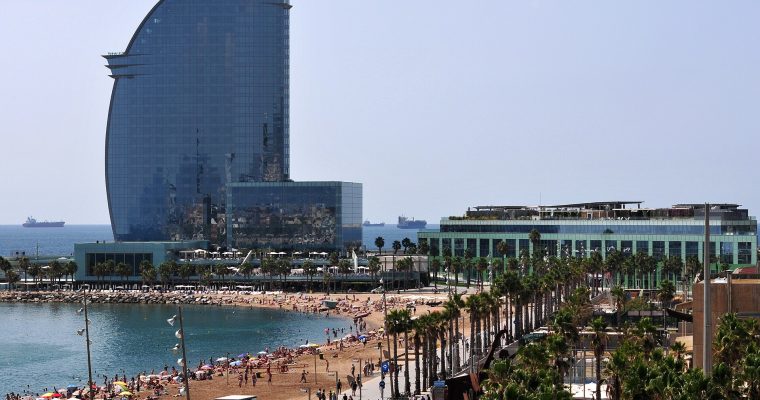
San Sebastián Beach, also known as Platja de Sant Sebastià, is one of the most traditional spots along Barcelona’s coastline. Located at the western end of Barceloneta, next to the port and at the foot of the iconic W Barcelona Hotel, it is a beach …
La Casa Batlló es una de las obras maestras de Antoni Gaudí y uno de los edificios más famosos de Barcelona. Situada en pleno Passeig de Gràcia, en el corazón del Eixample, esta extraordinaria construcción es uno de los grandes referentes del modernismo catalán y forma parte del conjunto de obras de Gaudí declarado Patrimonio Mundial por la UNESCO.
Más que un edificio, Casa Batlló es una experiencia arquitectónica en la que la luz, el color, la naturaleza, la geometría y la imaginación se combinan para crear un espacio único.
Su fachada parece cambiar dependiendo de la luz del día, mientras que el interior nos introduce en un universo de formas curvadas, cerámica, madera, vidrio y detalles inspirados en la naturaleza.
Y aunque a menudo se habla de Casa Batlló como la casa del dragón, su arquitectura es mucho más compleja. Gaudí convirtió un edificio preexistente en una auténtica obra de arte, sin renunciar a aspectos fundamentales como la iluminación, la ventilación y la funcionalidad.
¿Dónde está Casa Batlló?
Casa Batlló está situada en el número 43 del Passeig de Gràcia, una de las avenidas más importantes y elegantes de Barcelona.
Su localización es especialmente interesante porque forma parte de la conocida Manzana de la Discordia, un tramo del Passeig de Gràcia donde se concentran varias obras destacadas del modernismo catalán.
En pocos metros podemos contemplar edificios diseñados por algunos de los arquitectos más importantes de la época:
Casa Batlló, de Antoni Gaudí.
Casa Amatller, de Josep Puig i Cadafalch.
Casa Lleó Morera, de Lluís Domènech i Montaner.
Casa Mulleras, de Enric Sagnier.
Casa Josefina Bonet, de Marcel·lí Coquillat.
El resultado es uno de los conjuntos arquitectónicos más singulares de Barcelona.
La historia de Casa Batlló
Aunque hoy conocemos el edificio como Casa Batlló, su historia se inció antes de la intervención de Gaudí.
El inmueble original fue construido en 1877 por el arquitecto Emili Sala Cortés, que además había sido uno de los profesores de arquitectura de Gaudí. En aquel momento, Passeig de Gràcia todavía estaba desarrollándose como uno de los grandes ejes urbanos de la Barcelona moderna.
En 1903, el empresario textil Josep Batlló i Casanovas adquirió el edificio.
Inicialmente, el proyecto contemplaba incluso la posibilidad de derribarlo y levantar una nueva construcción. Sin embargo, Gaudí consiguió transformar completamente el edificio existente y finalmente se optó por una reforma integral, realizada entre 1904 y 1906.
Josep Batlló concedió a Gaudí una gran libertad creativa, algo que permitió al arquitecto transformar prácticamente todos los aspectos esenciales del inmueble.
Gaudí modificó la fachada, redistribuyó los espacios interiores, amplió el patio de luces y convirtió elementos funcionales de la vivienda en auténticos recursos arquitectónicos.
Gaudí y la transformación del edificio
Uno de los aspectos más interesantes de Casa Batlló es que Gaudí no partió de un solar vacío.
Trabajó sobre una construcción existente y consiguió darle una identidad completamente nueva.
La intervención afectó especialmente a:
la fachada principal;
la planta noble;
el patio de luces;
las escaleras;
los espacios interiores;
el desván;
y la azotea.
El resultado demuestra una de las características fundamentales de la arquitectura de Gaudí: la decoración y la funcionalidad no tienen por qué estar separadas.
En Casa Batlló, elementos que cumplen una función práctica también forman parte de la composición artística del edificio.
La ventilación, la entrada de luz, la circulación por las diferentes plantas y la distribución de los espacios fueron estudiadas cuidadosamente.
Una arquitectura inspirada en la naturaleza
La naturaleza es uno de los grandes protagonistas de Casa Batlló.
Gaudí rechazaba las líneas rígidas y buscaba inspiración en las formas que encontraba en el mundo natural.
Por eso encontramos curvas, formas orgánicas, elementos vegetales, referencias marinas y estructuras que recuerdan a huesos, escamas o caparazones.
La arquitectura parece estar viva.
No encontramos prácticamente ninguna superficie que resulte completamente convencional.
Las paredes se ondulan, los techos adquieren formas sinuosas y los elementos decorativos parecen formar parte de un organismo único.
Esta manera de diseñar convierte la visita en una experiencia diferente a la de un edificio histórico tradicional.
La espectacular fachada de Casa Batlló
La fachada es probablemente el elemento más conocido del edificio.
Gaudí utilizó diferentes materiales y técnicas para crear una superficie extraordinariamente dinámica.
Encontramos piedra arenisca, cerámica, vidrio y hierro, combinados para crear una composición llena de movimiento.
La superficie parece cambiar de aspecto dependiendo de cómo incide la luz.
Los fragmentos de cerámica y vidrio producen reflejos y colores que recuerdan al agua y al Mediterráneo.
Los balcones, por su parte, presentan formas que han generado infinidad de interpretaciones.
Algunos recuerdan a máscaras, otros a calaveras y otros a formas marinas.
Las columnas de la planta baja y de la tribuna también presentan formas orgánicas que refuerzan la sensación de que el edificio pertenece a un mundo natural.
La Casa de los Huesos
Uno de los sobrenombres más conocidos de Casa Batlló es Casa dels Ossos, o Casa de los Huesos.
El nombre hace referencia a la apariencia de algunos elementos de la fachada.
Las columnas parecen estructuras óseas y los balcones recuerdan, según algunas interpretaciones, a máscaras o calaveras.
Esta apariencia fantástica ha contribuido a que Casa Batlló sea uno de los edificios más fotografiados de Barcelona.
Sin embargo, es importante entender que muchas de las interpretaciones simbólicas de la fachada son lecturas posteriores y no siempre pueden atribuirse de manera documental a una intención concreta de Gaudí.
El dragón de Sant Jordi
La imagen del dragón es una de las interpretaciones más populares de Casa Batlló.
La cubierta del edificio recuerda al lomo de un enorme animal recubierto de escamas.
Las piezas de cerámica de diferentes tonalidades crean un efecto que hace que la cubierta parezca estar viva.
Según la interpretación tradicional, el tejado representa al dragón de Sant Jordi, mientras que la cruz situada en la parte superior simbolizaría la espada del santo.
Esta lectura conecta la arquitectura de Gaudí con una de las leyendas más conocidas de Cataluña: la historia de Sant Jordi y el dragón.
Es precisamente esta mezcla de arquitectura, tradición y simbolismo la que ha convertido Casa Batlló en uno de los grandes iconos culturales de Barcelona.
La cruz de cuatro brazos
En la parte superior del edificio encontramos una de las características más reconocibles de la Casa Batlló: la cruz de cuatro brazos.
La cruz corona una pequeña torre y se convierte en uno de los puntos visuales más importantes de la fachada.
La localización de este elemento también estuvo condicionada por el contexto arquitectónico de la Manzana de la Discordia y por la presencia de Casa Amatller, obra de Josep Puig i Cadafalch.
De esta manera, Gaudí no diseñó Casa Batlló de manera aislada, sino teniendo en cuenta los edificios que la rodeaban.
El patio de luces: una lección de luz y color
Uno de los espacios más interesantes del interior es el patio de luces.
Gaudí lo diseñó para mejorar la distribución de la luz y la ventilación en el interior del edificio.
Las piezas de cerámica presentan diferentes tonalidades de azul, más intensas en las zonas superiores y progresivamente más claras hacia las plantas inferiores.
Este recurso permite crear una sensación de continuidad y profundidad.
La distribución del color no es solamente decorativa: forma parte de la estrategia arquitectónica para aprovechar la iluminación natural.
Es uno de los mejores ejemplos de cómo Gaudí combinaba estética y funcionalidad.
La planta noble
La planta noble era el espacio principal de la familia Batlló.
Aquí encontramos algunos de los elementos más espectaculares del interior, como grandes ventanales, formas curvadas, carpinterías trabajadas y detalles decorativos diseñados específicamente para el edificio.
Los espacios principales están concebidos para aprovechar al máximo la entrada de luz y crear una relación continua entre arquitectura y mobiliario.
La sensación es muy diferente de la que encontramos en una vivienda tradicional de principios del siglo XX.
El desván y los arcos de Gaudí
El desván es otro de los espacios imprescindibles.
Aquí aparecen los famosos arcos catenarios, una solución estructural característica de Gaudí.
Las formas recuerdan a las costillas de un gran animal y han contribuido también a reforzar la interpretación de Casa Batlló como una especie de organismo vivo.
El propio espacio del desván crea una experiencia muy diferente a la de las plantas nobles.
Es más sobrio, pero al mismo tiempo profundamente expresivo.
Actualmente, la visita permite recorrer este espacio y experimentar la arquitectura de una manera especialmente cercana.
La azotea y las chimeneas
La azotea es uno de los lugares más fotografiados de Casa Batlló.
Aquí encontramos el famoso tejado con aspecto de dragón, además de un conjunto de chimeneas y elementos arquitectónicos que Gaudí convirtió en parte fundamental de la composición.
Las chimeneas no fueron tratadas simplemente como elementos técnicos.
Gaudí las agrupó y diseñó de manera que contribuyeran a crear un paisaje arquitectónico propio.
Desde la azotea también podemos disfrutar de vistas sobre el centro de Barcelona y observar de cerca algunos de los detalles que desde la calle pasan desapercibidos.
La experiencia actual de visita incluye el acceso a la azotea en determinadas modalidades de entrada.
¿Por qué Casa Batlló es tan importante?
Casa Batlló representa una de las etapas más maduras de la arquitectura de Gaudí.
En ella encontramos varias de sus grandes obsesiones:
la naturaleza, la luz, el color, la geometría, la estructura y la funcionalidad.
Pero también encontramos algo que diferencia especialmente esta obra: la capacidad de Gaudí para convertir una vivienda privada en una experiencia artística completa.
No diseñó únicamente habitaciones.
Diseñó puertas, ventanas, techos, escaleras, patios, chimeneas, barandillas, iluminación y elementos decorativos como partes de un mismo universo.
Por eso, recorrer Casa Batlló permite comprender mejor la idea de Gaudí de que la arquitectura debía ser una experiencia global.
Casa Batlló y el Patrimonio Mundial de la UNESCO
Casa Batlló forma parte del conjunto de obras de Antoni Gaudí inscritas en la lista del Patrimonio Mundial de la UNESCO.
Este reconocimiento incluye otras obras fundamentales del arquitecto, entre ellas Park Güell, Palacio Güell, Casa Milà, Casa Vicens, la fachada del Nacimiento y la cripta de la Colonia Güell.
La inclusión reconoce el valor universal de estas obras y su importancia dentro de la evolución de la arquitectura moderna.
La Casa Batlló actual
La historia de Casa Batlló no terminó con Gaudí.
El edificio dejó de pertenecer a la familia Batlló durante la década de 1950 y posteriormente tuvo diferentes usos.
Desde la década de 1990, la propiedad está en manos de la familia Bernat, que llevó a cabo un importante proceso de restauración.
En 1995, la casa abrió sus puertas al público y comenzó una nueva etapa como espacio cultural. Desde 2002 se incorporaron también las visitas culturales, que han ido evolucionando con el tiempo.
Actualmente, Casa Batlló combina patrimonio, arquitectura, tecnología, arte y experiencias inmersivas.
Una visita mucho más que arquitectónica
La visita actual está diseñada para acercarnos a la obra de Gaudí a través de diferentes recursos.
La experiencia general incluye una audioguía disponible en 15 idiomas y diferentes espacios del edificio, como la planta principal, el patio, el desván, las escaleras, el atrio y la azotea según el tipo de entrada.
También encontramos recursos tecnológicos que permiten descubrir el universo creativo de Gaudí desde una perspectiva contemporánea.
Entre ellos destaca el Gaudí Cube, una experiencia audiovisual de 360 grados creada por el artista digital Refik Anadol, además de experiencias de realidad aumentada en determinadas modalidades de visita.
Casa Batlló de noche
La experiencia también puede disfrutarse durante la noche.
Las visitas nocturnas incorporan una iluminación especial que transforma la percepción de los espacios interiores.
Según la modalidad disponible, la experiencia puede incluir además una bebida de bienvenida y otros elementos especiales. La programación y los horarios pueden variar, por lo que es recomendable consultar la información oficial antes de planificar la visita.
Arte, música y nuevas experiencias
Casa Batlló también funciona como espacio cultural y acoge diferentes propuestas a lo largo del año.
Entre ellas encontramos experiencias musicales, exposiciones temporales y actividades especiales.
En 2026, por ejemplo, el programa oficial incluye Magical Nights, con visita, bebida y concierto, además de nuevas propuestas expositivas.
También se puede visitar actualmente la exposición “Gaudí-Miró-Gomis: Deconstructed”, una propuesta que conecta la obra de Gaudí con Joan Miró y Josep Gomis a través de piezas originales e intervenciones digitales.
¿Cuánto dura la visita?
La visita general tiene una duración aproximada de 1 hora y 15 minutos.
Si elegimos una experiencia que incluya exposiciones adicionales, el recorrido puede prolongarse. Por ejemplo, la visita combinada con la exposición “Gaudí-Miró-Gomis: Deconstructed” tiene una duración aproximada de 1 hora y 45 minutos.
Nuestra recomendación es reservar al menos una hora y media si queremos visitar Casa Batlló tranquilamente y dedicar tiempo a observar los detalles.
¿Cuándo visitar Casa Batlló?
Casa Batlló abre durante todo el año, aunque los horarios pueden variar según la experiencia elegida.
Actualmente horarios de visita general desde las 9:00 hasta las 19:15, mientras que la última entrada puede variar según el tipo de visita.
Para disfrutar de la fachada con diferentes condiciones de luz, la mañana y las últimas horas de la tarde ofrecen experiencias visuales muy diferentes.
Si queremos una experiencia especial, también podemos consultar las visitas nocturnas y la programación cultural.
¿Cuánto cuesta visitar Casa Batlló?
El precio depende del tipo de entrada y de la experiencia seleccionada.
La web oficial ofrece diferentes modalidades y actualmente anuncia entradas generales desde 29 €, mientras que determinadas experiencias tienen precios superiores. Los niños de 0 a 12 años tienen entrada gratuita en las modalidades indicadas por el sitio oficial.
Como los precios, descuentos y experiencias pueden cambiar, recomendamos consultar la web oficial antes de comprar las entradas.
¿Cómo llegar a Casa Batlló?
La localización de Casa Batlló permite llegar fácilmente utilizando transporte público.
Metro
Las estaciones más cercanas son:
Passeig de Gràcia, con las líneas L2, L3 y L4.
Diagonal, con las líneas L3 y L5.
Tren
La estación de Passeig de Gràcia permite conectar con diferentes servicios ferroviarios y de cercanías.
Autobús
Infinidad de líneas de autobús circulan por Passeig de Gràcia y las calles próximas.
La dirección exacta es:
Passeig de Gràcia, 43
08007 Barcelona
Casa Batlló y el Passeig de Gràcia
Una visita a Casa Batlló puede combinarse fácilmente con un paseo por Passeig de Gràcia.
Esta avenida es una de las mejores zonas de Barcelona para descubrir la arquitectura modernista.
Podemos comenzar en Casa Batlló y continuar hacia Casa Amatller, Casa Lleó Morera y otras obras modernistas.
También podemos continuar hacia La Pedrera – Casa Milà, otra de las grandes obras de Gaudí.
De esta manera podemos dedicar varias horas a descubrir una de las concentraciones más importantes de arquitectura modernista de Barcelona.
Consejos para visitar Casa Batlló
Si es nuestra primera visita, recomendamos:
Comprar las entradas con antelación.
Reservar aproximadamente 1–1,5 horas para la visita.
No limitarse a fotografiar la fachada: el interior es una parte fundamental de la experiencia.
Observar especialmente el patio de luces, el desván y la azotea.
Comparar Casa Batlló con Casa Amatller y Casa Lleó Morera.
Consultar las experiencias especiales disponibles durante nuestra fecha.
Revisar los horarios y precios oficiales antes de acudir.
Magic Dreams Barcelona: descubrir Casa Batlló de una manera diferente
En Magic Dreams Barcelona creemos que Barcelona no se descubre únicamente visitando monumentos.
Se descubre comprendiendo sus historias, observando sus detalles y conectando cada espacio con la cultura, la arquitectura y la vida de la ciudad.
Por eso podemos diseñar experiencias personalizadas alrededor de Casa Batlló y del universo de Gaudí.
Nuestro servicio incluye:
Organización y logística personalizada.
Itinerarios arquitectónicos y culturales.
Rutas por el modernismo de Barcelona.
Experiencias privadas y exclusivas.
Rutas botánicas y de naturaleza vinculadas al universo de Gaudí.
Gastronomía privada y experiencias culinarias.
Conciertos y experiencias culturales.
Selección de alojamientos y servicios personalizados.
Nuestro equipo trabaja en castellano, catalán e inglés, adaptándose a otros idiomas bajo petición previa.
La idea es sencilla: convertir una visita turística en una experiencia más profunda, cuidada y personalizada.
Casa Batlló: una obra que hay que mirar dos veces
Quizá una de las mejores formas de entender Casa Batlló sea verla primero desde la calle y después entrar.
Desde fuera descubrimos el dragón, los balcones, los colores y las formas ondulantes.
Pero cuando entramos descubrimos otra Casa Batlló.
Aparecen la luz, los patios, las puertas, los arcos, las texturas, las curvas y todos aquellos pequeños detalles que demuestran hasta qué punto Gaudí diseñó el edificio como un conjunto.
Casa Batlló no es solamente uno de los lugares más fotografiados de Barcelona.
Es una obra que nos permite entender la manera en que Antoni Gaudí transformó la arquitectura y convirtió una vivienda del Eixample en uno de los grandes símbolos de la ciudad.
Y precisamente por eso, cuando caminemos por Passeig de Gràcia, merece la pena detenerse frente al número 43 y mirar hacía arriba.
Detalle exterior de Casa Batlló diseñada por el arquitecto Barcelonés Antoni Gaudí.
Perspectiva a pie de parte de Casa Amatller proyectada por el arquitecto Josep Puig i Cadafalch junto a la Casa Batlló de Antoni Gaudí.
Detalle interior de la Casa Batlló de Antoni Gaudí.
Detalle exterior de Casa Batlló de Antoni Gaudí.
Detalle mosaico diseño «Trencadís» terraza Casa Batlló de Antoni Gaudí.
Detalle exterior de Casa Batlló de Antoni Gaudí.
Detalle interior de la Casa Batlló de Antoni Gaudí.
Perspectiva exterior de Casa Batlló de Antoni Gaudí.
Detalle mosaico diseño «Trencadís» terraza Casa Batlló de Antoni Gaudí.
Detalle exterior de Casa Batlló diseñada por el arquitecto Barcelonés Antoni Gaudí.
Detalle exterior de Casa Batlló diseñada por el arquitecto Barcelonés Antoni Gaudí.
Detalle exterior de Casa Batlló diseñada por el arquitecto Barcelonés Antoni Gaudí.
Perspectiva a pie de la fachada de Casa Batlló de Antoni Gaudí.
Detalle mosaico diseño «Trencadís» terraza Casa Batlló de Antoni Gaudí.
Cruz Gaudí de Casa Batlló
Detalle exterior de Casa Batlló de Antoni Gaudí.
Detalle interior de la Casa Batlló de Antoni Gaudí.
Detalle interior de la Casa Batlló de Antoni Gaudí.
Casa Vicens: The Origins of a Genius Where Nature Becomes Architecture Casa Vicens is more than an architectural masterpiece: it is the starting point of Antoni Gaudí’s creative universe. Built between 1883 and 1885 in the then-independent town of Gràcia, this summer residence marked the …
In the La Ribera neighborhood, within the Ciutat Vella district, we find a small street whose name preserves the memory of one of Barcelona’s traditional crafts: Carrer de l’Espaseria. It is a short, narrow street located next to the Basilica of Santa Maria del Mar, …
The Spiritual Vision of Antoni Gaudí, Presented by Magic Dreams Barcelona
Discover the Basilica of the Expiatory Temple of the Sagrada Família, the architectural soul of Barcelona and the most significant work of the Modernist genius Antoni Gaudí. More than a monument, this temple is a living creation, conceived as an act of faith, a collective offering inspired by the people, and a bridge between nature, spirituality, and architecture.
Located at Carrer de la Marina, 41 (Barcelona), the Sagrada Família is now one of the most visited monuments in Spain and the world. Its construction began in 1882, funded by private donations, and Gaudí took over the project in 1883, dedicating 43 years of his life to this work, fully aware that he would not live to see it completed.
As of October 13, 2026, the upper cross of the Tower of Jesus at the Sagrada Família has already been installed, marking a historic milestone. Standing 172.5 metres tall, the tower crowns the vertical composition of the temple and makes the Sagrada Família the tallest church in the world, surpassing Ulm Minster in Germany and finally fulfilling Gaudí’s vision.
This date carries special significance, as June 10, 2026, marked the centenary of Antoni Gaudí’s death. He passed away on June 10, 1926. For this reason, 2026 is dedicated to celebrating the architect’s legacy and honouring his architectural, cultural, and artistic achievements. Exhibitions, concerts, cultural events, and commemorative Masses are taking place throughout the year, highlighting the global importance of his work.
The installation of the cross atop the Tower of Jesus, the central tower of the temple and a symbol of Catalan Modernism, represents one of the most emblematic moments of Gaudí Year 2026. This element symbolises both the completion of a fundamental stage in the construction process and the universal reach of the architect’s influence. The Sagrada Família not only achieves a historic height record but also reaffirms its status as a cultural and spiritual icon connecting centuries of history, creativity, and devotion.
Antoni Gaudí and His Spiritual Vision
Architecture as a Mission of Faith
Antoni Gaudí did not view architecture as an aesthetic exercise, but as a spiritual mission. A deeply religious man who led an austere life during the later years of his life, he understood his work as a service to God and to the community. He is often associated with the phrase, “My client is not in a hurry,” referring to God and eternity.
Gaudí conceived the Sagrada Família as a Bible carved in stone, with each façade illustrating an essential chapter of the Christian faith:
The Nativity Façade (facing east): Celebrates life, nature, and hope. It is the only façade built almost entirely during Gaudí’s lifetime.
The Passion Façade (west): Austere, angular, and dramatic, it represents the suffering and crucifixion of Christ, featuring sculptures by Josep Maria Subirachs.
The Glory Façade (south): The main entrance, dedicated to death, the Last Judgement, Glory, and the path towards God.
The 18 Towers of the Sagrada Família
An Architectural Journey Towards the Divine
The temple’s design includes 18 towers:
12 dedicated to the Apostles, 4 to the Evangelists, 1 to the Virgin Mary, and the central tower dedicated to Jesus Christ. Together, they form the defining silhouette of the Sagrada Família, making it the tallest church in the world and the tallest building in Barcelona.
Nature as a Spiritual Language
Gaudí’s Organic Architecture
On the exterior of the temple, Gaudí drew direct inspiration from nature: mountains, trees, animals, flowers, and the cycles of life. Stone is not rigid but organic; it does not merely bear weight, it seems to blossom. Each façade expresses an essential moment in the life of Christ—Nativity, Passion, and Glory—through a symbolic language accessible to everyone, conceived as a visual catechism for the people.
The Interior of the Sagrada Família
A Sacred Forest of Light and Geometry
The interior represents the culmination of Gaudí’s vision: a sacred forest where columns rise like tree trunks and branch out towards the light. Gaudí studied natural geometry—including hyperboloids, helicoids, and spirals—to create a structure that is light, strong, and harmonious.
Sunlight, filtered through coloured stained-glass windows, changes throughout the day: cool tones at dawn and warm hues at sunset, transforming the space into a cosmic and spiritual clock. For Gaudí, light was a manifestation of the divine.
The Final Years of Antoni Gaudí
A Life of Humility, Faith, and Dedication
During his final years, Gaudí led a humble, almost monastic life, devoting himself entirely to the Sagrada Família. He dressed simply, ate frugally, and spent long hours in prayer and work. On June 7, 1926, he was struck by a tram on Barcelona’s Gran Via. Because of his modest appearance, he was not immediately recognised and was taken to the Hospital de la Santa Creu, where he died three days later.
He was subsequently buried in the crypt of the Sagrada Família. His death deeply moved the city. Today, the Catholic Church’s beatification process for Gaudí remains open, recognising his life of faith, humility, and service.
The Tower of Jesus
The Culmination of Gaudí’s Architectural Vision
The Tower of Jesus, located at the centre of the Sagrada Família complex, is the temple’s tallest and most emblematic feature. Crowned by a large four-armed cross, it represents Jesus Christ and completes the vertical composition envisioned by Antoni Gaudí.
Standing 172.5 metres tall, the tower makes the Sagrada Família the tallest church in the world and the tallest building in Barcelona, bringing Gaudí’s architectural and spiritual vision to life.
The installation of the upper cross was completed in February 2026, marking one of the most significant milestones in the temple’s history and in Gaudí Year, coinciding with the centenary of the architect’s death on June 10, 1926.
The Tower of Jesus symbolises the union of architecture, nature, and spirituality, rising above Barcelona as an expression of faith and of Antoni Gaudí’s universal legacy.
The Tower of Mary
The Light of the Virgin Over Barcelona
The Tower of Mary, part of the Sagrada Família complex, is a central emblem of devotion and spirituality. Dedicated to the Virgin Mary, it symbolises purity, grace, and maternal intercession before God, rising above the city of Barcelona as a beacon of faith.
Crowned by a twelve-pointed star, the tower stands out as one of the most distinctive features of the Sagrada Família skyline. Its light and presence reinforce the spiritual dimension of the temple and express the importance of Mary within Gaudí’s religious vision.
The Tower of Mary represents a path towards spiritual elevation, symbolising humanity’s aspiration towards the divine and the Virgin’s maternal presence along the journey of faith.
The Glory Façade
The Path Towards God and Spiritual Transcendence
The Glory Façade, facing south towards Carrer de Mallorca, is the main entrance and the most ambitious façade of the Sagrada Família. Conceived by Gaudí to represent the path towards God, it focuses on redemption and spiritual transcendence. Construction began in 2002, and its design is organised into three levels: earthly, spiritual, and celestial. A grand staircase is planned to lead worshippers towards contemplation of the divine.
This façade symbolises the journey towards Glory through virtue, redemption, and the grace of the Holy Spirit. Its design includes representations of the Holy Trinity, stone clouds depicting scenes from Genesis, and columns dedicated to the seven deadly sins and the heavenly virtues. The structure features four monumental bell towers dedicated to Saint Andrew, Saint Peter, Saint Paul, and Saint James the Greater, while the main portico is designed to incorporate sixteen hyperboloid-shaped lanterns.
Between 2025 and 2026, the first columns and structural elements above pavement level along Carrer de Mallorca have been erected. Artistic and sculptural work is expected to continue for at least another decade.
Magic Dreams Barcelona
Private Experiences of Art, Culture, and Spirituality
We are professional native-speaking guides with more than 10 years of experience, specialising in Gaudí, Catalonia, and high-end cultural tourism. We offer personalised, private, and worry-free experiences, taking care of every detail. We know the symbols, mysteries, and deeper history that are rarely found in conventional guidebooks.
Premium Services
Private guided tours, available daily or weekly.
Daily or weekly cultural, botanical, architectural, and gastronomic itineraries.
Art guidance and creative workshops inspired by Gaudí’s trencadís mosaic technique.
Emotionally enriching botanical walks with a choice of premium picnics.
Personalised accommodation and comprehensive logistical support.
Private dining experiences with a local chef, featuring Catalan, Spanish, and international cuisine, with themed menus to choose from.
Live music at your accommodation or a selected venue, artisan pastries, and floral decorations.
Gastronomic experiences aboard a private yacht.
Photography experiences in unique and hidden corners of Barcelona.
Romantic getaways, weekend escapes, and tailor-made experiences.
Barcelona from the Sea
A Gastronomic Experience on a Private Yacht
Discover Barcelona from the sea with our private yacht gastronomic experience.
Enjoy an exclusive journey along the Mediterranean coastline, with privileged views of the city skyline, a personalised menu prepared by our local chef, alcohol-free 0.0% wine pairings and fresh juices, live music, and premium service. A unique sensory experience in which art, the sea, and gastronomy come together.
Every detail is designed with sensitivity, excellence, and personalised attention. Our services are available in Spanish, Catalan, and English. Other languages can be accommodated upon request.
The Words of Antoni Gaudí
Nature, Beauty, and Spirituality
To conclude, discover the words of Antoni Gaudí.
Antoni Gaudí said:
“Create beauty! Seek the image of mystery in nature and transform it into architecture.”
“The great book, always open, is the book of Nature.”
“Nothing has been invented in this world; good fortune lies in seeing what God has placed before our eyes.”
“Life is a battle; strength lies in virtue, and virtue can only be sustained through spiritual cultivation.”
Basílica del Templo Expiatorio de la Sagrada Familia.
Basílica del Templo Expiatorio de la Sagrada Familia.
Basílica del Templo Expiatorio de la Sagrada Familia.
Basílica del Templo Expiatorio de la Sagrada Familia.
Basílica del Templo Expiatorio de la Sagrada Familia.
Basílica del Templo Expiatorio de la Sagrada Familia.
Basílica del Templo Expiatorio de la Sagrada Familia.
Basílica del Templo Expiatorio de la Sagrada Familia.
Basílica del Templo Expiatorio de la Sagrada Familia.
Basílica del Templo Expiatorio de la Sagrada Familia.
Basílica del Templo Expiatorio de la Sagrada Familia.
Basílica del Templo Expiatorio de la Sagrada Familia.
Basílica del Templo Expiatorio de la Sagrada Familia.
Basílica del Templo Expiatorio de la Sagrada Familia.
Basílica del Templo Expiatorio de la Sagrada Familia.
Basílica del Templo Expiatorio de la Sagrada Familia.
Basílica del Templo Expiatorio de la Sagrada Familia.
Basílica del Templo Expiatorio de la Sagrada Familia.
Basílica del Templo Expiatorio de la Sagrada Familia.
Basílica del Templo Expiatorio de la Sagrada Familia.
Basílica del Templo Expiatorio de la Sagrada Familia.
Basílica del Templo Expiatorio de la Sagrada Familia.