Route guide for visitors throughout Catalonia – Barcelona – Costa Brava – Catalan Pyrenees – Personalized experiences – Customized tour guide services – A small tribute to the wonderful city and land that saw us born – Transforming experiences into unforgettable memories - Magic Dreams Collection: exclusive universes inspired by Salvador Dalí and Gaudí. Niche perfumes, jewelry, lithographs, and collectible items celebrating the Mediterranean spirit.
Casa Verdú – Modernism in Barcelona’s Eixample District We are standing in front of the building known as Casa Verdú, located at 103 Rambla de Cataluña, at the intersection with Provenza Street, in the emblematic Eixample district of Barcelona. This property is a remarkable example …
There are places where history is not simply told — it is felt. On the Costa Brava, overlooking the Mediterranean, the archaeological site of Empúries offers an extraordinary journey through more than two thousand years of history. Here, the remains of an ancient Greek settlement …
The summit of Barcelona where history, nature and entertainment come together
Tibidabo, the highest part of the city of Barcelona, stands at 575 metres above sea level, offering an incomparable perspective of the city, the Mediterranean Sea and the surrounding hills. This remarkable place combines history, architecture, nature and entertainment, creating an unforgettable journey for all the senses.
The Temple of the Sacred Heart of Jesus
A monumental landmark overlooking Barcelona
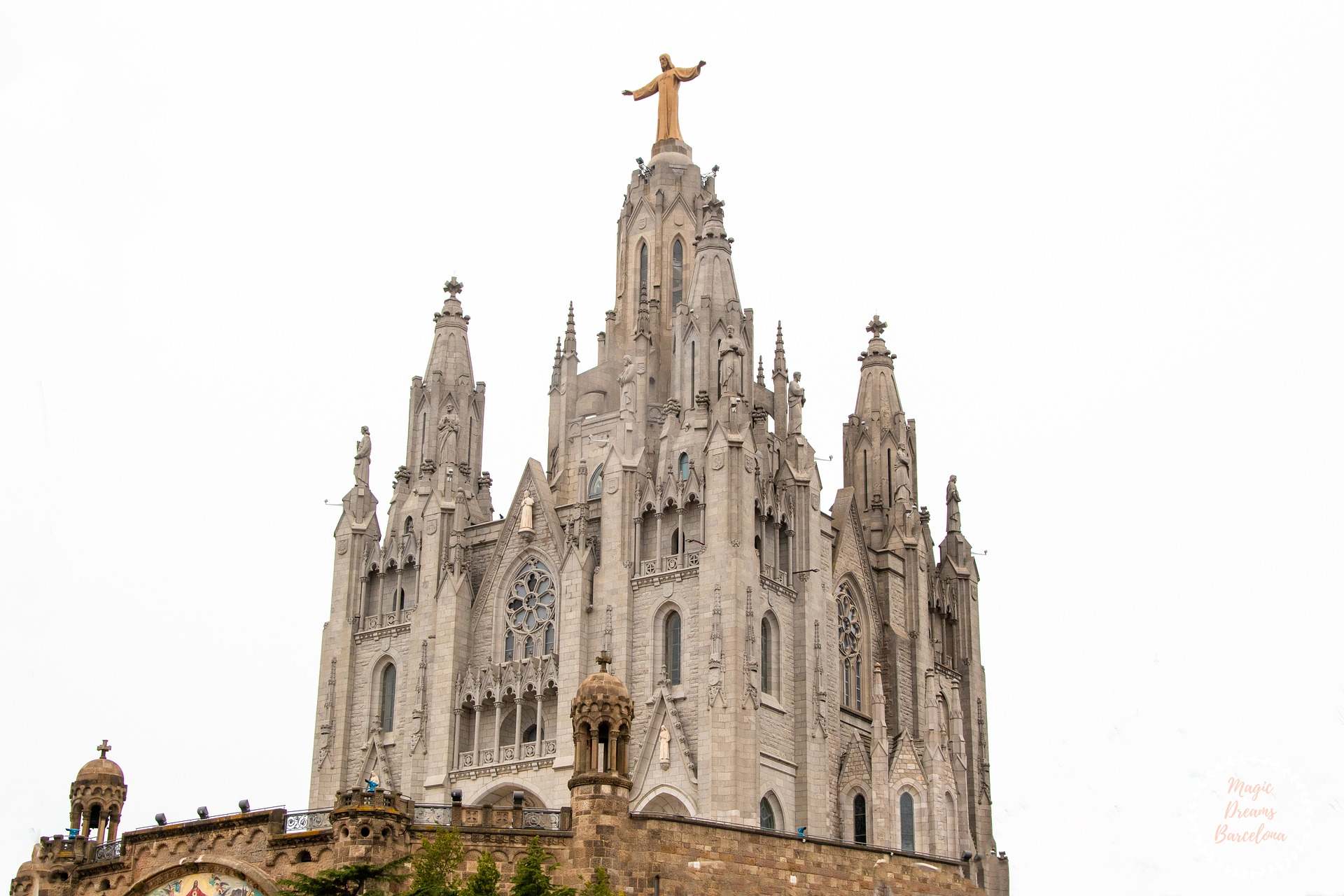
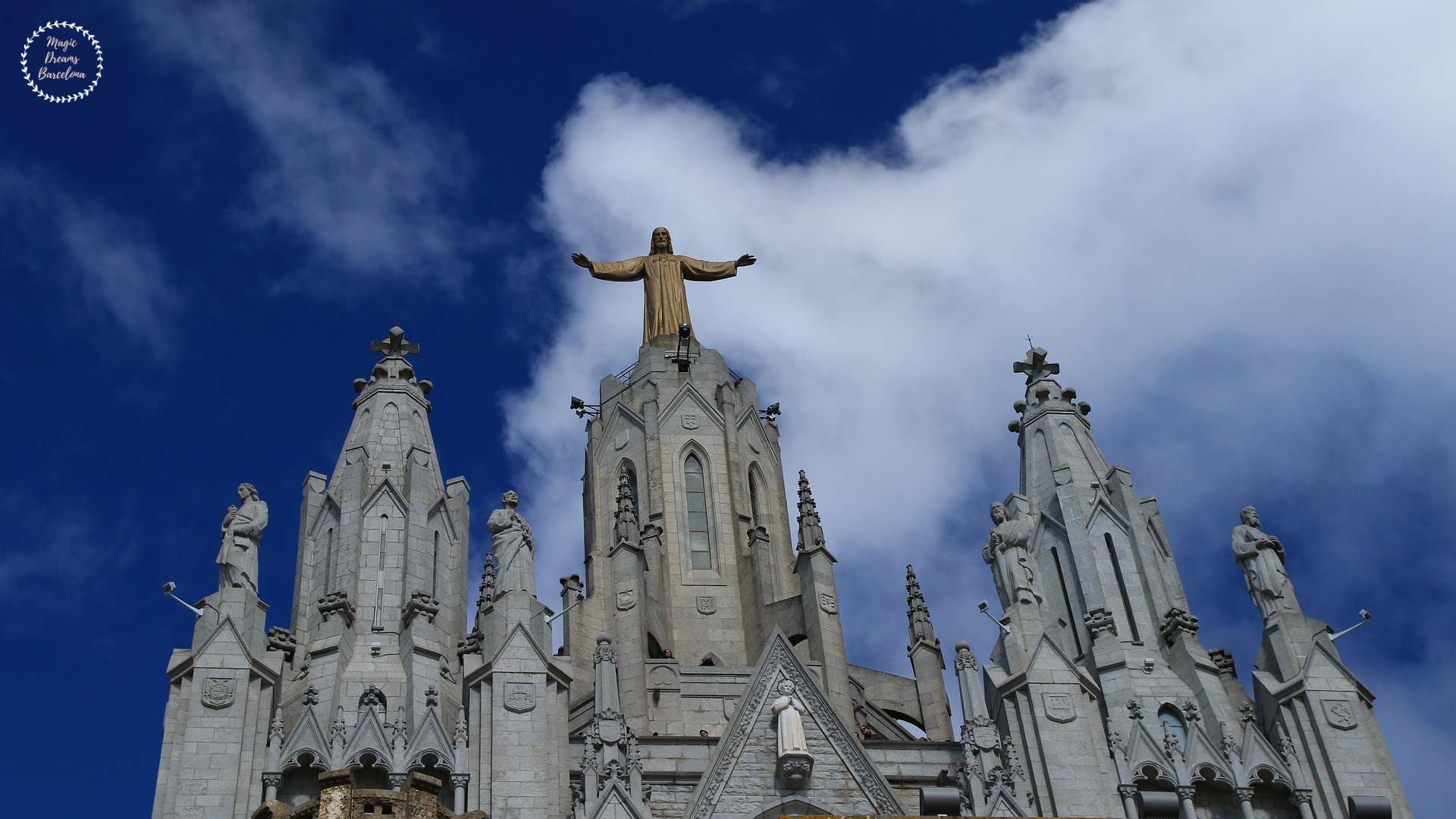
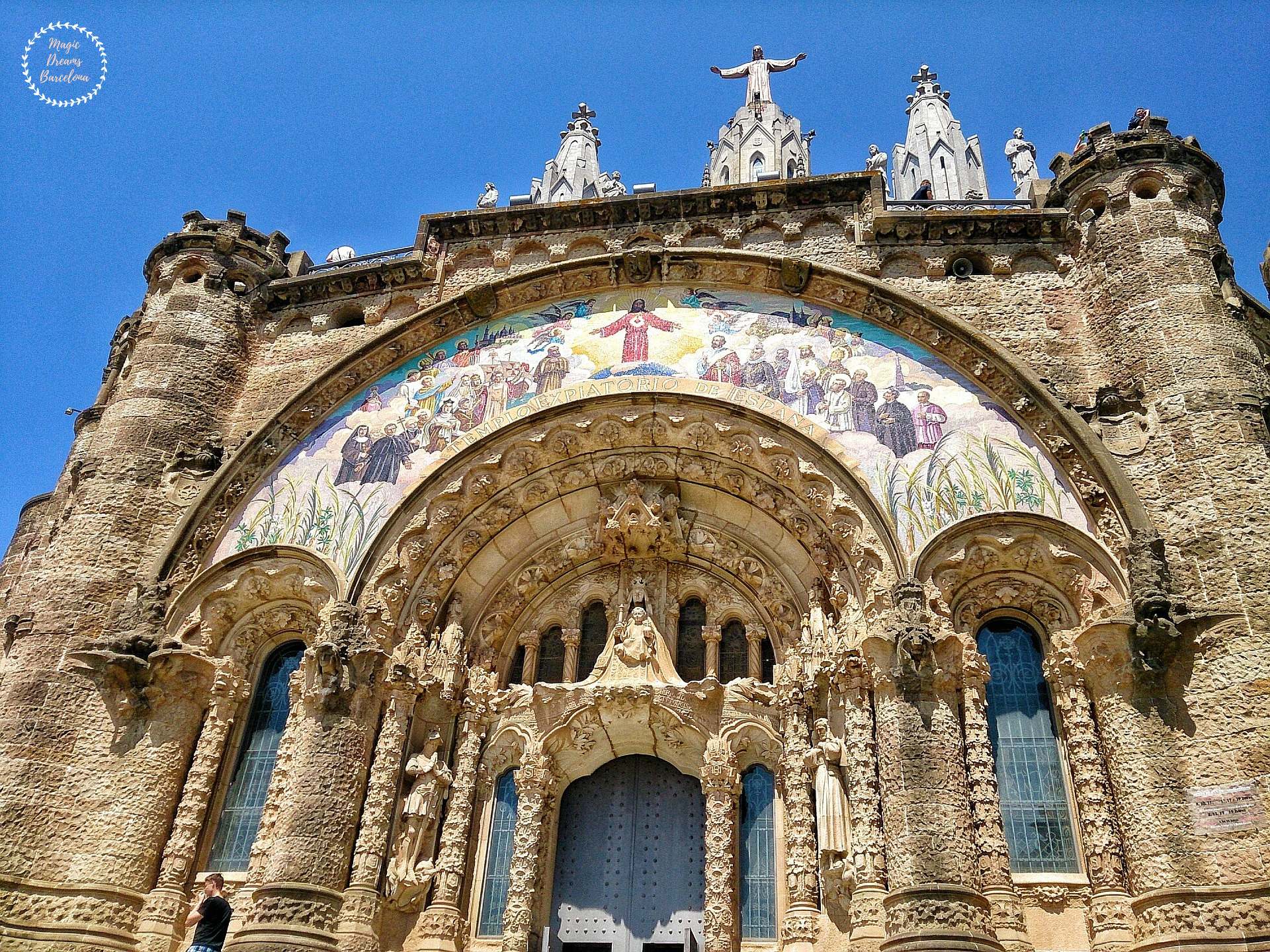
The Temple of the Sacred Heart of Jesus dominates the summit. Originally, there was a hermitage built by the Salesians, inaugurated in 1886 during the visit of Saint John Bosco to Barcelona.
The construction of the Expiatory Temple, designed by Enric Sagnier, began in 1902 and was completed in 1961. Its historicist style combines Neo-Gothic, Neo-Romanesque and Neo-Byzantine elements.
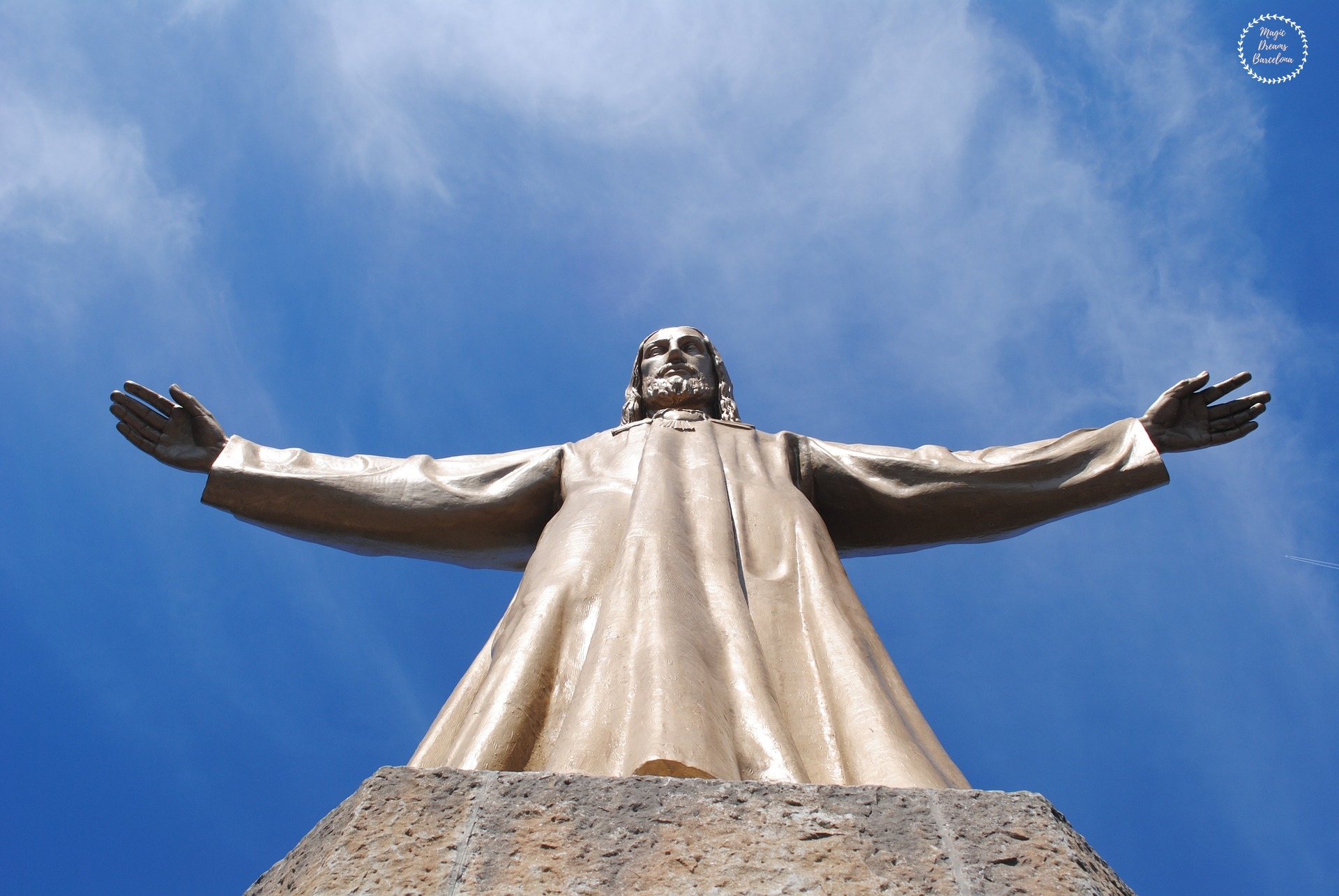
A bronze statue of the Sacred Heart crowns the summit, extending its arms over the city. An elevator provides access to the upper terrace, where visitors can enjoy privileged panoramic views of Barcelona, the Mediterranean and the surrounding landscape.
On one side, the original hermitage is still preserved, a testimony to the origins of this extraordinary place.
A Summit with an Incomparable Perspective
Barcelona, the Mediterranean and the surrounding hills at your feet
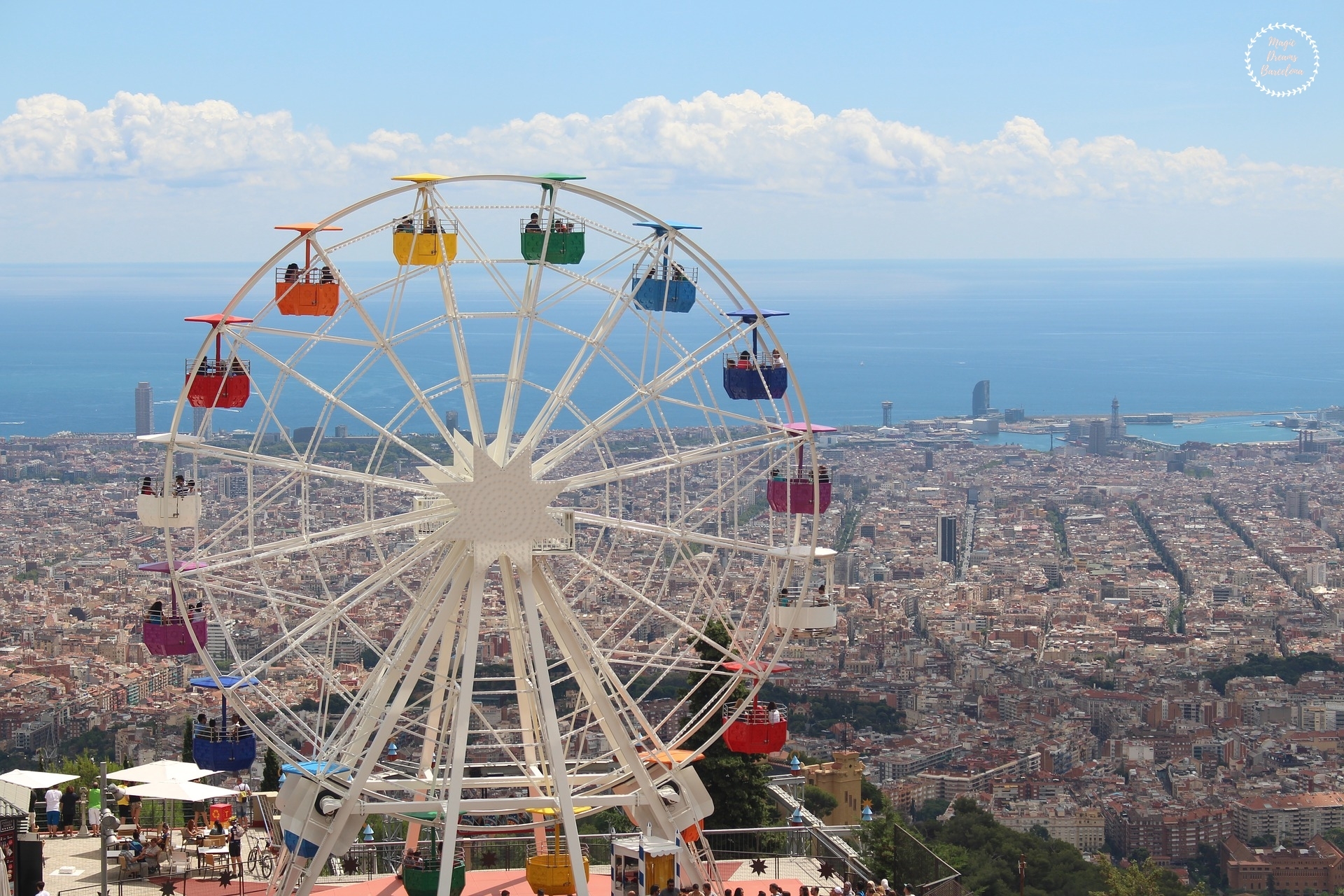
From the summit of Tibidabo, Barcelona unfolds beneath you in an extraordinary panorama. The combination of the city, the Mediterranean Sea and the surrounding hills creates a unique setting in which architecture and nature come together.
The elevated position of Tibidabo makes it one of the most remarkable viewpoints in Barcelona, offering a perspective that can be enjoyed in every season and at different times of the day.
Tibidabo Amusement Park
More than a century of entertainment overlooking Barcelona
The Tibidabo Amusement Park, inaugurated in 1899, is located next to the temple and covers more than 70,000 m² dedicated to entertainment.
Some of its historic attractions are still operating today, creating a fascinating connection between Barcelona’s past and present. Among them are the Avió, one of the world’s first flight simulators, the Museum of Automata, with more than 40 pieces from the 19th and 20th centuries, and the Talaia, which raises visitors 50 metres above the ground.
Alongside these historic attractions, modern rides such as the roller coaster offer excitement for visitors of all ages, always surrounded by a spectacular landscape.
The Avió
One of the historic icons of Tibidabo
The Avió is one of the most emblematic historic attractions in the park and one of the first flight simulators. Its presence on the summit adds a distinctive character to the Tibidabo experience, combining history, engineering and entertainment.
The Museum of Automata
A journey through mechanical art
The Museum of Automata houses more than 40 pieces from the 19th and 20th centuries.
These historic automata offer a fascinating glimpse into mechanical creativity and entertainment from another era, making the museum an essential part of the cultural and historical experience of Tibidabo.
The Talaia
Fifty metres above the summit
The Talaia raises visitors 50 metres above the ground, offering an extraordinary sensation of height and spectacular views over Barcelona and its surroundings.
It is one of the attractions that best represents the unique character of Tibidabo: a place where entertainment and panoramic views come together.
Science and Technology at the Summit
Discovering Barcelona from another perspective
The summit of Tibidabo also houses remarkable treasures of science and technology, offering experiences that go beyond its architecture and entertainment.
Two of its most significant landmarks are the Torre Collserola and the Fabra Observatory.
Torre Collserola
360° views over Barcelona
The Torre Collserola was built for the 1992 Olympic Games. Its tenth-floor observation deck offers 360° views over Barcelona and the surrounding landscape.
From this elevated viewpoint, the city can be contemplated from a completely different perspective, revealing the relationship between Barcelona, the Mediterranean Sea and the natural landscape of the surrounding hills.
Fabra Observatory
Astronomy, science and the beauty of the night sky
The Fabra Observatory has been active since 1901 and offers visitors the opportunity to observe the Moon, planets such as Jupiter, Saturn and Mars, as well as stellar systems and nebulae such as Alcyone, Albireo and the Orion Nebula.
Its scientific heritage makes it one of the most fascinating places on Tibidabo for those interested in astronomy and the universe.
The Botanical Gardens of the Fabra Observatory
Nature completing a unique sensory journey
The gardens of the Fabra Observatory, with pine trees, fir trees, holm oaks and mimosas, complete a unique sensory journey.
The combination of botanical surroundings, architecture, science and the panoramic landscape creates an experience in which nature becomes an essential part of the visit.
Dining Under the Stars
Astronomy and gastronomy in an extraordinary setting
The Fabra Observatory even offers the possibility of dining under the stars, combining astronomy and gastronomy in an exceptional setting.
It is an experience in which the night sky, the lights of Barcelona and the flavours of gastronomy come together, creating a memorable evening at one of the city’s most distinctive locations.
How to Reach Tibidabo
Comfortable and varied access to the summit
Reaching the summit of Tibidabo is comfortable and varied, with several transport options available:
Funicular from Torre de San Sebastián.
Metro, lines L3 and L5, with Vall de Hebron station.
Blue Tram.
Bus, lines 196 and T2A.
The different options make it possible to organise the visit according to each traveller’s preferences and itinerary.
Tibidabo for All the Senses
A place where history, art, architecture and nature are fully experienced
Tibidabo is much more than a viewpoint or an amusement park. It is a place where history, architecture, science, nature and entertainment coexist in a unique environment.
The Temple of the Sacred Heart of Jesus, the historic attractions of the amusement park, the Fabra Observatory, the Torre Collserola and the surrounding natural landscape create a complete experience in which every element contributes to the character of the summit.
Tibidabo with Magic Dreams Barcelona
An exclusive, intimate and sensory experience
At Magic Dreams Barcelona, we transform this visit into an exclusive, intimate and sensory experience.
Our premium services include:
Expert guides in history, architecture, art and astronomy, personalising each itinerary according to your interests and pace.
Private sensory experiences with live music, aromas, literature and themed dinners with a private chef.
Picnics and signature gastronomy in gardens, viewpoints or on yachts, with bespoke table linen and catering.
Professional photography sessions that capture every moment of the experience.
Creative workshops and exclusive getaways to the Costa Brava and the Catalan Pyrenees.
Signature Gastronomy and Private Experiences
Tibidabo experienced through the senses
A visit to Tibidabo can become much more than a sightseeing experience. With Magic Dreams Barcelona, every element can be carefully designed to create a private and personalised journey.
From gastronomy and carefully selected settings to music, aromas, literature and photography, each experience is created to reflect the character, interests and rhythm of each guest.
Experiences Created Just for You
Personalisation as the essence of a premium experience
Every journey can be adapted to your preferences, allowing you to discover Tibidabo through history, architecture, art, astronomy, nature or gastronomy.
The aim is to create an experience that is not simply observed, but fully lived and remembered.
Professional Photography and Lasting Memories
Capturing every moment of the experience
Professional photography allows every special moment to be preserved, transforming the visit into a collection of memories that can be enjoyed long after the experience has ended.
The panoramic landscapes, architecture, natural surroundings and personal moments become part of a visual story created exclusively for you.
Creative Workshops and Exclusive Getaways
Barcelona, the Costa Brava and the Catalan Pyrenees
Magic Dreams Barcelona also offers creative workshops and exclusive getaways to the Costa Brava and the Catalan Pyrenees.
These experiences extend beyond Barcelona, allowing guests to discover new landscapes, cultural traditions, gastronomy and natural environments through carefully designed private experiences.
An Experience to Be Fully Lived
History, art, architecture and nature in perfect harmony
Every visit with Magic Dreams Barcelona becomes a profound journey in which history, art, architecture and nature are experienced to the fullest.
It is not simply about observing Tibidabo, but about feeling it and understanding it in all its dimensions.
The summit becomes a place where every detail contributes to an unforgettable memory: the architecture of the temple, the views over Barcelona, the historic attractions, the stars above the city, the gardens, gastronomy and the surrounding landscape.
Discover Tibidabo with Magic Dreams Barcelona
Where every experience becomes an unforgettable memory
Discover this magical corner of Barcelona with Magic Dreams Barcelona and allow yourself to be captivated by the majesty of Tibidabo, where every experience becomes an unforgettable memory.
From its historic origins and extraordinary architecture to its panoramic views, scientific heritage, nature and entertainment, Tibidabo offers a unique way to experience Barcelona.
With Magic Dreams Barcelona, this extraordinary setting becomes an exclusive, intimate and sensory journey designed to be remembered.
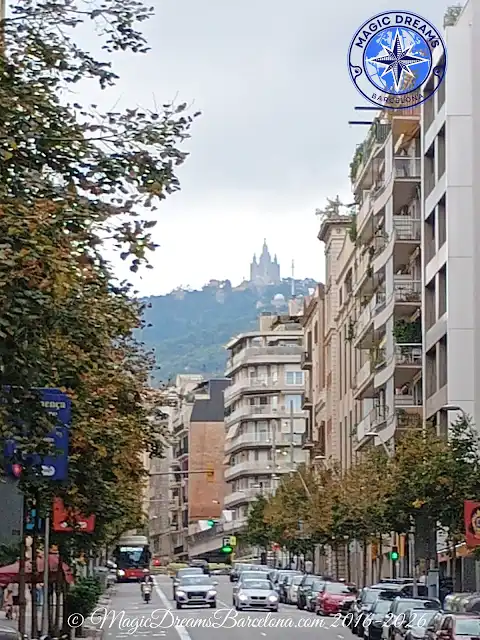
Perspectiva del Templo del Sagrado Corazón de Jesús en cima Tibidabo desde calle Balmes.
Detalle del Templo Expiatorio del Sagrado Corazón de Jesús en la cima Tibidabo
Perspectiva nocturna del Templo Expiatorio del Sagrado Corazón de Jesús en la cima Tibidabo junto al Parque de Atracciones.
Perspectiva de parte de la ciudad desde Templo Expiatorio del Sagrado Corazón de Jesús en la cima Tibidabo.
Perspectiva de parte de la ciudad desde el parque de Atracciones en la cima Tibidabo.
Templo Sagrado Corazón de Jesús.
Templo Sagrado Corazón de Jesús.
Templo Sagrado Corazón de Jesús.
Templo Sagrado Corazón de Jesús.
Templo Sagrado Corazón de Jesús.
Templo Expiatorio del Sagrado Corazón de Jesús – Barcelona.
Templo Expiatorio del Sagrado Corazón de Jesús – Barcelona.
Templo Expiatorio del Sagrado Corazón de Jesús – Barcelona.
Templo Expiatorio del Sagrado Corazón de Jesús – Barcelona.
Templo Expiatorio del Sagrado Corazón de Jesús – Barcelona.
Templo Expiatorio del Sagrado Corazón de Jesús – Barcelona.
Templo Expiatorio del Sagrado Corazón de Jesús – Barcelona.
Templo Expiatorio del Sagrado Corazón de Jesús – Barcelona.
Templo Expiatorio del Sagrado Corazón de Jesús – Barcelona.
Templo Expiatorio del Sagrado Corazón de Jesús – Barcelona.
Templo Expiatorio del Sagrado Corazón de Jesús – Barcelona.
Templo Expiatorio del Sagrado Corazón de Jesús – Barcelona.
Templo Expiatorio del Sagrado Corazón de Jesús – Barcelona.
Templo Expiatorio del Sagrado Corazón de Jesús – Barcelona.
Templo Expiatorio del Sagrado Corazón de Jesús – Barcelona.
Observatorio Fabra – By Ismaelromero – Own work, CC BY-SA 3.0 es, https://commons.wikimedia.org/w/index.php?curid=21490932.
Perspectiva de parte de la ciudad desde la noria del parque de Atracciones del Tibidabo.
Perspectiva de parte de la ciudad desde la noria del parque de Atracciones del Tibidabo.
Detalle noria del parque de Atracciones del Tibidabo.
Detalle noria del parque de Atracciones del Tibidabo.
Perspectiva de parte de la ciudad desde la noria del parque de Atracciones del Tibidabo.
Located in the heart of Baix Empordà, in the province of Girona, Pals is a destination that combines history, nature, and culture on the Costa Brava. It borders the municipalities of Torroella de Montgrí, Regencós, and Begur, and is home to just over two thousand …
In one of the most discreet and elegant corners of the Costa Brava, where the landscape speaks without artifice and time seems to slow down, lies Tamariu: a cove transformed into a destination, and a destination transformed into an experience. Unlike other locations along the …
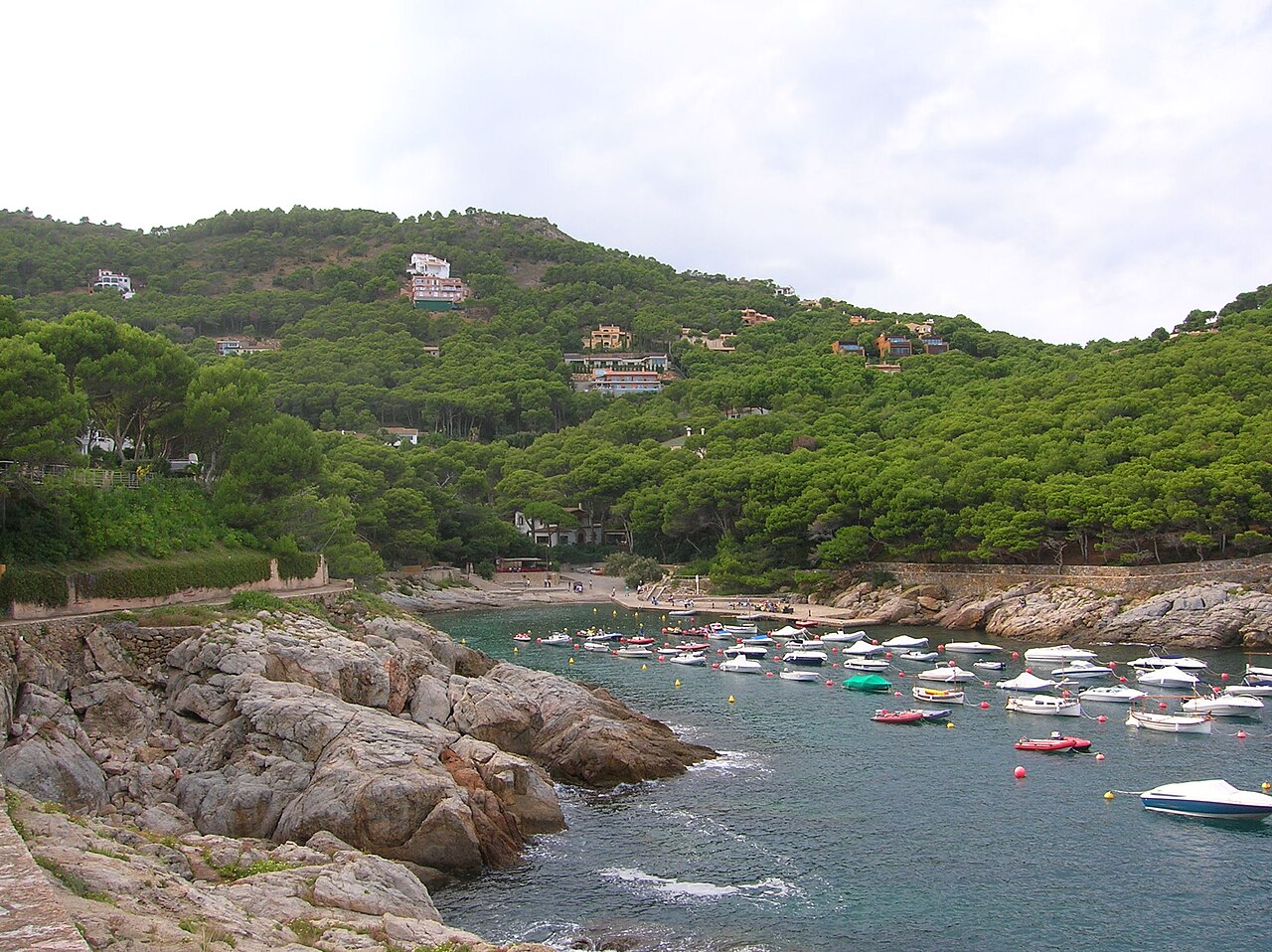
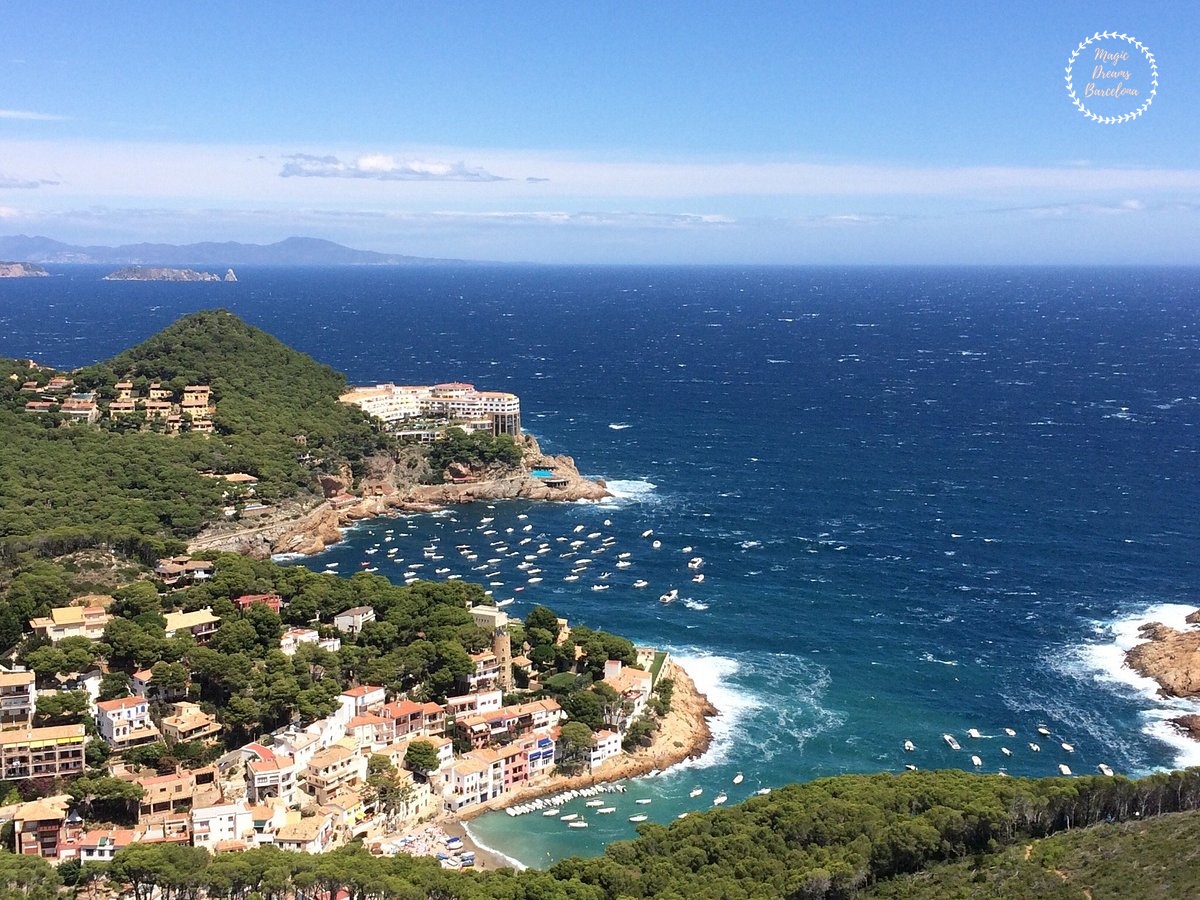
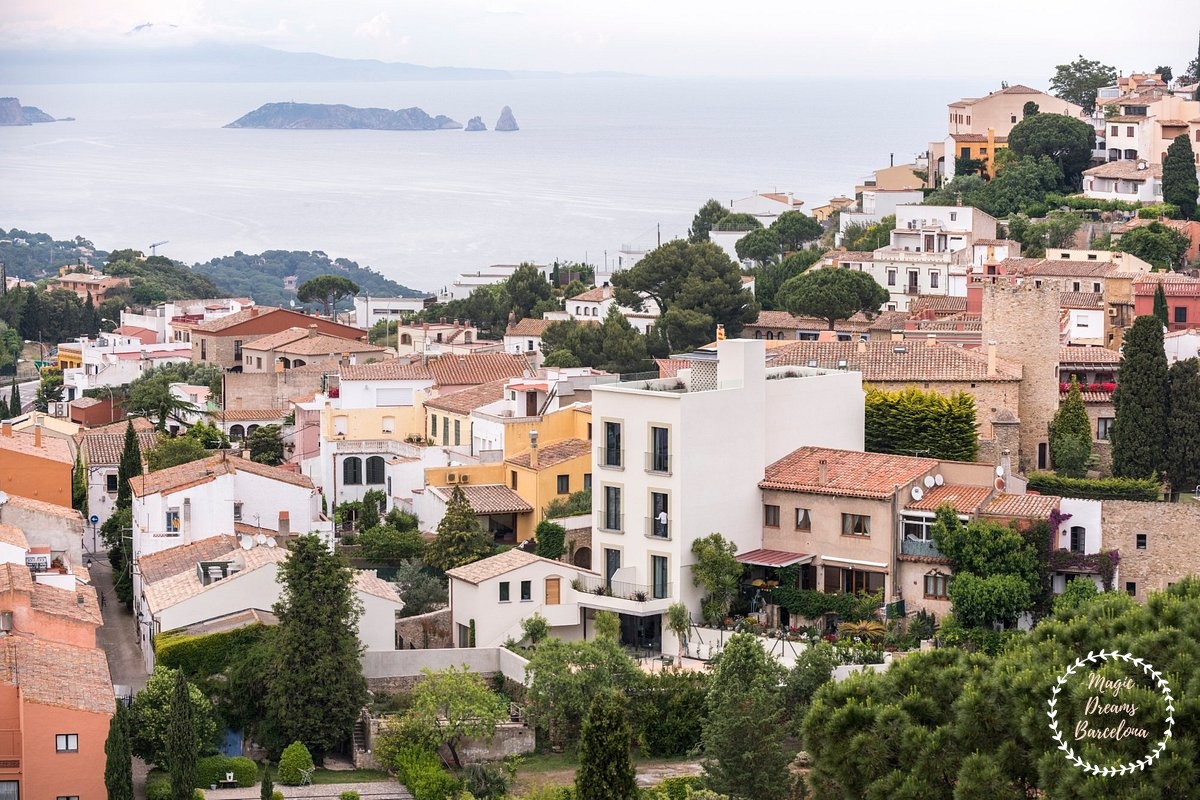
Perched on the hills of the Begur Massif and washed by the waters of the Mediterranean, we find one of the most distinctive corners of the Costa Brava. Begur combines a spectacular coastline of small coves, cliffs and pine forests with a historic old town full of character, Indian houses, old defensive towers and the remains of a medieval castle.
It is one of those places where it is well worth doing more than simply heading down to the beach. Begur invites you to wander through its streets, discover its viewpoints, follow one of its coastal paths, sit on a terrace, visit its old Indian houses and end the day admiring the Mediterranean from one of the elevated viewpoints around the municipality.
One of its main attractions is precisely this combination of the historic centre, the old castle, Esclanyà and its eight beaches and coves, creating a highly distinctive landscape.
Where is Begur and how far is it from Barcelona?
Begur is located in the province of Girona, in the Baix Empordà comarca, in the heart of the Costa Brava.
From Barcelona to Begur, it is approximately 130–135 kilometres by road, depending on the starting point and route chosen. Under normal conditions, the journey by car takes around 1 hour 40 minutes to 2 hours, although journey times can increase considerably in summer, at weekends and on bank holidays.
By road, the usual route from Barcelona follows the AP-7, taking the exit towards Vidreres and then continuing along the C-35 towards Sant Feliu de Guíxols, Platja d’Aro and Palamós. From there, continue towards Palafrugell and finally Begur.
How to get to Begur from Barcelona
By car
This is the most convenient option if you intend to explore the different coves, as many of them are some distance from the town centre and the access roads can be quite winding.
The journey is approximately 129–133 km and, without traffic, takes around 1 hour 40 minutes to 2 hours.
During July and August, it is advisable to set off early, especially if you want to visit Aiguablava, Sa Tuna or Sa Riera, as the roads and car parks can become very busy.
By bus
There is a direct bus connection between Barcelona Estació del Nord and Begur, operated by Moventis/Sarfa.
The journey takes around 2 hours 35 minutes and the indicative fare is approximately €23–€45 each way, depending on the date and ticket available.
This is an especially useful option if you do not want to drive, although once in Begur you will need to rely on local transport, taxis or seasonal buses to travel between the coves.
By train
Begur does not have a railway station. The nearest railway station is Flaçà, around 31 km away.
From Barcelona, you can take a train to Flaçà and then continue by bus to Palafrugell and Begur. The Tourist Office points out that there is no direct railway connection to Begur.
The combined journey can take more than 3 hours, making it less straightforward than the direct bus.
Bus services between the beaches
During the summer season, the Town Council operates the so-called Bus Platges, connecting Begur town centre and Esclanyà with the main beach areas: Sa Riera, Sa Tuna and Aiguablava.
It usually operates from around mid-June to mid-September, although it is advisable to check the exact timetable each season.
A little history of Begur
Begur is much more than a beach destination.
The town developed around its medieval castle and for centuries was closely connected with the sea, fishing, the coral trade and, later, cork production and emigration to the Americas.
One of the most fascinating chapters in its history is that of the Indians or Americanos. During the 19th century, more than 500 people from Begur crossed the Atlantic in search of their fortunes, particularly in Cuba. Some later returned with considerable wealth and built large colonial-style houses that can still be admired as you walk through the historic centre.
This heritage is so important that Begur even has the Interpretation Centre of the Indians of Catalonia, where admission and the heritage route with an audio guide are free.
Another important chapter in local history is linked to pirate attacks. The defensive towers built in the 16th century provided refuge during these incursions and still form part of Begur’s urban landscape today.
Begur medieval castle
At the highest point of the town stand the remains of the former Castle of Begur, documented since the early 11th century.
The castle was destroyed at different points throughout history, with the Napoleonic Wars bringing its final major destruction in 1810. Today, only remnants of the former structure remain, and the site is primarily used as a magnificent viewpoint.
From here, you can enjoy impressive views over the coast, the Medes Islands, the Bay of Ter, the Baix Empordà landscape and, on clear days, the Pyrenees.
At the summit, there is also a ceramic map that helps visitors identify some of the geographical features visible from this privileged location.
What to see in Begur town centre
If you spend a few hours away from the beaches, you will discover a completely different side of Begur.
Sant Pere Church
Sant Pere Church is one of the most important historic buildings in the old town. The original church is documented from 1199 and was enlarged between 1600 and 1624, following late Gothic architectural characteristics.
Inside, the small Chapel of the Blessed Sacrament is particularly noteworthy and is one of the corners worth discovering during a stroll through the town centre.
The Indian houses
As you walk around Begur, you will come across numerous houses built by the so-called Indians.
These colonial-style buildings reflect the prosperity achieved by some local residents after emigrating to the Americas. Casa Mas Carreras and Casa Pere Roger are among the finest examples.
The Cultural Casino
Built in 1870 on the initiative of the Indians, it was known as the Casino de los Señores or Casino Viejo. Today it forms part of the municipality’s cultural heritage and retains interesting architectural features, including large windows, mouldings and stone walls.
Les Escoles Velles
The former school buildings are also part of the local heritage. The building is now used for cultural and municipal purposes and retains a charming inner courtyard.
Carrer del Castell and Carrer de Vera
Two particularly interesting streets to explore are Carrer del Castell, a narrow, stepped street that once formed the natural approach to the castle, and Carrer de Vera, associated with Begur’s traditional coral traders.
You should also visit Es Pedrís Llarg, beside the church. This old stone bench was traditionally a meeting place where local residents would gather and chat.
Esclanyà, another side of Begur worth visiting
The municipality also includes the small village of Esclanyà, located to the north-west.
Here the landscape changes and the atmosphere is considerably more peaceful. Sant Esteve Church has been documented since 1280 and preserves elements from different periods of the Romanesque era.
You will also find the so-called Esclanyà Tower, belonging to the former castle, of which a rectangular tower with battlements remains. Traditionally, Esclanyà’s economy was associated with growing vines and olive trees and with tile production.
It is a highly recommended visit for those who want to discover the more rural and historic side of Begur.
Begur’s landscape is closely linked to the Begur Massif, a coastal extension of the Catalan Coastal Range.
The vegetation is predominantly Mediterranean. There are extensive areas of stone pine, Aleppo pine and maritime pine, as well as holm oak and cork oak woodland.
There are also Mediterranean scrublands made up of rosemary, heather, rockroses and other species adapted to periods of drought and to the soils of the massif. Environmental studies of the municipality indicate that pine forests have occupied much of the land that was historically covered by holm oak and cork oak woodland.
In many places, this vegetation reaches almost to the sea, and it is precisely the combination of pines, rock, cliffs and crystal-clear waters that gives Begur one of its most characteristic landscapes.
Wildlife, birdwatching and butterflies
Nature lovers will find Begur an especially interesting area for observing Mediterranean wildlife.
The woodland is home to small mammals such as squirrels and foxes, as well as reptiles and a wide variety of smaller animals associated with pine forests, scrubland and rocky areas. Environmental studies of the municipality have also documented amphibian species in some streams, including the European tree frog and the natterjack toad.
Begur for birdwatchers
Around 65 bird species have been documented within the municipality, including woodland species and birds of prey such as the long-eared owl, eagle owl, goshawk, common buzzard, peregrine falcon and, occasionally, Eleonora’s falcon.
In the pine forests you may also spot species such as the coal tit, goldcrest, wryneck, Eurasian jay and great spotted woodpecker, depending on the time of year.
If you are interested in birdwatching, the paths and viewpoints around the massif are particularly rewarding during migration periods.
In the wider Baix Ter area and the Montgrí, Medes Islands and Baix Ter Natural Park, more than 300 bird species have been recorded. Those planning a dedicated birdwatching trip can therefore combine Begur with the nearby wetlands and natural areas.
What about butterflies?
Mediterranean scrubland, pine forests and flower-filled clearings also provide suitable habitats for a wide variety of pollinating insects and butterflies.
However, there is no single, up-to-date municipal list of butterfly species in Begur equivalent to the bird inventory. If your visit has a particular lepidopterological focus, we recommend planning it with a naturalist guide and extending your itinerary to nearby natural areas in the Baix Empordà.
Begur’s eight beaches and coves
The Begur coastline has eight main beaches and coves: Platja del Racó, Illa Roja, Sa Riera, Aiguafreda, Sa Tuna, Platja Fonda, Fornells and Aiguablava.
Each has a different character, which is precisely why it is worth visiting more than one.
Platja del Racó
Located near the boundary with Pals, this is a much larger beach than many of the other coves in the municipality.
From here you can enjoy magnificent views towards the Medes Islands and join the coastal path leading towards Illa Roja.
Illa Roja
It is probably one of the most famous images of this part of the Costa Brava.
Its enormous reddish rock, standing just offshore, gives the cove its name. It is traditionally a nudist beach and lies in a wild, rugged setting without the usual facilities found at other beaches.
The contrast between the reddish rocks, sand and turquoise water makes this one of those places where it is worth having your camera ready.
Sa Riera
At around 300 metres long, Sa Riera is one of Begur’s largest beaches.
It is one of the most convenient options for those looking for facilities, restaurants, bars and water sports.
Its name comes from the stream that once crossed the beach before flowing into the Mediterranean.
Aiguafreda
Aiguafreda is completely different.
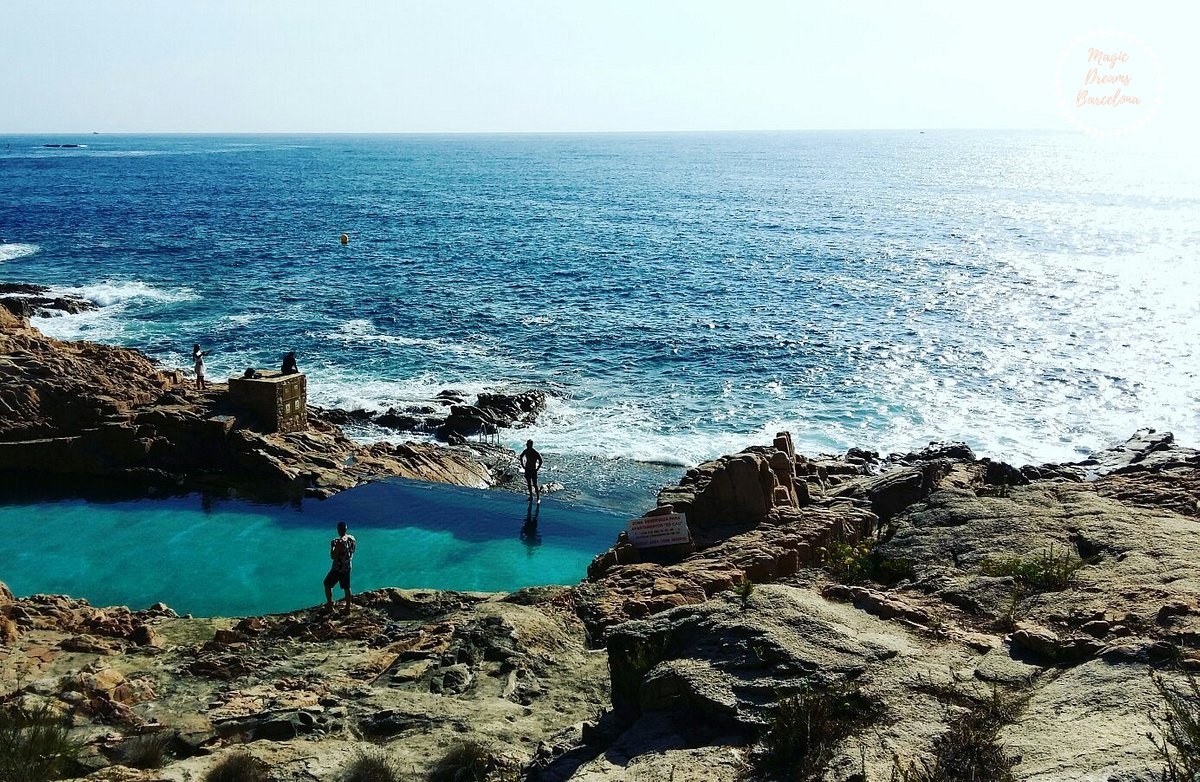
Small, sheltered and protected by Mount Rodó, it is surrounded by pine trees and has a small area equipped beside the water.
It is not a typical sandy beach, but rather a particularly interesting spot for snorkelling, rocky seabeds and tranquillity.
Sa Tuna
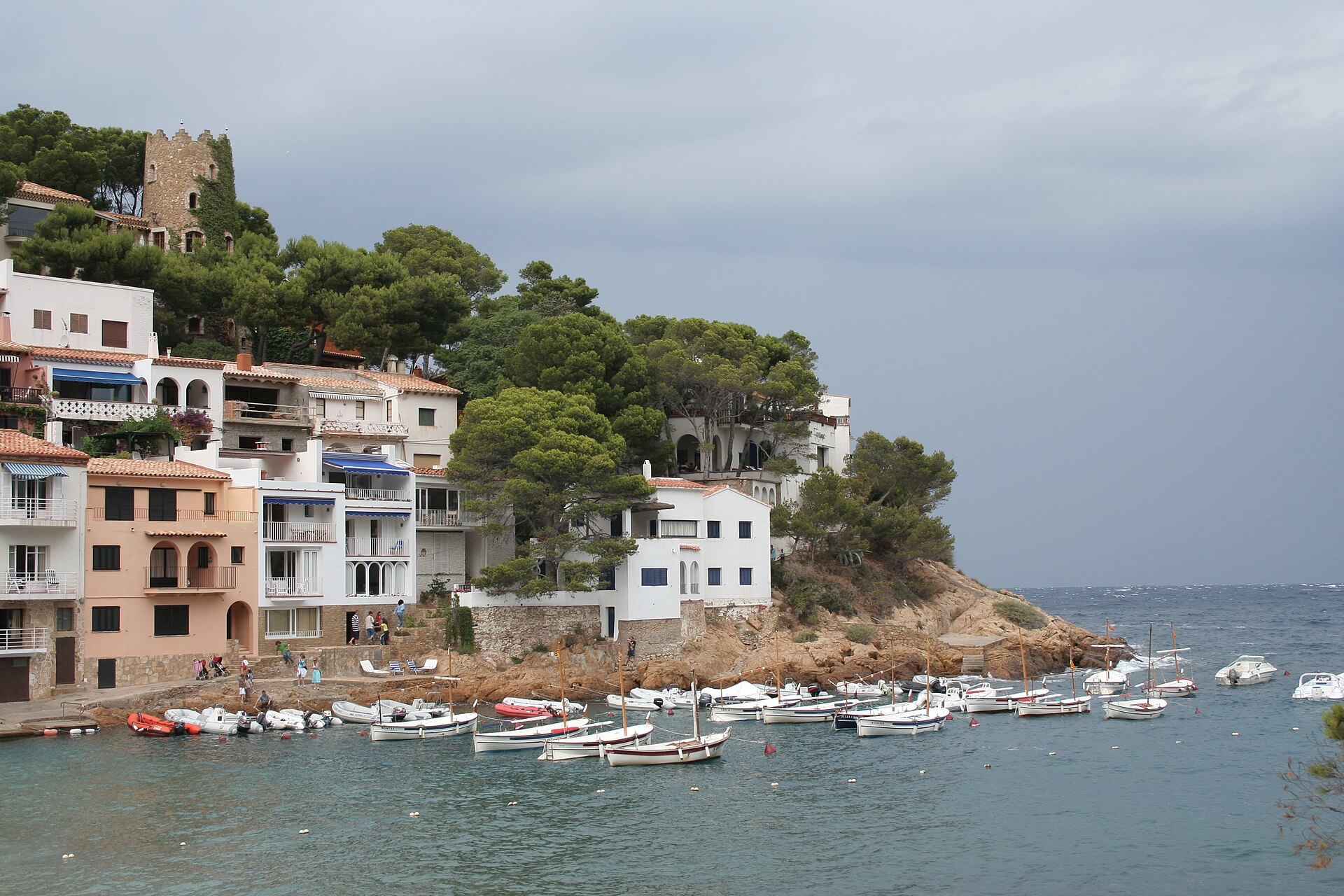
Sa Tuna still retains the appearance of a small fishing village.
Its houses beside the sea, protective rocks and crystal-clear waters make this cove one of Begur’s best-known locations.
It has access ramps and walkways, a bar, showers and a parking area. Public transport is also available in summer.
From Sa Tuna, you can walk along the coastal path to Aiguafreda.
It is also worth visiting the small Cala S’Eixugador, which can be reached on foot or by swimming from Sa Tuna.
Another curious spot is the Cova de Sant Pau, where you will find a naturally shaded area beside the beach. During the summer, habanera performances take place here, a tradition closely associated with the Catalan coast.
Platja Fonda
Below Cap de Begur lies Platja Fonda, a dark-sand beach contrasting with the intense blue of the water.
Access is more difficult than at some other beaches, as you have to descend a staircase, but this has helped preserve a more natural atmosphere.
Nearby is the stretch of coastline traditionally associated with the episode in which the poet Ferran Agulló is said to have used the name Costa Brava to describe this coastline.
Fornells
The Fornells area comprises several small coves: N’Estasia, Ses Orats and Cala d’en Malaret, connected by coastal paths.
It is a very pleasant area for walking beside the sea, admiring the houses built along the coast and discovering less obvious corners.
Aiguablava
Finally, we reach one of Begur’s best-known images.
Aiguablava, whose name literally means «blue water», is protected by Punta d’es Mut and the rocky outcrops of Cala de Cabres and Ses Falugues.
Pine and olive trees grow almost down to the water’s edge, while the purplish tones of the rocks contrast with the fine sand and shallow turquoise-blue waters.
The beach is approximately 75 metres long and 25 metres wide and has parking, showers, water sports, pedal-boat hire and restaurants.
The coastal paths: one of the best ways to discover Begur
If you want to discover the true essence of the coast, do not simply drive to the beaches.
The coastal paths connect different coves and reveal perspectives that cannot be seen from the road.
One of the most interesting routes connects Aiguafreda and Sa Tuna, although some sections involve steps and changes in elevation.
There is also the GR-92 route, which allows you to leave Begur towards Sa Tuna and continue through some of the wildest sections of the coastline.
For those who prefer viewpoints, Begur also has a Viewpoint Route with 17 locations, some accessible by car and others on foot. It can be enjoyed throughout the year.
Begur can also be enjoyed away from the beach
One of Begur’s great advantages is that you can plan a getaway even when the weather is not suitable for swimming.
In autumn and winter, the town centre becomes much quieter, allowing you to stroll among the Indian houses, visit the castle, explore Esclanyà, follow a hiking route or discover the viewpoints.
Spring is particularly appealing for combining nature and gastronomy, while summer brings the greatest activity to the coves, coastal paths, terraces, water sports and local festivities.
Ultimately, Begur is one of those destinations where the beach can be the beginning of your visit, but it certainly does not have to be the end.
Shopping and shops in Begur
You will also find an interesting range of shops.
The town centre has shops selling fashion and accessories, home décor, jewellery, food, wine and cellars, crafts, ceramics, beach products, books, art, cosmetics, hairdressing services and specialist goods.
So, as well as buying a souvenir of your trip, you can find local gastronomic products, Empordà wines, handicrafts and small items inspired by the Mediterranean.
The weekly market, together with various fairs and commercial activities, also helps keep the town centre lively outside the strictly summer season.
Customs, festivals and traditions
Begur’s culture is shaped by the sea, fishing, emigration to Cuba and its Indian heritage.
One of the best-known celebrations is the Fira d’Indians, held every year at the beginning of September.
During these days, the streets are transformed as the historic relationship between Begur and Cuba is recreated through a market selling overseas products, crafts, music, habaneras, performances and period-themed activities.
In 2026, the Fira d’Indians took place on 4, 5 and 6 September, with an edition dedicated to the theme of the sea and sailing.
Habaneras are also part of the musical tradition of the coast and can be heard during the summer at various venues.
Another important gastronomic tradition is the Rock Fish Gastronomic Campaign, held in spring and celebrating one of the most characteristic products of Begur’s coastline.
Where to eat in Begur?
Begur’s cuisine is directly connected with the Mediterranean.
You will find fish and seafood, rice dishes, traditional seafaring cuisine, seasonal dishes, Catalan specialities and contemporary proposals. Rock fish holds a particularly important place in the local culinary tradition.
Among the restaurants you may wish to consider are:
Restaurant Aigua Blava
Located in the Fornells area, its main attraction is the combination of traditional Catalan cuisine, Mediterranean produce and spectacular views over the bay.
The restaurant offers an à la carte menu, seasonal menus and special gastronomic options.
As a guide, the average à la carte price is around €40–€50 per person, although this may vary depending on your choice of dishes and wine.
Another option worth considering if you would like to dine practically suspended above the Mediterranean.
The current menu includes starters such as Empordà anchovies, mussels, razor clams and squid; various rice dishes, fish from the local fish market, prawns and grilled meats.
As a 2026 price reference, the creamy rice with half a lobster is listed at €38 per person, the fish and seafood paella at €23 per person, fish from the fish market at €79/kg, and desserts at approximately €7–€8. The indicated average price for the restaurant is around €40.
Located in central Begur, this is an alternative for those who prefer to stay in the historic centre and combine dinner with a stroll through its streets.
An interesting option for eating close to Sa Riera beach, particularly if you want to combine a day at the beach with lunch without having to travel into the town centre.
Located on Punta d’es Mut, around 4 km from the centre of Begur, the Parador occupies one of the most spectacular locations in the area.
Its rooms, gardens, swimming pool and spa offer views over the Mediterranean. The building was reopened in 2020 and retains architecture inspired by the Mediterranean coast. It also houses a collection of more than 200 works by Catalan artists.
It offers double rooms, superior rooms and suites, a restaurant, bar, garden, gym, seasonal outdoor swimming pool, free parking and an electric vehicle charging station.
Spa at the Parador de Aiguablava
This is one of the main attractions for those looking for a wellness break.
The spa includes:
Jacuzzi.
Sauna.
Steam room.
Waterfall.
Jet and hydrotherapy pool.
Thermal loungers.
Relaxation area.
Outdoor solarium.
Personalised treatments.
The basic circuit currently costs €45 for non-residents and €40 for hotel guests. Paradores Friends members have specific rates, while residents of Begur have a listed rate of €35.
The circuit is open from 10:00 to 20:00 and advance booking is essential for both the circuit and treatments.
As for accommodation, indicative rates of €124, €264 and €374 are offered depending on the category or board basis indicated in the table, so it is advisable to check the exact rate for your chosen dates.
Hotel Aigua Blava is one of the Costa Brava’s historic establishments.
It was founded by Clara Capellà, known as «la Clareta», in 1934 and remains in the hands of the same family today.
Its location overlooking the Fornells and Aiguablava area provides magnificent sea views.
It offers:
Heated outdoor swimming pool.
Mediterranean gardens.
Tennis.
Padel.
Gym.
Children’s playground.
Restaurant.
Panoramic terrace.
Private parking.
Wellness area.
Hairdressing and beauty salon.
Wellness at Hotel Aigua Blava
Its Wellness Area offers rooms for therapeutic massages, facial and body treatments, beauty treatments and beauty rituals.
Couples’ treatments are also available, using high-end cosmetic brands such as Natura Bissé, Kérastase, L’Oréal Paris, Scens and Germaine de Capuccini.
It is particularly appealing for those looking to combine the beach, gastronomy and wellness with a stay overlooking the Mediterranean.
The restaurant
Hotel Aigua Blava’s restaurant is open to the public and offers traditional Catalan cuisine based on fresh, seasonal produce.
You can choose from a lunch menu, seasonal menu, dinner menu, daily menu, wine list and special menus. Special gastronomic offerings are also organised, including rock-fish menus and Indian-inspired menus.
As a guide, the restaurant costs approximately €40–€50 per person à la carte.
In 2026, for example, Hotel Aigua Blava’s special rock-fish menu is offered at €80 per person, including water, Castell de Perelada wine and coffee.
For accommodation, indicative rates for Hotel Aigua Blava are €151, €301 and €421, depending on the rate and room category.
What is the best time to visit Begur?
Spring
Probably one of the most interesting seasons for those wanting to combine nature, hiking and gastronomy.
Temperatures are pleasant for walking along the coastal paths and the Mediterranean landscape begins to fill with flowers.
It also coincides with the Rock Fish Gastronomic Campaign, one of the municipality’s major culinary events.
Summer
This is the season for coves, swimming, snorkelling, water sports, terraces and evenings by the sea.
On the other hand, it is also when you will encounter the largest crowds, particularly at Aiguablava, Sa Tuna and Sa Riera.
If you are travelling in July or August, we recommend getting to the beaches early and booking restaurants and accommodation in advance.
Autumn
September is particularly pleasant. The sea remains warm and outdoor temperatures are generally milder.
Begur also holds its famous Fira d’Indians at the beginning of September.
Winter
This is the quietest season.
The beaches take on a completely different appearance and the coastal paths have a much more peaceful atmosphere.
It is a good time to explore the old town, Indian houses, Esclanyà, viewpoints, gastronomy and heritage.
Some of the viewpoint routes can also be enjoyed throughout the year.
A perfect day in Begur
You can start the morning by exploring the old town, visiting Sant Pere Church, the Indian houses and the area around the castle.
Then climb up to the old castle to enjoy the panoramic views.
Afterwards, head down towards Sa Tuna or Aiguafreda, walk a short section of the coastal path and finish with a swim if the season allows.
For lunch, choose one of the terraces in Sa Riera, Sa Tuna or Aiguablava, depending on where you are.
In the afternoon, head towards Aiguablava, explore Fornells and finish by watching the sunset from one of the viewpoints.
And if you would like to turn the day into a truly relaxing experience, you can book a spa circuit at the Parador or enjoy a Wellness treatment at Hotel Aigua Blava.
Begur, much more than a turquoise-water beach
Begur has a remarkable ability to surprise because beneath the image of its crystal-clear waters lie many other stories.
There is the Begur of fishermen and coral traders, of the Indians who returned from Cuba, of the towers built to protect the town from pirates, of the old paths towards Sa Tuna, of colonial houses, cork, habaneras and small coves hidden among the pine trees.
And, of course, there is the Mediterranean Begur of Aiguablava, Sa Tuna, Aiguafreda, Sa Riera, Illa Roja, Platja Fonda, Fornells and Platja del Racó — eight different corners that make every visit a little different.
For this reason, if you want to discover Begur in a different way, do not limit yourself to the photograph of Aiguablava cove.
Walk through its streets, climb up to the castle, discover its Indian houses, sit on a terrace, follow one of the coastal paths, visit Esclanyà, explore its forests and birdlife, and make time to enjoy the local gastronomy.
And if you would like to experience all this and discover Begur with us, get in touch through our contact form. We will tailor the experience to your preferences, the time of year you are travelling and the way in which you would like to discover this wonderful corner of the Costa Brava.
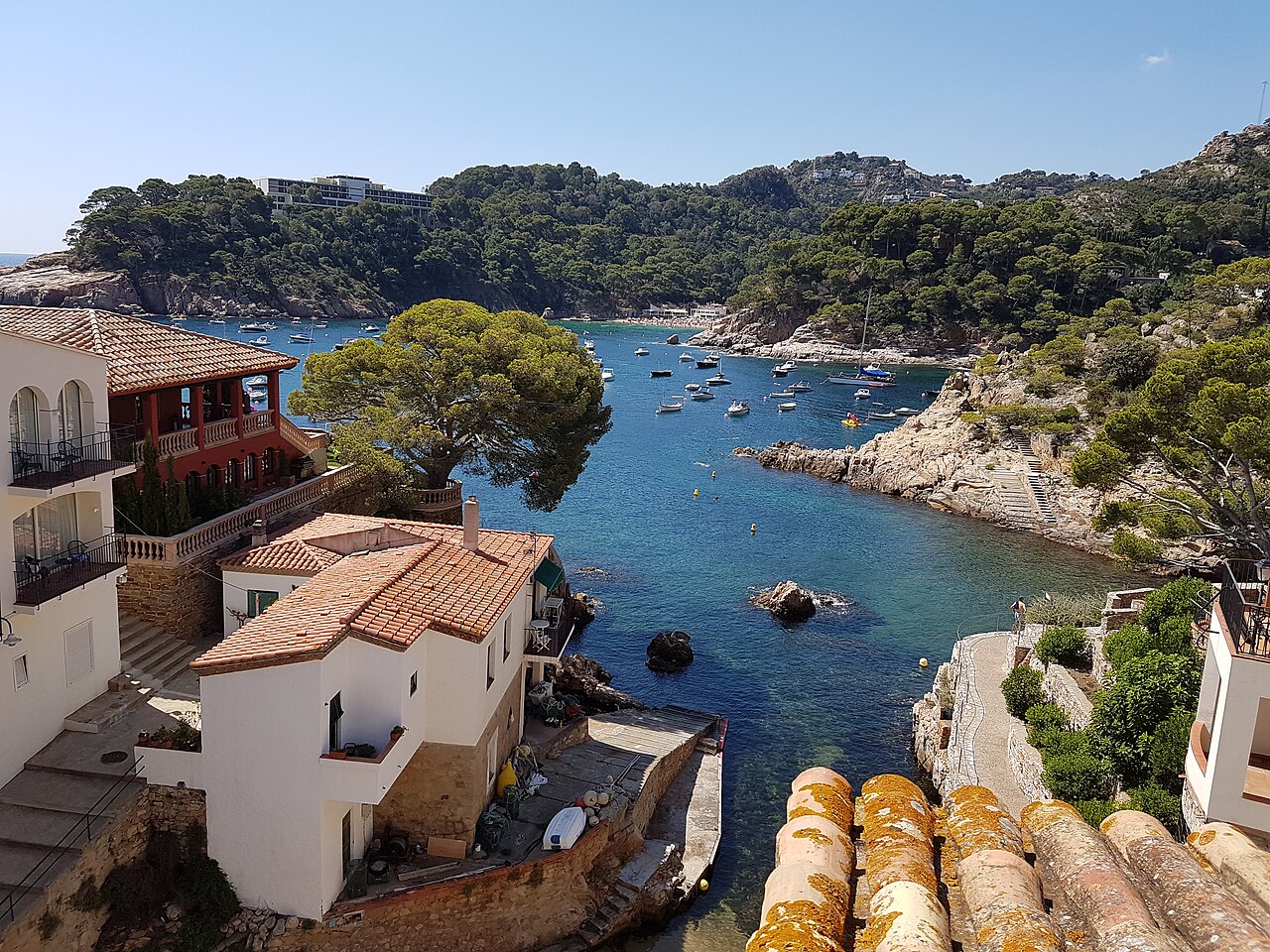
Perspectiva de la Bahía de Aiguablava – By Myriam Thyes – Own work, CC BY-SA 4.0, https://commons.wikimedia.org/w/index.php?curid=72844983.
Cala d’Aiguafreda – De Foto pròpia, Dominio público, https://commons.wikimedia.org/w/index.php?curid=2666592.
Sa Tuna – De No machine-readable author provided. Josemanuel assumed (based on copyright claims). – No machine-readable source provided. Own work assumed (based on copyright claims)., CC BY-SA 2.5, https://commons.wikimedia.org/w/index.php?curid=1296373.
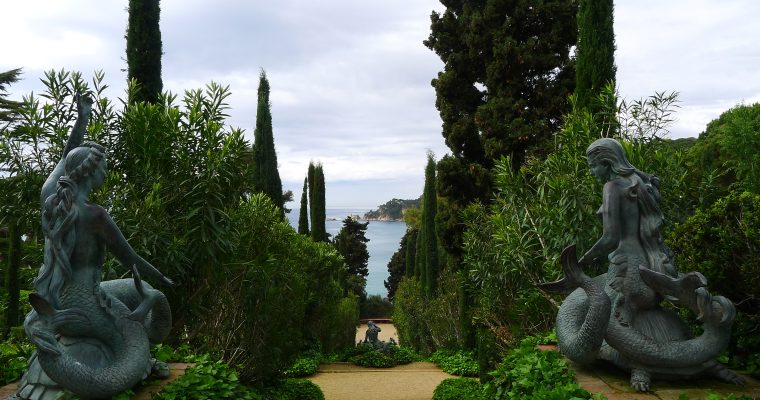
Perched dramatically above the Mediterranean on the Costa Brava, the Santa Clotilde Gardens in Lloret de Mar offer one of the most beautiful combinations of historic garden design and coastal scenery in Catalonia. Among their most spectacular features is the view towards Cala Boadella, a …
Los Jardines de Santa Clotilde, en Lloret de Mar, son uno de los espacios paisajísticos más elegantes y singulares de la Costa Brava. Situados sobre un acantilado entre Cala Boadella y la playa de Fenals, fueron concebidos como un jardín novecentista inspirado en los grandes …
Puigcerdà: A Pyrenean paradise that awakens all the senses
On the banks of the River Segre, embraced by the majestic Pyrenees, lies Puigcerdà, the capital of the Cerdanya region, at approximately 1,200 metres above sea level.
Located just 150 km from Barcelona, the journey by car takes around two hours, transporting you from the lively Catalan capital to a peaceful refuge surrounded by pristine nature.
Puigcerdà is a town where time seems to move at a slower pace, inviting you to discover its landscapes, history and gastronomy. Close to the French border, it is a fascinating crossroads of cultures and traditions where nature and human life coexist in remarkable harmony.
History and Heritage
A medieval and bourgeois legacy
Puigcerdà became particularly prestigious during the second half of the 19th century and the beginning of the 20th century, when many Barcelona bourgeois families began spending their summers here to escape the heat of the city.
This period transformed the town and contributed to the redevelopment of its artificial lake, giving it a more elegant and distinguished character. The lake acquired the unusual shape of an irregular hexagon that still defines its appearance today.
Several elegant villas were built around the lake during this period and can still be admired while walking through the town.
Traditionally, families from Barcelona also spent Christmas, New Year’s Eve and the winter months in Cerdanya, particularly enjoying the surrounding mountains and skiing. This helped establish the region as an exclusive destination for leisure and mountain tourism.
The old town, with its Town Hall Square, Carrer Major, Santa Maria Square and Gothic-Romanesque bell tower, offers a journey through centuries of history.
Visitors should also discover the 12th-century regional hospital and the Cerdà Museum, dedicated to the history, ethnology and natural heritage of the region.
A Mountain Climate Shaped by Nature
Cerdanya enjoys a Mediterranean mountain climate, characterised by cold and relatively dry winters and warm, dry summers accompanied by occasional summer storms.
Autumn tends to be wetter, sometimes causing increased river flows, while spring arrives relatively late and is generally moderately rainy.
The Cerdanya plain, particularly its sunnier southern-facing areas, is considerably drier than La Molina, where winter snowfall is abundant.
The Bellver area receives more rainfall due to the arrival of humid air, although winter temperatures can be extremely low.
Spring flowering begins towards the end of April and continues throughout May, while vegetation reaches its greatest splendour during June and early July.
From late September onwards, deciduous trees begin to lose their leaves, transforming the forests into a spectacular palette of red, ochre, yellow and green.
It is one of the most beautiful seasonal transitions in the Pyrenees.
Rivers and Wildlife
The municipality of Puigcerdà is crossed by four rivers: the Segre, the principal tributary of the Ebro, together with its tributaries the Raür, Llavanera and Querol, all of which originate in France.
These waterways, together with the Lanós irrigation canal, have historically supported agriculture and the hay meadows that still form an essential part of the Cerdanya landscape.
The region is also home to an impressive variety of wildlife.
Birdlife includes migratory and occasional species such as white storks, as well as resident birds including ravens, sparrowhawks and green woodpeckers.
Around the lake, visitors can observe mallards, mute swans and white pigeons. During migration periods, other species appear, including Eurasian wigeons, moorhens and several species of gull.
The rivers and streams also support a variety of fish, including eels, catfish, carp, gudgeon, minnows and brown trout.
A Destination for the Senses and Adventure
Puigcerdà and the surrounding Cerdanya valley offer an extensive range of outdoor activities.
Visitors can enjoy:
Hiking.
High-mountain excursions.
Mountain biking.
Horse riding.
Quad routes.
Skiing.
Golf.
Nature observation.
Birdwatching.
A boat ride on the artificial lake in Parc Schierbeck offers a particularly peaceful experience, surrounded by trees, water and mountain scenery.
Throughout the year, the landscape changes dramatically as the seasons transform the colour of the forests and the activity of the local wildlife.
The Bosquet de Puigcerdà provides an easy but highly rewarding walk, with beautiful views towards the Querol valley and routes connecting the natural landscape with the history of the region.
Cerdanya: A Mosaic of Flavours
The local cuisine reflects the richness of the mountain valleys and the influence of neighbouring Catalan and French traditions.
Among the region’s most characteristic products are:
Beef and lamb.
Local cheeses.
Seasonal vegetables.
Cereals.
Farm poultry.
Artisan yoghurt.
Butter.
Traditional cured meats.
These ingredients form the basis of traditional dishes such as:
Trinxat de Cerdanya.
Rabbit with mushrooms.
Tiró amb naps, duck with turnips.
Garlic soups.
Mató, a traditional fresh Catalan cheese.
Artisan yoghurts.
Local cheeses and butter.
Specialities such as Talltendre turnips, Cerdanya pears and winter cabbage, together with traditional cured meats such as bull de fetge and black bull, complete a gastronomic experience deeply connected with the land and the seasons.
Discover Puigcerdà with Magic Dreams Barcelona
At Magic Dreams Barcelona, we invite you to experience Puigcerdà and Cerdanya in a unique and personalised way.
Our romantic weekend escapes and day trips can include transportation, carefully selected locations and native guides specialising in history, botany and ornithology.
We can also arrange gastronomic experiences in traditional local establishments or private culinary experiences with our chef, specialising in local and international cuisine.
With advance notice, our experiences can be adapted to different languages.
We also offer private wellness services, exclusive concerts, themed gastronomy and personalised experiences designed around your interests.
Every detail is carefully planned so that you can feel comfortable, accompanied and completely immersed in the destination.
Our aim is to create an experience that goes beyond conventional tourism: a journey that awakens the senses and connects you with the landscapes, traditions, flavours and cultural heritage of Cerdanya.
Discover this extraordinary corner of the Catalan Pyrenees through the eyes of Magic Dreams Barcelona and let yourself be carried away by experiences that remain in your memory long after the journey has ended.
Detalle en el Lago de Puigcerdà.
Plaza de Santa María a pie.
Campanario de la antigua Iglesia de Santa María de Puigcerdá, en la plaza de Santa María.
El Bosquet.
Lago de Puigcerdà nevado.
Lago de Puigcerdà nevado.
Lago de Puigcerdà.
Detalle en el Lago de Puigcerdà.
Puigcerdà.
Perspectiva desde el Campanario de la antigua Iglesia de Santa María de Puigcerdá, en la plaza de Santa María.
Paisaje nevado en Puigcerdà, en el Chalet Golf.
Campanario de la antigua Iglesia de Santa María de Puigcerdá, en la plaza de Santa María.
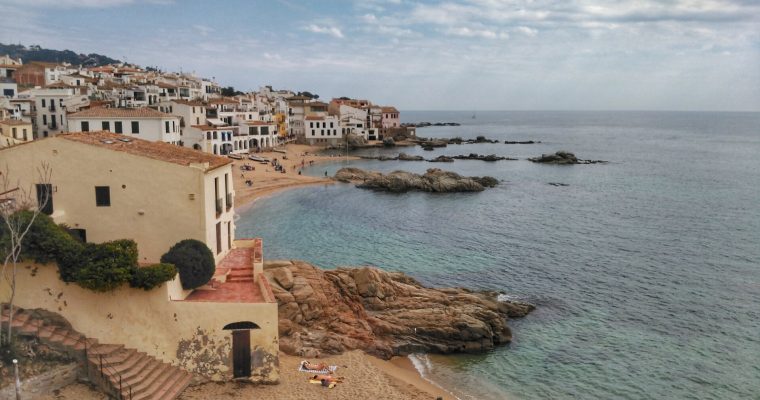
Maritime essence, beaches, heritage and Serrat’s Mediterranean Calella de Palafrugell is one of the coastal settlements belonging to the municipality of Palafrugell, in the Baix Empordà region, in the province of Girona, in the heart of the Costa Brava. It is one of those places …
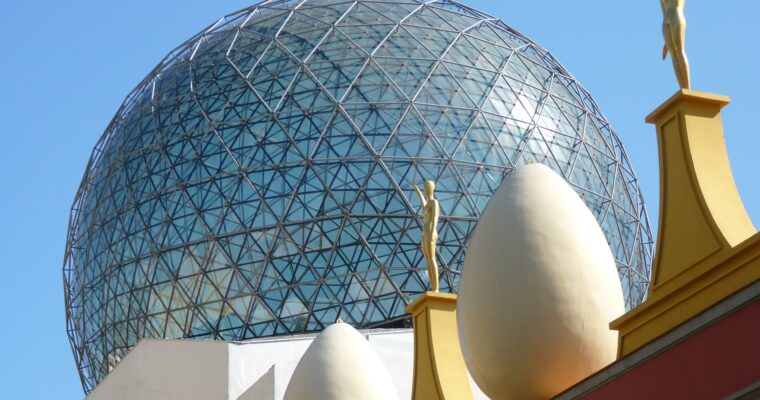
Salvador Dalí’s great surrealist universe The Dalí Theatre-Museum in Figueres is one of the most extraordinary museums in Catalonia and one of the most iconic places associated with Salvador Dalí. Conceived as a total work of art, the museum invites visitors to enter the artist’s …
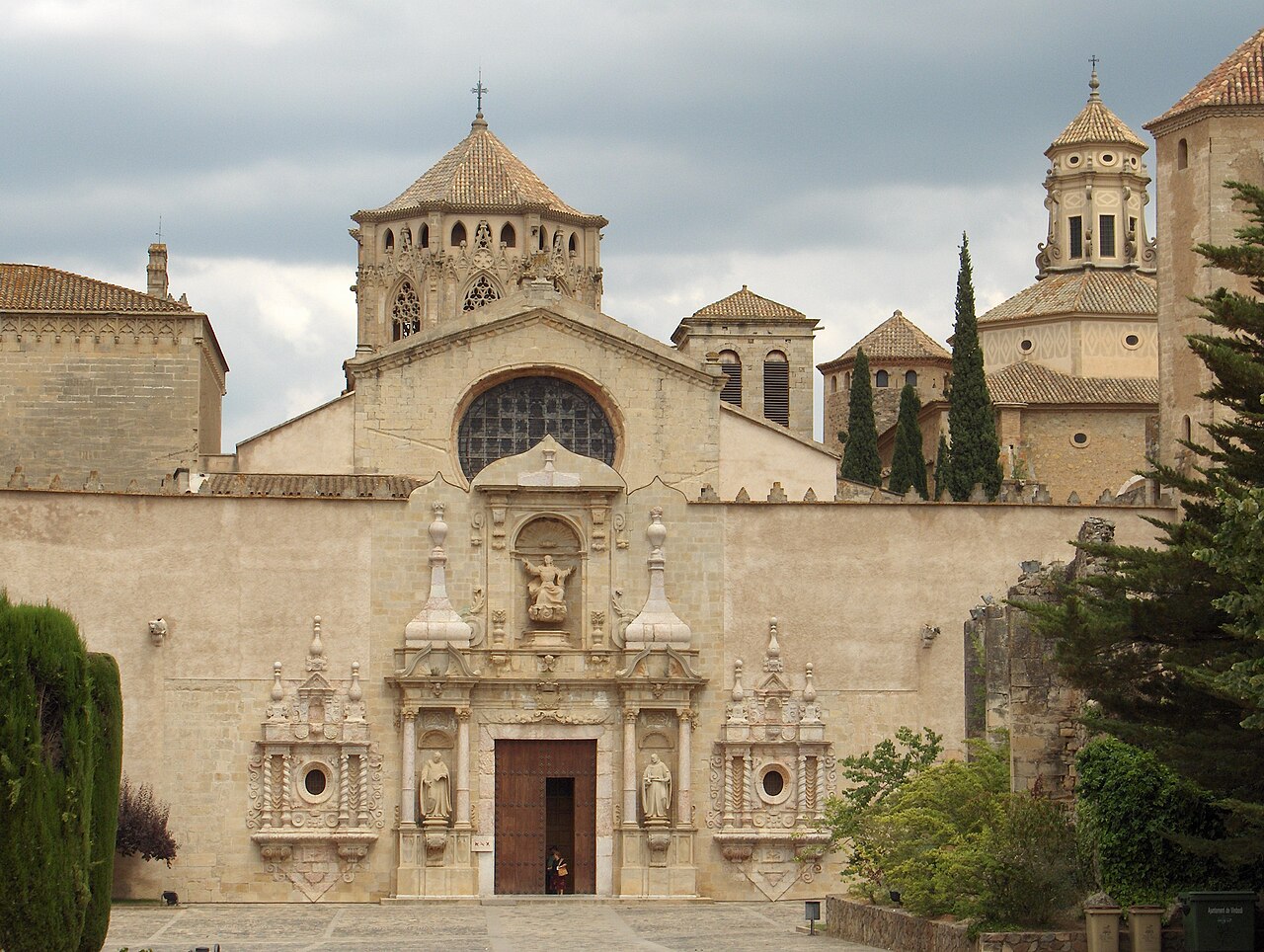
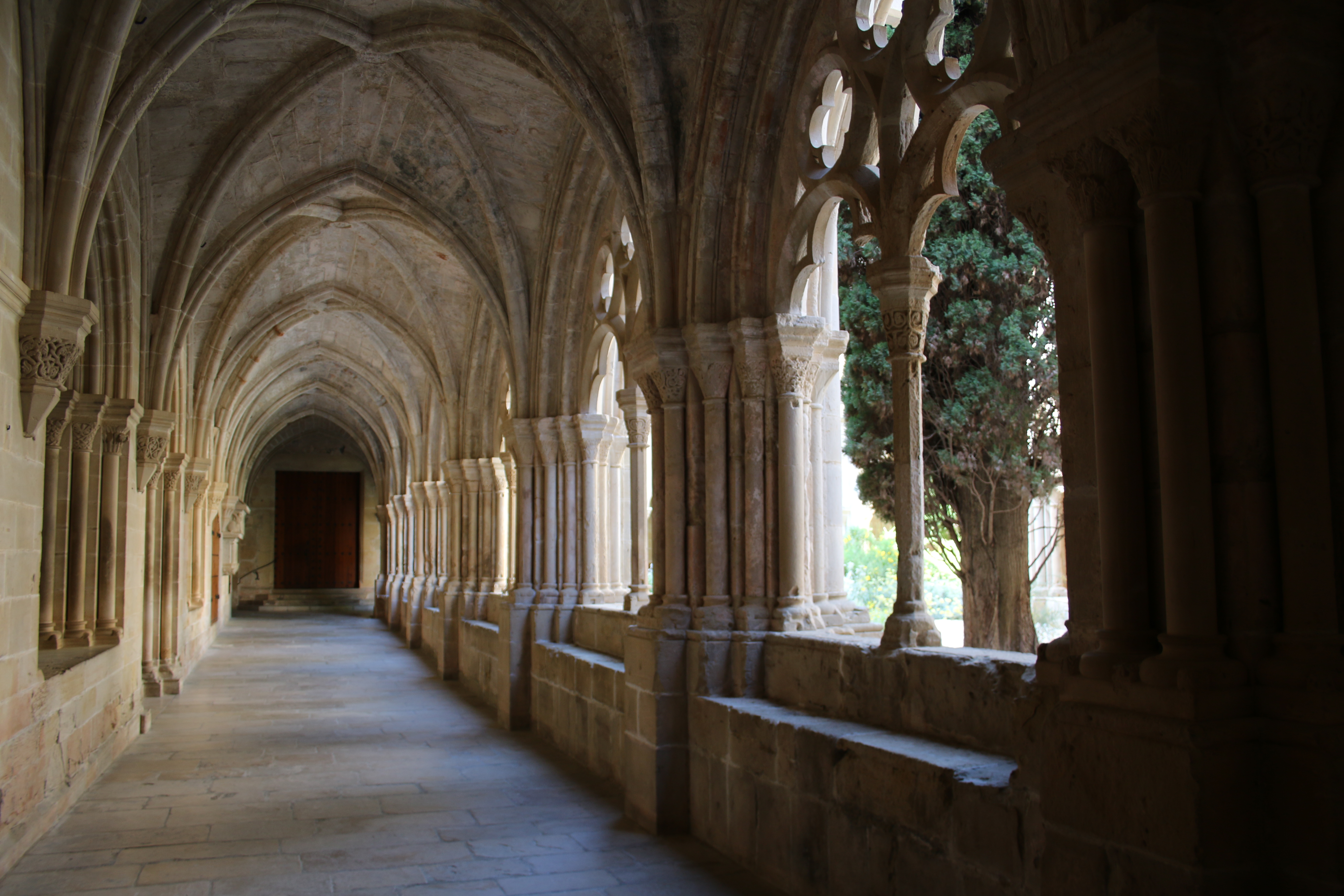
Hidden among the landscapes of the Conca de Barberà, in the province of Tarragona, stands one of Catalonia’s most extraordinary historical treasures: the Royal Monastery of Santa Maria de Poblet.
This impressive Cistercian monastery is much more than a beautiful medieval building. It is a place connected to the history of the Crown of Aragon, the Catalan royal dynasty, medieval monastic life and some of the most remarkable architectural traditions of Catalonia.
Declared a UNESCO World Heritage Site in 1991, Poblet is considered one of the largest and most complete Cistercian abbeys in the world.
If you are staying in Barcelona and would like to discover a different side of Catalonia, we highly recommend including Poblet in your itinerary.
Where is the Royal Monastery of Poblet?
The monastery is located in the municipality of Vimbodí i Poblet, in the Conca de Barberà region of Tarragona.
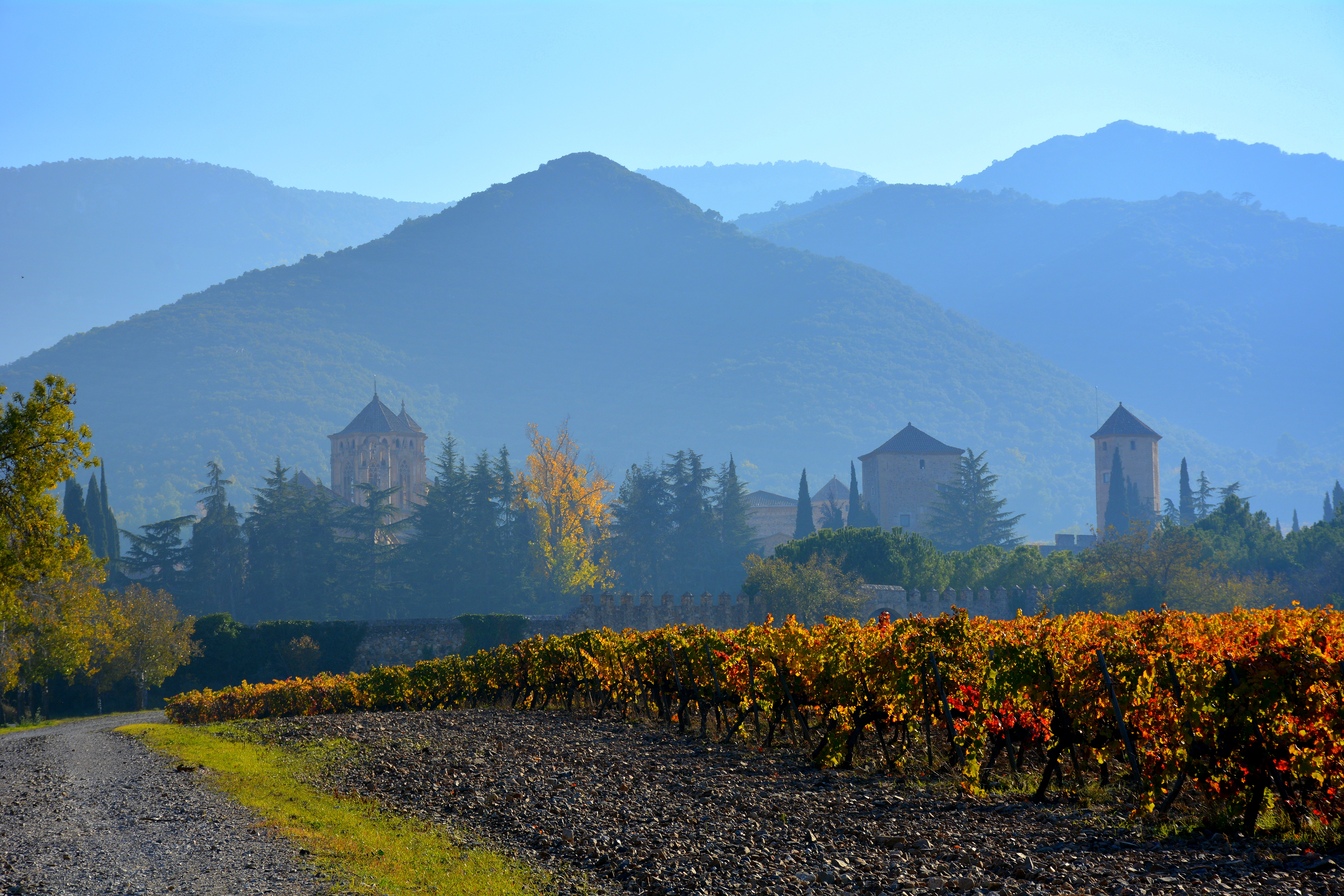
Its surroundings make the journey particularly attractive. The monastery is surrounded by forests, mountains and historic villages, creating an atmosphere that feels very different from the urban environment of Barcelona.
The location also makes Poblet an excellent destination for a cultural day trip from Barcelona.
How far is Poblet from Barcelona?
By car, the journey from Barcelona to Poblet is approximately 120 kilometres, depending on the exact route.
Under normal traffic conditions, the drive takes around 1 hour and 20 minutes to 1 hour and 30 minutes.
The usual route is via the AP-7 and AP-2, followed by the exit towards L’Espluga de Francolí and Poblet.
For visitors who prefer not to drive, there are also public transport options, although they require considerably more planning.
The nearest railway station is L’Espluga de Francolí, approximately 3 kilometres from the monastery.
A Brief History of Poblet
The history of Poblet begins in 1150, when the Cistercian monastery was founded in the context of the Christian expansion of the Crown of Aragon.
Over the following centuries, the monastery grew in importance and became one of the principal religious and political centres of the region.
Its relationship with the royal house became particularly significant.
Poblet eventually became the royal pantheon of the Crown of Aragon, and several kings and queens were buried here.
This royal connection transformed the monastery into much more than a religious institution. It became a powerful symbol of the medieval Crown of Aragon and an important centre of culture, administration and spirituality.
The Royal Pantheon
One of the most fascinating parts of Poblet is the Royal Pantheon, where members of the royal dynasties of Catalonia and Aragon were buried.
The tombs are located inside the monastery church, above the passageways between the columns.
Among the monarchs associated with the pantheon are Peter the Ceremonious, Martin the Humanist, Alfonso the Magnanimous and James II of Aragon, among others.
For visitors interested in medieval history, this is one of the most important highlights of the entire complex.
Walking through the church and seeing the royal tombs provides a direct connection with centuries of European history.
The Architecture of Poblet
Poblet is particularly interesting because it combines several architectural periods.
Its construction developed over centuries, and visitors can identify Romanesque, Gothic, Renaissance and Baroque elements throughout the complex.
However, Gothic architecture is particularly prominent in some of the monastery’s most important spaces.
The monastery was designed according to the principles of Cistercian architecture, which traditionally emphasized simplicity, functionality, light and spiritual contemplation.
At the same time, Poblet developed into an extraordinarily complex architectural ensemble.
The Three Enclosures of the Monastery
One of the most distinctive characteristics of Poblet is its organization into three main enclosures.
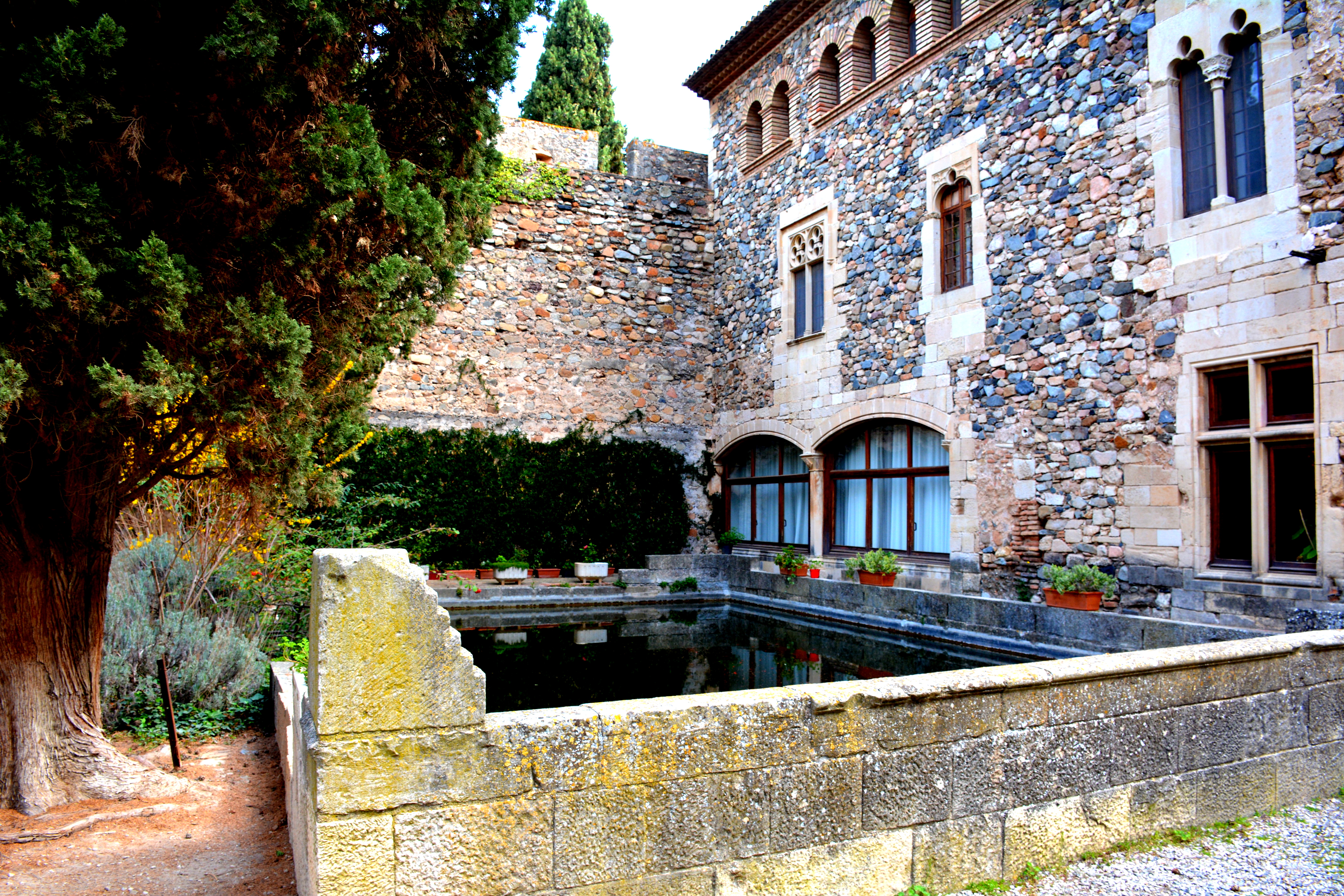
The complex is surrounded by defensive walls and towers, giving the monastery an imposing fortified appearance.
The First Enclosure
The first enclosure contains historic spaces that were connected with practical and everyday activities.
Among them are former stores, workshops and housing dating from later periods.
One of the most notable buildings is the Chapel of Saint George, a Gothic chapel dating from the 15th century.
This area provides an interesting introduction to the monastery before visitors reach its principal monumental spaces.
The Second Enclosure
The second enclosure leads visitors further into the historical heart of the complex.
Here you can find the Plaça Major, remains associated with the former hospital for the poor, the Romanesque Chapel of Santa Catherine and other historic spaces.
The architecture gradually becomes more monumental as you approach the main monastic enclosure.
The Third Enclosure
The third enclosure contains the heart of Poblet.
This is where visitors find the monastery church, the great cloister and many of the rooms associated with monastic life.
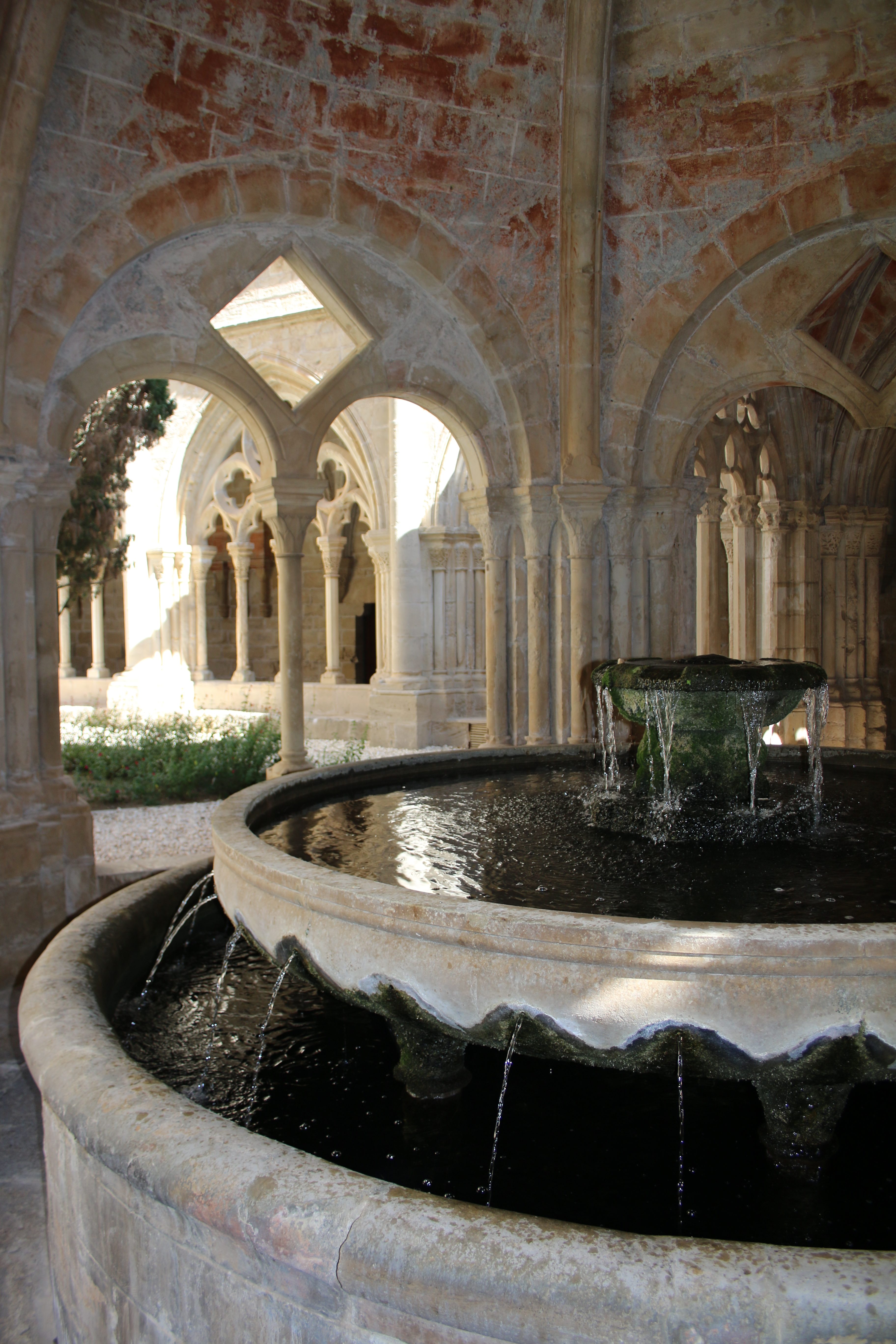
The cloister is particularly impressive and is one of the best places to appreciate the Gothic character of the monastery.
The Royal Gate and Defensive Walls
The monastery’s defensive character is impossible to miss.
The surrounding wall is approximately 11 metres high and extends for around 608 metres.
The fortifications were commissioned during the reign of Peter the Ceremonious, reflecting the political and strategic importance that Poblet had acquired.
The impressive Royal Gate was commissioned in the 14th century from the military engineer Guillem de Guimerà.
It is one of the most striking entrances to the monastery.
The Monastery Church
The church is at the centre of the monumental complex.
Its architecture follows the Cistercian tradition while incorporating Gothic elements.
The church has three naves, a transept and an ambulatory around the main altar.
The central nave is covered by a pointed vault, while the side aisles feature ribbed vaulting.
Inside, visitors can also admire the royal tombs and the impressive Renaissance alabaster altarpiece.
For many visitors, the combination of monumental architecture, royal history and religious symbolism makes the church one of the highlights of Poblet.
The Great Cloister
The great cloister is one of the most beautiful spaces in the monastery.
Its Gothic architecture creates a peaceful environment that contrasts with the defensive character of the exterior walls.
The cloister connected many of the monastery’s principal rooms and played an essential role in the daily life of the monks.
It is also one of the best places to appreciate the proportions, stonework and architectural details of Poblet.
The Chapter House
The Chapter House was one of the most important spaces in the daily life of the Cistercian community.
The monks gathered here to discuss matters concerning the monastery, listen to readings and deal with the administration of their community.
Its architecture reflects the importance of the space within monastic life.
The Refectory and Kitchen
The monastery also preserves spaces associated with the everyday life of the monks.
The refectory was where the community took its meals.
Nearby were the kitchen and other service areas required to support the monastic community.
These spaces help visitors understand that Poblet was not simply a monumental or religious building. It was a complete community designed around prayer, work, study and communal life.
The Scriptorium and Library
Poblet also became an important centre of learning.
The monastery had a library and scriptorium, where manuscripts were copied, preserved and studied.
The monks contributed to the transmission of knowledge, particularly in areas such as law and history.
This intellectual dimension is another reason why Poblet is so significant.
Its importance goes beyond architecture: it was also a centre of culture and knowledge.
The Palace of King Martin
One of the most fascinating structures within the complex is the Palace of King Martin.
Construction began towards the end of the 14th century, although the building was never completely finished after the death of King Martin in 1410.
Its Gothic windows are particularly distinctive.
The interiors were later completed and reconstructed during the 20th century to accommodate historical collections.
The palace is an excellent example of the connection between the monastery and the royal court.
What Happened to Poblet?
The monastery experienced a dramatic period of decline during the 19th century.
In 1835, following the confiscation of church property in Spain, the monks were forced to leave Poblet.
The abandoned monastery suffered looting and deterioration, and many of its buildings were seriously damaged.
For decades, Poblet remained in a state of ruin.
Fortunately, restoration efforts eventually began, and monastic life returned in 1940.
The restoration of Poblet became one of the most important heritage projects in Catalonia.
Poblet and UNESCO
The Royal Monastery of Santa Maria de Poblet was declared a UNESCO World Heritage Site in 1991.
UNESCO recognizes Poblet as one of the largest and most complete Cistercian abbeys in the world.
Its importance lies not only in its architecture but also in its historical relationship with the Crown of Aragon, its royal pantheon and its extraordinary preservation as a complete monastic complex.
How Do You Visit the Monastery?
The tourist visit to Poblet can be completed independently using the official “Poblet, guía oficial” application.
We recommend bringing headphones so that you can comfortably follow the information during the visit.
In addition to the monumental area, the visit includes the museum and interpretation centre, providing further information about the history and significance of the monastery.
We recommend preparing your visit in advance and checking the opening times before travelling, particularly during public holidays and special dates.
Would you prefer to discover Poblet without worrying about the organization?
If you would like to experience the monastery in a more comfortable and personalized way, Magic Dreams Barcelona can organize the entire experience for you.
We can arrange a private excursion from Barcelona including private transportation, guide services, scheduling, gastronomy and all the essential details required for a relaxed and enjoyable day.
You will not have to worry about how to get there, where to park, how to organize your time or where to enjoy a good meal.
We take care of the logistics so that you can concentrate on discovering Poblet and enjoying its history.
For visitors looking for a private and carefully planned experience, we highly recommend combining culture, heritage, gastronomy and the beautiful landscapes surrounding the monastery.
If you are considering visiting the Royal Monastery of Poblet from Barcelona, Magic Dreams Barcelona can design the complete experience for you, adapting the itinerary to your interests, preferred pace and requirements.
Opening Hours
The official tourist opening hours vary according to the season.
Winter season
15 September – 14 June
Monday to Saturday: 10:00–12:30 and 15:00–18:00
Sundays and public holidays: 10:30–12:30 and 15:00–18:00
Summer season
15 June – 14 September
Monday to Saturday: 10:00–12:30 and 15:00–18:30
Sundays and public holidays: 10:30–12:30 and 15:00–18:30
Tickets are normally sold until 30 minutes before closing.
The monastery is closed all day on certain public holidays, including 1 January, 6 January, 25 December and 26 December.
We strongly recommend checking the official schedule before travelling because special opening times may apply on specific dates.
Ticket Prices
Current general admission prices include:
General admission: €10.50
Reduced admission: €7.50
School and university groups: €6
Combined Cistercian Route ticket: €18
The combined ticket includes Poblet, Santes Creus and Vallbona de les Monges.
Reduced admission applies to several categories, including seniors, children from 7 years old, students and certain other groups with the appropriate documentation.
How to Get to Poblet from Barcelona
By Car
Driving is the most convenient option, particularly if you would like to combine Poblet with other destinations in the area.
The journey from Barcelona takes approximately 1 hour and 20–30 minutes, depending on traffic and the route.
By Train
You can travel by train from Barcelona towards the Tarragona/Lleida area and reach L’Espluga de Francolí.
The station is approximately 3 kilometres from the monastery, meaning that you will need to arrange the final part of the journey.
By Bus
Bus connections are possible, but they generally require more planning and transfers.
For this reason, visitors who want to make the most of a single day often find private transportation considerably more comfortable.
Where to Eat Near Poblet
A visit to Poblet can easily be combined with lunch in the surrounding area.
Among the nearby options are:
Restaurant Hostatgeria de Poblet — located very close to the monastery and a convenient option for combining the visit with lunch.
Restaurant El Grèvol — located in Vimbodí and offering a more informal local dining option.
Restaurant Dels Torrents — another nearby choice for enjoying a meal during your visit.
Opening times can change according to the season, so we recommend checking availability before travelling.
For a private excursion with Magic Dreams Barcelona, we can also help coordinate the gastronomic part of your experience so that your day is organized smoothly from beginning to end.
What Can You Do Around Poblet?
A visit to the monastery can be extended into a broader cultural excursion.
The surrounding area offers opportunities to discover:
Historic villages in the Conca de Barberà
The Cistercian heritage of Catalonia
Forest landscapes surrounding Poblet
L’Espluga de Francolí
Montblanc and its medieval heritage
Other historic monasteries in the region
Local gastronomy and traditional Catalan cuisine
One particularly interesting option is the Cistercian Route, which connects Poblet with the monasteries of Santes Creus and Vallbona de les Monges.
7 Fascinating Facts About Poblet
1. It is a royal burial place
Poblet became the royal pantheon of the Crown of Aragon, making it one of the most important royal burial sites in Catalonia.
2. It is a UNESCO World Heritage Site
Poblet has been recognized by UNESCO since 1991 because of its exceptional historical and architectural value.
3. It is a fortified monastery
Unlike many monasteries, Poblet has imposing defensive walls and towers, reflecting its historical importance.
4. It combines different architectural periods
Romanesque, Gothic, Renaissance and Baroque elements can all be found throughout the complex.
5. Monastic life returned in the 20th century
After decades of abandonment following the events of 1835, the monastic community returned in 1940.
6. It was an important centre of knowledge
The monastery developed an important library and scriptorium, contributing to the preservation and transmission of historical knowledge.
7. It remains one of Catalonia’s great historical landmarks
Today, Poblet is one of the most important examples of Cistercian heritage in Europe and one of the most remarkable cultural destinations in Catalonia.
Why Visit Poblet from Barcelona?
If you are staying in Barcelona, Poblet offers the opportunity to experience a completely different side of Catalonia.
Instead of focusing only on Barcelona’s urban attractions, you can discover medieval architecture, royal history, monastic traditions and spectacular landscapes in a single day.
We highly recommend Poblet for travelers interested in history, architecture, culture and authentic Catalan heritage.
And if you would rather enjoy the experience without worrying about transportation, reservations or logistics, Magic Dreams Barcelona can take care of the entire journey for you.
From the moment you leave Barcelona until your return, we can coordinate the vehicle, guide, itinerary, gastronomy and the details that make the difference between simply visiting a monument and enjoying a truly memorable cultural experience.
We invite you to discover the Royal Monastery of Poblet and experience one of Catalonia’s most fascinating historical treasures.
Iglesia del monasterio, parte de la Epístola. Sepulcros reconstruidos por Federico Marés Deulovol en 1944 – José Luis Filpo Cabana, CC BY 3.0 , via Wikimedia Commons.
Arcos del claustro – Francis Raher, CC BY 2.0 , via Wikimedia Commons.
Monestir de Poblet, Vimbodí – Angela Llop de España, CC BY-SA 2.0 , via Wikimedia Commons.
Monasterio, otoño, viñas, cisterna – By Angela Llop – https://www.flickr.com/photos/angela_llop/26730740849/, CC BY-SA 2.0, https://commons.wikimedia.org/w/index.php?curid=91000669.
Monasterio de Poblet – By FrDr – Own work, CC BY-SA 4.0, https://commons.wikimedia.org/w/index.php?curid=109229564.
Monasterio de Poblet – By FrDr – Own work, CC BY-SA 4.0, https://commons.wikimedia.org/w/index.php?curid=109229889.
Alrededores del Real Monasterio de Poblet – By LBM1948 – Own work, CC BY-SA 4.0, https://commons.wikimedia.org/w/index.php?curid=120602240.
A Pyrenean paradise that awakens all the senses At an altitude of 1,539 metres, in the heart of Cerdanya, lies Meranges, the municipal capital located at the highest elevation in Catalonia. This small mountain village is a place where stone houses, slate roofs and wooden …
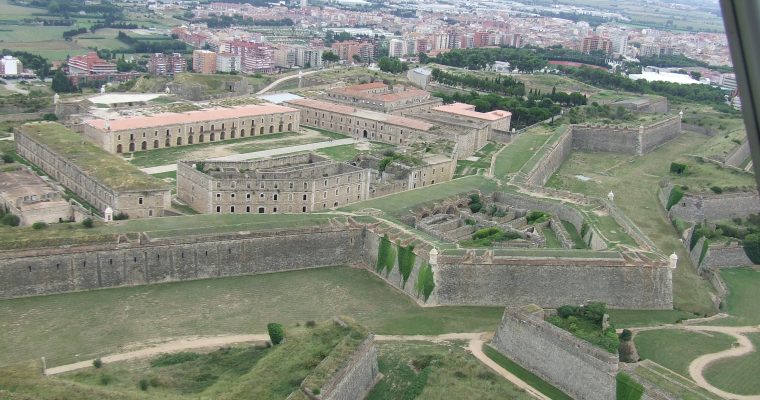
One of Europe’s Great Fortresses in the Heart of the Empordà Just a few minutes from the centre of Figueres, on a hill overlooking much of the Alt Empordà, stands Sant Ferran Castle, one of the most extraordinary military constructions in Catalonia. This is not …
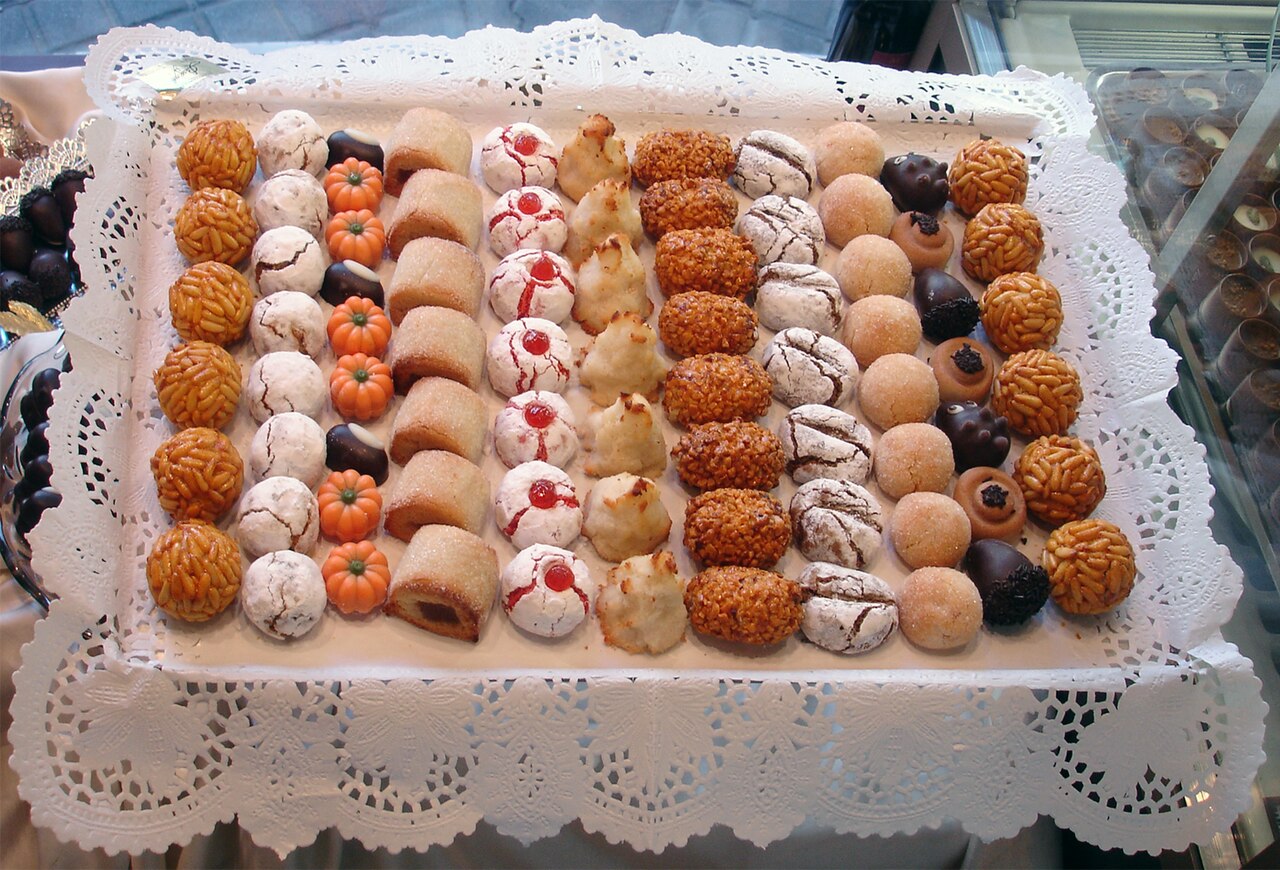
When autumn arrives in Catalonia, its leaves begin to turn shades of ochre and gold, prickly husks cover the paths through the chestnut groves, and chestnuts once again appear in markets, homes and streets. Their roasted aroma announces one of the most characteristic celebrations in the Catalan calendar: the Castanyada.
But behind that small autumn fruit lies a much broader world.
There is the tree, which can live for centuries; the wood, which for generations had considerable value as a forest resource; the forests of the Montseny, the humid slopes of Montnegre; the traditional ways of gathering the fruit; the chestnut sellers who for decades filled the streets of Barcelona with smoke; autumn fairs; traditional recipes; panellets; sweet potatoes; and also the stories and legends that have accompanied the chestnut trees.
The chestnut tree is, ultimately, much more than the tree that produces chestnuts.
It is part of a landscape, a rural economy and a tradition that awakens again every autumn.
The Castanyer: An Ancient Tree Linked to the Mediterranean Landscape
The scientific name of the European chestnut is Castanea sativa Mill.
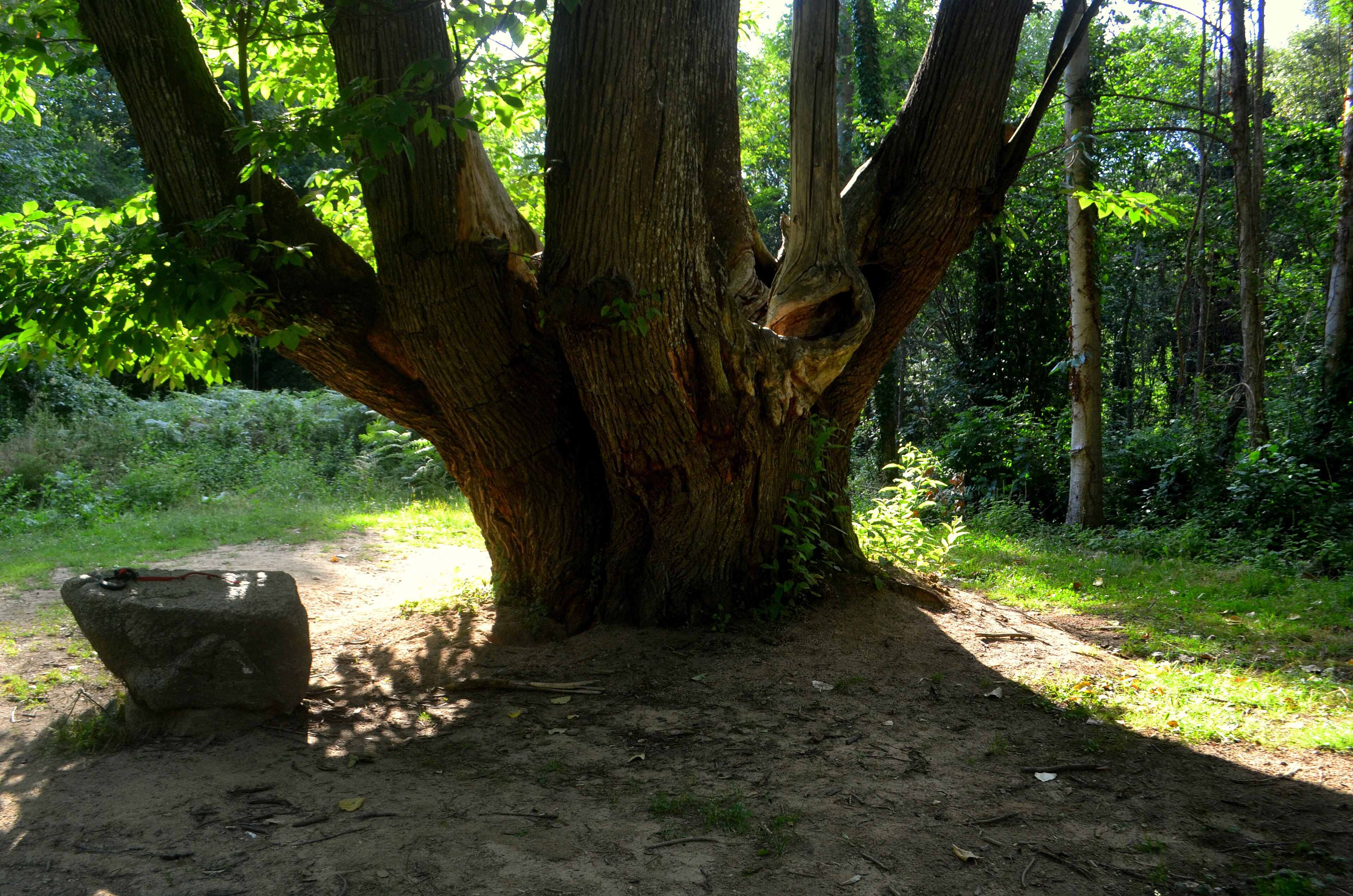
It is a deciduous tree belonging to the beech family, Fagaceae, the same large botanical family to which oaks and beeches belong. It can reach considerable dimensions: mature specimens can easily exceed 20 metres in height and develop extraordinarily broad trunks.
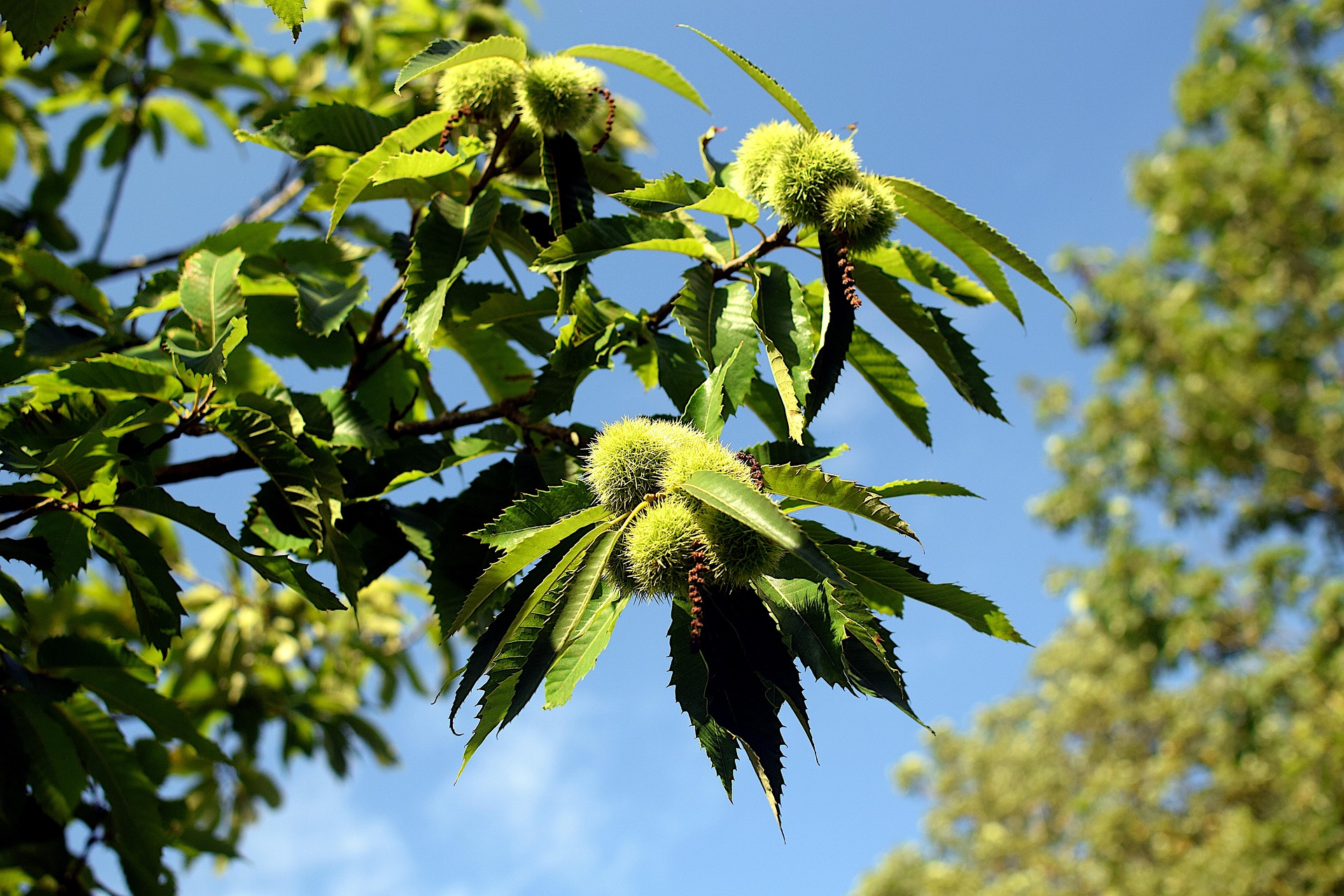
Its leaves are elongated, glossy and toothed, while the bark of mature specimens becomes deeply furrowed and rough.
But perhaps the most fascinating feature of the chestnut tree is its fruit.
The chestnut does not appear directly on the branches like a bare nut. It is protected by a spiny covering popularly known as a bur, or pelló in Catalan.
When the fruit ripens, the bur eventually opens and releases the chestnuts.
It is an extraordinarily effective natural protection strategy: the spines protect the fruit for much of its development.
A single bur normally contains two or three chestnuts. In the case of the Viladrau chestnut, this characteristic is documented as part of the product’s traditional description.
Where Does the Chestnut Tree Come From?
The European chestnut is native to a broad region extending across parts of the eastern Mediterranean, the Balkans and areas of western Asia.
Over time, it spread widely throughout Europe and was cultivated by human societies.
In Catalonia, its presence dates back to ancient times. It is a tree that was introduced into Catalonia in remote periods and cultivated for centuries in cool mid-mountain areas, particularly on siliceous soils.
Its expansion across the Iberian Peninsula took place during the Roman period.
This is especially interesting because the chestnut tree should not simply be viewed as a spontaneous and untouched element of the Catalan landscape.
Its history is deeply connected with human activity.
For centuries, people planted, cared for, harvested and transformed chestnut groves in order to obtain fruit and timber.
A Tree for Both Fruit and Timber
The historical importance of the chestnut tree is not limited to its fruit.
Its wood has traditionally been valued for its strength and versatility.
In Catalonia, chestnut cultivation was for a long time connected with forestry. In Montnegre and Corredor, for example, there are important stands of chestnut trees, and traditional management focused on timber as one of the main resources, while the fruit provided another.
The disappearance of certain traditional timber markets, together with chestnut diseases and the abandonment of some forest management practices, has considerably altered these landscapes.
For this reason, when we currently walk through a Catalan chestnut grove, we are not looking only at nature.
We are also seeing the result of centuries of interaction between forest and society.
The Annual Cycle of the Chestnut Tree
To understand the chestnut, we need to follow the tree throughout the entire year.
The story begins long before October.
Spring: The Tree Awakens
With the arrival of spring, the chestnut tree gradually emerges from its winter dormancy.
New leaves appear and the tree begins an intense period of vegetative growth.
The landscape changes quickly.
Where bare branches dominated during winter, green leaves now appear, forming a dense crown.
Chestnut Blossom
In late spring and throughout summer, its inflorescences appear.
The male flowers form long, yellowish catkins that are highly characteristic of the tree. The female flowers are located at the base of certain floral structures and will eventually develop into fruit.
The chestnut is therefore a tree whose flowering also has considerable visual interest, although it is completely overshadowed by the spectacular appearance of its autumn fruit.
Summer: The Chestnuts Are Still Growing
During summer, the small structures that will eventually become the familiar prickly burs continue to develop.
We are still far from the image we associate with the Castanyada.
The fruit remains protected, and the spines of the bur act as a barrier against numerous animals.
Little by little, the interior ripens.
The chestnut increases in size, accumulates reserves and acquires the characteristics that will make it one of the foods most strongly associated with autumn.
September and October: Chestnut Season Arrives
As temperatures gradually fall and autumn begins, ripening starts.
The exact calendar varies according to the area, altitude, variety and weather conditions.
In Catalonia, October is the great chestnut month.
In Viladrau and the surrounding Montseny area, the traditional harvest takes place approximately throughout October.
In other regions, the season may extend into November.
For this reason, there is no single universal date for gathering chestnuts.
The forest decides.
The Bur: The Chestnut’s Little Armour
Few things represent autumn better than an opened chestnut bur among the leaves.
Its appearance may seem intimidating, but it serves an essential function.
The multitude of spines protects the fruit while it develops.
When maturity arrives, the bur opens and the chestnuts eventually fall to the ground.
This is when harvesting begins.
And here we encounter one of the fundamental rules for anyone wishing to gather chestnuts in Catalonia.
A ripe chestnut should be collected once it has fallen.
How Are Chestnuts Traditionally Gathered?
The traditional image is simple.
A basket, sack or suitable container.
The gatherer walks across the floor of the chestnut grove, looking for fruit that has fallen naturally.
The burs can be carefully removed and the chestnuts separated from the leaf litter.
There is no need to hit the tree.
There is no need to pull off the fruit.
There is no need to climb.
Nature itself indicates when the time has come.
When the chestnut is ripe, it falls.
This also explains why the ground beneath a chestnut grove can acquire such a distinctive appearance during October: leaves, burs and fruit mix together to form a genuine autumn carpet.
The Viladrau Chestnut: One of Catalonia’s Great Protagonists
If there is one territory particularly associated culturally with chestnuts in Catalonia, it is the Montseny, and especially Viladrau.
The Viladrau chestnut is one of the traditional products that best represents this territory.
There are two traditional types in the Montseny:
Martinenques, associated with Saint Martin.
Sant Miquelenques, associated with Saint Michael.
They differ essentially in their harvesting period rather than simply in size, colour or flavour.
Chestnuts from Viladrau and nearby towns such as Espinelves, Arbúcies and Sant Hilari Sacalm have traditionally been relatively small and sweet.
Their commercial history is also fascinating.
During the 1960s, chestnut gathering was highly important in this area, and gatherers took the chestnuts to markets in Vic, Granollers, Manlleu, Torelló and Sant Celoni, and even directly to Barcelona.
Viladrau and Barcelona’s Chestnuts
There is also a particularly interesting relationship between the Montseny and the Catalan capital.
Until the middle of the 20th century, the Viladrau chestnut came to be regarded as the most highly valued among those sold in Catalonia, and Barcelona’s famous chestnut sellers preferred chestnuts from Viladrau for roasting.
Thus, a connection was established between two very different landscapes:
the forests of the Montseny and the streets of Barcelona.
On one side, the chestnut groves.
On the other, the small stalls of the castanyeres, the smoke, the embers and the hot paper bags.
The Chestnut Groves of the Coastal Range
When we think of Catalan chestnuts, we usually travel mentally to the Montseny.
But it is not the only territory associated with these forests.
The Serralada Litoral and nearby areas also preserve a tradition connected with chestnut forests.
The Montnegre i el Corredor Natural Park is particularly important. This massif runs parallel to the coast and forms a natural barrier between the Maresme, Vallès and La Selva regions. In its more humid and inland sectors there are chestnut groves and chestnut plantations.
This is an interesting detail:
chestnut trees do not necessarily occupy the driest and warmest coastal strip, but rather certain cooler and more humid slopes and environments within the coastal mountain system.
In Montnegre, chestnut plantations are particularly concentrated in inland and shaded areas.
Specific places traditionally recommended for chestnut gathering include the Montseny, Montnegre-Corredor, Serralada Litoral, Serralada de Marina, Collserola, Guilleries-Savassona and other natural areas in the province of Barcelona.
The chestnut-growing territory around Barcelona is therefore broader than it might initially appear.
Other Catalan Territories Where Chestnut Trees Can Be Found
In addition to the Montseny and Montnegre-Corredor, chestnut trees occur in various cool mid-mountain areas of Catalonia.
Among the territories particularly associated with these forests are:
Montseny
Guilleries-Savassona
Montnegre-Corredor
Serralada Litoral
Serralada de Marina
some areas of Osona
areas of La Garrotxa
certain humid sectors of the pre-coastal regions
The presence of the tree must always be understood in relation to local conditions. Chestnut trees require sufficient moisture and thrive best in cool environments and well-drained soils.
Can We Freely Go and Gather Chestnuts?
Finding a chestnut grove during a hike does not automatically mean that we are allowed to collect its fruit.
In forest areas, chestnuts may be gathered for personal consumption with the permission of the owners of the trees. They should also be collected only after they have fallen.
Therefore:
We should not enter private land without permission.
We should not shake the branches.
We should not hit the trees.
We should not damage the burs or branches.
We should not gather quantities intended for commercial sale without the relevant authorisation.
And we should always leave the forest exactly as we found it.
The best harvesting is that which allows the chestnut grove to continue existing for the next generation.
Autumn Transforms the Landscape
The chestnut grove undergoes one of its great visual transformations in autumn.
The leaves lose their green colour.
Yellow, ochre and brown tones gradually appear.
The ground becomes covered with leaves.
The burs contrast with the leaf litter.
And the chestnuts shine with their characteristic reddish-brown colour.
It is precisely this transformation of the forest that has turned the chestnut groves of the Montseny and other Catalan territories into traditional destinations for family outings during October and November.
The Castanyada: When the Tree Enters Catalan Culture
Few fruits are as closely linked to a popular festival as the chestnut is in Catalonia.
The Castanyada is celebrated around All Saints’ Day and has a documented history dating back at least to the 18th century.
Traditionally, families gathered to eat chestnuts, panellets and other autumn foods while remembering the dead.
Chestnuts and Remembrance of the Dead
Before becoming primarily a festive and family celebration, the Castanyada was connected with rituals commemorating the dead.
In Catalan tradition, All Saints’ Day and All Souls’ Day were associated with visits to cemeteries, prayers and different ways of remembering ancestors.
Chestnuts, panellets, sweet potatoes and autumn fruits formed part of this ritual world.
In some older traditions, candles were lit and prayers were said for the dead, while food acquired a symbolic meaning of communion with those who had passed away.
This is why the Castanyada has a much greater cultural depth than the simple image of a gastronomic festival.
It is a festival of autumn, fire, memory and community.
The Castanyera: One of Catalonia’s Popular Characters
And then she appears.
The castanyera.
Coat, headscarf, basket, embers and hot chestnuts.
In Barcelona, chestnut-seller stalls became a characteristic sight in the weeks leading up to All Saints’ Day. Historical documentation records the presence of chestnut roasters and sellers in the city as early as the late 18th century, while the figure of the castanyera as we recognise her today became particularly established during the 19th century.
The streets filled with smoke.
Chestnuts were roasted in front of customers.
And they were handed over hot, traditionally in small paper bags.
This also produced one of the festival’s most powerful images:
a cold evening, a hot chestnut and the smell of embers.
“Hot and Big…”
The tradition of selling chestnuts in the streets created an entire small soundscape.
The sellers’ calls announced the product to passers-by.
In the Calaix de sastre of the Baron of Maldà, at the end of the 18th century, the intense commercial activity involving panellets and chestnuts in Barcelona during All Saints’ Day is even described, with roasters operating in the streets.
This allows us to understand something extraordinary:
the contemporary Castanyada is not a recent invention.
It is the evolution of a rural and urban tradition that was already deeply established in 18th-century Barcelona.
Panellets, Sweet Potatoes and Chestnuts: The Great All Saints’ Trio
If there is a menu that represents Catalan autumn, it is probably this:
chestnuts + sweet potatoes + panellets.
All three foods are traditionally associated with All Saints’ Day.
Panellets have their own history as well. They are small sweets made primarily from marzipan and may contain pine nuts, almonds, coconut, candied fruit, coffee, chocolate and other ingredients.
In Barcelona, there is documentation of their production dating back to the 18th century.
The All Saints’ table is traditionally completed with sweet wines such as muscatel, mistela or Malvasia.
The Chestnut as Food
The chestnut occupies a peculiar position among nuts.
Unlike most other nuts, it contains a considerable amount of water and has a nutritional profile dominated by carbohydrates.
Information from Gastroteca about the Viladrau chestnut specifically highlights its water, fibre and carbohydrate content and its relatively low fat content.
Historically, this was considerably important.
Chestnuts could provide energy during the colder months and could be preserved through different methods.
For this reason, in certain rural societies they eventually played a much more important dietary role than they do today.
How to Preserve Chestnuts
Fresh chestnuts are a delicate food.
In the case of Viladrau chestnuts, traditional documentation indicates that once harvested they can be kept for approximately a couple of weeks under suitable conditions.
Historically, methods were therefore developed to extend their shelf life.
One of these methods is drying.
Dried chestnuts can be stored for much longer and later used to make flour, stews and different preparations.
Chestnut flour is still used today in cooking and baking.
How to Roast Chestnuts at Home
You do not have to wait until you find a castanyera to enjoy good chestnuts.
They are easy to prepare at home.
Oven-Roasted Chestnuts
Ingredients
500 g chestnuts
A pinch of salt, optional
Method
Wash and dry the chestnuts.
Using a small, sturdy knife, make a cut in the shell.
This step is essential because it prevents pressure from building up inside and causing some chestnuts to burst during cooking.
Preheat the oven to around 200–220°C.
Place the chestnuts on a baking tray.
Roast for approximately 20–30 minutes, depending on their size.
It is advisable to turn them once or twice to ensure even cooking.
When the outer skin has opened and the chestnut is tender, remove them from the oven.
Allow them to rest for a few minutes and peel them while they are still warm.
The result should be an aromatic, tender and slightly sweet chestnut.
Chestnuts Roasted in a Pan
If we do not want to turn on the oven, we can use a heavy frying pan.
Make a cut in each chestnut.
Place them in the pan over medium heat and turn them frequently.
The process may take around 20 minutes.
The key is to prevent the surface from burning before the inside is cooked.
When finished, wrap them in a clean cloth for a few minutes.
The steam will help loosen the skin.
Boiled Chestnuts
Another traditional preparation is to boil them.
Peel off the outer shell and place the chestnuts in water.
We can add:
a pinch of salt;
a bay leaf;
fennel;
anise, depending on the recipe.
Boil until tender.
Boiled chestnuts can be eaten directly or used later in other recipes.
Chestnut Purée
One of the most versatile preparations.
Ingredients
500 g cooked and peeled chestnuts
150–250 ml vegetable stock
1 onion
extra-virgin olive oil
salt
pepper
Method
Slowly sauté the onion.
Add the cooked chestnuts.
Gradually add the stock.
Cook for a few minutes.
Blend until smooth.
Adjust the salt and pepper.
The result is an extraordinarily aromatic autumn cream.
It can be served on its own or accompany meat, poultry and game dishes.
Catalan-Style Chestnut Cream
Chestnuts can also be incorporated into sweet dishes.
We can prepare a chestnut cream using:
cooked chestnuts;
milk;
sugar;
vanilla;
a small amount of cream;
cinnamon, optional.
Blend the chestnuts with some of the hot milk until smooth.
Add the remaining ingredients and cook gently until the mixture becomes thick.
Served chilled, it becomes an elegant autumn dessert closely connected with the ingredient.
Chestnuts with Mushrooms: Autumn on a Plate
There is a particularly Catalan and Mediterranean combination:
chestnuts and mushrooms.
Both products belong to the same autumn landscape.
A simple preparation consists of sautéing:
onion;
garlic;
mushrooms;
previously cooked chestnuts.
Add thyme, rosemary or parsley.
A little extra-virgin olive oil completes the dish.
It can also be used as a side dish for meat.
Chestnut Stew
Chestnuts can be used as an ingredient in winter stews.
They work especially well with:
pork;
duck;
chicken;
wild boar;
mushrooms;
onion;
pumpkin.
Their natural sweetness helps balance dishes with intense flavours.
One particularly interesting combination is slowly cooking pork with onion, mushrooms and previously cooked chestnuts.
The chestnuts absorb some of the juices from the stew and develop an extraordinarily pleasant texture.
Chestnuts and Pumpkin
Another deeply autumnal combination.
We can roast together:
pumpkin;
chestnuts;
onion;
garlic;
thyme.
Then blend everything with vegetable stock.
The result is a cream with a sweet, earthy and slightly smoky flavour.
Chestnut Bread
Chestnut flour can be used in breadmaking.
Viladrau chestnuts are also sold in the form of flour, flakes and other derived products.
The flour provides a sweet, slightly toasted aroma.
It can be combined with wheat flour in different proportions to produce breads with deeper flavour.
It is also very interesting in baking.
Marron Glacé: When the Chestnut Becomes a Delicacy
The most elegant transformation of the chestnut is probably the marron glacé.
The chestnut is slowly candied in syrup until it becomes tender and glossy.
It is a laborious process, but it demonstrates how this humble autumn fruit can become a sophisticated confectionery product.
The Chestnut Also Has an Economic History
For centuries, the chestnut tree formed part of Catalonia’s rural economy.
It provided:
fruit
timber
shade
organic matter
wildlife habitat
and helped shape certain forest landscapes.
In the Montseny, chestnut gathering was particularly important during the 20th century. In Arbúcies, Espinelves and Viladrau, the activity was especially significant during the 1960s.
A period of decline followed.
But the Castanyada helped restore some of the interest in the fruit.
Gathering was revitalised during the 1980s, coinciding with renewed interest among schools in celebrating the Castanyada.
The Chestnut Tree and Its Problems
The chestnut landscape is not free from threats.
Chestnut trees have historically suffered from various diseases, including ink disease and chestnut blight, the latter associated with the fungus Cryphonectria parasitica.
In Montnegre and Corredor, these diseases have contributed to the loss of vitality in some stands and to problems associated with forest management.
Climate change also adds new challenges.
Water availability, higher temperatures and changes in the structure of Mediterranean forests may alter the conditions in which chestnut trees thrive.
For this reason, conserving a chestnut grove does not simply mean leaving the trees where they are.
It requires forest management, knowledge, regeneration and adaptation.
A Tree That Needs Care
Abandoned chestnut groves can develop health and structural problems.
Forest management makes it possible to select trees, encourage regeneration and maintain a more resilient forest.
In Catalonia, specific projects exist to improve the vitality and resilience of mixed Mediterranean forests, including chestnut groves.
This makes the chestnut tree a perfect example of how the conservation of natural heritage and human activity can be closely interconnected.
The Castanyer de les Nou Branques: A Tree Turned into a Symbol
In Viladrau there is one of the most famous chestnut trees in Catalonia:
the Castanyer de les Nou Branques, or Nine-Branch Chestnut Tree.
Its candelabra-like shape and extraordinary size have made it one of the emblematic trees of the Montseny.
Viladrau Town Council attributes an approximate age of 700 years to it, a height of around 24 metres and a circumference of approximately 6.5 metres.
Its history is also connected with the identity of the municipality itself.
In 2012 it was chosen as an identifying element of Viladrau’s coat of arms.
The tree suffered significant damage during the windstorms of 1987 and subsequently lost other parts of its structure, but it remains one of the great botanical symbols of the Montseny.
There is even a marked trail, SL-C81, that leads to it from Viladrau.
Monumental Trees
The Castanyer de les Nou Branques represents more than an extraordinary specimen.
It represents the ability of a tree to become collective memory.
A person may remember a hike.
A family may remember a Castanyada.
A village may remember a harvest.
But a centuries-old tree may have stood there for generations.
It has watched the paths, houses, fields and ways of life change.
And every autumn it continues to produce chestnuts.
The Legend of En Drau
As happens with many ancient trees, the chestnut tree has also entered the realm of legend.
Around Viladrau there is an old folk story known as the Legend of En Drau.
According to the story, En Drau was a slave who lived in Rome and was caught stealing a chestnut, a food symbolically reserved for the powerful.
As punishment, he was sent to the galleys with a chestnut tied around his neck.
The ship sank and En Drau managed to reach the Catalan coast.
He then travelled inland into the Montseny.
Over time, the chestnut he carried with him became part of the legendary story explaining the appearance of chestnut trees in these mountains.
The story belongs to the realm of popular tradition rather than documented botanical history, but it is extraordinarily evocative because it explains, through a symbolic narrative, the deep relationship between Viladrau and the chestnut tree.
The Witches of Viladrau and Autumn
The Montseny is also a territory extraordinarily rich in legends involving witches, spirits and fantastic beings.
One of the best-known stories is that of the witches of Viladrau.
Tradition tells that in 1617, coinciding with All Saints’ Day, a group of women considered witches gathered at Sant Segimon. They were subsequently persecuted and executed under accusations of witchcraft.
Today, this memory forms part of Viladrau’s intangible cultural heritage and is commemorated around All Saints’ Day and the Chestnut Fair.
Once again, we find an extraordinary coincidence:
chestnuts, autumn, All Saints’ Day, fire, forest and legends.
All these elements form part of the same cultural imagination of the Montseny.
The Viladrau Chestnut Fair
The tradition continues today.
The Viladrau Chestnut Fair has been held since 1995 and combines gastronomy, nature, culture and the revival of local produce.
In 2026, its 31st edition is scheduled for the weekend of October 24–25.
The fair includes activities related to:
chestnuts;
gastronomy;
walks through chestnut groves;
demonstrations;
cultural activities;
workshops;
storytelling;
music;
local products.
It is a good example of how an agricultural tradition can also become cultural heritage and a tourism experience without necessarily losing its connection to the land.
The Castanyada in Barcelona
If the Montseny represents the forest, Barcelona represents the transformation of the chestnut into an urban tradition.
During the weeks around All Saints’ Day, castanyeres appear at various locations throughout the city.
The Generalitat explicitly recognises the presence of castanyeres and the traditional consumption of chestnuts and sweet potatoes in Barcelona around All Saints’ Day.
The city transforms a forest product into a street experience.
The embers.
The smoke.
The sound of chestnuts roasting.
The paper in which they are wrapped.
The warmth in your hands.
And that aroma which, for a few days, seems to officially announce the arrival of autumn.
Castanyada Versus Halloween
In recent decades, Halloween has also become part of the popular calendar at the end of October.
But the two celebrations have different roots and meanings.
The Catalan Castanyada is historically associated with All Saints’ Day, the dead, chestnuts, panellets, sweet potatoes and community gatherings.
Halloween originates in another cultural and religious tradition that was later transformed into an international popular celebration.
Today the two coexist.
In Catalan schools, neighbourhoods and homes, it is possible to find pumpkins, costumes and Halloween activities alongside chestnuts, panellets and the figure of the castanyera.
But the Castanyada retains its own identity.
A Small Guide to Recognising a Chestnut Tree
If we walk through a forest and want to identify one, we should observe several features.
The Leaf
It is elongated and has a clearly toothed margin.
The Bark
In mature specimens it is thick and deeply furrowed.
The Fruit
The chestnut is enclosed within the spiny bur.
The Habitat
In Catalonia it is generally associated with cool and relatively humid mid-mountain environments and certain sectors of the coastal mountain ranges.
Autumn
This is the easiest season in which to recognise it, thanks to the combination of fallen leaves, burs and chestnuts.
Chestnut or Acorn?
It is an understandable confusion because both trees belong to the Fagaceae family.
But their fruits are very different.
Acorns come from oaks, holm oaks and related species.
Chestnuts come from chestnut trees.
The most obvious difference is their protective covering.
The acorn is protected by a cupule.
The chestnut is protected by a spiny bur.
And in autumn, both can appear mixed together in certain forests.
Can Freshly Gathered Chestnuts Be Eaten?
Yes, but we must distinguish between edible chestnuts from the European chestnut tree and other fruits that may look similar.
We should never consume wild fruits unless we are completely certain of their identification.
European chestnuts are edible.
Traditionally, they can also be eaten:
raw
roasted
boiled
dried
as flour
in purées
in stews
in baking
candied
Contemporary gastronomy has expanded their possibilities even further.
Chestnuts, Autumn and Catalan Cuisine
The great virtue of the chestnut is its ability to move between two worlds.
It can be a humble food, roasted directly over embers.
But it can also appear in sophisticated cuisine.
It can accompany meat.
Be transformed into cream.
Ground into flour.
Add sweetness to a dessert.
Or become an ingredient in breadmaking.
This versatility explains why the chestnut has survived culturally even after losing the dietary importance it once had.
A Catalan Autumn Recipe: Chestnuts with Sweet Potatoes
For a simple, homemade version of the traditional Castanyada table:
Ingredients
chestnuts
sweet potatoes
salt
Method
Wash the sweet potatoes.
Make a small cut in the chestnuts.
Place both products on a baking tray.
Bake at approximately 200°C until the sweet potatoes are tender and the chestnuts are fully cooked.
Serve hot.
Nothing more is really needed.
Because the beauty of this tradition lies precisely in its simplicity.
Chestnuts, Honey and the Mountains
Chestnuts also combine extraordinarily well with honey.
At certain fairs in the Montseny, traditional preparations and tastings have even been revived that combine local products such as chestnuts and chestnut blossom honey.
It is a logical combination from a gastronomic point of view:
the sweetness of the chestnut + the floral notes of the honey + woodland aromas.
The Chestnut Tree as an Ecosystem
A chestnut grove is not simply a collection of trees that produce food.
It is an ecosystem.
Its leaves, branches, fruits and cavities participate in a complex ecological network.
Chestnut forests can coexist with oaks, hazelnuts, holm oaks and other species.
In Montnegre, for example, chestnut groves occur alongside other forest species and form part of much more complex vegetation mosaics.
Therefore, conserving a chestnut grove also means conserving:
soil
wildlife
fungi
microorganisms
old trees
dead wood
natural regeneration
and an entire network of ecological relationships.
The Future of the Catalan Chestnut Tree
The future of the chestnut depends on more than selling chestnuts during October.
It depends on maintaining forests.
On managing woodland properly.
On controlling diseases.
On encouraging regeneration.
On preserving local varieties.
On maintaining traditional knowledge.
And also on ensuring that society continues to value the product.
The Viladrau chestnut is a good example of this process: today it is sold not only fresh, but also in forms such as roasted chestnuts, flour, dried chestnuts and flakes.
In this way, a traditional product can find new ways to remain part of contemporary cuisine.
The Chestnut Tree: A Tree with Deep Roots
Its presence is not limited to the beauty of its trunk, the shade of its branches or the generosity of its fruit. Above all, the chestnut tree is a tree loaded with meaning: it represents resilience, rootedness, abundance and the continuity of life.
For generations, the chestnut tree has accompanied rural communities throughout Europe. Its fruits provided food, its branches and timber had many uses, and its forests became places connected with work, community life and tradition. Wherever a chestnut tree grew, there was also a human story surrounding it.
Perhaps for this reason, its first great lesson is that of roots. A chestnut tree needs time to grow and can reach extraordinary longevity. Its trunk, marked by the passing years, is not a sign of weakness but visible evidence of having endured. Every crack, knot and branch tells of winters, droughts, storms and springs survived. In this sense, the chestnut becomes a metaphor for existence itself: growing does not mean remaining untouched, but learning to live with the marks left by time.
It is also a symbol of abundance and generosity. Every autumn, its fruit recalls an ancient relationship between human beings and nature. Gathering chestnuts, sharing them and roasting them around a fire transforms a simple food into an act of community.
From this comes another of its symbolic dimensions: protection. The crown of the chestnut tree provides shade and shelter, while its roots remain firmly anchored in the earth.
The chestnut tree also speaks of memory. A centuries-old tree may have seen several generations beneath its branches. It has remained while people, houses, paths and customs have changed. That is why looking at an old chestnut tree can create the feeling of standing before something that belongs to a time larger than our own.
And perhaps that is where its deepest meaning lies. In an age defined by speed and by the constant need for renewal, the chestnut tree represents the opposite: patience. It reminds us that some important things need years to acquire true value. Roots cannot be seen, but they hold the tree in place. Wood takes time to form, but it endures. Fruit arrives only after a cycle that cannot be rushed.
The chestnut tree therefore invites us to recover a simple idea: having roots does not mean remaining still. A tree stays in one place, yet every spring it grows again. Its branches reach toward the light while its roots grow deeper into the earth. There is a powerful human lesson in this contradiction: we can move forward without forgetting where we come from.
For this reason, the chestnut tree can be understood as a symbol of strength, belonging, generosity and continuity. A tree that does not need to impose itself to demonstrate its greatness. It is enough for it to remain, endure, bear fruit and offer shade.
Perhaps that is its true lesson: that strength does not always mean standing firm against the storm, but also having roots deep enough to grow again after it.
Surtido de panellets – Por Mutari 15:57, 30 October 2007 (UTC) – Trabajo propio, Dominio público, https://commons.wikimedia.org/w/index.php?curid=2995937.
Panellets durante su elaboración – Por Onnoth, CC BY 2.0, https://commons.wikimedia.org/w/index.php?curid=17537554.
Follaje de Castaño – Por Rodelar – Trabajo propio, CC BY-SA 4.0, https://commons.wikimedia.org/w/index.php?curid=49369709.
Castañas sueltas y aún en su erizo – Por Wilfried Wittkowsky – Trabajo propio, CC BY-SA 3.0, https://commons.wikimedia.org/w/index.php?curid=2894034.
Castañas maduras aún en su erizo – Por Benjamin Gimmel, BenHur – Trabajo propio, CC BY-SA 3.0, https://commons.wikimedia.org/w/index.php?curid=468004.
Castanyer de les 9 branques, Viladrau – Angela Llop, CC BY-SA 2.0 , via Wikimedia Commons.
Castañas caídas en el bosque – By Kolforn (Kolforn)I’d appreciate if you could mail me (Kolforn@gmail.com) Own work, CC BY-SA 4.0, https://commons.wikimedia.org/w/index.php?curid=112365655.
About 100 kilometres from Barcelona, Rupit i Pruit emerges among mountains, forests and cliffs as one of those villages that seem to belong to another era. The journey from Barcelona by car takes approximately 1 hour 20 minutes to 1 hour 40 minutes, depending on …
Discover Vall de Núria Vall de Núria is one of those places that surprises you from the very first moment. Located in the heart of the Eastern Pyrenees, within the municipality of Queralbs, the valley is surrounded by mountains, forests, alpine meadows and peaks rising …
There are places you visit to admire a work of art.
And there are others where you step directly into a story.
Gala Dalí Castle in Púbol belongs to the second category.
In this small village in the Baix Empordà, Salvador Dalí transformed a medieval castle into one of the most intimate and personal places in his creative universe.
He did not buy it for himself.
He bought it for Gala.
He wanted to give her a place of her own, a refuge and almost a private palace where she could be the true protagonist.
Dalí personally transformed its interiors, designed spaces, worked on ceilings and walls, introduced antiques, textiles, symbols, false architectural elements and surrealist details, and created a garden filled with sculptures.
But Púbol also preserves a much deeper story.
Gala lived here.
She was buried here.
Dalí spent some of his final years here.
He established his last workshop here.
And here there is still a second tomb, prepared for him and connected to Gala’s tomb, which remains empty.
This is precisely what makes Púbol one of the most fascinating places in the Dalinian Triangle.
Where Is Gala Dalí Castle in Púbol?
The castle is located in Púbol, a small village belonging to the municipality of La Pera, in the Baix Empordà region of Girona.
Púbol is a small, peaceful medieval village surrounded by the agricultural and Mediterranean landscapes of the Empordà.
From Barcelona, the distance is approximately 130–140 kilometres by road, depending on your starting point and route.
By car, the journey usually takes approximately 1 hour 30 minutes to 1 hour 45 minutes, depending on traffic.
The usual route from Barcelona follows the AP-7 towards Girona and then continues along the roads leading into the Baix Empordà.
The castle is located within the village itself.
This makes it easy to combine your museum visit with a walk through Púbol before continuing to other destinations in the Empordà.
Púbol: A Small Medieval Village in the Baix Empordà
Before becoming one of the best-known places associated with Salvador Dalí, Púbol already had a long history.
The village is documented from the medieval period, and its castle was the centre of an ancient barony.
The main structure of the castle today is primarily associated with the 14th and 15th centuries, although the site is documented as early as the 11th century.
The complex stands next to the Church of Sant Pere and preserves the character of a small historic village.
Walking through Púbol is very different from visiting a large city.
There is no need to rush.
Its streets are quiet, its houses preserve traditional architectural features, and the countryside of the Empordà begins almost immediately beyond the village.
For this reason, we recommend allowing some time to explore Púbol before or after visiting the castle.
The Castle Before Salvador Dalí
For centuries, Púbol Castle was a noble residence.
Its medieval character, location and atmosphere attracted Dalí when the building was already considerably deteriorated.
In 1969, Salvador Dalí acquired the castle.
But from the beginning, he knew who it was for.
Gala.
The Dalí Foundation describes Púbol as a gift of courtly love from Dalí to Gala, conceived as a private refuge for her.
Why Did Dalí Give Gala a Castle?
To understand Púbol, you need to understand the relationship between Salvador Dalí and Gala.
Gala was much more than the artist’s wife.
She was his muse, companion and one of the most important figures in his life.
Dalí wanted to give her something different from Portlligat.
He wanted her to have a place that was exclusively hers.
He found the perfect setting in Púbol.
A medieval castle.
A mysterious place.
A secluded space.
A building that could be completely transformed without losing its historic character.
Dalí turned the old castle into a kind of private palace for Gala.
The entire project revolves around her.
The Agreement Between Gala and Dalí
There is a fascinating detail that demonstrates just how strongly Púbol was conceived as Gala’s territory.
The couple agreed that Dalí would not visit the castle unless he had first received a written invitation from Gala.
In other words, although he had purchased the building and personally transformed much of it, Púbol symbolically belonged to Gala.
She was the lady of the castle.
This agreement is one of the most fascinating details surrounding their relationship.
Dalí had created a castle for the woman he loved, but once it became Gala’s private residence, even he had to respect its rules.
Dalí Turns Púbol Into a Work of Art
Dalí did not simply restore the castle.
He transformed it into a work of art.
He worked on walls and ceilings, created false architectural elements, incorporated antiques, textiles, Baroque details and symbols associated with Gala.
The result is strange, elegant, theatrical and unmistakably surrealist.
Every room seems to tell a story.
Some areas preserve the medieval architecture, while others are completely transformed by Dalí’s imagination.
Visitors can discover:
paintings and drawings;
sculptures;
antiques;
furniture;
textiles;
surrealist elements;
false architecture;
objects associated with Gala;
haute couture dresses;
private rooms;
sculptural gardens.
This is why we recommend taking your time.
Look upwards.
Look at the walls.
Look closely at the smaller objects.
At Púbol, almost everything has an intention.
The Gardens of Púbol
The garden is another major attraction.
Dalí created a space where nature blends with sculptures and surrealist elements.
The famous long-legged elephants are among the most recognizable images in the complex.
The combination of vegetation, sculptures, medieval architecture and fantastic elements creates an atmosphere unlike any conventional garden.
It is romantic, theatrical and deeply Dalinian.
The Vegetation Around Púbol
Beyond the castle lies the characteristic landscape of the Baix Empordà.
The surroundings combine agricultural fields, small wooded areas and Mediterranean vegetation.
Depending on the season, you may encounter:
holm oaks;
pine trees;
olive trees;
almond trees;
cypresses;
Mediterranean shrubs;
aromatic plants;
wild vegetation along paths and fields.
Spring is particularly interesting for visitors who enjoy flowers and pollinating insects.
Summer offers a much drier Mediterranean landscape.
Autumn brings different colours and a quieter atmosphere.
Birds and Butterflies Around Púbol
Púbol can also be interesting for visitors who enjoy observing nature.
The surrounding countryside is home to birds typical of agricultural and Mediterranean environments, including sparrows, blackbirds, tits, goldfinches, hoopoes, turtle doves and other species that can be seen flying over the fields.
During spring and summer, butterflies, bees, bumblebees and other pollinators become more noticeable.
This is not a controlled wildlife park or a dedicated birdwatching reserve.
Its charm lies precisely in observing the wildlife that appears naturally while you walk through the village and surrounding countryside.
Gala: The True Protagonist of Púbol
Although today we know it as Gala Dalí Castle, it is important to remember that Púbol was fundamentally conceived for Gala.
She had her own space here.
She kept personal objects and memories here.
She could withdraw from the outside world here.
The history of Púbol repeatedly highlights its character as a personal refuge for Gala.
Dalí created an artistic universe around her.
But Gala also played an active role in the life of Púbol.
She was not simply an observer of Dalí’s work.
The castle became a shared project in many respects, even though Dalí’s artistic vision dominates the visual character of the building.
Gala’s Death
Gala died on 10 June 1982.
She was buried in the crypt of Púbol Castle.
And this is where one of the most important and lesser-known aspects of the story begins.
The crypt had been prepared so that Gala and Dalí could rest together.
There were two tombs.
And the two tombs were connected.
This was not simply two separate burial spaces placed side by side.
The design reflected the idea that Gala and Dalí would remain together after death.
Gala occupies one of them.
The other remains empty.
Dalí’s Empty Tomb
For years, Dalí had expressed his desire to be buried beside Gala in Púbol.
Robert Descharnes, one of his closest collaborators, recalled that Dalí had maintained this wish until shortly before his death and that he wanted to rest in the crypt beside Gala.
The existence of the second tomb prepared for him is a physical reminder of that plan.
And this is why the story of his burial remains controversial.
Why Was Dalí Buried in Figueres?
Shortly before Dalí’s death, another version emerged.
The mayor of Figueres at the time, Marià Lorca, stated that Dalí had told him he wanted to be buried beneath the dome of his Dalí Theatre-Museum in Figueres.
The difficulty is that this supposed final wish was communicated orally and was not accompanied by a signed document that could conclusively establish the circumstances.
Dalí died on 23 January 1989 and was ultimately buried in the Dalí Theatre-Museum in Figueres.
But the story did not end there.
A Decision That Has Never Stopped Being Controversial
The question of where Dalí truly wanted to rest has been debated for decades.
On one side is the version of the mayor of Figueres concerning that alleged final wish.
On the other are testimonies from people close to the artist who remembered that Dalí had wanted to rest beside Gala.
In 2004, Robert Descharnes even led a petition calling for Dalí’s remains to be transferred from Figueres to Púbol, beside Gala.
This demonstrates that the issue was far from settled among people who knew the artist.
Did Dalí Really Want to Be Separated From Gala?
This is the question that many people close to Dalí have asked over the years.
Gala had been his companion, muse and a fundamental figure in his life.
Dalí had purchased Púbol for her.
He had designed the castle around her.
He had prepared the crypt.
And the two tombs were connected.
From this perspective, it is understandable that people close to Dalí found it difficult to believe that his original wish had been to remain separated from Gala.
Among those who have publicly discussed Dalí’s relationship with Gala is Amanda Lear, who knew the artist personally and was part of his close circle for many years.
Her testimony forms part of the personal accounts surrounding Dalí, Gala and their relationship.
It is important, however, to distinguish between personal testimony and documentary proof.
The most accurate way to present the story is therefore that people close to Dalí questioned whether his burial in Figueres truly reflected his final wishes.
The controversy remains part of the history of Púbol.
Two Places, One Story
Today there is an unforgettable image.
Gala is in Púbol.
Dalí is in Figueres.
But in Púbol there is still the tomb that had been prepared for him.
A tomb that remains empty.
That absence has become part of the story of the castle.
Púbol therefore preserves not only Gala’s resting place, but also the physical reminder of a plan in which she and Dalí were supposed to remain together.
Figueres currently preserves the artist’s remains inside the great museum he created.
Two places.
Two chapters.
And a question that continues to fascinate visitors.
Púbol Becomes Dalí’s Final Refuge
After Gala’s death, Dalí increasingly withdrew from public life.
Púbol became even more important.
During the early 1980s, the castle became Salvador Dalí’s final workshop.
This adds another layer to the visit.
You are not only entering the castle Dalí created for Gala.
You are also entering one of the final places where the artist lived and worked.
Gala Dalí Castle as a Museum
The castle opened to the public as a house museum in 1996.
Visitors can explore the rooms associated with Gala and Dalí, the spaces decorated by the artist, the garden, sculptures and the mausoleum.
The interior visit follows a free-flowing, one-way route.
In 2026, the temporary exhibition “Dalí/Horst. Miradas cruzadas” is scheduled to run until 6 January 2027.
Gala Dalí Castle Púbol Opening Hours in 2026
Opening hours vary according to the season.
1–6 January
Tuesday to Sunday: 10:30–17:00
7 January–27 February
Closed
28 February–13 March
Tuesday to Sunday: 10:30–17:00
14 March–30 June
Tuesday to Sunday: 10:30–18:00
1 July–6 September
Every day: 10:00–19:00
7 September–1 November
Tuesday to Sunday: 10:30–18:00
2 November–31 December
Tuesday to Sunday: 10:30–17:00
The last admission is approximately 45 minutes before closing, while the rooms close 15 minutes before the museum itself.
Exceptional opening and closing dates may apply, so we recommend checking the schedule for your specific travel date.
How Much Does It Cost to Visit Púbol Castle?
For 2026, the published general admission is:
€10 online €12 at the ticket office
Reduced admission:
€7 online €9 at the ticket office
During July and August:
€12 online / €14 at the ticket office
Reduced admission:
€8 online / €10 at the ticket office
Different free-admission and discount conditions may also apply.
How Much Time Should You Spend in Púbol?
If you only want to visit the museum, we recommend allowing approximately 1.5 hours.
But if you are travelling from Barcelona, we recommend spending considerably longer.
A well-planned visit could include:
Púbol: approximately 2 hours.
Walk through La Pera and the surrounding area: 30–60 minutes.
Lunch: 1.5–2 hours.
Afterwards, you can continue to another destination in the Empordà or visit another part of the Dalinian Triangle.
Where Should You Eat Near Púbol?
The Baix Empordà is one of Catalonia’s most interesting gastronomic regions.
In Púbol, La Pera and nearby villages, you can find restaurants serving Catalan and Mediterranean cuisine and seasonal local produce.
For a special trip, we recommend booking a quality restaurant in advance and looking for establishments that work with local ingredients, traditional Empordà cuisine and regional wines.
If your visit forms part of a private experience, Magic Dreams Barcelona can adapt the gastronomic stop to your preferences:
traditional Catalan cuisine;
fine dining;
seasonal cuisine;
romantic restaurants;
wineries and wine experiences;
relaxed lunches in medieval villages.
Where Should You Stay?
Staying in the Baix Empordà allows you to experience the area in a completely different way.
There are small hotels, rural houses and charming accommodations around Púbol, La Pera and the surrounding villages.
You can also use the area as a base for discovering places such as Madremanya, Peratallada, Monells and other historic villages.
For a romantic or private getaway, we recommend choosing accommodation with character that allows you to enjoy the landscape while minimizing unnecessary driving.
Púbol and the Dalinian Triangle
The Gala Dalí Castle forms part of the Dalinian Triangle, together with Figueres and Portlligat.
But each place tells a different story.
Púbol
Gala.
Intimacy.
Love.
The castle.
The garden.
The crypt.
Dalí’s final workshop.
Figueres
The great museum.
Dalí’s birthplace.
His public artistic legacy.
The place where his remains are currently buried.
Portlligat
The Mediterranean.
The house.
The landscape.
The place where Dalí and Gala built another important part of their life together.
Visiting all three gives you a much deeper understanding of the relationship between art, life, love and landscape in Dalí’s universe.
A Private Dalinian Triangle Escape from Barcelona
If you are travelling from Barcelona, we do not recommend trying to rush through Púbol, Figueres and Portlligat in a single day unless your schedule is very limited.
It is possible, but the experience is much better when you have time.
The Empordà deserves time.
The villages deserve time.
The museums deserve time.
And the landscape deserves time too.
A private itinerary can be designed according to the amount of time you have available.
Barcelona → Púbol → medieval villages → accommodation in the Empordà → Figueres → Cadaqués → Portlligat → Barcelona.
The third option is our favourite if you want to truly enjoy the region.
Magic Dreams Barcelona: Your Private Dalinian Escape Without the Stress
If you would like to discover the Dalinian Triangle but do not want to worry about driving, parking, timetables, reservations or connections between villages, Magic Dreams Barcelona can design a fully private and personalized experience for you.
Our goal is simple: you only have to enjoy the journey.
We can organize a private escape from Barcelona according to your pace, interests and available time.
We can include
Private pick-up in Barcelona
We can collect you from your accommodation or an agreed meeting point.
Private vehicle
No trains, buses or complicated connections.
Gala Dalí Castle in Púbol
A visit focused on Gala and Dalí’s story, the castle, decoration, gardens and crypt.
Figueres
A visit to the Dalí Theatre-Museum.
Cadaqués
Time to enjoy one of Catalonia’s most beautiful coastal villages.
Portlligat
Dalí and Gala’s Mediterranean home and artistic universe.
Medieval villages
We can add places such as Peratallada, Monells or Madremanya.
Gastronomy
We can select restaurants according to your preferences and budget.
Wine
We can also include a winery or wine experience.
Accommodation
If you would like to turn your visit into a two-day escape, we can help organize the accommodation.
The Púbol You Will Not Discover on a Rushed Visit
There is something we would like to emphasize at Magic Dreams Barcelona.
Púbol should not be visited simply as “Dalí’s castle.”
Because that would mean missing its most important story.
This is Gala’s story.
This is the place Dalí created for her.
These are her rooms.
This is the garden he designed.
This is her crypt.
And here there is a second tomb, connected to Gala’s, which had been prepared for Dalí and remains empty.
Then comes the controversy.
The version that Dalí asked to be buried in Figueres.
The testimonies of people close to him who remembered a different wish.
The later efforts of those who believed he should rest beside Gala.
And the undeniable fact that his remains ultimately ended up in Figueres.
That is why Púbol is not simply a museum.
It is also a story that continues to raise questions.
Púbol: Love, Art and Mystery in the Empordà
The Gala Dalí Castle in Púbol is one of the most fascinating places you can visit from Barcelona.
A medieval castle.
A love story.
A woman who received a castle as a gift.
An artist who transformed it into a work of art.
An agreement requiring him to receive a written invitation before visiting.
A surrealist garden.
A crypt.
Two connected tombs.
One occupied.
The other empty.
And a controversy that remains unresolved.
All of this is found in a small village in the Baix Empordà, surrounded by nature, fields, medieval villages and one of Catalonia’s great gastronomic traditions.
That is precisely the magic of Púbol.
You are not simply coming to see where Gala lived.
You are discovering a part of Salvador Dalí’s story that cannot be fully understood inside a museum.
And if you would like to discover it from Barcelona without stress, without rushing and with a private itinerary designed around you, Magic Dreams Barcelona can turn the Dalinian Triangle into a truly special experience.
Barcelona → Púbol → Figueres → Portlligat → Cadaqués
Art.
History.
Love.
Landscape.
Gastronomy.
And the universe of Dalí.
Magic Dreams Barcelona — private experiences from Barcelona for discovering Catalonia in a different way.
Terraza del Castillo de Púbol – By Daniel CULSAN – Own work, CC BY-SA 4.0, https://commons.wikimedia.org/w/index.php?curid=36768117.
Perspectiva exterior de la Casa Museo de Púbol – By Daniel CULSAN – Own work, CC BY-SA 4.0, https://commons.wikimedia.org/w/index.php?curid=36766319.
Cadillac de Gala y Dalí – By Anitxu – Own work, CC BY-SA 4.0, https://commons.wikimedia.org/w/index.php?curid=154294951.
Obra de Dalí representando a Gala – By Anitxu – Own work, CC BY-SA 4.0, https://commons.wikimedia.org/w/index.php?curid=154293999.
Datsun de Dalí – By Kippelboy – Own work, CC BY-SA 4.0, https://commons.wikimedia.org/w/index.php?curid=34890806.
El jardín del Castillo de Púbol – By Gordito1869 – Own work, CC BY 3.0, https://commons.wikimedia.org/w/index.php?curid=9458854.
Baño de Gala – By Daniel CULSAN – Own work, CC BY-SA 4.0, https://commons.wikimedia.org/w/index.php?curid=36706402.
Cama de Gala – By Alberto-g-rovi – Own work, CC BY-SA 3.0, https://commons.wikimedia.org/w/index.php?curid=27866351.
Castell de Púbol i església del castell (la Pera) – By Enric – Own work, CC BY-SA 4.0, https://commons.wikimedia.org/w/index.php?curid=62082504.
Castell de Púbol i església del castell (la Pera) – By Enric – Own work, CC BY-SA 4.0, https://commons.wikimedia.org/w/index.php?curid=62082573.
Estatua de Gala – Davidpar, CC BY-SA 4.0 , via Wikimedia Commons.
Castell de Púbol – By Enric – Own work, CC BY-SA 4.0, https://commons.wikimedia.org/w/index.php?curid=62067544.
Castell de Púbol i iglesia del castell (la Pera) – By Enric – Own work, CC BY-SA 4.0, https://commons.wikimedia.org/w/index.php?curid=62082494.
Comedor, cabeza de León – Enric, CC BY-SA 4.0 , via Wikimedia Commons.
Santiago en el comedor – Enric, CC BY-SA 4.0 , via Wikimedia Commons.
Comedor del Castillo de Púbol – Enric, CC BY-SA 4.0 , via Wikimedia Commons.
Exposición de vestidos de Gala de Gala – Enric, CC BY-SA 4.0 , via Wikimedia Commons.
Salón del piano – By Enric – Own work, CC BY-SA 4.0, https://commons.wikimedia.org/w/index.php?curid=62082521.
Salón de los escudos, leona a los pies del trono de Gala – Enric, CC BY-SA 4.0 , via Wikimedia Commons.
Salón de los escudos, trono de Gala – By Enric – Own work, CC BY-SA 4.0, https://commons.wikimedia.org/w/index.php?curid=62082571.
Salón de los escudos, trompe-l’oeil del techo – By Enric – Own work, CC BY-SA 4.0, https://commons.wikimedia.org/w/index.php?curid=62082570.
Salón de los escudos – By Enric – Own work, CC BY-SA 4.0, https://commons.wikimedia.org/w/index.php?curid=62082573.
Gárgola del Patio – Enric, CC BY-SA 4.0 , via Wikimedia Commons.
Escalera del Patio – Castillo de Púbol – By Enric – Own work, CC BY-SA 4.0, https://commons.wikimedia.org/w/index.php?curid=62082575.
Entrada Castillo de Púbol – By Enric – Own work, CC BY-SA 4.0, https://commons.wikimedia.org/w/index.php?curid=62082576.
Estanque del jardín – By Enric – Own work, CC BY-SA 4.0, https://commons.wikimedia.org/w/index.php?curid=62082579.
Elefante gigante del jardín (uno de ellos) – By Enric – Own work, CC BY-SA 4.0, https://commons.wikimedia.org/w/index.php?curid=62082588.
Cripta o sala del Delme, con la tumba de Gala y la Salvador Dalí vacía – Enric, CC BY-SA 4.0 , via Wikimedia Commons.
The pink sea of the Segrià, where fruit trees, history and rural tradition come together There are places that transform completely for a few weeks each year. Aitona is one of them. Located in the western part of the Segrià, in the province of Lleida, …
Antoni Gaudí i Cornet was a Catalan architect internationally recognized as one of the most prodigious experts in his field, and a leading exponent of Modernism. His exceptionally groundbreaking genius created a unique, personal, and incomparable architectural language, difficult to categorize. Gaudí was born on …
The Spiritual Vision of Antoni Gaudí, Presented by Magic Dreams Barcelona
Discover the Basilica of the Expiatory Temple of the Sagrada Família, the architectural soul of Barcelona and the most significant work of the Modernist genius Antoni Gaudí. More than a monument, this temple is a living creation, conceived as an act of faith, a collective offering inspired by the people, and a bridge between nature, spirituality, and architecture.
Located at Carrer de la Marina, 41 (Barcelona), the Sagrada Família is now one of the most visited monuments in Spain and the world. Its construction began in 1882, funded by private donations, and Gaudí took over the project in 1883, dedicating 43 years of his life to this work, fully aware that he would not live to see it completed.
As of October 13, 2026, the upper cross of the Tower of Jesus at the Sagrada Família has already been installed, marking a historic milestone. Standing 172.5 metres tall, the tower crowns the vertical composition of the temple and makes the Sagrada Família the tallest church in the world, surpassing Ulm Minster in Germany and finally fulfilling Gaudí’s vision.
This date carries special significance, as June 10, 2026, marked the centenary of Antoni Gaudí’s death. He passed away on June 10, 1926. For this reason, 2026 is dedicated to celebrating the architect’s legacy and honouring his architectural, cultural, and artistic achievements. Exhibitions, concerts, cultural events, and commemorative Masses are taking place throughout the year, highlighting the global importance of his work.
The installation of the cross atop the Tower of Jesus, the central tower of the temple and a symbol of Catalan Modernism, represents one of the most emblematic moments of Gaudí Year 2026. This element symbolises both the completion of a fundamental stage in the construction process and the universal reach of the architect’s influence. The Sagrada Família not only achieves a historic height record but also reaffirms its status as a cultural and spiritual icon connecting centuries of history, creativity, and devotion.
Antoni Gaudí and His Spiritual Vision
Architecture as a Mission of Faith
Antoni Gaudí did not view architecture as an aesthetic exercise, but as a spiritual mission. A deeply religious man who led an austere life during the later years of his life, he understood his work as a service to God and to the community. He is often associated with the phrase, “My client is not in a hurry,” referring to God and eternity.
Gaudí conceived the Sagrada Família as a Bible carved in stone, with each façade illustrating an essential chapter of the Christian faith:
The Nativity Façade (facing east): Celebrates life, nature, and hope. It is the only façade built almost entirely during Gaudí’s lifetime.
The Passion Façade (west): Austere, angular, and dramatic, it represents the suffering and crucifixion of Christ, featuring sculptures by Josep Maria Subirachs.
The Glory Façade (south): The main entrance, dedicated to death, the Last Judgement, Glory, and the path towards God.
The 18 Towers of the Sagrada Família
An Architectural Journey Towards the Divine
The temple’s design includes 18 towers:
12 dedicated to the Apostles, 4 to the Evangelists, 1 to the Virgin Mary, and the central tower dedicated to Jesus Christ. Together, they form the defining silhouette of the Sagrada Família, making it the tallest church in the world and the tallest building in Barcelona.
Nature as a Spiritual Language
Gaudí’s Organic Architecture
On the exterior of the temple, Gaudí drew direct inspiration from nature: mountains, trees, animals, flowers, and the cycles of life. Stone is not rigid but organic; it does not merely bear weight, it seems to blossom. Each façade expresses an essential moment in the life of Christ—Nativity, Passion, and Glory—through a symbolic language accessible to everyone, conceived as a visual catechism for the people.
The Interior of the Sagrada Família
A Sacred Forest of Light and Geometry
The interior represents the culmination of Gaudí’s vision: a sacred forest where columns rise like tree trunks and branch out towards the light. Gaudí studied natural geometry—including hyperboloids, helicoids, and spirals—to create a structure that is light, strong, and harmonious.
Sunlight, filtered through coloured stained-glass windows, changes throughout the day: cool tones at dawn and warm hues at sunset, transforming the space into a cosmic and spiritual clock. For Gaudí, light was a manifestation of the divine.
The Final Years of Antoni Gaudí
A Life of Humility, Faith, and Dedication
During his final years, Gaudí led a humble, almost monastic life, devoting himself entirely to the Sagrada Família. He dressed simply, ate frugally, and spent long hours in prayer and work. On June 7, 1926, he was struck by a tram on Barcelona’s Gran Via. Because of his modest appearance, he was not immediately recognised and was taken to the Hospital de la Santa Creu, where he died three days later.
He was subsequently buried in the crypt of the Sagrada Família. His death deeply moved the city. Today, the Catholic Church’s beatification process for Gaudí remains open, recognising his life of faith, humility, and service.
The Tower of Jesus
The Culmination of Gaudí’s Architectural Vision
The Tower of Jesus, located at the centre of the Sagrada Família complex, is the temple’s tallest and most emblematic feature. Crowned by a large four-armed cross, it represents Jesus Christ and completes the vertical composition envisioned by Antoni Gaudí.
Standing 172.5 metres tall, the tower makes the Sagrada Família the tallest church in the world and the tallest building in Barcelona, bringing Gaudí’s architectural and spiritual vision to life.
The installation of the upper cross was completed in February 2026, marking one of the most significant milestones in the temple’s history and in Gaudí Year, coinciding with the centenary of the architect’s death on June 10, 1926.
The Tower of Jesus symbolises the union of architecture, nature, and spirituality, rising above Barcelona as an expression of faith and of Antoni Gaudí’s universal legacy.
The Tower of Mary
The Light of the Virgin Over Barcelona
The Tower of Mary, part of the Sagrada Família complex, is a central emblem of devotion and spirituality. Dedicated to the Virgin Mary, it symbolises purity, grace, and maternal intercession before God, rising above the city of Barcelona as a beacon of faith.
Crowned by a twelve-pointed star, the tower stands out as one of the most distinctive features of the Sagrada Família skyline. Its light and presence reinforce the spiritual dimension of the temple and express the importance of Mary within Gaudí’s religious vision.
The Tower of Mary represents a path towards spiritual elevation, symbolising humanity’s aspiration towards the divine and the Virgin’s maternal presence along the journey of faith.
The Glory Façade
The Path Towards God and Spiritual Transcendence
The Glory Façade, facing south towards Carrer de Mallorca, is the main entrance and the most ambitious façade of the Sagrada Família. Conceived by Gaudí to represent the path towards God, it focuses on redemption and spiritual transcendence. Construction began in 2002, and its design is organised into three levels: earthly, spiritual, and celestial. A grand staircase is planned to lead worshippers towards contemplation of the divine.
This façade symbolises the journey towards Glory through virtue, redemption, and the grace of the Holy Spirit. Its design includes representations of the Holy Trinity, stone clouds depicting scenes from Genesis, and columns dedicated to the seven deadly sins and the heavenly virtues. The structure features four monumental bell towers dedicated to Saint Andrew, Saint Peter, Saint Paul, and Saint James the Greater, while the main portico is designed to incorporate sixteen hyperboloid-shaped lanterns.
Between 2025 and 2026, the first columns and structural elements above pavement level along Carrer de Mallorca have been erected. Artistic and sculptural work is expected to continue for at least another decade.
Magic Dreams Barcelona
Private Experiences of Art, Culture, and Spirituality
We are professional native-speaking guides with more than 10 years of experience, specialising in Gaudí, Catalonia, and high-end cultural tourism. We offer personalised, private, and worry-free experiences, taking care of every detail. We know the symbols, mysteries, and deeper history that are rarely found in conventional guidebooks.
Premium Services
Private guided tours, available daily or weekly.
Daily or weekly cultural, botanical, architectural, and gastronomic itineraries.
Art guidance and creative workshops inspired by Gaudí’s trencadís mosaic technique.
Emotionally enriching botanical walks with a choice of premium picnics.
Personalised accommodation and comprehensive logistical support.
Private dining experiences with a local chef, featuring Catalan, Spanish, and international cuisine, with themed menus to choose from.
Live music at your accommodation or a selected venue, artisan pastries, and floral decorations.
Gastronomic experiences aboard a private yacht.
Photography experiences in unique and hidden corners of Barcelona.
Romantic getaways, weekend escapes, and tailor-made experiences.
Barcelona from the Sea
A Gastronomic Experience on a Private Yacht
Discover Barcelona from the sea with our private yacht gastronomic experience.
Enjoy an exclusive journey along the Mediterranean coastline, with privileged views of the city skyline, a personalised menu prepared by our local chef, alcohol-free 0.0% wine pairings and fresh juices, live music, and premium service. A unique sensory experience in which art, the sea, and gastronomy come together.
Every detail is designed with sensitivity, excellence, and personalised attention. Our services are available in Spanish, Catalan, and English. Other languages can be accommodated upon request.
The Words of Antoni Gaudí
Nature, Beauty, and Spirituality
To conclude, discover the words of Antoni Gaudí.
Antoni Gaudí said:
“Create beauty! Seek the image of mystery in nature and transform it into architecture.”
“The great book, always open, is the book of Nature.”
“Nothing has been invented in this world; good fortune lies in seeing what God has placed before our eyes.”
“Life is a battle; strength lies in virtue, and virtue can only be sustained through spiritual cultivation.”
Basílica del Templo Expiatorio de la Sagrada Familia.
Basílica del Templo Expiatorio de la Sagrada Familia.
Basílica del Templo Expiatorio de la Sagrada Familia.
Basílica del Templo Expiatorio de la Sagrada Familia.
Basílica del Templo Expiatorio de la Sagrada Familia.
Basílica del Templo Expiatorio de la Sagrada Familia.
Basílica del Templo Expiatorio de la Sagrada Familia.
Basílica del Templo Expiatorio de la Sagrada Familia.
Basílica del Templo Expiatorio de la Sagrada Familia.
Basílica del Templo Expiatorio de la Sagrada Familia.
Basílica del Templo Expiatorio de la Sagrada Familia.
Basílica del Templo Expiatorio de la Sagrada Familia.
Basílica del Templo Expiatorio de la Sagrada Familia.
Basílica del Templo Expiatorio de la Sagrada Familia.
Basílica del Templo Expiatorio de la Sagrada Familia.
Basílica del Templo Expiatorio de la Sagrada Familia.
Basílica del Templo Expiatorio de la Sagrada Familia.
Basílica del Templo Expiatorio de la Sagrada Familia.
Basílica del Templo Expiatorio de la Sagrada Familia.
Basílica del Templo Expiatorio de la Sagrada Familia.
Basílica del Templo Expiatorio de la Sagrada Familia.
Basílica del Templo Expiatorio de la Sagrada Familia.