The Chestnut Tree in Catalonia: The Tree, the Forest and Tradition.

When autumn arrives in Catalonia, its leaves begin to turn shades of ochre and gold, prickly husks cover the paths through the chestnut groves, and chestnuts once again appear in markets, homes and streets. Their roasted aroma announces one of the most characteristic celebrations in the Catalan calendar: the Castanyada.
But behind that small autumn fruit lies a much broader world.
There is the tree, which can live for centuries; the wood, which for generations had considerable value as a forest resource; the forests of the Montseny, the humid slopes of Montnegre; the traditional ways of gathering the fruit; the chestnut sellers who for decades filled the streets of Barcelona with smoke; autumn fairs; traditional recipes; panellets; sweet potatoes; and also the stories and legends that have accompanied the chestnut trees.
The chestnut tree is, ultimately, much more than the tree that produces chestnuts.
It is part of a landscape, a rural economy and a tradition that awakens again every autumn.
The Castanyer: An Ancient Tree Linked to the Mediterranean Landscape
The scientific name of the European chestnut is Castanea sativa Mill.
It is a deciduous tree belonging to the beech family, Fagaceae, the same large botanical family to which oaks and beeches belong. It can reach considerable dimensions: mature specimens can easily exceed 20 metres in height and develop extraordinarily broad trunks.
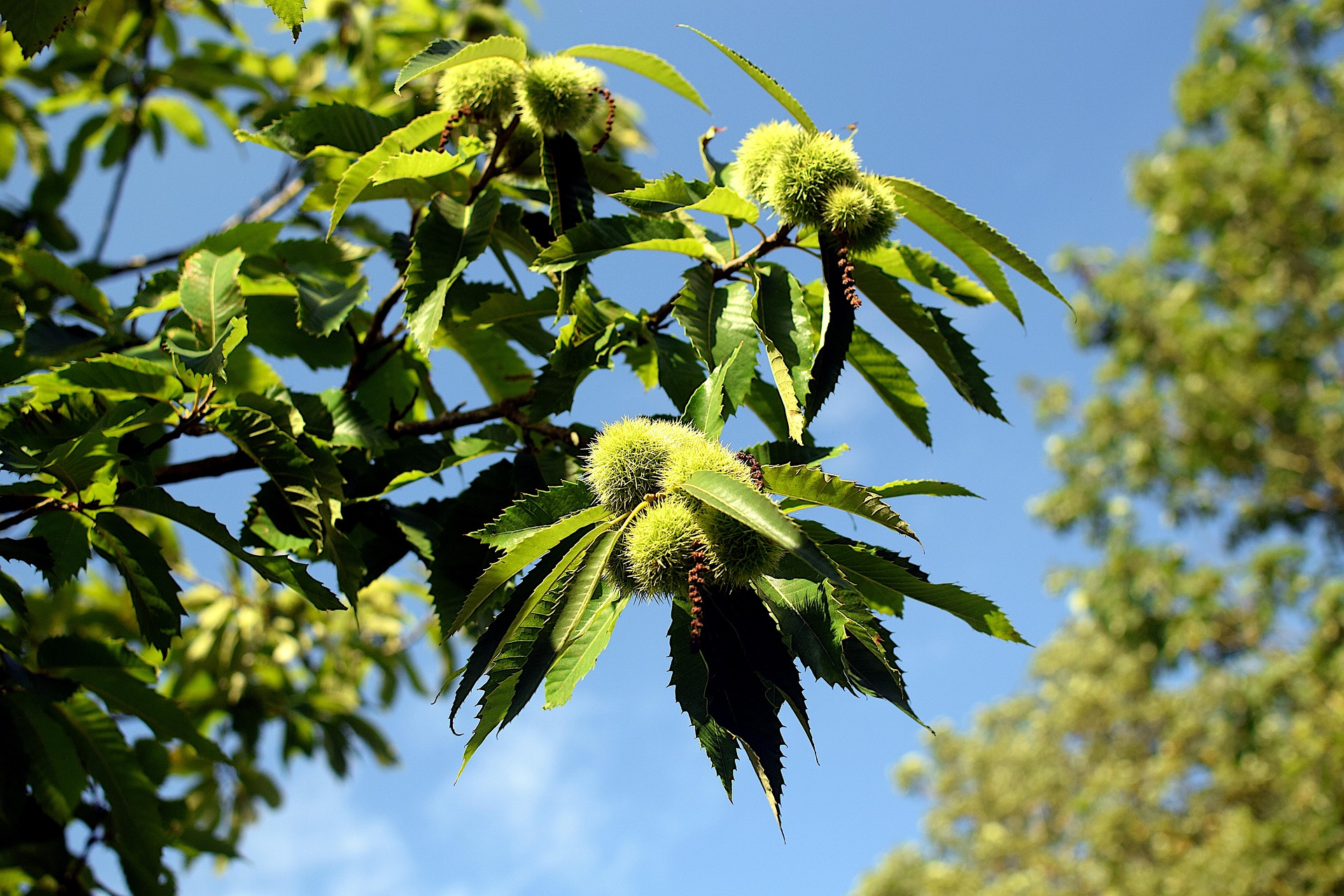
Its leaves are elongated, glossy and toothed, while the bark of mature specimens becomes deeply furrowed and rough.
But perhaps the most fascinating feature of the chestnut tree is its fruit.
The chestnut does not appear directly on the branches like a bare nut. It is protected by a spiny covering popularly known as a bur, or pelló in Catalan.
When the fruit ripens, the bur eventually opens and releases the chestnuts.
It is an extraordinarily effective natural protection strategy: the spines protect the fruit for much of its development.
A single bur normally contains two or three chestnuts. In the case of the Viladrau chestnut, this characteristic is documented as part of the product’s traditional description.
Where Does the Chestnut Tree Come From?
The European chestnut is native to a broad region extending across parts of the eastern Mediterranean, the Balkans and areas of western Asia.
Over time, it spread widely throughout Europe and was cultivated by human societies.
In Catalonia, its presence dates back to ancient times. It is a tree that was introduced into Catalonia in remote periods and cultivated for centuries in cool mid-mountain areas, particularly on siliceous soils.
Its expansion across the Iberian Peninsula took place during the Roman period.
This is especially interesting because the chestnut tree should not simply be viewed as a spontaneous and untouched element of the Catalan landscape.
Its history is deeply connected with human activity.
For centuries, people planted, cared for, harvested and transformed chestnut groves in order to obtain fruit and timber.
A Tree for Both Fruit and Timber
The historical importance of the chestnut tree is not limited to its fruit.
Its wood has traditionally been valued for its strength and versatility.
In Catalonia, chestnut cultivation was for a long time connected with forestry. In Montnegre and Corredor, for example, there are important stands of chestnut trees, and traditional management focused on timber as one of the main resources, while the fruit provided another.
The disappearance of certain traditional timber markets, together with chestnut diseases and the abandonment of some forest management practices, has considerably altered these landscapes.
For this reason, when we currently walk through a Catalan chestnut grove, we are not looking only at nature.
We are also seeing the result of centuries of interaction between forest and society.
The Annual Cycle of the Chestnut Tree
To understand the chestnut, we need to follow the tree throughout the entire year.
The story begins long before October.
Spring: The Tree Awakens
With the arrival of spring, the chestnut tree gradually emerges from its winter dormancy.
New leaves appear and the tree begins an intense period of vegetative growth.
The landscape changes quickly.
Where bare branches dominated during winter, green leaves now appear, forming a dense crown.
Chestnut Blossom
In late spring and throughout summer, its inflorescences appear.
The male flowers form long, yellowish catkins that are highly characteristic of the tree. The female flowers are located at the base of certain floral structures and will eventually develop into fruit.
The chestnut is therefore a tree whose flowering also has considerable visual interest, although it is completely overshadowed by the spectacular appearance of its autumn fruit.
Summer: The Chestnuts Are Still Growing
During summer, the small structures that will eventually become the familiar prickly burs continue to develop.
We are still far from the image we associate with the Castanyada.
The fruit remains protected, and the spines of the bur act as a barrier against numerous animals.
Little by little, the interior ripens.
The chestnut increases in size, accumulates reserves and acquires the characteristics that will make it one of the foods most strongly associated with autumn.
September and October: Chestnut Season Arrives
As temperatures gradually fall and autumn begins, ripening starts.
The exact calendar varies according to the area, altitude, variety and weather conditions.
In Catalonia, October is the great chestnut month.
In Viladrau and the surrounding Montseny area, the traditional harvest takes place approximately throughout October.
In other regions, the season may extend into November.
For this reason, there is no single universal date for gathering chestnuts.
The forest decides.
The Bur: The Chestnut’s Little Armour
Few things represent autumn better than an opened chestnut bur among the leaves.
Its appearance may seem intimidating, but it serves an essential function.
The multitude of spines protects the fruit while it develops.
When maturity arrives, the bur opens and the chestnuts eventually fall to the ground.
This is when harvesting begins.
And here we encounter one of the fundamental rules for anyone wishing to gather chestnuts in Catalonia.
A ripe chestnut should be collected once it has fallen.
How Are Chestnuts Traditionally Gathered?
The traditional image is simple.
A basket, sack or suitable container.
The gatherer walks across the floor of the chestnut grove, looking for fruit that has fallen naturally.
The burs can be carefully removed and the chestnuts separated from the leaf litter.
There is no need to hit the tree.
There is no need to pull off the fruit.
There is no need to climb.
Nature itself indicates when the time has come.
When the chestnut is ripe, it falls.
This also explains why the ground beneath a chestnut grove can acquire such a distinctive appearance during October: leaves, burs and fruit mix together to form a genuine autumn carpet.
The Viladrau Chestnut: One of Catalonia’s Great Protagonists
If there is one territory particularly associated culturally with chestnuts in Catalonia, it is the Montseny, and especially Viladrau.
The Viladrau chestnut is one of the traditional products that best represents this territory.
There are two traditional types in the Montseny:
- Martinenques, associated with Saint Martin.
- Sant Miquelenques, associated with Saint Michael.
They differ essentially in their harvesting period rather than simply in size, colour or flavour.
Chestnuts from Viladrau and nearby towns such as Espinelves, Arbúcies and Sant Hilari Sacalm have traditionally been relatively small and sweet.
Their commercial history is also fascinating.
During the 1960s, chestnut gathering was highly important in this area, and gatherers took the chestnuts to markets in Vic, Granollers, Manlleu, Torelló and Sant Celoni, and even directly to Barcelona.
Viladrau and Barcelona’s Chestnuts
There is also a particularly interesting relationship between the Montseny and the Catalan capital.
Until the middle of the 20th century, the Viladrau chestnut came to be regarded as the most highly valued among those sold in Catalonia, and Barcelona’s famous chestnut sellers preferred chestnuts from Viladrau for roasting.
Thus, a connection was established between two very different landscapes:
the forests of the Montseny and the streets of Barcelona.
On one side, the chestnut groves.
On the other, the small stalls of the castanyeres, the smoke, the embers and the hot paper bags.
The Chestnut Groves of the Coastal Range
When we think of Catalan chestnuts, we usually travel mentally to the Montseny.
But it is not the only territory associated with these forests.
The Serralada Litoral and nearby areas also preserve a tradition connected with chestnut forests.
The Montnegre i el Corredor Natural Park is particularly important. This massif runs parallel to the coast and forms a natural barrier between the Maresme, Vallès and La Selva regions. In its more humid and inland sectors there are chestnut groves and chestnut plantations.
This is an interesting detail:
chestnut trees do not necessarily occupy the driest and warmest coastal strip, but rather certain cooler and more humid slopes and environments within the coastal mountain system.
In Montnegre, chestnut plantations are particularly concentrated in inland and shaded areas.
Specific places traditionally recommended for chestnut gathering include the Montseny, Montnegre-Corredor, Serralada Litoral, Serralada de Marina, Collserola, Guilleries-Savassona and other natural areas in the province of Barcelona.
The chestnut-growing territory around Barcelona is therefore broader than it might initially appear.
Other Catalan Territories Where Chestnut Trees Can Be Found
In addition to the Montseny and Montnegre-Corredor, chestnut trees occur in various cool mid-mountain areas of Catalonia.
Among the territories particularly associated with these forests are:
Montseny
Guilleries-Savassona
Montnegre-Corredor
Serralada Litoral
Serralada de Marina
some areas of Osona
areas of La Garrotxa
certain humid sectors of the pre-coastal regions
The presence of the tree must always be understood in relation to local conditions. Chestnut trees require sufficient moisture and thrive best in cool environments and well-drained soils.
Can We Freely Go and Gather Chestnuts?
Finding a chestnut grove during a hike does not automatically mean that we are allowed to collect its fruit.
In forest areas, chestnuts may be gathered for personal consumption with the permission of the owners of the trees. They should also be collected only after they have fallen.
Therefore:
We should not enter private land without permission.
We should not shake the branches.
We should not hit the trees.
We should not damage the burs or branches.
We should not gather quantities intended for commercial sale without the relevant authorisation.
And we should always leave the forest exactly as we found it.
The best harvesting is that which allows the chestnut grove to continue existing for the next generation.
Autumn Transforms the Landscape
The chestnut grove undergoes one of its great visual transformations in autumn.
The leaves lose their green colour.
Yellow, ochre and brown tones gradually appear.
The ground becomes covered with leaves.
The burs contrast with the leaf litter.
And the chestnuts shine with their characteristic reddish-brown colour.
It is precisely this transformation of the forest that has turned the chestnut groves of the Montseny and other Catalan territories into traditional destinations for family outings during October and November.
The Castanyada: When the Tree Enters Catalan Culture
Few fruits are as closely linked to a popular festival as the chestnut is in Catalonia.
The Castanyada is celebrated around All Saints’ Day and has a documented history dating back at least to the 18th century.
Traditionally, families gathered to eat chestnuts, panellets and other autumn foods while remembering the dead.
Chestnuts and Remembrance of the Dead
Before becoming primarily a festive and family celebration, the Castanyada was connected with rituals commemorating the dead.
In Catalan tradition, All Saints’ Day and All Souls’ Day were associated with visits to cemeteries, prayers and different ways of remembering ancestors.
Chestnuts, panellets, sweet potatoes and autumn fruits formed part of this ritual world.
In some older traditions, candles were lit and prayers were said for the dead, while food acquired a symbolic meaning of communion with those who had passed away.
This is why the Castanyada has a much greater cultural depth than the simple image of a gastronomic festival.
It is a festival of autumn, fire, memory and community.
The Castanyera: One of Catalonia’s Popular Characters
And then she appears.
The castanyera.
Coat, headscarf, basket, embers and hot chestnuts.
In Barcelona, chestnut-seller stalls became a characteristic sight in the weeks leading up to All Saints’ Day. Historical documentation records the presence of chestnut roasters and sellers in the city as early as the late 18th century, while the figure of the castanyera as we recognise her today became particularly established during the 19th century.
The streets filled with smoke.
Chestnuts were roasted in front of customers.
And they were handed over hot, traditionally in small paper bags.
This also produced one of the festival’s most powerful images:
a cold evening, a hot chestnut and the smell of embers.
“Hot and Big…”
The tradition of selling chestnuts in the streets created an entire small soundscape.
The sellers’ calls announced the product to passers-by.
In the Calaix de sastre of the Baron of Maldà, at the end of the 18th century, the intense commercial activity involving panellets and chestnuts in Barcelona during All Saints’ Day is even described, with roasters operating in the streets.
This allows us to understand something extraordinary:
the contemporary Castanyada is not a recent invention.
It is the evolution of a rural and urban tradition that was already deeply established in 18th-century Barcelona.
Panellets, Sweet Potatoes and Chestnuts: The Great All Saints’ Trio
If there is a menu that represents Catalan autumn, it is probably this:
chestnuts + sweet potatoes + panellets.
All three foods are traditionally associated with All Saints’ Day.
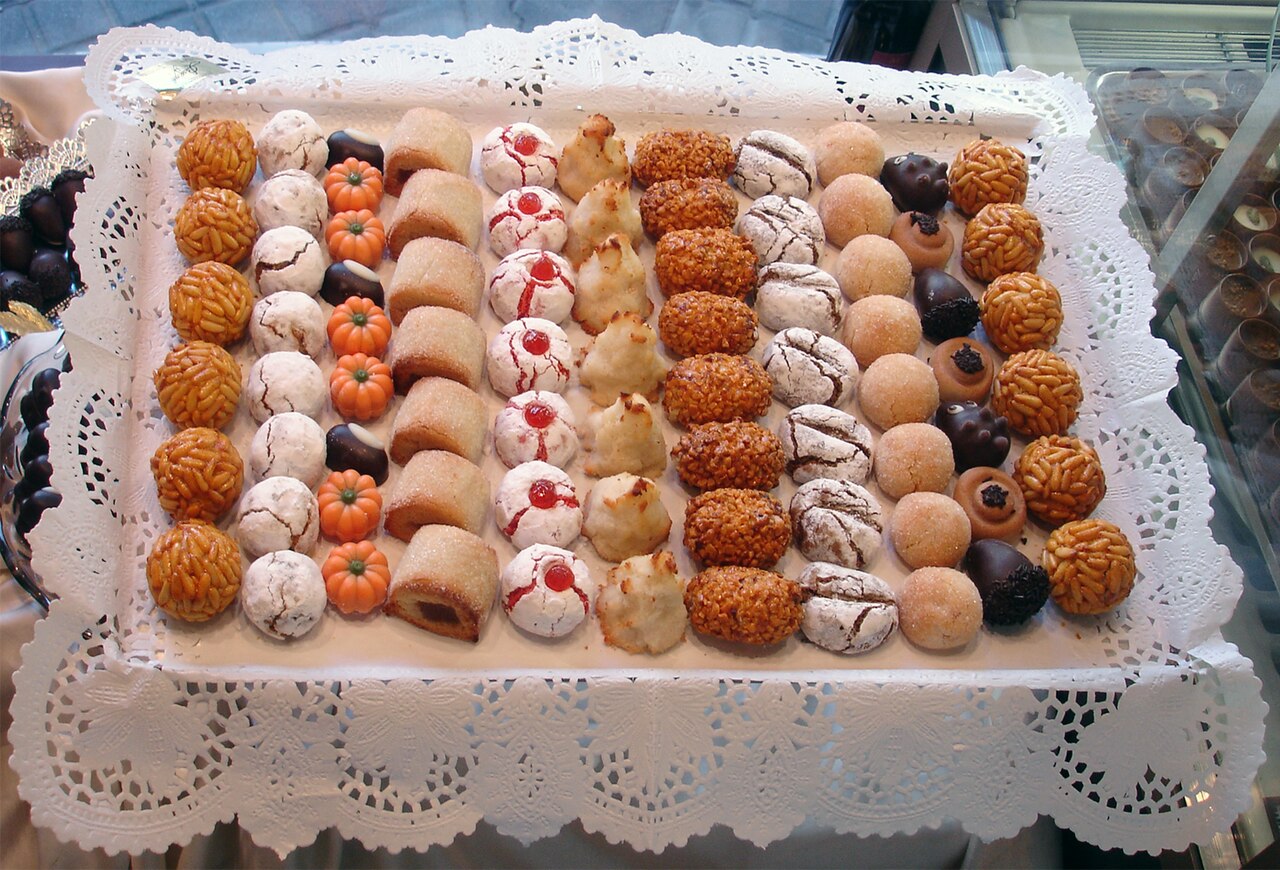
Panellets have their own history as well. They are small sweets made primarily from marzipan and may contain pine nuts, almonds, coconut, candied fruit, coffee, chocolate and other ingredients.
In Barcelona, there is documentation of their production dating back to the 18th century.
The All Saints’ table is traditionally completed with sweet wines such as muscatel, mistela or Malvasia.
The Chestnut as Food
The chestnut occupies a peculiar position among nuts.
Unlike most other nuts, it contains a considerable amount of water and has a nutritional profile dominated by carbohydrates.
Information from Gastroteca about the Viladrau chestnut specifically highlights its water, fibre and carbohydrate content and its relatively low fat content.
Historically, this was considerably important.
Chestnuts could provide energy during the colder months and could be preserved through different methods.
For this reason, in certain rural societies they eventually played a much more important dietary role than they do today.
How to Preserve Chestnuts
Fresh chestnuts are a delicate food.
In the case of Viladrau chestnuts, traditional documentation indicates that once harvested they can be kept for approximately a couple of weeks under suitable conditions.
Historically, methods were therefore developed to extend their shelf life.
One of these methods is drying.
Dried chestnuts can be stored for much longer and later used to make flour, stews and different preparations.
Chestnut flour is still used today in cooking and baking.
How to Roast Chestnuts at Home
You do not have to wait until you find a castanyera to enjoy good chestnuts.
They are easy to prepare at home.
Oven-Roasted Chestnuts
Ingredients
- 500 g chestnuts
- A pinch of salt, optional
Method
Wash and dry the chestnuts.
Using a small, sturdy knife, make a cut in the shell.
This step is essential because it prevents pressure from building up inside and causing some chestnuts to burst during cooking.
Preheat the oven to around 200–220°C.
Place the chestnuts on a baking tray.
Roast for approximately 20–30 minutes, depending on their size.
It is advisable to turn them once or twice to ensure even cooking.
When the outer skin has opened and the chestnut is tender, remove them from the oven.
Allow them to rest for a few minutes and peel them while they are still warm.
The result should be an aromatic, tender and slightly sweet chestnut.
Chestnuts Roasted in a Pan
If we do not want to turn on the oven, we can use a heavy frying pan.
Make a cut in each chestnut.
Place them in the pan over medium heat and turn them frequently.
The process may take around 20 minutes.
The key is to prevent the surface from burning before the inside is cooked.
When finished, wrap them in a clean cloth for a few minutes.
The steam will help loosen the skin.
Boiled Chestnuts
Another traditional preparation is to boil them.
Peel off the outer shell and place the chestnuts in water.
We can add:
- a pinch of salt;
- a bay leaf;
- fennel;
- anise, depending on the recipe.
Boil until tender.
Boiled chestnuts can be eaten directly or used later in other recipes.
Chestnut Purée
One of the most versatile preparations.
Ingredients
- 500 g cooked and peeled chestnuts
- 150–250 ml vegetable stock
- 1 onion
- extra-virgin olive oil
- salt
- pepper
Method
Slowly sauté the onion.
Add the cooked chestnuts.
Gradually add the stock.
Cook for a few minutes.
Blend until smooth.
Adjust the salt and pepper.
The result is an extraordinarily aromatic autumn cream.
It can be served on its own or accompany meat, poultry and game dishes.
Catalan-Style Chestnut Cream
Chestnuts can also be incorporated into sweet dishes.
We can prepare a chestnut cream using:
- cooked chestnuts;
- milk;
- sugar;
- vanilla;
- a small amount of cream;
- cinnamon, optional.
Blend the chestnuts with some of the hot milk until smooth.
Add the remaining ingredients and cook gently until the mixture becomes thick.
Served chilled, it becomes an elegant autumn dessert closely connected with the ingredient.
Chestnuts with Mushrooms: Autumn on a Plate
There is a particularly Catalan and Mediterranean combination:
chestnuts and mushrooms.
Both products belong to the same autumn landscape.
A simple preparation consists of sautéing:
- onion;
- garlic;
- mushrooms;
- previously cooked chestnuts.
Add thyme, rosemary or parsley.
A little extra-virgin olive oil completes the dish.
It can also be used as a side dish for meat.
Chestnut Stew
Chestnuts can be used as an ingredient in winter stews.
They work especially well with:
- pork;
- duck;
- chicken;
- wild boar;
- mushrooms;
- onion;
- pumpkin.
Their natural sweetness helps balance dishes with intense flavours.
One particularly interesting combination is slowly cooking pork with onion, mushrooms and previously cooked chestnuts.
The chestnuts absorb some of the juices from the stew and develop an extraordinarily pleasant texture.
Chestnuts and Pumpkin
Another deeply autumnal combination.
We can roast together:
- pumpkin;
- chestnuts;
- onion;
- garlic;
- thyme.
Then blend everything with vegetable stock.
The result is a cream with a sweet, earthy and slightly smoky flavour.
Chestnut Bread
Chestnut flour can be used in breadmaking.
Viladrau chestnuts are also sold in the form of flour, flakes and other derived products.
The flour provides a sweet, slightly toasted aroma.
It can be combined with wheat flour in different proportions to produce breads with deeper flavour.
It is also very interesting in baking.
Marron Glacé: When the Chestnut Becomes a Delicacy
The most elegant transformation of the chestnut is probably the marron glacé.
The chestnut is slowly candied in syrup until it becomes tender and glossy.
It is a laborious process, but it demonstrates how this humble autumn fruit can become a sophisticated confectionery product.
The Chestnut Also Has an Economic History
For centuries, the chestnut tree formed part of Catalonia’s rural economy.
It provided:
fruit
timber
shade
organic matter
wildlife habitat
and helped shape certain forest landscapes.
In the Montseny, chestnut gathering was particularly important during the 20th century. In Arbúcies, Espinelves and Viladrau, the activity was especially significant during the 1960s.
A period of decline followed.
But the Castanyada helped restore some of the interest in the fruit.
Gathering was revitalised during the 1980s, coinciding with renewed interest among schools in celebrating the Castanyada.
The Chestnut Tree and Its Problems
The chestnut landscape is not free from threats.
Chestnut trees have historically suffered from various diseases, including ink disease and chestnut blight, the latter associated with the fungus Cryphonectria parasitica.
In Montnegre and Corredor, these diseases have contributed to the loss of vitality in some stands and to problems associated with forest management.
Climate change also adds new challenges.
Water availability, higher temperatures and changes in the structure of Mediterranean forests may alter the conditions in which chestnut trees thrive.
For this reason, conserving a chestnut grove does not simply mean leaving the trees where they are.
It requires forest management, knowledge, regeneration and adaptation.
A Tree That Needs Care
Abandoned chestnut groves can develop health and structural problems.
Forest management makes it possible to select trees, encourage regeneration and maintain a more resilient forest.
In Catalonia, specific projects exist to improve the vitality and resilience of mixed Mediterranean forests, including chestnut groves.
This makes the chestnut tree a perfect example of how the conservation of natural heritage and human activity can be closely interconnected.
The Castanyer de les Nou Branques: A Tree Turned into a Symbol
In Viladrau there is one of the most famous chestnut trees in Catalonia:
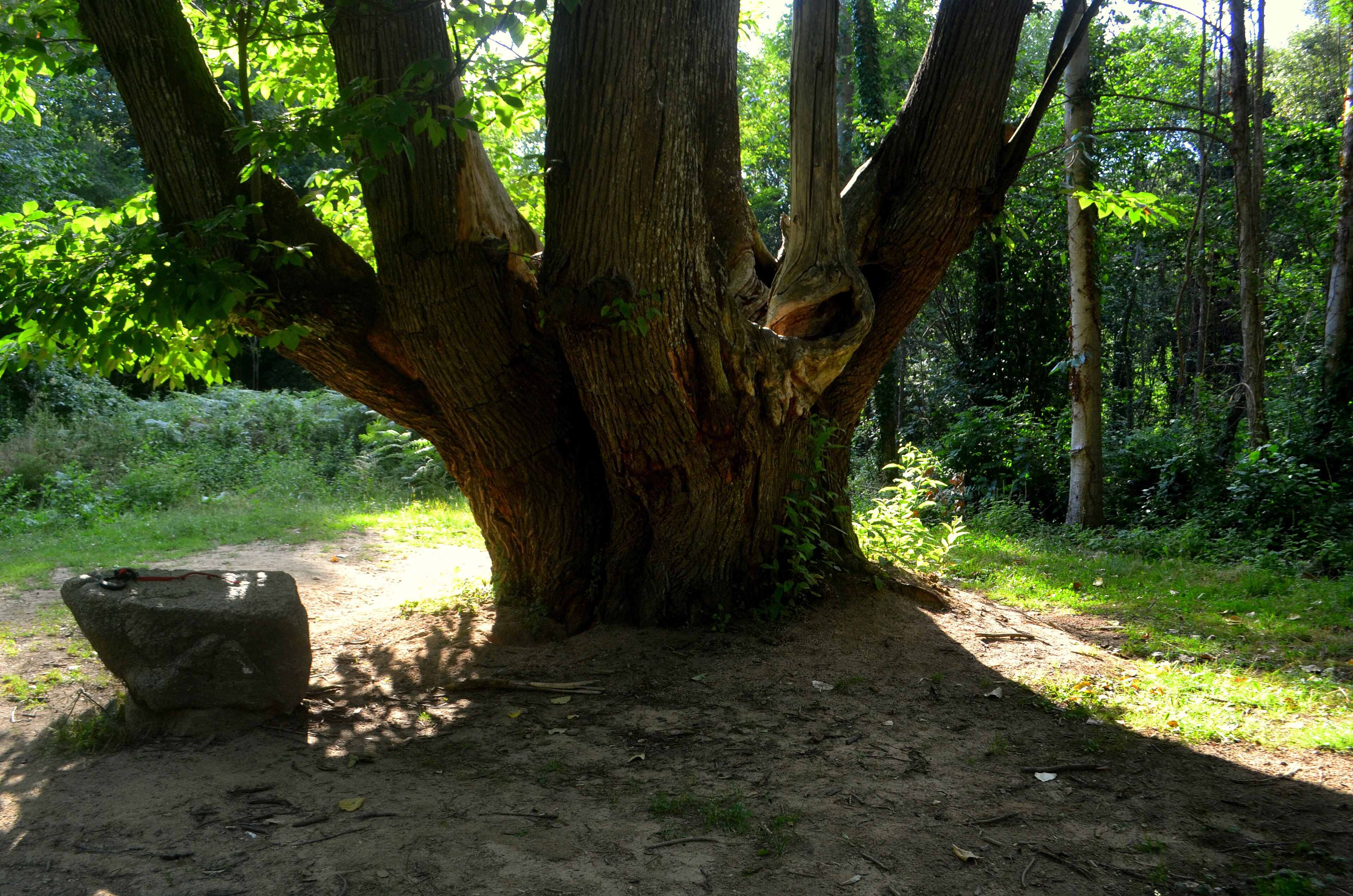
the Castanyer de les Nou Branques, or Nine-Branch Chestnut Tree.
Its candelabra-like shape and extraordinary size have made it one of the emblematic trees of the Montseny.
Viladrau Town Council attributes an approximate age of 700 years to it, a height of around 24 metres and a circumference of approximately 6.5 metres.
Its history is also connected with the identity of the municipality itself.
In 2012 it was chosen as an identifying element of Viladrau’s coat of arms.
The tree suffered significant damage during the windstorms of 1987 and subsequently lost other parts of its structure, but it remains one of the great botanical symbols of the Montseny.
There is even a marked trail, SL-C81, that leads to it from Viladrau.
Monumental Trees
The Castanyer de les Nou Branques represents more than an extraordinary specimen.
It represents the ability of a tree to become collective memory.
A person may remember a hike.
A family may remember a Castanyada.
A village may remember a harvest.
But a centuries-old tree may have stood there for generations.
It has watched the paths, houses, fields and ways of life change.
And every autumn it continues to produce chestnuts.
The Legend of En Drau
As happens with many ancient trees, the chestnut tree has also entered the realm of legend.
Around Viladrau there is an old folk story known as the Legend of En Drau.
According to the story, En Drau was a slave who lived in Rome and was caught stealing a chestnut, a food symbolically reserved for the powerful.
As punishment, he was sent to the galleys with a chestnut tied around his neck.
The ship sank and En Drau managed to reach the Catalan coast.
He then travelled inland into the Montseny.
Over time, the chestnut he carried with him became part of the legendary story explaining the appearance of chestnut trees in these mountains.
The story belongs to the realm of popular tradition rather than documented botanical history, but it is extraordinarily evocative because it explains, through a symbolic narrative, the deep relationship between Viladrau and the chestnut tree.
The Witches of Viladrau and Autumn
The Montseny is also a territory extraordinarily rich in legends involving witches, spirits and fantastic beings.
One of the best-known stories is that of the witches of Viladrau.
Tradition tells that in 1617, coinciding with All Saints’ Day, a group of women considered witches gathered at Sant Segimon. They were subsequently persecuted and executed under accusations of witchcraft.
Today, this memory forms part of Viladrau’s intangible cultural heritage and is commemorated around All Saints’ Day and the Chestnut Fair.
Once again, we find an extraordinary coincidence:
chestnuts, autumn, All Saints’ Day, fire, forest and legends.
All these elements form part of the same cultural imagination of the Montseny.
The Viladrau Chestnut Fair
The tradition continues today.
The Viladrau Chestnut Fair has been held since 1995 and combines gastronomy, nature, culture and the revival of local produce.
In 2026, its 31st edition is scheduled for the weekend of October 24–25.
The fair includes activities related to:
- chestnuts;
- gastronomy;
- walks through chestnut groves;
- demonstrations;
- cultural activities;
- workshops;
- storytelling;
- music;
- local products.
It is a good example of how an agricultural tradition can also become cultural heritage and a tourism experience without necessarily losing its connection to the land.
The Castanyada in Barcelona
If the Montseny represents the forest, Barcelona represents the transformation of the chestnut into an urban tradition.
During the weeks around All Saints’ Day, castanyeres appear at various locations throughout the city.
The Generalitat explicitly recognises the presence of castanyeres and the traditional consumption of chestnuts and sweet potatoes in Barcelona around All Saints’ Day.
The city transforms a forest product into a street experience.
The embers.
The smoke.
The sound of chestnuts roasting.
The paper in which they are wrapped.
The warmth in your hands.
And that aroma which, for a few days, seems to officially announce the arrival of autumn.
Castanyada Versus Halloween
In recent decades, Halloween has also become part of the popular calendar at the end of October.
But the two celebrations have different roots and meanings.
The Catalan Castanyada is historically associated with All Saints’ Day, the dead, chestnuts, panellets, sweet potatoes and community gatherings.
Halloween originates in another cultural and religious tradition that was later transformed into an international popular celebration.
Today the two coexist.
In Catalan schools, neighbourhoods and homes, it is possible to find pumpkins, costumes and Halloween activities alongside chestnuts, panellets and the figure of the castanyera.
But the Castanyada retains its own identity.
A Small Guide to Recognising a Chestnut Tree
If we walk through a forest and want to identify one, we should observe several features.
The Leaf
It is elongated and has a clearly toothed margin.
The Bark
In mature specimens it is thick and deeply furrowed.
The Fruit
The chestnut is enclosed within the spiny bur.
The Habitat
In Catalonia it is generally associated with cool and relatively humid mid-mountain environments and certain sectors of the coastal mountain ranges.
Autumn
This is the easiest season in which to recognise it, thanks to the combination of fallen leaves, burs and chestnuts.
Chestnut or Acorn?
It is an understandable confusion because both trees belong to the Fagaceae family.
But their fruits are very different.
Acorns come from oaks, holm oaks and related species.
Chestnuts come from chestnut trees.
The most obvious difference is their protective covering.
The acorn is protected by a cupule.
The chestnut is protected by a spiny bur.
And in autumn, both can appear mixed together in certain forests.
Can Freshly Gathered Chestnuts Be Eaten?
Yes, but we must distinguish between edible chestnuts from the European chestnut tree and other fruits that may look similar.
We should never consume wild fruits unless we are completely certain of their identification.
European chestnuts are edible.
Traditionally, they can also be eaten:
raw
roasted
boiled
dried
as flour
in purées
in stews
in baking
candied
Contemporary gastronomy has expanded their possibilities even further.
Chestnuts, Autumn and Catalan Cuisine
The great virtue of the chestnut is its ability to move between two worlds.
It can be a humble food, roasted directly over embers.
But it can also appear in sophisticated cuisine.
It can accompany meat.
Be transformed into cream.
Ground into flour.
Add sweetness to a dessert.
Or become an ingredient in breadmaking.
This versatility explains why the chestnut has survived culturally even after losing the dietary importance it once had.
A Catalan Autumn Recipe: Chestnuts with Sweet Potatoes
For a simple, homemade version of the traditional Castanyada table:
Ingredients
- chestnuts
- sweet potatoes
- salt
Method
Wash the sweet potatoes.
Make a small cut in the chestnuts.
Place both products on a baking tray.
Bake at approximately 200°C until the sweet potatoes are tender and the chestnuts are fully cooked.
Serve hot.
Nothing more is really needed.
Because the beauty of this tradition lies precisely in its simplicity.
Chestnuts, Honey and the Mountains
Chestnuts also combine extraordinarily well with honey.
At certain fairs in the Montseny, traditional preparations and tastings have even been revived that combine local products such as chestnuts and chestnut blossom honey.
It is a logical combination from a gastronomic point of view:
the sweetness of the chestnut + the floral notes of the honey + woodland aromas.
The Chestnut Tree as an Ecosystem
A chestnut grove is not simply a collection of trees that produce food.
It is an ecosystem.
Its leaves, branches, fruits and cavities participate in a complex ecological network.
Chestnut forests can coexist with oaks, hazelnuts, holm oaks and other species.
In Montnegre, for example, chestnut groves occur alongside other forest species and form part of much more complex vegetation mosaics.
Therefore, conserving a chestnut grove also means conserving:
soil
wildlife
fungi
microorganisms
old trees
dead wood
natural regeneration
and an entire network of ecological relationships.
The Future of the Catalan Chestnut Tree
The future of the chestnut depends on more than selling chestnuts during October.
It depends on maintaining forests.
On managing woodland properly.
On controlling diseases.
On encouraging regeneration.
On preserving local varieties.
On maintaining traditional knowledge.
And also on ensuring that society continues to value the product.
The Viladrau chestnut is a good example of this process: today it is sold not only fresh, but also in forms such as roasted chestnuts, flour, dried chestnuts and flakes.
In this way, a traditional product can find new ways to remain part of contemporary cuisine.
The Chestnut Tree: A Tree with Deep Roots
Its presence is not limited to the beauty of its trunk, the shade of its branches or the generosity of its fruit. Above all, the chestnut tree is a tree loaded with meaning: it represents resilience, rootedness, abundance and the continuity of life.
For generations, the chestnut tree has accompanied rural communities throughout Europe. Its fruits provided food, its branches and timber had many uses, and its forests became places connected with work, community life and tradition. Wherever a chestnut tree grew, there was also a human story surrounding it.
Perhaps for this reason, its first great lesson is that of roots. A chestnut tree needs time to grow and can reach extraordinary longevity. Its trunk, marked by the passing years, is not a sign of weakness but visible evidence of having endured. Every crack, knot and branch tells of winters, droughts, storms and springs survived. In this sense, the chestnut becomes a metaphor for existence itself: growing does not mean remaining untouched, but learning to live with the marks left by time.
It is also a symbol of abundance and generosity. Every autumn, its fruit recalls an ancient relationship between human beings and nature. Gathering chestnuts, sharing them and roasting them around a fire transforms a simple food into an act of community.
From this comes another of its symbolic dimensions: protection. The crown of the chestnut tree provides shade and shelter, while its roots remain firmly anchored in the earth.
The chestnut tree also speaks of memory. A centuries-old tree may have seen several generations beneath its branches. It has remained while people, houses, paths and customs have changed. That is why looking at an old chestnut tree can create the feeling of standing before something that belongs to a time larger than our own.
And perhaps that is where its deepest meaning lies. In an age defined by speed and by the constant need for renewal, the chestnut tree represents the opposite: patience. It reminds us that some important things need years to acquire true value. Roots cannot be seen, but they hold the tree in place. Wood takes time to form, but it endures. Fruit arrives only after a cycle that cannot be rushed.
The chestnut tree therefore invites us to recover a simple idea: having roots does not mean remaining still. A tree stays in one place, yet every spring it grows again. Its branches reach toward the light while its roots grow deeper into the earth. There is a powerful human lesson in this contradiction: we can move forward without forgetting where we come from.
For this reason, the chestnut tree can be understood as a symbol of strength, belonging, generosity and continuity. A tree that does not need to impose itself to demonstrate its greatness. It is enough for it to remain, endure, bear fruit and offer shade.
Perhaps that is its true lesson: that strength does not always mean standing firm against the storm, but also having roots deep enough to grow again after it.




Copyright © 2016-2026 Magic Dreams Barcelona.