Route guide for visitors throughout Catalonia – Barcelona – Costa Brava – Catalan Pyrenees – Personalized experiences – Customized tour guide services – A small tribute to the wonderful city and land that saw us born – Transforming experiences into unforgettable memories - Magic Dreams Collection: exclusive universes inspired by Salvador Dalí and Gaudí. Niche perfumes, jewelry, lithographs, and collectible items celebrating the Mediterranean spirit.
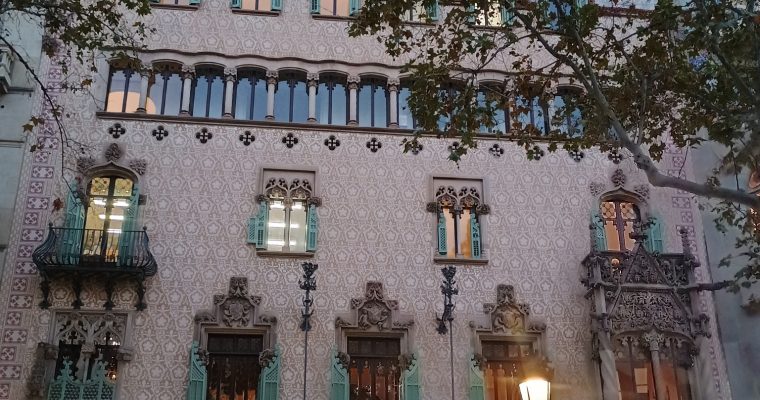
Located on the iconic Passeig de Gràcia, one of Barcelona’s most elegant avenues, stands one of the finest and most distinctive jewels of Catalan Modernism: Casa Amatller. Its stepped façade, sculptural details and delicate decorative elements make it an unmistakable landmark. However, its true charm …
Where History, Art, and the Mediterranean Lifestyle Converge Plaça de Catalunya is the epicentre of Barcelona, a vibrant meeting point where the historic district of Ciutat Vella meets the modern Eixample neighbourhood. Considered one of the city’s most iconic public spaces, the square connects some …
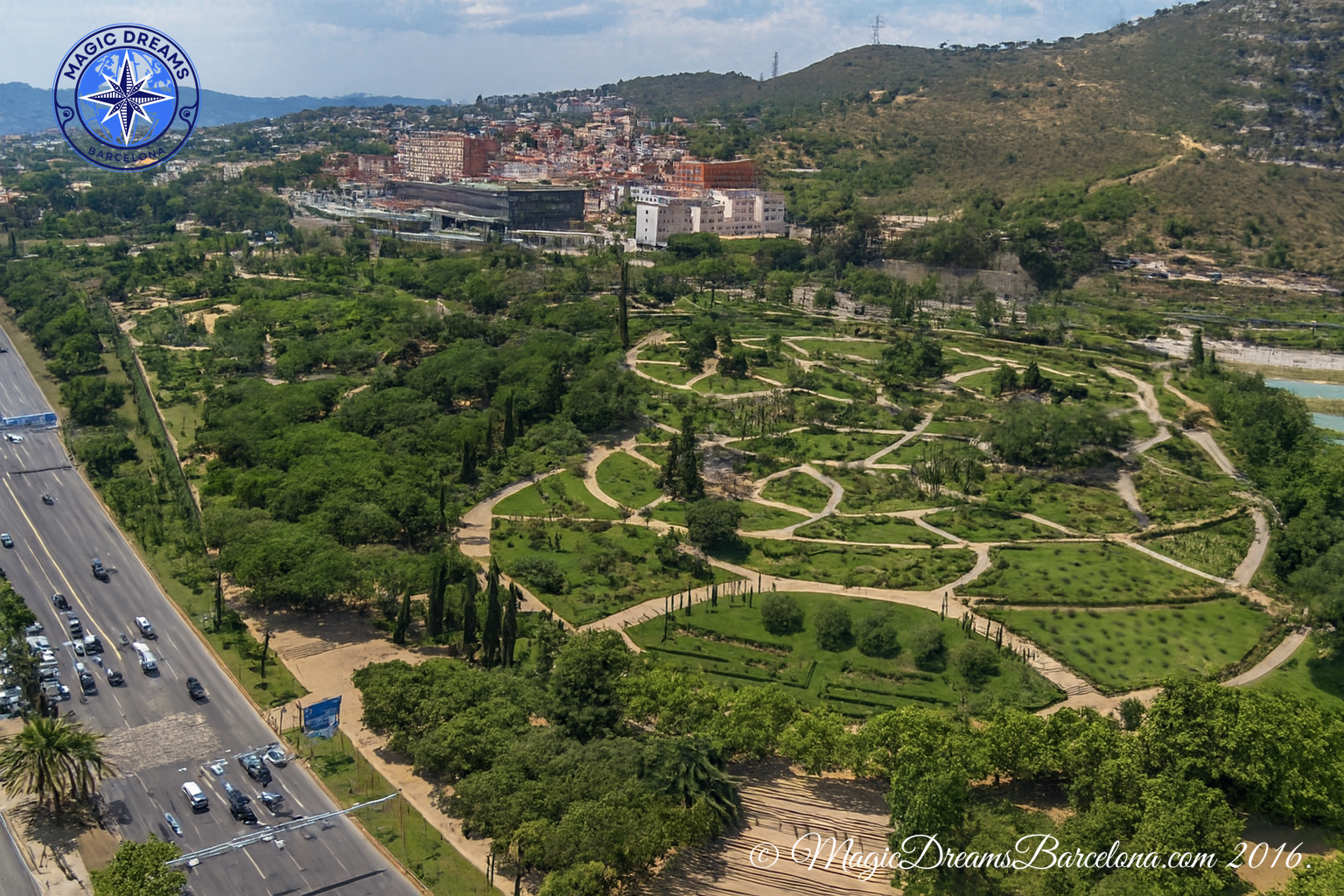
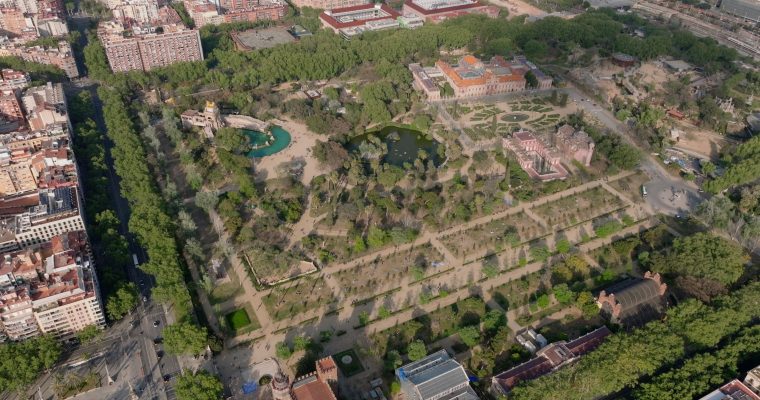
Located in the exclusive neighbourhood of Pedralbes, within Barcelona’s Les Corts district, Cervantes Park (Parc de Cervantes) is one of the city’s most distinctive and peaceful green spaces. This magnificent public garden stretches between Avinguda Diagonal and Avinguda d’Esplugues, close to the Ronda de Dalt ring road. Its main entrance is located on Avinguda Diagonal, providing easy access for both residents and visitors.
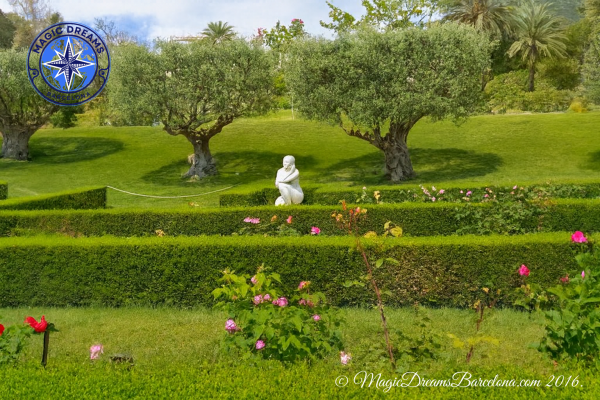
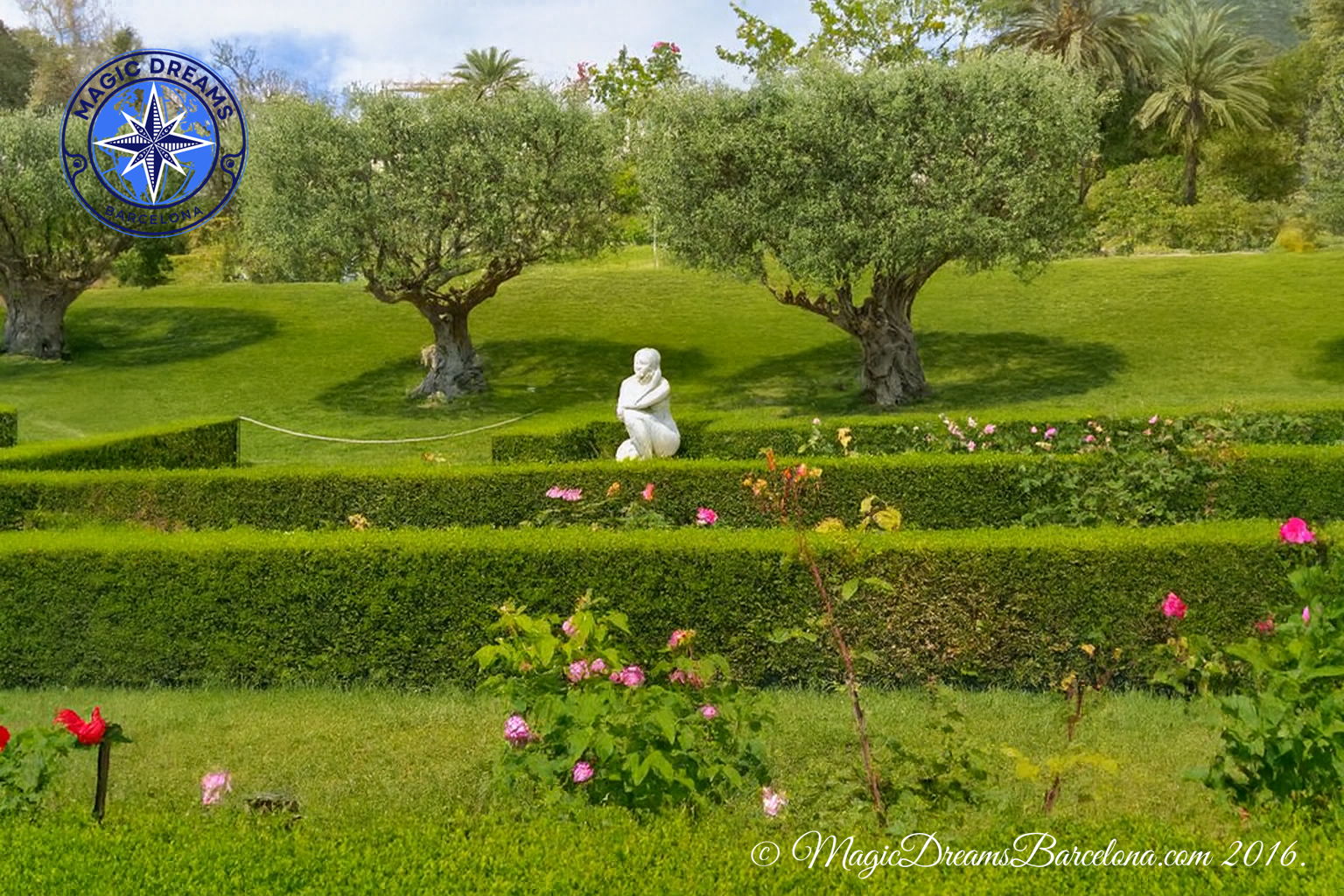
Cervantes Park combines the beauty of an urban garden with the richness and diversity of a remarkable botanical landscape. Its most iconic feature is undoubtedly its extraordinary rose garden, home to more than 10,000 rose bushes representing approximately 2,000 different varieties. A spectacular display of colours, shapes and fragrances that makes this one of Barcelona’s most remarkable rose gardens.
From spring through autumn, its pathways become a sensory journey where nature reveals its full beauty, offering a particularly appealing experience for garden enthusiasts, photography lovers and visitors seeking beautiful floral landscapes.
The Rose Garden: A World of Beauty, Colour and Fragrance
The rose garden is the true heart of Cervantes Park. Its extraordinary collection brings together rose varieties from different countries and botanical traditions, carefully arranged within a landscaped setting that invites visitors to stroll, admire and discover the diversity of this remarkable flower.
Each variety has its own distinctive characteristics in terms of colour, shape, size and fragrance, creating a natural composition of exceptional aesthetic richness.
The park also hosts the Barcelona International New Rose Competition, a specialist event that brings together rose growers, experts and horticultural professionals to present and evaluate new rose varieties.
Flowering generally reaches its most spectacular peak during May and June, although the garden offers different botanical attractions throughout the year.
Nature, Art and Landscape Design
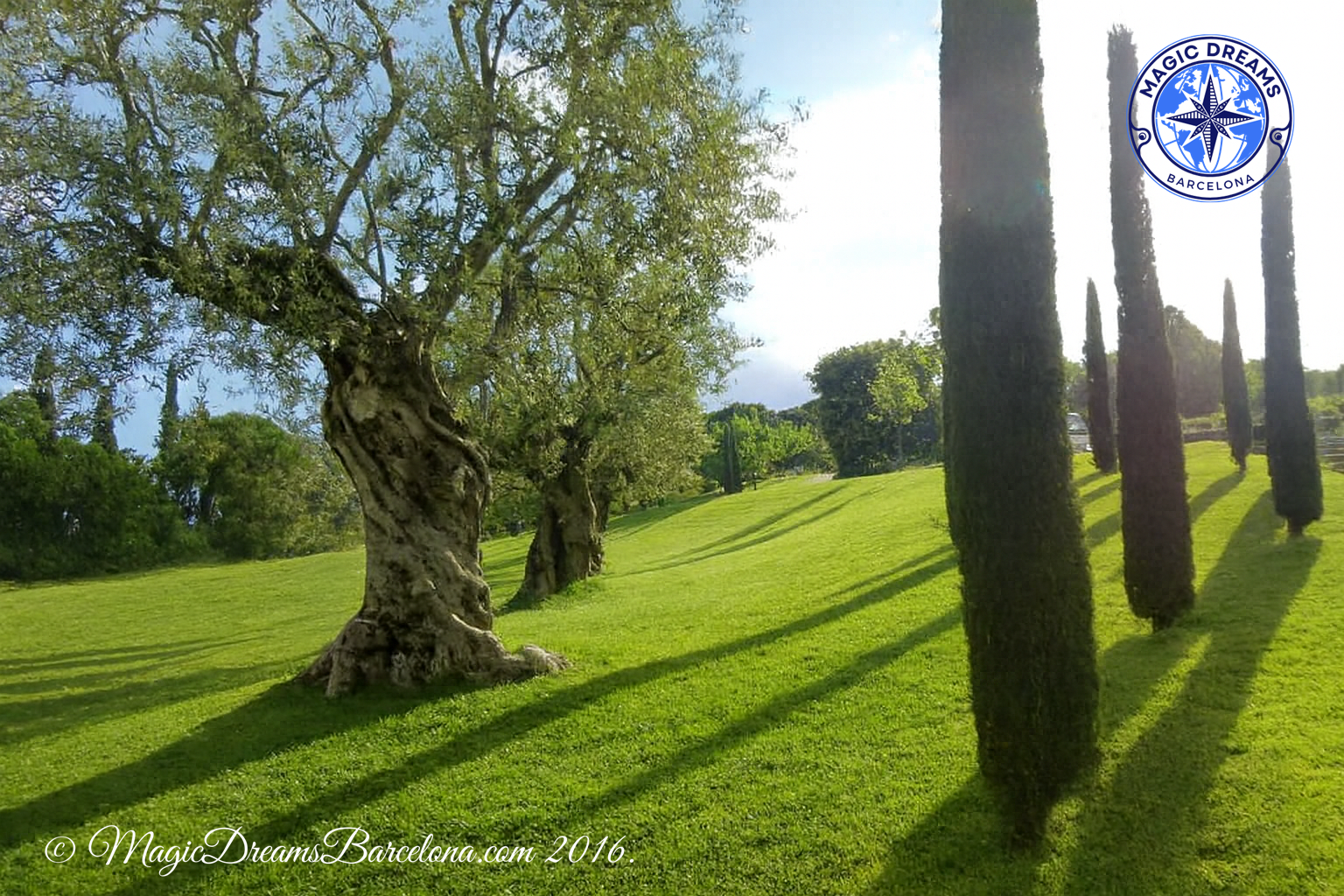
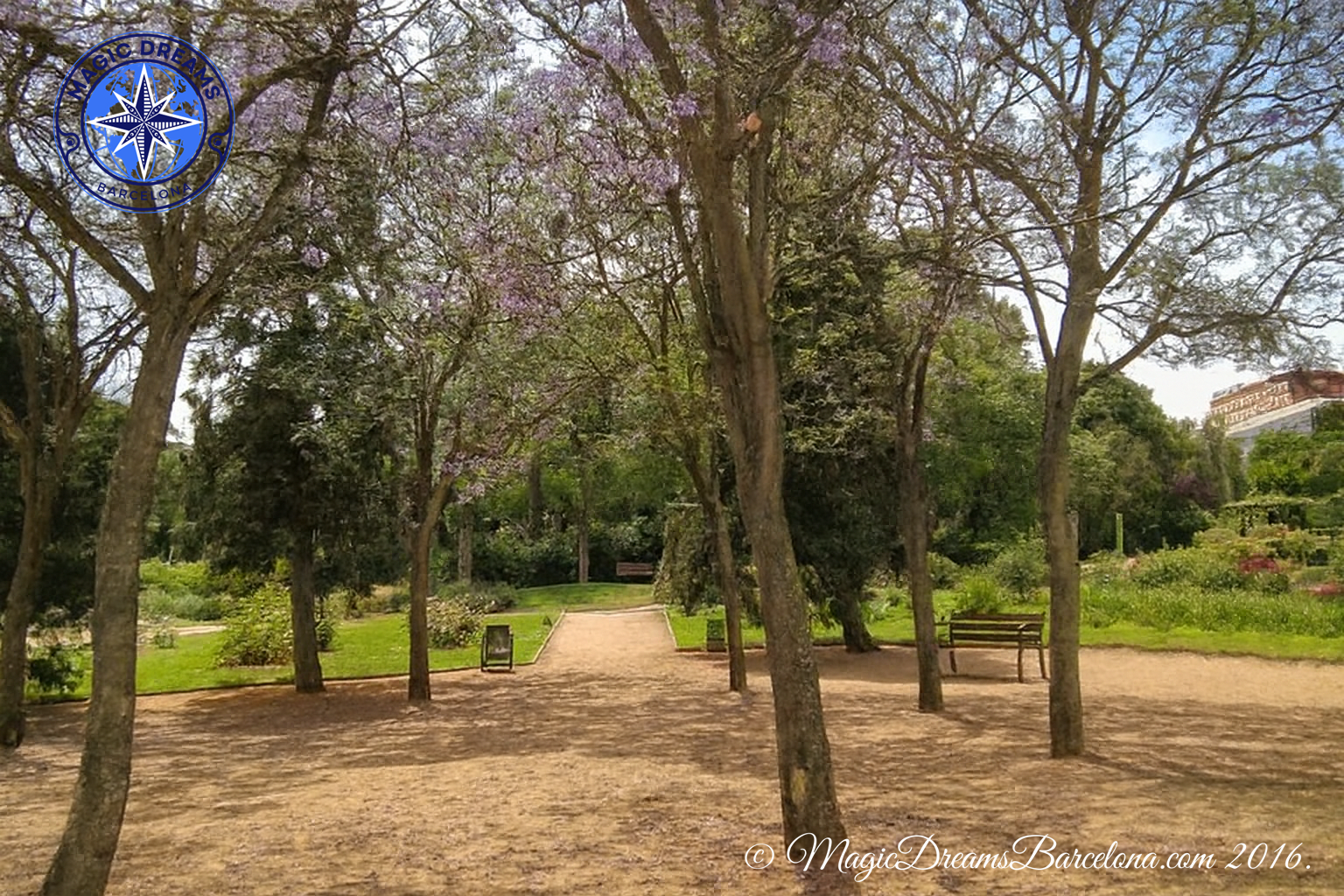
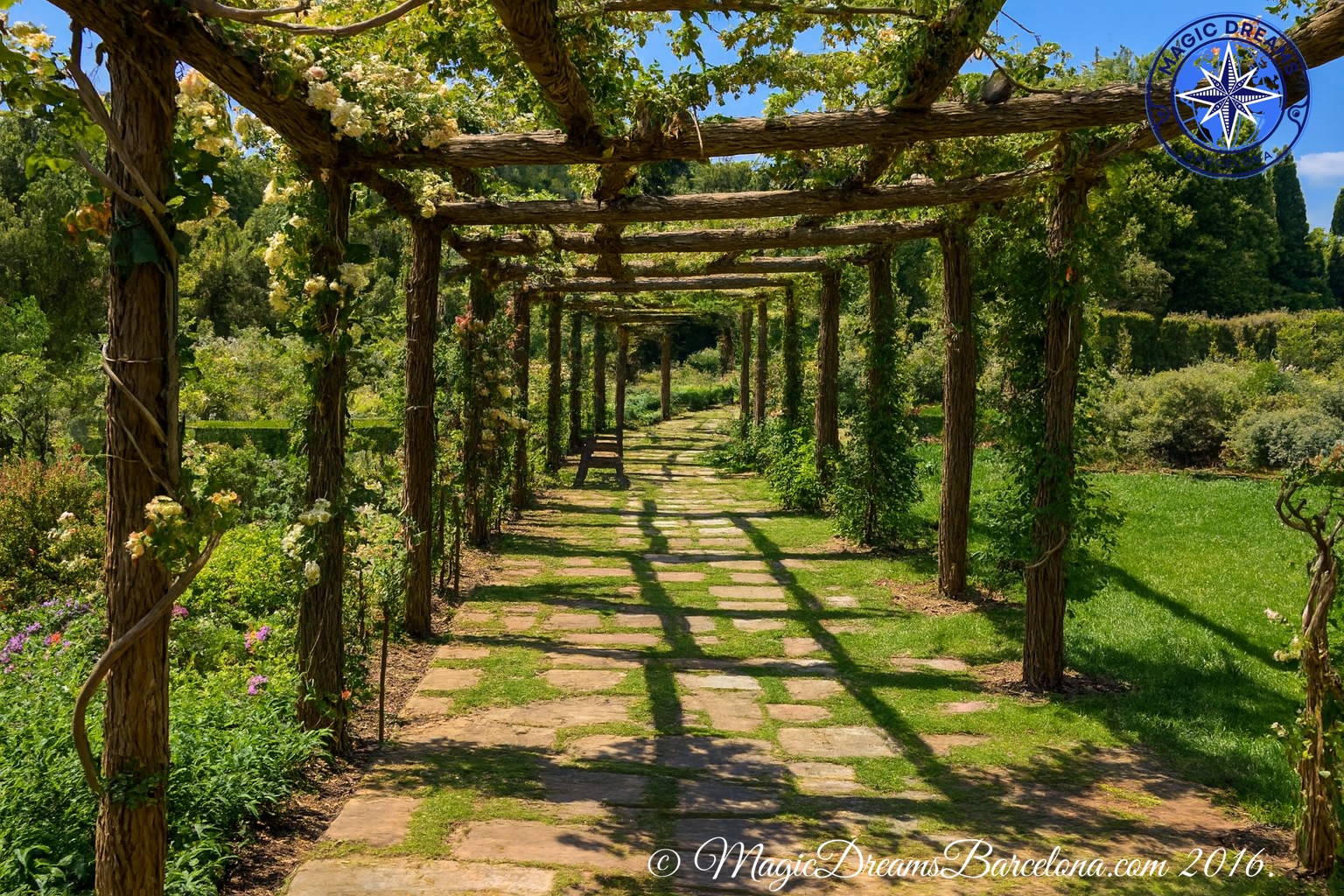
Beyond its famous rose garden, Cervantes Park features extensive landscaped areas, open lawns, winding pathways, peaceful resting spots and sculptures that interact harmoniously with the natural surroundings.
Its landscape design combines open perspectives, ornamental vegetation and secluded corners of remarkable tranquillity, creating an ideal environment for contemplation, reading, photography, leisurely walks or outdoor exercise.
The integration of artistic elements into the landscape adds a cultural dimension to the experience, transforming the park into a place where nature and artistic expression coexist in harmony.
Furthermore, its botanical diversity and carefully maintained gardens contribute to urban biodiversity and the preservation of Barcelona’s natural heritage.
A Space for Biodiversity and Environmental Education
Cervantes Park is also an important place to connect with nature within Barcelona’s urban environment.
Its different plant species, trees and flowering areas encourage the presence of pollinating insects, butterflies and birds, creating small ecosystems where visitors can observe natural cycles and appreciate the importance of biodiversity.
This environment offers interesting opportunities for educational activities, botanical interpretation walks and nature experiences focused on observing Mediterranean flora and fauna.
The combination of nature, knowledge and environmental awareness makes the park an especially attractive destination for families, botanical enthusiasts and visitors wishing to discover a different side of Barcelona.
The Best Time to Visit Cervantes Park
Although the park can be enjoyed throughout the year, spring is particularly recommended thanks to the spectacular flowering of its rose garden.
May and June generally offer the most attractive conditions for admiring the diversity of roses, enjoying their fragrances and taking photographs in an exceptionally beautiful setting.
During summer, its green spaces provide pleasant corners for walking and relaxation, while autumn reveals different shades across the landscape and offers a quieter atmosphere.
Early mornings and late afternoons are particularly enjoyable times to explore the gardens, when natural light enhances the colours of the flowers and the surroundings invite visitors to slow down and appreciate the scenery.
Pedralbes: An Area of Elegance, History and Nature
The location of Cervantes Park also provides an opportunity to discover the distinctive character of Pedralbes, one of Barcelona’s most prestigious residential neighbourhoods.
Nearby, visitors will find important historical and architectural landmarks, including the Monastery of Pedralbes, a remarkable example of Catalan Gothic architecture founded in the 14th century, as well as university buildings, historic gardens and architectural landmarks that reflect the city’s development.
The proximity of these attractions makes it possible to create itineraries combining nature, history, art and architecture, offering a more comprehensive understanding of Barcelona and its urban evolution.
Cervantes Park therefore becomes an exceptional starting point for discovering a quieter, more cultural and nature-oriented side of the Catalan capital.
Discover Cervantes Park with Magic Dreams Barcelona
Discover Cervantes Park and Catalonia through the exclusive perspective of Magic Dreams Barcelona, where every itinerary becomes an experience designed to connect visitors with the history, culture, art and natural beauty of the region.
Our services are designed so that you do not have to worry about a thing. We take care of every detail, ensuring that you feel comfortable, supported and fully immersed in each experience, with personalised attention and carefully selected services.
Our Exclusive Services Include:
Private transportation: Personalised transfers with carefully selected vehicles to suit the needs of each experience.
Professional multilingual guides: Expert guides offering services in Spanish, Catalan and English, with additional languages available upon request.
Personalised cultural itineraries: Bespoke routes incorporating historical, architectural, botanical and artistic interpretation, including insights into symbolism and cultural heritage.
Exclusive accommodation: A selection of premium properties and establishments offering privacy, comfort and personalised services.
Private chef experiences: Local and international culinary creations prepared by private chefs, with menus tailored to individual preferences.
Private live music: Elegant performances featuring violinists and carefully selected acoustic ensembles to create unique atmospheres.
Bespoke sensory picnics: Outdoor experiences with table linen, decoration and catering of your choice, arranged in gardens, by the sea, in natural surroundings or aboard a yacht. These experiences can also include specialists in botany, ornithology and butterfly observation.
Signature catering: Carefully curated sweet and savoury creations, fresh juices, wines and non-alcoholic sparkling wines.
Personalised floral design: Floral arrangements created to complement and enhance each experience.
Professional photography: Photography services to capture and preserve the most memorable moments of your journey.
Wellness and creative workshops: Experiences ranging from traditional Catalan cuisine, including learning to prepare an authentic paella, to artistic workshops inspired by techniques such as Gaudí’s iconic trencadís mosaic.
Gastronomic tours: Carefully curated culinary itineraries featuring a selection of Barcelona’s finest restaurants and dining establishments.
Exclusive getaways and excursions: Weekend escapes along the Costa Brava and through the Catalan Pyrenees, as well as fully organised day trips with services included, allowing you to discover Catalonia’s extraordinary natural, cultural and artistic heritage.
More Than a Visit: A Sensory, Cultural and Emotional Journey
At Magic Dreams Barcelona, we believe that discovering a destination means much more than visiting its monuments and iconic landmarks. It means understanding its identity, interpreting its history and connecting with its essence through the perspective of those who know the region best.
Every itinerary becomes a sensory, cultural and emotional journey, where nature, art, gastronomy and heritage come together to offer a different way of discovering Barcelona and Catalonia.
Our aim is to create meaningful and memorable experiences, guided by local perspectives and an intimate knowledge of the region, its history, evolution, traditions and hidden treasures.
From a leisurely stroll among the roses of Cervantes Park to exploring historic gardens, architectural heritage or the natural landscapes of Catalonia, every detail is carefully considered to ensure an authentic, exclusive and truly special experience.
Magic Dreams Barcelona invites you to discover the beauty of Barcelona and Catalonia from a unique perspective, where elegance, authenticity and attention to detail transform every moment into an unforgettable memory.
The summit of Barcelona where history, nature and entertainment come together Tibidabo, the highest part of the city of Barcelona, stands at 575 metres above sea level, offering an incomparable perspective of the city, the Mediterranean Sea and the surrounding hills. This remarkable place combines …
La Barceloneta is one of Barcelona’s most iconic and evocative neighbourhoods. Located in the Ciutat Vella district, this former fishing quarter retains a unique identity shaped by the Mediterranean, fishing traditions and the urban evolution of a city that has always found one of its …
History, architecture, sailing and new experiences overlooking the Mediterranean
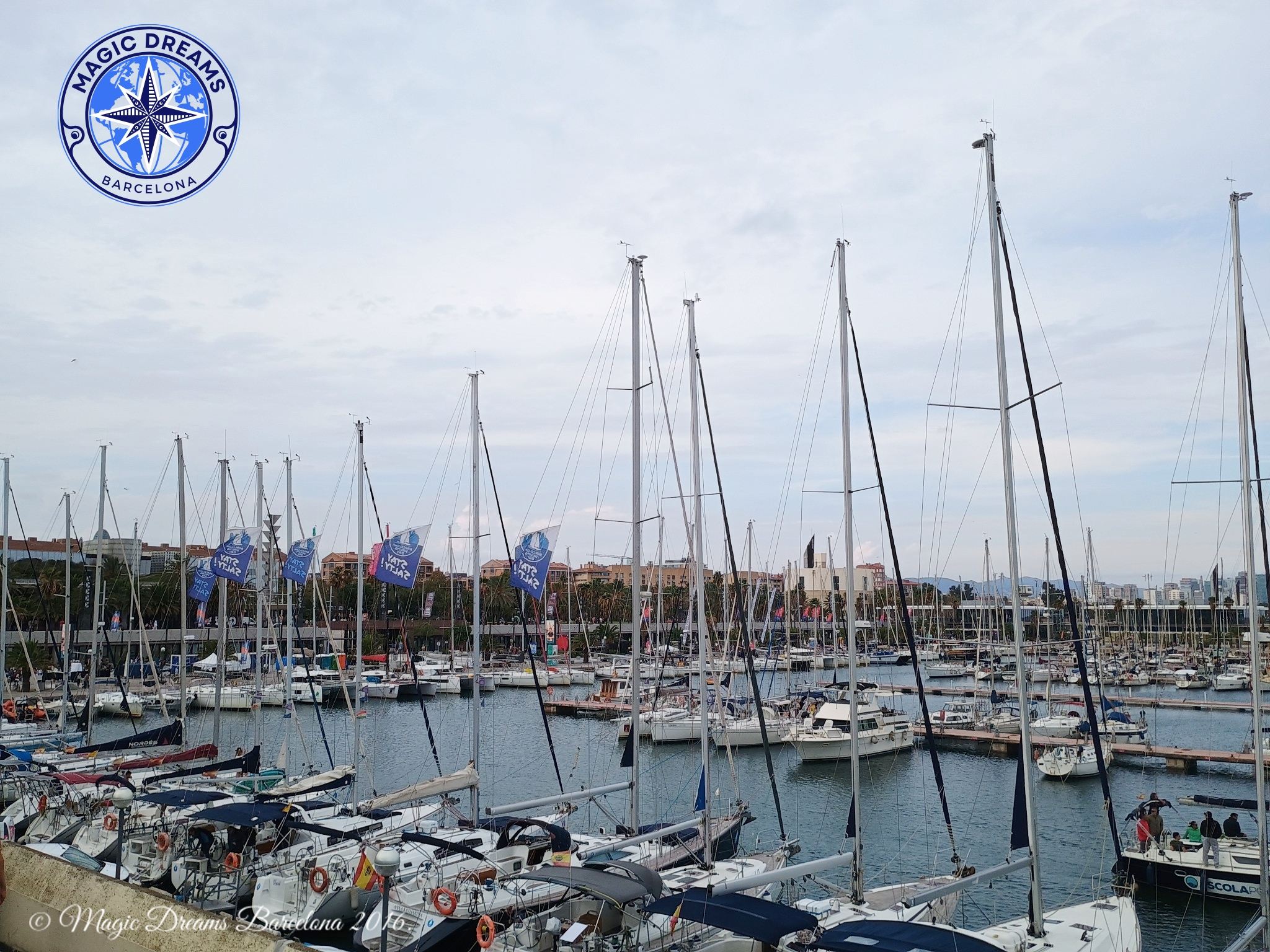
The Port Olímpic Marina, currently known as Port Olímpic de Barcelona, is one of the most emblematic maritime areas of contemporary Barcelona. Located on the Mediterranean waterfront, this landmark combines history, architecture, nautical activities, gastronomy and new public spaces in an environment that reflects the profound transformation the city has undergone over recent decades.
Conceived in the context of the 1992 Barcelona Olympic Games, the marina was created as part of one of the most significant urban renewal projects in the recent history of the Catalan capital. Its construction made it possible to reclaim a section of the coastline that had been dominated for decades by industrial facilities, railway infrastructure and port-related activities.
Today, more than three decades later, Port Olímpic is entering a new chapter.
The transformation completed in 2024 has reclaimed more than 20,000 m² of public space, incorporating squares, gardens, promenades, viewing areas and new access points that directly connect the marina with the Vila Olímpica district and the beaches.
The result is a revitalised area that goes far beyond its function as a marina: an open space for the public, offering new dining options, nautical activities, cultural initiatives and projects linked to the blue economy.
A place where Barcelona reconnects with the sea from a much more open, sustainable and contemporary perspective.
A privileged location overlooking the Mediterranean
Between Vila Olímpica, the beaches and Barcelona’s horizon
Port Olímpic is located in the Vila Olímpica del Poblenou neighbourhood, within the Sant Martí district, between Somorrostro Beach and Nova Icària Beach.
Its location creates a natural connection between Barcelona’s coastline and some of the neighbourhoods that best represent the city.
From the marina, visitors can walk towards Barceloneta, continue along the seafront promenade or head in the opposite direction towards Poblenou and the city’s coastal beaches.
The landscape is dominated by some of the most distinctive buildings of contemporary Barcelona.
Two major towers stand out in particular:
Hotel Arts Barcelona, one of the city’s most iconic hotels.
Torre Mapfre, an office building that forms part of the architectural skyline of Vila Olímpica.
Both buildings were constructed for the 1992 Olympic Games and have become two of the great symbols of Barcelona’s urban renaissance.
On the maritime horizon, another unmistakable architectural landmark comes into view: W Barcelona Hotel, popularly known as the Hotel Vela. Its distinctive silhouette can be particularly well appreciated from the marina’s open spaces and the viewing promenade along Dic de Recer.
This combination of contemporary architecture, boats, beaches and the Mediterranean makes Port Olímpic one of the most remarkable settings along Barcelona’s coastline.
History: the Olympic legacy that transformed Barcelona
The transformation of a city that rediscovered its connection with the sea
Until the end of the twentieth century, much of Barcelona’s coastline was occupied by industrial, railway and port infrastructure, which made it difficult for the city to connect with the Mediterranean.
The 1992 Olympic Games represented an extraordinary opportunity to change this situation.
Barcelona embarked on a major urban transformation that made it possible to reclaim extensive stretches of coastline, create new beaches, build the Vila Olímpica neighbourhood and develop infrastructure designed to bring the sea closer to its residents.
The Olympic Marina was conceived as a sporting and nautical facility associated with the Games and intended to accommodate athletes.
Once the Olympic event had concluded, the marina took on new recreational, sporting, commercial and tourism-related functions.
Among the major transformations associated with this process were:
The recovery of numerous sections of Barcelona’s coastline.
The creation of new urban beaches.
The construction of the Vila Olímpica neighbourhood.
The development of the Olympic Marina.
Improvements to seafront promenades and pedestrian connections.
Barcelona’s renewed opening towards the Mediterranean.
The project brought about a decisive change in the relationship between Barcelona’s residents and their coastline.
What had previously been an area dominated by industrial uses gradually became a place for meeting, sport, leisure and community life.
A marina with multiple functions
Sailing, gastronomy, sport and urban life
During its early years, Port Olímpic became widely known as a dining and nightlife destination, particularly around Moll de Mestral.
Over time, however, the marina’s role and model of use began to evolve.
From 2020 onwards, a comprehensive transformation project was launched with the aim of restoring its function as a public space, strengthening its nautical activities and promoting new economic initiatives related to the sea.
Today, Port Olímpic brings together a wide range of activities:
A marina with berths for boats.
A recreational sailing base.
The Municipal Sailing Centre.
Facilities for emerging water sports.
Spaces for blue economy businesses.
Restaurants and dining areas.
Public squares, gardens and promenades.
Viewing areas overlooking the Mediterranean.
Cultural and family activities.
Meeting places for residents and visitors.
The new vision is centred on a more accessible, sustainable marina that is better connected to the city.
The aim is to make the Mediterranean not only a beautiful backdrop, but also an active environment for sport, education, innovation and community life.
The major transformation of Moll de Mestral
From a former nightlife hub to an open public square by the sea
One of the most visible changes brought about by the redevelopment of Port Olímpic can be found at Moll de Mestral.
In the past, this area was primarily associated with the terraces, restaurants and nightlife venues that shaped the marina’s image for many years.
The new redevelopment has transformed the area into a large public square covering more than 8,000 m².
The space incorporates vegetation, seating areas, shaded zones and a large wooden pergola that provides visual and architectural continuity throughout the area.
Its design makes it more comfortable to enjoy the maritime surroundings and provides a setting suitable for cultural activities, community gatherings, performances and family events.
The new Balcó Gastronòmic
A new way to enjoy gastronomy overlooking the Mediterranean
One of the most important elements of the marina’s transformation is the Balcó Gastronòmic, located at Moll de Gregal.
This area has been designed to restore the relationship between gastronomy, architecture, the city and the sea through a concept that brings together restaurants, terraces and public spaces.
Its contemporary design encourages visual openness, natural light and a stronger connection between the marina’s interior and Nova Icària Beach.
The redevelopment forms part of a wider renewal project that has created a much more open and pleasant environment for walking, dining or simply enjoying views of the Mediterranean.
The culinary offering brings together a variety of concepts, ranging from Mediterranean and seafood cuisine to international food, casual dining and establishments specialising in healthy eating.
Restaurants and dining establishments
Among the venues forming part of the Balcó Gastronòmic offering are:
El Tribut – Mediterranean and Catalan fusion cuisine, with a culinary concept inspired by creativity and the architectural world of Antoni Gaudí.
Eldelmar – Hermanos Torres – A gastronomic concept centred on quality ingredients and the culinary creativity of renowned chefs Sergio and Javier Torres.
Nuara – Sea-and-fire cuisine, offering fish, seafood, meat and rice dishes prepared over an open flame.
Kresala – Specialising in fish and Basque-inspired grilled cuisine.
Superlocal – A restaurant focused on locally sourced ingredients and a sustainable culinary philosophy.
Casa Carmen – Mediterranean cuisine, small sharing plates and informal dining in a seafront setting.
El Cangrejo Loco – A traditional seafood restaurant and one of the marina’s historic dining landmarks.
Las Muns – Specialising in gourmet empanadas.
Faborit – Coffee, juices, salads and healthy food options.
Dolce Mare – An offering of ice cream and sweet treats that has formed part of the area’s gastronomic scene.
The commercial offering continues to evolve. In July 2026, two additional establishments were announced: a traditional Sicilian cuisine concept by El Siciliano BCN and a Japanese food concept presented by Sushi Hand. It is advisable to check whether they have opened and what is currently available before planning a visit.
The Balcó Gastronòmic reflects a clear intention to diversify the marina’s dining scene, catering to different audiences, budgets and ways of enjoying food.
The result is a new culinary landscape in which Mediterranean cuisine, fish, seafood, grilled dishes, local produce, international food, cafés and casual dining options coexist.
An invitation to discover the Mediterranean through its flavours as well.
The Dic de Recer viewing promenade
A walkway extending out into the Mediterranean
One of the most special areas of the new Port Olímpic is the Dic de Recer viewing promenade.
This route follows the marina’s protective breakwater and extends out into the sea, offering a different perspective of Barcelona’s coastline.
At approximately 500 metres long, it is one of the main attractions of the redevelopment and provides an experience quite different from that of a conventional seafront promenade.
Walking along Dic de Recer creates a particular sensation: little by little, the city falls behind and the Mediterranean becomes the main focus.
The route offers different perspectives of the marina, its boats and Barcelona’s architectural skyline.
From its open spaces, visitors can admire:
W Barcelona Hotel, known as the Hotel Vela.
Barceloneta Beach.
Vila Olímpica.
Hotel Arts Barcelona.
Torre Mapfre.
Barcelona’s seafront.
Recreational and leisure boats.
The open Mediterranean.
It is particularly recommended during the early morning and at sunset, when the changing light transforms the colour of the water and the silhouette of the buildings.
The promenade was designed as a genuine public viewing point, allowing visitors to admire Barcelona from a privileged position and enjoy a much closer relationship with the sea.
Where does the promenade end, and do you have to return along the same route?
The end of the breakwater overlooking the Mediterranean
The Dic de Recer viewing promenade ends at the outermost tip of the protective breakwater.
Therefore, if the aim is simply to enjoy this particular route, the usual option is to walk all the way to the end and then return along the same path.
It is not a route that continues towards the Hotel Vela.
W Barcelona Hotel is located in the direction of Barceloneta, on the other side of the seafront, so visitors wishing to approach it must continue along the coastal promenade.
This distinction is important when planning the visit.
Dic de Recer offers a privileged maritime perspective of the hotel, while the seafront promenade allows visitors to continue towards Barceloneta and gradually approach its location.
How long does the walk along Dic de Recer take?
An experience to enjoy at your own pace
The route is approximately 500 metres each way, meaning that completing the round trip involves walking around one kilometre.
For planning purposes, we recommend allowing:
20–25 minutes: to complete the round trip at a leisurely pace.
30–45 minutes: to stop at the viewing points, enjoy the scenery and take photographs.
One hour or more: if you wish to combine the walk with a visit to the marina and its different areas.
If you also include a meal, a coffee or a gastronomic break at the Balcó Gastronòmic, it is advisable to allow between one and a half and two and a half hours to enjoy the whole experience without rushing.
The experience is particularly enjoyable when combined with a walk along Nova Icària and Somorrostro beaches.
Port Olímpic opening hours and access
A public space open throughout the year
Port Olímpic is accessible throughout the year, although its different facilities and access points have specific opening hours.
According to the marina’s official information, general opening hours are:
Winter, October to April: from 7:00 am to 1:00 am.
Summer, May to September: from 6:00 am to 1:00 am.
The Dic de Recer viewing promenade has its own opening hours:
From 6:00 am to 10:00 pm.
It is therefore not open throughout the night.
There are also access points with specific opening hours:
Access to Moll de Gregal from Nova Icària Beach: from 5:00 am to 10:00 pm.
Access to Moll de Marina from Somorrostro Beach: from 8:00 am to 11:00 pm.
It is advisable to check the official opening hours before visiting, especially if you wish to explore the marina early in the morning or during the late afternoon.
How to access the viewing promenade
New connections between the marina and the beaches
The transformation of Port Olímpic has considerably improved pedestrian connections between its different areas.
Access to Dic de Recer is available from the Balcó Gastronòmic and Moll de Gregal area, which connects with the seafront promenade.
There is also a connection with Nova Icària Beach, allowing visitors to enter the marina area directly.
The redevelopment has introduced new routes, stairways, lifts and connections to facilitate visitor movement and improve accessibility.
As a result, the marina is no longer a relatively isolated area, but is now much better integrated into Barcelona’s usual coastal walking routes.
How to get to Port Olímpic
A location with excellent connections to Barcelona
Port Olímpic is located in an area with excellent public transport links and convenient pedestrian and cycling routes connecting it with the rest of the city.
Metro
The nearest station is:
Line L4 – Ciutadella | Vila Olímpica.
From there, the marina can easily be reached on foot.
Tram
Tram T4 – Ciutadella | Vila Olímpica.
A convenient alternative for visitors travelling from Poblenou or the Fòrum area.
Bus
Several bus routes connect the Vila Olímpica area with the rest of Barcelona. It is advisable to check the current routes and stops before travelling.
On foot
From Barceloneta, visitors can reach the marina by walking along the seafront promenade.
From Parc de la Ciutadella, it is also possible to reach the coastline through the Vila Olímpica neighbourhood.
Nova Icària Beach provides a direct connection to the Balcó Gastronòmic area.
By bicycle
Barcelona’s coastline has cycling routes that make it easy to reach the marina.
There are also bicycle parking facilities at various points throughout the premises.
By car
The marina has nearby parking facilities and vehicle access from the Avinguda Litoral and Moll de Mestral areas.
To avoid unnecessary journeys, we recommend checking access and parking arrangements in advance.
The redevelopment of Port Olímpic
An urban transformation with a vision for the future
Between 2020 and 2024, Port Olímpic underwent one of the most significant transformations since its creation.
The project was developed around several key objectives:
Reclaiming public spaces for the community.
Improving connections between the marina, Vila Olímpica and the beaches.
Reducing dependence on the former nightlife-oriented model.
Promoting nautical and sporting activities.
Developing a new blue economy hub.
Improving environmental sustainability.
Expanding the gastronomic offering.
Creating new cultural and family spaces.
Improving accessibility and pedestrian mobility.
The recovery of more than 20,000 m² of public space has been one of the most significant achievements of this redevelopment.
The marina’s new configuration represents a change of direction: moving away from a space primarily associated with commercial leisure towards an urban environment where economic activity, nature, sport, culture and community life coexist.
The blue economy and new opportunities
The Mediterranean as a driving force for innovation and development
One of the fundamental pillars of the new Port Olímpic is its commitment to the blue economy.
This concept encompasses economic activities related to the sea and marine resources, incorporating principles of sustainability, innovation and environmental protection.
The marina aims to become a leading location for companies, professionals and projects related to:
Nautical activities.
Maritime services.
Technology and innovation.
Research and development.
Circular economy.
Environmental sustainability.
Maritime education and outreach.
The project includes dedicated business spaces and new facilities designed to encourage economic activity connected with the Mediterranean.
This commitment expands the traditional functions of a marina, transforming it into a place for work, knowledge and innovation as well.
The blue economy therefore represents one of the main areas of future development for Port Olímpic.
Nautical activities and water sports
Bringing the Mediterranean closer to people
Port Olímpic retains its sporting and nautical identity while strengthening its facilities for sailing and water-based activities.
One of its key facilities is the Municipal Sailing Centre, which has been renovated to improve its facilities and make the sport more accessible to a wider audience.
The redevelopment has also promoted new spaces dedicated to water sports and the promotion of nautical activities.
The marina offers berths for boats ranging from 7 to 30 metres in length.
It currently has 674 berths.
These services cater to both private boat owners and professionals operating recreational vessels.
The new vision aims to ensure that the sea is not simply a landscape to admire, but also an active environment in which people can learn, sail, practise sports and enjoy sustainable experiences.
Ecological regeneration and marine biodiversity
A marina committed to the life of the Mediterranean
Sustainability is another major pillar of the Port Olímpic transformation.
Among the environmental initiatives developed are projects designed to encourage marine biodiversity and improve the conditions of the underwater ecosystem.
The project has incorporated seabed regeneration measures through artificial structures designed to create new marine habitats.
Among the initiatives publicised are the installation of 100 artificial reefs and 50 biotopes, designed to encourage the colonisation of marine organisms and contribute to ecosystem recovery.
In September 2025, the marina also reported on initiatives that had contributed to the recovery of more than one hundred marine species along Barcelona’s coastline.
These initiatives are complemented by environmental awareness activities, seabed clean-up operations and educational programmes related to biodiversity.
The objective is to make port activities compatible with the protection of the natural environment.
A new way of understanding the relationship between the city and the Mediterranean: not simply enjoying the sea, but also contributing to its conservation.
A new space for families, culture and the community
Activities throughout the year by the sea
The redevelopment of Port Olímpic has made it possible to introduce a cultural and family-oriented programme that helps keep the area lively throughout the year.
One of the most notable examples is Dissabte Blau, a regular initiative specifically designed for families with children.
These events take place at Moll de Mestral and include free activities, creative workshops, educational games, marine-themed experiences and family entertainment.
The programme usually runs between 11:00 am and 3:00 pm, with activities adapted to different age groups.
Activities include:
Arts and crafts workshops.
Educational games inspired by the sea.
Reading activities and storytelling.
Painting and artistic creation.
Sensory areas for younger children.
Magic shows, music and theatre performances.
The marina also hosts other cultural and social initiatives, including concerts, community gatherings, markets and activities related to sustainability.
Highlights include:
Port Flea, a market promoting circular fashion and conscious consumption.
Dijous de Vent, an initiative designed to bring sailing races and nautical activities closer to the public.
La Mar en Calma, offering wellbeing activities by the sea.
KBr Live, a cultural and music programme associated with the KBr photography centre of Fundación MAPFRE.
The specific programme changes throughout the year, so it is advisable to consult the official events calendar before planning a visit.
In this way, Port Olímpic is establishing itself as an active urban space where culture, sport, education and family leisure find a privileged setting overlooking the Mediterranean.
A complete experience overlooking the Mediterranean
An itinerary to discover the new Port Olímpic
One of the best ways to discover the new Port Olímpic is to enjoy a leisurely walk that takes in its different atmospheres and highlights.
We can begin in the Vila Olímpica area, admiring the impressive towers that form part of Barcelona’s architectural landscape.
From there, we can head towards Moll de Mestral, where we can enjoy the new public square, its landscaped areas and its spaces for relaxation.
Next, we can continue towards Moll de Gregal and discover the Balcó Gastronòmic, with its different dining options and terraces overlooking the sea.
From this point, it is particularly pleasant to walk down towards the marina and admire the recreational and leisure boats.
Our next destination will be Dic de Recer, where we can follow the breakwater to its outermost point and enjoy one of the most open views of Barcelona’s coastline.
Afterwards, we return towards the Balcó Gastronòmic to enjoy a meal, a coffee or a relaxing break overlooking the Mediterranean.
Finally, we can continue along the seafront promenade towards Barceloneta, discovering the beaches along the way and gradually approaching W Barcelona Hotel, popularly known as the Hotel Vela.
This itinerary allows visitors to experience Barcelona from different perspectives: architecture, Olympic history, gastronomy, sailing, beaches and the Mediterranean.
Port Olímpic at sunset
The Mediterranean light and Barcelona’s iconic skyline
Port Olímpic takes on a particularly attractive atmosphere during the late afternoon.
The light begins to reflect on the water, the boats take on golden hues and the towers of Vila Olímpica gradually change under the sun’s final rays.
From Dic de Recer, the view of the coastline takes on an extraordinary dimension.
The Hotel Vela stands out against the horizon, while the city stretches out on both sides of the marina.
This is a particularly interesting moment for photography, thanks both to the reflections on the water and the opportunities to capture Barcelona’s architectural skyline.
It is also an ideal time to enjoy a gastronomic break or simply take a walk by the sea.
It is worth remembering that the viewing promenade has specific opening hours and closes at 10:00 pm, so it is advisable to plan your visit accordingly.
The city, the sea and a new way of experiencing the coastline
Port Olímpic represents an open, luminous and deeply Mediterranean Barcelona.
A place where contemporary architecture coexists with boats, beaches, promenades and the everyday life of a city that has successfully transformed its relationship with the sea.
The redevelopment has made it possible to reclaim an area that for many years was primarily associated with nightlife and turn it into a much more diverse environment.
Today, visitors can sail, walk, dine, admire the scenery, practise sports, take part in cultural activities, discover marine biodiversity and enjoy the Mediterranean.
From the Olympic towers to the new Balcó Gastronòmic, from the waterfront terraces to the Dic de Recer viewing promenade, every corner tells a different part of Barcelona’s evolution.
The legacy of the 1992 Olympic Games remains present, but the marina has embarked on a new chapter with its sights firmly set on the future.
And when the walk reaches the end of Dic de Recer, with the open Mediterranean stretching out ahead and the Hotel Vela emerging on the horizon, it becomes particularly easy to understand the importance of the transformation that allowed Barcelona to reconnect with its coastline.
Discover Port Olímpic with Magic Dreams Barcelona
Experience the Mediterranean from a different perspective
At Magic Dreams Barcelona, we believe that discovering a place means much more than simply walking through its streets or admiring its monuments.
It means understanding its history, observing its details, discovering its natural surroundings and allowing yourself to be surprised by the little experiences that turn a visit into a special memory.
Port Olímpic, Vila Olímpica and Barcelona’s coastal beaches are among our favourite settings: places where Barcelona expresses its most authentic, Mediterranean and luminous essence.
We organise personalised experiences that allow visitors to discover the city from a different perspective:
Private tours and tailor-made itineraries.
Sensory experiences by the sea.
Exclusive gourmet picnics.
Specialist guides in nature, architecture and culture.
Professional photography sessions.
Creative workshops and wellbeing experiences.
Premium gastronomic tours.
Private walks along Barcelona’s coastline.
Sunset experiences overlooking the Mediterranean.
Getaways to the Costa Brava and the Pyrenees.
Our native guide, who specialises in different disciplines related to nature and culture, accompanies each experience with a personal, sensitive and enriching approach.
We also organise full-day experiences, multi-day stays, weekend getaways and private excursions tailored to each visitor’s preferences.
We provide services in Spanish, Catalan and English and, upon request, can accommodate other languages.
Our experiences can also be complemented with carefully selected accommodation, picnic services including table linen and catering, gastronomic experiences, themed dinners, musicians, floral arrangements, professional photography and personalised workshops.
Every experience is designed with attention to the smallest details, ensuring that each person discovers Barcelona at their own pace.
Discover Port Olímpic with all five senses with Magic Dreams Barcelona.
The Royal Palace of Pedralbes, located at 686 Avinguda Diagonal, is one of Barcelona’s most distinctive heritage sites. Surrounded by historic gardens and removed from the hustle and bustle of the city’s main avenues, this remarkable place invites visitors to discover an essential part of …
In the heart of Barcelona, Ciutadella Park stands as a true haven of history, art, and nature. This emblematic space, carefully designed in the mid-19th century, combines lush gardens, sculptures, and impressive fountains, offering a journey that transcends the visual to become a full sensory …
In the Pedralbes neighborhood, away from the urban bustle and immersed in a tranquil and beautifully serene atmosphere, stands the Real Monastery of Santa María de Pedralbes, one of the most elegant expressions of Catalan Gothic architecture. Founded in 1327 by Queen Elisenda de Montcada, wife of King James II of Aragon, this enclave was conceived as a space of spirituality, contemplation, and retreat for the Order of the Poor Clares.
From its inception, the monastery fulfilled a deeply symbolic purpose: to offer a place where female monastic life could develop in harmony with nature, art, and faith. Queen Elisenda herself resided in an adjoining palace after the king’s death, maintaining a direct connection with the religious community until her passing.
Architecture and Artistic Heritage
The architectural ensemble is notable for its elegant sobriety and its extraordinary three-level cloister, considered one of the widest and most harmonious in the Gothic world. Its slender columns and delicate pointed arches create a play of light and shadow that invites contemplation.
Inside, the monastery houses a remarkable artistic heritage:
The church, with a single nave, reflects the purity of Catalan Gothic.
The tomb of Queen Elisenda, a dual work symbolizing her courtly and spiritual life.
Ferrer Bassa murals in the Chapel of Saint Michael, inspired by Italian Trecento art.
Altarpieces, liturgical ornaments, and manuscripts that reveal the monastery’s cultural richness.
Monastic Life and Current Use
For centuries, the monastery has been inhabited by Poor Clare nuns, whose lives were guided by principles of silence, prayer, and contemplation. Today, a small community still resides there, keeping the spiritual essence alive.
Simultaneously, the site has opened to the public as a museum and cultural space, hosting:
Temporary and permanent exhibitions.
Classical and sacred music concerts.
Cultural activities and specialized guided tours.
Nature and Gardens
The monastery is surrounded by delicate Mediterranean vegetation that enhances its contemplative character. In its historic gardens, medicinal plants, vegetables, and flowers were cultivated, following monastic tradition.
Highlights include:
Aromatic and medicinal herbs.
Cypresses and fruit trees.
Roses and ornamental plants.
This natural environment turns every visit into a sensory experience where time seems to stand still.
How to Get There
Access to the monastery is convenient and well-connected from central Barcelona:
Bus: Lines H4, V5, 63, 68, and 75.
Metro: Line L3 (Maria Cristina stop) + bus or walk.
Taxi: From the center, approximately €12–€18 depending on traffic.
Exclusive Experiences and Services
Each visit can be transformed into an extraordinary experience through a curated selection of personalized services:
Our native tour guides speak Spanish, Catalan, and English, as well as other languages by reservation. They are experts in history, architecture, art, symbolism, and botany—including lepidopterology, ornithology, floriculture, and arboriculture—and specialists in Antoni Gaudí and Salvador Dalí experiences.
Explore all the secrets of Barcelona in depth and enjoy getaways to the Costa Brava and Catalan Pyrenees, with all-inclusive services:
Private chef with national, Catalan, and international cuisine, offering themed breakfasts, lunches, and dinners.
Live music: piano, violin, or opera, by choice.
Floral services and professional photography sessions.
Exclusive tours of carefully selected city and surrounding landmarks.
Premium tickets for museums and events.
Sensorial picnics in gardens, by the sea, or on a yacht, with a specialized guide.
We also offer exclusive workshops in trencadís, surrealism, gastronomy, floral art, and fragrances.
Our wellness services include:
Hawaiian Lomi Lomi massages by the sea.
Spa, thermal circuits, and sauna.
Outdoor guided prayers with fruit baskets, tea, and natural juices.
We provide complete logistics so you don’t have to worry about anything, including sensorial sunsets in secret historical spots, hiking, excursions, private vehicles, and Sky experiences.
With Magic Dreams Barcelona, every trip is a unique and personalized experience, attending to the smallest details, including gourmet breakfasts, so you can enjoy Barcelona and its surroundings in an exclusive and memorable way.
With Magic Dreams Barcelona, every stay becomes an unforgettable experience, where warmth and service are expressed in the details, discretion, and excellence.
In the heart of Baix Empordà, surrounded by cultivated fields, Mediterranean forests, and small winding roads leading towards the Costa Brava, lies Peratallada, one of the most unique and best-preserved medieval villages in Catalonia. Its name derives from the very essence of the place: a …
About 100 kilometres from Barcelona, Rupit i Pruit emerges among mountains, forests and cliffs as one of those villages that seem to belong to another era. The journey from Barcelona by car takes approximately 1 hour 20 minutes to 1 hour 40 minutes, depending on …
A Modernist Gem at the Crossroads of History, Architecture and Barcelona’s Past
The La Rotonda building, also known as Torre Andreu, is one of the most recognisable architectural landmarks in Sant Gervasi–La Bonanova and one of the most distinctive historic buildings in the upper part of Barcelona.
Located at the junction of Avinguda del Tibidabo and Passeig de Sant Gervasi, this emblematic property has undergone more than a century of transformation. Originally conceived as a residence associated with the development of the garden city, it later became one of Barcelona’s most prestigious luxury hotels in the early twentieth century. Subsequently, it housed a healthcare facility before being transformed, following an extensive redevelopment, into a complex of offices, commercial premises and parking facilities.
La Rotonda is much more than a historic building. It reflects an era when Barcelona was expanding towards the mountains, a period when the bourgeoisie sought new residential environments, and a time when Catalan Modernisme transformed functional architecture into urban sculpture.
Its distinctive silhouette, crowned by a circular tower and a polychrome ceramic dome, remains an integral part of Sant Gervasi’s urban landscape and collective memory.
1. The Origins of La Rotonda
Salvador Andreu and the Birth of a New Barcelona
The history of La Rotonda is closely linked to Dr Salvador Andreu, a pharmacist, entrepreneur and one of the principal driving forces behind the urban development of Barcelona’s upper districts.
At the beginning of the twentieth century, Andreu promoted the development of a garden city on the slopes of Tibidabo. His vision responded to the aspirations of an affluent society seeking to move away from the density of the city centre and establish itself in a more spacious, healthier environment, closer to nature.
The project envisioned elegant mansions, broad avenues and new transport infrastructure designed to connect the established city with residential neighbourhoods spreading towards the foothills of the Collserola mountain range.
Among these infrastructures was the tramway along Avinguda del Tibidabo, intended to facilitate access to the new residential developments. Another important element was the Tibidabo Funicular, inaugurated in 1901, which enabled visitors to ascend the mountain to the Tibidabo Amusement Park.
It was against this backdrop of urban transformation that the Torre Andreu project emerged, eventually becoming the celebrated building popularly known as La Rotonda.
Initially conceived as a residence associated with Salvador Andreu, the property ultimately became part of a more ambitious undertaking: a prestigious hotel capable of welcoming distinguished guests and reflecting the social aspirations of a rapidly evolving Barcelona.
2. The Birth of the Metropolitan Hotel
Adolf Ruiz Casamitjana and an Architecture with a Distinctive Identity
Architect Adolf Ruiz Casamitjana designed the building in 1906, drawing on the aesthetic principles of Catalan Modernisme, a movement that sought to unite decorative arts, traditional materials and forms inspired by nature.
Construction continued over several years, and the complex gradually acquired its historic appearance through subsequent architectural interventions. It opened as the Grand Hotel Metropolitan, soon establishing itself as one of the city’s most distinctive hospitality establishments.
Architect Enric Sagnier later contributed to the development of the complex, extending the building and modifying aspects of its original configuration with elements associated with Noucentisme, the artistic and cultural movement that followed Modernisme in Catalonia.
This succession of architectural periods explains the building’s hybrid character, in which Modernist ornamentation coexists with later interventions designed to accommodate changing functional requirements.
Following the Spanish Civil War, the establishment became known as Hotel La Rotonda. The name gradually became firmly established in the public imagination, inspired by the circular tower that remains one of the building’s most recognisable features.
The evolution of La Rotonda offers a particularly interesting example of how historic architecture can accumulate different layers of meaning over time.
3. A Luxury Hotel in Upper Barcelona
La Rotonda and the Social Life of Barcelona’s Bourgeoisie
During its hotel years, La Rotonda became an important meeting place for Barcelona’s bourgeois society.
Its position between Passeig de Sant Gervasi and Avinguda del Tibidabo gave it a privileged location within a residential district undergoing significant transformation.
The establishment featured a highly regarded restaurant with seating for approximately 500 diners, hosting banquets, social gatherings and important events.
La Rotonda was more than a place to stay. It embodied a particular way of life associated with elegance, social prestige and the desire to enjoy exclusive surroundings away from the bustle of central Barcelona.
Its architecture, location and distinctive facilities helped establish its reputation.
The hotel’s history also offers insight into the transformation of Sant Gervasi, which evolved from an area of villas and gardens into an increasingly integrated part of Barcelona’s urban fabric.
4. Architecture Between Modernisme and Noucentisme
Stonework, Sgraffito and Botanical Ornamentation
One of La Rotonda’s most fascinating characteristics is the richness of its architectural composition.
The original building features a ground floor, mezzanine and three upper storeys, in addition to basement levels. Its design combines volumes of different geometries arranged around the circular structure that gives the complex its popular name.
The façade establishes a dialogue between materials, colours and textures.
At the lower levels, worked stone provides solidity and monumental presence. On the upper floors, yellow-toned sgraffito decoration and botanical motifs introduce an ornamental language characteristic of Catalan Modernisme.
Balconies, windows with segmental arches and sculptural details contribute to a dynamic composition in which construction and artistic expression are closely intertwined.
The undulating roofline and lateral towers reinforce the building’s distinctive silhouette, while the circular tower dominates the overall composition.
This combination of geometry, ornamentation and varied materials makes La Rotonda one of the most remarkable examples of historic architecture in Sant Gervasi.
5. The Circular Tower and Its Temple-Like Pavilion
The Feature That Gave the Building Its Name
The circular tower is the visual heart of La Rotonda.
Crowned by a circular pavilion supported by eight columns, this structure concentrates much of the building’s decorative richness.
The columns feature capitals inspired by floral forms, while the bases incorporate ornamental motifs, including eagles, reinforcing the monumental character of the composition.
The dome, covered in glazed ceramic and mosaics decorated with floral patterns, introduces a rich palette of colours that contrasts with the stone surfaces and ochre tones of the façades.
At the top, eight green dragons designed as gargoyles add a fantastical dimension to the building’s silhouette.
Together, these elements create a distinctive profile visible from various points along the avenue, establishing a visual relationship between architecture and the surrounding mountain landscape.
The ceramic decoration was produced by ceramist Lluís Bru, who was associated with the Pujol i Bausis factory, one of the most important centres of artistic ceramic production during the Modernist period.
These details illustrate the importance of collaboration between architects, sculptors and craftspeople in the creation of Catalonia’s great Modernist buildings.
At La Rotonda, ceramics are far more than a decorative finish: they are an essential component of the building’s architectural identity.
6. Architecture in Dialogue with the Landscape
The Historic Gateway to Tibidabo
La Rotonda’s location is no coincidence.
The building stands at a transition point between the established city and the rising terrain leading towards Tibidabo. It occupies an environment where avenues, historic villas and vegetation form part of a shared urban history.
Its monumental presence accompanies the route along Avinguda del Tibidabo and recalls the urban transformation promoted by Salvador Andreu at the beginning of the twentieth century.
Architecture thus becomes a means of orientation and remembrance, identifying a place and connecting its past with its present.
The tower, dome and decorative roofline introduce a vertical emphasis that contrasts with the surrounding buildings and vegetation.
In this sense, La Rotonda functions as a visual landmark within the landscape of Sant Gervasi.
Its significance lies not only in the quality of its decorative elements but also in its ability to represent a decisive period in Barcelona’s urban development.
7. From Luxury Hotel to Healthcare Facility
The End of an Era and the Building’s Decline
Following its years of splendour, La Rotonda underwent a gradual transformation.
Barcelona’s changing social, economic and urban conditions altered the circumstances that had sustained the hotel’s success.
The property experienced several alterations and changes of use until its hospitality function gave way to healthcare activities.
By 1933, the building had begun its transformation into Clínica Rabassa, although further stages of adaptation subsequently altered its architectural configuration.
Over the following decades, the complex lost part of its original identity. Some interventions modified characteristic features of the façades, while the interior was adapted to meet the functional demands of its new purpose.
The elegance of the former hotel gradually gave way to an environment increasingly shaped by healthcare requirements.
Eventually, the building suffered significant deterioration and entered a period of neglect, illustrating the vulnerability of architectural heritage when its original purpose disappears and adequate maintenance is no longer provided.
La Rotonda’s history reflects a recurring challenge in major cities: historic buildings must find new uses compatible with their preservation if they are to survive for future generations.
8. The Restoration of La Rotonda
Preserving Heritage and Adapting It to Contemporary Life
In 1999, the property was acquired by the real estate group Núñez y Navarro, which initiated a redevelopment project intended to restore its architectural presence and adapt the building to new functions.
Developed from a project by Alfredo Arribas Arquitectos Asociados, the intervention sought to recover the original building and restore its principal façades while incorporating new spaces for offices, commercial premises and parking.
The project addressed a complex challenge: preserving the most representative elements of a Modernist building while meeting the technical and functional requirements of a contemporary property.
The works included the restoration of stonework, balconies, sgraffito decoration, stucco, mosaics and other ornamental features on the façades.
Particular attention was devoted to the circular tower and its dome, whose ceramic coverings had deteriorated through age and exposure to environmental conditions.
The restoration also recovered part of the original colour scheme of the exterior surfaces, along with ornamental details that had lost their definition over time.
The intervention continued over several years and was completed in September 2016. The illumination of the façade and upper pavilion restored some of the building’s former prominence within the urban landscape.
9. New Architecture for a Historic Building
A Dialogue Between Conservation and Innovation
The redevelopment of La Rotonda involved a profound transformation of its interior.
While the historic façades and the most valuable decorative features were restored, the interior spaces were reconstructed and later additions were replaced with contemporary architectural elements.
The result combines the enduring image of the original Modernist building with a new functional organisation.
The intervention incorporated ultra-high-performance concrete panels, known as UHPC, some with curved forms. These elements introduced a contemporary interpretation of the building’s volumes and established a dialogue with the geometry of the historic structure.
This architectural language differs significantly from Modernist ornamentation. In contrast to the decorative richness of stonework, mosaics and sgraffito, the new design favours more abstract surfaces and a restrained composition.
The intention was to reconcile the preservation of historic features with the creation of spaces suitable for offices and commercial activities.
The transformation restored the building’s active use and re-established its presence within Sant Gervasi’s economic landscape.
However, the project also generated controversy over the modifications carried out and questions concerning urban planning regulations and heritage protection.
10. Urban Planning Controversy
Heritage, the City and Architectural Responsibility
The redevelopment of La Rotonda was not without controversy.
Changes to the building and the expansion of its volumes led to an urban planning and legal dispute concerning the protection of architectural heritage.
Several heritage advocacy groups challenged the works and brought the matter before the courts, arguing that the intervention should have complied more strictly with the applicable heritage protection requirements.
In 2018, the High Court of Justice of Catalonia annulled the municipal planning instrument that had provided the legal basis for the redevelopment. This decision initiated a complex process to regularise the building’s planning status.
The controversy highlighted the difficulty of reconciling the preservation of a protected building with its adaptation to new uses and with the profitability and functional requirements associated with a major real estate development.
In July 2024, Barcelona City Council definitively approved a new comprehensive special plan for La Rotonda. The aim was to address the planning deficiencies identified and prevent demolition resulting from the earlier legal situation.
The new planning instrument sought to regularise most of the complex and preserve the building, although debate over the appropriate criteria for heritage intervention continued to form part of La Rotonda’s recent history.
This episode demonstrates that heritage protection involves far more than restoring façades or retaining decorative details. It also requires appropriate urban planning, rigorous interpretation of regulations and careful consideration of the balance between historical memory and urban transformation.
La Rotonda has therefore become a particularly significant case study in understanding the challenges of architectural conservation in contemporary Barcelona.
11. La Rotonda Today
A Historic Building Integrated into Barcelona’s Business Community
As of 2026, La Rotonda continues to operate as a business and commercial complex in one of the most prominent locations in Sant Gervasi.
Following the redevelopment completed in 2016, the property resumed active use through a combination of offices, commercial establishments and parking facilities.
Among its occupants is the American multinational Nike, alongside other companies and businesses serving the everyday needs of the neighbourhood.
The complex also accommodates restaurants, a gym, local shops and services, contributing to the area’s economic activity.
According to the redevelopment project documentation, its surface area is approximately 11,000 square metres, illustrating the scale of an intervention that transformed a former hotel and healthcare facility into a property adapted to the needs of contemporary Barcelona.
La Rotonda no longer operates as a hotel or healthcare facility. Its present identity is defined by the coexistence of architectural heritage and commercial activity.
This evolution demonstrates how a building can undergo radical changes of function without necessarily losing all the features that make it historically significant.
At the same time, the urban planning controversy surrounding its transformation serves as a reminder of the importance of maintaining a balance between contemporary needs and the preservation of architectural memory.
12. La Rotonda and Barcelona’s Modernist Heritage
A Distinctive Work in the History of the City
Barcelona possesses an extraordinary Modernist heritage, encompassing residential buildings, public facilities, former factories, markets and structures associated with the economic and cultural development of the late nineteenth and early twentieth centuries.
La Rotonda occupies a distinctive place within this architectural landscape.
Unlike many Modernist works conceived primarily as private residences, this building followed a trajectory associated with several collective functions: residence, hotel, healthcare facility and business complex.
Each period left its mark on the architecture and its relationship with the surrounding environment.
The circular tower, ceramic dome, sgraffito decoration and sculptural ornamentation continue to express the artistic language of their time, while contemporary interventions illustrate both the possibilities and the challenges of adapting historic buildings to new uses.
La Rotonda may not possess the international symbolic status of Antoni Gaudí’s major monuments, but it represents an important chapter in the architectural history of Sant Gervasi and Barcelona’s expansion towards the mountains.
Its value lies both in its architectural characteristics and in the urban and social history it allows us to reconstruct.
13. What to Look for at La Rotonda
An Architectural Walk Through Its Most Remarkable Details
Observing La Rotonda reveals a variety of features that explain its architectural uniqueness.
Among the most notable are:
The Modernist façade: A combination of worked stone, sgraffito decoration and botanical ornamentation.
The balconies and windows: Elements that organise the composition of the different storeys.
The undulating roofline: A feature that adds movement and dynamism to the building’s silhouette.
The lateral towers: Structures that contribute to the richness of its overall volume.
The circular tower: The defining architectural feature of La Rotonda.
The upper pavilion: A structure supported by eight columns and decorated with mosaics and floral motifs.
The ceramic dome: Its polychrome finish contrasts with the stone materials of the façade.
The green dragons: Gargoyle-like figures that have become some of the building’s most striking ornamental details.
The contemporary concrete panels: Elements that reveal the architectural intervention undertaken during the redevelopment.
Observing these features helps visitors understand the relationship between architecture, decorative arts and urban transformation.
It also allows them to distinguish the building’s different construction phases and appreciate how the restoration sought to recover aspects of its historic appearance.
14. How to Get to La Rotonda
At the Junction of Passeig de Sant Gervasi and Avinguda del Tibidabo
La Rotonda is located in the upper part of Barcelona, within the Sarrià-Sant Gervasi district. Its strategic position makes it an excellent starting point for discovering the history of the garden city and the residential developments associated with Tibidabo.
Address: Avinguda del Tibidabo, 2–4, Barcelona.
Its location makes it possible to combine an appreciation of the building with a walk along some of the most characteristic streets and avenues of Barcelona’s upper districts.
Metro and Ferrocarrils de la Generalitat de Catalunya
Avinguda Tibidabo station, served by Ferrocarrils de la Generalitat de Catalunya (FGC), provides convenient access to the surrounding area.
From there, visitors can continue on foot along the avenue, discovering historic villas and residential architecture that form part of Sant Gervasi’s distinctive urban landscape.
Historic Tramway
The history of the area is closely connected with the former tramway along Avinguda del Tibidabo, which was designed to connect the city with the residential developments in the upper districts.
This transport infrastructure formed part of Salvador Andreu’s urban development project and helped establish the avenue as one of the most distinctive thoroughfares in early twentieth-century Barcelona.
Bus and Other Transport Options
The district is also served by several bus routes.
Its location makes it possible to organise an excursion around Tibidabo and explore the relationship between historic residential developments, transport infrastructure and Barcelona’s expansion towards Collserola.
Please note: La Rotonda is currently a business and commercial complex rather than a monument with guaranteed general tourist access. Entry to offices and interior spaces depends on their use and operating conditions. Viewing the building from the outside is the most suitable option for including it in an architectural walking tour.
15. Would You Like to Discover La Rotonda with Us?
Experience Sant Gervasi from a Different Perspective
Discovering La Rotonda means exploring a chapter of Barcelona’s history in which Modernist architecture, urban development, artistic heritage and social transformation come together.
The experience becomes even more meaningful when accompanied by a knowledgeable and sensitive perspective capable of connecting buildings with the lives of their inhabitants, the forms of nature and the evolution of the city.
At Magic Dreams Barcelona, our guides are native speakers and offer tours in Spanish, Catalan, English and other languages upon request.
They specialise in history, architecture, art, symbolism and botany, with additional knowledge of lepidopterology, ornithology, floriculture and arboriculture, as well as experience with cultural itineraries devoted to Antoni Gaudí and Salvador Dalí.
We invite you to explore Barcelona in greater depth and enjoy exclusive excursions to the Costa Brava and the Catalan Pyrenees through personalised services and meticulous attention to detail.
We organise day trips, week-long stays, weekend getaways and excursions designed around your individual preferences.
Bespoke Experiences Designed Around You
Our services include:
Private chef experiences
Enjoy national, Catalan and international cuisine in the comfort of your accommodation, with breakfasts, lunches and dinners inspired by Gaudí, Dalí, Roman temples, the Renaissance, the Baroque period and Classical Greece, among other cultural themes.
Live music
Enhance your experience with live piano, violin or opera performances, according to your preferences.
Floral design and professional photography
Beautiful floral arrangements and professional photography can accompany celebrations, special occasions and memorable moments.
Exclusive cultural itineraries
Discover a carefully selected collection of exceptional establishments and remarkable locations throughout Barcelona, the Pyrenees and the Costa Brava.
Premium museum and event access
Enjoy premium admission options for museums and events, subject to availability and access conditions.
Sensory picnics
Experience carefully arranged picnics in gardens, beside the sea or aboard a yacht, complete with sensory guidance, table linen and catering.
Creative Workshops and Artistic Encounters
We also offer personalised workshops in trencadís mosaic art, Surrealism, gastronomy, floral design and fragrance creation. Each experience is designed to connect participants with Catalonia’s artistic traditions and creative heritage.
Wellbeing and Relaxation
Our wellness experiences include outdoor Hawaiian Lomi Lomi massages overlooking the sea, spa experiences, thermal circuits, sauna sessions and guided reflective or prayer-based meditation.
These experiences can be accompanied by fresh fruit, tea, natural juices and thoughtful gifts.
We also provide comprehensive logistical arrangements for private vehicles, excursions, hiking, sky-based experiences and sensory sunset outings in locations of outstanding historical and natural significance.
Carefully Selected Accommodation and Personalised Service
Our accommodation options are selected with particular attention to comfort, elegance and atmosphere. Gastronomic, cultural and artistic experiences are tailored to each visitor’s preferences, ensuring that every detail contributes to a coherent and memorable stay.
With Magic Dreams Barcelona, every journey becomes a personalised experience, carefully designed to reveal Barcelona and its surroundings in an exclusive, meaningful and unforgettable way.
Discover La Rotonda with Magic Dreams Barcelona, beyond its façade: through the history, art and collective memory of a city that continues to reinvent itself.
On Montjuïc Mountain, surrounded by terraced gardens, ornamental fountains, sculptures and Mediterranean vegetation, lies one of Barcelona’s most distinctive viewpoints: the Jardins del Mirador de l’Alcalde (Mayor’s Lookout Gardens). Located at 41–51 Carretera de Montjuïc, very close to Montjuïc Castle, these gardens form a magnificent …
A hidden corner of Barcelona where Modernisme, bourgeois architecture and contemporary gastronomy come together. In the very heart of Barcelona’s Eixample district, between two of the city’s most iconic thoroughfares, Passeig de Gràcia and Rambla de Catalunya, lies one of those places that allows visitors …
Where History Sails Towards the Mediterranean Future
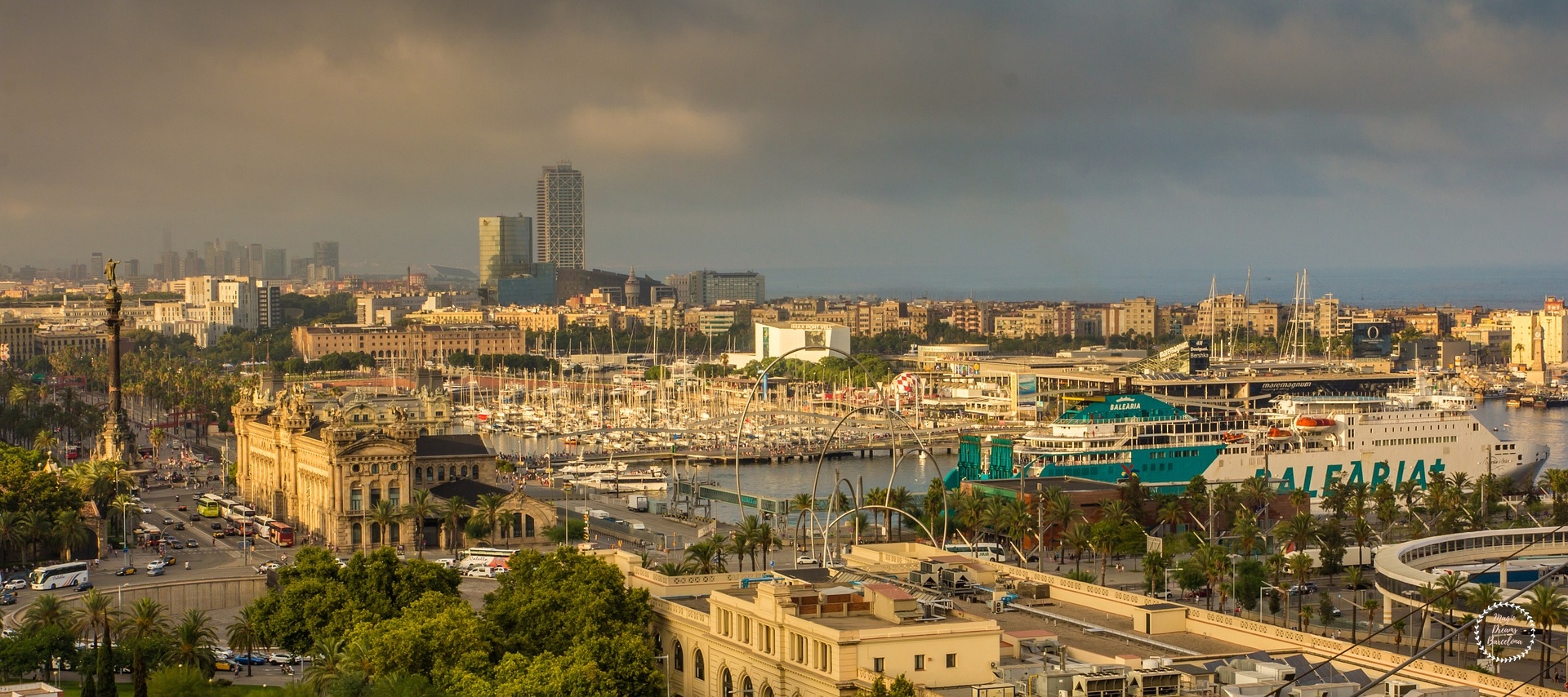
Port Vell is one of the oldest and most symbolic spaces in Barcelona’s relationship with the sea and remains, in 2026, one of the great places where the city meets the Mediterranean.
It was Barcelona’s first major permanent port area and, among its quays, buildings and basins, it preserves the memory of a city that grew for centuries with its eyes turned towards the sea.
Trade, navigation, shipbuilding, fishing, cultural exchange and everyday life all coexisted here.
Barcelona cannot be fully understood without understanding its port.
And Port Vell represents precisely that meeting point between the historic city and the Mediterranean.
Today, however, Port Vell is much more than a port area.
It is a place where history, architecture, maritime heritage, contemporary art, gastronomy, yachting, innovation, sustainability and culture come together.
A place that has succeeded in transforming its relationship with the water without losing the memory of what it once was.
The Origins of Port Vell
Barcelona’s First Permanent Harbour
Port Vell forms the oldest part of Barcelona’s present-day port waterfront.
Its history is deeply connected to Barcelona’s maritime and commercial expansion and to its role within the medieval Mediterranean.
For centuries, this area was the setting for the arrival of goods, vessels, sailors and visitors from different Mediterranean territories.
The port grew alongside the city and gradually became one of Barcelona’s great economic engines.
Commercial institutions, shipyards, markets, warehouses and spaces associated with navigation developed around it.
For centuries, the relationship between city and port was inseparable.
But it was also a changing relationship.
As Barcelona expanded, port infrastructure was progressively enlarged and moved farther away from the urban centre, until the transformation of the waterfront made it possible to reclaim a fundamental part of this territory for the public.
The great transformation would come in the final decades of the 20th century.
From Industrial Port to Citizens’ Port
The Transformation That Brought Barcelona Back to the Mediterranean
For much of the 20th century, the port represented a physical barrier between Barcelona and the sea.
The city had turned its back on its coastline, while much of the port infrastructure was devoted exclusively to industrial and commercial activities.
The transformation began to take on a new dimension with the urban renewal process associated with the 1992 Barcelona Olympic Games.
In 1988, the Port 2000 Urban Development Agency was established and, in 1989, the Port Vell Special Plan was approved. Its objective was to preserve the area’s port character while introducing new cultural, commercial, tourist and civic uses.
The result was one of Barcelona’s most important waterfront urban transformation projects.
The former port area began to become a true citizens’ port.
And the city began walking towards the sea once again.
The Royal Shipyards
The Naval Architecture of Medieval Barcelona
One of the key points of the route is the Royal Shipyards of Barcelona (Drassanes Reials).
This extraordinary Gothic complex preserves the memory of medieval Barcelona’s maritime heritage and of the construction of large vessels destined to sail across the Mediterranean.
Its enormous halls, arches and architectural structure make it possible to understand the importance of shipbuilding to the Crown of Aragon and to Barcelona’s Mediterranean expansion.
Inside is the Maritime Museum of Barcelona (Museu Marítim de Barcelona), dedicated to preserving and explaining the historic relationship between the city and the sea.
Its collections include vessels, ship models, nautical instruments, cartography and various objects associated with navigation.
Among its highlights is the section devoted to the Shipyards and Galleys, which offers an insight into 13th-century Barcelona and the era of the great Mediterranean galleys.
Visiting the Royal Shipyards is, in a sense, entering the naval memory of Barcelona.
La Llotja de Mar
Trade, Art and Economic Power
The historical journey continues towards La Llotja de Mar, one of the fundamental buildings for understanding Barcelona’s economic and commercial history.
Its origins lie in the medieval market hall, associated with trade and mercantile activity.
The present building is predominantly Neoclassical in appearance, although its interior preserves elements and remains of the earlier Gothic structure.
For centuries, La Llotja was one of the city’s great economic centres.
But its history is not limited to commerce.
It was also closely associated with artistic education.
The former School of Fine Arts of Barcelona was based here, and among its students were artists who would later achieve international recognition.
La Llotja therefore represents an extraordinary connection between commerce, architecture, culture and artistic creation.
Portal de la Pau
Barcelona’s Symbolic Gateway to the Sea
Portal de la Pau is one of the most prominent spaces in Port Vell.
Here stands one of the great symbols of Barcelona’s waterfront: the Monument to Christopher Columbus, inaugurated on the occasion of the 1888 Universal Exhibition.
The monument stands approximately 60 metres high and contains an elevator leading to a viewing platform at the same height.
From there, visitors can enjoy a 360-degree panorama over the port, Ciutat Vella, Montjuïc, the Eixample and the Mediterranean.
The image of Columbus pointing towards the horizon has become an inseparable part of Barcelona’s visual skyline.
There is, however, a particularly interesting detail.
Although the statue is traditionally interpreted as pointing towards America, its actual orientation does not correspond to the American continent.
The monument was conceived as a symbolic representation of Barcelona’s connection with navigation and maritime expansion.
Rambla de Mar
A Walkway Between the City and the Mediterranean
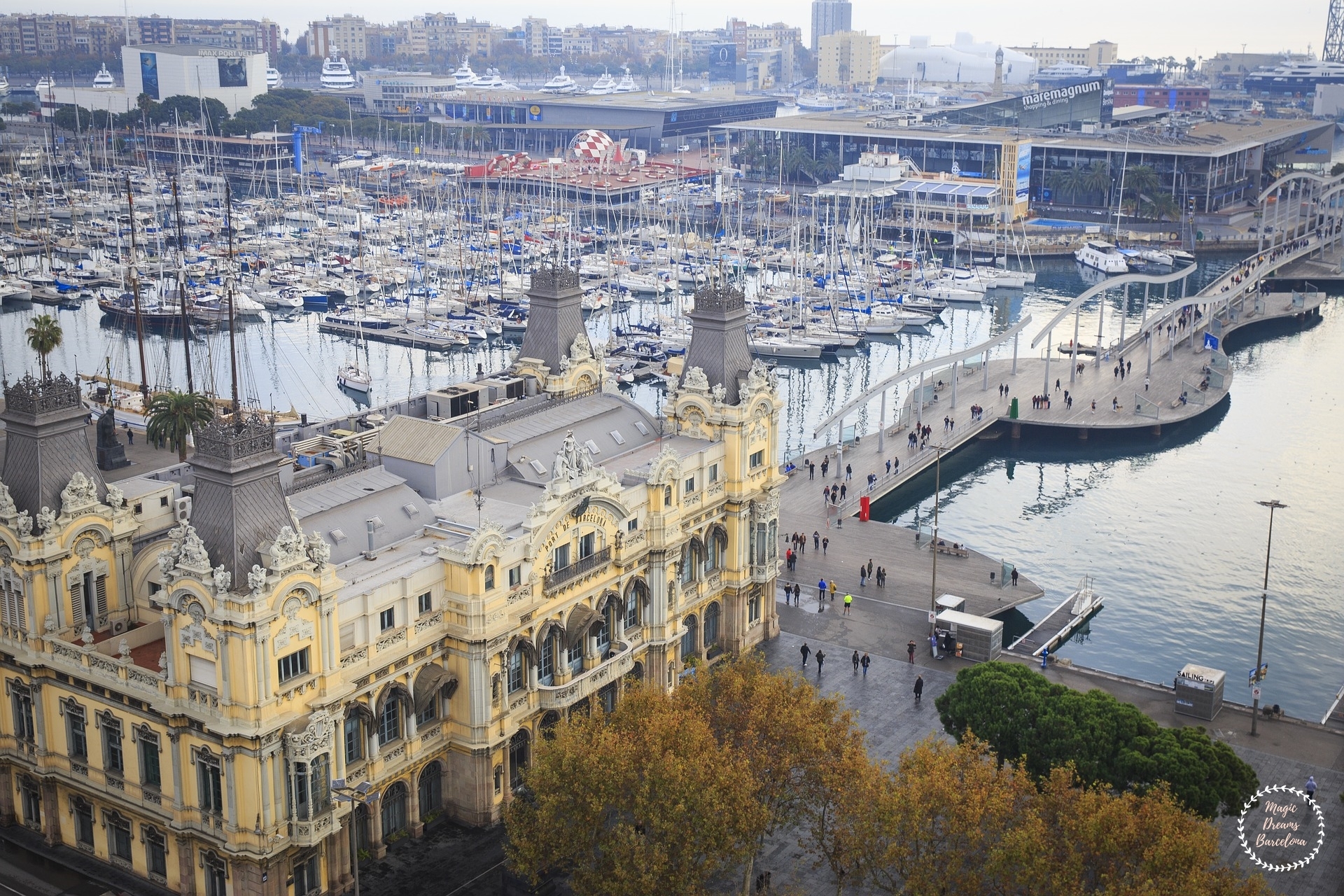
From Portal de la Pau begins Rambla de Mar, a pedestrian walkway extending over the water and connecting the waterfront with Moll d’Espanya.
Its architecture creates a very particular sensation.
As you walk along it, the city seems to fall behind and the Mediterranean becomes immediately present.
The movement of the water, the vessels, the reflections and the structure of the walkway create one of the most distinctive routes in Port Vell.
It is particularly atmospheric at sunrise, sunset and during the evening hours, when Barcelona’s lights begin to reflect across the water.
Maremàgnum
Urban Leisure on the Mediterranean
Maremàgnum is literally located over the water, at Moll d’Espanya.
Its arrival was one of the key elements in transforming Port Vell into a civic space.
Today it brings together a variety of retail, dining and leisure options, as well as being located beside one of Barcelona’s major marine attractions.
Its position provides particularly open views across the harbour and towards Barcelona’s maritime horizon.
But the true underwater world is only a few metres away.
L’Aquàrium de Barcelona
The Mediterranean Turned into an Experience
L’Aquàrium de Barcelona is one of the city’s principal facilities dedicated to understanding marine life.
Its exhibition features more than 11,000 specimens belonging to more than 600 species, distributed across nearly 80 aquariums.
The journey allows visitors to discover different marine ecosystems, from the Mediterranean to tropical environments.
One of its best-known spaces is the large Oceanarium, where sharks, rays and other marine species can be observed through an underwater tunnel.
Beyond its tourist appeal, L’Aquàrium also plays an important role in education and raising awareness of marine biodiversity.
It is another way of experiencing the Mediterranean.
This time, from beneath its surface.
Contemporary Art by the Sea
When Port Vell Becomes an Open-Air Gallery
Port Vell can also be explored as a genuine open-air museum of contemporary art.
Throughout its different spaces are works by artists who have left their visual mark on Barcelona.
Among them is The Head of Barcelona (El Cap de Barcelona) by Roy Lichtenstein, one of the most distinctive works in the urban landscape of Moll de la Fusta.
There are also interventions associated with the creative universe of Xavier Mariscal.
But Port Vell also contains a particularly poetic sculptural presence.
Miraestels
A Figure Suspended Between Sky and Water
Above the waters of Port Vell stands Miraestels, by Catalan artist Robert Llimós.
The human figure appears to contemplate the sky while suspended above the Mediterranean.
Its presence introduces a different dimension to the harbour landscape.
It is no longer simply about boats, quays or architecture.
It is a figure that invites us to pause.
To look upwards.
To think.
To observe how a city can engage with the sea through poetry, rather than solely through engineering.
Miraestels has therefore become one of those small works that can easily go unnoticed during a quick walk, but which acquires particular power once its story and meaning are understood.
The Port from the Sea
Barcelona Changes Completely When Seen from the Water
One of the best ways to understand Port Vell is precisely to leave it for a few minutes.
From the sea, the perspective changes.
The façades of Ciutat Vella, the Columbus Monument, Montjuïc, Barceloneta and Barcelona’s urban skyline take on a different dimension.
For more than a century, Las Golondrinas have offered visitors the opportunity to discover the harbour from the water.
Their current harbour tour lasts approximately 40 minutes and allows passengers to observe the different port and marina facilities from a maritime perspective.
The experience is particularly useful for understanding how the different areas of the port connect with one another.
Barcelona from Above
The Mediterranean from a Bird’s-Eye View
Another completely different experience is the Port Cable Car (Transbordador Aeri del Port).
The system connects the Barceloneta area with Montjuïc via a route suspended above the harbour.
The experience offers an exceptional perspective over Barcelona.
From above, the port appears as a vast urban composition in which water, architecture, mountain and city form a single landscape.
From this height, it becomes particularly clear just how deeply the Mediterranean is embedded in Barcelona’s very structure.
Marina Port Vell
International Yachting in the Heart of Barcelona
Port Vell is not only about history.
It is also one of contemporary Barcelona’s major nautical centres.
Marina Port Vell specialises in large yachts and currently offers capacity for 148 vessels, with berths for yachts of up to 120 metres.
Its location, virtually in the heart of the city, makes the marina a unique destination within the Mediterranean.
During the 37th America’s Cup Barcelona 2024, the marina welcomed more than 150 superyachts, establishing itself as one of the major international meeting points associated with the competition.
Luxury yachting, private events and sea-based experiences now form part of Port Vell’s new identity.
The America’s Cup Barcelona 2024
Barcelona Looks Towards the World from the Sea Once Again
The staging of the 37th America’s Cup in Barcelona in 2024 represented one of the most important international sailing events in the city’s recent history.
The event accelerated various transformation processes in Port Vell.
The competition helped drive infrastructure modernisation, new public spaces, urban improvements and the incorporation of solutions related to innovation and sustainability.
The transformation did not end with the competition.
Quite the opposite.
The America’s Cup acted as a catalyst for a much broader process in the evolution of the citizens’ port.
A New Transformation of Port Vell
More Space for the City
Between 2023 and 2024, a first major phase of transformation was carried out involving 17 projects and more than €86 million in public-private investment.
The projects included interventions at Barcelona Nord, Drassanes and Pescadors quays, the redevelopment of Moll d’Espanya, the restoration of the historic Portal de la Pau building, improvements to the Jaume I Tower, new spaces associated with yachting and various urban improvements.
The objective was not simply to modernise the port.
It was to continue transforming the relationship between Barcelona and the Mediterranean.
To create new open spaces.
To improve accessibility.
To introduce new activities.
And to make the port part of the city’s everyday life.
Moll de Pescadors
Barcelona’s Fishing Heritage
As part of this transformation, Moll de Pescadors has particular importance.
This area preserves a fundamental part of Barcelona’s maritime identity: fishing.
It is home to the historic Clock Tower (Torre del Rellotge), one of the most distinctive heritage landmarks on the waterfront.
The tower was originally built as a lighthouse and later acquired different functions before becoming a clock tower.
Its silhouette is a reminder that Port Vell was not created as a tourist destination.
It was created as a port.
And behind every quay lie centuries of work, navigation and maritime life.
A 70-Hectare Port Vell
A Territory Between City, Culture and Sea
Today, Port Vell covers approximately 70 hectares and receives around 16 million visitors each year.
Within this space coexist:
Promenades.
Cultural facilities.
Museums.
Restaurants.
Commercial activities.
Marinas.
Businesses.
Nautical education.
Sports facilities.
Leisure activities.
International events.
Historic heritage.
More than 300 companies are currently based in Port Vell, generating more than 7,500 direct jobs.
This economic dimension is important because it demonstrates that Port Vell is not simply a tourist destination.
It is also a productive territory.
A place where the blue economy, innovation and maritime activity are part of Barcelona’s future.
Port Vell Towards 2030
Sustainability, Innovation and the Blue Economy
In 2026, the Port of Barcelona presented its 5th Strategic Plan 2026–2030, which for the first time integrates the commercial port, logistics port and citizens’ port within a single vision.
For Port Vell, the future vision is based on consolidating it as a local and global benchmark for a diversified, innovative and sustainable citizens’ port.
The new plan incorporates 120 initiatives grouped into 25 environmental, social and economic objectives.
Future priorities include:
The energy transition.
Emissions reduction.
Sustainable mobility.
Digitalisation.
The blue economy.
Technological innovation.
Education and training.
Job creation.
Greater integration between port and city.
Improvements to public spaces.
The intention is clear.
Port Vell does not want to become merely a place for contemplating the past.
It also wants to be a laboratory for the future.
Innovation and the Blue Economy
The Mediterranean as an Engine of Knowledge
The blue economy is becoming increasingly important within the Port Vell strategy.
Yachting, marine technology, education, innovation, research and new energy solutions are part of an ecosystem seeking to generate economic activity while maintaining a more sustainable relationship with the Mediterranean.
The concept of the citizens’ port is therefore evolving towards a new idea:
an open, intelligent, sustainable port connected to society.
Culture and Major Events
An International Stage on the Mediterranean
Port Vell continues to host cultural, business, nautical and gastronomic events with an international dimension.
These include various events connected to yachting and superyachts, as well as cultural activities and initiatives linked to maritime heritage.
The presence of large vessels, exhibitions, conferences and international events periodically transforms the harbour into a meeting point between Barcelona and the world.
But perhaps one of Port Vell’s greatest attractions lies precisely in its ability to combine the extraordinary with the everyday.
A superyacht may be found beside a small fishing boat.
An ancient Gothic building can coexist with contemporary architecture.
A sculpture may appear above the water.
And a medieval building may share the same landscape with one of the city’s major leisure centres.
Port Vell at Sunset
When Barcelona Changes Colour
There is a particularly magical moment to discover Port Vell.
Sunset.
As the sun begins to descend over Montjuïc and the light reflects across the water, the harbour takes on a completely different atmosphere.
The silhouettes of the boats become a succession of dark forms.
The city’s façades take on warm tones.
The Columbus Monument begins to light up.
And the Mediterranean ceases to be simply a geographical space and becomes part of the experience.
It is one of those moments when Barcelona is best understood by walking slowly.
Without rushing.
Without needing to follow a rigid itinerary.
A Barcelona That Looks Towards the Sea
Port Vell as a Living Memory of the City
The true value of Port Vell lies not only in the beauty of its buildings or in the number of activities it brings together.
Its real value lies in continuity.
Here, an essential part of Barcelona’s history can be explored without leaving virtually the same landscape.
The medieval galleys.
The merchants.
The shipyards.
Fishing.
Navigation.
Trade.
The 1888 Universal Exhibition.
The Olympic transformation.
The citizens’ port.
International yachting.
The America’s Cup.
The blue economy.
Everything forms part of the same story.
A story that is still being written.
What Can You Discover in Port Vell?
A Journey Through Heritage, Culture and the Mediterranean
A complete Port Vell experience can include:
The Royal Shipyards (Drassanes Reials) and the Maritime Museum.
Portal de la Pau.
The Columbus Monument and its viewing platform.
Rambla de Mar.
Moll d’Espanya.
Maremàgnum.
L’Aquàrium de Barcelona.
Contemporary sculptures along the waterfront.
Miraestels.
Moll de Pescadors.
The historic Clock Tower.
Marina Port Vell.
Views towards Barceloneta and Montjuïc.
The different harbour basins and nautical areas.
A maritime tour with Las Golondrinas.
The Port Cable Car.
Gastronomic experiences overlooking the Mediterranean.
Private boat or yacht experiences.
Each of these places tells a different part of the story.
Together, they create a much deeper image of Barcelona.
How to Discover Port Vell
A Route That Deserves to Be Experienced Without Rushing
Port Vell can be explored on foot from different points of Ciutat Vella.
A particularly interesting route can begin at the Royal Shipyards, continue towards Portal de la Pau and the Columbus Monument, cross Rambla de Mar and reach Moll d’Espanya.
From there, you can continue towards Moll de Pescadors and Barceloneta.
Another possibility is to begin from the sea and subsequently discover the harbour from land.
Combining both perspectives offers a much better understanding of the character of the place.
A Different Experience with Magic Dreams Barcelona
Port Vell Through a Deep, Emotional and Authentic Perspective
Discovering Port Vell means entering one of the essential parts of Barcelona’s maritime soul.
But there is a huge difference between visiting a place and truly understanding it.
At Magic Dreams Barcelona, we design fully personalised experiences to discover Port Vell through a cultural, historical, artistic and emotional perspective.
We take care of every detail.
We organise private routes through Port Vell and Ciutat Vella, architecture and heritage tours, nautical experiences, private boat trips, Mediterranean dining and cultural experiences designed around each visitor’s interests.
We can combine Port Vell with the Royal Shipyards, Barceloneta, Montjuïc, the Gothic Quarter, the Eixample or different gastronomic and artistic experiences across Barcelona.
We also design full-day experiences, weekend escapes and personalised stays lasting several days.
The Mediterranean as a Stage
When Travel Becomes More Than a Visit
We can organise private experiences at sea, from peaceful sunset cruises to gastronomic experiences aboard a yacht.
We can also incorporate:
Private picnics overlooking the Mediterranean.
Personalised catering.
Floristry.
Professional photography.
Live music.
Themed romantic dinners.
Local or international cuisine.
Gastronomic tours.
Private cultural experiences.
Artistic activities.
Personalised workshops.
Family experiences.
Couples’ programmes.
Private group experiences.
Each experience is designed around the preferences, pace and personality of our clients.
We do not simply offer a visit.
We create an experience.
A Barcelona Discovered from the Water
History, Architecture and Emotion Sailing Together
Port Vell offers an extraordinary summary of Barcelona’s evolution.
A medieval city that built galleys.
A commercial city that looked towards the Mediterranean.
An industrial city that for decades became physically separated from the sea.
An Olympic Barcelona that reopened itself to the waterfront.
And a contemporary city now seeking to make its port more sustainable, innovative and connected with its citizens.
That is why walking through Port Vell means experiencing much more than a port.
It means walking through the history of Barcelona.
And sailing into its future.
Would You Like to Discover Port Vell with Us?
Barcelona from Its Maritime Essence
At Magic Dreams Barcelona, we believe that the most special places are not discovered solely with the eyes.
They are discovered through stories, details, sounds, aromas, gastronomy, architecture and the emotions that remain long after the journey.
Our team accompanies every experience with a sophisticated, warm and deeply human narrative.
We speak Spanish, Catalan and English and, upon prior request, can adapt the service to other languages.
We take care of logistics, transportation, reservations, accommodation and every small detail that transforms a special day into a truly personalised experience.
We can design anything from a private visit lasting a few hours to a complete stay in Barcelona, combining heritage, nature, gastronomy, art, sailing and culture.
Because Port Vell can be visited.
But it can also be felt.
And when it is discovered from the sea, among the memory of the ancient Royal Shipyards, the light of the Mediterranean and Barcelona’s horizon, the city takes on another dimension.
Magic Dreams Barcelona transforms Port Vell into a journey to the maritime essence of Barcelona, where history, architecture, nature and emotion sail together.
Port Vell.
Rambla Mar.
Port Vell.
Port Vell.
Port Vell.
Port Vell.
Port Vell.
Port Vell.
Port Vell.
Port Vell.
Port Vell.
Port Vell.
Port Vell.
Port Vell.
Perspectiva de parte de la ciudad de Barcelona.
Detalle en el Port Vell.
Detalle en el Port Vell.
Detalle en el Port Vell.
Detalle en el Port Vell.
Port Vell.
Port Vell.
Port Vell.
Port Vell.
Port Vell.
Port Vell.
Perspectiva superior aérea Centro Comercial Maremagnum.
Port Vell.
Atardecer en el Port Vell.
Perspectiva desde Rambla Mar.
Perspectiva desde Rambla Mar
Perspectiva aérea del Port Vell.
Detalle barco en el Port Vell.
Perspectiva nocturna en el Port Vell.
Perspectiva de parte de la ciudad de Barcelona desde el Port Vell
Located in the heart of Barcelona, next to Avinguda de Gaudí and just a few minutes from the Sagrada Família, this extraordinary architectural complex was conceived as a hospital, but also as a genuine city within the city. Pavilions made of exposed brick, mosaics, ceramics, …