Route guide for visitors throughout Catalonia – Barcelona – Costa Brava – Catalan Pyrenees – Personalized experiences – Customized tour guide services – A small tribute to the wonderful city and land that saw us born – Transforming experiences into unforgettable memories - Magic Dreams Collection: exclusive universes inspired by Salvador Dalí and Gaudí. Niche perfumes, jewelry, lithographs, and collectible items celebrating the Mediterranean spirit.
History, heritage, beaches and coves of the Costa Brava Roses is a Catalan municipality in the Alt Empordà comarca, in the province of Girona, located on the northern coast of the Gulf of Roses, south of Cap de Creus, in the heart of the Costa …
A hidden corner of Les Gavarres where history, nature and gastronomy come together There are places that do not appear on the usual tourist routes. Places you have to reach slowly, through forests and old country tracks, only to discover that true luxury is sometimes …
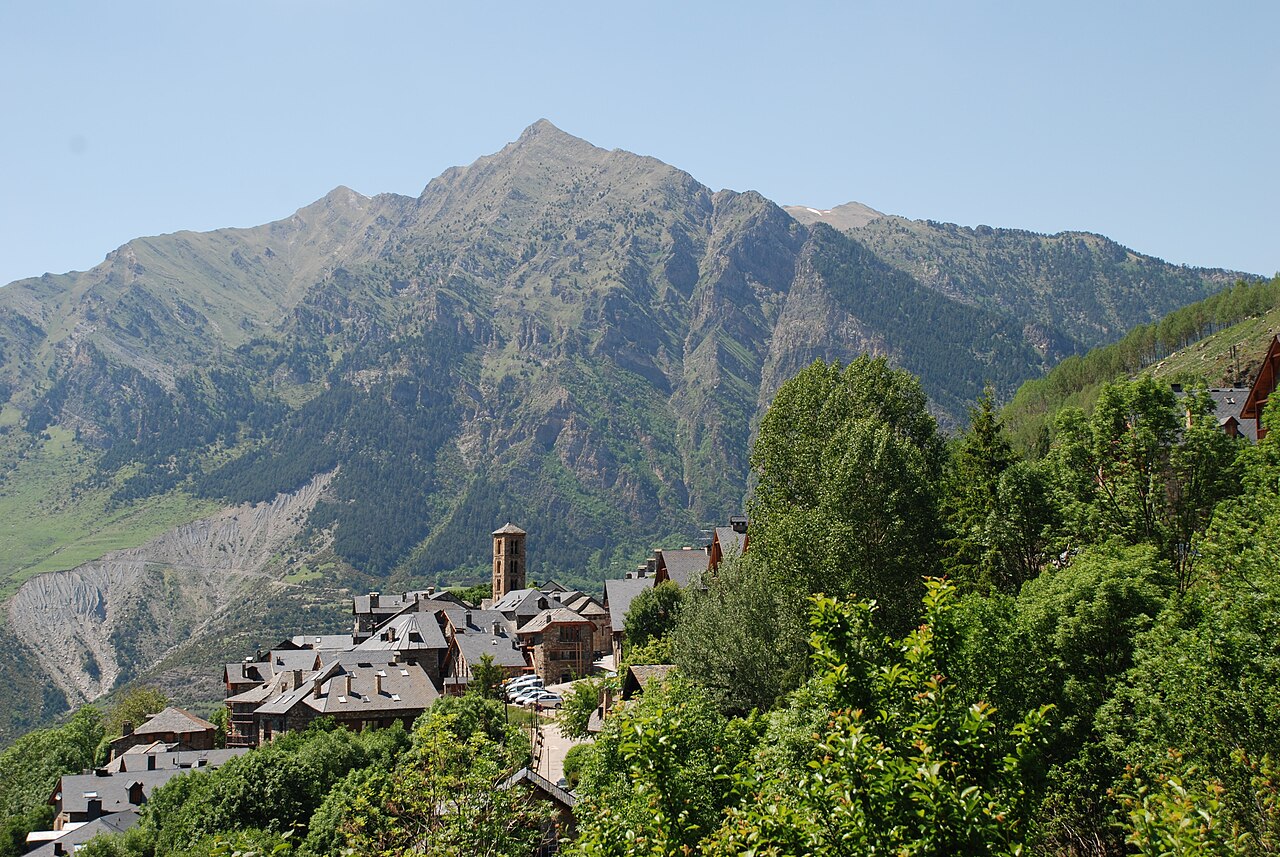
Esterri d’Àneu is a municipality located in the heart of the Catalan Pyrenees, northwest of the city of Lleida, close to the Aran Valley and the French border.
Esterri d’Àneu can only be reached by road, travelling through some of the most spectacular landscapes in the Pyrenees.
How to Get to Esterri d’Àneu from Barcelona
Esterri d’Àneu is located approximately 231 kilometres by road from Barcelona, a journey that takes around 3 hours and 30 minutes by car, depending on traffic, weather conditions and any stops along the way.
The route gradually takes you deeper into the landscapes of the Catalan Pyrenees and is, in itself, an interesting part of the journey. From Barcelona, the route heads inland through Catalonia before continuing along the mountain roads towards the Valls d’Àneu.
By Bus from Barcelona
It is also possible to reach Esterri d’Àneu by bus, an especially convenient option for travellers who prefer not to drive. ALSA operates services between Barcelona and Esterri d’Àneu, departing from Barcelona Nord Bus Station. The journey takes approximately 5 hours and 10 minutes, with fares generally ranging from around €23 to €35 each way, although prices may vary depending on the date and how far in advance you book.
The bus arrives directly in Esterri d’Àneu, meaning that you do not need a car once you are in the municipality to explore the historic centre, walk along the Noguera Pallaresa or enjoy many of the tourist services available in the Valls d’Àneu.
Other Transport Options
Another possibility is to combine train and bus. You can take the train from Barcelona to La Pobla de Segur and then continue by bus towards Esterri d’Àneu. The RL2 line operated by Ferrocarrils de la Generalitat de Catalunya connects Lleida with La Pobla de Segur, while various bus services provide onward connections to the Valls d’Àneu.
This option requires transfers and is therefore more complicated than travelling directly by car or bus. However, for travellers who want to enjoy the scenery and combine different forms of public transport, it can be an interesting alternative.
In short, travelling by car is the fastest and most flexible option, especially if you plan to explore different villages and natural areas throughout the Valls d’Àneu. The direct bus from Barcelona is a practical alternative for those who do not want to drive, while the combination of train and bus provides another way to reach the Pyrenees using public transport.
The municipality is located in the middle of a broad basin of glacial origin, surrounded by extensive green meadows and crossed by the waters of the Noguera Pallaresa River.
Esterri d’Àneu is much more than a mountain village. It is the geographical, economic, social and cultural centre of the Valls d’Àneu. Although it lies in a wide valley, the surrounding mountains are high and imposing, creating a spectacular contrast that makes this a truly magical corner of the Pyrenees.
A Village of Pyrenean Tradition
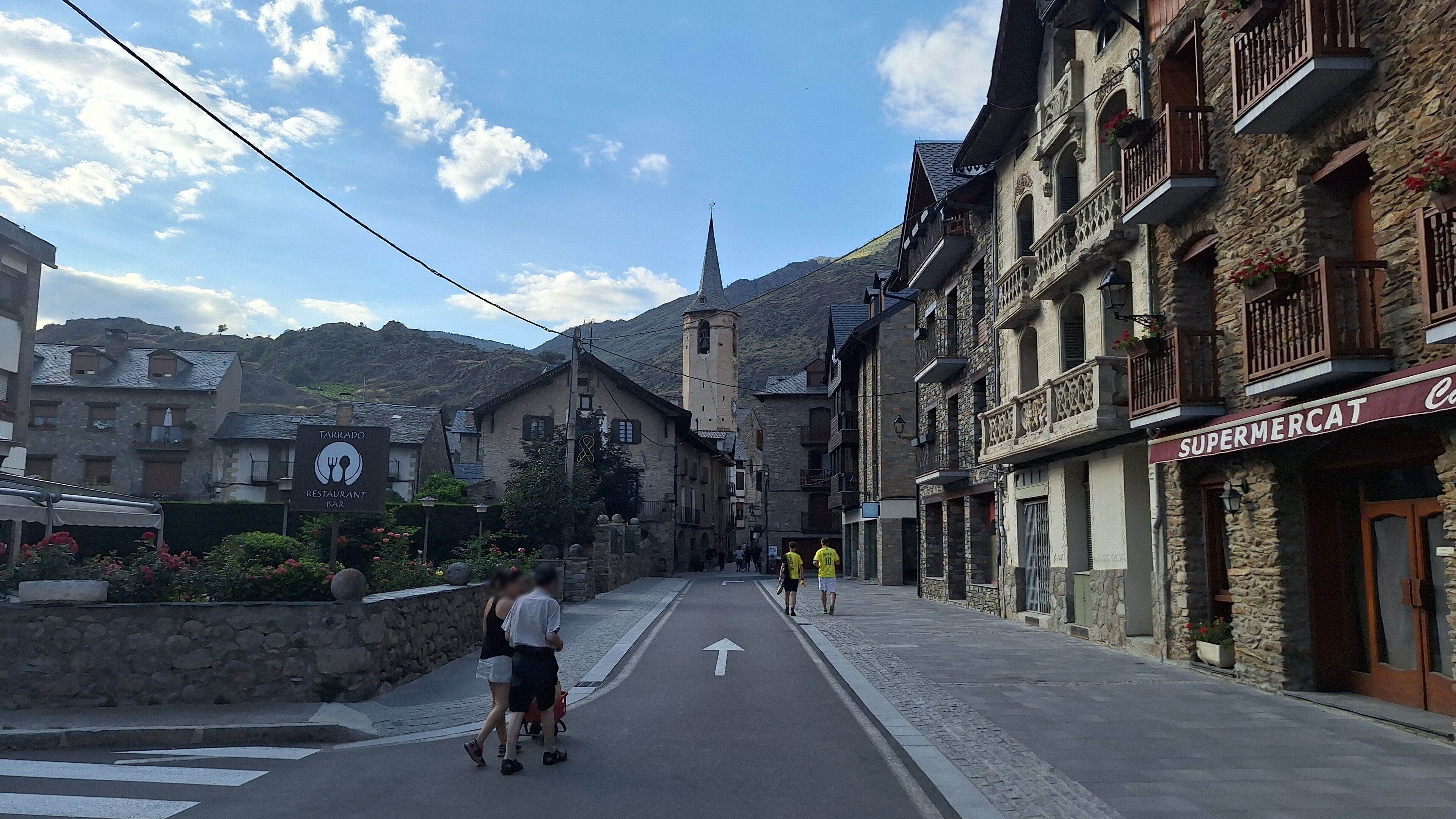
The Pyrenean tradition can be seen in the houses, squares and narrow streets of the old quarter, the historic heart of a village spread across a green meadow in the centre of the Valls d’Àneu.
Esterri d’Àneu is the most important municipality in this sub-region and serves as its main economic and geographical centre.
With a history stretching back centuries and a privileged location, the village is an excellent gateway for discovering the natural, cultural and architectural wonders of the Valls d’Àneu.
One of the best ways to experience it is to take a leisurely walk through the old town and discover its traditional mountain architecture, characterised by stone houses, slate roofs and narrow streets.
Mountain Gastronomy
Gastronomy is another of Esterri d’Àneu’s great attractions.
Traditional mountain cuisine is mainly based on local products such as mushrooms, game meats, cured meats and cheeses.
Traditional dishes and products include shepherd’s soups, hearty stews, different lamb dishes and game civet, as well as cured meats such as secallona, girella and roseta.
One of the traditional desserts is mostillo, a sweet preparation traditionally made from grape must.
The gastronomy of the Valls d’Àneu reflects the history and way of life of the Pyrenean villages, where local and seasonal products have always played a leading role.
Nature and Adventure in the Valls d’Àneu
Esterri d’Àneu is located between two areas of extraordinary natural beauty: Aigüestortes i Estany de Sant Maurici National Park and the Alt Pirineu Natural Park.
This privileged location makes the municipality an ideal destination for lovers of hiking, cycling and adventure sports.
The surrounding landscape consists of hundreds of mountain lakes, glacial cirques, granite walls, natural forests dominated by fir and black pine, waterfalls, ravines, meanders, hanging valleys and extensive high-mountain meadows.
Wildlife is also one of the area’s great attractions. Deer, fallow deer, chamois, roe deer and wild boar inhabit the mountains and forests of these valleys. The brown bear is also present throughout the Pyrenean region.
The Valls d’Àneu also provide access to some of the highest peaks in Catalonia, offering spectacular landscapes throughout the year.
Rafting on the Noguera Pallaresa: Adventure for Much of the Year
Rafting on the Noguera Pallaresa River is one of the most popular adventure activities in the Valls d’Àneu and Pallars Sobirà. Although it is not available all twelve months of the year, the river activity season generally runs from spring to autumn, approximately from March to October, depending on river conditions and each company’s operating season. In 2026, for example, RocRoi has scheduled rafting activities from 15 March to 11 October.
The Noguera Pallaresa is one of Catalonia’s main white-water rivers and offers different routes suitable for different levels of experience. Rafting involves descending the river in a shared inflatable boat, accompanied by a professional guide who leads the group and explains how to paddle and respond to the different rapids.
No previous experience is necessary for beginner-friendly routes. The difficulty depends on the section of river chosen and also on the river flow. During May and June, when snowmelt generally increases the water level, descents can be more intense. In summer, regulated flows provide conditions that are particularly suitable for families, groups and first-time rafters.
Where Can You Go Rafting Near Esterri d’Àneu?
The main adventure activity companies are located in towns such as Llavorsí and Sort, both within easy reach of Esterri d’Àneu. Different rafting trips along the Noguera Pallaresa depart from these locations.
One of the specialised companies is RocRoi, which has an activity base in Llavorsí. Its programmes include family-friendly routes and descents of different levels. In 2026, for example, the company offers a route between Llavorsí and Moleta aimed particularly at families and participants aged 8 and over.
Another option is Rafting Pallars Turisnat, based in Sort. The company offers different options on the Noguera Pallaresa, including a 14-kilometre descent between Llavorsí and Rialp for €50 per person, a 17-kilometre route between Llavorsí and Sort for €60, and an option including lunch and photographs for €70. It also offers a family option from €45 per person.
Prices may vary depending on the season, route, age of participants and available promotions. As a general reference, rafting activities on the Noguera Pallaresa currently start at approximately €35–€50 per person, while longer routes or experiences including lunch, photographs or other services can cost more than €60.
What Does a Rafting Activity Include?
The activity normally includes the technical equipment required for the descent. At Rafting Pallars, for example, the price includes a wetsuit, boots, life jacket and helmet, as well as compulsory insurance and the services of qualified instructors. Participants generally need to bring a swimsuit, towel and plenty of enthusiasm for enjoying the river.
The duration depends on the route selected. Published descents can take approximately 2 to 3 hours, although the complete experience may take longer due to preparation, transport to the starting point of the river and the return to the base.
Rafting is therefore an excellent way to experience the Noguera Pallaresa from a different perspective. It combines sport, nature and adventure while allowing visitors to enjoy the landscapes of Pallars Sobirà as they descend some of the river’s best-known sections.
It is advisable to book in advance, especially during the summer months, weekends and holiday periods. Companies may modify routes or schedules depending on river flow and safety conditions.
A Classic Hike: Les Planes de Son
One of the best-known hikes in these mountains begins at Les Planes de Son.
From here, you can climb to the Pla de la Font mountain refuge, from where you can enjoy magnificent panoramic views of the peaks of the Alt Pirineu.
From the refuge, it is worth continuing across the mountain meadows until reaching Pas del Coro, a mountain pass connecting the Montañas de Son with the Cabanes Valley.
From Pas del Coro, you can descend back towards Les Planes de Son, completing a beautiful circular route.
The route allows visitors to enjoy forests, mountain meadows and some of the most characteristic landscapes of the Catalan Pyrenees.
Must-See Places in Esterri d’Àneu
Visit the Ecomuseum of the Valls d’Àneu
The Ecomuseum of the Valls d’Àneu is one of the area’s main cultural attractions.
It is located in Casa Gassia, a traditional Pallarese house that has preserved its original structure and provides an insight into family and domestic life in these Pyrenean valleys during the first half of the 20th century.
Through its rooms and exhibitions, visitors can discover the activities that took place inside a traditional house, the relationships between its inhabitants and how household tasks and responsibilities were organised.
Casa Gassia – Carrer del Camp, 22–24, Esterri d’Àneu.
Stroll Along the Vora Riu Promenade
The Vora Riu promenade runs parallel to the right bank of the Noguera Pallaresa River.
It is the perfect place for a peaceful walk alongside the river while enjoying the surrounding scenery. It has benches, gardens and a children’s playground, making it a pleasant spot for families as well.
Discover the Old Quarter
The old town of Esterri d’Àneu retains a distinctive medieval atmosphere.
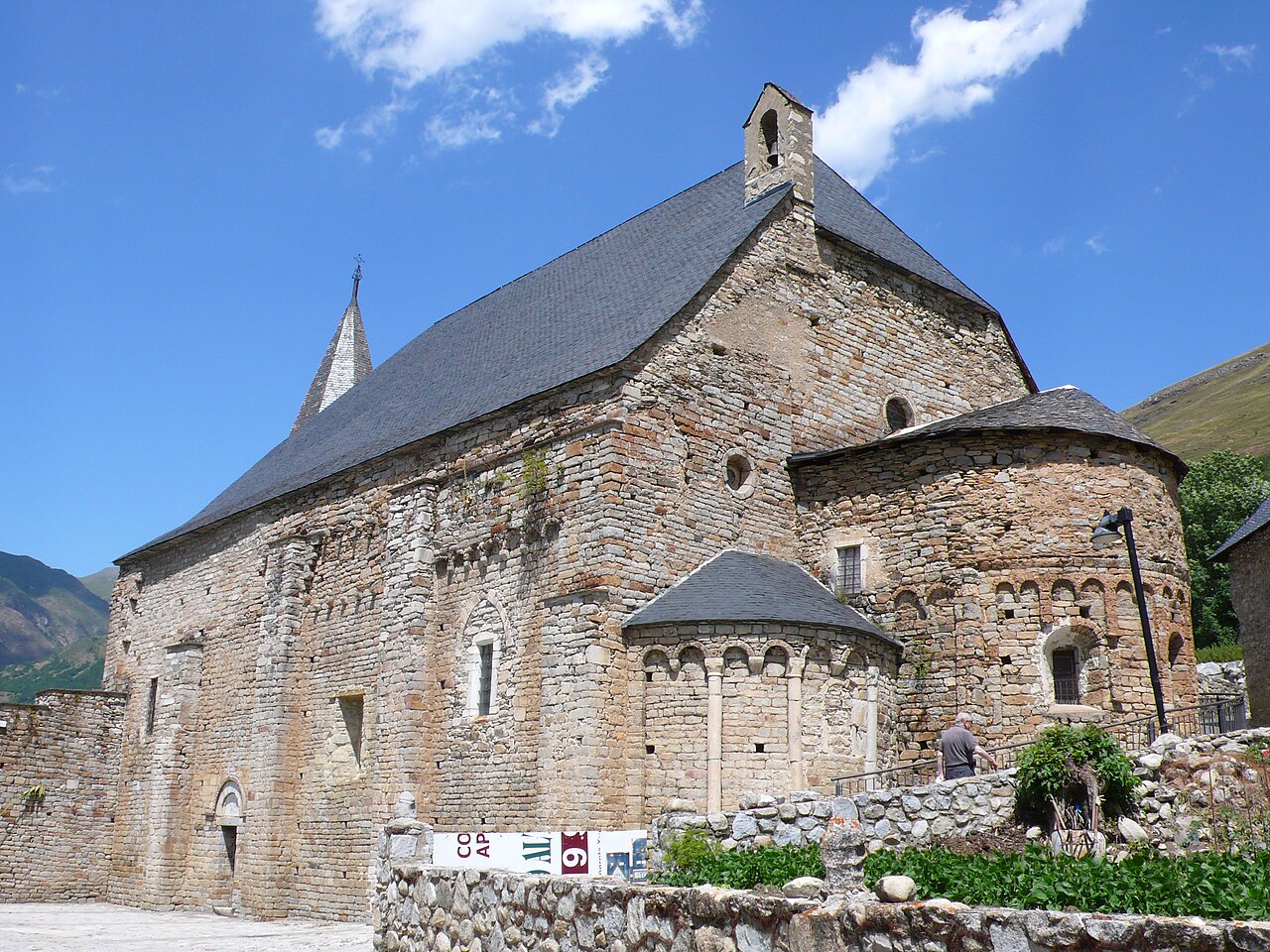
Among its main points of interest are the church of Sant Vicenç, the remains of the former church of Sant Vicenç and the historic Romanesque bridge.
The former church of Sant Vicenç was built in the 15th century and is located in Plaça del Bon Consell. Today, only its western façade remains.
The parish church of Sant Vicenç was built in the 18th century to replace the previous church and is located on Carrer Major.
Its interior consists of a single nave with six side altars. The bell tower is square at its base, with an octagonal second section and a pyramidal roof.
The entrance portal is Neoclassical in style.
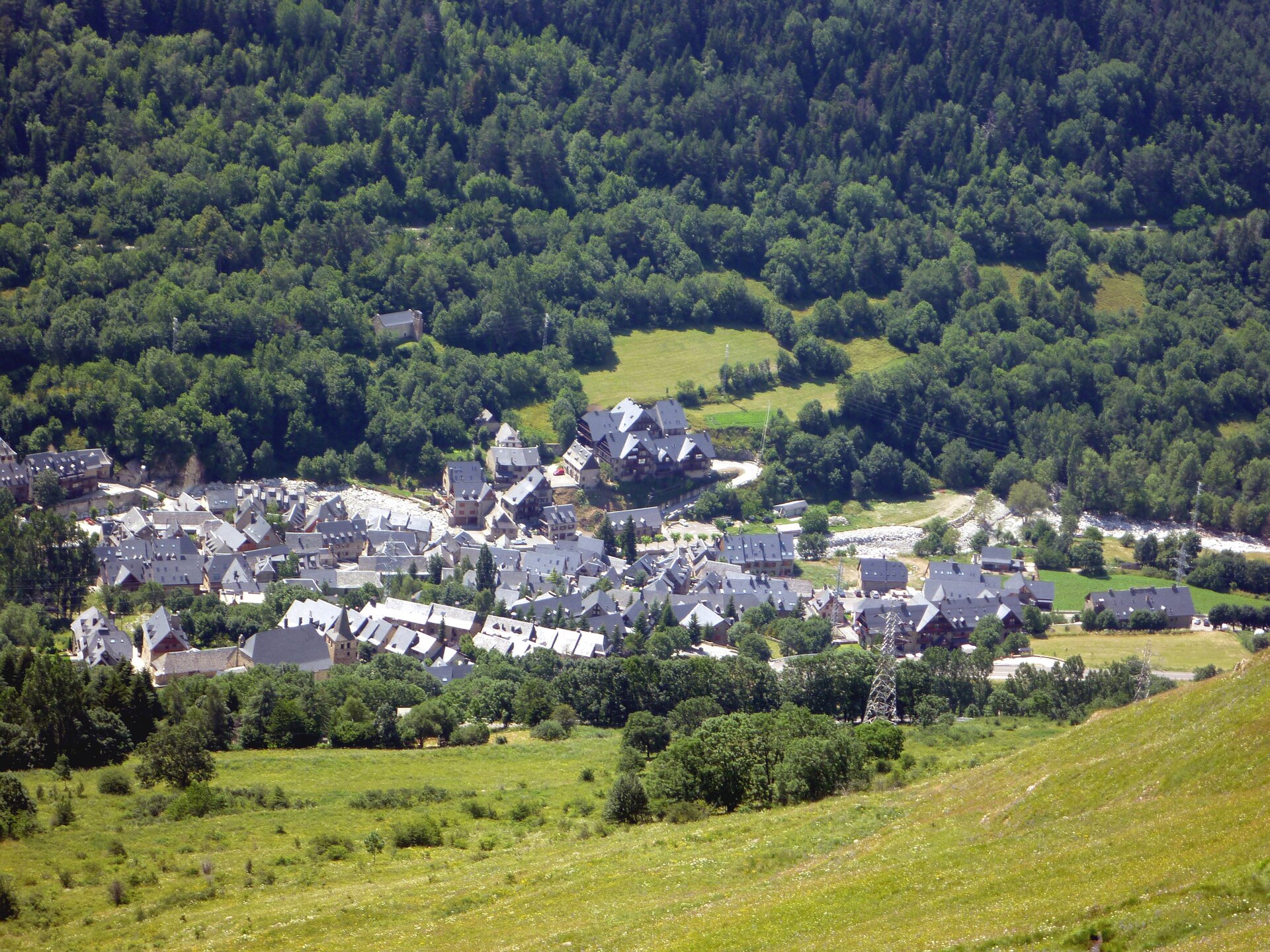
The old quarter of Esterri is characterised by its narrow, winding streets, some of them quite steep, small squares and traditional stone houses with black slate roofs.
During your walk, it is worth exploring the streets of the Pont neighbourhood and Carrer de València.
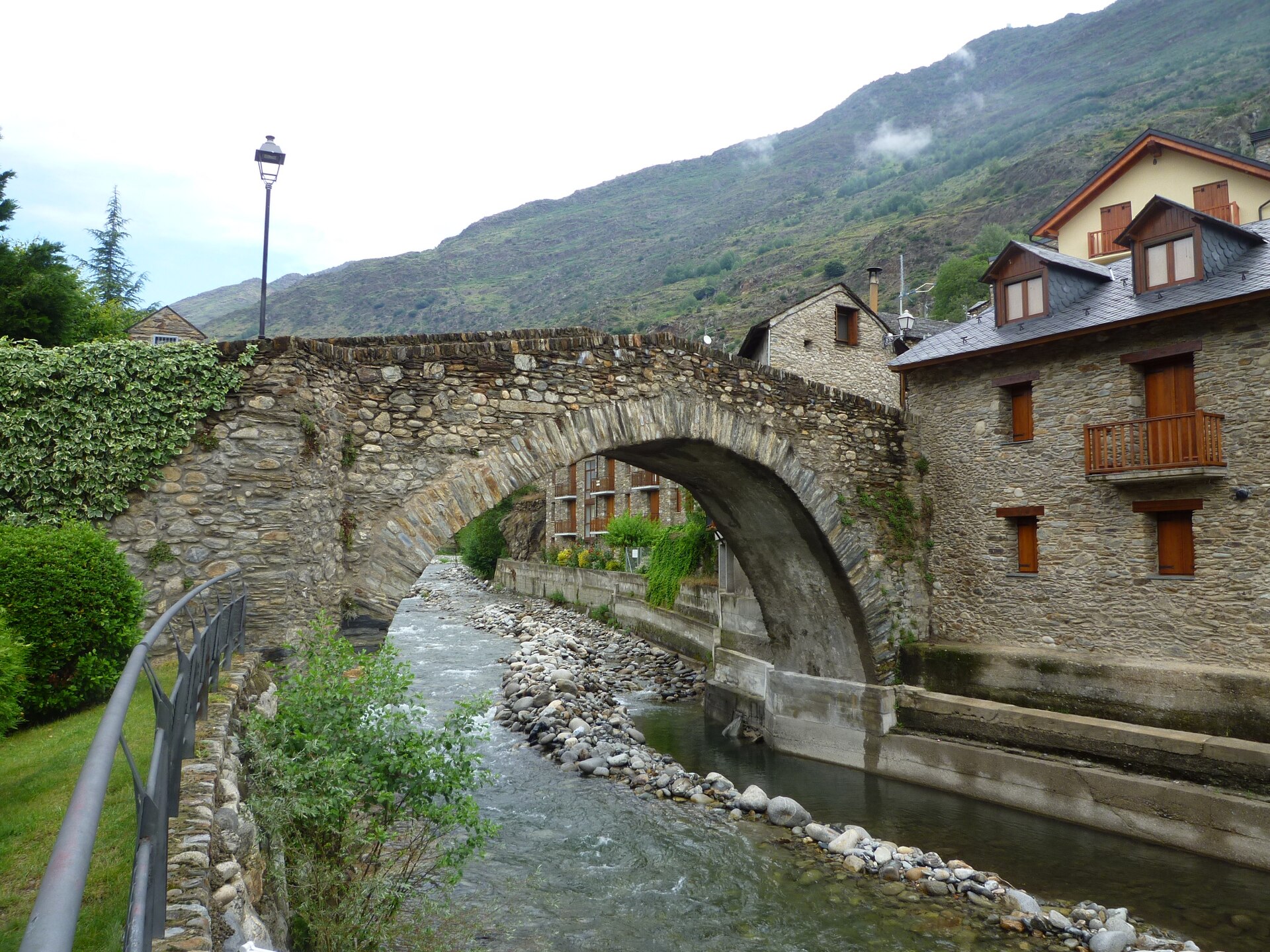
The Romanesque Bridge of Esterri d’Àneu
The bridge of Esterri d’Àneu is located on Carrer del Pont, opposite the parish church of Sant Vicenç.
It crosses the Noguera Pallaresa River and formed part of the old royal road leading towards France.
It is a stone bridge of Romanesque tradition, dating approximately from the 13th century, although it has been rebuilt at various points throughout its history.
Originally, it had three arches, of which two remain today. The main one is a large central semicircular arch, while the western arch is smaller and has a slightly lowered arch.
The bridge is approximately 28 metres long, 3.5 metres wide and reaches a maximum height of around 9 metres.
There is a change in level in the middle of the main arch, while the northern parapet is higher in order to protect the bridge from the strong winds coming from the mountain pass.
On the northern side, between the two arches, there is a buttress designed to protect the structure from flooding, such as the major flood that occurred in 1937.
The masonry consists of irregular stonework made from local slate and granite. This contrasts with the voussoirs of the arches, which are constructed from thinner slabs of stone.
The upper sections of the parapets are made from carefully arranged regular stones.
To facilitate the passage of carts and horses, passing bays were built over the bridge piers.
The roadway is approximately 105 centimetres thick and consists of a pavement made from flat, regular stones. The stairs located in the central section are the result of a later modification.
Under the western arch there was once a weir. In 1850, it was renovated to support local industrial activity and provide water to a sawmill, a factory used to clean and card wool, and a fulling mill used to compact fabrics produced by local looms.
It also supplied water to several flour mills.
Until the mid-20th century, the weir was also used as a public washing area. In 1998, it was paved over.
The weir was dedicated to Saint John the Baptist. Today, only an image of the saint remains, displayed in a glass case on the bridge.
Discover Estany Negre de Cabanes
Estany Negre de Cabanes, or Black Lake of Cabanes, is another of the great natural attractions in the surrounding mountains.
Located in a spectacular high-mountain setting, it provides an opportunity to experience first-hand the glacial landscape that characterises much of the Catalan Pyrenees.
Enjoy the Santa Teresa Fair
Every third weekend of October, Esterri d’Àneu hosts the traditional Santa Teresa Fair.
During the celebration, some of the finest Bruna cattle and Hispano-Breton horses from the Pyrenees are brought together.
Visitors can taste Pyrenean beef and horse meat, explore a market selling artisan products and attend a livestock auction.
Various competitions and activities complete the programme of this traditional fair, offering an opportunity to experience the customs, gastronomy and livestock farming traditions of the area.
Espot Ski Resort
Approximately 13 kilometres from Esterri d’Àneu lies Espot Ski Resort.
Its privileged location and snow conditions make it an interesting option for enjoying winter sports with the family.
More than 60% of its skiable area is equipped with artificial snowmaking systems, providing greater snow coverage throughout the season.
Discover Alós, Son and Escaló
The surrounding villages are also well worth visiting.
Alós, approximately 12 kilometres away, is known for its old sawmill, Romanesque bridge over the Noguera Pallaresa and Baroque church of Sant Lliser.
Son, around 6 kilometres from Esterri d’Àneu, is home to the church of Sants Just i Pastor, built in the Lombard Romanesque style.
Another place worth discovering is Escaló, approximately 9 kilometres away. This walled village preserves the Torre de Moros and the Benedictine monastery of Sant Pere del Burgal.
Visiting these villages provides an opportunity to discover the architectural, religious and historical heritage of the Valls d’Àneu.
Aigüestortes i Estany de Sant Maurici National Park
Aigüestortes i Estany de Sant Maurici National Park is the only national park in Catalonia.
Located in the central Pyrenees, it is divided into two main areas: Aigüestortes, accessed from the Vall de Boí, and Sant Maurici.
The park is known for its hundreds of mountain lakes, rivers and waterfalls, making water the true protagonist of this landscape.
The combination of glacial lakes, high peaks, forests, valleys and waterfalls creates some of the most spectacular scenery in the Catalan Pyrenees.
For hiking and nature lovers, the park offers an exceptional opportunity to discover the Pyrenean landscape at its finest.
Esterri d’Àneu: Gateway to the Authentic Pyrenees
Esterri d’Àneu brings together nature, history, architecture, gastronomy and mountain traditions in one of the most spectacular settings in the Catalan Pyrenees.
Whether you want to enjoy a peaceful walk along the river, go hiking in the mountains, discover traditional villages, practise winter sports or learn about Catalan Pyrenean culture, Esterri d’Àneu is an excellent starting point.
Its location between protected natural areas and its connections with the different valleys of the region make this municipality an exceptional destination for discovering the authentic spirit of the Pyrenees.
Discover Esterri d’Àneu with Magic Dreams Barcelona and let us design a personalised experience tailored to your interests.
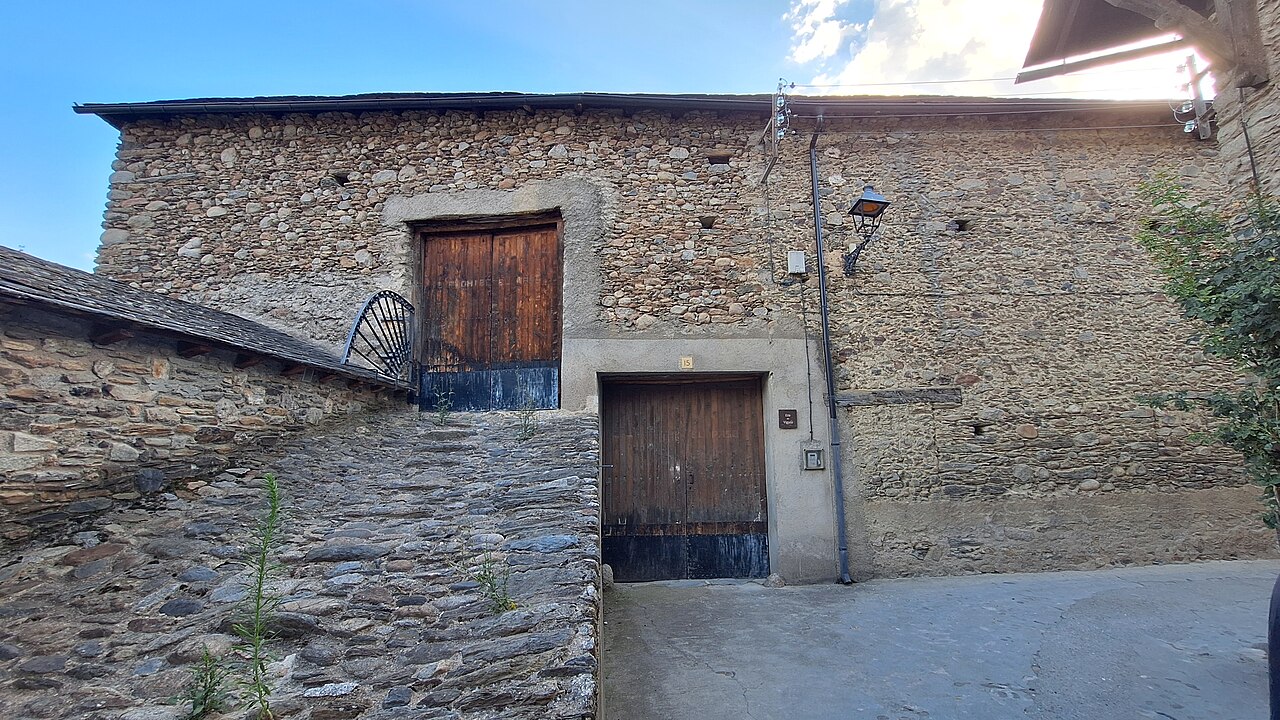
Casa Vigatà – By Pere prlpz – Treball propi, CC BY-SA 3.0, https://commons.wikimedia.org/w/index.php?curid=168754375.
Era y horno de Vigatà – Esterri – By Pere prlpz – Treball propi, CC BY-SA 3.0, https://commons.wikimedia.org/w/index.php?curid=168754307.
Iglesia de Sant Vicenç, Esterri d’Áneu, Pallars Sobirá – By Cruccone – Treball propi, CC BY-SA 3.0 es, https://commons.wikimedia.org/w/index.php?curid=21261264.
Este pequeño pico, situado sobre Espot, destaca por las amplias vistas que se obtienen desde su cota sur – By Simonjoan – Treball propi, CC BY-SA 4.0, https://commons.wikimedia.org/w/index.php?curid=196619073.
Esterri d’Àneu – By Pere prlpz – Treball propi, CC BY-SA 3.0, https://commons.wikimedia.org/w/index.php?curid=168754527.
Puente Viejo de Esterri (Esterri d’Àneu) – By Isidre blanc (talk) – Own work, CC BY-SA 3.0, https://commons.wikimedia.org/w/index.php?curid=27754392.
Río Noguera Pallaresa cerca del Desfiladero de Collegats» – By Prankster – Own work, CC0, https://commons.wikimedia.org/w/index.php?curid=30456354.
Perspectiva desde el puente románico.
Camino desde el aparcamiento.Parque nacional de Aigüestortes y Estany de Sant Maurici.
History, architecture, nature, culture, language, gastronomy and traditions of one of the most remarkable villages in the Pyrenees High in the Val d’Aran, surrounded by mountains, alpine meadows and spectacular high-mountain landscapes, lies Bagergue, a small village that has preserved much of the traditional character …
Puigcerdà: A Pyrenean paradise that awakens all the senses On the banks of the River Segre, embraced by the majestic Pyrenees, lies Puigcerdà, the capital of the Cerdanya region, at approximately 1,200 metres above sea level. Located just 150 km from Barcelona, the journey by …
In the highlands of Val d’Aran, where stone villages meet forests, rivers and the Pyrenean mountains, Tredòs preserves the authentic character of a historic mountain village.
At an altitude of 1,348 metres, in the upper part of Val d’Aran, lies Tredòs, one of the villages that best reveals the architecture, nature and traditional culture of this Pyrenean territory.
Located beside the Garonne River, Tredòs is the last inhabited village in Naut Aran before reaching the surroundings of Baqueira Beret. Its privileged position also makes it one of the gateways to the Aiguamòg Valley, the Banhs de Tredòs and the Circ de Colomèrs, within the surroundings of Aigüestortes i Estany de Sant Maurici National Park.
At first glance, Tredòs may seem like nothing more than a small mountain village.
Yet behind its stone houses and slate roofs lies centuries of history, Romanesque churches, ancient paths, bridges, livestock traditions and architecture deeply adapted to the harsh climate of the Pyrenees.
It is precisely this combination that makes Tredòs so special.
Here, visitors can wander among traditional Aranese houses, admire an 11th-century Romanesque church, follow the course of the Garonne, walk into a mountain forest or sit down to enjoy a traditional olla aranesa.
And all of this can be experienced within a compact village that is best discovered slowly, on foot.
The History of Tredòs
A mountain village with medieval roots
The history of Tredòs is deeply connected to the evolution of Val d’Aran itself.
For centuries, its inhabitants lived mainly from livestock farming, mountain agriculture, forestry and the use of local natural resources.
The landscape shaped everyday life.
Meadows provided pasture for livestock, forests supplied timber and the mountains offered high-altitude grazing grounds during the summer months.
The paths connecting the different villages of the valley were also essential for trade and for the movement of people and animals.
Historically, Tredòs played a greater role than its small size today might suggest.
The village preserves important traces of its medieval and religious past, particularly through its churches.
One of the most remarkable elements of its history is Santa Maria de Cap d’Aran, where the Conselh Generau dera Val d’Aran, the historic governing institution of the valley, once held its annual meetings.
The old settlement was also protected by a defensive tower, which has since disappeared.
With the arrival of mountain tourism and, particularly, the development of Baqueira-Beret, Tredòs gradually began to change.
New homes and accommodation appeared, yet the village managed to preserve an important part of its traditional structure.
Today, old Aranese houses coexist with more recent buildings associated with tourism.
The Old Town
Stone, wood, slate and flowers
One of the best ways to discover Tredòs is simply to walk through its streets.
There is no need for a complicated itinerary.
The village itself works as a small open-air museum of traditional architecture.
The houses are mainly built from stone and wood, while slate roofs protect them from heavy rainfall and winter snowfall.
Wooden balconies, small windows, stone walls and narrow streets create the distinctive character of traditional Aranese villages.
During the warmer months, many façades and balconies are decorated with flowers.
Naut Aran Town Council places particular emphasis on the care of Tredòs’s green spaces and façades, with trees, flower planters and balconies decorated by local residents.
This attention to flowers and greenery has contributed to Tredòs being part of the Viles Florides programme.
Santa Maria de Cap d’Aran
The great Romanesque treasure of Tredòs
If there is one monument that should not be missed in Tredòs, it is Santa Maria de Cap d’Aran.
The church is one of the most important examples of Romanesque architecture in Val d’Aran.
Its oldest elements date back to the 11th century, although the building reflects several different stages of construction.
Its stone walls, apses and characteristic features of Lombard Romanesque architecture are particularly striking.
One of its most distinctive features is the crypt beneath the presbytery.
The church has a three-nave basilica layout and preserves a number of architectural elements that reveal the importance the temple once held within the territory.
Its interior also contained an important collection of Romanesque mural paintings.
Parts of these paintings were transferred to different institutions, and some of the best-known pieces are now held in international collections.
The church is one of the essential places for understanding the historical and artistic heritage of Tredòs.
Romanesque Art
An exceptional medieval artistic legacy
Romanesque heritage is one of Tredòs’s great attractions.
The religious architecture of Val d’Aran preserves distinctive characteristics reflecting the influence of the Pyrenean territories and Lombard architectural traditions.
At Santa Maria de Cap d’Aran, visitors can observe:
A basilica-style layout.
Three naves.
Semicircular apses.
A crypt.
Lombard architectural elements.
Bell-tower structures.
Stone doorways.
Architectural sculpture.
Remains of mural paintings.
The artistic importance of the church extends beyond its walls.
The Romanesque paintings associated with Tredòs form part of the history of medieval European art, and some are now preserved outside Catalonia.
For art lovers, Tredòs can also form part of a wider Romanesque itinerary through Val d’Aran, including Salardú, Arties, Unha, Bossòst and other villages throughout the valley.
Sant Esteve de Tredòs
A small church beside the river
The second religious building deserving particular attention is Sant Esteve de Tredòs.
This small church has Romanesque origins and stands on the opposite side of the Garonne.
Its modest size contrasts with the historical importance of Tredòs’s wider religious heritage.
Its bell structure combines a small tower with a simple open belfry and retains elements characteristic of Aranese Romanesque architecture.
Its location also makes it possible to combine a visit with a walk beside the river and through one of the village’s most traditional areas.
The Chapel of the Virgin of the Rosary
A small sanctuary beside the bridge
Close to the Garonne stands the Chapel of the Virgin of the Rosary, a small religious building located beside the bridge.
It is one of those places that can easily be overlooked if Tredòs is visited too quickly.
The chapel, river, bridge and traditional houses create one of the village’s most characteristic scenes.
It is also one of the most attractive areas for photography.
Pont de la Capella
A classic image of Tredòs
The Pont de la Capella crosses the Garonne and connects the main part of the village with the neighbourhood on the opposite bank.
The present bridge has historic origins, and an inscription dates its construction to 1753.
The combination of the stone bridge, river, houses and vegetation makes this one of the most photogenic places in Tredòs.
The Garonne River
The water that accompanies the village
The Garonne River is one of the defining elements of Tredòs’s landscape.
The river runs through the valley and has long been closely connected to village life.
Its waters, together with small streams and tributaries, help create the exceptionally green landscape that characterises the valley during spring and summer.
In spring, melting snow increases the river’s flow.
During summer, the riverbanks become cool and pleasant places for walking.
In autumn, the water contrasts beautifully with the golden colours of the forests.
In winter, snow completely transforms the landscape.
Nature and Vegetation
A lush landscape shaped by Atlantic influences
Val d’Aran has particularly distinctive climatic conditions within the Catalan Pyrenees.
Its position on the northern side of the mountain range gives the valley a stronger Atlantic influence and supports exceptionally abundant vegetation.
Around Tredòs, visitors can find:
Fir trees.
Pine trees.
Beech trees.
Birch trees.
Hazelnut trees.
Oaks.
Juniper.
Rhododendrons.
Bilberry bushes.
Alpine meadows.
A wide variety of mountain flowers.
Around Banhs de Tredòs, mountain vegetation includes extensive pine and fir forests, together with rhododendrons, juniper, birch and bilberry.
During spring and early summer, the meadows burst into bloom.
Autumn offers one of the most spectacular landscapes, as the forests gradually turn yellow, gold, orange and deep red.
Wildlife
Wildlife in the Pyrenees
The surroundings of Tredòs form part of a territory of exceptional natural richness.
The forests and mountain areas are home to species such as:
Red deer.
Roe deer.
Wild boar.
Foxes.
Squirrels.
Marmots.
Pyrenean chamois.
Ptarmigan.
Golden eagles.
Vultures.
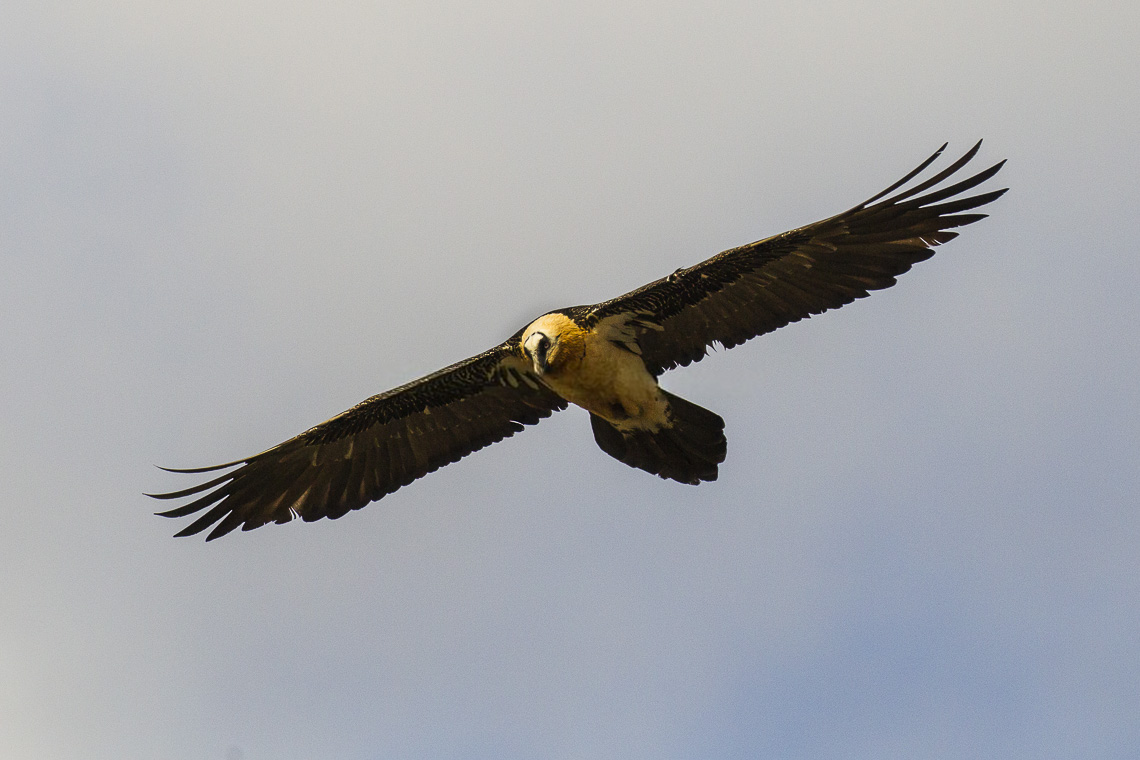
Bearded vultures.
Numerous species of woodland birds.
Wildlife changes according to altitude and season.
During summer, small mammals and birds become particularly active.
In autumn, signs of larger herbivores can often be found in the mountains.
During winter, snow completely alters the behaviour and movements of many species.
The brown bear is also part of the wider Pyrenean ecosystem, although sightings are extremely rare. Wild animals should never be approached, followed or deliberately disturbed.
The Climate of Tredòs
A true mountain climate
Tredòs’s altitude and Atlantic influence shape its climate.
Winters are cold and snowy, particularly at higher elevations.
Spring is generally cool and marked by significant snowmelt.
Summers are pleasantly warm during the day and cool at night, making Tredòs particularly appealing to travellers looking to escape the summer heat of Barcelona.
Autumn is one of the most beautiful seasons to visit because of the changing colours of the forests.
Winter, meanwhile, transforms Tredòs into an especially attractive destination for those wishing to combine the charm of a traditional village with the proximity of Baqueira-Beret.
Banhs de Tredòs
Thermal waters surrounded by mountains
Following the Aiguamòg Valley, visitors reach one of the most distinctive places in the surroundings: Banhs de Tredòs.
The complex stands at approximately 1,755 metres above sea level, within the protected mountain environment associated with Aigüestortes i Estany de Sant Maurici National Park.
Its thermal waters are one of the area’s main attractions.
But Banhs de Tredòs is much more than a thermal retreat.
It is also an excellent starting point for exploring the high-mountain landscapes of Aiguamòg and the Circ de Colomèrs.
During summer, visitors can enjoy hiking, trekking and e-bike routes.
In winter, activities include snowshoeing and snowmobile excursions.
The Circ de Colomèrs
More than thirty mountain lakes in a glacial landscape
One of the great natural attractions of the area is the Circ de Colomèrs.
This spectacular glacial landscape lies at the head of the Aiguamòg Valley.
The area is characterised by mountains, alpine meadows, waterfalls and an extraordinary concentration of mountain lakes.
Naut Aran Town Council highlights the trails leading from Tredòs towards the more than 30 mountain lakes of the Circ de Colomèrs.
It is one of the essential destinations for hiking enthusiasts and landscape photographers.
Baqueira-Beret
The great winter mountain destination
The proximity of Baqueira-Beret has made Tredòs one of the most attractive villages in which to stay during the snow season.
The resort offers alpine skiing and snowboarding, together with a range of mountain activities.
Yet the surrounding landscape is equally appealing outside the winter season.
In spring and summer, hiking, cycling and mountain-bike routes take centre stage.
Tredòs offers the advantage of combining the tourist infrastructure of Baqueira with the quieter atmosphere of a traditional mountain village.
Gastronomy
The flavours of Aranese mountain cuisine
Tredòs’s cuisine forms part of the traditional gastronomic heritage of Val d’Aran.
It is a hearty cuisine, historically shaped by long winters and the need to make the most of locally available ingredients.
Among its most representative dishes and products are:
Olla aranesa.
Trinxat.
Mountain meats.
Beef.
Lamb.
Pork.
Cured meats and sausages.
Wild mushrooms.
Potatoes.
Local cheeses.
Dairy products.
Traditional desserts.
Olla aranesa is probably the dish that best represents the traditional cuisine of the valley.
This substantial one-pot dish is particularly satisfying after a day spent hiking or exploring the mountains.
During autumn, wild mushrooms take centre stage, while meats and slow-cooked dishes remain deeply rooted in a culinary tradition closely connected to the local climate.
Where to Eat in Tredòs
Traditional cuisine in a mountain village
Tredòs currently offers several options for dining.
Era Caseta des deth Mestre, located in Plaça Major, is one of the village’s best-known gastronomic references.
Its cuisine is closely connected to traditional mountain cooking, with dishes such as olla aranesa, meats, stews, mushrooms and homemade desserts appearing among its offerings.
Another option in the village is Orishas Bar Tredòs, offering a more informal atmosphere.
For a relaxed drink or casual stop, Terrasseta dera Bruisha is another possibility.
The Former Golf Course at Salardú and Its New Gastronomic Life
From mountain golf to gastronomy
Just a few kilometres from Tredòs was the historic Golf Salardú, a small mountain golf course.
The course should no longer be presented as an open golf facility. However, the former Golf Clubhouse has taken on a gastronomic role.
Tourism information for Val d’Aran currently lists Wellbourne Salardú at the former Chalet del Golf, around 3 kilometres from Baqueira-Beret.
Its concept combines local Pyrenean products with international influences, complemented by a wine selection and a contemporary setting.
It offers an interesting alternative for visitors looking for a more sophisticated gastronomic experience alongside traditional Aranese cuisine.
What to Visit Around Tredòs
A landscape to discover without rushing
Tredòs’s location makes it an ideal base for exploring some of the most interesting villages and landscapes in Val d’Aran.
Salardú
Just a few minutes away lies Salardú, the historic capital of Naut Aran and one of the valley’s most important villages.
Its church of Sant Andreu houses the famous Christ of Salardú, a 12th-century Romanesque carving, together with later mural paintings.
Unha
A small village perched above the valley, offering magnificent views and traditional architecture.
Gessa
Another charming village where visitors can continue exploring Aranese architecture and the traditional character of Naut Aran.
Arties
One of the best-known villages in Val d’Aran, combining traditional architecture, religious heritage, restaurants and a lively tourist atmosphere.
Baqueira-Beret
An essential destination in winter and an excellent starting point for discovering the mountains throughout the rest of the year.
Banhs de Tredòs
Thermal waters, mountain scenery and access to Aiguamòg.
Aiguamòg
A beautiful valley leading towards some of the area’s high-mountain landscapes.
Circ de Colomèrs
One of the Pyrenees’ most spectacular lake-filled glacial landscapes.
Tredòs from Barcelona
A Pyrenean escape in around four hours
Tredòs is approximately 261 kilometres by road from Barcelona, with a driving time of around four hours under normal conditions.
The journey crosses inland Catalonia before reaching Val d’Aran.
During winter, particular attention should be paid to weather conditions and road conditions.
For a getaway from Barcelona, Tredòs is particularly well suited to a two- or three-day escape, combining the village with Salardú, Arties, Baqueira, Banhs de Tredòs and mountain trails.
Tredòs Through the Seasons
Four completely different landscapes
Spring
Snowmelt feeds the rivers and mountain streams. The meadows become green again and the first flowers begin to appear.
Summer
One of the best times for walking, mountain hiking, exploring Aiguamòg and discovering the villages of the valley.
Autumn
The forests change colour, turning Tredòs into an exceptional destination for photography, hiking and gastronomy.
Winter
Snow completely transforms the village and surrounding mountains. The proximity of Baqueira-Beret makes Tredòs an excellent base for winter sports.
Discover Tredòs with Magic Dreams Barcelona
A private experience in the heart of the Pyrenees
At Magic Dreams Barcelona, we can turn a visit to Tredòs into a completely personalised experience.
We can design an escape combining:
Romanesque heritage.
Traditional architecture.
History.
Hiking.
Botany.
Birdwatching.
Landscape photography.
Aranese gastronomy.
Carefully selected restaurants.
Thermal experiences.
Baqueira-Beret.
Private excursions.
Mountain activities.
Private transportation from Barcelona.
An experience can begin by exploring the streets of Tredòs and visiting Santa Maria de Cap d’Aran, continue with a route through Aiguamòg and end with a traditional meal or a more sophisticated gastronomic experience in the surrounding area.
The Charm of Tredòs
Tredòs is one of those places where the mountains are not simply scenery.
They are part of the village’s identity.
The stone tells the story of its architecture.
The Romanesque heritage recalls its past.
The Garonne shapes its landscape.
The forests reflect its climate.
Its cuisine preserves the traditions of its inhabitants.
And the mountains surrounding it remind us that we are in one of the most spectacular territories of the Pyrenees.
Tredòs invites visitors to slow down, discover its churches, cross its historic bridges, listen to the river and sit around a table to taste the flavours of Val d’Aran.
A small village with an extraordinary history, surrounded by some of the most beautiful landscapes in the Pyrenees.
Estany de Ratera – Lago de origen glaciar situado en el Parque Nacional de Aigüestortes i Estany de Sant Maurici Magic Dreams Barcelona.
Tredós- Iglésia de Santa Maria de Cap d’Aran – Galería Catalana de Arte y Arquitectura (Josep Bracons) de Barcelona, Cataluña, CC BY-SA 2.0 , via Wikimedia Commons.
Circo glaciar situado en el sector norte del Parque Nacional de Aigüestortes i Estany de Sant Maurici, en la Vall d’ Arán Magic Dreams Barcelona.
Tredós – By Isidre blanc (talk) – Own work, CC BY-SA 3.0, https://commons.wikimedia.org/w/index.php?curid=27892130.
Quebrantahuesos en vuelo – Pirineos catalanes – Francesco Veronesi de Italia, CC BY-SA 2.0 , via Wikimedia Commons.
Isard / rebeco pirenaico – Bouke ten Cate, CC BY 4.0 , via Wikimedia Commons.
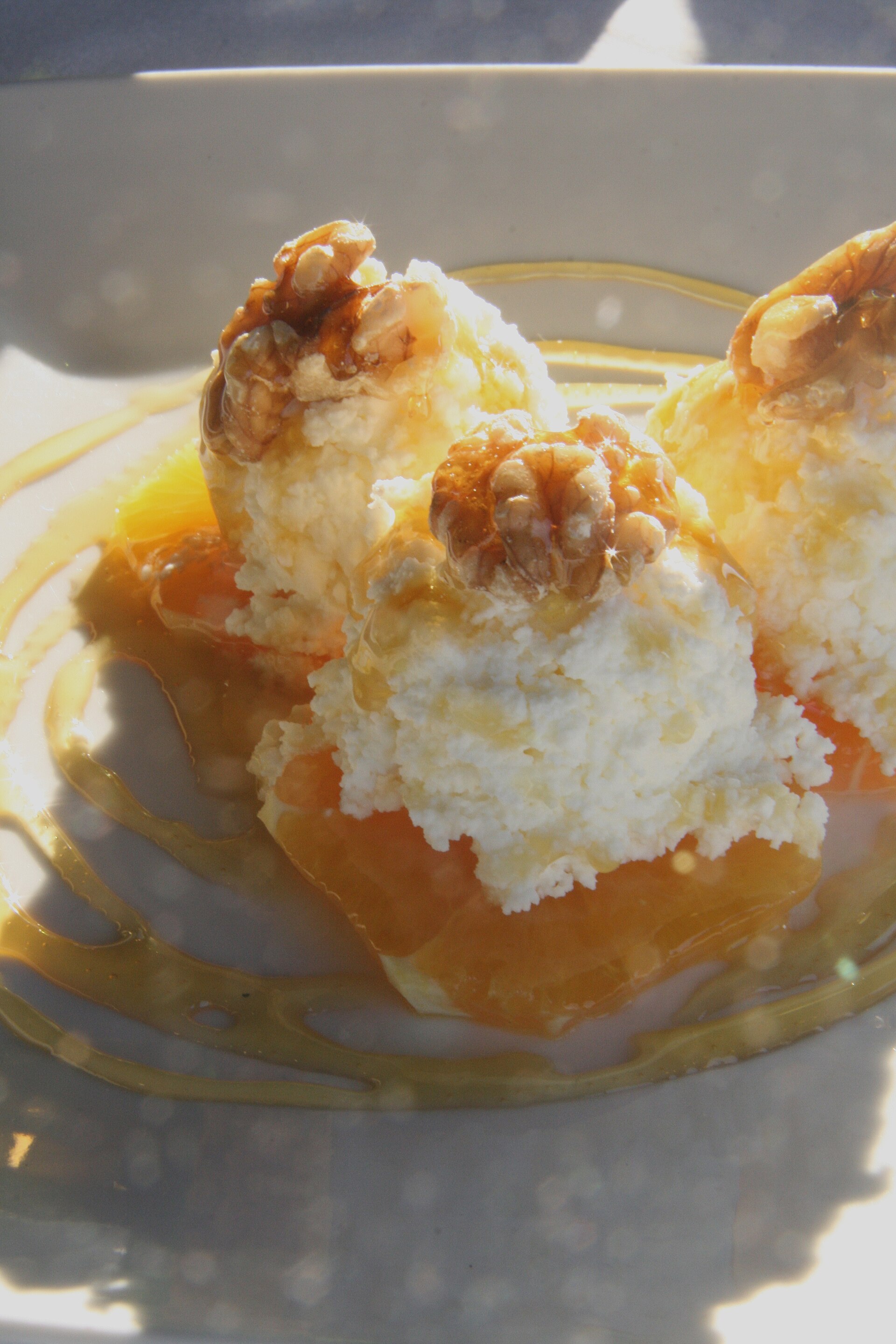
Mel i Mató – Tamorlan, CC BY 3.0 , via Wikimedia Commons.
Romantic Getaway Magic Dreams Barcelona – Vielha and Val d’Aran, the Purest Heartbeat of the Catalan Pyrenees In the northwesternmost corner of Catalonia, where the Catalan Pyrenees rise majestically and nature still preserves an ancient rhythm, lies the Val d’Aran. A land of mountains, forests, …
Escapada Romántica Magic Dreams Barcelona – Vielha y la Val d’Aran, el latido más puro del Pirineo catalán En el extremo noroccidental de Cataluña, allí donde el Pirineo catalan se eleva con solemnidad y la naturaleza conserva todavía un pulso ancestral, está situada la Val …
There are places you travel to in order to disconnect, and others that make you wish you could stay a few more days. The Boí Valley, in the heart of the Catalan Pyrenees, belongs firmly to the second category.
Surrounded by high mountains, small stone villages, Romanesque churches, forests, alpine meadows, thermal waters and the spectacular landscape of Aigüestortes i Estany de Sant Maurici National Park, the valley brings together an extraordinary concentration of natural and cultural heritage within a relatively small area.
Here, you can ski in winter, hike among lakes and waterfalls in summer, observe wildlife, discover one of the most important concentrations of Romanesque art in Catalonia, enjoy mountain cuisine and end the day relaxing in the thermal waters of Caldes de Boí.
It is precisely this combination that makes the Boí Valley such an appealing destination for a getaway combining nature, wellness, culture and gastronomy.
Where is the Boí Valley?
The Boí Valley is located in the Alta Ribagorça comarca, in the province of Lleida, in the Catalan Pyrenees.
The municipality comprises eight small population centres and preserves an exceptional architectural and natural heritage. The valley’s historic isolation helped preserve many of its traditional buildings and much of its landscape.
Its main attractions include:
Taüll.
Boí.
Barruera.
Erill la Vall.
Durro.
Cóll.
Cardet.
Pla de l’Ermita.
Caldes de Boí.
Boí Taüll.
Aigüestortes i Estany de Sant Maurici National Park.
The Romanesque churches designated a UNESCO World Heritage Site.
Caldes de Boí Spa.
The altitude and terrain mean that the landscape changes dramatically throughout the year.
Taüll: the village of the great Pyrenean Romanesque heritage
Taüll, located at around 1,510 metres above sea level, is probably one of the best-known names in the Boí Valley.
Historically, it was of considerable importance within the valley and served as a stopping point on routes crossing the mountains. Today, it is one of the essential places for understanding the region’s Romanesque heritage.
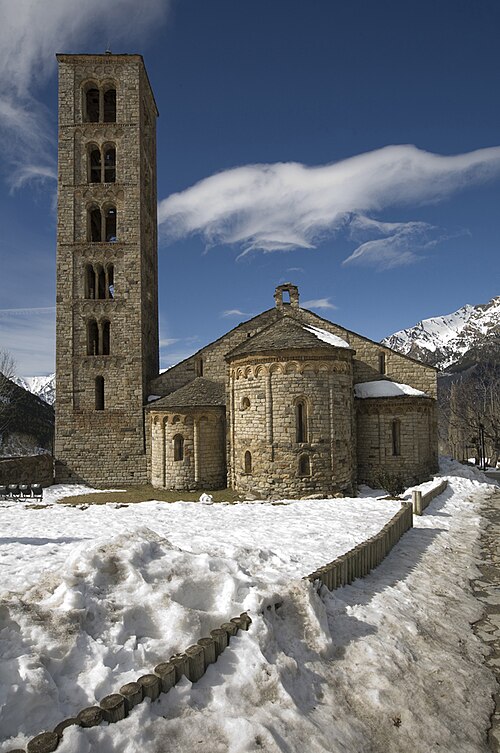
Its most prominent landmarks are the churches of Sant Climent de Taüll and Santa Maria de Taüll, two true icons of Catalan Romanesque architecture.
Their architecture is striking for its combination of stone, slate roofs and slender bell towers.
The Romanesque ensemble of the Boí Valley was inscribed on the UNESCO World Heritage List in 2000.
The Romanesque heritage of the Boí Valley
The Boí Valley contains an extraordinary concentration of Romanesque churches, built mainly during the 11th and 12th centuries.
The ensemble consists of eight churches and one hermitage:
Sant Climent de Taüll.
Santa Maria de Taüll.
Sant Joan de Boí.
Santa Eulàlia d’Erill la Vall.
Sant Feliu de Barruera.
La Nativitat de Durro.
Santa Maria de Cardet.
L’Assumpció de Cóll.
Sant Quirc de Durro.
They share characteristics of Lombard Romanesque architecture, including bell towers, blind arches, Lombard bands and remarkably pure architectural forms.
But their importance lies not only in the buildings themselves.
The churches preserved exceptional ensembles of mural paintings, including the famous frescoes of Sant Climent and Santa Maria de Taüll and those of Sant Joan de Boí. Many of the original paintings are now preserved at the Museu Nacional d’Art de Catalunya (MNAC), while the churches contain reproductions and interpretation resources.
The fusion of architecture, painting, landscape and medieval culture is one of the territory’s greatest assets.
Sant Climent de Taüll and the Pantocrator
Few images represent Catalan Romanesque art as well as the Pantocrator of Sant Climent de Taüll.
The original mural painting was transferred to the MNAC to ensure its preservation, but the church contains a reproduction that helps visitors understand what the medieval pictorial space would have looked like.
The Taüll ensemble is also an extraordinary example of the relationship between architecture and painting: the walls, apses and bell towers formed part of an artistic and religious programme conceived as a unified whole.
Boí, Erill la Vall and the valley’s small villages
The Boí Valley is not limited to Taüll.
In Boí, the church of Sant Joan is particularly interesting for the remains of its mural decoration and its depictions of elements of medieval life.
In Erill la Vall, the church of Santa Eulàlia stands out for its impressive bell tower and its sculptural group of the Descent from the Cross, associated with the so-called Erill Workshop.
Durro, Barruera, Cardet and Cóll complete the Romanesque heritage route while also offering the opportunity to discover small mountain villages where traditional Pyrenean architecture is still preserved.
A high-mountain landscape
The Boí Valley lies in one of the most spectacular sectors of the Catalan Pyrenees.
The great natural protagonist is Aigüestortes i Estany de Sant Maurici National Park, the only national park in Catalonia.
The landscape consists of peaks, glacial valleys, rivers, waterfalls, forests, alpine meadows and an extraordinary concentration of mountain lakes.
Water is one of the defining elements of the landscape.
The National Park contains nearly 300 lakes as well as countless streams, ravines and waterfalls, creating one of the most distinctive high-mountain ecosystems in the Pyrenees.
Flora and botany of the Boí Valley
The wide range of elevations allows visitors to encounter different plant communities.
In the lower areas, forests include species such as:
Scots pine.
Birch.
Hazel.
Ash.
Rowan.
Various shrub species.
As the altitude increases, mountain pine, subalpine meadows and vegetation adapted to harsh climatic conditions become more prevalent.
During spring and summer, the alpine meadows burst into bloom.
For botany enthusiasts, it is particularly interesting to observe how vegetation changes according to orientation, altitude, humidity and soil type.
Among the characteristic species of the Pyrenean high mountains are various gentians, lilies, saxifrages, primroses, arnica and other alpine plants.
Flowering depends on altitude and the weather conditions of each year, so the months from May to July can offer very different botanical experiences.
Wildlife: chamois, marmots and large birds
Wildlife is another of the great attractions of the Boí Valley and the National Park.
The Pyrenean chamois, or isard, is one of the emblematic animals of these mountains.
Marmots can also be observed, particularly during the warmer months, when they are active after their winter hibernation.
Other species found in the area include:
Red deer.
Roe deer.
Wild boar.
Foxes.
Squirrels.
Stoats.
Hares.
Various small mammals.
The area is also of great interest for mountain birdwatching and the observation of birds of prey.
For any wildlife-watching activity, visitors should keep their distance, never feed animals and respect the regulations of the protected area. The Boí Valley itself recommends using binoculars, maintaining silence and hiring a guide when seeking a nature interpretation experience.
Boí Taüll: skiing at one of the highest resorts in the Pyrenees
During winter, the Boí Valley is transformed.
The Boí Taüll ski resort is located between 2,020 and 2,751 metres above sea level, reaching the summit of Puig Falcó.
Its orientation and altitude favour particularly interesting snow conditions during the winter season.
The resort currently offers:
45 km of marked ski runs.
42 alpine ski runs.
6 green runs.
6 blue runs.
15 red runs.
16 black runs.
4 ski-mountaineering itineraries.
Snowpark.
5 chairlifts.
2 drag lifts.
3 conveyor belts.
Beginners’ area.
Ski school.
Equipment rental.
Snow garden and childcare.
Medical service.
Restaurants at the ski area.
The resort is suitable both for beginners and experienced skiers.
For beginners
The green runs and lower areas allow visitors to learn progressively.
The ski school, conveyor belts and children’s areas are particularly convenient for family trips.
For intermediate skiers
The blue runs allow skiers to gradually expand their terrain and explore different sectors of the resort.
For advanced skiers
The wide range of red and black runs and the high altitude provide options for those looking for more demanding terrain.
Boí Taüll also offers dedicated ski-mountaineering itineraries, with routes of varying difficulty and length.
When should you visit Boí Taüll?
Each season offers a different experience.
Winter: skiing, snowboarding, snowshoeing, ski mountaineering and snow-covered landscapes.
Spring: snowmelt, rivers, waterfalls and the gradual emergence of alpine vegetation.
Summer: hiking, high mountains, photography, botany, wildlife and access to the National Park.
Autumn: colourful forests, cooler temperatures and a particularly peaceful atmosphere.
For this reason, the Boí Valley should not be considered solely a snow destination.
Caldes de Boí: thermal waters in the mountains
One of the valley’s great distinguishing features is Caldes de Boí.
The spa is located at around 1,470 metres above sea level, beside the Noguera de Tor River and surrounded by a high-mountain landscape.
The site’s thermal tradition is very old, with references to the properties of its waters dating back to Roman times.
Today, the complex has 37 thermal springs, with temperatures ranging approximately from 4°C to 56°C.
The waters have different compositions and characteristics, allowing them to be used in a variety of thermal programmes and treatments.
What does Caldes de Boí Spa offer?
The complex combines:
Thermal waters.
Health treatments.
Wellness programmes.
Beauty treatments.
Mud treatments.
Natural steam rooms.
Thermal services.
Medical supervision for certain programmes.
Accommodation.
Dining.
Swimming pools and relaxation areas during the relevant season.
The spa states that its waters are traditionally used in treatments associated with various conditions, including rheumatic, respiratory, dermatological, circulatory, urinary, digestive and nervous-system disorders. Therapeutic treatments should be understood within the medical and thermal framework of the establishment and not as substitutes for conventional medical care.
For a wellness getaway, the combination is particularly appealing: spend the day walking in the mountains and finish with a thermal experience.
The valley’s cuisine emerges directly from its landscape.
It is a mountain cuisine traditionally based on products that could be found or produced locally.
Typical ingredients include:
Potatoes.
Vegetables.
Lamb.
Pork.
Beef.
Mushrooms.
Trout.
Seasonal produce.
Local products.
Organic beef from the Boí Valley and lamb play a prominent role in local cuisine.
In recent years, various chefs have also reinterpreted traditional dishes using contemporary techniques, creating an offering that combines Pyrenean cuisine with creative gastronomy.
Two restaurants for a special gastronomic experience
The gastronomy of the Boí Valley is closely linked to the landscape and mountain traditions. The cuisine makes use of local products and combines traditional recipes with more contemporary approaches.
For a gastronomic getaway in the valley, two establishments are particularly worth considering: L’Aüt in Erill la Vall and El Fai in Taüll.
L’Aüt Restaurant, Erill la Vall
In Erill la Vall, just a few metres from the Romanesque church of Santa Eulàlia, you will find L’Aüt Restaurant, located within Hotel L’Aüt.
It is an especially interesting option for those looking for cuisine rooted in local produce. The restaurant highlights the use of local products and organic meats from the region, with grilled meats and traditional stews playing a particularly important role. Vegetarian, vegan and gluten-free options are also available upon request.
Dishes currently associated with its offering include:
Escudella.
Beef tenderloin with porcini mushroom sauce.
Mushroom ravioli.
Pappardelle with truffle, bacon and Parmesan.
Mushroom and truffle croquettes.
Dishes featuring blood sausage.
Apple tarte Tatin with cinnamon ice cream.
The menu therefore combines Catalan cuisine, mountain produce and more contemporary-inspired dishes.
The restaurant is located at Carrer de Santa Eulàlia, 7, Erill la Vall, and also has a terrace overlooking the valley.
Average price at L’Aüt
For a realistic budget, allow approximately €30–40 per person, depending on whether you choose a starter, main course, dessert and drinks.
In Taüll, you will find El Fai Restaurant, a different and somewhat more informal option, but a very interesting place to discover traditional cuisine from the Boí Valley.
The establishment describes itself as a home-style restaurant using local produce and has a large terrace overlooking Sant Climent de Taüll. Its location is one of its main attractions.
Its specialities include:
Mushroom cannelloni with porcini mushroom sauce.
Caracoles a la llauna.
Organic beef from the Boí Valley.
Organic grilled meats.
Salads.
Trinxat.
Grilled vegetables.
Risotto.
Various traditional dishes.
Vegetarian options and a selection of dishes suitable for people with coeliac disease are also available.
Average price at El Fai
Prices are approximately €15–35 per person.
The restaurant offers an €18 set menu, a €12 children’s menu and an à la carte service.
Its terrace also offers views of Sant Climent de Taüll, making it particularly suitable for a cultural route through the village.
In addition to the Romanesque churches, it is worth paying attention to the valley’s civil architecture.
Traditional houses use materials characteristic of the area, especially stone, wood and slate.
The villages are adapted to the slopes and climatic conditions of the high mountains.
Sloping roofs, wooden balconies and stone walls form an architecture perfectly integrated into the landscape.
Taüll, Boí, Durro, Erill la Vall and Barruera allow visitors to discover this architecture while strolling through their streets.
The history of an isolated valley
For centuries, the Boí Valley remained relatively isolated.
Difficult communications, the climate and the terrain helped preserve traditional ways of life and an economy based mainly on livestock farming and mountain resources.
This isolation had an extraordinary cultural consequence: it helped the Romanesque heritage survive to the present day in an exceptional state of preservation.
The churches were not simply religious spaces.
They also played social roles within medieval communities, while their bell towers could serve as communication and lookout structures.
Hiking and high mountains
The Boí Valley is an excellent gateway to the National Park.
There are routes for different abilities, ranging from easy walks to high-mountain itineraries.
Possibilities include:
Walks between villages.
Family-friendly routes.
Excursions to mountain lakes.
Waterfalls.
Nature interpretation trails.
Ascents.
Crossings.
Landscape photography.
Wildlife watching.
Botany.
Ski mountaineering.
For more demanding routes, it is essential to check the weather forecast, trail conditions and mountain conditions beforehand.
A destination for photography
The Boí Valley offers enormous photographic variety.
At sunrise, the churches of Taüll can be photographed in the first light falling across the mountains.
During the day, the lakes and waterfalls of the National Park provide spectacular landscape settings.
In summer, macro photography offers opportunities to discover flowers, butterflies and insects.
In autumn, the forests create a completely different palette.
And in winter, the Romanesque churches, stone villages and snow-covered mountains create some of the most characteristic images of the Pyrenees.
The Boí Valley under the stars
The valley and the surrounding National Park also offer excellent conditions for observing the night sky.
The Boí Valley is associated with Starlight Destination recognition, supported by the area’s dark skies and low light pollution.
On a clear night, visitors can see a sky very different from the one we are accustomed to in cities.
How to get to the Boí Valley from Barcelona
Barcelona is approximately 280 kilometres from the Boí Valley.
The usual route heads towards Lleida and continues towards Alta Ribagorça, passing through the area around Alfarràs and El Pont de Suert before taking the L-500 road towards the Boí Valley.
By car, the journey can take around 3½ to 4 hours, depending on traffic, weather conditions and the exact departure and destination points.
In winter, it is particularly important to check road conditions and carry appropriate equipment for mountain conditions.
Can you get there by public transport?
Yes.
The Boí Valley has bus connections.
There are bus services from Barcelona and Lleida to El Pont de Suert, operated by ALSA. From there, you can continue towards the Boí Valley using the transport options available in the valley.
Another possibility is to travel by train to Lleida and then continue by bus.
There are also taxi services and seasonal transport options within the valley for certain activities and periods, such as the Bus de la Neu during the ski season and the Bus del Parc during the National Park access season.
If you are planning a car-free trip, it is advisable to check the schedules for each connection according to your travel dates, as frequencies can vary considerably between high and low seasons.
How many days do we recommend?
For a first visit, a long three-day weekend allows you to enjoy a good introduction to the area.
Day 1: Heritage
Taüll, Sant Climent, Santa Maria, Boí and Erill la Vall.
Day 2: Nature
An excursion around the National Park, adapted to your fitness level and the season.
Day 3: Wellness and gastronomy
A leisurely morning, a thermal experience at Caldes de Boí and a gastronomic lunch before heading home.
In winter, the itinerary can change:
Day 1: arrival and Taüll village.
Day 2: skiing at Boí Taüll.
Day 3: snow, gastronomy and spa.
When is the best time to visit the Boí Valley?
There is no single best season.
There is a different Boí Valley for every time of year.
Winter for skiing and enjoying the snow.
Spring for snowmelt, waterfalls and the awakening of vegetation.
Summer for hiking, high mountains, wildlife, botany and the National Park.
Autumn for colourful forests, gastronomy and tranquillity.
This diversity means that the valley can be visited several times, with every trip offering something different.
Joan Ventosa i Calvell Refuge: a high-mountain experience above Estany Negre
For those who want to discover the Boí Valley from a more adventurous perspective, Joan Ventosa i Calvell Refuge offers one of the area’s most distinctive high-mountain experiences. Located at around 2,215 metres above sea level, inside Aigüestortes i Estany de Sant Maurici National Park and above the spectacular Estany Negre, the refuge is surrounded by high peaks, glacial lakes and granite landscapes.
Managed by the Centre Excursionista de Catalunya (CEC), it has 69 beds and operates as a staffed mountain refuge during the relevant season, providing accommodation, food and drinks, toilets and other basic services for mountaineers. There is also an emergency area for periods when the main refuge is closed, intended for emergencies and self-sufficient mountaineers.
Reaching the refuge: the Marmot Route
The most common approach from the Boí Valley begins at the Cavallers Reservoir, reached via the L-500 road towards Caldes de Boí. From Taüll, you descend through the valley and continue towards Caldes de Boí until reaching the Cavallers area.
From the car park, the true mountain experience begins. The trail climbs from the 1,784-metre Cavallers Reservoir to the 2,215-metre refuge, following the well-known Marmot Route.
The trail is approximately 4.4 kilometres each way, with a positive elevation gain of 431 metres and an estimated duration of around 2 hours and 15 minutes, although the actual time will depend on fitness, pace, weather and trail conditions. The route is considered difficult and crosses the Pletiu de Riumalo and the Llastres de la Morta section before reaching Estany Negre and the refuge.
The route begins beside the dam and continues around the reservoir before gradually entering a high-mountain landscape. As altitude is gained, the surroundings become increasingly rocky and spectacular. Estany Negre, located at 2,147 metres, is one of the great highlights of the excursion, surrounded by peaks and granite walls.
The route requires more than physical endurance: it is important to wear appropriate mountain footwear, carry sufficient water, protect yourself from sun and cold, and always check the weather forecast before setting out. Conditions in this high-mountain area can change quickly, and mobile coverage may be limited or unavailable. It is advisable to plan the route, check the weather and download the trail before starting the hike.
A night in the heart of the high mountains
The great attraction of Ventosa i Calvell is not simply reaching it. For those who want to extend the experience, spending a night at the refuge allows you to enjoy the landscape as the mountains fall silent and the last light of the day illuminates the peaks.
Accommodation is provided in shared spaces and the refuge supplies duvets or blankets, although you should check the current seasonal conditions and bring the personal equipment specified by the refuge. It also provides food and drinks, making it possible to arrange half-board or purchase certain services separately depending on the current conditions.
Reservations should be made in advance through the relevant booking system, particularly during busy periods. Conditions, prices and services may vary according to the season, so we recommend checking the latest information before setting out.
Rates and reservations
The refuge is not free accommodation when it is staffed. The price depends on the type of arrangement, the visitor’s age and, in certain cases, whether the mountaineer holds a federation licence or belongs to an organisation with specific agreements.
As a reference, in recent seasons half-board for non-federated adults has been around €65–70 per person per night, although this figure should be considered indicative and checked at the time of booking. Rates for federated members and other groups may differ.
When the main refuge is closed, there is a small emergency area, but this should not be confused with conventional free accommodation: it is intended for emergencies and for mountaineers undertaking activities outside the staffed season, with capacity for approximately 6 to 8 people.
Refuge services and operation
The philosophy of Ventosa i Calvell is that of a high-mountain refuge: to provide a safe place to rest, eat and recover in an environment that cannot be reached by road.
Available services include:
69 beds in shared dormitories.
Duvets or blankets for guests.
Toilets and showers, depending on seasonal operating conditions.
Food and drinks.
Communication via radio and the refuge telephone under the available conditions.
An emergency area when the staffed refuge is closed.
Meal times and certain services are subject to the refuge’s operating arrangements and may change according to the season. It is therefore advisable to check the current conditions directly before making a reservation.
Much more than a hike
Ventosa i Calvell is also an excellent gateway to some of the most spectacular high-mountain landscapes around Aigüestortes. Various routes to lakes, mountain passes and peaks begin at or pass through the refuge, including trails towards Port de Caldes, the Travessani Lakes and other areas of the National Park. The route towards Port de Caldes, for example, continues from the refuge to 2,565 metres and offers views of the Besiberri massif, countless lakes and waterfalls and, ultimately, vistas towards the Aran Valley.
The refuge is also part of Carros de Foc, one of the great multi-refuge traverses in the Catalan Pyrenees, making the area particularly interesting for experienced hikers and enthusiasts of multi-day mountain routes.
For visitors to the Boí Valley, an excursion to Ventosa i Calvell can be planned as a full-day mountain experience or as a multi-day adventure, combining it with other routes through the National Park. In either case, the landscape is completely different from the villages and Romanesque heritage of the valley: here, high mountains take centre stage, with granite, glacial lakes, alpine meadows and great peaks as the backdrop.
An especially appealing experience for those seeking nature, landscape photography, high-mountain hiking and a deeper connection with the Pyrenees.
A getaway where everything is close
One of the great advantages of the Boí Valley is the possibility of combining very different experiences within a single trip.
In one getaway, you can:
Wake up in a stone village.
Visit a Romanesque church designated a World Heritage Site.
Walk through forests and high-mountain lakes.
Observe chamois and marmots.
Ski at more than 2,000 metres.
Discover alpine flowers.
Taste mountain cuisine.
Relax in thermal waters.
And finish the day watching the mountains at sunset.
The Boí Valley is not simply a mountain destination.
It is a territory where nature, heritage, gastronomy, wellness and sport come together as a single experience.
We design your private Boí Valley experience
If you would like to discover the Boí Valley in a different way, we can design a personalised experience for you.
Not every visitor is looking for the same thing.
Some want a romantic getaway with charming accommodation, gastronomy and a spa.
Others prefer several days of skiing.
We can also organise experiences focused on nature, photography, hiking, wildlife, botany, Romanesque heritage or gastronomy.
We design:
Romantic getaways.
Private trips.
Gastronomic experiences.
Wellness and thermal getaways.
Ski trips.
Nature experiences.
Photography tours.
Hiking and mountain experiences.
Wildlife and botany experiences.
Family trips.
Weekend getaways.
Tailor-made programmes for groups.
Bespoke premium experiences.
Our aim is to ensure that you do not have to worry about coordinating every detail.
We can review your dates, number of people, interests, activity level and budget and create a proposal that fits the type of trip you want to take.
The Boí Valley can be experienced in many different ways. We design the one that best suits you.
Request your personalised proposal and discover the Pyrenees from a different perspective.
Cisne del Balneario Magic Dreams Barcelona.
Perspectiva desde la piscina del Balneario Termal Caldes de Boí Magic Dreams Barcelona.
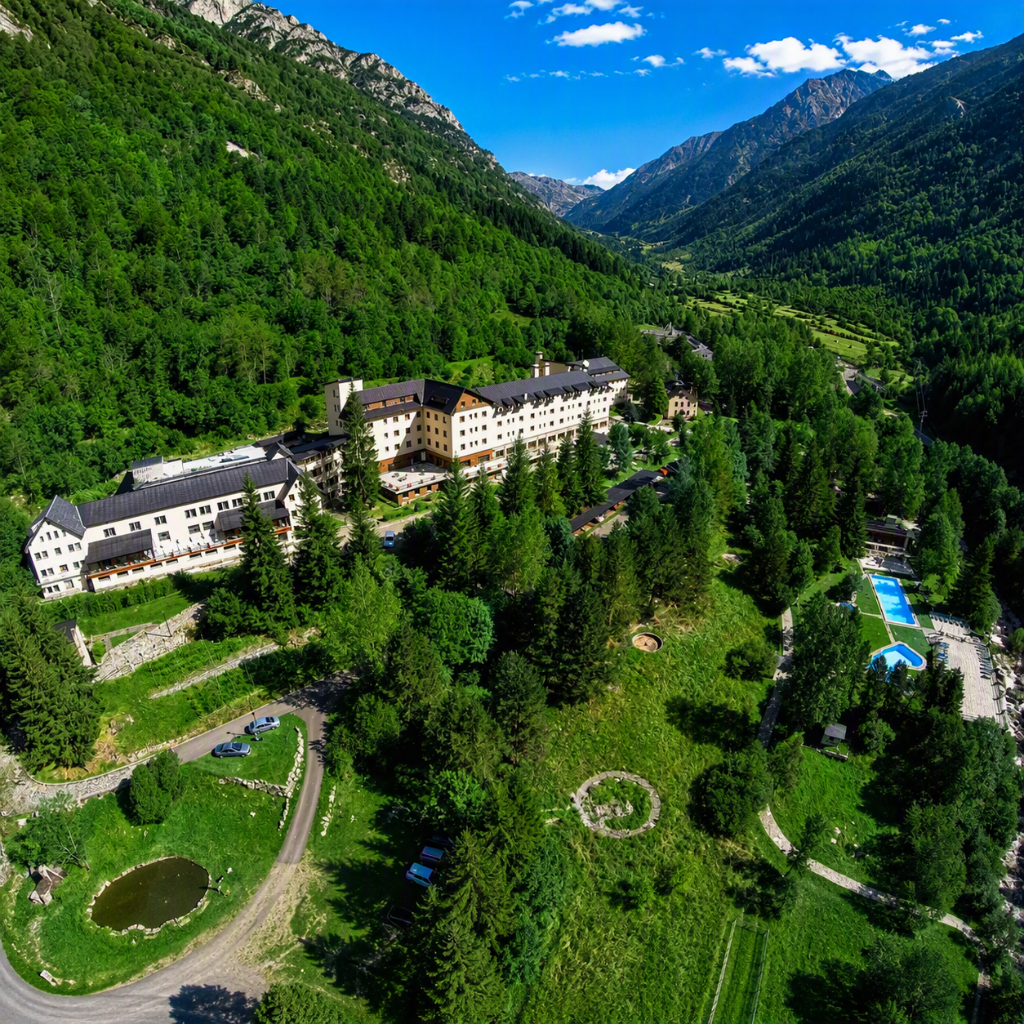
Balneario Termal Caldes de Boí Magic Dreams Barcelona.
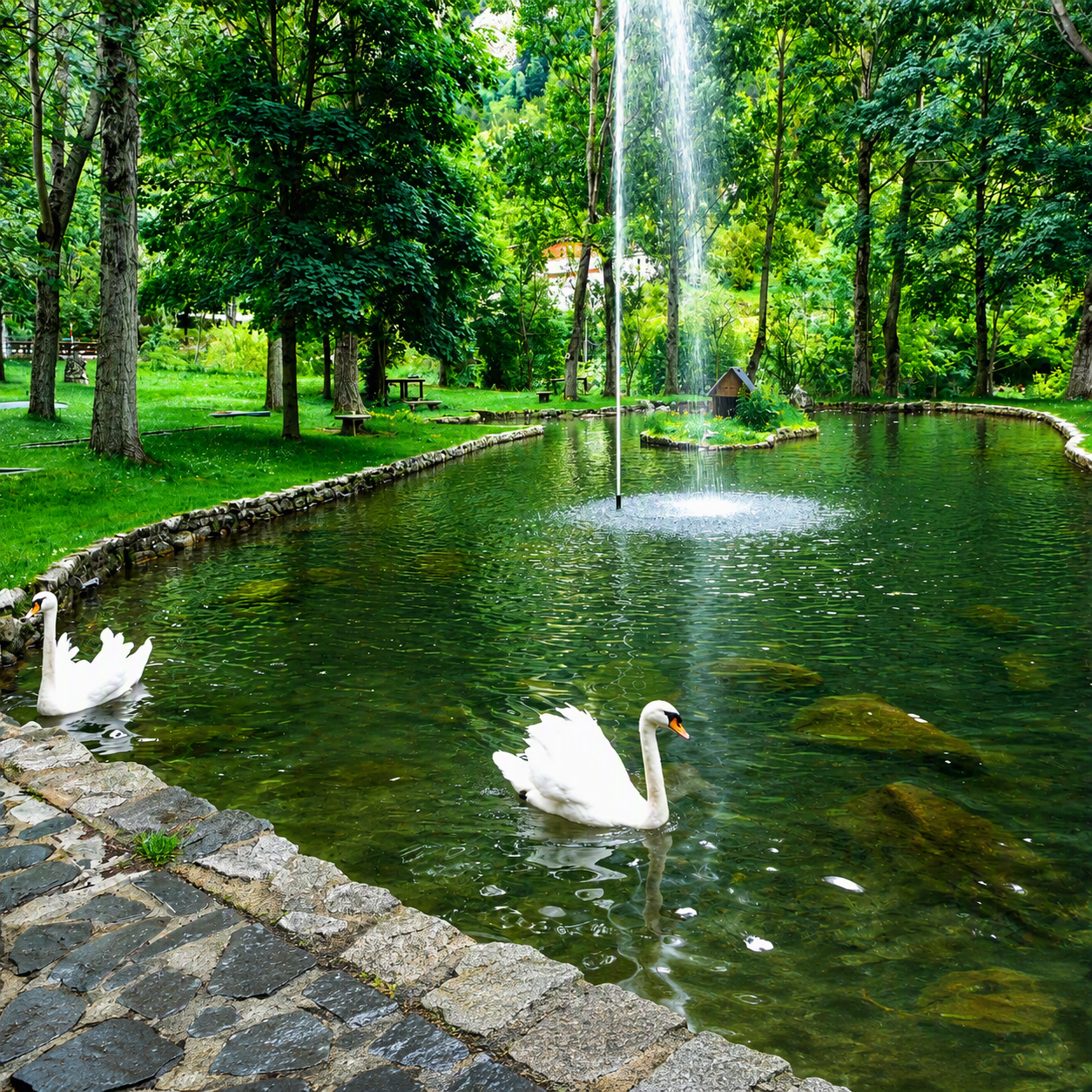
Cisne en un lago del Balneario Termal Caldes de Boí Magic Dreams Barcelona.
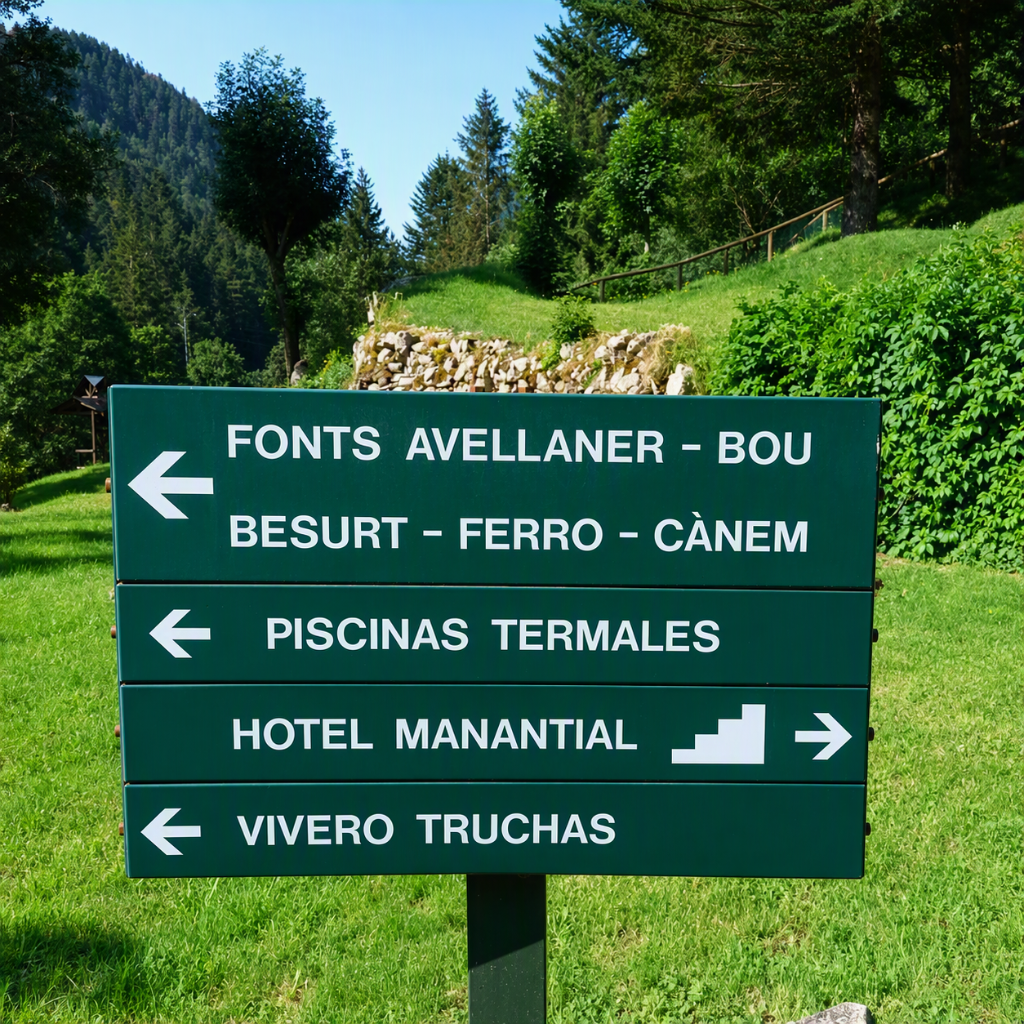
Indicaciones en el Balneario Resort Caldes de Boí Magic Dreams Barcelona.
Estación de Esquí Boí Taüll magic Dreams Barcelona.
Refugio Joan Ventosa i Calvell – By Triedros – Own work, CC BY-SA 4.0, https://commons.wikimedia.org/w/index.php?curid=40220873.
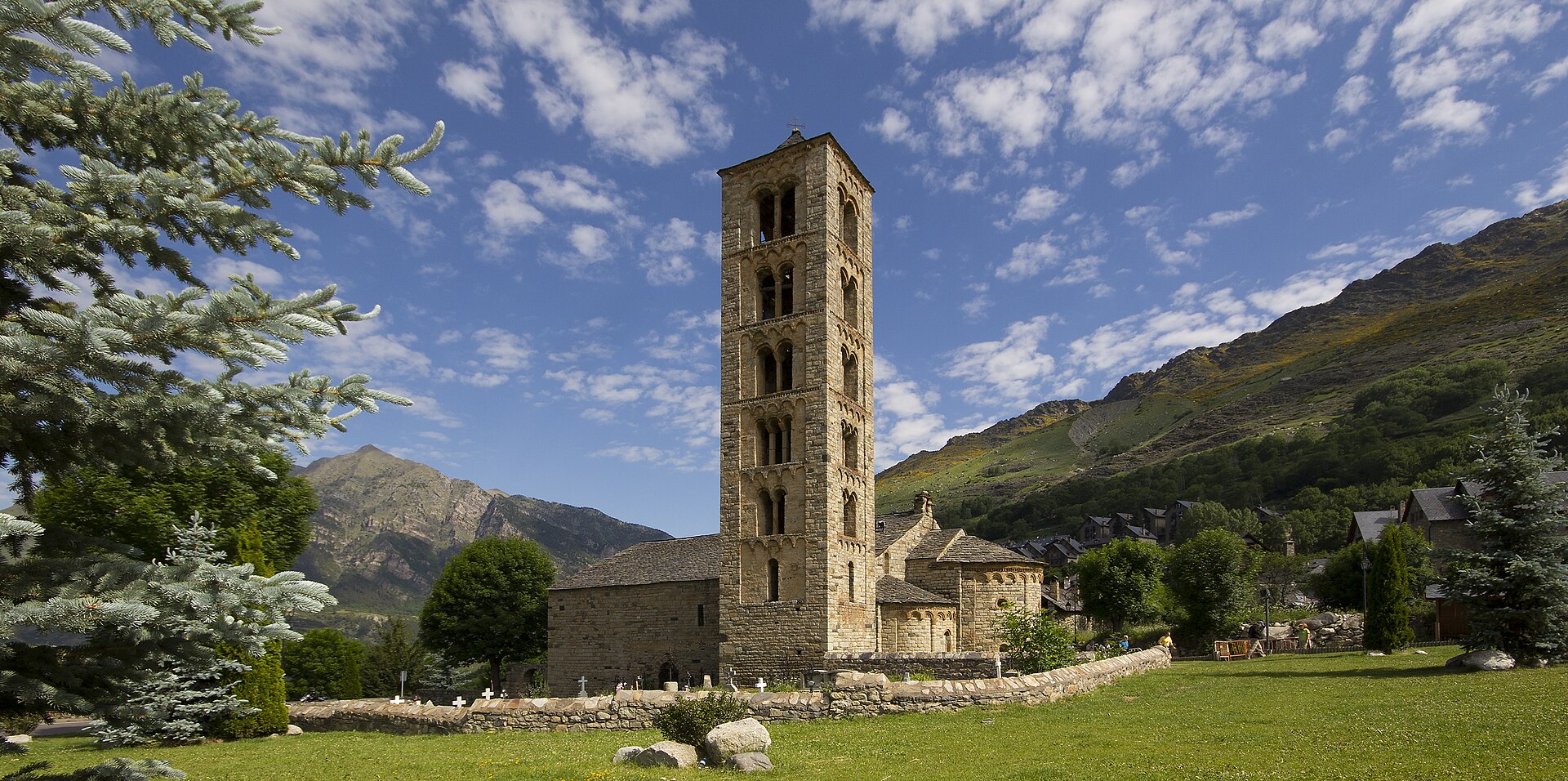
Vistas desde Taüll – By Palmira Garcia – fotgrafia pròpia, CC BY-SA 4.0, https://commons.wikimedia.org/w/index.php?curid=23218789.
Casa Mansió en Taüll – By Herodotptlomeu – Own work, CC BY-SA 4.0, https://commons.wikimedia.org/w/index.php?curid=93974017.
Iglesia de Sant Climent de Taüll nevada – By PMRMaeyaert – Own work, CC BY-SA 3.0, https://commons.wikimedia.org/w/index.php?curid=17521280.
Sant Climent de Taüll – By Vicente Maza Gómez, CC BY-SA 3.0, https://commons.wikimedia.org/w/index.php?curid=54342644.
Iglesia de Sant Climent de Taüll – By Ramonilolo – Own work, CC BY-SA 3.0, https://commons.wikimedia.org/w/index.php?curid=16657598.
Iglesia de Sant Climent de Taüll – By PMRMaeyaert – Own work, CC BY-SA 4.0, https://commons.wikimedia.org/w/index.php?curid=98412553.
Iglesia de Sant Climent de Taüll – By Albert Aymà – Own work, CC BY-SA 3.0 es, https://commons.wikimedia.org/w/index.php?curid=16510298.
Discover the Catalan Pyrenees with a Sensitive Perspective Imagine waking up among silent mountains, breathing the pure air of the forests, and letting yourself be guided by the serene rhythm of nature. The Catalan Pyrenees is a land of majestic landscapes, soulful villages, and a …
Discover Vall de Núria Vall de Núria is one of those places that surprises you from the very first moment. Located in the heart of the Eastern Pyrenees, within the municipality of Queralbs, the valley is surrounded by mountains, forests, alpine meadows and peaks rising …
In the heart of the Catalan Pyrenees, surrounded by forests, mountains and the spectacular landscapes of La Cerdanya, lies La Molina, one of Catalonia’s most iconic mountain resorts and one of Spain’s most historically important ski destinations.
Located in the municipality of Alp, in the Cerdanya region, La Molina combines sport, nature, snow, gastronomy and mountain traditions.
But La Molina also represents an important chapter in the history of skiing in Catalonia.
The first skiers arrived in the area at the beginning of the 20th century and, in 1943, La Molina opened Spain’s first ski tow, marking a turning point in the development of skiing and in the creation of the modern ski-resort concept.
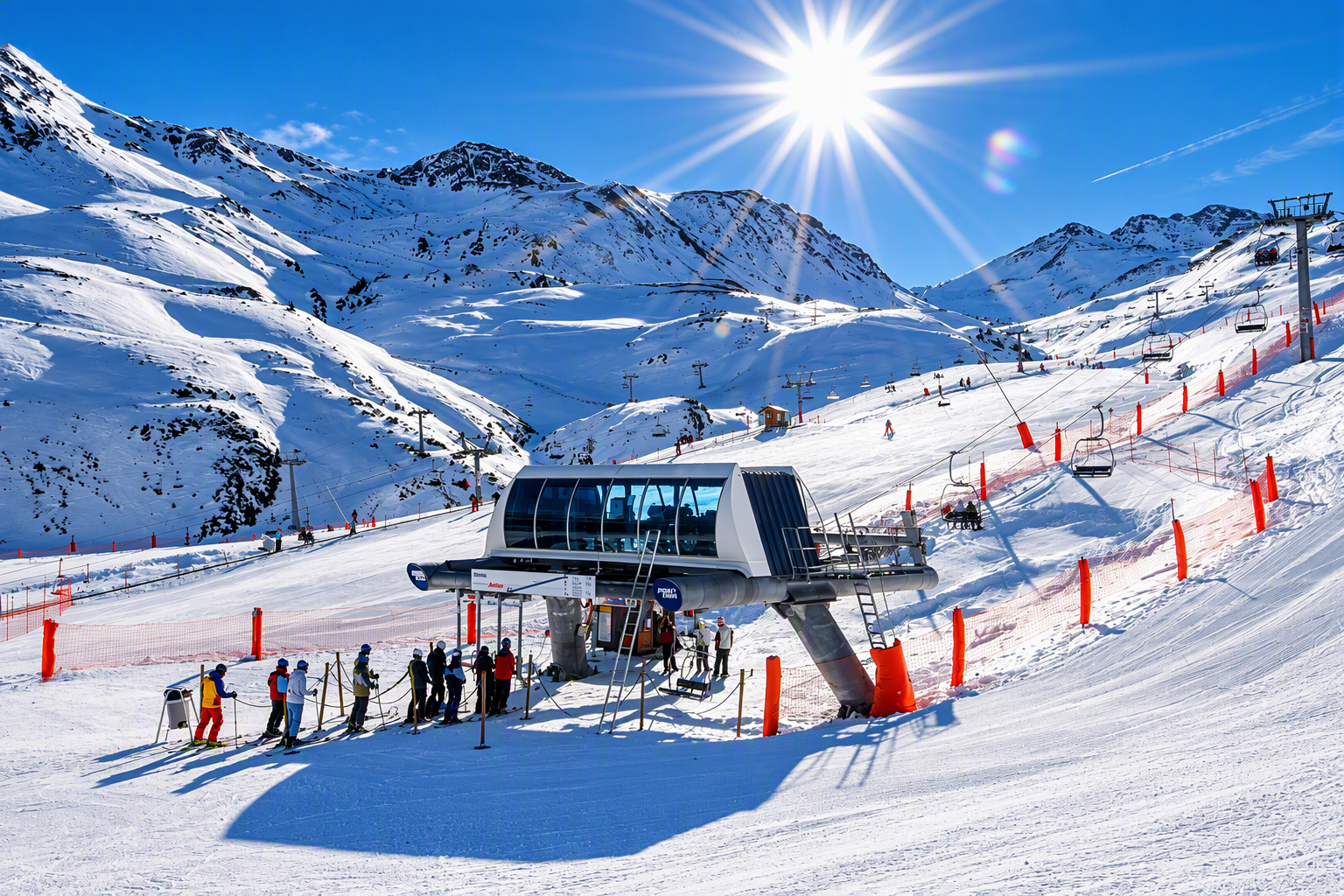
Today, La Molina offers 71 kilometres of skiable terrain, 66 pistes and 16 lifts, with a maximum elevation of 2,537 metres.
And the mountains do not disappear when winter ends. During the summer, La Molina becomes a destination for hiking, cycling, adventure and nature.
Where Is La Molina?
In the Catalan Pyrenees, within La Cerdanya
La Molina belongs to the municipality of Alp, in the province of Girona, and is located in the eastern sector of the Pyrenees.
Its location within La Cerdanya gives it a distinctive landscape characterised by wide valleys, mountain forests, meadows and Pyrenean peaks.
The resort extends approximately between 1,667 and 2,537 metres above sea level, creating a wide variety of mountain environments and landscapes.
Its relative proximity to Barcelona is also one of its great attractions. In just a few hours, visitors can leave the urban environment of the Catalan capital behind and find themselves surrounded by high-mountain scenery.
How Long Does It Take to Travel from Barcelona to La Molina?
A mountain getaway within easy reach of Barcelona
La Molina is approximately 150 kilometres from Barcelona, depending on the exact starting point and route.
Under normal conditions, the journey by road usually takes around 2 hours, although travel times can increase on busy winter weekends, during snowfall or during periods of particularly high visitor numbers.
The usual route heads towards La Cerdanya, passing through the Cadí Tunnel before continuing towards Alp and La Molina.
For travellers with children, luggage or ski equipment, a private car, chauffeur-driven vehicle, minibus or coach can be particularly convenient.
A Winter Tradition for People from Barcelona
Snow getaways from Barcelona to the Catalan Pyrenees
For many people from Barcelona, trips to the snow are part of a genuine winter tradition.
The proximity of the Pyrenees and Pre-Pyrenees means that during December, January and February, families, couples, groups of friends and winter-sports enthusiasts regularly travel from Barcelona to the different ski resorts across Catalonia.
This tradition is not limited to a single resort.
From the Val d’Aran, in the western part of the Catalan Pyrenees, to La Cerdanya, Ripollès, Berguedà and the different areas of the Pre-Pyrenees, Catalonia offers numerous opportunities to enjoy the snow.
Every winter, people leave Barcelona for a day, a weekend or several days in the mountains.
La Molina, a Historic Resort within This Tradition
La Molina holds a particularly important place within this culture of snow getaways.
Its relative proximity to Barcelona, its long history connected to skiing and its importance in the development of winter sports in Catalonia have made it one of the great historic references of Catalan skiing.
The possibility of reaching La Cerdanya within a few hours makes La Molina particularly attractive both for a day trip and for longer stays in the mountains.
The Ski Week
A way to experience the Pyrenees over several days
Within this winter tradition, there is also the option of organising a Ski Week.
The idea is simple: spend several days enjoying the snow, combining skiing or snowboarding with gastronomy, nature, relaxation and other mountain activities.
For some people, it may be a weekend getaway; for others, a single day of skiing; and for many families and groups, a full week in the Pyrenees.
A Ski Week also allows visitors to explore La Cerdanya at a more relaxed pace and combine sport with mountain restaurants, local villages, hiking, wellness and time to unwind.
The tradition of travelling from Barcelona to the snow is therefore about more than skiing for a few hours.
It is also about escaping the city, breathing fresh mountain air and enjoying the Pyrenean landscape for several days.
La Molina Railway Station
La Molina also has a Ferrocarrils de la Generalitat de Catalunya (FGC) railway station, located in the La Molina area.
The railway has great historical importance in the development of tourism in this Pyrenean destination. The railway arrived in 1922, helping to facilitate access for hikers and early winter-sports enthusiasts travelling from Barcelona and other parts of Catalonia.
It is important to distinguish between La Molina railway station and the ski resort itself. The railway station is not located directly beside the ski lifts and pistes, so travellers arriving by train need to arrange onward transport to the skiing area.
For those travelling with luggage and sports equipment and looking for a direct transfer, a private vehicle, minibus or coach remains a particularly practical option.
The History of La Molina
More than a century of passion for the mountains
The history of La Molina is closely connected with the development of skiing in Catalonia.
The first skiers arrived in the area in 1908, when skiing was still a relatively minor activity and largely unknown in Spain.
Those early enthusiasts had no mechanical lifts.
To reach the higher areas, they had to climb on foot with their skis, carrying all their equipment and making a considerable effort before they could even begin their descent.
During the first decades of the 20th century, skiing gradually became more popular.
The arrival of the railway in 1922 historically contributed to La Molina’s tourism development and made the area more accessible to hikers and winter-sports enthusiasts.
In 1925, the Xalet of the Centre Excursionista de Catalunya was built, becoming one of the early mountain lodges associated with outdoor activities in La Molina.
Little by little, the area evolved from a destination primarily visited by mountaineers into a genuine winter-sports resort.
Was La Molina Spain’s First Ski Resort?
A claim with an important history behind it
The answer requires a little context.
La Molina is considered one of Spain’s oldest ski resorts and the first resort in the Iberian Peninsula to have a mechanical uphill transport system for skiers.
The decisive moment came on 28 February 1943.
That day, the first ski tow in Spain was inaugurated at Font Canaleta, allowing skiers to ascend mechanically for the first time.
Rather than simply describing La Molina as «the first ski resort», it is more accurate to say that it was a pioneer in the development of the modern ski resort in Spain.
Spain’s First Chairlift
Another historic milestone at La Molina
In December 1946, La Molina inaugurated Spain’s first chairlift, known as the Turó de la Perdiu Chairlift.
The lift made it possible to overcome vertical elevation much more comfortably than previous systems and provided easier access to different areas of the resort.
It represented another decisive step in the development of skiing in Spain.
During the following decades, La Molina continued to add new facilities and expand its skiable terrain.
From the First Skiers to a Modern Resort
The evolution of a symbol of Catalan skiing
The growing popularity of the automobile, improvements to the road network and increasing interest in winter sports helped La Molina develop rapidly during the second half of the 20th century.
The resort progressively added new chairlifts, ski tows and gondolas.
In 1985, Ferrocarrils de la Generalitat de Catalunya took over the management of La Molina, beginning a new phase of modernisation.
The resort continued developing its infrastructure and diversifying its activities.
Today, La Molina can no longer be understood simply as a ski resort.
It is a mountain destination for the whole year.
The Slopes at La Molina
71 kilometres of skiable terrain and 66 pistes
La Molina currently offers 71 kilometres of skiable terrain, distributed across 66 pistes of different difficulty levels.
The current breakdown is:
20 green pistes for beginners.
18 blue pistes for intermediate skiers.
22 red pistes for more advanced skiers.
6 black pistes for expert skiers.
The resort also has 16 lifts.
The maximum elevation reaches 2,537 metres, while the lowest point is approximately 1,667 metres.
What Are the Slopes Like at La Molina?
From beginners to experts
One of La Molina’s advantages is the variety of its pistes.
The green areas allow complete beginners to learn progressively.
The blue pistes provide longer and more varied runs for those who have mastered the basics.
The red pistes offer a significant increase in difficulty.
The black pistes are designed for experienced skiers.
The resort also features a snowpark, superpipe and FIS competition stadiums, as well as a sledging area, snowshoe routes and various facilities for winter activities.
There is also an Adaptive Sports Centre, making it possible for people with different disabilities to enjoy mountain and snow activities.
Snow at La Molina
Altitude, orientation and snowmaking
La Molina reaches a maximum elevation of 2,537 metres, an important factor in its winter snow conditions.
The resort also has artificial snowmaking systems.
It currently has approximately 42 kilometres of pistes covered by snowmaking and 595 snow cannons.
Artificial snow does not replace natural snowfall, but it can help improve the consistency of skiing conditions when temperatures are suitable.
Alp 2500: La Molina and Masella
Two resorts, one major ski domain
La Molina is connected with Masella as part of the Alp 2500 ski domain.
This connection considerably expands the possibilities for skiers and makes the Cerdanya area one of the major winter-sports destinations in the Catalan Pyrenees.
Together, the Alp 2500 domain offers approximately 145 kilometres of skiable terrain when both resorts are connected and operating.
This is one of the reasons why many skiers choose the area for several days rather than limiting themselves to a single day.
The Climate of La Molina
A true mountain climate
La Molina has a climate strongly influenced by altitude and the Pyrenean landscape.
The AEMET weather station at La Molina is located at 1,699 metres above sea level, within the municipality of Alp.
Winters are cold, and temperatures can fall below freezing overnight, particularly at higher elevations.
Snow and frost are an integral part of the winter landscape.
Summer, by contrast, offers much more pleasant temperatures than lower-lying areas, particularly at night.
This makes La Molina an attractive destination during the warmer months as well.
Altitude and the Mountain Experience
Between 1,667 and 2,537 metres
The difference in elevation across the resort means that the landscape changes considerably depending on where you are.
At lower elevations, visitors find forested areas and more sheltered spaces.
As you climb higher, the landscape becomes more open and alpine in character.
From the upper areas, visitors can enjoy views towards some of the major peaks and valleys of the eastern Pyrenees.
Altitude also means that solar radiation can be strong even on cold winter days.
For this reason, during a day on the slopes it is essential to protect yourself from both cold and sun exposure.
La Molina in Summer
When the snow disappears, another mountain begins
La Molina is a year-round destination.
During summer, the slopes become trails and circuits for enjoying the mountains on foot or by bicycle.
Activities include:
Hiking.
Trekking.
Mountain biking.
E-bike.
Bike Park.
Downhill.
Enduro.
Panoramic gondola rides.
Family activities.
Nature trails.
Accessible activities.
La Molina Bike Park features 13 downhill and enduro circuits, making it one of the resort’s major attractions during the warmer months.
Nature and Wildlife
The Pyrenees as a natural setting
La Molina is surrounded by forests and mountain ecosystems that provide a rich variety of flora and fauna.
Coniferous forests, alpine meadows and high-mountain areas create different habitats according to altitude.
During hikes, visitors may encounter different bird species and small mammals typical of the Pyrenees.
Wildlife observation requires patience and respect for the natural environment.
La Molina and Major Competitions
An international sporting venue
La Molina’s sporting tradition goes far beyond recreational skiing.
The resort has hosted numerous high-level competitions and important international events.
One of its major events was the 2011 FIS Snowboard World Championships, which once again placed La Molina on the international map of snow sports.
Interesting Facts About La Molina
A resort full of milestones
Spain’s first ski tow was at La Molina.
It was inaugurated on 28 February 1943 at Font Canaleta.
Spain’s first chairlift was also here.
The Turó de la Perdiu lift began operating in December 1946.
The first skiers arrived in 1908.
The railway arrived in 1922.
Its arrival contributed to the development of tourism at La Molina and historically facilitated access from Barcelona and other Catalan towns.
La Molina is part of a much broader winter tradition.
Every winter, people from Barcelona travel to the different ski resorts across Catalonia, from the Val d’Aran to the Pre-Pyrenees.
December, January and February are traditionally associated with these winter getaways, always depending on weather and snow conditions.
The Ski Week provides an opportunity to turn a snow getaway into a multi-day experience combining sport, nature, gastronomy and relaxation.
La Molina was also a filming location.
In 1960, the resort was used for the filming of Amor bajo cero, a comedy connected with the world of snow and skiing.
La Molina Through the Seasons
Four different mountain landscapes
Winter
Snow covers the forests and pistes, bringing La Molina back to its best-known appearance. It is the perfect season for skiing, snowboarding, snowshoeing and family activities.
For many people from Barcelona and across Catalonia, December, January and February are traditionally associated with getaways to the different ski resorts in the region.
Spring
Snow gradually retreats from the lower elevations and the first green colours of the season appear. It is a particularly attractive transitional period for exploring the mountains.
Summer
La Molina becomes a major destination for nature and outdoor sports. Hiking, cycling, the Bike Park, gondola rides and family activities take the place of snow sports.
Autumn
The forests take on golden, ochre and reddish tones. It is one of the most photogenic times of year to explore the trails and landscapes of La Cerdanya.
Mountain Gastronomy
The flavours of La Cerdanya
A trip to La Molina can combine sport and nature with the traditional cuisine of La Cerdanya.
One of the region’s best-known dishes is trinxat de Cerdanya, traditionally prepared with potatoes, cabbage and pork belly.
The region is also known for meats, cured products, cheeses and other foods associated with Pyrenean mountain cuisine.
After a day in the snow, enjoying a traditional meal from La Cerdanya is part of the experience.
A Getaway from Barcelona
From the city to the Pyrenees in just a few hours
One of La Molina’s great advantages is its proximity to Barcelona.
In approximately two hours by road, visitors can travel from the urban environment of Barcelona to a mountain landscape located more than 1,600 metres above sea level.
This proximity explains why La Molina forms part of the winter snow-getaway tradition of many people from Barcelona, within a much broader culture of travelling each winter to the different ski resorts across Catalonia.
From the Val d’Aran to the Pre-Pyrenees, through La Cerdanya, Ripollès and other areas of the Catalan Pyrenees, there are numerous options for enjoying the snow.
La Molina stands out particularly for its history, accessibility and long-standing skiing tradition.
During the snow season, especially between December and February, day trips, ski weekends and longer stays are common.
A Ski Week offers a more complete experience, combining several days of sport with relaxation, nature and gastronomy.
Discover La Molina with Magic Dreams Barcelona
A private experience in the Catalan Pyrenees
At Magic Dreams Barcelona, we design private and personalised experiences to discover La Molina and La Cerdanya in a different way.
The experience can be tailored to those who want to enjoy the snow, practise winter sports, discover nature or simply spend a few special days away from Barcelona.
Our experiences can include:
Private transportation from Barcelona.
Chauffeur-driven cars.
Private minibuses.
Coaches for groups.
Ski getaways.
Ski Weeks.
Snowboarding.
Snowshoeing.
Hiking.
Private excursions.
La Cerdanya gastronomy.
Romantic experiences.
Wellness and spa.
Family activities.
Nature and photography.
Tailor-made experiences for companies and groups.
The advantage of a private experience is the ability to adapt the pace of the journey to each traveller.
It is not simply about getting to La Molina.
It is about experiencing the mountains.
La Molina: Much More Than a Ski Resort
La Molina is history.
It is where the first enthusiasts began skiing in Catalonia at the beginning of the 20th century.
It is where Spain’s first ski tow was installed in 1943.
It is also where the country’s first chairlift began operating in 1946.
And it is a resort that has successfully evolved into a mountain destination active throughout the year.
Today, its 71 kilometres of pistes, 66 runs, 16 lifts and maximum elevation of 2,537 metres make La Molina one of the major destinations in the Catalan Pyrenees.
But its story must be understood within a much broader tradition.
Every winter, Barcelona looks towards the mountains. From the Val d’Aran to the Pre-Pyrenees, thousands of people travel to Catalonia’s ski resorts to enjoy snow, skiing and a few days in the mountains.
La Molina, thanks to its history and proximity, occupies a special place within this winter landscape.
The possibility of leaving Barcelona and finding yourself, just a few hours later, surrounded by snow, forests, silence and impressive mountains is one of the great experiences offered by the Catalan Pyrenees.
La Molina is not simply a place to ski. It is a place where the mountains become an experience.
Discover La Molina, discover La Cerdanya and let yourself be carried away by the magic of the Catalan Pyrenees.
Magic Dreams Barcelona
An experience for all the senses
At Magic Dreams Barcelona, we believe that travelling is not simply about visiting a place.
It is about discovering it in a way that remains in your memory.
That is why we can create private experiences combining transportation, nature, gastronomy, sport, culture and wellness, tailored to each client.
From a day in the snow to a Ski Week, a romantic getaway, a family experience or a private excursion for groups, La Molina provides an exceptional setting for discovering another side of Catalonia.
A Pyrenean paradise that awakens all the senses.
La Molina – Pere López Brosa, CC BY-SA 4.0 , via Wikimedia Commons.
Estación de Esquí de La Molina. Alp Baja Cerdaña -LBM1948, CC BY-SA 4.0 , via Wikimedia Commons.
In our “Charming Places” section, you will find a carefully curated selection of the most remarkable towns, valleys, and corners throughout Catalonia. From the magical landscapes of the Garrotxa volcanic region, to the impressive Montserrat mountains, and the serene Pyrenean valleys, each place offers unique …
The Catalan Pyrenees is the mountainous region located in northern Catalonia, renowned for its spectacular landscapes, charming villages, and a wide range of outdoor activities. In this section, you will find all the information carefully selected by us: from the most notable villages to hiking …
Between the Mountains, Snow, Forests and Culture of the Val d’Aran
In the highest part of the Val d’Aran, where the mountains begin to open out into a vast plateau of alpine meadows, we find one of the most distinctive landscapes in the Pyrenees: the Pla de Beret.
At an altitude of around 1,850–1,860 metres, this enormous high-altitude plateau is one of the most characteristic natural areas of Naut Aran and forms part of the Baqueira Beret ski resort, the great winter sports destination of the Val d’Aran.
But reducing Beret to skiing would mean seeing only a small part of its history.
Here, waters flowing towards two different sides of the Pyrenees converge: to the north, the waters associated with the Garonne head towards the Atlantic basin; to the south, the Noguera Pallaresa begins its journey towards the Mediterranean. The Pla de Beret is therefore a genuine watershed and one of those places where geography itself explains the history of the territory.
During winter, the great meadows disappear beneath the snow, transforming the landscape into one of the main skiing areas in the Pyrenees.
During summer, by contrast, the great mountain meadow reappears, livestock graze peacefully, and trails lead towards Montgarri, Baciver, the Clòsos lakes and other high-mountain landscapes.
It is a place for skiing, walking, observing, photographing, eating well and, above all, breathing.
WHERE IS PLA DE BERET?
At the upper end of the Val d’Aran
The Pla de Beret belongs to the municipality of Naut Aran, in the province of Lleida, within the Val d’Aran.
It is located above Baqueira and can be reached via the road that climbs from the village of Baqueira towards Beret.
From Baqueira to Pla de Beret, it is approximately 8 kilometres by road.
From Vielha, the road journey is around 19–20 kilometres, depending on the exact starting point.
The road continues towards one of the main gateways to this high-mountain landscape and takes you practically to the Pla de Beret car park itself.
What about from Barcelona?
From Barcelona to Pla de Beret, it is approximately 264 kilometres by road, with a driving time of around 4 hours, although in winter the actual journey can take considerably longer due to traffic, snow, ice or weather conditions.
For a getaway from Barcelona, therefore, you should allow around four hours of travel each way.
The usual route heads towards Lleida and the Pyrenees, subsequently entering the Val d’Aran through the Vielha Tunnel.
Historically, the connection with Catalonia was much more difficult. The opening of the Vielha Tunnel in 1948 made year-round communication considerably more reliable, after centuries during which the mountains and snow made travel towards the south extremely difficult.
HOW FAR IS IT FROM FRANCE?
A mountain landscape that practically exists between two worlds
The Val d’Aran borders France directly, and its history is deeply connected with Occitania.
The valley’s geographical orientation explains much of its character: for centuries, its relations with French territory were particularly strong, while the Garonne River forms the great natural axis connecting Aran with the French side.
The area around Montgarri, which can be reached on foot from the Pla de Beret, lies precisely beside the border with Pallars Sobirà and very close to the French department of Ariège.
For this reason, rather than giving an exact distance from the Pla de Beret car park to France — which depends on the specific border point chosen — it is more accurate to say that we are only a few kilometres from the French border as the crow flies across the mountains.
By road, however, you have to descend towards the border crossings in the Val d’Aran.
THE PLA DE BERET
A great meadow between two watersheds
The Pla de Beret is one of the largest open mountain-meadow areas in the Val d’Aran.
It is approximately 4 kilometres long and is surrounded by peaks forming the Beret massif.
Its appearance changes completely depending on the season.
In winter, we find snow, ski lifts, skiers, snowboarders, pistes and vast white expanses.
In summer, an immense green meadow appears, dotted with paths, livestock and mountain flowers.
It is one of those landscapes where you can clearly understand the historical relationship between the inhabitants of the Val d’Aran and the mountains.
For centuries, these meadows were used as summer pastures.
Livestock farming was an essential part of the traditional economy, and even today cattle can be found grazing freely during the warmer months.
A UNIQUE WATERSHED
Where the journey towards two seas begins
One of the most interesting geographical features of the Pla de Beret is its position on the watershed between the Atlantic and Mediterranean basins.
Watercourses begin in this area and then follow completely different routes.
The Noguera Pallaresa begins its journey southwards and eventually becomes part of the Mediterranean basin.
On the other side, we find waters associated with the Garonne, which cross the Val d’Aran towards France before eventually flowing into the Atlantic Ocean.
For this reason, the Pla de Beret is not simply a beautiful landscape.
It is also a place of extraordinary geographical interest.
HISTORY OF PLA DE BERET
Shepherds, mountain paths and legends
Long before chairlifts, hotels and ski resorts existed, Beret was shepherds’ territory.
Life was governed by the cycles of the mountains: the arrival of spring, the movement of livestock towards the high summer pastures and the return before the first heavy snowfalls.
The landscape still preserves this pastoral heritage.
There is also an important tradition of legends and stories involving witches and covens. The Pla de Beret was traditionally regarded as a setting for gatherings of witches and sorcerers.
These stories form part of the popular legends of the mountains and contribute to the mysterious atmosphere found in many places throughout the Pyrenees.
MONTGARRI
An essential excursion from Beret
From the Pla de Beret, you can take one of the area’s best-known hikes: the trail towards the Sanctuary of Montgarri.
The circular route is approximately 10–12 kilometres, depending on the variant chosen, and involves a moderate amount of elevation gain.
The route follows the course of the Noguera Pallaresa, crossing alpine meadows, black pine forests and mountain areas.
At the end, you reach the historic Sanctuary of Montgarri, beside the river.
The complex has medieval origins and for centuries served a much more important purpose than we might imagine today: it was a place of passage, shelter and mountain hospitality for visitors and inhabitants on both sides of the border.
In winter, the route can be completed on snowshoes, depending on conditions and the state of the trail.
It is one of the experiences that best allows you to understand the mountains beyond skiing.
CAN YOU GET THERE ON FOOT?
Yes — and it is one of the main attractions
The Pla de Beret is easily accessible on foot from its car park.
You do not need to ski to enjoy the landscape.
From the car park area, you can walk across the plateau itself and begin various trails.
One of the best known is the route towards Montgarri.
In summer, it is a pleasant hiking route, while in winter it can become a snowshoe excursion.
In addition, the Pla de Beret restaurant is accessible on foot from the car park, meaning that even people who do not ski can enjoy the atmosphere of the resort and its mountain cuisine.
This makes Beret an especially interesting option for families, companions of skiers or anyone simply looking to enjoy the snow without putting on skis.
BAQUEIRA BERET
The great ski resort of the Pyrenees
The modern history of Baqueira officially began on 6 December 1964, when the first chairlift was inaugurated.
What was then an ambitious project went on to transform the Val d’Aran profoundly.
The resort began in the Baqueira area and gradually expanded towards Beret and later towards Bonaigua and Pallars Sobirà.
The expansion towards Beret began in 1982, with the inauguration of the Reina chairlift, followed by the subsequent development of this part of the resort.
In 2003, the skiable area was expanded towards the Bonaigua valley and Alt Àneu.
Today, Baqueira Beret constitutes a large mountain domain divided mainly into the following areas:
Baqueira
Beret
Bonaigua
Baciver
BAQUEIRA BERET IN NUMBERS
A large-scale ski resort
The resort’s technical figures are approximately:
173 kilometres of pistes
131 pistes
36 lifts
Approximate lowest elevation: 1,500 metres
Highest elevation: 2,610 metres
More than 1,100 metres of vertical drop
7 kilometres of cross-country skiing
More than 2,000 hectares of skiable area
Areas for snowparks, freeride, competition and ski touring.
The resort offers pistes for different ability levels.
According to the current published figures:
Green pistes
6
These are the easiest pistes and are primarily intended for beginners.
Blue pistes
48
Ideal for skiers who have mastered the basic movements and want to progress.
Red pistes
55
Featuring steeper slopes and greater technical difficulty.
Black pistes
18
For expert skiers and suitable conditions.
In total, there are 131 marked pistes.
THE FOUR MAIN SECTORS
Each mountain has its own character
BAQUEIRA
This is the historic heart of the resort.
Here you will find the Baqueira 1,500 area, the main services, hotels, apartments, restaurants and connections to the pistes.
It is also one of the most convenient areas for those looking to combine skiing, gastronomy, accommodation and atmosphere.
BERET
This is the area surrounding the great Pla de Beret.
It has areas particularly suitable for beginners, cross-country skiing and families, although there are also more challenging routes towards the upper areas.
It is also one of the most interesting sectors for those who want to enjoy the landscape even without skiing.
BONAIGUA
On the other side of the Bonaigua Pass, the landscape changes, becoming more open and offering long mountain runs.
The area has pistes of varying difficulty and magnificent panoramic views.
BACIVER
This is one of the highest and most distinctly alpine areas of the domain.
From its upper elevations, you can enjoy views of some of the great mountains of the Pyrenees.
WHAT KIND OF SKIING CAN YOU FIND?
From beginners to freeride
Baqueira allows you to practise different disciplines:
Alpine skiing.
Snowboarding.
Cross-country skiing.
Freeride.
Ski touring.
Snowshoeing.
Training and competition.
Snow activities for families.
The Pla de Beret also has a long tradition of Nordic skiing.
The Marxa Beret, one of the major popular cross-country skiing events, is held here, with routes of different distances.
Baqueira Beret also occupies a prominent position within Spanish skiing. If we use skiable kilometres as a reference, its approximately 173 kilometres place it immediately behind Formigal-Panticosa, which has 182 kilometres, a difference of just 9 kilometres.
For Catalonia, however, Baqueira has a particular importance. The resort is located in the Val d’Aran, in the province of Lleida, and during the winter months it concentrates a significant part of the snow-related activity in the Catalan Pyrenees. The ski season usually takes place between December and February, although dates and conditions depend each year on snow conditions and weather.
For many people from Barcelona, travelling to the Pyrenees to ski is a long-established tradition linked to the proximity of the mountains. Weekends, public holidays, New Year and winter holidays are common times to travel from Barcelona to the Pyrenean resorts. Although Baqueira is farther away than other resorts in the Catalan Pyrenees, it occupies a unique position because of the size of its ski domain, its altitude and the variety of its landscapes.
SPORTS IN SUMMER TOO
When the snow disappears, another mountain emerges
Baqueira Beret does not disappear during the warmer months.
The resort and its surroundings become a destination for:
Hiking.
Trekking.
Mountain biking.
Road cycling.
Mountain cycling.
Trail running.
Family excursions.
Nature photography.
Wildlife watching.
Ski touring and alpine activities during the appropriate seasons.
Access to the Ruda valley and towards the Saboredo lakes also allows you to gradually enter high-mountain landscapes.
CYCLING AND THE PLA DE BERET
A mountain for two wheels as well
The Pla de Beret is a mountain pass known among cycling enthusiasts.
The climb from the Val d’Aran involves a significant amount of elevation gain, and the pass has formed part of routes used by major cycling races.
The Pla de Beret has hosted stages and finishes associated with both the Vuelta a España and the Tour de France.
It is an especially interesting destination for road-cycling enthusiasts during the snow-free months.
NATURE
One of the main reasons to visit Beret
The Val d’Aran has particularly rich natural surroundings due to the combination of altitude, orientation and Atlantic climate.
The forests include beech, fir, pine, oak and birch, while alpine meadows appear above the forest zones.
The humidity and relatively high levels of precipitation favour abundant vegetation.
In spring and summer, the meadows can be filled with flowers.
In autumn, the forests completely change colour.
And in winter, the landscape becomes covered in snow.
BOTANY
Alpine flowers and Atlantic forests
For botany enthusiasts, the Val d’Aran is an extraordinarily interesting region.
Species found here include:
Fir trees.
Black pines.
Beech trees.
Birch trees.
Oak trees.
Hazel trees.
Rhododendrons.
Bilberries.
Mosses.
Ferns.
Daffodils.
Mountain arnica.
Alpine orchids.
Sundews.
Water violets.
Vegetation changes radically with altitude.
In the forests, we find a humid, Atlantic-type natural environment.
At higher elevations, alpine meadows and vegetation adapted to cold, wind and a much shorter growing season appear.
WILDLIFE
A great territory for wildlife
The Val d’Aran is also one of the Pyrenean areas of greatest interest for wildlife observation.
Species that can be found include:
Red deer.
Roe deer.
Wild boar.
Marmots.
Chamois.
Foxes.
Squirrels.
Ptarmigans.
Golden eagles.
Bearded vultures.
Vultures.
Middle spotted woodpeckers.
Pyrenean brook newts.
Brown bears.
The presence of the brown bear is part of the natural heritage of the Pyrenees, although seeing one is exceptional and you should never attempt to approach or follow a wild animal.
During summer, it is possible to hear or even spot marmots in the meadow areas.
In autumn, one of the great natural spectacles is the red deer rut.
And in winter, with a great deal of luck, you may spot snow-adapted species such as the ptarmigan.
ARCHITECTURE
From traditional Aranese architecture to contemporary mountain design
The Pla de Beret, given its character as a large high-mountain area, should not be understood as a traditional village.
Its architecture is mainly associated with mountain buildings, resort infrastructure, shelters and facilities dedicated to tourism and winter sports.
The real historic architecture should be sought in nearby villages:
Baqueira, Salardú, Tredòs, Unha, Gessa, Arties and Bagergue.
Here you will find traditional Aranese architecture based on:
Stone.
Wood.
Slate.
Steeply pitched roofs.
Wooden balconies.
Small windows.
Thick walls adapted to the climate.
It is an architectural style born out of the need to withstand long winters, snow, rain and extreme temperatures.
THE BAQUEIRA STYLE
Elegant mountain architecture
From the 1960s onwards, Baqueira developed a form of tourist architecture different from that of the medieval villages in the valley.
The aim was to create a modern ski resort while integrating it visually into the landscape.
Stone and wood play an important role, while pitched roofs and a mountain aesthetic help create Baqueira’s distinctive appearance.
In the Baqueira 1500, Ruda and Baqueira 1700 areas, we find different types of accommodation, ranging from mountain apartments and buildings to higher-end hotels.
The Pleta de Baqueira is a particularly good example of this attempt to draw inspiration from traditional Aranese buildings.
WELLNESS
Mountains, silence and water
Baqueira and the Val d’Aran allow you to combine sport and wellness.
After a day of skiing or hiking, you can find:
Spas.
Massages.
Heated pools.
Saunas.
Steam rooms.
Body treatments.
Relaxation areas.
Hotels with wellness facilities.
There is also a particularly unique experience in the area:
BANHS DE TREDÒS
The Banhs de Tredòs, located at approximately 1,755 metres above sea level, combine thermal waters with a high-mountain setting.
Access is via the Aiguamòg valley, and the area is also a gateway to some of the most spectacular landscapes in the Pyrenees.
It is an especially attractive experience for combining:
The gastronomy of the Val d’Aran is deeply connected to its climate.
It is a cuisine created for cold winters, mountain work and the need to make use of locally available products.
The most emblematic dish is:
OLLA ARANESA
A hearty stew that perfectly summarises the traditional cuisine of the valley.
Other specialities include:
Mountain meats.
Beef.
Lamb.
Pork.
Cured meats and sausages.
Trinxat.
Mushrooms.
Potatoes.
Cheeses.
Dairy products.
Traditional desserts.
Traditional gastronomy continues to play an important role in the tourist experience of the Val d’Aran.
EATING AT THE PLA DE BERET
Yes, you can eat there without skiing
One of the great advantages of the Pla de Beret is that there is a restaurant with table service.
The Pla de Beret Restaurant offers à la carte cuisine, with dishes such as salads, pasta and grilled meats.
It has an indoor dining room and a terrace overlooking the Pla.
And the most interesting point for non-skiers:
it can be reached on foot from the car park.
The resort also has other dining facilities, including the Eth Audeth self-service restaurant, in Beret.
So you can simply drive up to the Pla de Beret to enjoy lunch in the mountains.
GASTRONOMY IN BAQUEIRA
From traditional dishes to fine dining
Baqueira offers a much broader gastronomic selection.
There are restaurants and cafés on the slopes, hotel restaurants and establishments in Baqueira 1500 and the nearby villages.
One restaurant with a history of its own is Ticolet, whose story began practically at the same time as the resort.
On 6 December 1964, coinciding with the inauguration of Baqueira, this establishment also began its gastronomic history.
Its current cuisine combines tradition and innovation, using local products.
Gastronomy is, in fact, an important part of the contemporary Baqueira experience.
WHERE TO STAY
From apartments to high-mountain hotels
One of Baqueira’s major advantages is the quantity and variety of accommodation.
You can choose between:
BAQUEIRA 1500
The most practical option for those who want to be close to lifts, restaurants, shops and services.
There are hotels and numerous apartments.
BAQUEIRA 1700
A higher area closely associated with access to the slopes and mountain accommodation.
BAQUEIRA RUDA
One of the best-known areas for those looking for accommodation with convenient access to the slopes and a more refined mountain aesthetic.
SALARDÚ
An excellent option for those who prefer to stay in a historic village in the Val d’Aran and travel to the slopes afterwards.
TREDÒS
Particularly interesting for those seeking peace and quiet, traditional architecture, nature and proximity to Baqueira.
ARTIES
One of the liveliest villages in the valley, with restaurants, historic heritage and a wide range of accommodation.
VIELHA
The capital of the Val d’Aran and a practical option for those who want to combine the resort with a larger town.
WHERE SHOULD I STAY DEPENDING ON THE TYPE OF TRIP?
Each area offers a different experience
For skiing and heading straight onto the slopes:
Baqueira 1500, 1700 or Ruda.
For a romantic getaway:
Arties or a hotel with a spa in the Baqueira area.
For peace and nature:
Tredòs.
For combining heritage and skiing:
Salardú.
For gastronomy and atmosphere:
Arties and Baqueira.
For a family getaway:
Baqueira or Beret, depending on the activities and accommodation.
For a wellness experience:
Baqueira + spa + Banhs de Tredòs.
BAQUEIRA WITHOUT SKIING
A resort also for non-skiers
You do not have to be a skier to enjoy Baqueira.
You can:
Walk around the Pla de Beret.
Hike to Montgarri.
Use designated areas for walking.
Go snowshoeing.
Enjoy a restaurant on the slopes.
Have a drink on a terrace.
Photograph the landscape.
Watch wildlife.
Visit Aranese villages.
Take mountain trails.
Relax in a spa.
Visit Banhs de Tredòs.
Discover Romanesque churches.
Enjoy the local gastronomy.
This allows you to create a much more complete getaway than simply spending a day skiing.
WHAT TO SEE NEAR BAQUEIRA AND BERET
A region that deserves several days
SALARDÚ
One of the most important historic villages in Naut Aran.
Its church of Sant Andreu preserves the famous Christ of Salardú, one of the great treasures of Aranese Romanesque heritage.
TREDÒS
A small traditional village located at 1,348 metres above sea level, beside the Garonne.
It preserves traditional architecture, Romanesque churches and provides access to Aiguamòg and Banhs de Tredòs.
UNHA
A small village perched above the valley, offering magnificent views.
GESSA
Another traditional village in Naut Aran.
ARTIES
One of the best-known villages in the valley.
Here you will find traditional architecture, religious heritage, restaurants and a particularly pleasant atmosphere.
BAGERGUE
One of the highest and most picturesque villages in the valley.
BANHS DE TREDÒS
Thermal waters and access to Aiguamòg.
COLOMÈRS CIRCUS
One of the great lake landscapes of the Pyrenees, with numerous glacially formed lakes.
From the Tredòs area, you can access trails leading towards this spectacular landscape.
PLA DE BERET THROUGHOUT THE YEAR
Four completely different landscapes
SPRING
Snowmelt transforms the streams and rivers.
The meadows become green again and the first flowers begin to appear.
It is a magnificent time to observe the transformation of the mountains.
SUMMER
The Pla de Beret becomes a vast meadow.
Livestock return to the pastures.
The trails allow you to walk towards Montgarri and other natural areas.
It is also an excellent season for cycling and hiking.
AUTUMN
The forests of the Val d’Aran take on shades of yellow, gold, orange and red.
It is an especially interesting season for photography, nature and gastronomy.
WINTER
Snow completely changes the identity of the place.
The Pla de Beret becomes one of the main gateways to the Baqueira Beret domain.
Alpine skiing, snowboarding, cross-country skiing and snowshoeing coexist with restaurants, hotels and mountain activities.
Baqueira en verano desde la carretera de de Beret (Naut Aran) – By Isidre blanc – Own work, CC BY-SA 3.0, https://commons.wikimedia.org/w/index.php?curid=27931073.
Baqueira Beret – By Cantabrucu – Own work, CC0, https://commons.wikimedia.org/w/index.php?curid=85262394.
Baqueira – By Cantabrucu – Own work, CC0, https://commons.wikimedia.org/w/index.php?curid=85262390.
Baqueira Beret – By Cantabrucu – Own work, CC0, https://commons.wikimedia.org/w/index.php?curid=85262379.
Telesilla en Baqueira – By Patrice Bon – Own work, CC BY-SA 4.0, https://commons.wikimedia.org/w/index.php?curid=75088229.
Estación de Esquí de Baqueira – By Faras – Own work, CC BY-SA 4.0, https://commons.wikimedia.org/w/index.php?curid=5502059.
Las curvas en la carretera que sube de Baqueira al Pla de Beret forman una serie de herraduras y tramos abiertos – By Anthospace – Own work, CC BY 4.0, https://commons.wikimedia.org/w/index.php?curid=150801231.
Verano del Pla de Beret y de la estación de esquí de Baqueira con muchos caballos alrededor – By Jordiferrer – Own work, CC BY-SA 3.0, https://commons.wikimedia.org/w/index.php?curid=15990431.
Some places surprise you with their landscapes, others with their history, and some because of the unique circumstances that make them truly exceptional destinations. Llívia combines all three. Located in the heart of Cerdanya, at an altitude of around 1,224 metres, Llívia is a Catalan …