Ramon Servent House: Hidden Modernist Gem in Barcelona
Introduction
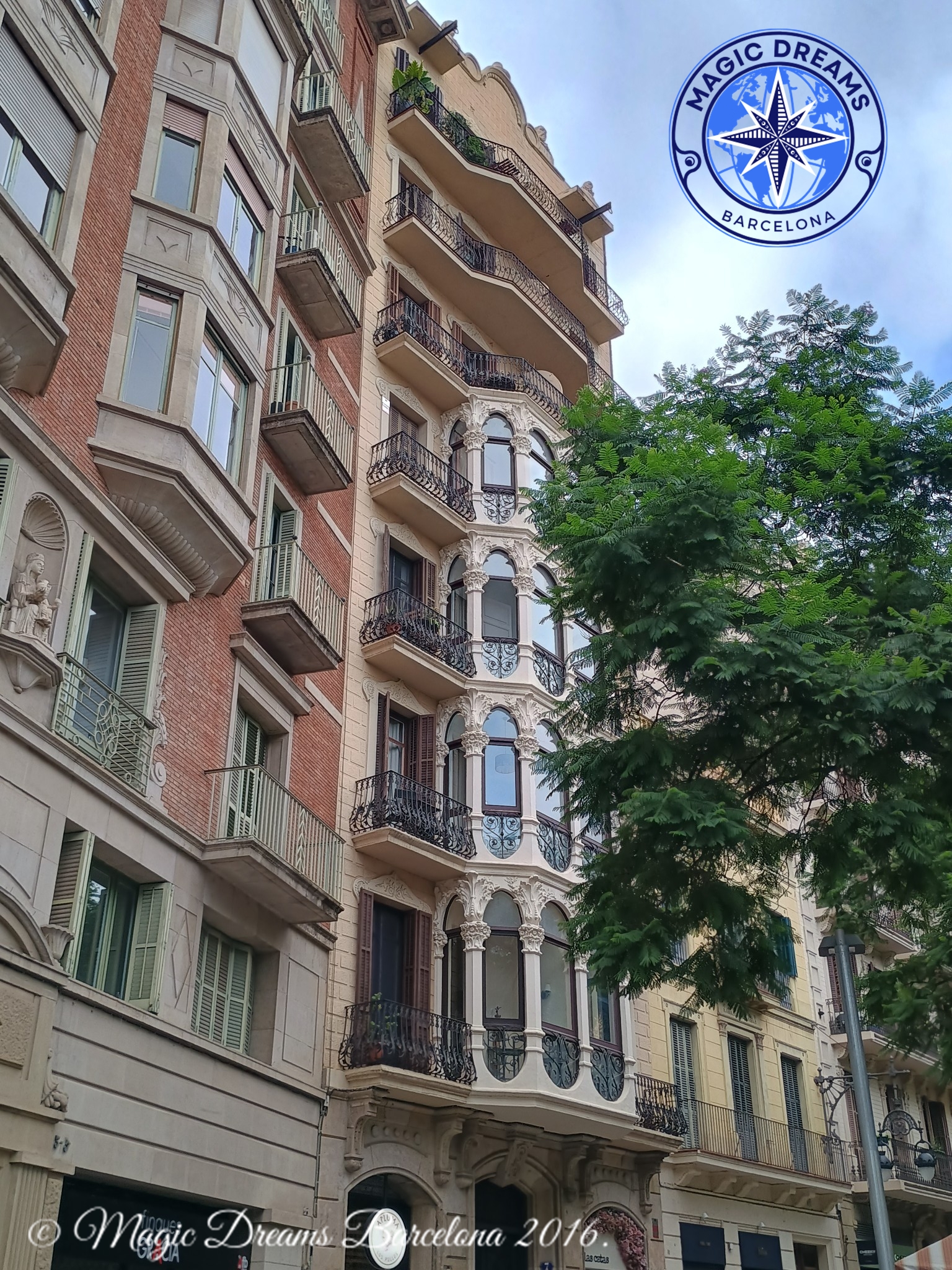
In Barcelona, beyond the major modernist icons, there are lesser-known buildings with significant architectural value. One of these is the Ramon Servent House, a unique work located in the Gràcia neighborhood that stands out for its modernist composition and a singular element: the four busts that crown its façade.
History of the Ramon Servent House
The Ramon Servent House was built between 1910 and 1911 by commission of the contractor Ramon Servent, who promoted the building as a family residence on one of the main streets of the former Gràcia municipality.
From its inception, the building was conceived as a multi-family residential property, during a period when Barcelona was experiencing urban expansion and consolidating neighborhoods like Gràcia within the city fabric.
Over time, the building underwent vertical expansions, adding additional floors that partially altered its original appearance.
Architect: Who Designed the Building
The project was designed by the architect Emili Sala i Cortés, a notable figure within Catalan modernism.
Sala i Cortés was a professor and mentor to Antoni Gaudí, placing this work within an architectural lineage linked to the development of modernism in Barcelona, though with a more restrained and conventional language.
Architectural Style
The Ramon Servent House is an example of late or conventional modernism, featuring a balanced composition and characteristic decorative elements:
- Symmetrical façade with clear vertical organization
- Central polygonal bay connecting the main floors
- Lateral balconies with wrought iron railings
- Floral ornamentation on lintels and bays
- Decorative reliefs around openings
The upper floors added later show a style closer to Noucentisme, creating an interesting stylistic layering in the ensemble.
Distinctive Element: The Four Busts
One of the most unique aspects of the building is its crowning with four sculptural busts, earning it the nickname “House of the Four Busts.”
These represent, from left to right:
- Joan Fiveller
- Christopher Columbus
- Miguel Servet
- Miguel de Cervantes
Location
Gran de Gràcia Street, 7
Gràcia Neighborhood
Barcelona
Interior and Decorative Elements
- Elongated vestibule with wooden partition
- Decoration with sgraffito and floral plasterwork
- Staircase with cast-iron railings
- Original carpentry with ornamental details
Present Day
Today, the Ramon Servent House remains a residential building and is not open to interior tourism. However, its façade is accessible and forms part of informal modernist architecture routes in Gràcia.
It is a clear example of:
- Non-massified architectural heritage
- Everyday modernism of Barcelona
- Growing interest for alternative cultural tourism
Conclusion
The Ramon Servent House demonstrates that modernism in Barcelona is not limited to the major names. This building combines history, symbolism, and architecture in a more discreet but equally valuable format, making it an interesting stop for those seeking to discover a different side of Barcelona.
Please leave your details and phone number, and we will get in touch with you as soon as possible, within the same day.
Copyright © 2016-2026 Magic Dreams Barcelona.