Parc del Laberint d’Horta: History, Gardens, Architecture and Nature.
Barcelona has places that are famous all over the world, but it also has corners that remain surprisingly unknown despite their historical and natural importance.
One of them is the Parc del Laberint d’Horta, a historic garden located at the foot of the Collserola mountain range.
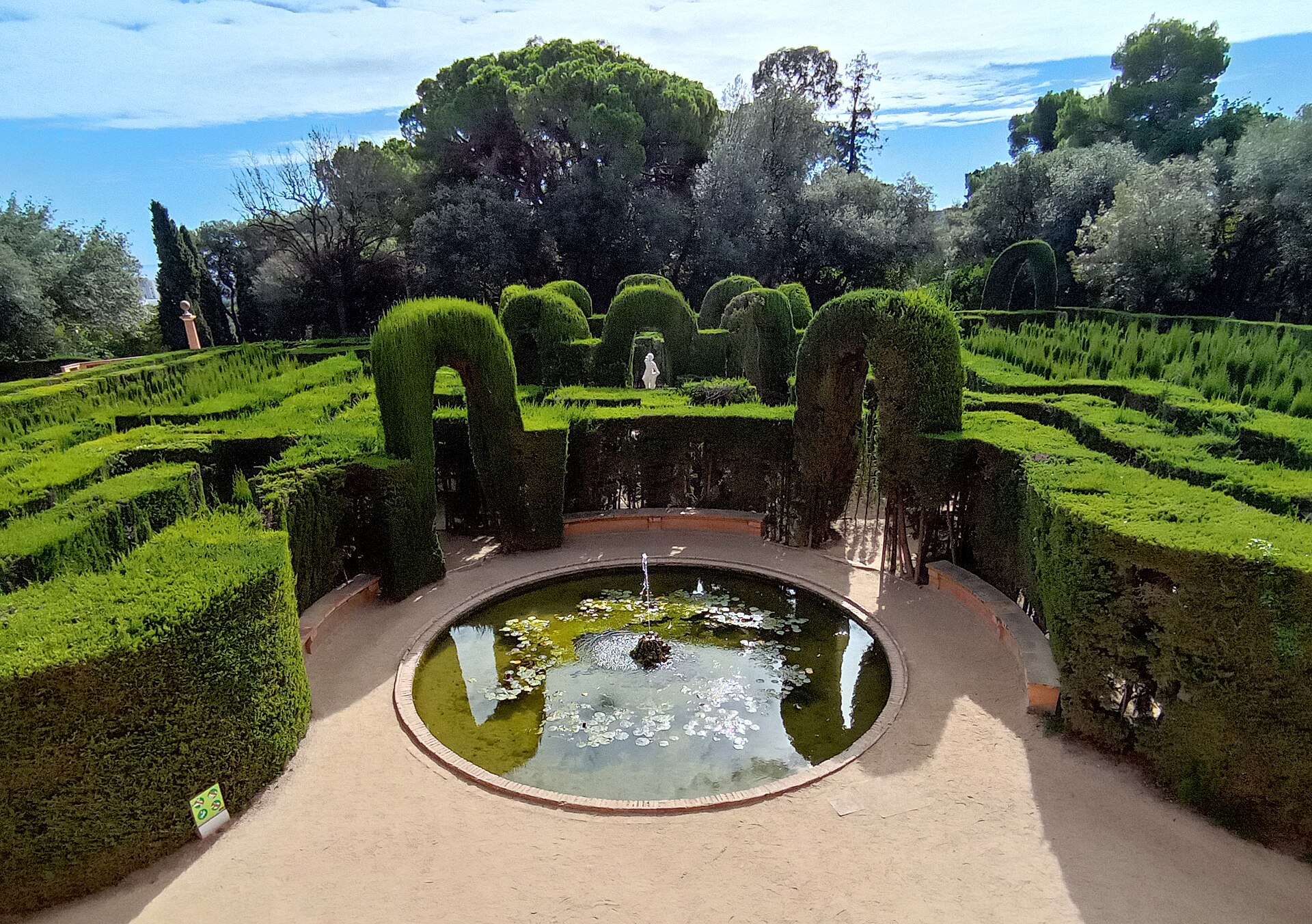
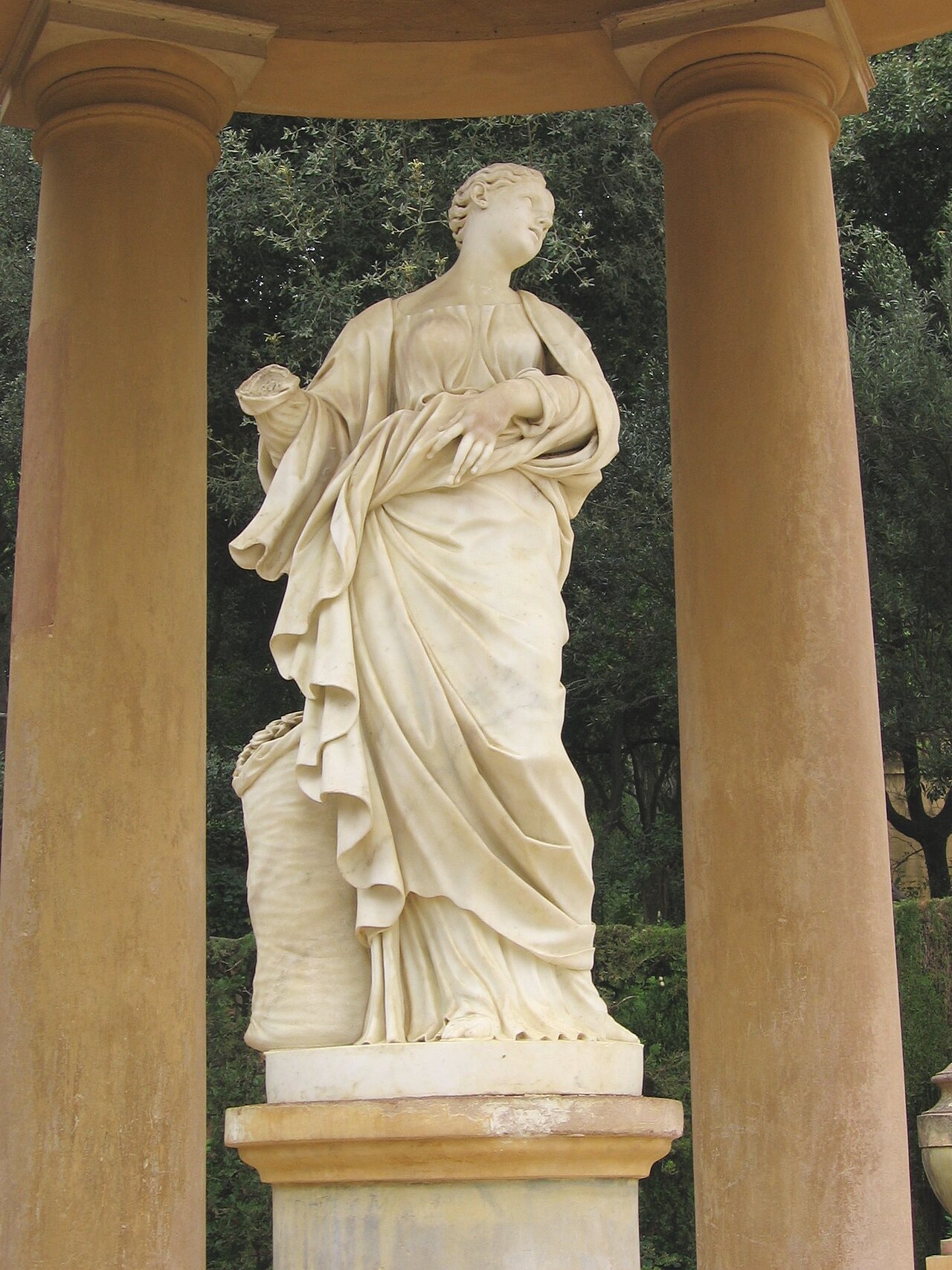
Its main attraction is, of course, its famous cypress maze. But the park is much more than that. Inside we find neoclassical and romantic gardens, sculptures inspired by Greek and Roman mythology, ponds, fountains, waterfalls, remarkable trees and a remarkable variety of plants and wildlife.
It is a place where history, architecture, botany and nature come together.
And there is something particularly interesting for nature lovers: the park and its surroundings are home to a wide variety of birds, insects and other species, including butterflies that can be observed during different times of the year.
So, if we are looking for a different side of Barcelona, away from the busiest tourist attractions, the Laberint d’Horta is definitely worth discovering.
Where is the Laberint d’Horta?
The Parc del Laberint d’Horta is located in the Horta-Guinardó district, in the northern part of Barcelona, close to the Collserola mountain range.
Address: Passeig dels Castanyers, 1-17, 08035 Barcelona.
Its location makes it particularly interesting for combining a visit to the historic garden with other attractions in Horta and the surrounding natural areas.
How to get to the Laberint d’Horta by public transport
One of the easiest ways to reach the park from central Barcelona is by public transport.
The most convenient option is usually the Barcelona Metro Line 3 (L3).
We can get off at Mundet station and continue on foot towards the park.
Several bus routes also serve the area, making it possible to reach the Laberint d’Horta from different parts of the city.
For visitors staying in central Barcelona, public transport is generally the best option because parking around the park is limited.
Is there parking near the Laberint d’Horta?
Yes, there are parking areas in the surroundings of the park and near the Velòdrom d’Horta, but the number of spaces is limited.
Therefore, we recommend not relying on finding a parking space right next to the entrance, especially during busy periods.
There are also reserved spaces for people with reduced mobility.
If possible, arriving by metro or bus is usually the most convenient option.
How much does it cost to visit the Laberint d’Horta?
Under normal circumstances, admission to the park is inexpensive.
The general admission price is €2.23, while the reduced rate is €1.42 for eligible visitors.
There are also free admission conditions on certain days and for specific groups.
However, before planning a visit, we recommend checking the official information because opening conditions, access and restoration works may change.
Opening hours
Under normal conditions, the park follows a seasonal timetable:
- April 1 to October 31: 10:00 a.m. to 8:00 p.m.
- November 1 to March 31: 10:00 a.m. to 6:00 p.m.
- December 25: 10:00 a.m. to 2:00 p.m.
Because restoration and conservation works may affect access to some areas, it is advisable to check the current situation before travelling.
The history of the Laberint d’Horta
The history of this garden dates back to the end of the 18th century.
The project began in 1791, promoted by Joan Antoni Desvalls, a member of an aristocratic family from Barcelona who was interested in science, nature, mathematics and art.
Desvalls worked together with the Italian architect and garden designer Domenico Bagutti, who helped develop the neoclassical garden.
The garden was conceived not simply as a collection of plants, but as a carefully designed landscape in which architecture, mythology, symbolism and nature were closely connected.
The park remained in private hands for many years.
It was eventually acquired by the City of Barcelona and opened to the public in 1971.
A major restoration was carried out in the 1990s, turning the site into a historic garden and museum garden open to visitors.
The architecture of the park
One of the most interesting aspects of the Laberint d’Horta is that its architecture is inseparable from its gardens.
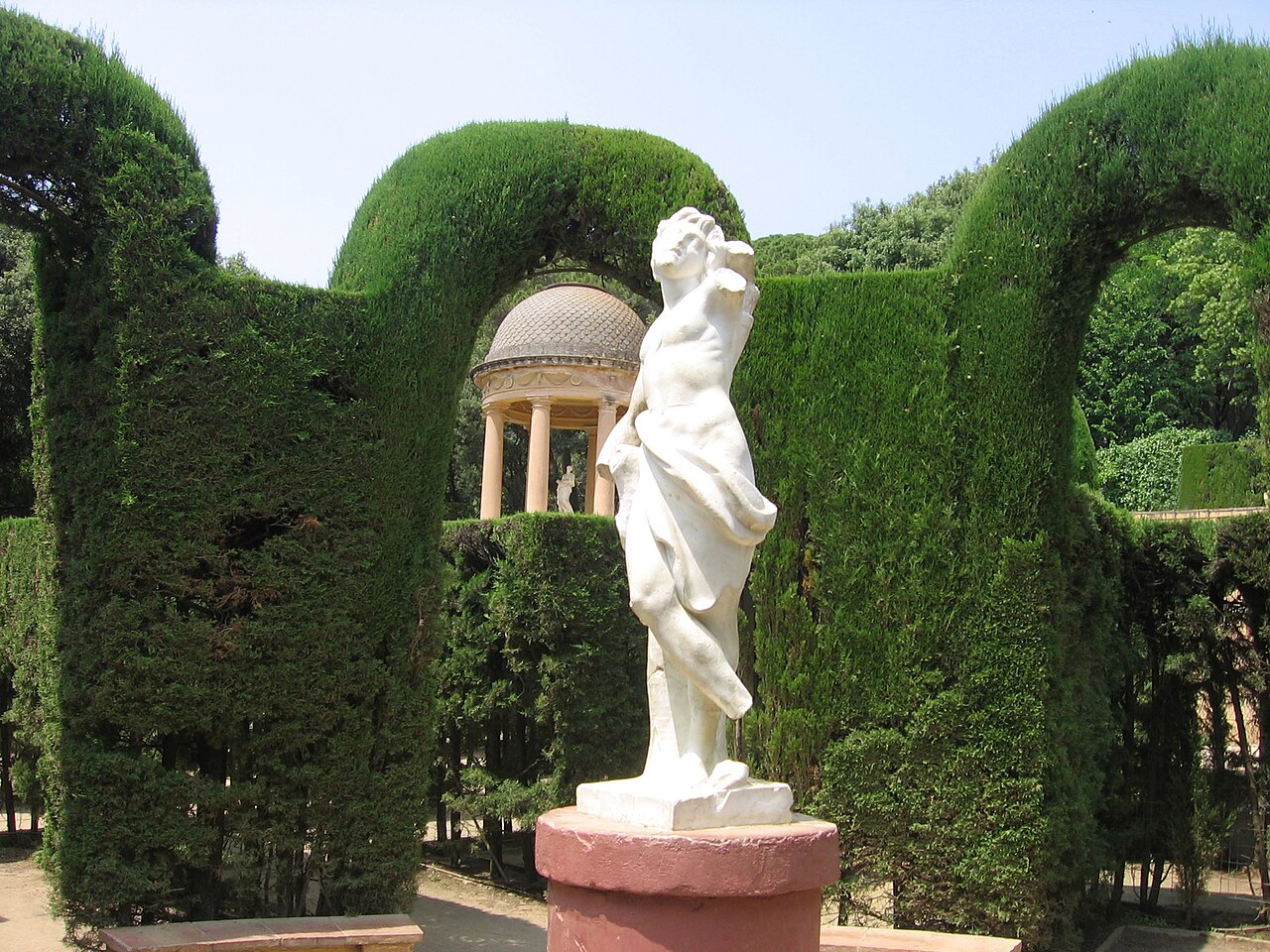
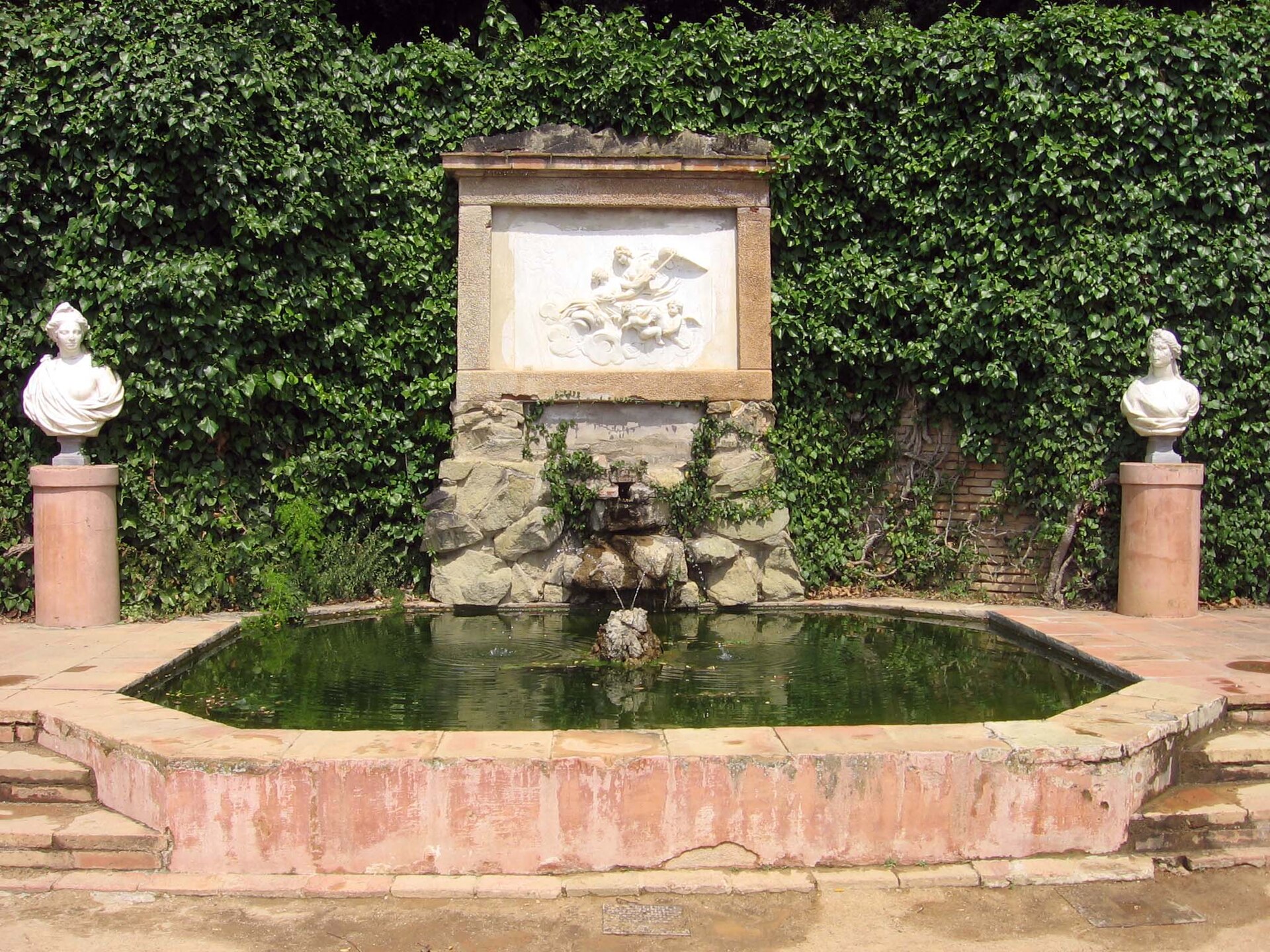
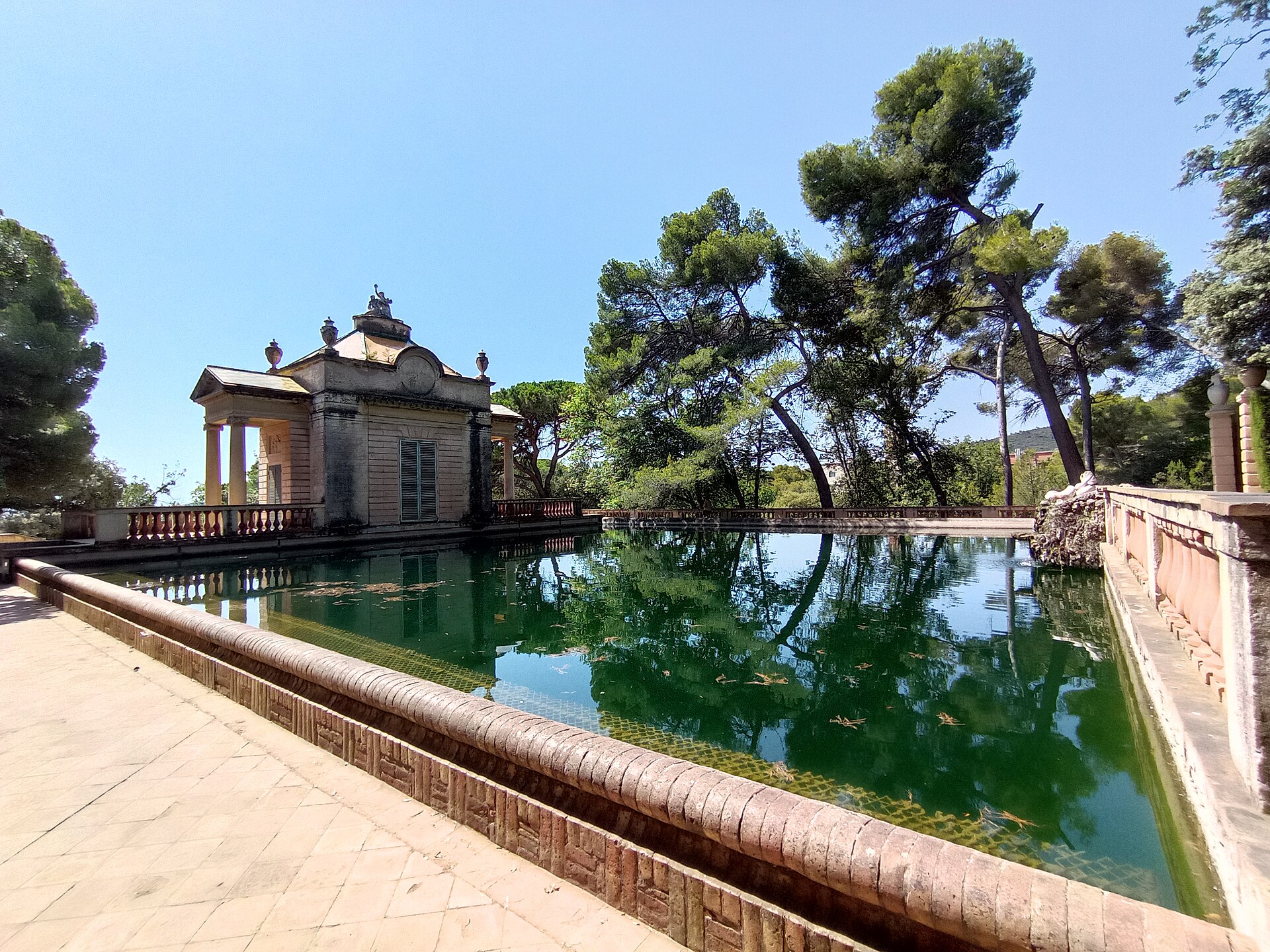
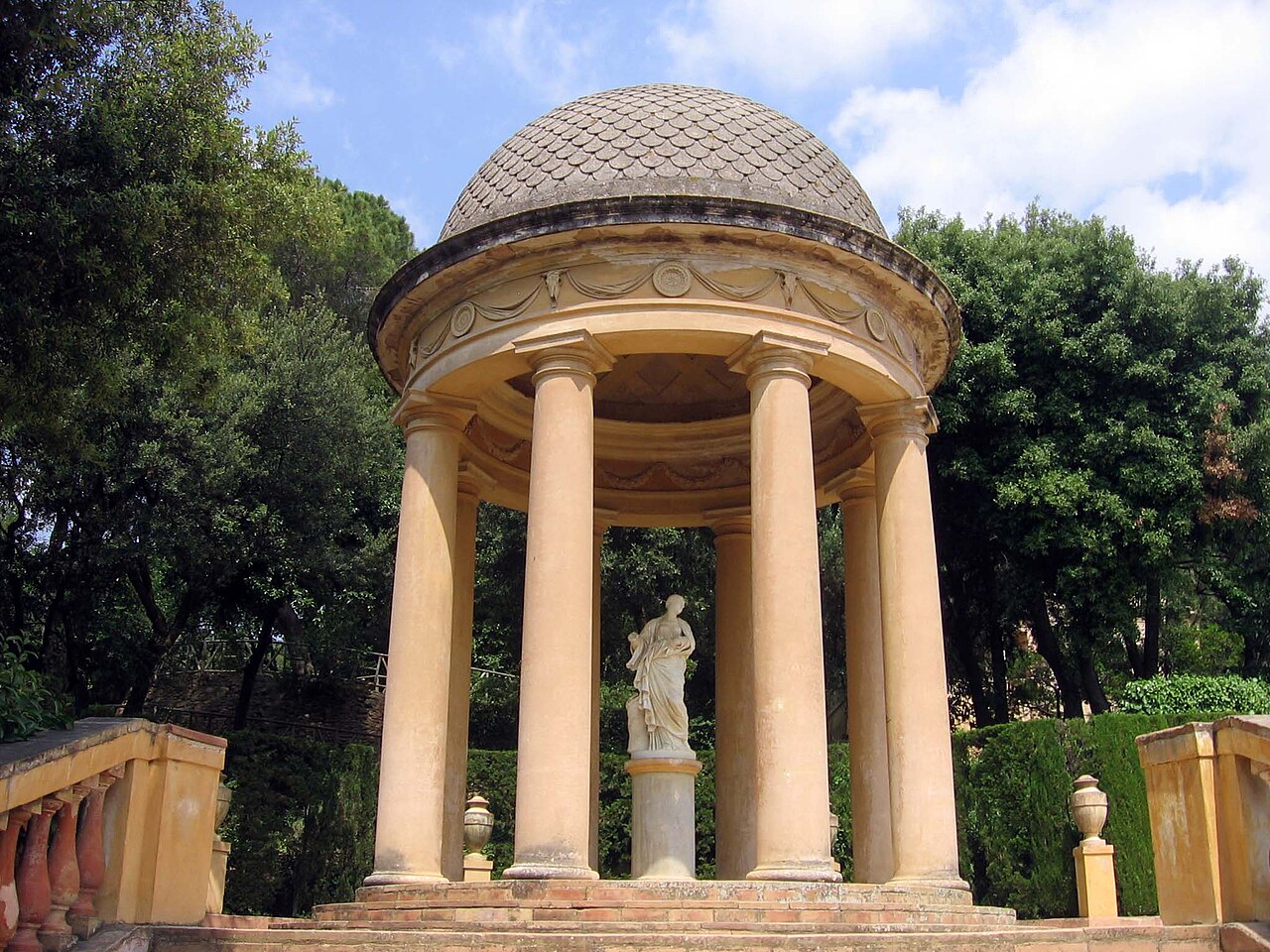
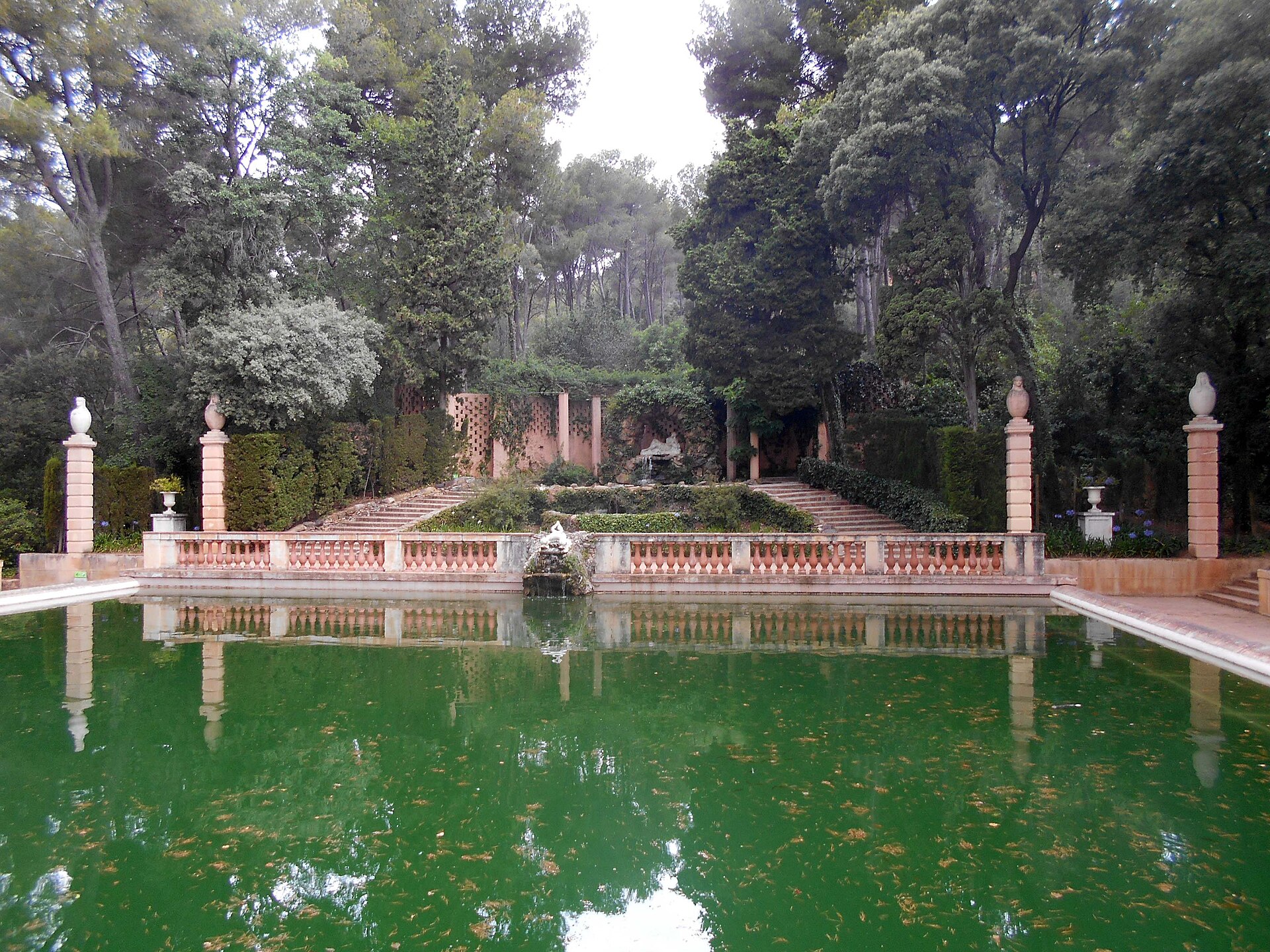
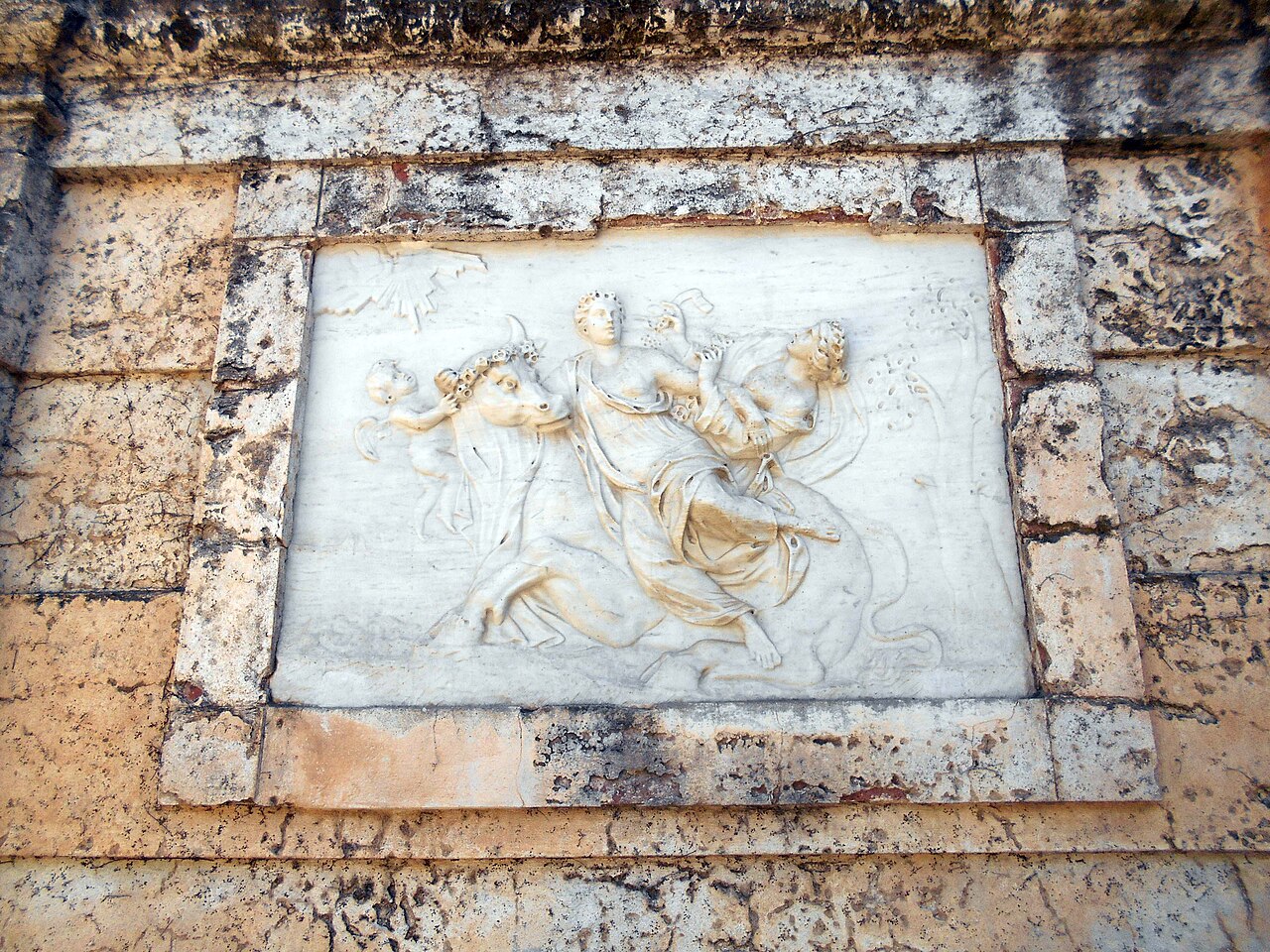
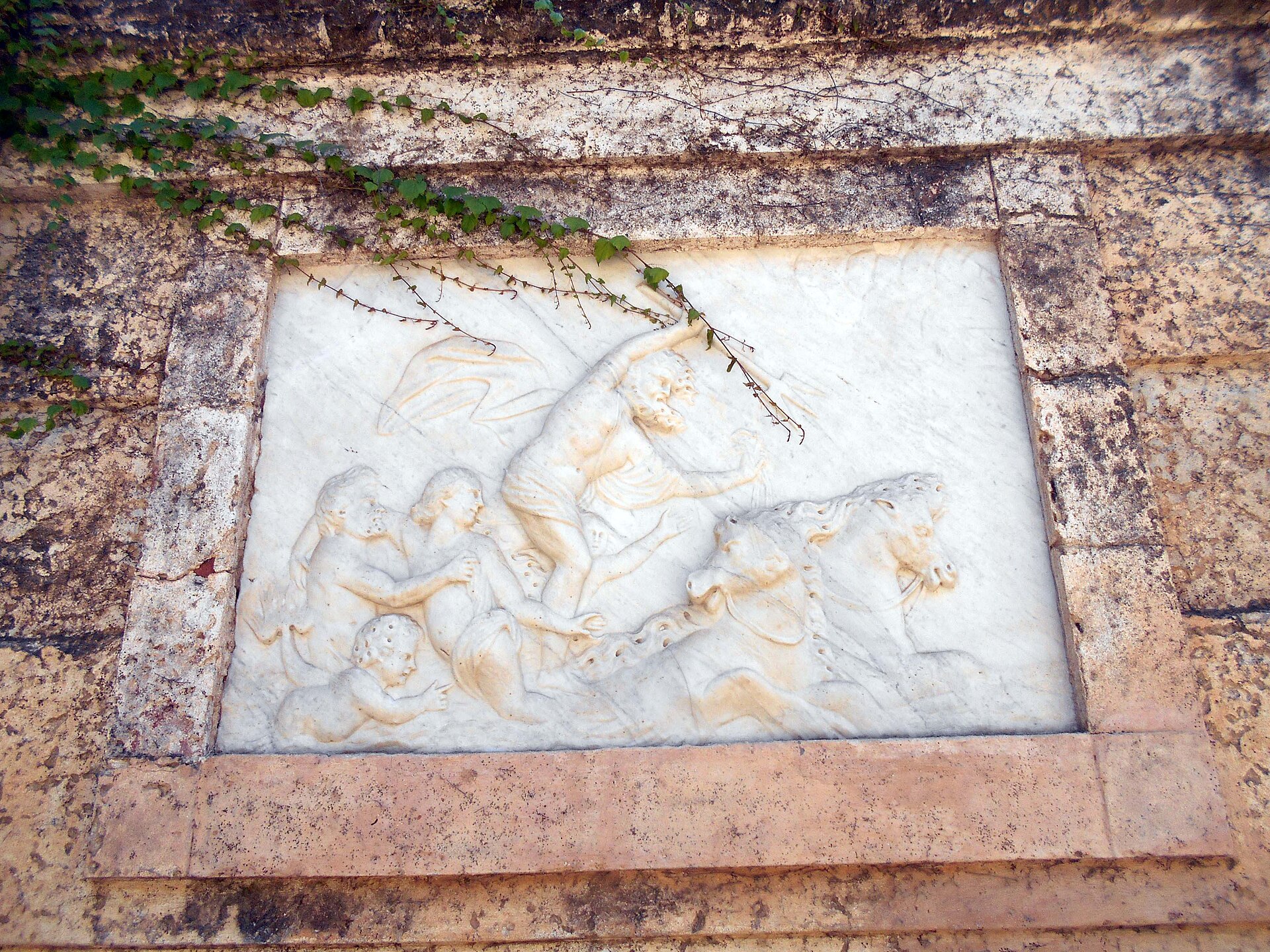
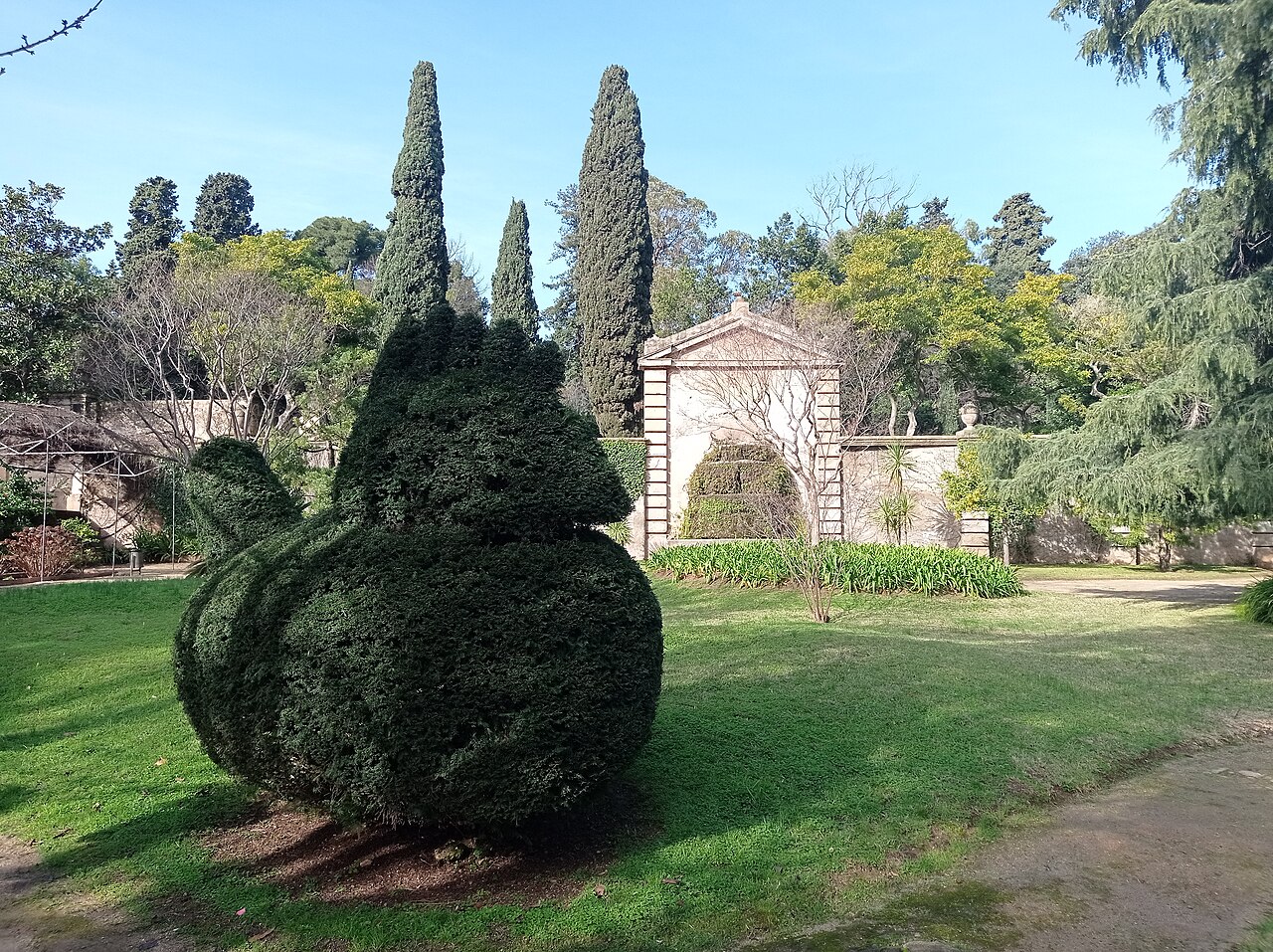
The neoclassical section is characterised by symmetry, geometric shapes, carefully trimmed vegetation, sculptures, fountains and architectural elements inspired by classical antiquity.
Among the most distinctive features are the small temples, columns, pavilions and viewpoints distributed throughout the garden.
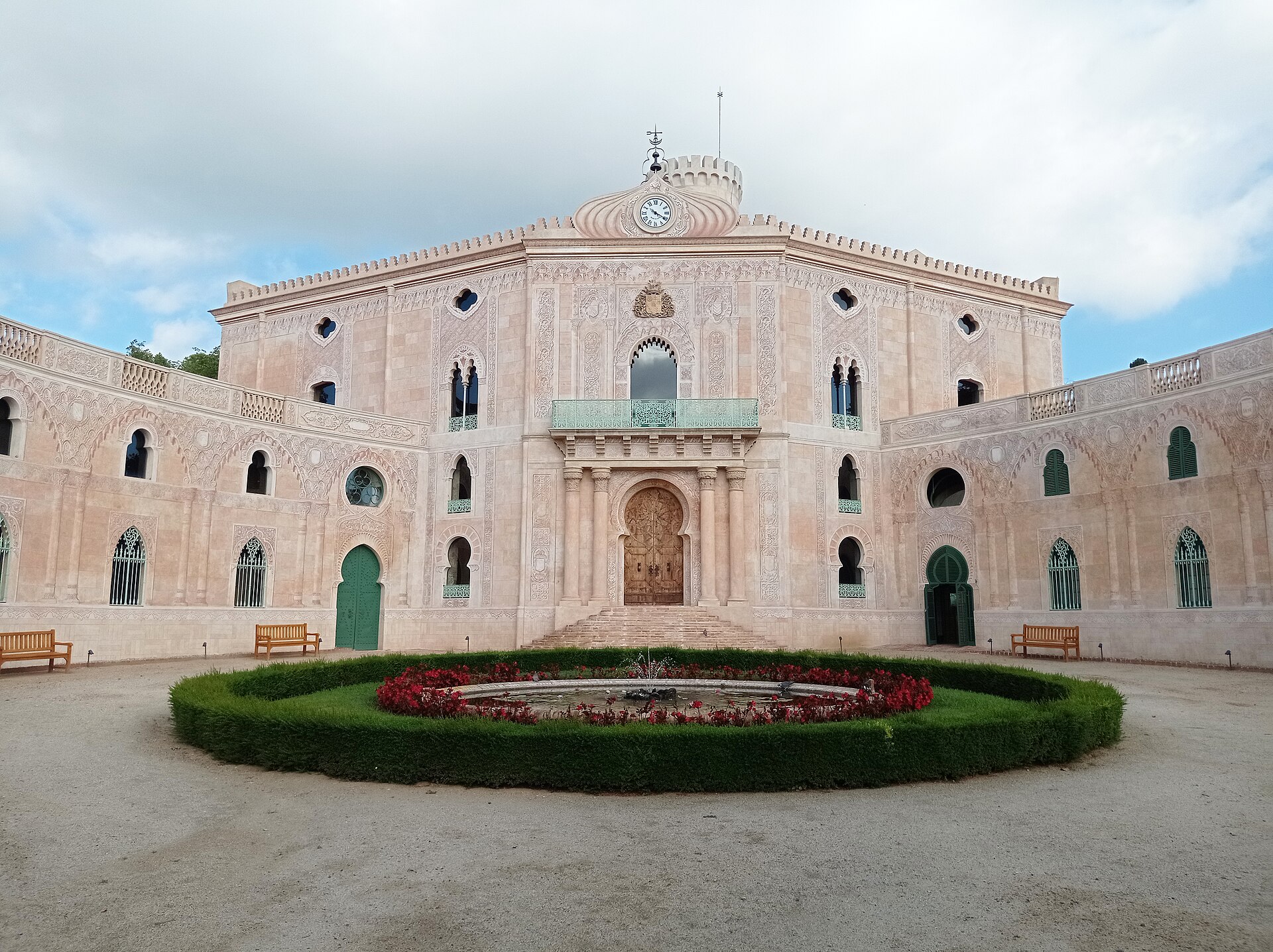
The park also contains the Desvalls Palace, associated with the family that created the garden.
The combination of buildings, sculptures, water and vegetation creates a landscape that feels almost theatrical.
The famous cypress maze
The maze is undoubtedly the most famous part of the park.
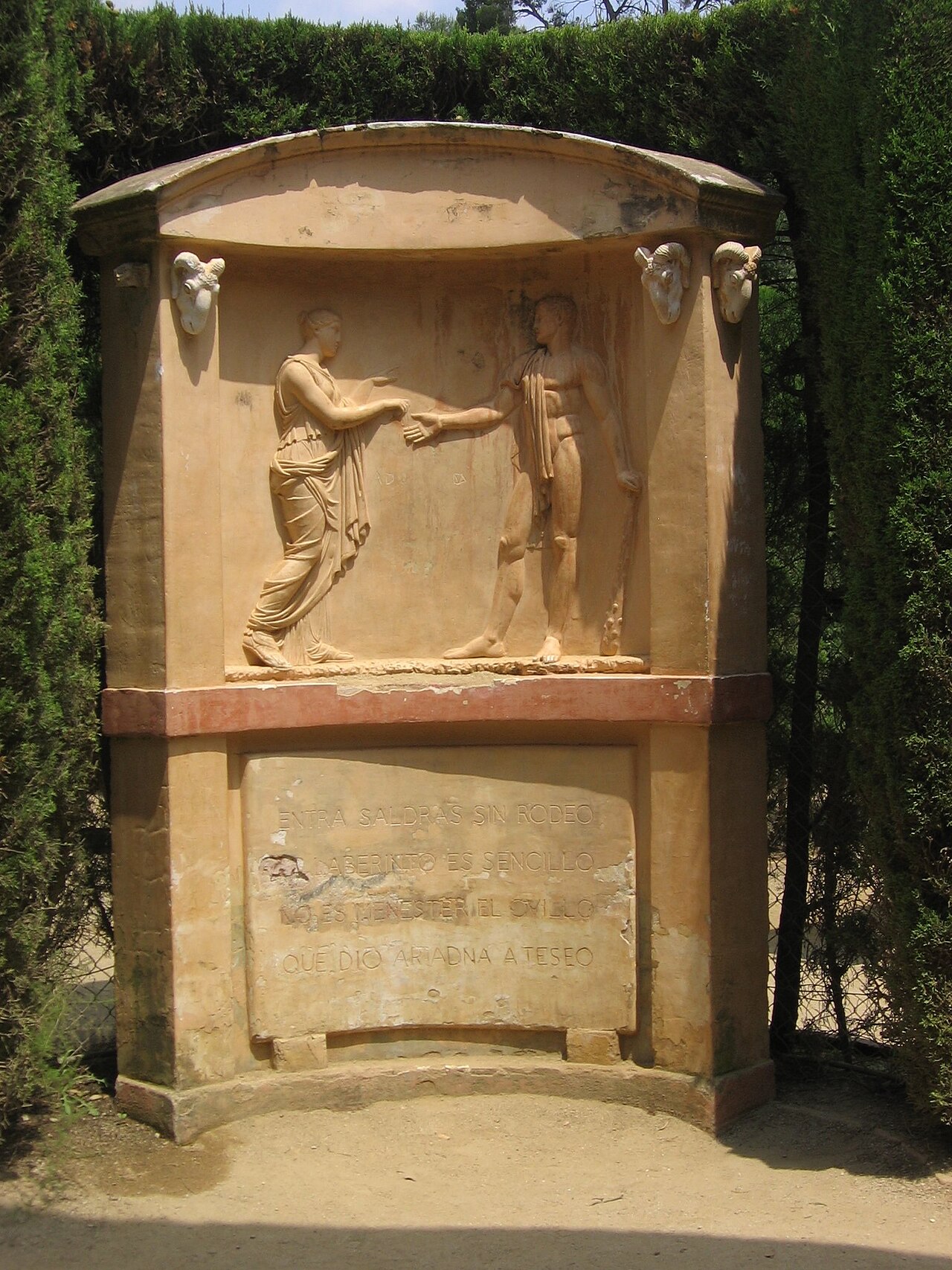
It is formed by carefully trimmed cypress trees and was designed according to the symbolic language of classical mythology.
Its inspiration is associated with the story of Theseus and Ariadne.
The visitor enters the maze and follows a network of narrow paths surrounded by walls of vegetation.
The objective is to reach the centre.
But the labyrinth was designed to be more than a simple game.
Its symbolism is connected to love, mythology and the idea of reaching the centre as a reward.
For this reason, the maze is one of the most recognisable examples of the way symbolic ideas were incorporated into European garden design.
The romantic garden
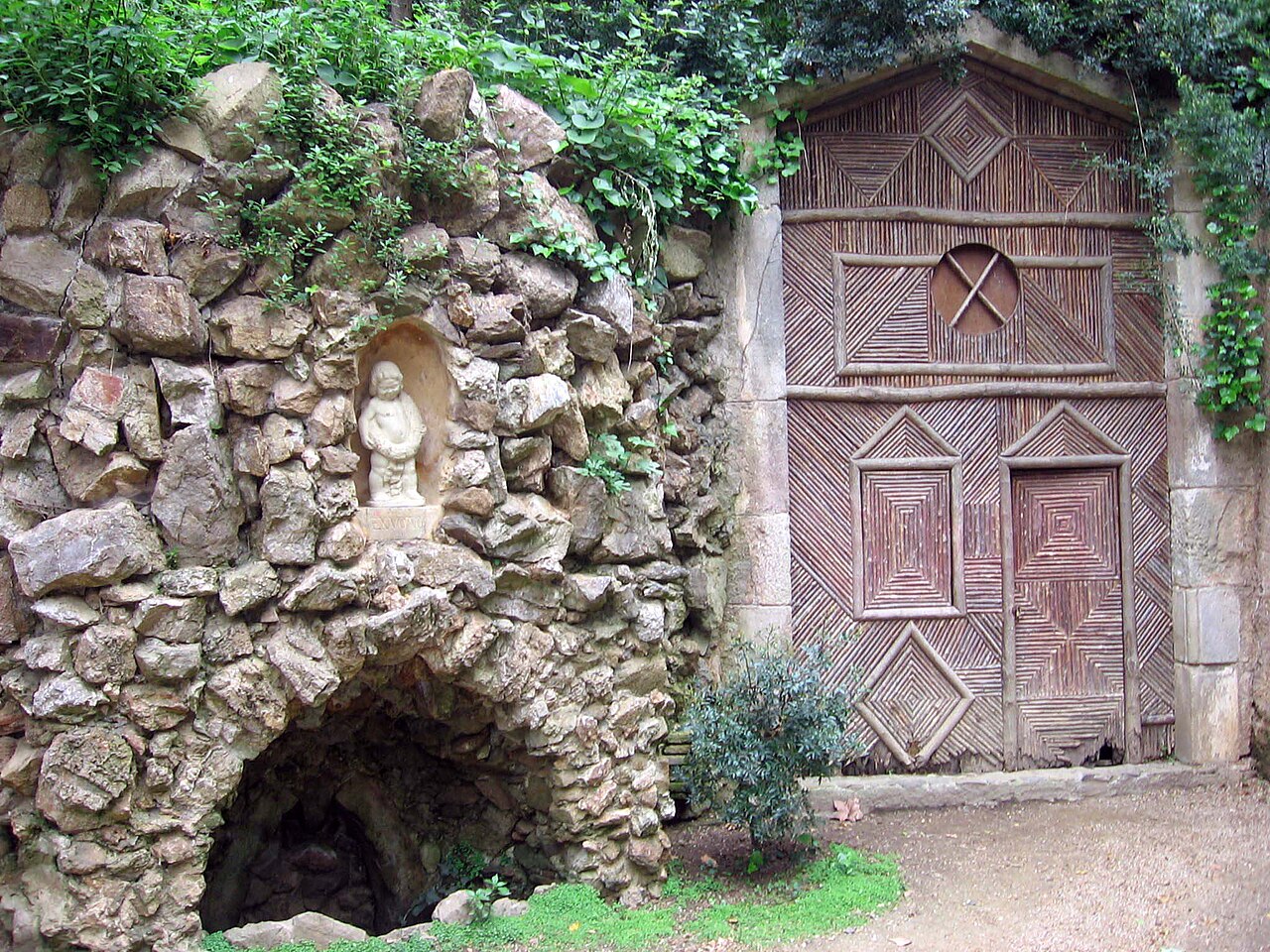
Beyond the geometric neoclassical garden, the park becomes more naturalistic.
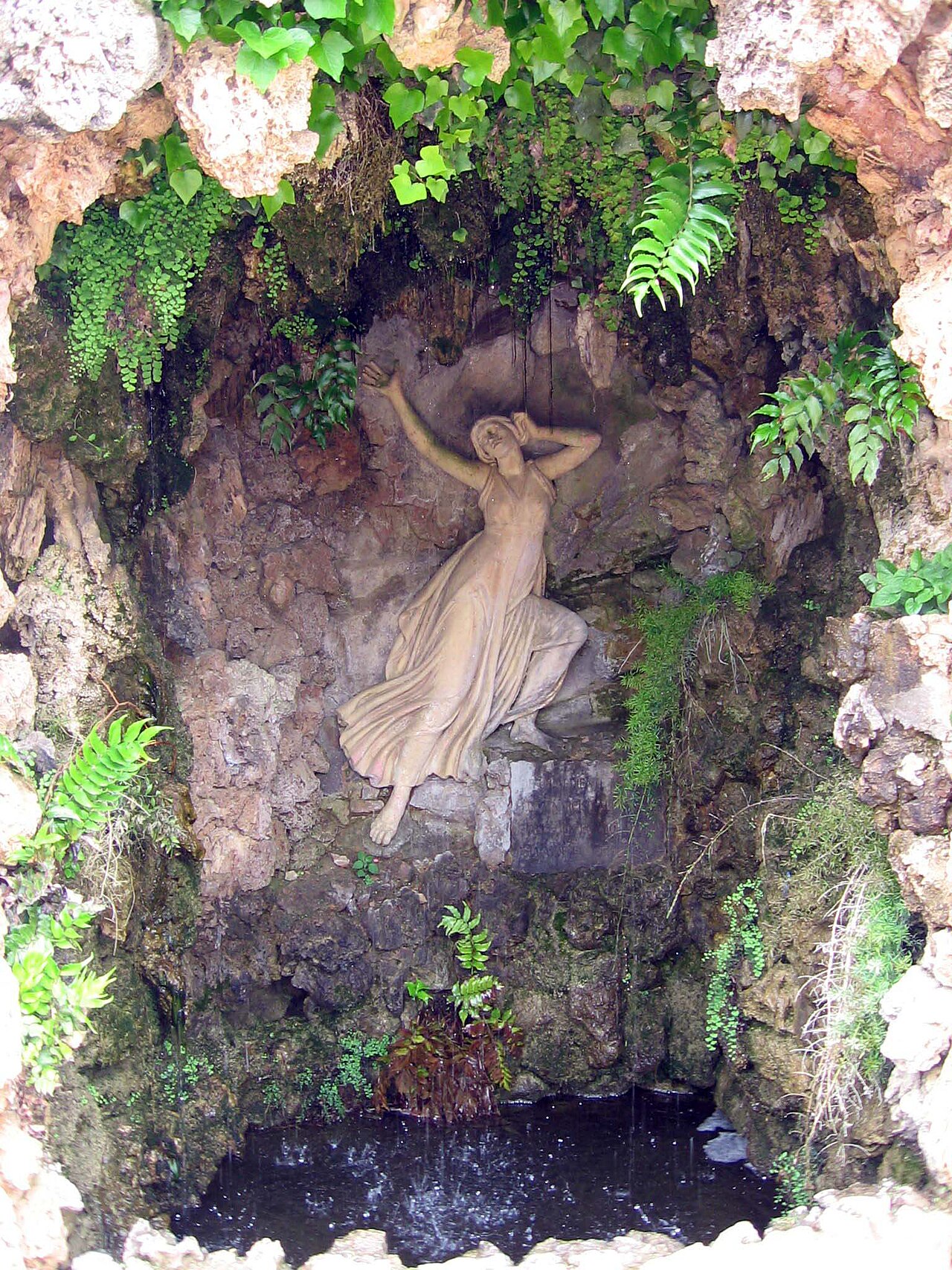
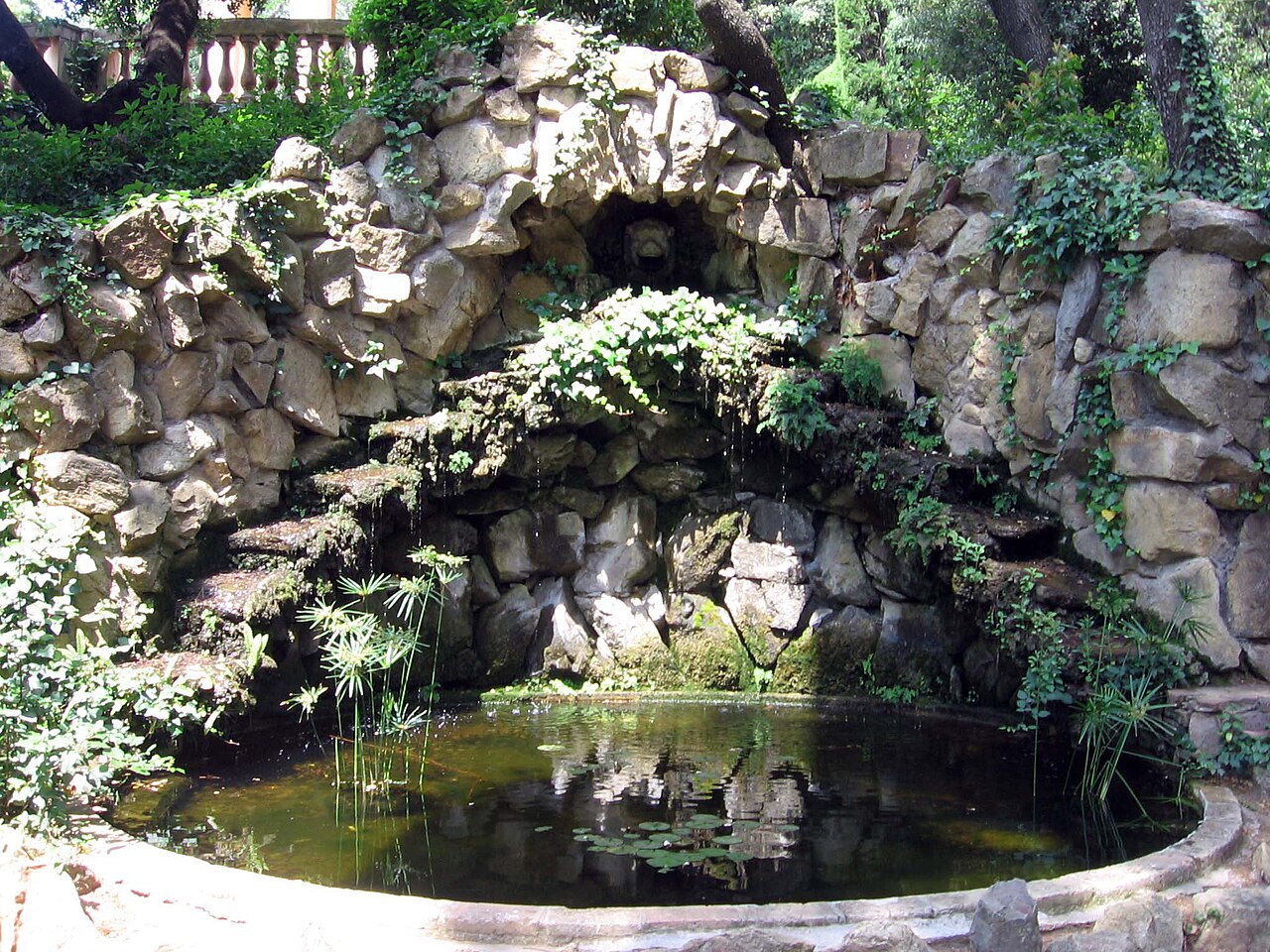
This is the Romantic Garden, developed later and characterised by more irregular forms, denser vegetation and a different relationship with water.
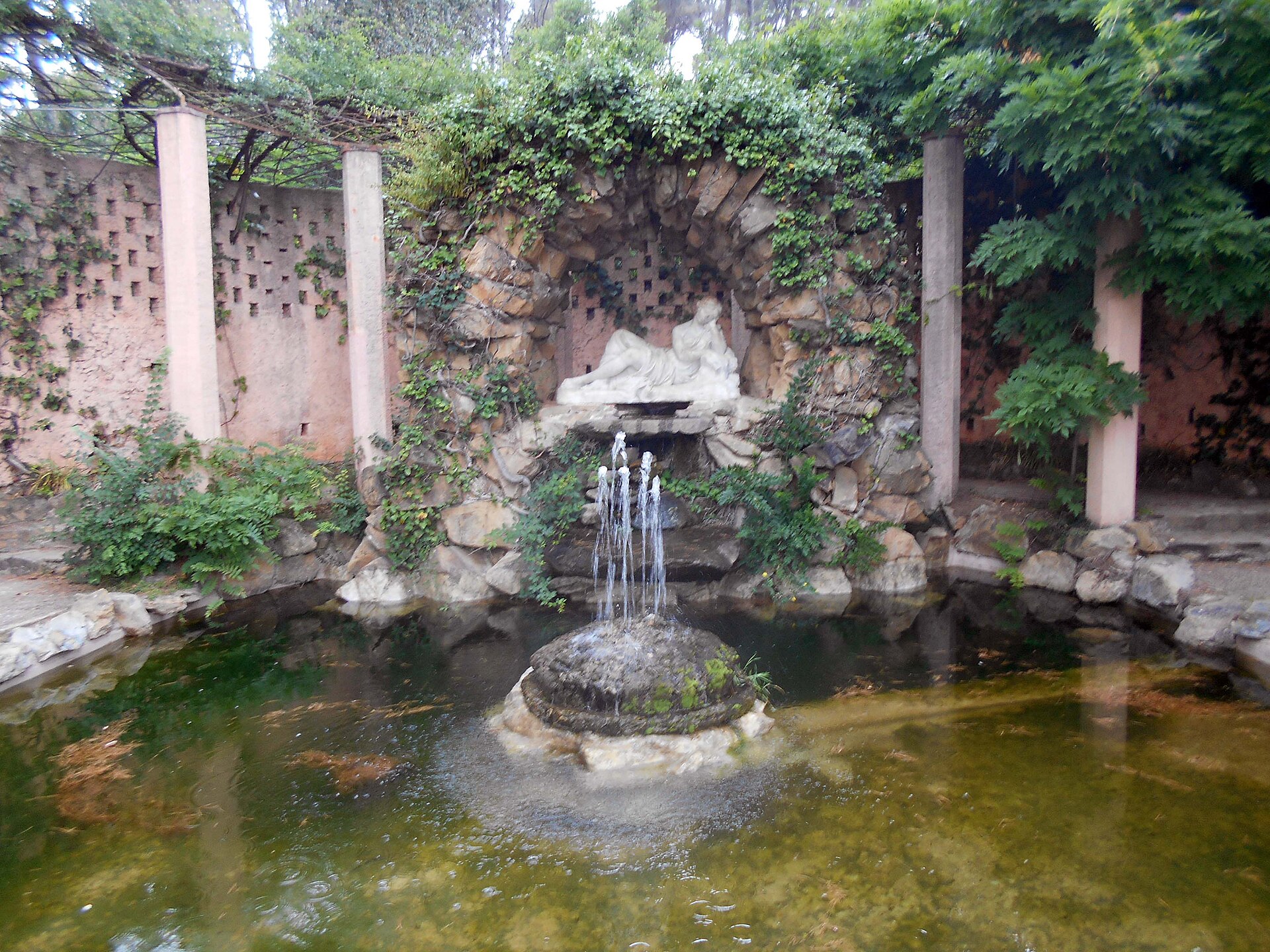
Here we find streams, a waterfall, ponds, mosses, ivy and woodland vegetation.
The atmosphere changes completely.
The rigid geometry of the neoclassical garden gives way to a landscape that appears more spontaneous and natural.
This contrast between the two styles is one of the most interesting features of the Laberint d’Horta.
Water, ponds and fountains
Water plays an important role throughout the park.
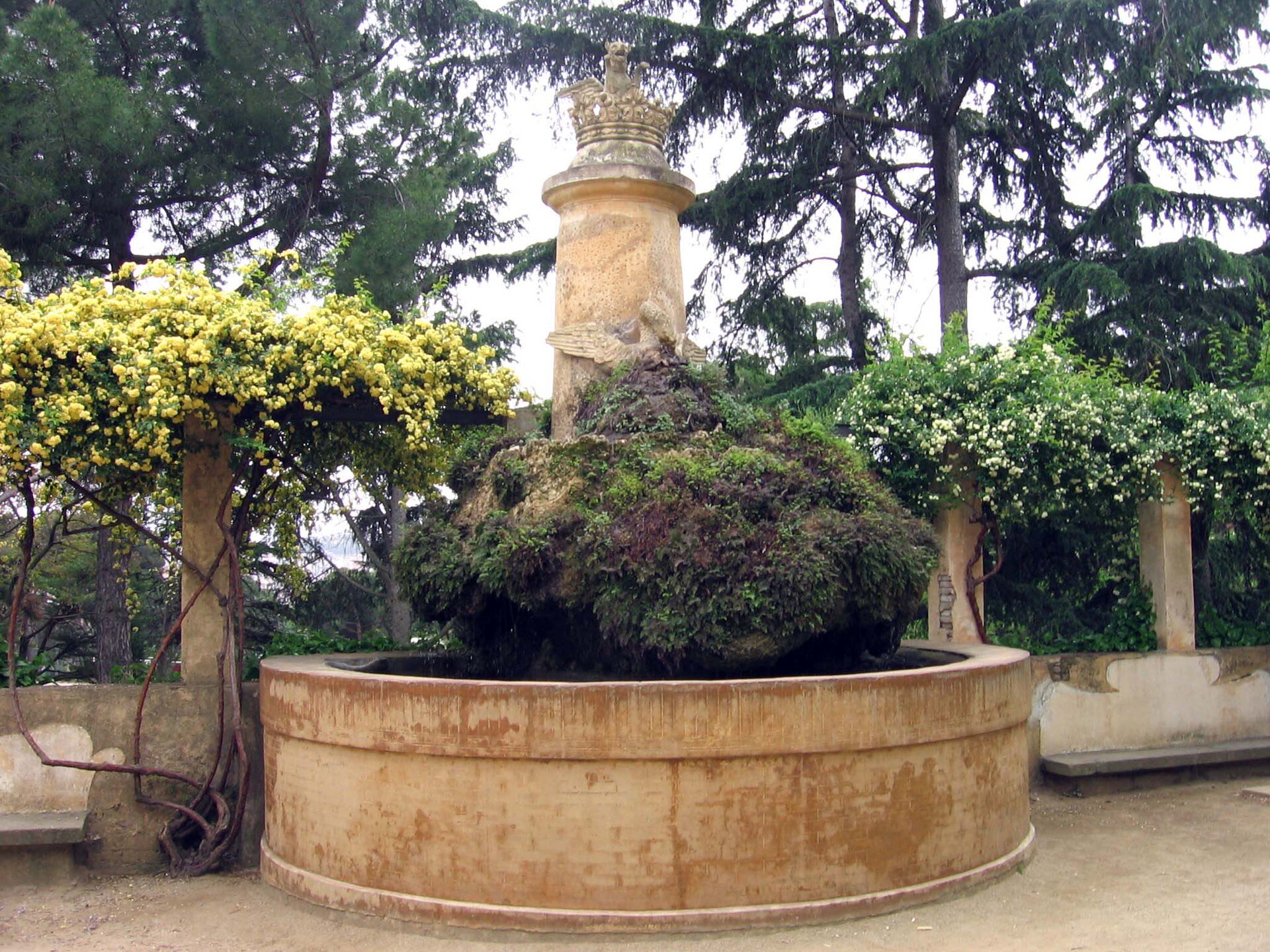
There are ponds, fountains, channels and streams that were integrated into the original garden design.
One of the channels in the Romantic Garden was originally navigable.
The water system also supplied fountains and other ornamental elements.
The canal eventually reaches a waterfall and continues as a small stream, creating a particularly attractive section of the park.
These aquatic environments are also important from a naturalist perspective because they provide habitat for insects and other small animals.
The plants of the Laberint d’Horta
For anyone interested in botany, the park is much more interesting than its size might initially suggest.
Among the trees and plants found in the park are:
- cypresses;
- holm oaks;
- oaks;
- Aleppo pines;
- plane trees;
- lime trees;
- magnolias;
- palms;
- sequoias;
- cedars;
- camellias;
- agapanthus;
- Judas trees;
- strawberry trees.
Some specimens are particularly remarkable because of their age or size.
The park also contains rows of cypresses that form one of its most characteristic visual elements.
There are also areas of Mediterranean vegetation, including species such as laurel, viburnum, euonymus and other shrubs.
Remarkable trees
One of the best ways to explore the park is to pay attention to the trees rather than focusing exclusively on the maze.
The Laberint d’Horta contains several notable specimens, including sequoias, Himalayan cedars and large lime trees, as well as old holm oaks and other mature trees.
For visitors interested in urban botany, these specimens provide an additional reason to explore the park slowly.
Wildlife in the park
The location of the Laberint d’Horta, close to Collserola, contributes to its biodiversity.
Although we are inside Barcelona, the park provides habitat and shelter for many species.
Birds are particularly noticeable.
Squirrels and bats are also associated with the wooded environment, while the wider Collserola area supports a much broader range of wildlife.
The ponds and water channels create additional habitats for aquatic organisms and insects.
We may also find tadpoles, dragonflies and other small animals around these areas.
Ornithology: birds in the Laberint d’Horta
Birdwatching is another interesting activity here.
The combination of mature trees, shrubs, water and proximity to Collserola makes the park attractive to urban and woodland bird species.
Around 80 bird species have been recorded in the park and its surroundings, although the species we see on any particular day will depend on the season, weather and time of day.
Common urban species such as pigeons and sparrows are easy to find, but patient observers can discover a much greater variety.
For this reason, we recommend visiting in the morning if birdwatching is one of our main interests.
A pair of binoculars can make the experience even more rewarding.
Butterflies and lepidopterology
The Laberint d’Horta is also an interesting location for studying butterflies.
In recent years, surveys carried out in Barcelona have highlighted the importance of urban green spaces for these insects.
One particularly interesting discovery was the recording of Callophrys avis, known in Catalan as the verdeta d’ull ros.
It was identified at the Laberint d’Horta and became the first known record of this species within the city of Barcelona.
The species is generally active between March and May and is associated with plants such as the strawberry tree.
This is an excellent example of why urban parks can be much more biologically important than they appear.
Butterflies are also valuable bioindicators, since changes in their populations can provide information about the condition of ecosystems.
Herpetology and small animals
The ponds and water features of the park provide opportunities to observe small aquatic organisms.
Depending on the season, we may find tadpoles, dragonflies and other insects associated with freshwater environments.
The surrounding Collserola landscape also supports reptiles and amphibians.
However, the easiest animals to observe inside the garden are generally birds and insects.
The best approach is to move slowly and avoid disturbing the vegetation.
A historic garden and a biodiversity refuge
The importance of the Laberint d’Horta lies precisely in the combination of cultural and natural heritage.
It is simultaneously:
- a historic garden;
- a neoclassical landscape;
- a Romantic garden;
- an architectural complex;
- a museum garden;
- a botanical space;
- a refuge for urban wildlife.
This combination makes it particularly interesting for visitors who want to experience a different side of Barcelona.
What can we see inside the Laberint d’Horta?
During a visit, we can discover:
- the famous cypress maze;
- neoclassical gardens;
- the Romantic Garden;
- the Desvalls Palace;
- sculptures inspired by classical mythology;
- temples and pavilions;
- ponds and fountains;
- the Romantic canal;
- a waterfall;
- remarkable trees;
- Mediterranean vegetation;
- birds;
- butterflies;
- dragonflies;
- other insects and small animals.
The park rewards slow exploration.
If we simply enter the maze, take some photographs and leave, we will miss much of what makes this place special.
How long does it take to visit?
We recommend allowing between one and a half and three hours.
Around two hours is a good amount of time for a first visit.
If we are interested in photography, botany, birdwatching or butterflies, we can easily spend longer.
The park is not particularly large, but there are many details worth discovering.
What other places can we visit nearby?
A visit to the Laberint d’Horta can easily be combined with other places in Horta and Collserola.
We can visit:
- Velòdrom d’Horta;
- Collserola;
- Vall d’Hebron;
- Horta;
- different paths and natural areas of the mountain range.
If we have more time, we can also organise a nature day by following some of the trails through Collserola.
Tips for visiting the Laberint d’Horta
If it is our first visit, we recommend:
Taking the metro to Mundet.
Going in the morning, especially if we want to observe birds.
Allowing at least two hours.
Bringing water during the warmer months.
Wearing comfortable shoes.
Not limiting ourselves to the maze.
Taking time to observe the trees and plants.
Checking the ponds for dragonflies and other insects.
Looking up into the tree canopy to spot birds.
And, above all:
not rushing.
The park was designed precisely to encourage visitors to discover its spaces little by little.
Parc del Laberint d’Horta: practical information
Name: Parc del Laberint d’Horta
Address: Passeig dels Castanyers, 1-17, 08035 Barcelona
District: Horta-Guinardó
Metro: Mundet, L3
Garden origins: 1791
Promoter: Joan Antoni Desvalls
Architect/garden designer: Domenico Bagutti
Styles: Neoclassical and Romantic
Main feature: Cypress maze
Usual admission price: €2.23
Reduced admission: €1.42
Usual summer opening hours: 10:00 a.m.–8:00 p.m.
Usual winter opening hours: 10:00 a.m.–6:00 p.m.
Recommended visit: 1.5–3 hours
Dogs: Not allowed
Parking: Parking areas exist around the park, although spaces are limited.
Is the Laberint d’Horta worth visiting?
Yes, absolutely.
But we recommend visiting it with the understanding that the maze is only the entrance to a much more interesting historical and natural complex.
Here we find the history of an aristocratic Barcelona family, a garden designed according to the principles of Neoclassicism, a second garden inspired by Romanticism, architecture, mythological sculptures, water, remarkable trees and surprising biodiversity.
We may enter looking only for the famous maze and end up discovering a sequoia, a butterfly, a dragonfly, a classical sculpture or the old Desvalls Palace.
And that is precisely where the magic of the place lies.
The Parc del Laberint d’Horta is not simply a park.
It is a historic garden, an open-air museum, a mythological setting and a small refuge for nature within Barcelona.
When we return to explore its paths, it is worth taking our time.
Enter the maze.
Look for the centre.
Find the way out.
Keep walking.
Discover the small temples.
Listen to the water.
Look at the trees.
Search for a butterfly among the flowers.
And, for a few moments, forget that Barcelona is still waiting on the other side of the cypress trees.







Copyright © 2016-2026 Magic Dreams Barcelona.