Jardins del Doctor Pla i Armengol: History and Nature.
The Jardins del Doctor Pla i Armengol occupy a former estate in the Guinardó district of Barcelona, a space where history, architecture, art, nature and biodiversity now coexist.
The site was originally connected to the Institut Ravetllat-Pla, founded by doctors Ramon Pla i Armengol and Joaquim Ravetllat i Estech for research into tuberculosis. The estate combined scientific activity with gardens, agricultural areas, stables and a large residential building.
Today, the gardens are a public green space that preserves important elements of this past while incorporating naturalized areas designed to promote urban biodiversity.
A garden with three different areas
The gardens are divided into three clearly differentiated areas.
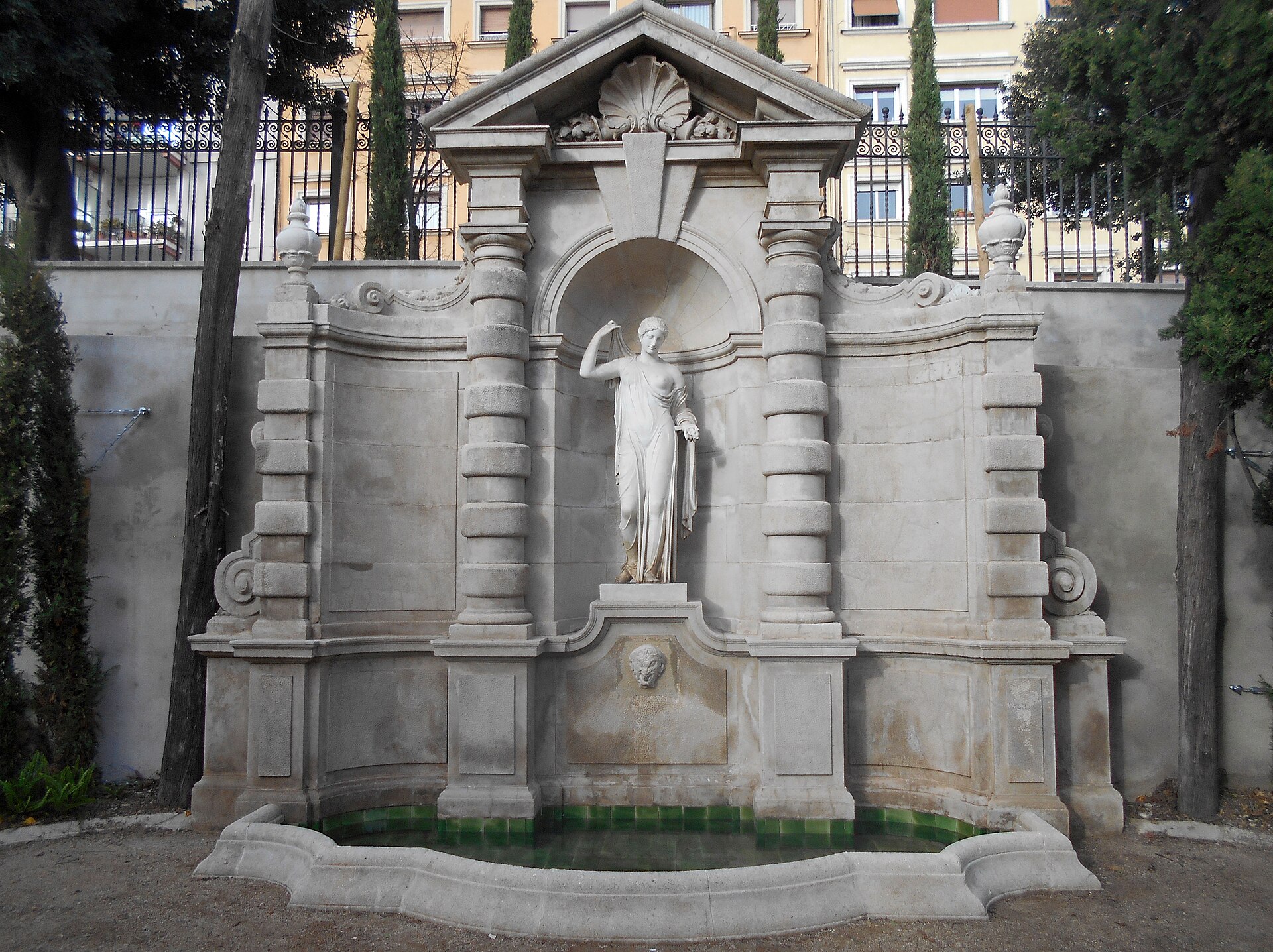
The Noucentista garden is the most closely connected to the historical character of the estate. Its restored walls, balustrades, original pools, pilasters and wooden pergolas reflect the garden design of the early 20th century.
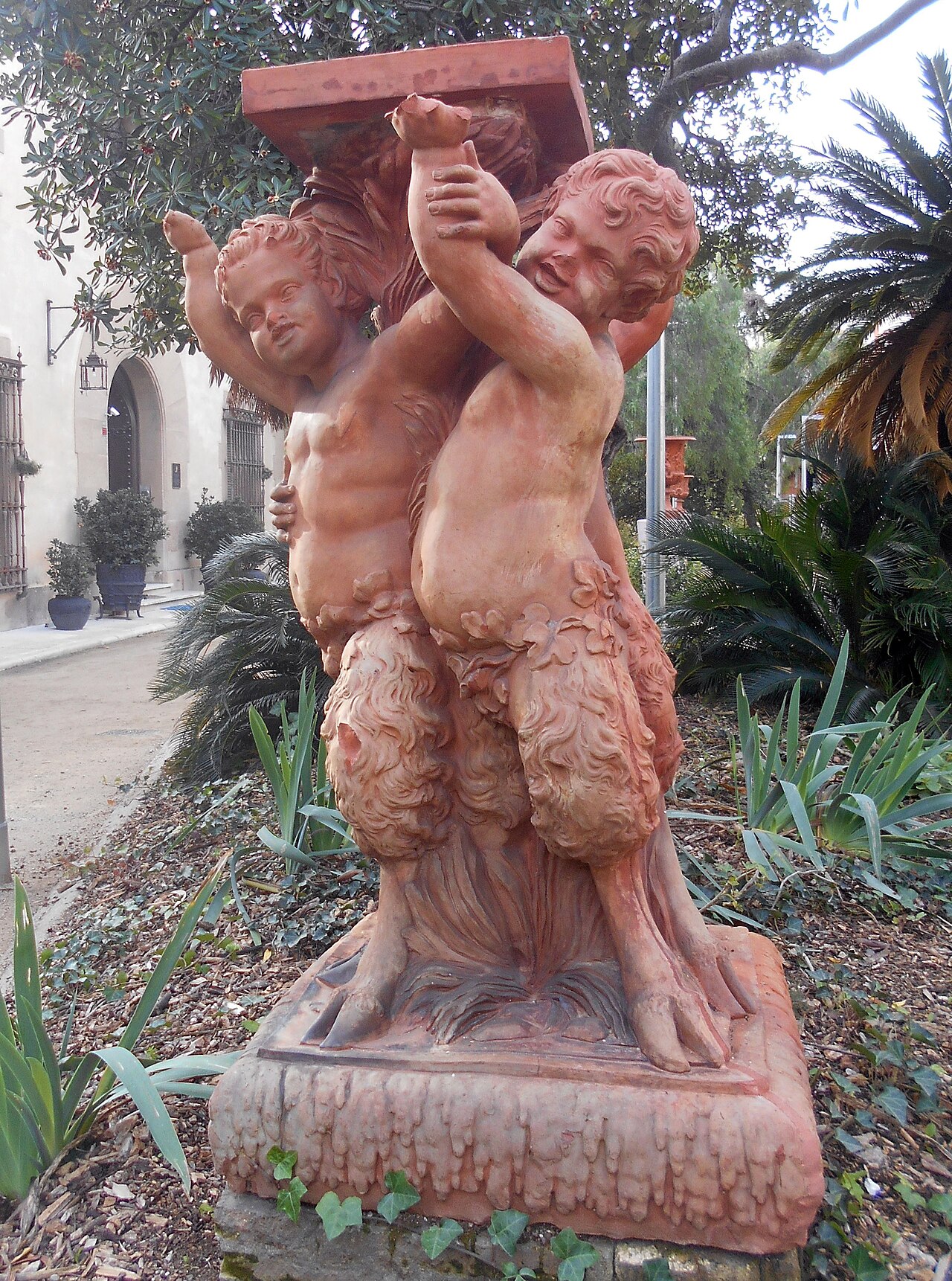
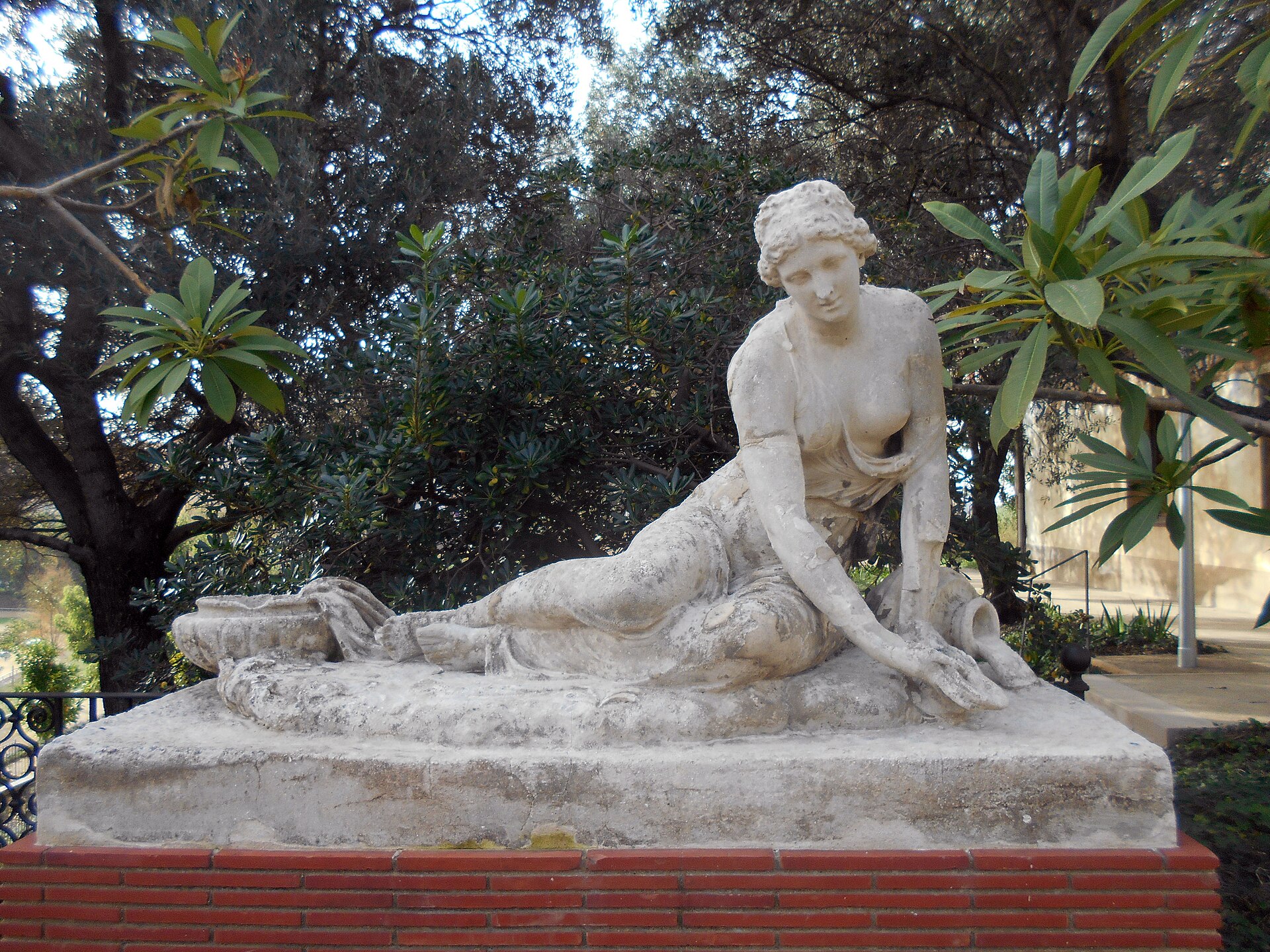
Among its most recognizable elements is the Venus de Fréjus, a reproduction of the classical sculpture preserved at the Louvre. Other sculptures and decorative elements are distributed throughout the garden, including a horse, a figure of an angel or child with a dolphin, a nymph with a shell, three child fauns and classical-style vases.
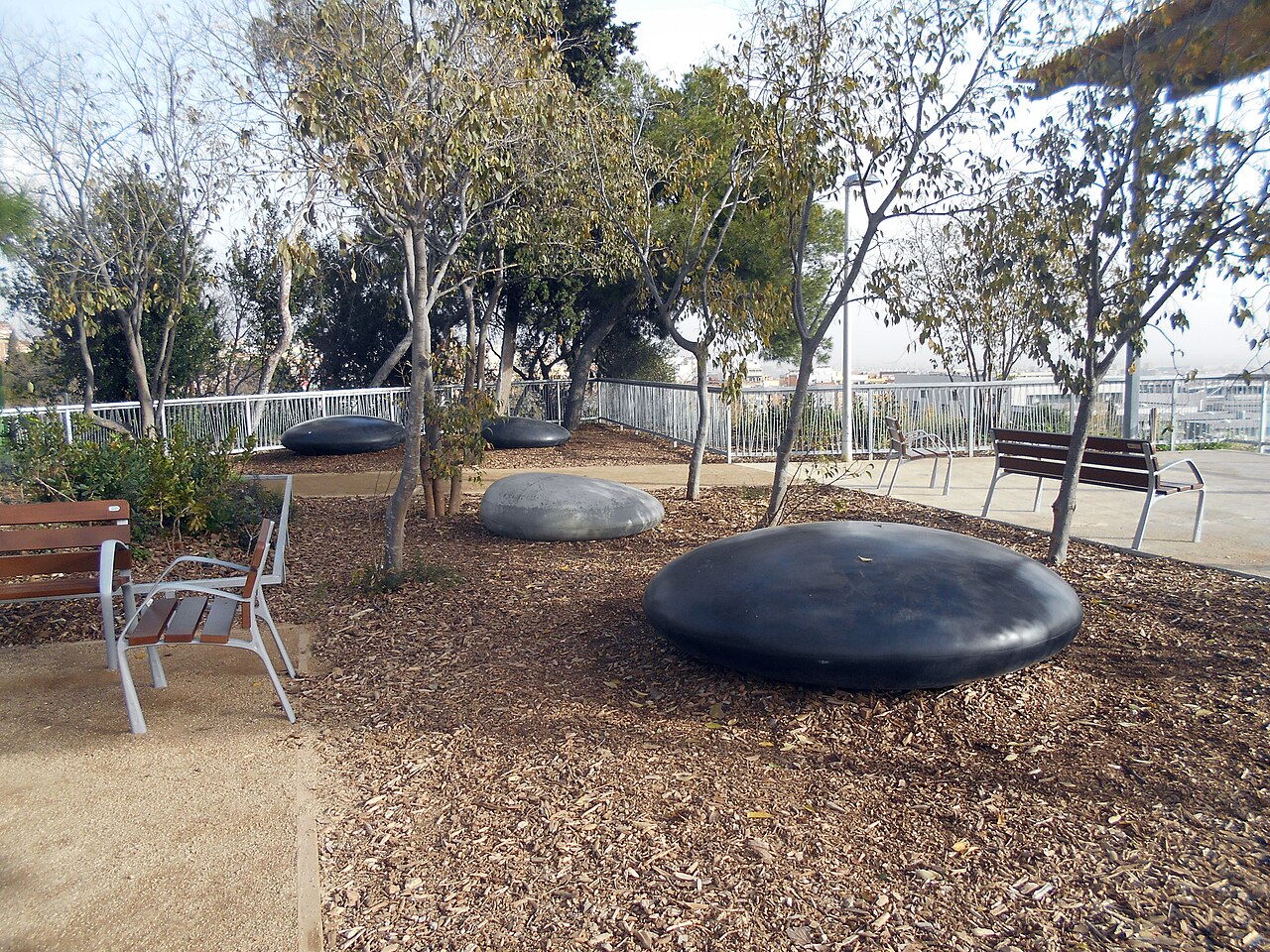
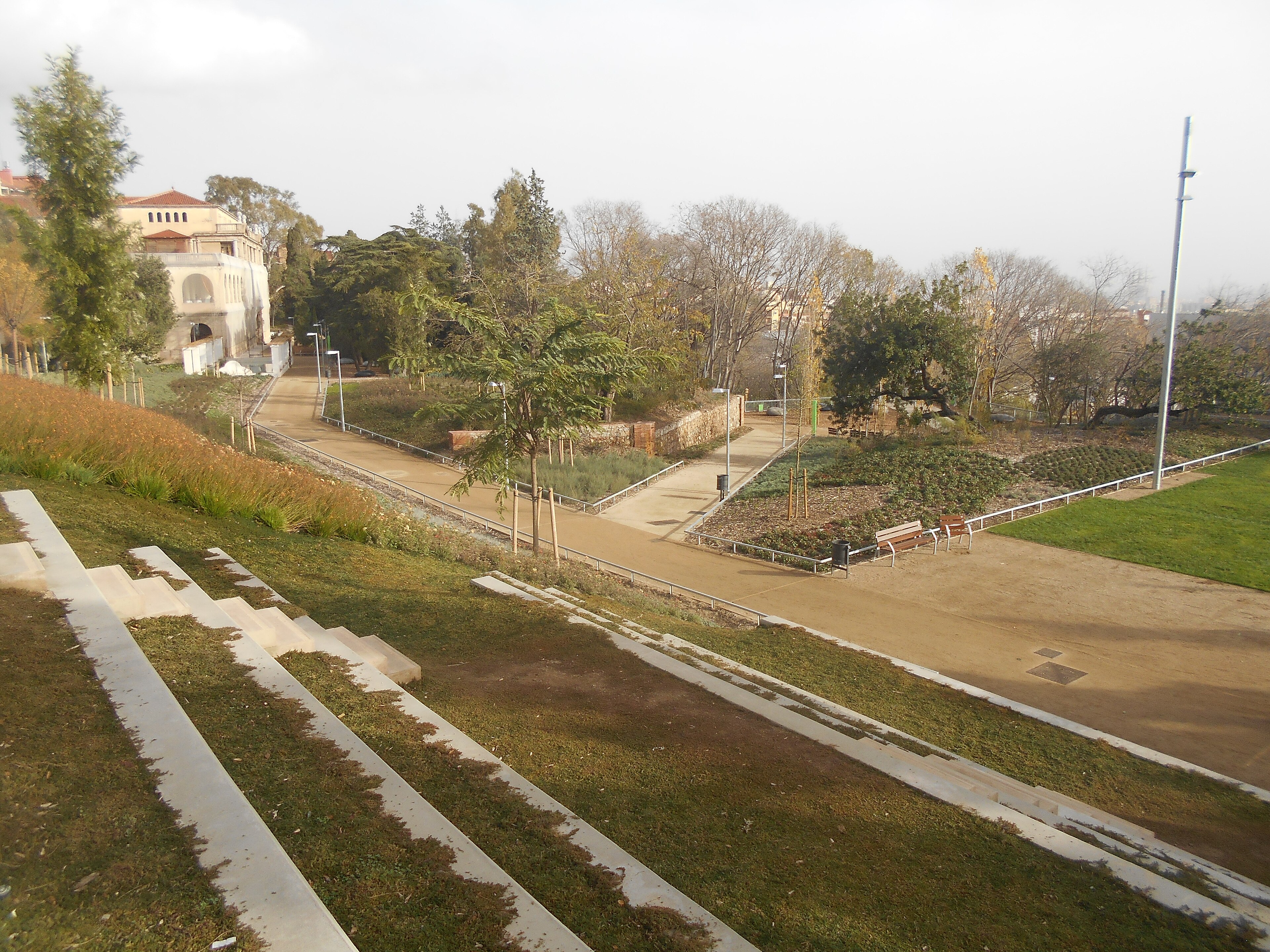
The former stables area has been transformed into a public space with seating areas, a green square, an amphitheatre, a children’s playground and viewpoints overlooking Barcelona.
The southeastern part of the gardens has a more natural character, with community urban gardens, wet environments and areas dedicated to biodiversity and environmental education.
Mediterranean vegetation
One of the most interesting features of the Jardins del Doctor Pla i Armengol is the variety of vegetation found within a relatively compact urban space.
Olive trees, carob trees and orange trees recall the agricultural character of the former estate, while areas of Mediterranean woodland include species such as holm oak and Aleppo pine.
There are also aromatic plants such as rosemary, thyme and sage, as well as Mediterranean scrub and other species that contribute to the garden’s ecological diversity.
The combination of mature trees, woodland, cultivated areas and naturalized spaces creates different habitats and makes the gardens particularly interesting for observing urban nature.
Wetlands and urban biodiversity
The restoration of the gardens incorporated several elements specifically designed to encourage biodiversity.
Naturalized ponds provide suitable environments for amphibians and other species associated with water. There are also structures for nesting and sheltering birds and bats, as well as wooden constructions that provide habitats for insects.
Some areas are intentionally less urbanized, allowing vegetation and small ecosystems to develop with greater freedom.
The gardens therefore function not only as a recreational green space but also as an important link within Barcelona’s network of urban green areas.
Birds and wildlife
The diversity of habitats makes the gardens a suitable place for observing birds and other urban wildlife.
Birds can be found among the mature trees and Mediterranean vegetation, while the ponds and naturalized areas provide additional habitats for insects, amphibians and other small species.
Birdwatching and citizen-science activities have also taken place in the gardens, contributing to a better understanding of Barcelona’s urban biodiversity.
Views over Barcelona
The elevated position of the Jardins del Doctor Pla i Armengol is another of their attractions.
From several viewpoints, you can see different parts of Barcelona, including the Sagrada Família, Montjuïc and the Mediterranean.
The changing light throughout the day also makes the gardens an interesting location for photography. Early morning offers a particularly different perspective, when the city begins to appear behind the trees and vegetation.
How to get there
The easiest way to reach the gardens from central Barcelona is by metro.
The L4 Guinardó | Hospital de Sant Pau station provides a convenient connection with central areas of the city, including Passeig de Gràcia, Urquinaona and Jaume I.
Several bus routes also serve the surrounding area, including V23, D40, 39, 191, 192 and 117, depending on the access point you choose.
Cycling is another option, although the surrounding streets include some slopes typical of the Guinardó district.
For those arriving by car, there are parking facilities around the Hospital de Sant Pau area. One nearby option is the Saba Hospital Sant Pau car park on Carrer del Mas Casanovas. Its published prices can vary depending on the type and duration of parking, so it is advisable to check the current rate before travelling.
Opening hours
The gardens are free to access.
From April 1 to October 31, they are generally open from 7:30 a.m. to 9:00 p.m.
From November 1 to March 31, opening hours are generally from 7:30 a.m. to 7:00 p.m.
The closing time may be adjusted according to daylight conditions.
A different side of Barcelona
The Jardins del Doctor Pla i Armengol offer a different way of experiencing Barcelona.
Here, the history of scientific research, Noucentista architecture, classical sculpture, Mediterranean vegetation, urban agriculture and biodiversity come together within the same space.
It is a garden to explore calmly, paying attention not only to its views but also to the details that reveal the history of the former estate.
Copyright © 2016-2026 Magic Dreams Barcelona.





Copyright © 2016-2026 Magic Dreams Barcelona.