Route guide for visitors throughout Catalonia – Barcelona – Costa Brava – Catalan Pyrenees – Personalized experiences – Customized tour guide services – A small tribute to the wonderful city and land that saw us born – Transforming experiences into unforgettable memories - Magic Dreams Collection: exclusive universes inspired by Salvador Dalí and Gaudí. Niche perfumes, jewelry, lithographs, and collectible items celebrating the Mediterranean spirit.
Located on Barcelona’s most iconic beach, the Mirador Vela is an exceptional viewpoint offering vistas that merge the majestic Mediterranean Sea with the city’s skyline. This viewpoint and its accompanying pedestrian staircases were designed by the studio External Reference Architects, under the direction of architect …
Situado en la playa más emblemática de Barcelona, el Mirador Vela es un punto panorámico excepcional, que ofrece vistas que fusionan el imponente mar Mediterráneo con la silueta urbana de la ciudad. Este mirador y las escaleras peatonales que lo acompañan fueron diseñados por el …
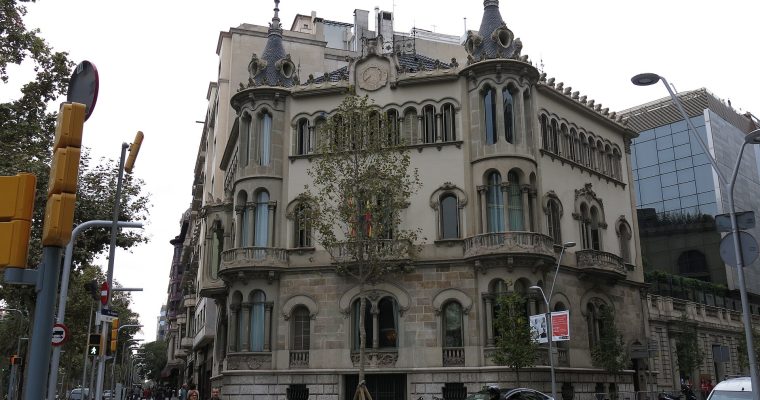
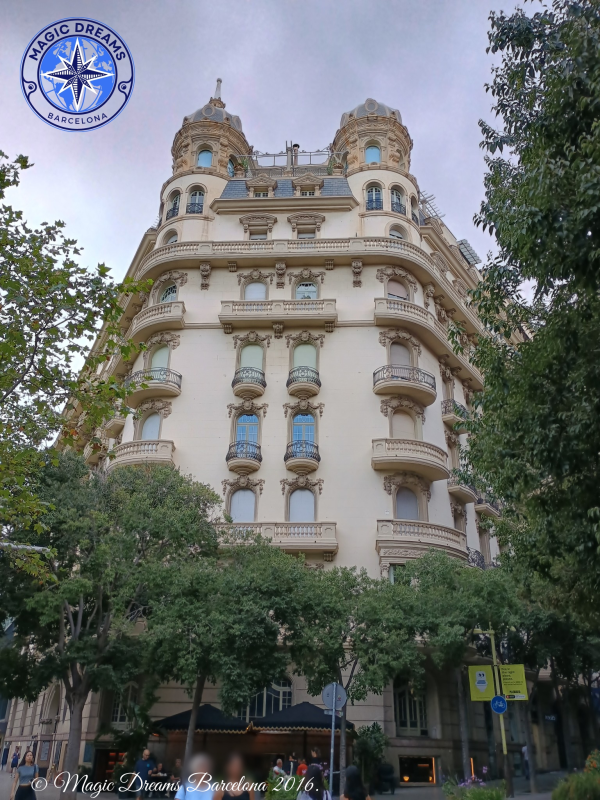
Located at one of the most iconic entrances to Barcelona’s Eixample district, the Residential Building of Plaça Francesc Macià is a landmark that defines the city’s urban personality and invites you to discover Barcelona’s architectural elegance from the 1930s.
This monumental building represents one of the most refined expressions of Beaux-Arts – Classical Monumentalism in the city. It stands out for its semi-circular façade, grand central dome, and intricate details inspired by European architectural traditions.
An Architectural Icon with European Spirit
Built in 1935, the building was designed by the Barcelona-born architect Josep Rodríguez Lloveras, renowned for creating works with strong urban presence. Its style combines classical monumentality with elements typical of major European capitals, resulting in a structure distinguished by sobriety, elegance, and uniqueness.
The semi-circular façade recalls the famous Royal Crescent in Bath (United Kingdom), creating an enveloping effect that gives Plaça Francesc Macià a uniquely noble character.
Architectural Details and Symbolism
During your visit, you will be able to admire:
Classical columns and ornamental reliefs
Decorative pediments, vases, and sculptural volutes
Slate mansard roofs on the upper levels, unusual in Barcelona
Grand central dome serving as the visual axis
Side pavilions enhancing the building’s monumentality
Unique sailboat prows atop the façade, evoking the Mediterranean spirit of the city
These elements make the Residential Building of Plaça Francesc Macià a true architectural dialogue between Barcelona and the great European capitals.
A Noble Gateway to the Eixample
Located at a key urban node, the building serves as a city landmark, marking the transition between historic Barcelona and the modern expansion of the Eixample. From this perspective, you can admire the harmony between urban design and monumental architecture, enjoying a unique journey through the city’s history.
Discover Barcelona with Magic Dreams Barcelona
At Magic Dreams Barcelona, we invite you to explore the Residential Building of Plaça Francesc Macià and its surroundings through private, personalized experiences. Our curated itineraries combine:
Urban architecture and history
Contemporary art and design
Green spaces and hidden city corners
Exclusive gastronomic experiences in top local venues
Our team of expert local guides will provide you with a deep and authentic perspective, revealing stories, secrets, and architectural details that go beyond conventional sightseeing.
We manage all logistics, ensuring comfort, punctuality, and a service fully tailored to your needs, whether for cultural visits, private gastronomic experiences, or bespoke itineraries.
We operate in Spanish, Catalan, and English, and upon request, experiences can be adapted to other languages, ensuring a professional, personalized, and high-quality service.
From our experiential, local, and professional perspective, we invite you to discover Barcelona with authenticity, emotion, and elegance.
En uno de los accesos más emblemáticos al Eixample barcelonés está situado el Edificio Residencial de Plaça Francesc Macià, un inmueble que define la personalidad urbana de la ciudad y le invita a descubrir la elegancia arquitectónica de Barcelona de la década de 1930. Este …
Architecture, design, art, and innovation converge at Mirador Torre Glòries, one of the most iconic cultural and sensory experiences in contemporary Barcelona. Located at the intersection of Avinguda Diagonal and Carrer de Badajoz, near Plaça de les Glòries, Torre Glòries marks the gateway to the …
La Torre de Radiodifusión de Montjuïc, diseñada por el arquitecto e ingeniero valenciano Santiago Calatrava, es una de las obras más emblemáticas de Barcelona. Construida entre 1989 y 1992, se encuentra en el corazón de la Anilla Olímpica de Montjuïc, rodeada por importantes instalaciones deportivas como el Palau Sant Jordi, el Estadio Olímpico Lluís Companys y las Piscinas Picornell, convirtiéndose en un referente visual de la ciudad desde los Juegos Olímpicos de Verano de 1992.
Arquitectura y Diseño
Esta torre de acero de 136 metros de altura destaca por su diseño innovador, que representa la figura de un atleta de la antigua Grecia con la antorcha olímpica en su mano, simbolizando la esencia del deporte clásico y moderno. Su base alberga una fuente de hormigón armado decorada con trencadís, en homenaje al legado de Antoni Gaudí, fusionando tradición y modernidad.
La orientación de la torre está cuidadosamente diseñada para funcionar como reloj de sol, proyectando la sombra de su aguja central sobre la Plaza de Europa, combinando funcionalidad con estética arquitectónica.
Acceso y Experiencia del Visitante
El acceso a la torre es cómodo y accesible: se puede llegar a pie desde la Plaza España, ascendiendo por la Avenida María Cristina, o utilizando escaleras mecánicas y el funicular de Montjuïc, disfrutando de vistas panorámicas de la ciudad durante el trayecto.
Visitar la Torre de Radiodifusión ofrece un recorrido arquitectónico único y una experiencia cultural y deportiva, ideal para amantes de la arquitectura, la historia y la fotografía urbana.
Experiencias y Servicios de Magic Dreams Barcelona
Guías turísticos y trayectos privados: expertos en historia, arte y simbolismo, disponibles en castellano e inglés, y adaptables a otros idiomas con previo aviso. Rutas privadas para máxima comodidad y tranquilidad.
Experiencias gastronómicas y sensitivas: picnics sensoriales con catering premium, zumos, refrescos, cavas y vinos sin alcohol, menús personalizados con gastronomía catalana, nacional e internacional, cenas privadas con chef profesional en alojamientos seleccionados, frente al mar, yates o espacios exclusivos, y rutas de tapas en locales de referencia.
Guías expertos en botánica, lepidopterología y ornitología: rutas guiadas que combinan naturaleza, aprendizaje y relajación.
Talleres de música, arte, botánica y floricultura: especializados en Gaudí, Dalí y gastronomía. Conciertos privados en vivo, cenas tematizadas y experiencias culturales premium.
Fotografía y ambientación: fotógrafos profesionales, floristería y decoración personalizada para crear momentos únicos.
Escapadas románticas y paquetes todo incluido: Costa Brava, Pirineos y rincones emblemáticos de Cataluña, combinando naturaleza, cultura y gastronomía sin preocupaciones.
Valor añadido: atención premium, totalmente personalizada, adaptada a intereses, gustos y preferencias. Experiencias diseñadas para parejas, grupos o familias, con itinerarios a medida.
Magic Dreams Barcelona ofrece un viaje único donde arquitectura, historia, naturaleza, gastronomía, arte y emoción se combinan para crear recuerdos imborrables.
Torre de Comunicaciones de Montjuïc.
Torre de Comunicaciones de Montjuïc
Torre de Comunicaciones de Montjuïc
Estadio Olímpico Lluís Companys.
Estadio Olímpico Lluís Companys.
Torre de Comunicaciones de Montjuïc
Torre de Comunicaciones de Montjuïc
Torre de Comunicaciones de Montjuïc
Para colaboraciones, proyectos o consultas profesionales – Reservas y presupuestos
Por favor, deje sus datos y su número de teléfono, y nos pondremos en contacto con usted a la mayor brevedad, a lo largo del día.
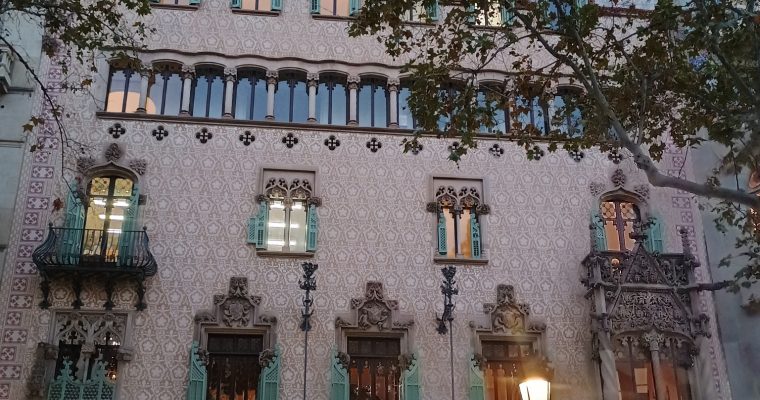
En el Passeig de Gràcia de Barcelona encontramos una de las joyas más exquisitas del modernismo catalán: la Casa Amatller, un edificio que representa la perfecta unión entre arte, arquitectura y tradición burguesa de finales del siglo XIX. Historia de la Casa Amatller La Casa …
The Palau Güell, one of the earliest masterpieces by visionary architect Antoni Gaudí, marks the beginning of the creative genius that would forever transform world architecture. Located in the historic heart of Barcelona, this extraordinary urban palace blends luxury, symbolism, structural innovation, and deep artistic …
Situado en el exclusivo barrio de Pedralbes, dentro del distrito de Les Corts en Barcelona, el Parque de Cervantes es un remanso de tranquilidad en plena ciudad. Este jardín público está situado estratégicamente entre la Avenida Diagonal y la Avenida de Esplugues, muy cerca de la Ronda de Dalt, con su entrada principal en la Avenida Diagonal, facilitando un acceso cómodo para residentes y visitantes.
El Parque de Cervantes combina el encanto de un espacio verde urbano con la riqueza de un jardín botánico de referencia. Destaca especialmente por su impresionante rosaleda temática, que alberga más de 10.000 rosales de aproximadamente 2.000 variedades. Este exquisito despliegue de color y fragancia convierte al parque en uno de los jardines de rosas más notables de Barcelona, ofreciendo una experiencia sensorial que se extiende desde la primavera hasta el otoño.
Más allá de la rosaleda, el parque dispone de amplias zonas de césped, caminos serpenteantes para pasear, áreas de descanso y esculturas artísticas que dialogan con la naturaleza, creando un entorno ideal para la contemplación, la práctica de deporte suave o simplemente para desconectar del bullicio urbano. Durante los últimos años, el parque ha incorporado iniciativas de sostenibilidad y conservación de especies vegetales, consolidándose como un espacio no solo de recreo, sino también de educación ambiental y valorización del patrimonio natural de Barcelona.
El Parque de Cervantes no solo es un punto de encuentro para amantes de la naturaleza y el arte, sino también un escenario privilegiado para eventos culturales, talleres educativos y actividades al aire libre que fomentan la conexión entre ciudad y naturaleza. Su diseño y mantenimiento reflejan la armonía entre tradición y modernidad, haciendo de este parque un verdadero oasis urbano en el corazón de Pedralbes.
Descubra el Parque de Cervantes y Cataluña desde la perspectiva mágica de Magic Dreams Barcelona.
Nuestro servicio está concebido para que no tenga que preocuparse de nada. Nos ocupamos de cada detalle para que se sienta acompañado, cómodo y plenamente inmerso en la experiencia.
Nuestros servicios incluyen:
Transporte privado.
Guía turístico profesional en castellano, catalán e inglés (otros idiomas bajo previa solicitud).
Rutas personalizadas con lectura histórica, arquitectónica, botánica y artística, con profundo conocimiento de simbolismo.
Alojamientos exclusivos cuidadosamente seleccionados, con servicios privados.
Chef privado con cocina local e internacional.
Música en vivo privada, como violín o formaciones acústicas seleccionadas.
Picnics sensoriales personalizados, con mantelería y catering a escoger en jardines, frente al mar, en espacios naturales o en yate, acompañados de guía experto en botánica, ornitología y mariposas.
Catering de autor con propuestas dulces y saladas, zumos naturales, vinos y cavas sin alcohol.
Floristería personalizada.
Reportajes fotográficos profesionales.
Servicios de bienestar y talleres creativos, desde cocina tradicional catalana —como aprender a elaborar una auténtica paella— hasta experiencias y talleres artísticos inspirados en técnicas como el trencadís de mosaico de Gaudí.
Rutas gastronómicas por una cuidada selección de los mejores locales de la ciudad.
Escapadas de fin de semana por la Costa Brava y los Pirineos catalanes, o excursiones de un día con todos los servicios incluidos, para que descubra la riqueza natural, cultural y artística de Cataluña sin preocupaciones.
Cada recorrido se convierte así en un viaje sensorial, cultural y emocional, donde se comprende y se siente el territorio desde dentro. Nuestro objetivo es sienta experiencia profunda y transformadora, guiada por miradas nativas que conocen su historia, su evolución y sus secretos, para que el recuerdo perdure como algo auténtico, cuidado y verdaderamente mágico, desde la perspectiva única de Magic Dreams Barcelona.
Maritime tradition, roasted garlic and the authentic flavour of the Mediterranean Monkfish with burnt garlic, known in Catalan as Rap a l’All Cremat, is a traditional seafood recipe associated with Vilanova i la Geltrú, on the Catalan coast near Barcelona. The name all cremat literally …
Escondidos entre las suaves pendientes del barrio de Sarrià-Sant Gervasi, los Jardins de la Tamarita representan uno de los espacios verdes más elegantes y tranquilos de Barcelona. Lejos del bullicio urbano, estos jardines invitan a descubrir un universo donde arquitectura paisajística, botánica mediterránea y simbolismo …
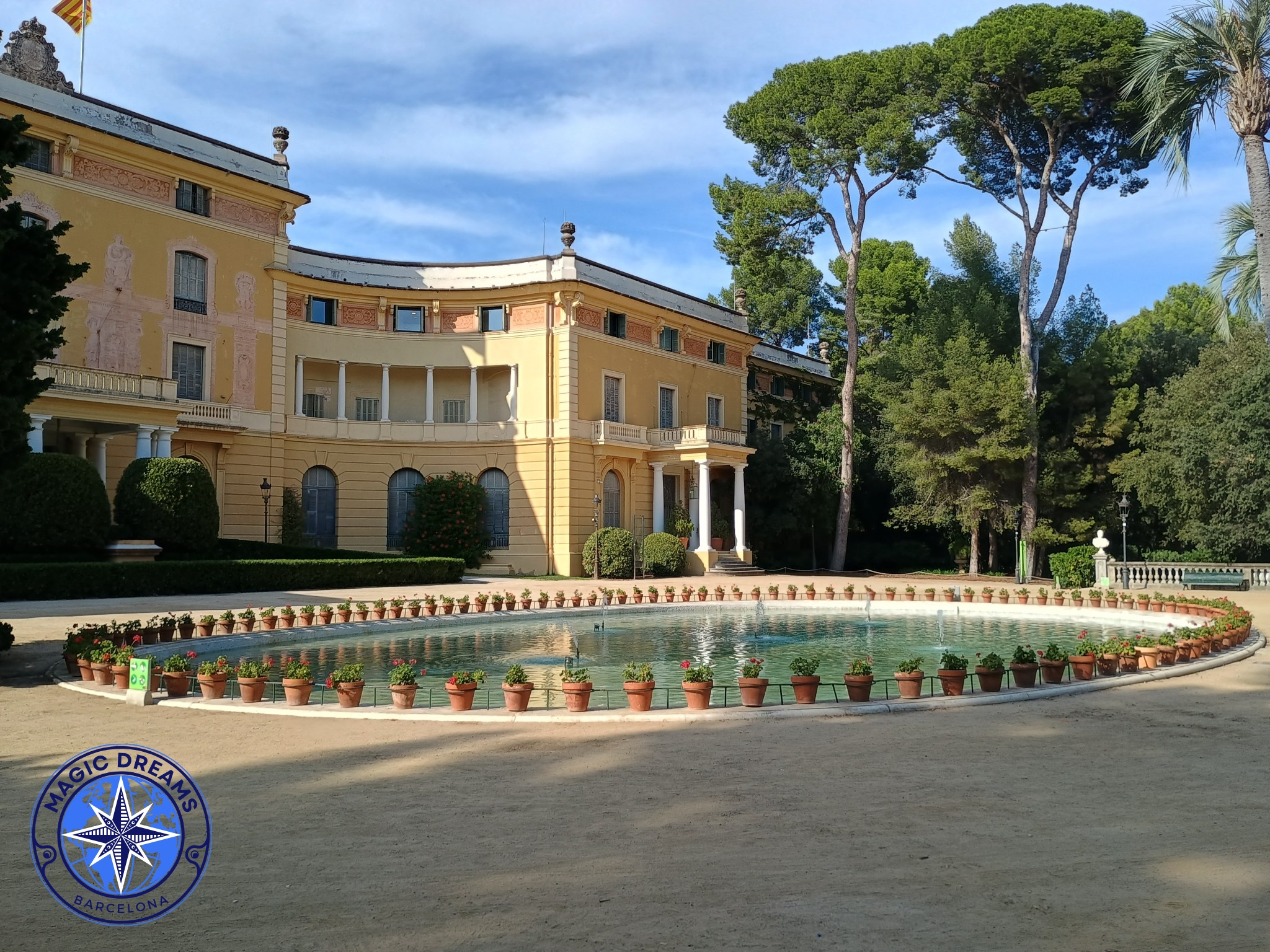
El Palacio Real de Pedralbes, situado en Avinguda Diagonal, 686,es un emblema de la historia, la arquitectura y la naturaleza que caracteriza a la ciudad. Concebido inicialmente como residencia aristocrática y posteriormente cedido a la Familia Real Española, este palacio refleja la elegancia neoclásica combinada con la sensibilidad paisajística del siglo XX. Su diseño estuvo a cargo de los arquitectos Eusebi Bona y Francesc de P. Nebot, mientras que los jardines fueron desarrollados con influencia de Antoni Gaudí y Nicolau Maria Rubió i Tudurí, quienes integraron fuentes, esculturas y especies vegetales de gran valor histórico y ornamental.
Historia y Arquitectura
La transformación del antiguo Can Feliu en palacio real comenzó en 1919 y se completó en 1924, incorporando una capilla neogótica y salones decorados con mobiliario elegante. La residencia refleja el gusto aristocrático y la armonía entre espacios interiores y exteriores, constituyendo un verdadero testimonio del patrimonio cultural catalán.
Jardines y Naturaleza
Los jardines que rodean el palacio combinan estilos francés e inglés, con árboles centenarios y especies autóctonas mediterráneas como magnolias, palmeras, cipreses y pinos. La Font d’Hèrcules de Gaudí y diferentes esculturas completan un recorrido donde arte y naturaleza se funden. Además, el espacio permite la observación de aves locales y la exploración de la flora de forma sensorial y educativa.
Servicios y Experiencias Magic Dreams Barcelona
Todo ello pueden descubrirlo de la mano de Magic Dreams Barcelona, un servicio diseñado para que no tengan que preocuparse de nada. Nos encargamos de cada detalle para que se sientan cómodos y acompañados en todo momento.
Ofrecemos transporte privado, guía turístico profesional en castellano, catalán e inglés —y en otros idiomas bajo aviso previo—, adaptándonos siempre a sus necesidades. Contamos con alojamientos seleccionados con esmero y experiencias personalizadas, como picnics en los jardines con mantelería a elegir y catering de autor, que incluyen opciones dulces y saladas, así como selección de zumos naturales, vinos y cavas sin alcohol.
Ponemos a su disposición servicio de floristería personalizada, guía arquitectónico y artístico, profundizando en el simbolismo y la historia local. Somos guías locales que enseñamos la Barcelona más auténtica, complementando la experiencia con actividades artísticas, música en vivo y cenas temáticas, tanto en los espacios de nuestra selección como en la intimidad de su alojamiento, con chefs nativos e internacionales.
Nuestra experiencia se enriquece con la presencia de un guía nativo y experto en botánica emocional, quien ofrece lecturas sensibles y didácticas del entorno durante el recorrido y especialmente durante el picnic. Se explican las especies vegetales, su simbolismo, historia y relación con el paisaje mediterráneo, junto con la observación y reconocimiento de aves, transformando cada explicación en un relato vivo y memorable.
Nuestro objetivo es que cada visitante se sienta cuidado, inspirado y libre para descubrir la magia de Barcelona, viviendo la ciudad no solo como un destino, sino como una experiencia sensorial, educativa y emocional.
Horarios y Acceso
El palacio y sus jardines están abiertos generalmente de martes a domingo, de 10:00 a 18:00 horas, aunque se recomienda verificar los horarios antes de la visita, especialmente durante exposiciones y eventos especiales.
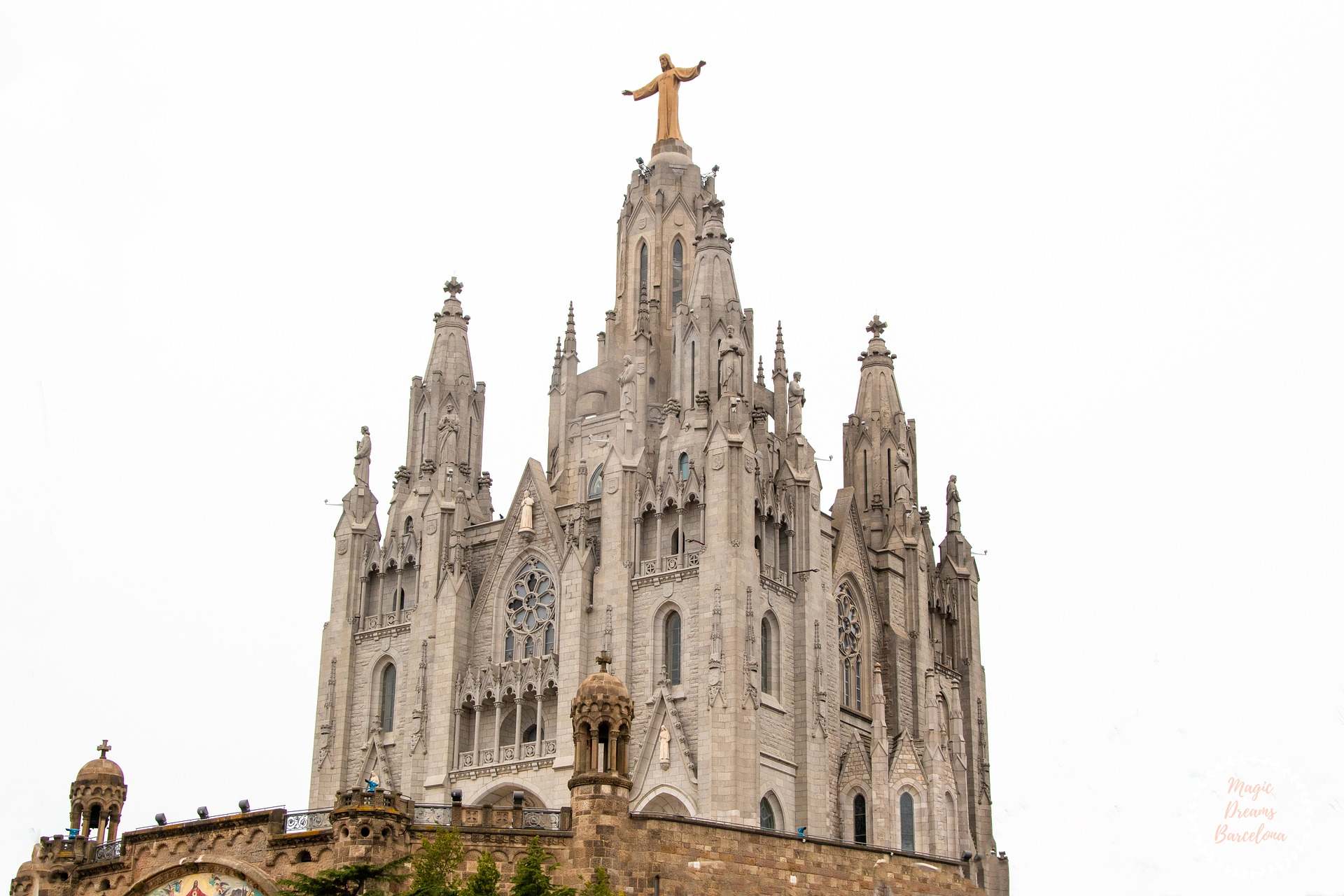
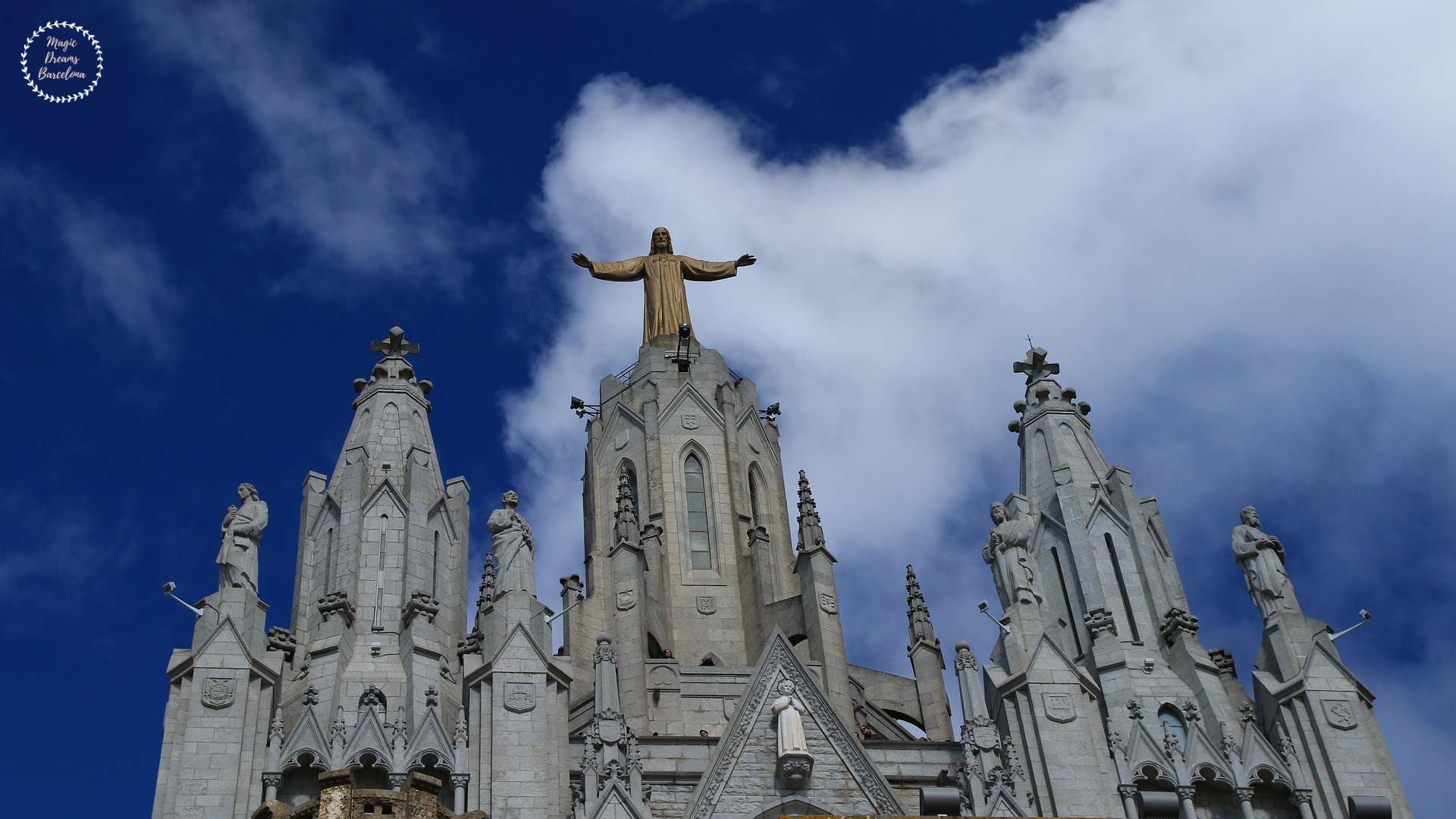
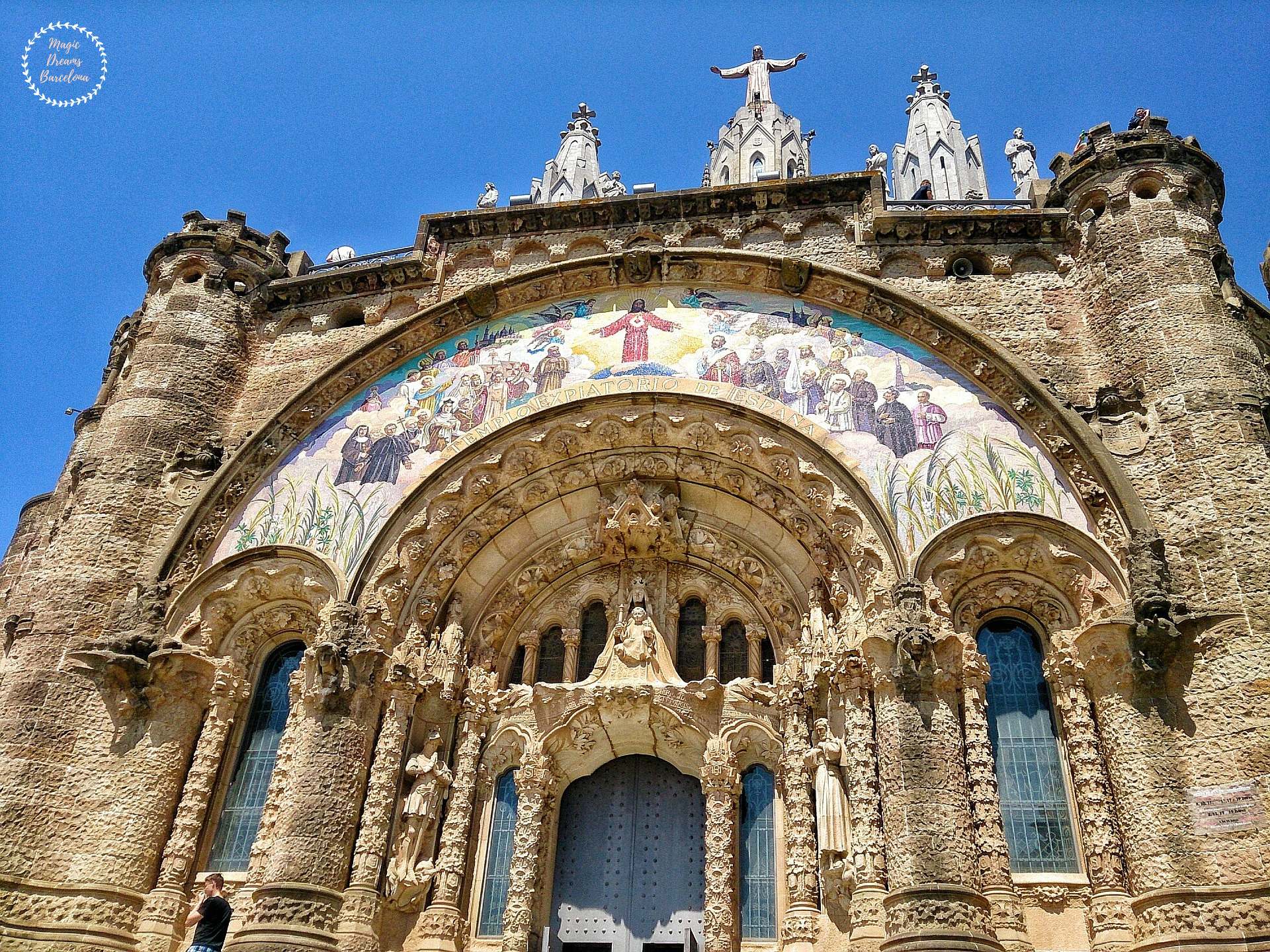
Una combinación única de historia, arquitectura y espiritualidad en la cima del Tibidabo En la cima del Tibidabo, con vistas privilegiadas sobre la ciudad de Barcelona, está situado el Templo Expiatorio del Sagrado Corazón de Jesús, un monumento que fusiona historia, arquitectura y espiritualidad en …
Las Ramblas de Barcelona: Historia, Cultura y Experiencias Únicas. Las Ramblas de Barcelona es uno de los paseos más emblemáticos y visitados de la ciudad. Con una longitud aproximada de 1,3 kilómetros, este histórico boulevard conecta la Plaça de Catalunya con el Port Vell, marcando …
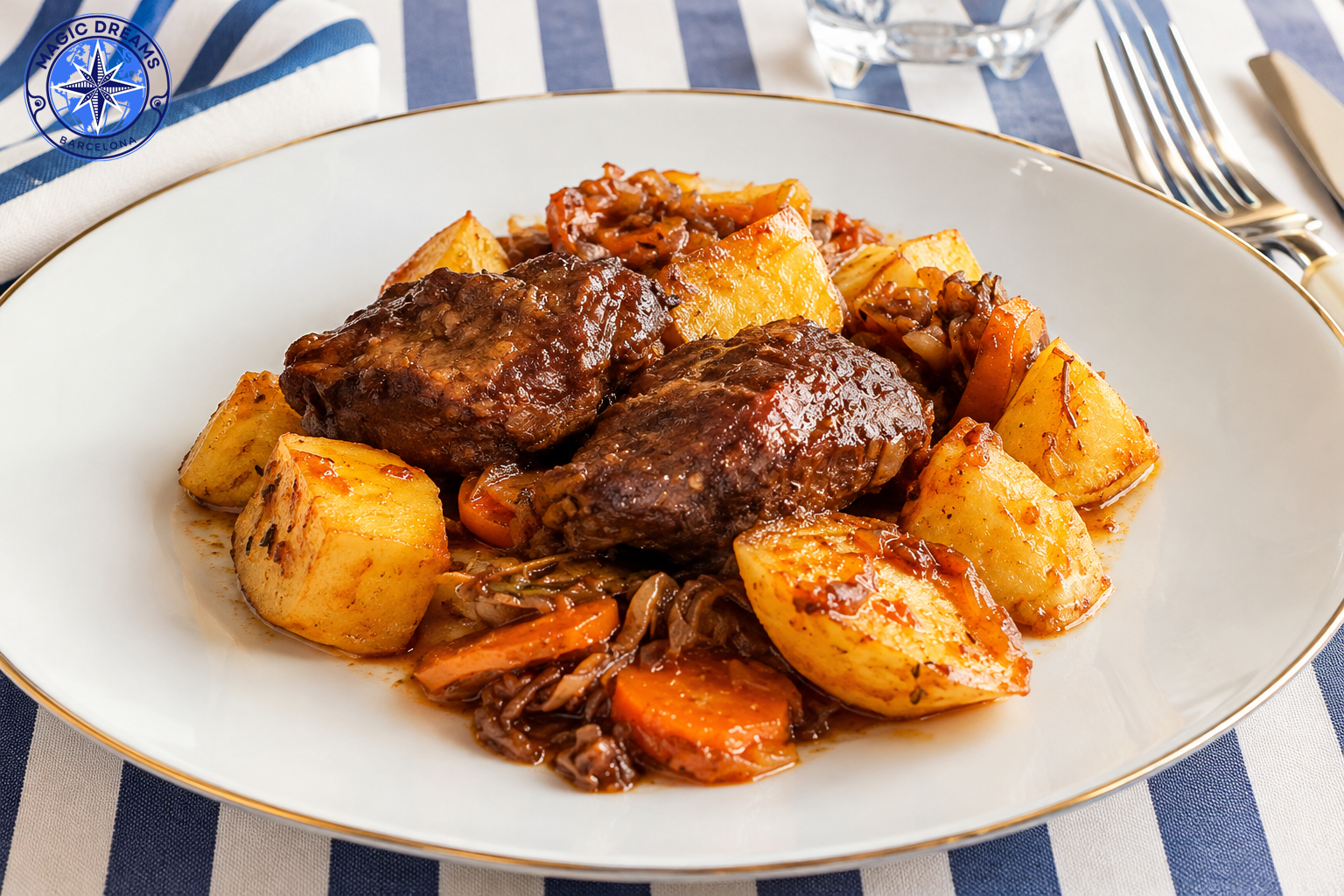
Oven-baked pork cheeks with potatoes are one of those traditional dishes that, with slow cooking and careful presentation, can be transformed into a truly exceptional gastronomic experience.
The meat becomes extraordinarily tender and succulent, while the potatoes absorb the rich roasting juices, caramelized onions, and aromatic Mediterranean herbs. It is a hearty, elegant, and comforting recipe, perfect for a family meal or as a centerpiece for a special occasion.
Ingredients
Serves 8
For the Pork Cheeks
8 pork cheeks, cleaned and trimmed.
4 garlic cloves, minced or lightly crushed.
3 tablespoons extra virgin olive oil.
1 teaspoon sweet paprika.
½ teaspoon ground cumin.
1 teaspoon dried oregano.
Fresh parsley, chopped.
2 bay leaves.
Sea salt.
Freshly ground black pepper.
For the Garnish
3 large potatoes, cut into large chunks.
3 onions, thinly sliced.
3 carrots, cut into thick slices.
3 ripe tomatoes, sliced.
2–3 garlic cloves.
Extra virgin olive oil.
150 ml white wine.
150–200 ml beef stock or water.
Fresh rosemary or thyme, to taste.
Optional: a few drops of sherry vinegar at the end, a pinch of smoked paprika, or a little honey for a lightly caramelized finish.
Preparation
01 · Marinating the Pork Cheeks
Where the flavor begins
Place the pork cheeks in a large bowl or container and add the olive oil, garlic, sweet paprika, cumin, oregano, parsley, bay leaves, salt, and pepper.
Massage the meat thoroughly so that every piece is evenly coated with the spices and aromatics.
Cover the container and refrigerate for 8–12 hours.
The marinade is optional, but it adds aromatic depth and results in a considerably more flavorful dish.
02 · Searing the Meat
A beautifully browned and aromatic exterior
Remove the pork cheeks from the refrigerator approximately 20–30 minutes before cooking.
Heat a large skillet or ovenproof casserole over medium-high heat with a little olive oil.
Sear the pork cheeks for several minutes on each side until they develop a deep, golden-brown crust.
There is no need to cook them through at this stage. The main goal is to develop their flavor and create a deliciously browned exterior.
Remove the meat from the pan and set aside.
03 · The Mediterranean Base
Slowly caramelized vegetables
Using the same pan, add the onions, carrots, and garlic.
Cook over medium heat for 8–10 minutes, stirring occasionally.
Add the tomatoes and cook for a few more minutes, until they begin to soften.
Pour in the white wine and gently scrape the bottom of the pan to loosen all the caramelized meat juices and flavorful browned bits.
Allow the wine to reduce for 3–4 minutes.
04 · Preparing the Potatoes
Golden on the outside, tender and succulent inside
Peel the potatoes and cut them into large, irregular chunks.
Arrange them in a large baking dish together with some of the onions and carrots.
Drizzle generously with olive oil and season with salt and freshly ground black pepper. Add a few sprigs of fresh rosemary or thyme.
Pour the stock and reduced wine around the vegetables, taking care not to completely submerge the potatoes.
05 · Slow-Cooking the Pork Cheeks
The key to melt-in-the-mouth meat
Preheat the oven to 170°C / 340°F, using conventional top-and-bottom heat.
Place the browned pork cheeks on top of the bed of vegetables and cover the baking dish with aluminum foil or an ovenproof lid.
Bake for approximately 1 hour and 30 minutes.
After this time, remove the foil and carefully turn the pork cheeks over.
Continue cooking for another 30–45 minutes, occasionally basting the meat with the juices from the baking dish.
The pork cheeks are ready when they are extremely tender and can be easily pulled apart with a fork.
06 · The Golden Finish
The gourmet touch
Increase the oven temperature to 200°C / 390°F for the final 10–15 minutes.
Allow the pork cheeks and potatoes to brown lightly while the cooking juices reduce and develop a richer, glossier, more intensely flavored consistency.
If the baking dish becomes too dry during cooking, add a small splash of stock.
The goal is to achieve a concentrated, aromatic, and slightly silky sauce without allowing the vegetables to burn.
07 · Resting and Plating
The finishing touch
Remove the baking dish from the oven and allow the pork cheeks to rest for 8–10 minutes.
Place a bed of onions, carrots, and cooking juices on each plate.
Add one or two pork cheeks and arrange the golden potatoes around the meat.
Finish with a few drops of the cooking sauce, a very fine drizzle of extra virgin olive oil, and a few fresh parsley, thyme, or rosemary leaves.
For a more elegant presentation, arrange the potatoes naturally around the meat and allow a small amount of sauce to spread delicately across the plate.
Gourmet Suggestions
Magic Dreams Barcelona
To elevate this recipe even further:
Add a few drops of sherry vinegar just before serving to balance the richness and enhance the flavors.
Add a small amount of smoked paprika for greater depth and complexity.
A teaspoon of honey mixed with the cooking juices during the final minutes in the oven creates a glossy, lightly caramelized finish.
Serve with crusty rustic bread to soak up the delicious sauce.
A green salad with a light vinaigrette provides the perfect fresh contrast to the richness of the dish.
The Secret to Truly Succulent Pork Cheeks
The key is not to cook the meat quickly, but to give it time, moisture, and moderate heat.
Slow cooking allows the collagen in the pork cheeks to gradually break down and transform into gelatin, creating that characteristic texture that is tender, juicy, and practically melting in your mouth.
Gourmet Presentation
Serve the pork cheeks on a large, elegant white plate, making the meat the star of the dish and arranging the golden potatoes and vegetables around it.
Finish with the concentrated sauce, fresh herbs, and a delicate drizzle of extra virgin olive oil.
The result is a sophisticated-looking dish that retains all the character and soul of traditional Mediterranean cuisine.
Suquet de Peix is one of the great classics of Catalan coastal cuisine. A humble fishermen’s stew in origin, it has become one of the most representative dishes of the Mediterranean gastronomic tradition. Traditionally prepared with the fish available that day, Suquet combines fish, potatoes, …
Historia, arqueología, paisaje y esencia mediterránea en la Costa Brava Existen de la Costa Brava en los que el paisaje parece contener la memoria de quienes lo habitaron hace miles de años. Empúries es, sin duda, uno de ellos. Situado frente al Mediterráneo, entre L’Escala …
There are places where history is not simply told — it is felt.
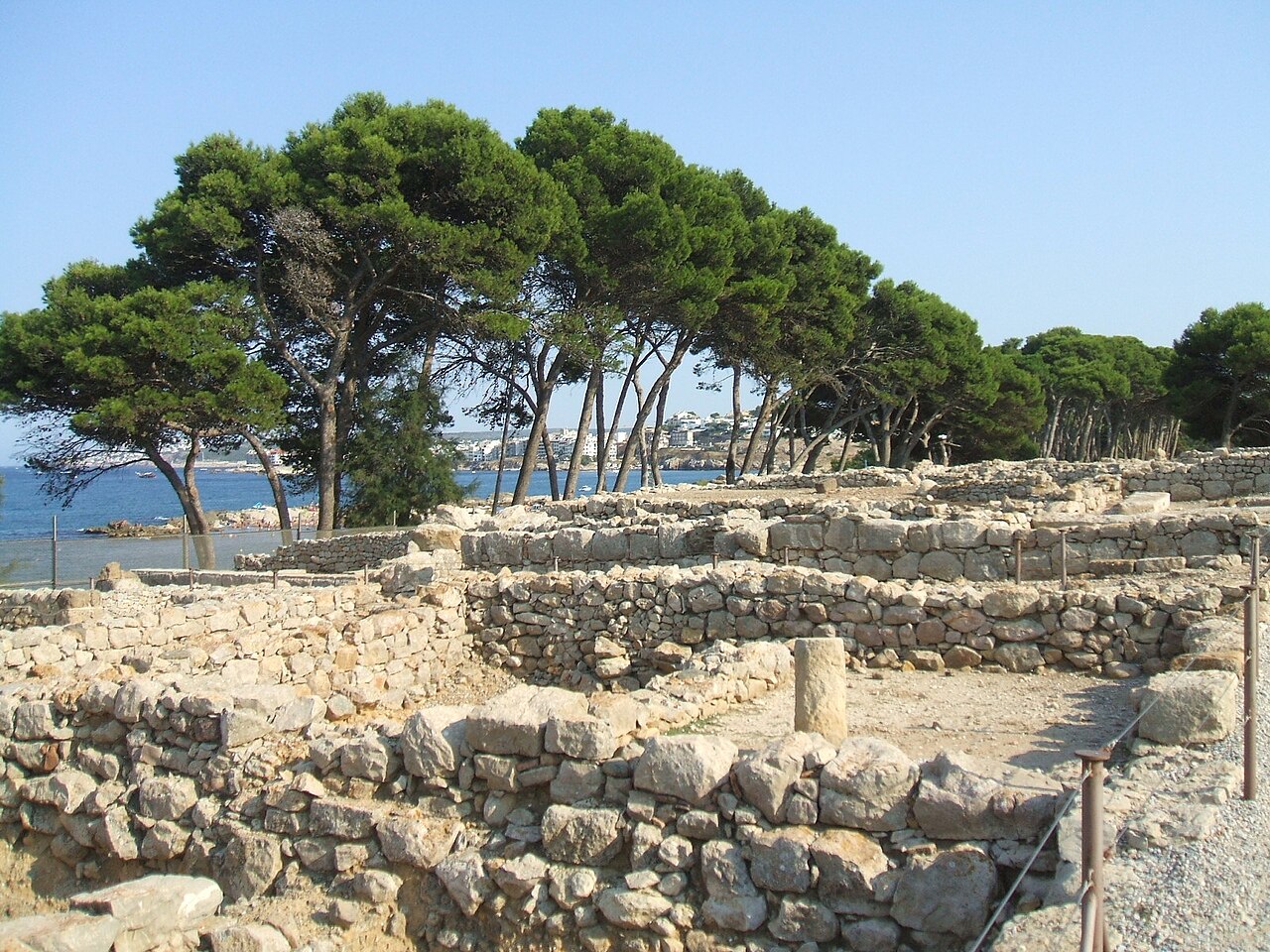
On the Costa Brava, overlooking the Mediterranean, the archaeological site of Empúries offers an extraordinary journey through more than two thousand years of history. Here, the remains of an ancient Greek settlement stand alongside those of a Roman city, creating one of the most fascinating cultural landscapes in Catalonia.
Surrounded by pine trees, Mediterranean vegetation and the blue horizon, Empúries is much more than an archaeological site. It is a place where civilizations, landscapes and the Mediterranean way of life come together.
A Greek gateway to the Iberian Peninsula
The story of Empúries begins with the arrival of Greek settlers from Phocaea, who established a trading settlement here around the beginning of the 6th century BC.
Known as Emporion, the settlement became an important commercial centre thanks to its strategic position on the Mediterranean coast. Its location allowed it to connect the Greek world with the communities of the Iberian Peninsula, creating a vibrant meeting point between different cultures.
Walking among the ancient remains today, it is easy to imagine merchants, sailors and travellers arriving from across the Mediterranean, bringing with them products, ideas, beliefs and traditions.
The sanctuary of Asclepius
One of the most remarkable discoveries at Empúries is the marble statue traditionally identified as Asclepius, the Greek god associated with medicine and healing.
Discovered during the early excavations of the site, the sculpture has become one of the most recognisable symbols of Empúries. Its presence offers a glimpse into the religious world of the ancient Greek community and the importance of sanctuaries within the city.
The surrounding archaeological remains reveal how religion, commerce and everyday life were closely connected in the ancient Mediterranean world.
The arrival of Rome
In 218 BC, during the Second Punic War, Roman troops landed at Emporion. This marked the beginning of a new chapter in the history of the settlement.
Over time, Roman influence grew and a Roman city developed alongside the existing Greek settlement. The two urban worlds evolved side by side, transforming Empúries into a remarkable meeting point between Greek and Roman cultures.
The Roman remains reveal a very different urban landscape, with streets, houses, public spaces, mosaics and architectural elements that provide an extraordinary insight into life during the Roman period.
Mosaics, streets and everyday life
Among the most fascinating features of the Roman city are its mosaics.
Their geometric patterns and decorative details offer a glimpse into the homes and lifestyles of the people who lived here centuries ago. Walking through the ancient streets, visitors can also identify the remains of houses, public buildings and other spaces that formed part of the Roman urban landscape.
Empúries allows history to be experienced at a human scale. Rather than simply observing isolated ruins, you can walk through the streets of an ancient city and imagine how people once lived, worked, worshipped and traded here.
A landscape shaped by the Mediterranean
Part of the magic of Empúries lies in its setting.
The archaeological remains extend towards the Mediterranean, surrounded by pine trees, coastal vegetation and the characteristic light of the Costa Brava.
Nearby, the ancient harbour area and the remains traditionally associated with the Moll Grec remind us of the fundamental role that the sea played in the history of Empúries.
The coastline, the ancient ruins and the Mediterranean horizon create a landscape where archaeology and nature exist side by side.
Sant Martí d’Empúries
Just above the ancient archaeological area lies Sant Martí d’Empúries, a charming medieval village with a long history of its own.
Its origins are connected to the ancient settlement known as the Palaiapolis, while its medieval character can still be appreciated in its streets, stone buildings and historic atmosphere.
From here, the Mediterranean landscape opens towards the coast, creating one of the most beautiful combinations of history and scenery in the area.
The coastal route connecting Sant Martí d’Empúries with L’Escala is another wonderful way to experience this landscape, with the sea constantly accompanying the journey.
Beaches and ancient history
The coastline surrounding Empúries is home to some of the most evocative corners of this part of the Costa Brava.
Portitxol and Les Muscleres offer Mediterranean scenery framed by rocks, pine trees and clear waters. Nearby, the ancient harbour area creates a particularly atmospheric setting where the remains of the past meet the sea.
Here, a day beside the Mediterranean can become something much more meaningful: a journey through landscapes that have attracted travellers, sailors and different civilizations for more than two millennia.
The archaeology of Empúries
Modern archaeological excavations at Empúries began in 1908 and have continued to reveal new information about the ancient settlements.
The archaeological site and the Archaeology Museum of Catalonia – Empúries preserve and interpret an extraordinary collection of remains, objects and discoveries connected with the Greek and Roman presence in the area.
Together, they provide a fascinating insight into the evolution of the site and into the cultural exchanges that shaped this part of the Mediterranean.
Empúries: an experience beyond history
Visiting Empúries is not simply about seeing ancient ruins.
It is about walking through a landscape where Greek merchants once arrived by sea, where Roman streets once filled with daily life and where the Mediterranean continues to define the character of the region.
The combination of archaeology, nature, sea and light makes Empúries one of those places that stays with you long after you leave.
For travellers looking to discover a more cultural and authentic side of the Costa Brava, this extraordinary archaeological landscape offers a different perspective on Catalonia — one where the past and present meet beside the Mediterranean.
Empúries at the Golden Hour
There is something particularly special about experiencing Empúries when the afternoon light begins to soften.
The ancient stones take on warmer tones, the Mediterranean becomes almost golden and the surrounding landscape acquires an atmosphere that feels timeless.
It is the perfect moment to pause, look towards the sea and imagine the thousands of years of history that unfolded on this extraordinary coast.
Empúries is not simply a place to visit. It is a place to travel through time.
From ancient Greece to Rome, from archaeological remains to Mediterranean landscapes, this corner of the Costa Brava reveals a side of Catalonia where history, culture and beauty come together.
And perhaps that is the true magic of Empúries: standing beside the Mediterranean and realizing that, more than two thousand years later, the sea is still telling the same story.
Estatua de Asclepio – Por KaischiB from Mainz, Germany – empúries_18, CC BY-SA 2.0, https://commons.wikimedia.org/w/index.php?curid=82365450.
Mosaico del Sacrificio de Ifigenia , arra el momento dramático en el que los griegos, varados en el puerto de Áulide por falta de viento para viajar a Troya, deciden sacrificar a Ifigenia (hija del rey Agamenón) para aplacar la ira de la diosa Diana. Se cree que es una copia romana fiel (fechada hacia el siglo I a. C.) de una famosa pintura griega del siglo IV a. C. atribuida a Timantes.
Muralla griega en Neápolis – By LeZibou – Own work, CC BY-SA 3.0, https://commons.wikimedia.org/w/index.php?curid=4294112.
Detalle ruinas de la ciudad Greco – Romana de Castelló d’Empúries.
Detalle ruinas de la ciudad Greco – Romana de Castelló d’Empúries.
Detalle ruinas de la ciudad Greco – Romana de Castelló d’Empúries.
Detalle ruinas de la ciudad Greco – Romana de Castelló d’Empúries.
Detalle ruinas de la ciudad Greco – Romana de Castelló d’Empúries.
Detalle mosaico de la ciudad Greco – Romana de Castelló d’Empúries.
Detalle detalle gaviota sobre una piedra de la ciudad Greco – Romana de Castelló d’Empúries.
Detalle mosaico de la ciudad Greco – Romana de Castelló d’Empúries.
Detalle de parte de la ciudad Greco – Romana y Museo de Castelló d’Empúries es el único yacimiento arqueológico de la Península Ibérica donde conviven los restos de una ciudad griega con los restos de una ciudad romana.
Some places surprise us with their history, others with their beauty, and some with their ability to convey a sense of calm even when they are located right in the heart of the city. Turó Park combines all three qualities. Located in the Sarrià-Sant Gervasi …
Existen lugares que sorprenden por su historia, otros por su belleza y algunos por la capacidad de transmitir una sensación de calma incluso cuando están situados en plena ciudad. El Turó Park reúne las tres características. Situado en el distrito de Sarrià-Sant Gervasi, junto a …
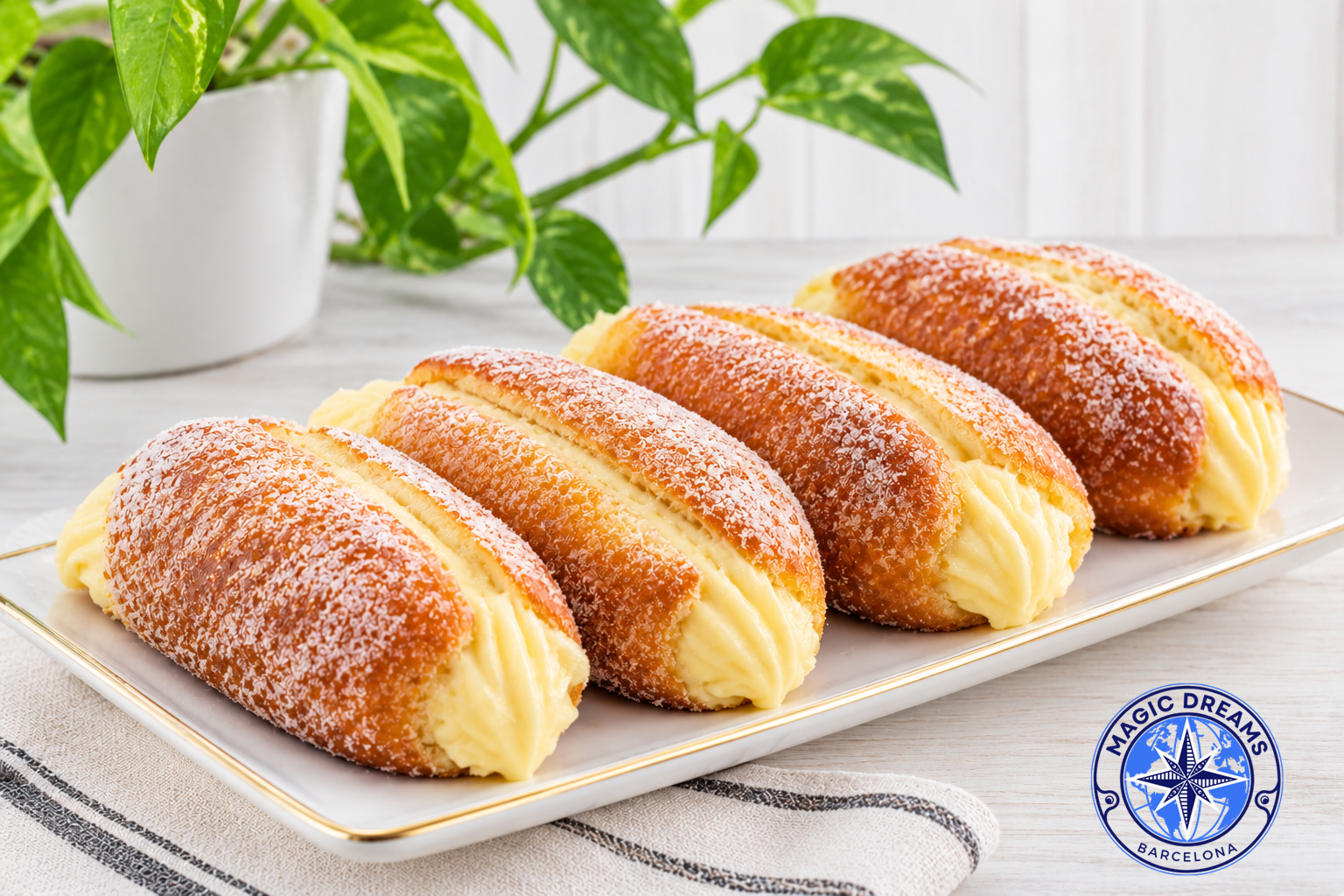
The xuixo de crema is one of the most iconic sweet pastries in Catalan cuisine, and particularly in the city of Girona. It is a delicate, laminated and lightly flaky cylindrical pastry, filled with pastry cream, deep-fried and generously coated in sugar.
Crisp and golden on the outside, delicate and creamy on the inside, the xuixo offers an irresistible contrast between the texture of freshly fried pastry and the smoothness of its filling.
This speciality is an important part of Girona’s gastronomic identity and has been recognised by the Generalitat de Catalunya as a Producte de la Terra. Traditionally enjoyed for breakfast or as an afternoon snack, it is also served as a dessert or enjoyed as a sweet treat at any time of day.
At Magic Dreams Barcelona, we celebrate the essence of this traditional Catalan speciality, offering a xuixo de crema that preserves the character of this iconic pastry: golden dough, a sugar-coated exterior and a generous filling of pastry cream.
The Origins of the Xuixo
A story rooted in Girona
The xuixo was created in Girona during the first decades of the 20th century. The most widely told story places its creation at the former pastry shop of Emili Puig, located on Carrer de la Cort Reial in the city’s Barri Vell.
Sources place its origins in 1918 or around 1920. In fact, in 2018, Girona City Council celebrated the centenary of the xuixo, using 1918 as the reference year.
According to the story traditionally associated with its creation, a French pastry chef arrived at Emili Puig’s bakery and introduced him to a pastry known as “chou à la crème.”
This preparation inspired the creation of a new speciality adapted to the local pastry-making tradition.
The result was a completely different pastry in both preparation and presentation: a thin, laminated dough filled with cream, rolled, left to ferment, then deep-fried and coated with sugar.
Thus was born a sweet that would eventually become one of Girona’s great gastronomic symbols.
What Exactly Is a Xuixo?
Crispy on the outside, creamy on the inside
The traditional xuixo is a pastry with an approximately cylindrical shape, made from thin dough that develops multiple layers during the preparation process.
Its exterior should have a characteristic golden colour, a lightly crisp texture and a generous coating of sugar.
Inside, we find its unmistakable star: pastry cream.
The combination of these two textures is precisely one of the secrets of its appeal:
crispy pastry + sugar + smooth, aromatic cream.
The traditional dough is made with ingredients such as flour, eggs, salt, butter, sugar, milk and yeast, while the pastry cream generally contains milk, sugar, egg yolks, starch and aromatic ingredients such as lemon and cinnamon.
Ingredients
For traditional cream-filled xuixos
For the dough
500 g strong bread flour
80 g sugar
10 g salt
2 eggs
150 ml milk
20 g fresh yeast
50 g butter
Approximately 150 g butter for laminating
Oil for deep-frying
For the pastry cream
500 ml whole milk
4 egg yolks
100 g sugar
40 g cornstarch
1 strip of lemon peel
1 cinnamon stick
1 teaspoon vanilla extract, optional
To finish
Plenty of sugar for coating
The recipe may vary from one bakery to another. Traditional xuixo recipes from Girona can differ in proportions and small details depending on the pastry chef or family recipe. What remains essential is the combination of thin laminated dough, pastry cream, deep-frying and sugar.
Preparation
01 · Prepare the Dough
The beginning of a great xuixo
Combine the flour, sugar and salt in a large bowl.
Add the eggs, milk and crumbled fresh yeast.
Knead until you obtain a smooth and elastic dough.
Gradually incorporate the butter and continue kneading until the dough becomes smooth, soft and slightly elastic.
Shape the dough into a ball, cover it and leave it to rest until it increases in volume.
This first resting period is important for developing the dough’s structure and achieving a light texture later on.
02 · Prepare the Pastry Cream
The heart of the xuixo
Heat the milk together with the lemon peel and cinnamon stick.
Meanwhile, mix the egg yolks with the sugar and cornstarch until smooth.
Gradually pour the hot milk over the mixture, stirring continuously.
Return the mixture to the heat and cook over medium heat, stirring constantly, until the cream thickens.
Remove from the heat, transfer to a clean container and cover directly with cling film to prevent a skin from forming.
Allow the pastry cream to cool completely before using it.
The cream should be smooth, firm yet creamy, so that it can be piped into the dough without becoming too runny.
03 · Laminate the Dough
The key to its texture
Once the dough has rested, roll it out into a thin, even sheet.
Place the laminating butter on the dough and make the appropriate folds.
Roll and fold the dough several times to create its characteristic layers.
This process creates the thin laminated structure that will give the xuixo its distinctive texture after frying.
The dough should be rolled thin enough to produce a light and crisp pastry once fried.
04 · Cut and Fill
Cream at the centre
Roll out the dough and cut it into portions, creating elongated or triangular pieces depending on the technique used.
Place a generous amount of pastry cream in the centre.
Carefully roll the dough over itself, making sure to seal the ends properly.
It is important that the cream remains completely enclosed inside the pastry during shaping.
The xuixo should be compact without compressing the dough excessively.
05 · Allow to Proof
A light and airy pastry
Place the shaped xuixos on a tray and leave them to rest until they increase in volume.
This second resting period allows the dough to develop a lighter and airier texture.
The exact time will depend on the room temperature and the amount of yeast used.
This process should not be rushed: proper fermentation is essential for achieving a light interior and even frying.
06 · Fry the Xuixos
The decisive moment
Heat plenty of oil and carefully control the temperature.
Gently place the xuixos into the hot oil and fry until they achieve an even golden colour.
The frying process should be carefully controlled so that the pastry cooks properly inside without becoming too dark on the outside.
Excessively high temperatures can brown the exterior too quickly while leaving the interior insufficiently cooked.
A well-controlled frying process produces an exterior that is crisp, golden and light.
07 · Coat with Sugar
The finishing touch
Once fried, remove the xuixos and allow them to drain briefly.
While they are still slightly warm, roll them in sugar, coating the entire surface.
The sugar adheres to the exterior, creating the characteristic sweet finish associated with the traditional xuixo.
The result should be a golden, slightly crisp pastry covered in sugar.
Gourmet Presentation
Magic Dreams Barcelona
For an elegant presentation, place the cream-filled xuixos on a white porcelain tray or a simple pastry plate.
Arrange them slightly apart or in a staggered composition that highlights their volume and characteristic golden finish.
The cream can be left slightly visible at the ends, creating a visual contrast between the golden pastry and the soft colour of the pastry cream.
Finish with a light dusting of sugar and, for a more contemporary presentation, accompany the xuixos with a few small green leaves or natural elements for contrast.
The importance of every layer
A great xuixo depends on more than just its filling.
The final result is the combination of several elements:
Thin, well-laminated dough.
It should have delicate layers and a light structure after frying.
Proper fermentation.
This is essential for achieving a less dense interior and a pleasant texture.
Balanced pastry cream.
It should be creamy and aromatic, yet firm enough to remain inside the pastry.
Controlled frying.
The exterior should be golden and crisp without becoming excessively greasy.
Sugar.
It is an essential part of the traditional finish and provides the sweet contrast that defines the xuixo.
Pastry Cream
The Soul of the Xuixo
The cream is arguably the element that most defines the experience of eating a xuixo.
Traditionally made with milk, egg yolks, sugar and starch, it is flavoured with ingredients such as lemon peel and cinnamon.
It should have a smooth, velvety and sufficiently thick texture, allowing it to remain inside the pastry while melting delicately in the mouth.
The contrast between the warm or slightly warm pastry, the sugar and the smooth cream is one of the great pleasures of this traditional sweet.
When Is a Xuixo Enjoyed?
The xuixo is especially associated with breakfast and afternoon snacks, although its versatility also makes it perfect as a dessert or accompaniment to coffee.
It pairs beautifully with:
Café con leche / latte
Espresso
Cortado
Hot chocolate
Black tea or chai
Mild herbal teas
It can also be enjoyed as a small dessert after a meal, particularly when served slightly warm.
Storage and Enjoyment
A pastry best enjoyed fresh
The xuixo is at its best when freshly made.
Its exterior gradually loses some of its characteristic crispness over time, which is why it is traditionally recommended to enjoy it as soon as possible.
Information about Girona’s traditional product also highlights its short shelf life once purchased, which is why traditional bakeries generally prepare it daily.
To fully appreciate its qualities, it is best enjoyed fresh rather than stored for extended periods.
Gourmet Suggestions
Ideas for enjoying an exceptional Xuixo
Serve the xuixo slightly warm to enhance the aroma of the pastry and the creaminess of the filling.
Pair it with an intense espresso to create a contrast between the coffee’s bitterness and the sweetness of the sugar.
For a more sophisticated presentation, add a small amount of crème anglaise or vanilla ice cream.
Thinly sliced strawberries or berries can add acidity and freshness.
For a more aromatic version, accompany it with cinnamon or a small amount of lemon zest.
Avoid overcrowding the plate: the traditional xuixo already has enough visual and gastronomic presence on its own.
The Secret of the Xuixo de Crema
The true magic of the xuixo lies in its contrast.
On the outside, there is thin, golden and crisp pastry.
Inside, there is smooth, delicate and aromatic pastry cream.
Finally, the sugar provides the sweet, traditional finish that makes every bite a unique experience.
It is precisely this combination of texture, temperature, aroma and sweetness that has allowed the xuixo to remain, for more than a century, one of the great references of Girona’s pastry tradition.
Xuixos de Crema
A classic of Catalan gastronomy, born in Girona and transformed into a symbol of a pastry tradition that continues to delight generations. At Magic Dreams Barcelona, we celebrate this heritage with a crisp, creamy and deeply Catalan sweet.
El xuixo de crema es uno de los dulces más emblemáticos de la gastronomía catalana y, especialmente, de la ciudad de Girona. Se trata de una pieza de masa fina, laminada y ligeramente hojaldrada, de forma cilíndrica, rellena de crema pastelera, frita y generosamente cubierta de azúcar. Crujiente …
Where History, Art, and the Mediterranean Lifestyle Converge Plaça de Catalunya is the epicentre of Barcelona, a vibrant meeting point where the historic district of Ciutat Vella meets the modern Eixample neighbourhood. Considered one of the city’s most iconic public spaces, the square connects some …
Construido entre 1905 y 1908 como sede del Orfeón Catalán, el Palacio de la Música Catalana es uno de los monumentos más emblemáticos del modernismo catalán y como una de las salas de conciertos más singulares del mundo. El arquitecto Lluís Domènech i Montaner concibió este edificio como un santuario para la música coral catalana, emplazado sobre el solar del antiguo convento de San Francisco de Paula, con la primera piedra colocada en el día de Sant Jordi de 1905.
La Sala de Conciertos, joya del palacio, deslumbra por su acústica impecable, que ha enamorado a músicos de renombre internacional. Su espacio luminoso y colorido, definido por vidrieras y un cuidado minucioso de cada detalle, transporta al espectador a un mundo de fantasía, donde la música y la luz se funden con la naturaleza y el arte. La enorme claraboya de cristal coloreado —con forma de campana invertida y más de una tonelada de peso— simboliza un corazón de ángeles femeninos rodeando el sol, mientras que las vidrieras y la estructura de acero ligera filtran la luz exterior, recreando la atmósfera mística de las catedrales góticas.
El palacio está adornado con bustos, relieves y esculturas, que evocan figuras musicales y mitológicas, desde las musas que rodean el escenario hasta las valquirias de Wagner que surgen del techo. Elementos de la naturaleza —flores mediterráneas, palmeras y frutas— dialogan con las columnas revestidas de trencadís, cada una única, que simbolizan la alegría y la unión de arte y vida, siguiendo el ideal modernista. Los mosaicos, elaborados en los talleres de Lluís Bru, completan un conjunto armónico que convierte cada visita en un paseo por la fantasía y la sensibilidad artística.
Más allá de su valor arquitectónico, el Palacio de la Música Catalana es un centro cultural vibrante, con más de 600 conciertos anuales y 350.000 visitantes turísticos. Experiencias sensoriales como «Essència Palau», que combina aromas, literatura y música, permiten una inmersión profunda en la riqueza artística y arquitectónica del lugar. La visita puede concluir en la Sala Lluís Millet, un salón de descanso modernista que da a una pequeña terraza con columnas decoradas con mosaicos, un remanso de belleza y serenidad.
Localización: C/ Sant Pere Més Alt, s/n
Cómo llegar: Autobuses V15, V17 y 45; Metro Urquinaona, líneas 1 y 4
Experiencias Magic Dreams Barcelona: descubrir la esencia de la belleza
Magic Dreams Barcelona ofrece una manera íntima, personalizada y sensorial de descubrir el Palacio de la Música Catalana. Nuestro servicio transforma la visita en un viaje educativo y emocional, donde cada detalle es cuidado con sensibilidad y precisión, donde la arquitectura y la música se viven plenamente.
Nuestros servicios exclusivos incluyen:
Somos guías nativos expertos en historia, arquitectura y arte modernista, especializados en simbolismo.
Rutas personalizadas que adaptan el recorrido a sus intereses, ritmo y preferencias, con transporte privado.
Experiencias sensoriales privadas: música en vivo durante la velada en su alojamiento privado, aromas, literatura, chef privado de cocina nacional e internacional, cena o comida tematizada.
Gastronomía y picnic de autor: dulces, salados, zumos naturales, vinos y cavas sin alcohol, en espacios únicos frente al mar, jardines o yates, con mantelería y catering a escoger.
Servicio de floristería.
Reportajes fotográficos profesionales, que capturan cada instante de la experiencia.
Bienestar y talleres creativos, desde cocina tradicional catalana hasta mosaico y trencadís.
Escapadas de un día o fin de semana a a los mejores rincones de la Costa Brava y Pirineo Catalán, rutas gastronómicas en nuestra selección de los mejores locales de la ciudad.
Cada visita de la mano de Magic Dreams Barcelona, se convierte así en un encuentro profundo con la música,el arte, la arquitectura y la naturaleza, donde no solo se contempla la obra, sino que se siente, se comprende y se escucha el lenguaje que une historia, arte y vida. Magic Dreams Barcelona le permite vivir el Palacio de la Música Catalana como una experiencia inolvidable y exquisitamente cuidada.
Detalle interior del Palau de la Música Catalana diseño del arquitecto barcelonés Lluís Domènech i Montaner.
Detalle interior del Palau de la Música Catalana diseño del arquitecto barcelonés Lluís Domènech i Montaner.
Detalle exterior del Palau de la Música Catalana diseño del arquitecto barcelonés Lluís Domènech i Montaner.
Detalle interior del Palau de la Música Catalana diseño del arquitecto barcelonés Lluís Domènech i Montaner.
Detalle interior del Palau de la Música Catalana diseño del arquitecto barcelonés Lluís Domènech i Montaner.
Detalle interior del Palau de la Música Catalana diseño del arquitecto barcelonés Lluís Domènech i Montaner.
Detalle interior del Palau de la Música Catalana diseño del arquitecto barcelonés Lluís Domènech i Montaner.
Detalle exterior del Palau de la Música Catalana diseño del arquitecto barcelonés Lluís Domènech i Montaner.
Detalle interior del Palau de la Música Catalana diseño del arquitecto barcelonés Lluís Domènech i Montaner.
Detalle exterior del Palau de la Música Catalana diseño del arquitecto barcelonés Lluís Domènech i Montaner.
Detalle interior del Palau de la Música Catalana diseño del arquitecto barcelonés Lluís Domènech i Montaner.
Detalle interior del Palau de la Música Catalana diseño del arquitecto barcelonés Lluís Domènech i Montaner.
Detalle interior del Palau de la Música Catalana diseño del arquitecto barcelonés Lluís Domènech i Montaner.
Detalle interior del Palau de la Música Catalana diseño del arquitecto barcelonés Lluís Domènech i Montaner.
Detalle interior del Palau de la Música Catalana diseño del arquitecto barcelonés Lluís Domènech i Montaner.
Un espacio donde converge la historia, el arte y el estilo de vida mediterráneo La Plaza de Cataluña (Plaça de Catalunya) es el epicentro de Barcelona, un vibrante punto de encuentro donde confluyen el histórico distrito de Ciutat Vella y el moderno Eixample. Considerada uno …
An Art Nouveau Mansion Preserving the Splendour of a Bygone Era At the intersection of Avinguda Diagonal and Carrer de Balmes, in the heart of Barcelona, stands Casa Pérez Samanillo, the current headquarters of the Círculo Ecuestre. This remarkable mansion is one of the most …
En el corazón del barrio del Born, entre estrechas callejuelas medievales que aún conservan el pulso del antiguo puerto de Barcelona, está situada la Basílica de Santa María del Mar, uno de los testimonios más puros y conmovedores del gótico catalán y un símbolo profundo de identidad colectiva.
Situada en la Plaça de Santa Maria, 1, a pocos minutos a pie del metro Jaume I, esta iglesia —conocida popularmente como la Catedral de la Ribera— no nació del poder de la monarquía ni del alto clero, sino del esfuerzo, la devoción y la solidaridad de los habitantes del barrio. Comerciantes, artesanos y, de forma muy especial, los bastaixos —los descargadores del muelle de la Ribera— financiaron y levantaron el templo con su propio trabajo y recursos.
Estos hombres transportaron, una a una, las enormes piedras desde la cantera real de Montjuïc y desde el puerto hasta la actual plaza del Born, cargándolas sobre sus espaldas. En homenaje a su sacrificio, la basílica los inmortaliza en los capiteles del interior y en los repujados de bronce de sus puertas, un gesto excepcional que convierte a Santa María del Mar en un monumento a la dignidad del trabajo colectivo.
Arquitectura: la pureza del gótico catalán
Construida en un tiempo extraordinariamente breve para la época —55 años, entre 1329 y 1384—, Santa María del Mar es considerada la única iglesia de gótico catalán puro. Su estructura de tres naves casi de la misma altura, soportada por esbeltas columnas separadas exactamente cada 13 metros, crea un espacio diáfano y armónico sin precedentes en la arquitectura medieval europea.
La sensación que produce el interior es sobrecogedora, amplitud, ligereza y verticalidad se combinan como si la gravedad se hubiera invertido, atrayendo la piedra hacia lo alto. Las vidrieras monumentales, entre ellas el gran rosetón central —reconstruido tras el terremoto de 1428 en un exquisito estilo gótico flamígero— filtran la luz natural y envuelven el espacio en una atmósfera serena y casi etérea.
Cada elemento arquitectónico está concebido para elevar la mirada y el espíritu, invitando al silencio, la contemplación y la emoción.
Las azoteas: Barcelona desde el cielo medieval
Desde hace algunos años, el acceso público a las azoteas y terrazas de la basílica permite descubrir Santa María del Mar desde una perspectiva privilegiada. Tras ascender por una estrecha escalera de caracol de 120 a 140 peldaños, el visitante es recompensado con una de las vistas más bellas de Barcelona.
Desde aquí se comprende el entramado urbano medieval de Ciutat Vella y se divisan iconos contemporáneos como la Sagrada Família, Montjuïc, Tibidabo, la Torre de Collserola, el mar Mediterráneo y los tejados del Born, estableciendo un diálogo visual entre pasado y presente.
Curiosidades que enriquecen la experiencia
Santa María del Mar nunca ha sido reconstruida en estilo barroco, como ocurrió con muchas iglesias góticas, lo que explica la extraordinaria coherencia estética que conserva hoy.
Las columnas interiores, pese a su esbeltez, soportan el peso con tal precisión que no requieren arbotantes visibles en el interior, una proeza técnica para su tiempo.
El templo ha sobrevivido a incendios, terremotos y a la Guerra Civil, cuando en 1936 se perdieron gran parte de sus retablos, pero la estructura gótica permaneció intacta, reforzando su aura de resistencia y permanencia.
En 2026, Santa María del Mar continúa siendo un espacio donde arquitectura, música y espiritualidad conviven en conciertos, celebraciones y visitas culturales de alto valor patrimonial.
Santa María del Mar: un viaje emocional en el tiempo
Caminar hasta la basílica desde la calle Princesa o perderse por las calles del Born no es solo un desplazamiento urbano, es un viaje sensorial y emocional hacia la Barcelona medieval, hacia una ciudad construida con esfuerzo, fe y belleza compartida.
Experiencias Magic Dreams Barcelona – Descubrir la esencia de la belleza.
En Magic Dreams Barcelona transformamos la visita a espacios emblemáticos como la Basílica de Santa María del Mar en experiencias íntimas, personalizadas y profundamente emocionales. No ofrecemos simples recorridos, sino encuentros sensibles con la historia, la arquitectura y el simbolismo que definen el alma de Barcelona.
Nuestros servicios exclusivos incluyen:
Guías nativos especializados en historia, arte y arquitectura, con profundo conocimiento del simbolismo medieval y gótico catalán.
Rutas totalmente personalizadas, adaptadas a sus intereses, ritmo y preferencias, con opción de transporte privado.
Experiencias sensoriales privadas, que pueden incluir música en vivo, aromas, literatura y veladas exclusivas en alojamientos privados.
Gastronomía y picnics de autor, con selección de dulces, salados, zumos naturales, vinos y cavas sin alcohol, en espacios únicos frente al mar, jardines históricos o yates.
Servicio de floristería, reportajes fotográficos profesionales y experiencias de bienestar.
Talleres creativos como cocina tradicional catalana, mosaico y trencadís.
Escapadas exclusivas a la Costa Brava y el Pirineo Catalán, así como rutas gastronómicas cuidadosamente seleccionadas.
Cada experiencia con Magic Dreams Barcelona se convierte en un diálogo entre pasado y presente, donde la arquitectura se escucha, la historia se siente y la belleza se vive con todos los sentidos.
Porque descubrir Santa María del Mar —como Barcelona misma— es emocionarse, comprenderla y llevarla consigo para siempre.
Three simple ingredients carrying centuries of Catalan tradition Mel i Mató is one of the simplest desserts in Catalan cuisine and, at the same time, one of the recipes that most clearly represents the region’s culinary identity. Its essence lies in a humble combination: fresh …
Una tapa imprescindible de la cocina española y catalana Las croquetas son una de las tapas más populares de España y forman parte también de la tradición culinaria catalana. Su origen moderno está relacionado con la cocina francesa y la elaboración de la croquette, aunque …
Barcelona ofrece diferentes floristerías conocidas por su estilo, tradición y calidad en el arte floral. A continuación, presentamos una selección de floristerías recomendadas por Magic Dreams Barcelona.
1 – The Boj
Situada en la calle de Bigai, 5, en Sarrià-Sant Gervasi, The Boj es una floristería familiar que selecciona las mejores flores de la región del Maresme y de Holanda. Ofrecen ramos, cestas, velas y flores preservadas que mantienen su aspecto sin necesidad de riego. También disponen de servicio a domicilio.
2 – Herbs
Situada en la calle Balmes, 171, Herbs destaca por su entrega de ramos el mismo día, incluso fines de semana y festivos. Actualmente también realizan entregas en Madrid, permitiendo que más personas disfruten de la belleza de sus flores.
3 – Colvin (Floristería Online)
Con sede en Barcelona, Colvin ofrece una amplia variedad de plantas exóticas y ramos. Se enfocan en ofrecer flores frescas, minimizando el tiempo de transporte desde el campo hasta el cliente, asegurando que las flores lleguen directamente del productor al consumidor.
4 – Florster
Situada en la calle de Laforja, 61, Florster realiza entregas sostenibles usando bicicletas e incluye un vídeo del momento de la entrega. Los ramos se personalizan según el tamaño deseado, con flores de temporada, muchas provenientes del Maresme, casi productos de kilómetro 0.
5 – Navarro
Floristería histórica en la calle València, 320, en el Eixample, con más de 65 años de tradición. Gestionada por las nietas de Constantino Navarro, ofrece plantas, ramos y arreglos con entrega el mismo día, garantizando flores frescas y precio justo.
6 – Flower Shop Barcelona
Con tres locales en la ciudad, Flower Shop Barcelona ofrece una amplia variedad de flores y plantas de interior, tienda online y reparto a domicilio. Localizaciones: Còrsega, 267; Passeig de Sant Joan, 114; y Rossend Nobas, 3.
7 – Au Nom de la Rose
Especializada en rosas, situada en la calle València, 203 (esquina con Enric Granados). Ofrece entregas a domicilio 24 horas y recogida en tienda, proporcionando ramos elegantes y de alta calidad.
8 – The Botanique Flower Shop
Situada en el Mercado de la Concepción, calle Aragón, 217, The Botanique destaca por la elegancia y la oferta de flores frescas. También ofrecen cestas de frutas, regalos, cava, tienda online y servicio de entrega 24/7.
Cada una de estas floristerías representa una forma única de entender el arte floral en Barcelona, combinando tradición, innovación y dedicación en cada ramo.
Top Florists in Barcelona – Magic Dreams Recommended Floral Shops Guide
Top Florists in Barcelona – Magic Dreams Recommended Floral Shops Guide.
Top Florists in Barcelona – Magic Dreams Recommended Floral Shops Guide.
Top Florists in Barcelona – Magic Dreams Recommended Floral Shops Guide.
Top Florists in Barcelona – Magic Dreams Recommended Floral Shops Guide
Top Florists in Barcelona – Magic Dreams Recommended Floral Shops Guide.
Top Florists in Barcelona – Magic Dreams Recommended Floral Shops Guide.
Top Florists in Barcelona – Magic Dreams Recommended Floral Shops Guide.
Top Florists in Barcelona – Magic Dreams Recommended Floral Shops Guide.
Flowers.
Flowers.
Flowers.
Flowers.
Floristería Barcelona.
Flores MDB.
Flores MDB.
Flores MDB.
Flores MDB.
Flores MDB.
Flores MDB.
Flores MDB.
Flores MDB.
Flowers Magic Dreams Barcelona.
Flowers Magic Dreams Barcelona.
Top Florists in Barcelona – Magic Dreams Recommended Floral Shops Guide
Flores MDB.
Flores MDB.
Flores MDB.
Flores MDB.
Top Florists in Barcelona – Magic Dreams Recommended Floral Shops Guide.
Top Florists in Barcelona – Magic Dreams Recommended Floral Shops Guide.
Para colaboraciones, proyectos o consultas profesionales – Reservas y presupuestos
Por favor, deje sus datos y su número de teléfono, y nos pondremos en contacto con usted a la mayor brevedad, a lo largo del día.
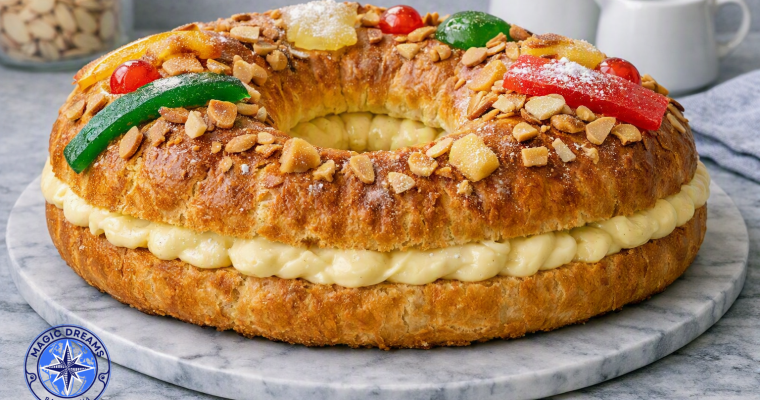
An aromatic brioche crown, silky vanilla pastry cream and the sweetest spirit of tradition The Roscón de Reyes, or Spanish King’s Cake, is much more than one of the most eagerly awaited treats of the Christmas season. Its distinctive crown shape, fragrant citrus and orange …
Torre Glòries, one of the most recognizable contemporary icons of Barcelona’s skyline, stands as a testament to architectural innovation and sustainable design. Opened in 2005 under its original name, Torre Agbar, the tower is located in the 22@ district, the city’s technological and business hub, …
Sumérjase en un oasis de elegancia, romanticismo y serenidad en pleno corazón de Montjuïc. Los Jardines de Joan Maragall, rodeando el histórico Palauet Albéniz, ofrecen paseos inolvidables entre parterres repletos de flores, fuentes ornamentales y esculturas que dialogan con la arquitectura neoclásica del palacete. Este entorno único permite disfrutar de miradores privilegiados con vistas a la ciudad de Barcelona, mientras se percibe la calma y la sofisticación de un espacio diseñado para el deleite de los sentidos.
Historia y origen
Los jardines fueron concebidos en 1929 con motivo de la Exposición Internacional de Barcelona, diseñados por el paisajista Jean‑Claude Nicolas Forestier con la colaboración de Nicolau Maria Rubió i Tudurí.
El Palauet Albéniz se construyó para alojar a la familia real durante la Exposición, un edificio de aire neoclásico que hoy sigue siendo residencia oficial durante visitas importantes.
En 1970 los jardines se ampliaron y se les dio el nombre actual en honor al poeta catalán Joan Maragall, junto con otros jardines de Montjuïc dedicados a poetas.
Descripción del lugar: qué ver
Los jardines combinan naturaleza, arte y arquitectura, ideales para pasear tranquilos y descubrir rincones con encanto.
Elementos principales
Parterres y avenidas con árboles, con especies mediterráneas (olivos, encinas, coníferas) y exóticas, dotando al espacio de calma y sombra.
Fuentes ornamentales y estanques: destacan Font Angelots Estany Magnoliers y Font Jardins Joan Maragall, visibles en funcionamiento durante las horas de visita.
Más de 30 esculturas distribuidas por los jardines, de autores como Theophile Eugène, Frederic Marès, Louis Sauregeau, Enric Monjo, Pilar Francesch o Eulàlia Fàbregas de Sentmenat.
Terrazas, pérgolas y zonas con vistas hacia la ciudad, perfectas para fotografía y contemplación.
Conexión con otros jardines de Montjuïc, como la escalera que desciende hacia los jardines de Laribal.
El Palauet Albéniz no se visita normalmente; solo se recorren los jardines y se pueden ver las fuentes en funcionamiento.
Horarios y visitas
Acceso gratuito:
Sábados, domingos y festivos: 10:00 h a 15:00 h.
El acceso puede cerrarse por actos oficiales o visitas institucionales al palacete.
El edificio del palacio no está abierto al público, salvo ocasiones especiales organizadas por el Ayuntamiento.
Situación:
Montjuïc, Barcelona, entre el Estadio Olímpico Lluís Companys y el Palau Nacional (MNAC).
Dirección de acceso: Avinguda de l’Estadi, 69 (08038 Barcelona).
Cómo llegar.
Transporte público:
Metro: L1 o L3 → Plaça d’Espanya; después subir caminando o con funicular/bus.
Bus: Líneas 13, 23, 55, 125, 150, entre otras.
A pie: Desde Poble Sec por caminos ajardinados hasta Montjuïc y luego hasta los jardines.
Otras opciones:
Teleférico de Montjuïc, con vistas panorámicas y acceso cercano al parque.
Consejos para visitar.
Mejor hora: mañanas de fin de semana (10 – 13 h) para ver las fuentes funcionando.
Ideal para: paseos románticos, fotografía, picnics bajo árboles centenarios, vistas panorámicas y rincones con esculturas.
Vistas bonus: desde zonas altas, panorámicas de Barcelona.
Experiencia premium con Magic Dreams Barcelona:
Y todo ello pueden descubrirlo de la mano de la mágica y profunda mirada de Magic Dreams Barcelona.
Un servicio pensado para que no tengan que preocuparse de nada; nosotros nos encargamos de cada detalle para que se sientan cómodos y acompañados en todo momento.
Ofrecemos transporte privado, guía turístico profesional en castellano, catalán e inglés —y en otros idiomas bajo aviso previo—, adaptándonos siempre a sus necesidades. Contamos con un exclusivo servicio de alojamientos, cuidadosamente seleccionados, así como experiencias personalizadas como picnics en los jardines, con mantelería a elegir y catering de autor elaborado por nuestro chef, con propuestas dulces y saladas, además de zumos naturales, vinos y cavas sin alcohol.
Ponemos a su disposición servicio de floristería personalizada, guía arquitectónico y artístico por la ciudad, con profundo conocimiento del simbolismo local. Somos guías locales que enseñamos la Barcelona más auténtica, complementando la experiencia con actividades artísticas, música en vivo, cenas temáticas en los mejores espacios o en la intimidad de su alojamiento, ambientadas con música y gastronomía local catalana, de la mano de chefs nativos e internacionales.
Además, nuestra experiencia se enriquece gracias a la presencia de un guía nativo, profundamente vinculado al territorio y experto en guía botánico emocional. Durante el recorrido y especialmente en el picnic, se ofrece una lectura sensible del entorno: especies vegetales, su historia, simbolismo y relación con el paisaje mediterráneo, así como la observación de aves y mariposas de los jardines.
Cada explicación se transforma en un relato vivo, diseñado para conectar emocionalmente con la naturaleza, despertar la curiosidad y generar una experiencia consciente y memorable. No se trata solo de ver, sino de sentir, comprender y escuchar el lenguaje del jardín, convirtiendo el paseo y el picnic en un viaje sensorial y educativo.
Nuestro objetivo es simple y profundo, que se sientan cuidados, inspirados y libres para descubrir la magia de nuestra ciudad, viviendo Barcelona no solo como un destino, sino como una experiencia inolvidable.
Jardines de Joan Maragall y el Palauet Albéniz en Montjuïc.
Jardines de Joan Maragall y el Palauet Albéniz en Montjuïc.
Jardines de Joan Maragall y el Palauet Albéniz en Montjuïc.
Perspectiva a pie en los Jardines Joan Maragall.
Perspectiva a pie en los Jardines Joan Maragall.
Perspectiva a pie en los Jardines Joan Maragall.
Perspectiva a pie en los Jardines Joan Maragall.
Perspectiva a pie en los Jardines Joan Maragall.
Perspectiva a pie en los Jardines Joan Maragall.
Perspectiva a pie en los Jardines Joan Maragall.
Perspectiva a pie en los Jardines Joan Maragall.
Perspectiva a pie en los Jardines Joan Maragall.
Perspectiva a pie en los Jardines Joan Maragall.
Perspectiva a pie en los Jardines Joan Maragall.
Jardines de Joan Maragall y el Palauet Albéniz en Montjuïc.
Jardines de Joan Maragall y el Palauet Albéniz en Montjuïc.
Jardines de Joan Maragall y el Palauet Albéniz en Montjuïc.
En el corazón de Sant Gervasi, en la calle Muntaner 282, está situado un tesoro verde de la ciudad de Barcelona, los Jardines de la Fundación Julio Muñoz Ramonet. Diseñados originalmente en 1916 por el paisajista francés Jean-Claude Nicolas Forestier, introductor del concepto del “Jardín …
The great gastronomic ritual of Catalan cuisine Calçots with Romesco sauce are much more than a recipe: they represent one of the great gastronomic rituals of Catalonia. Closely associated with Valls and the Camp de Tarragona, calçots are a variety of tender green onion traditionally …
Maritime tradition, Mediterranean flavour and elegance in every bite
Catalan-style fideuà, prepared using the traditional rossejat de fideus technique, is a delicious interpretation of Mediterranean coastal cuisine. Although fideuà originated on the Valencian coast, Catalonia has embraced and adapted this dish thanks to its deep maritime heritage and its culinary traditions based on quality ingredients, time and local flavours.
Fideuà is traditionally associated with fishermen and working boats, where available fish and seafood were used to prepare an intensely flavoured stock. The noodles were then toasted before being cooked in the broth, creating a dish that was simple, nourishing and full of character.
In this Catalan-inspired version, we combine calamari, fresh king prawns, peas, green beans, carrot and tomato sofrito, finishing the dish with a traditional homemade allioli prepared in a mortar.
The result is a deeply aromatic fideuà with beautifully toasted noodles, a concentrated seafood flavour and a creamy garlic allioli that provides the perfect contrast.
Preparation Time
Approximately 40 minutes
Serves
3 people
Ingredients
For the Fideuà
300 g nº 3 noodles
Calamari tentacles, to taste
10 fresh king prawns
1 small onion
300 ml homemade seafood stock
½ cup peas
A handful of round green beans
1 carrot
3 teaspoons grated fresh tomato
A small pinch of sugar, to balance the acidity of the tomato
Extra virgin olive oil
Sweet or hot paprika, to taste
2 garlic cloves
Salt
A medium-sized paella pan or fideuà pan
For the Traditional Allioli
A ceramic or marble mortar
Wooden pestle
3 garlic cloves
500 ml extra virgin olive oil
Salt
A few drops of lemon juice
1 egg yolk, only if needed to rescue a split emulsion
Step-by-Step Preparation
01 · Infuse the Olive Oil
Heat a generous base of extra virgin olive oil in the paella pan.
Add the peeled garlic cloves and gently fry them until lightly golden, allowing their flavour to infuse the oil.
Remove them before they become too dark or bitter.
02 · The Rossejat de Fideus
Add the noodles to the same pan.
Toast them over medium heat, stirring carefully so they become evenly golden.
This is one of the most important steps of the recipe.
The rossejat technique gives the noodles their characteristic toasted flavour and adds considerably more depth to the finished dish.
Once golden, remove the noodles from the pan and set them aside.
03 · Prepare the Sofrito
Add a little more olive oil to the pan.
Add the calamari, finely chopped onion, carrot and green beans.
Cook over medium heat until the onion becomes translucent and the vegetables begin to soften.
Add the peas.
04 · Add the Tomato
Add the grated fresh tomato.
If necessary, add a small pinch of sugar to balance its acidity.
Cook gently for several minutes until the sofrito becomes concentrated, aromatic and slightly reduced.
05 · Add the Noodles and Paprika
Return the toasted noodles to the pan.
Sprinkle the paprika evenly over the mixture.
Stir briefly.
Immediately add the hot seafood stock so that the paprika does not burn.
06 · Cook the Fideuà
Spread the ingredients evenly throughout the pan and cook according to the cooking time recommended for the noodles.
Avoid stirring constantly.
The fideuà should cook gently so the noodles can gradually absorb the flavour of the seafood stock.
07 · Add the King Prawns
Peel the king prawns, carefully remove the intestinal tract and set them aside.
Approximately 3–4 minutes before the fideuà is finished, add the prawns to the pan.
Allow them to cook gently with the noodles and stock.
Taste and adjust the seasoning.
08 · Rest Before Serving
Remove the fideuà from the heat.
Allow it to rest for a few minutes before serving.
This short resting period allows the flavours to settle and the noodles to finish absorbing the remaining stock.
Traditional Allioli
09 · Prepare the Allioli in a Mortar
Peel the garlic cloves and place them in the mortar with a pinch of salt.
Crush them slowly until you obtain a smooth garlic paste.
Begin adding the extra virgin olive oil very slowly, in a thin and steady stream.
Continue working the mixture in the same direction.
Gradually, the garlic and olive oil will form a thick, glossy and creamy emulsion.
Add a few drops of lemon juice and adjust the salt.
10 · If the Allioli Splits
If the emulsion breaks, you can use one egg yolk to help bring it back together.
Add the yolk to the mortar and continue working the mixture until the allioli becomes smooth and creamy again.
The Secret of Rossejat
Rossejat de fideus is a traditional Mediterranean technique in which the noodles are toasted before the stock is added.
This simple step develops deeper toasted aromas and gives the fideuà its distinctive character.
The noodles should be golden and aromatic, never burnt.
The Soul of the Fideuà
The seafood stock is essential.
A homemade seafood fumet, prepared with quality ingredients and reduced to concentrate its flavour, gives the noodles the depth needed to make the dish truly memorable.
The better the stock, the more expressive the final fideuà will be.
The Catalan Touch
This version combines the flavours of the sea with ingredients commonly found in Mediterranean cooking:
calamari + king prawns + sofrito + vegetables + toasted noodles + traditional allioli.
The result is a harmonious balance between the richness of the seafood, the natural sweetness of the sofrito and the powerful aroma of garlic and extra virgin olive oil.
Presentation
Serve the fideuà directly in the paella or fideuà pan.
Arrange the king prawns visibly over the noodles and serve with a small portion of traditional allioli on the side.
For a Premium Magic Dreams Barcelona presentation, serve individual portions carefully plated while preserving the Mediterranean character of the dish.
The contrast between the golden toasted noodles, fresh seafood and creamy allioli creates an elegant and highly appetising presentation.
Pairing
This fideuà pairs beautifully with a chilled 0.0% alcohol-free Mediterranean-style white wine, particularly one that is fresh and aromatic.
A 0.0% alcohol-free Xarel·lo-style wine or a fresh 0.0% alcohol-free rosé can also complement the seafood without overpowering it.
For a completely refreshing alternative, serve with sparkling water, lemon and fresh Mediterranean herbs.
Tradition and Culture
Fideuà reflects the close relationship between the Mediterranean, fishing culture and traditional coastal cuisine.
The rossejat technique demonstrates how a simple cooking method can transform an everyday ingredient into something rich and deeply aromatic.
And allioli, found throughout Catalan cuisine, brings the powerful Mediterranean character of garlic and olive oil that makes this fideuà so distinctive.
The Premium Magic Dreams Barcelona Touch
At Magic Dreams Barcelona, tradition is not replaced — it is elevated.
We select quality ingredients, respect traditional techniques and pay particular attention to presentation, transforming a classic maritime recipe into a refined gastronomic experience.
Quality ingredients, tradition, local character and Mediterranean elegance in one unforgettable dish.
A timeless maritime tradition of Catalan cuisine Suquet de Langostinos, or Catalan shrimp suquet, is an elegant interpretation of one of the most representative dishes of Catalonia’s maritime cuisine. Its name is associated with the Catalan word “suc”, meaning juice or cooking liquid, referring to …
One of the great classics of traditional Catalan cuisine Butifarra amb mongetes, also known as butifarra amb seques, is one of the simplest, most recognizable and most beloved dishes in Catalan gastronomy. Its origins are deeply connected to Catalan rural cuisine, where nutritious, affordable and …
Pork tenderloin with creamy lobster and shrimp sauce is an elegant and sophisticated recipe that combines the tenderness of pork with the delicate flavors of lobster and shrimp.
The meat is beautifully browned on the outside while remaining juicy inside, then served with a rich, creamy and aromatic sauce made with shallots, garlic, fresh thyme and butter. It is an impressive dish for a special dinner, celebration or elegant gathering, bringing together the best of Mediterranean-inspired cooking with a refined seafood touch.
Ingredients
Serves 4
For the Pork Tenderloin
4 pork tenderloins
2 shallots, finely chopped
2 garlic cloves, finely chopped
100 g shrimp, peeled and cleaned
100 g lobster meat, chopped
½ cup chicken stock
1 cup cooking cream
1 tablespoon fresh thyme leaves
1 tablespoon unsalted butter
Extra virgin olive oil
Salt
Freshly ground black pepper
For garnish: fresh thyme sprigs or finely chopped fresh parsley.
Preparation
01 · Season the Pork Tenderloin
The foundation of great flavor
Trim the pork tenderloins if necessary, removing any excess fat or silver skin.
Season generously with salt and freshly ground black pepper, making sure all sides are evenly coated.
Let the meat rest at room temperature for a few minutes before cooking.
02 · Sear the Pork
Golden on the outside, juicy on the inside
Heat a large skillet over medium-high heat and add a generous drizzle of extra virgin olive oil.
Once the oil is hot, add the pork tenderloins.
Sear for approximately 4–5 minutes per side, depending on their thickness, until beautifully browned on the outside while keeping the inside juicy.
Remove the pork from the skillet and set aside, loosely covered to keep it warm.
Chef’s tip: If the tenderloins are particularly thick, you can finish them in the oven for a few minutes to achieve an even doneness.
03 · Build the Aromatic Base
Shallots, garlic and caramelized pan juices
Using the same skillet, add the finely chopped shallots and garlic.
Sauté for approximately 2 minutes over medium heat, stirring frequently so they absorb all the flavorful caramelized juices left by the pork.
The shallots should become soft and lightly golden without burning.
This aromatic base will form the foundation of the sauce.
04 · Add the Shrimp and Lobster
The seafood heart of the recipe
Add the peeled shrimp and chopped lobster meat to the skillet.
Sauté for 2–3 minutes, stirring gently, until the shrimp begin to turn golden and the seafood aromas blend with the shallots and garlic.
Avoid overcooking the seafood, as the shrimp should remain tender and juicy.
05 · Create the Creamy Sauce
Smooth, rich and full of flavor
Pour in the chicken stock and gently stir, scraping the bottom of the skillet to release all the caramelized flavors from the pork and seafood.
Add the cooking cream and fresh thyme leaves.
Stir well and simmer gently for 3–4 minutes, allowing the sauce to reduce slightly and develop a creamy consistency.
Taste and adjust the seasoning with salt and freshly ground black pepper.
06 · Finish with Butter
The final touch
Remove the skillet from the heat.
Add the unsalted butter and stir gently until completely melted and incorporated into the sauce.
This simple finishing touch gives the sauce a silky texture, beautiful shine and richer flavor, creating a restaurant-style finish.
07 · Bring Everything Together
Pork and seafood in perfect harmony
Return the pork tenderloins to the skillet.
Spoon the creamy lobster and shrimp sauce generously over the meat and allow everything to rest together for 1–2 minutes.
This allows the juices from the pork to blend with the sauce while keeping the meat tender and juicy.
Gourmet Presentation
Magic Dreams Barcelona
To serve, place each pork tenderloin in the center of a large, elegant plate.
You can serve the tenderloin whole or slice it into thick medallions and arrange them slightly overlapping.
Generously spoon the creamy lobster and shrimp sauce over and around the pork, making sure the pieces of seafood remain visible for an attractive presentation.
Finish with a few leaves of fresh thyme or a light sprinkle of chopped parsley.
For an extra elegant touch, add a very fine drizzle of extra virgin olive oil just before serving.
Perfect Side Dishes
This dish pairs beautifully with sides that allow you to enjoy every drop of the sauce:
Creamy mashed potatoes
Rosemary roasted potatoes
Mediterranean roasted vegetables
Creamy white rice
Cauliflower purée
Grilled asparagus
Roasted carrots and zucchini
For a refined presentation, serve the pork with a quenelle of creamy mashed potatoes, arranging the shrimp, lobster and sauce around the meat.
Gourmet Suggestions
How to take this recipe to the next level
Use a mild chicken stock so it does not overpower the delicate lobster and shrimp.
Avoid overcooking the shrimp so they remain tender and succulent.
Add the butter off the heat to create a smoother, silkier sauce.
For a stronger seafood flavor, replace part of the chicken stock with fish or seafood stock.
Add a small splash of brandy or Cognac before adding the stock. Allow the alcohol to evaporate for a deeper, more complex flavor.
A few drops of fresh lemon juice at the end will balance the richness of the cream and brighten the entire dish.
For an even more luxurious finish, garnish with a little extra lobster meat and fresh herbs.
The Secret to the Dish
The key is finding the perfect balance between the three main elements: pork, seafood and cream.
The pork should be golden on the outside and juicy inside. The shrimp and lobster should contribute their delicate ocean flavor without becoming overcooked. Finally, the sauce should be creamy, glossy and silky, complementing the meat without overpowering it.
The result is a sophisticated yet comforting dish where Mediterranean-inspired cooking meets refined seafood flavors.
Final Presentation
Serve the pork tenderloin on a large white plate, using the creamy sauce as the visual and flavorful centerpiece.
Arrange the sliced pork elegantly, place the shrimp and lobster around it, and add a generous spoonful of sauce.
Finish with fresh thyme, chopped parsley and a delicate drizzle of extra virgin olive oil.
The result is an elegant restaurant-style presentation with a luxurious combination of land and sea flavors.
Pork Tenderloin with Creamy Lobster and Shrimp Sauce
A refined combination of tender pork, delicate seafood and a silky cream sauce — elegant, flavorful and perfect for a truly special dinner.
El solomillo de cerdo con salsa de crema de langosta y gambas es una receta elegante y sofisticada que combina la delicadeza del cerdo con la intensidad marina de la langosta y las gambas. La carne, dorada por fuera y jugosa en su interior, se …
Donde la memoria arquitectónica abraza la vida contemporánea A los pies de Plaça d’Espanya, está situada Las Arenas de Barcelona como un icono de transformación urbana, un espacio donde el pasado dialoga con el presente a través de la arquitectura, la cultura y la emoción. …
A hidden corner of Les Gavarres where history, nature and gastronomy come together
There are places that do not appear on the usual tourist routes.
Places you have to reach slowly, through forests and old country tracks, only to discover that true luxury is sometimes found in what still preserves its authenticity.
Sant Cebrià de Lledó, popularly known as Els Metges, is one of those places.
Hidden in the heart of the Les Gavarres massif, this small rural settlement in the Baix Empordà preserves a medieval church, an old farmhouse, forest tracks, Mediterranean woodland and beautiful views across the surrounding countryside.
Here, time seems to move differently.
There are no great crowds.
No busy avenues.
Only forest, stone, wind, silence and memory.
And that is precisely why reaching Els Metges becomes part of the experience.
A History Born Among the Forests
An old rural settlement of the Empordà
Sant Cebrià de Lledó was historically a small rural community made up of scattered farmhouses, connected with agriculture, livestock and the use of forest resources.
The church is documented from the medieval period, and its territory once included numerous rural homes spread across the mountains of Les Gavarres.
Over the centuries, many of these farmhouses were abandoned and the settlement gradually lost much of its population.
Today, that history remains visible in the landscape.
Old houses.
Stone walls.
Country paths.
Forests reclaiming former cultivated land.
And a small church that continues to stand as the spiritual and symbolic heart of the place.
Why Is It Called Els Metges?
Saints Cosmas and Damian, the physician saints
Although its official name is Sant Cebrià de Lledó, almost everyone in the area knows the place as Els Metges.
The explanation lies in the religious tradition of the church and in the presence of Saint Cosmas and Saint Damian, traditionally known as the physician saints.
According to Christian tradition, these brothers were physicians who cared for the sick without asking for payment.
Their devotion spread throughout Mediterranean Europe, and their association with the church eventually gave rise to the popular name Els Metges, meaning “The Doctors”.
Their presence gives this small sanctuary a particularly human dimension.
They do not simply represent religious devotion.
They also embody an enduring idea:
to care, to heal and to protect.
Perhaps that is why their presence feels so appropriate in this quiet sanctuary surrounded by forest.
The Romanesque Church
A small medieval jewel in the heart of Les Gavarres
The Church of Sant Cebrià de Lledó retains an important Romanesque structure dating back to the 11th century.
Its exposed stone masonry walls express the simplicity and strength of medieval rural architecture.
The building was later modified over the centuries, meaning that the present church brings together architectural elements from different periods.
But perhaps the most remarkable thing is not simply its architecture.
It is the feeling of entering.
Outside there is forest.
Inside, the light becomes softer.
The old stone holds the coolness.
Silence becomes deeper.
And the small religious figures seem to acquire a special presence.
The Altar of the Physician Saints
Saint Cosmas, Saint Damian and the Virgin Mary
Inside the church, a simple stone altar is crowned by several small religious images.
Among them are Saint Cosmas and Saint Damian, the physician saints, accompanied by a central figure of the Virgin Mary.
The composition is simple, yet deeply evocative.
On either side, the two brothers associated with healing and medicine.
At the centre, the Virgin.
Together they create a powerful symbol of faith, protection and care.
The presence of the Virgin adds a maternal and serene dimension, while Saints Cosmas and Damian represent healing and compassion.
Inside such a modest church, these figures acquire an extraordinary sense of intimacy.
There is no grandeur.
No excessive ornamentation.
Only stone, silence, faith and memory.
A sentence to remember
Among the Romanesque stone walls, Saints Cosmas and Damian seem to continue watching over those who reach Els Metges, while the Virgin, serene at the centre of the altar, quietly protects this little sanctuary hidden among the forests of Les Gavarres.
The Aplec dels Metges
Faith, music and community
The devotion to Saints Cosmas and Damian also gave rise to the Aplec dels Metges, a traditional gathering associated with the church and the surrounding area.
For generations, people arrived from both sides of Les Gavarres to meet, celebrate and share traditions.
This made Els Metges more than a place of worship.
It became a meeting point.
The mountain brought people together.
The church provided the spiritual centre.
And the celebration strengthened a shared regional identity.
It is a beautiful example of how, in rural Catalonia, religion, landscape and community life were once deeply intertwined.
Les Gavarres
The great Mediterranean forest of the Empordà
Sant Cebrià de Lledó cannot be understood without understanding Les Gavarres.
The massif stretches between the Baix Empordà and Gironès and forms one of the great Mediterranean woodland landscapes of coastal Catalonia.
The protected area covers more than 28,000 hectares, preserving remarkable natural and cultural heritage.
Its forests are dominated by holm oaks, cork oaks and pine trees, together with many other Mediterranean species.
The cork oak has particular importance here because cork harvesting was historically one of the region’s key forest activities.
But Les Gavarres are much more than woodland.
Hidden within them are:
Medieval churches.
Dolmens and standing stones.
Traditional farmhouses.
Lime kilns.
Old paths.
Ice wells.
Mills.
Former charcoal-making sites.
The massif is therefore not simply a natural environment.
It is a cultural landscape shaped by generations of human life.
A Landscape Made of Nature and Memory
For centuries, the people who lived here made use of everything the mountain provided.
They cultivated the land.
Raised animals.
Worked cork.
Produced charcoal.
Built stone walls and paths.
And gradually shaped the landscape while remaining dependent upon it.
Today, when we walk through Les Gavarres, we can still discover traces of that former life.
The forest has reclaimed many of those spaces.
But the memory remains.
In a stone.
In a wall.
In an abandoned farmhouse.
In a path.
In a church.
The Climate
Mediterranean, with a mountain character
Sant Cebrià de Lledó enjoys a distinctive Mediterranean mountain climate.
Its elevation and position within the massif create conditions different from those of the nearby coast.
Spring
The woodland becomes intensely green again and wildflowers appear throughout the landscape.
Summer
Days can be warm, particularly around midday, but the forest offers welcome shade. Early mornings are especially pleasant for walking.
Autumn
One of the most atmospheric seasons.
Moisture changes the scent of the woodland, while golden and earthy tones transform the landscape.
Winter
Temperatures can be cold, particularly early in the morning, but clear days offer exceptional visibility across the Empordà.
Reaching Sant Cebrià de Lledó
The road is part of the experience
Reaching Sant Cebrià de Lledó is not simply a matter of following a conventional road.
It means entering Les Gavarres.
One of the usual approaches comes from the Cassà de la Selva area, followed by forest tracks.
Once the asphalt disappears, the landscape changes completely.
Country roads replace conventional streets.
Cork oaks appear.
Holm oaks.
Pines.
Curves.
Silence.
Depending on the exact starting point and the condition of the track, allow approximately 20–30 minutes of driving on forest roads to reach Els Metges.
This final stretch should not be considered an inconvenience.
It is part of the adventure.
Drive carefully and check the condition of the tracks before setting out, particularly after heavy rainfall.
Some alternative approaches may be considerably more difficult for conventional vehicles.
The final stretch
We leave the everyday world behind and slowly climb through the forests of Les Gavarres until, after several bends, the old church finally appears among the trees.
At that moment, the journey suddenly feels worthwhile.
Can Cama
An old farmhouse beside the church
Next to the church stands Can Cama, an old farmhouse that forms an essential part of the Els Metges setting.
Its presence preserves the rural character of the place and reminds us that this was never simply a religious site.
People lived here.
Families.
Animals.
Work.
Fields.
Celebrations.
And generations who made their lives in these mountains.
The Great Hackberry Tree
A place to stop and breathe
In front of Can Cama stands a large hackberry tree, known in Catalan as a lledoner.
Its presence adds something almost timeless to the square.
Church.
Farmhouse.
Tree.
Forest.
Everything seems to belong to the same scene.
It is the perfect place to pause after a walk.
Sit down.
Breathe.
Listen to the forest.
And simply allow time to pass.
Restaurant Els Metges
Gastronomy in the middle of the mountains
Beside Can Cama we find Restaurant Els Metges, closely connected with the rural setting of the site.
The experience begins long before taking a seat.
It begins with the journey.
Then the forest.
The church.
The views.
The mountain air.
And finally, the meal.
The restaurant is associated with a traditional, home-style approach to cooking, particularly appropriate after exploring Les Gavarres.
Here, eating becomes part of the journey itself.
Mountain, local character, tradition and time.
As with any rural destination, it is advisable to check opening hours and availability before setting out.
The Gastronomy of Les Gavarres
Flavours of forest, farmhouse and territory
The cuisine of this area shares many characteristics with the traditional rural gastronomy of the Empordà.
Simple ingredients.
Seasonal cooking.
Slow preparations.
Meat.
Cured products.
Mushrooms.
Vegetables.
Legumes.
Bread.
Forest produce.
In autumn, wild mushrooms become particularly important.
In winter, slow-cooked dishes make perfect sense.
This is not food designed to impress through complexity.
It seeks something else:
flavour, memory and a sense of place.
The Views Across the Empordà
The reward at the end of the journey
Els Metges sits high enough to offer broad views across the Empordà landscape.
On clear days, the horizon opens towards the plains and, from certain points, it is possible to identify coastal and regional landmarks depending on visibility.
This is one of those places where it is worth stopping.
Not simply to take a photograph.
But to look.
Because the landscape itself tells the story of the region.
The mountain.
The fields.
The villages.
The distant sea.
Everything belongs to the same territory.
An Experience for All the Senses
Sant Cebrià de Lledó is not discovered through sight alone.
You hear it in the wind moving through the trees.
You smell the earth after rain.
You feel the old stone.
You taste the mountain cuisine.
And you remember the silence.
It is an ideal destination for those seeking something different, far from crowded tourist routes.
Here we can walk.
Discover.
Eat.
Contemplate.
And simply slow down.
Sant Cebrià de Lledó with Magic Dreams Barcelona
A private escape into the heart of Les Gavarres
At Magic Dreams Barcelona, we can transform a visit to Els Metges into a private experience designed around your interests.
We can combine:
nature + history + heritage + gastronomy + wellbeing.
A walk through the forest.
A visit to the Romanesque church.
The story of Saints Cosmas and Damian.
The altar and the Virgin.
The landscapes of Les Gavarres.
A traditional meal around Can Cama.
And time to enjoy the surroundings without rushing.
We can also arrange private transport and specialist guidance focused on history, botany and nature, creating a fully personalised day.
We do not simply want to show you a place.
We want you to experience it.
The Soul of Els Metges
Some places impress through their size.
Els Metges does the opposite.
It impresses through its intimacy.
Its silence.
Its sense of discovery.
A Romanesque church.
Two physician saints.
A Virgin.
An old farmhouse.
A great hackberry tree.
A rural restaurant.
An endless Mediterranean forest.
And the Empordà stretching out before us.
Everything seems simple.
And that is precisely where its beauty lies.
One Last Look
When it is time to leave, we return to the forest track.
The trees surround us again.
The church slowly disappears behind the branches.
And the sounds of everyday life begin to return.
But something remains.
The old stone.
The silence.
The light between the cork oaks.
The shade of the hackberry tree.
And that small church where Saint Cosmas and Saint Damian, beside the Virgin, seem to continue protecting this quiet corner of Les Gavarres.
Because there are places we simply visit.
And there are places we truly discover.
Sant Cebrià de Lledó belongs to the latter.
A place to reach slowly, stay a little longer and remember for a very long time.
Els Metjes – Magic Dreams Barcelona.Església de Sant Cebrià de Lledó – Magic Dreams Barcelona.Església de Sant Cebrià de Lledó – Magic Dreams Barcelona.Perspectiva sobre sobre el paisaje del Empordà – Magic Dreams Barcelona.Església de Sant Cebrià de Lledó – Magic Dreams Barcelona.
Un rincón secreto de Les Gavarres donde historia, naturaleza y gastronomía se fusionan Hay lugares que no aparecen en las rutas convencionales. Lugares a los que hay que llegar despacio, atravesando bosques y antiguos caminos, para descubrir que el verdadero lujo no siempre está en …
The essence of the Empordà in one dish: land, sea and Catalan tradition Chicken with lobster, known in Catalan cuisine as Pollastre amb llagosta, is one of the finest expressions of the Mar i Muntanya tradition. This distinctive style of Catalan cooking brings together ingredients …
The Gilda is one of Spain’s most recognisable pintxos. Its origins are in San Sebastián, where it became popular in the 1940s. The classic combination of olive, anchovy and pickled chilli quickly became a symbol of Basque bar culture.
Our Catalan-inspired interpretation brings this iconic pintxo into the Mediterranean aperitif tradition: two olives at each end, two rolled anchovy fillets and a pickled chilli in the centre, all threaded onto a cocktail skewer and served over Espinaler crisps.
Espinaler is a historic brand associated with Vilassar de Mar, Catalonia, and is closely linked to the culture of the Mediterranean aperitif.
The result is a small but intensely flavoured bite: salty, tangy, spicy, crunchy and deeply savoury.
Ingredients
Serves 4
4 handfuls of Espinaler crisps
8 green olives
8 anchovy fillets in olive oil
4 pickled chillies or piparras
Extra virgin olive oil
Espinaler Sauce
Fresh parsley, optional
Preparation
01 · Prepare the Olives
Drain the olives and set them aside.
For a more elegant presentation, choose firm, meaty green olives with a good Mediterranean character.
02 · Prepare the Anchovies
Drain the anchovy fillets lightly.
Carefully roll each anchovy around itself.
For this premium version, use two anchovy fillets per skewer, creating a richer and more generous bite.
03 · Prepare the Pickled Chilli
Drain the piparras and trim the ends if necessary.
The chilli should provide acidity and a gentle spicy note, without overpowering the other ingredients.
The skewer positioned carefully for maximum visual impact.
The objective is simple: preserve the soul of the traditional aperitif while presenting it as a refined Mediterranean gastronomic experience.
The Secret of a Great Gilda
The magic lies in the balance:
the olive provides richness and softness, the anchovy brings intensity and umami, the pickled chilli adds acidity and spice, and the crisp provides texture.
It is a tiny bite containing almost every contrast that makes a great aperitif memorable.
Ideally, eat the Gilda in one bite, allowing all the flavours to come together at once.
The Vermouth
The natural companion to a Gilda
Few tapas pair as naturally with vermouth as a Gilda.
The intensity of the anchovy, the acidity of the chilli, the olive and the crisp create the perfect appetite-opening combination.
For our experience, we recommend a chilled 0.0% alcohol-free Mediterranean-style vermouth, served over ice with a thin slice of orange.
It can also be accompanied by very cold sparkling water with lemon and fresh Mediterranean herbs.
Premium Presentation
Arrange the Espinaler crisps on a large serving plate or elegant tray.
Place the Gildas carefully on top, keeping the skewers aligned.
Add a few drops of Espinaler Sauce over selected crisps and finish with extra virgin olive oil.
Un pequeño bocado con alma mediterránea La Gilda es uno de los pintxos más reconocibles de España. Su origen se sitúa en San Sebastián, donde comenzó a popularizarse en los años 40. La combinación de aceituna, anchoa y guindilla se convirtió rápidamente en un clásico …
The Güell Pavilions: Elegance, Symbolism, and the Beginnings of Gaudí’s Universe In the upper part of Barcelona, in the historic surroundings of Pedralbes, stands one of Antoni Gaudí’s most fascinating architectural ensembles: the Güell Pavilions. Less internationally renowned than the Sagrada Família, Park Güell, or …
Los Pabellones Güell: elegancia, simbolismo y los primeros pasos del universo de Gaudí
En la zona alta de Barcelona, en el histórico entorno de Pedralbes, está situado uno de los conjuntos arquitectónicos más sugerentes de Antoni Gaudí: los Pabellones de la Finca Güell.
Menos conocidos internacionalmente que la Sagrada Familia, el Park Güell o la Casa Batlló, los Pabellones Güell poseen un valor extraordinario: fueron una de las primeras grandes obras que Gaudí realizó para Eusebi Güell, el empresario, mecenas y figura fundamental en la trayectoria del arquitecto.
Construidos entre 1884 y 1887, los pabellones formaban parte de la entrada monumental de la antigua finca de recreo de la familia Güell. Gaudí intervino no solo en los dos pabellones, sino también en los jardines, el muro perimetral y diferentes puertas de acceso a la propiedad.
Aquí empieza una relación profesional y de mecenazgo que marcaría profundamente la arquitectura catalana: la colaboración entre Antoni Gaudí y Eusebi Güell.
Una obra temprana que ya anuncia al gran Gaudí
1884-1887: naturaleza, geometría y artesanía
Los Pabellones Güell pertenecen a una etapa inicial de Gaudí, pero ya contienen muchos de los principios que posteriormente definirían su arquitectura.
Arcos parabólicos, bóvedas, cúpulas, ladrillo visto, piedra, cerámica y hierro forjado aparecen combinados con una libertad formal extraordinaria.
Gaudí no concibió los edificios como simples construcciones funcionales. Incluso en un conjunto destinado a funciones prácticas como la vigilancia, las caballerizas y el acceso a una finca privada, introdujo un universo visual cargado de referencias naturales, geométricas y mitológicas.
Los Pabellones Güell permiten así observar a un Gaudí todavía joven experimentando con soluciones que alcanzarán una complejidad mucho mayor en sus obras posteriores.
La antigua Finca Güell
El escenario para una arquitectura extraordinaria
Eusebi Güell había ampliado considerablemente una extensa propiedad situada en esta zona de Barcelona, entonces vinculada al territorio de Les Corts de Sarrià.
La finca funcionaba como residencia y espacio de recreo de la familia y contaba con jardines, caminos, accesos y diferentes construcciones.
Gaudí recibió el encargo de intervenir en este conjunto y creó una entrada monumental capaz de anunciar, desde el exterior, la importancia de la propiedad.
La antigua finca ya no existe como tal. El entorno ha cambiado profundamente y parte de los terrenos están hoy vinculados a la zona universitaria y al entorno del Palau Reial de Pedralbes.
Sin embargo, los pabellones conservan la memoria de aquella gran propiedad burguesa y permiten comprender cómo era la relación entre arquitectura, jardín y representación social en la Barcelona de finales del siglo XIX.
Dos pabellones, dos funciones
La portería y las caballerizas
El conjunto conserva dos edificios principales.
Uno estaba destinado a casa del portero o conserjería, mientras que el otro correspondía a las caballerizas, vinculadas a los carruajes y caballos de la finca. El conjunto incluía además un picadero y otros elementos asociados al acceso y funcionamiento de la propiedad.
La portería destaca por su composición compacta, su forma geométrica y su cúpula.
Las caballerizas presentan una solución estructural especialmente interesante, con arcos parabólicos que soportan las bóvedas de ladrillo.
Estas soluciones no son únicamente decorativas.
Gaudí utiliza la geometría como herramienta de construción y consigue que la propia estructura se convierta en parte esencial de la belleza del edificio.
La puerta del dragón
Ladón, guardián del Jardín de las Hespérides
Si existe un elemento que ha convertido a los Pabellones Güell en una imagen destacada de Gaudí, es su espectacular puerta de hierro forjado.
En el centro aparece un enorme dragón con las alas desplegadas, la boca abierta y la lengua extendida.
Pero este dragón no es una representación genérica ni corresponde al tradicional dragón de Sant Jordi.
Se identifica con Ladón, el dragón que, según la mitología clásica, vigilaba el Jardín de las Hespérides, famoso por albergarun árbol de manzanas doradas que otorgaban la inmortalidad.
La referencia conecta además con L’Atlàntida, el célebre poema épico de Jacint Verdaguer, una obra que tuvo una importancia especial dentro de la fantasía cultural de la época.
Gaudí transforma así una puerta funcional en una auténtica escena mitológica.
El visitante no se encuentra simplemente ante una verja: atraviesa simbólicamente el acceso a un jardín protegido por una criatura fantástica.
Un dragón convertido en arquitectura
Hierro, movimiento y simbolismo
La extraordinaria puerta de hierro demuestra la importancia que Gaudí concedía al trabajo artesanal.
El dragón no está colocado como una escultura independiente sobre la verja. La propia figura forma parte de la estructura y del diseño del acceso.
La composición ha sido relacionada también con la constelación del Dragón, reforzando la conexión entre mitología, astronomía y naturaleza.
El resultado es una pieza donde la ingeniería y la imaginación dejan de ser disciplinas separadas.
El hierro adquiere movimiento.
Las alas parecen extenderse sobre el visitante.
La cabeza protege la entrada.
Y la totalidad de la composición transforma una puerta de carruajes en uno de los elementos más singulares de la arquitectura de Gaudí.
Cerámica, ladrillo y color
La materia como parte de la arquitectura
En los Pabellones Güell, Gaudí experimenta con una combinación de materiales que posteriormente tendrá una enorme importancia en su trayectoria.
El ladrillo visto, la piedra, la cerámica y los elementos metálicos crean un lenguaje visual en el que la estructura y la decoración aparecen profundamente integradas.
Las cubiertas y diferentes elementos arquitectónicos incorporan piezas cerámicas de distintos colores, creando superficies vibrantes que cambian dependiendo de la luz.
La decoración geométrica convive con referencias vegetales y formas inspiradas en la naturaleza.
La obra demuestra que Gaudí no entendía el edificio como una caja a la que posteriormente se añadía decoración.
Para él, construcción y ornamentación podían formar una misma unidad.
Los arcos parabólicos
Una de las grandes claves de Gaudí
Uno de los elementos más interesantes de los Pabellones Güell es el uso de arcos parabólicos.
Esta solución permite distribuir las cargas de manera eficiente y, al mismo tiempo, genera espacios interiores de gran fuerza visual.
En las caballerizas, los arcos y las bóvedas de ladrillo crean una arquitectura de extraordinaria expresividad.
Esta combinación de cálculo, estructura y belleza anticipa algunos de los principios que Gaudí desarrollaría posteriormente en edificios de mucha mayor escala.
Los Pabellones Güell son, por tanto, un lugar especialmente interesante para comprender al Gaudí arquitecto antes de la etapa de plena madurez de obras como el Park Güell, la Casa Batlló o la Casa Milà.
El jardín y la naturaleza
Gaudí antes del Park Güell
Una de las particularidades menos conocidas del conjunto es que el encargo de Eusebi Güell no se limitó a los edificios.
Gaudí también intervino en los jardines de la finca, diseñando elementos relacionados con el recorrido, los accesos y la organización del espacio exterior.
Esta relación entre arquitectura y paisaje resulta especialmente interesante porque permite observar uno de los principios que posteriormente tendrá una importancia fundamental en el Park Güell.
La arquitectura no termina en las paredes.
El edificio forma parte de un paisaje y el paisaje participa en la experiencia arquitectónica.
La Fuente de Hércules
Otro elemento simbólico de la antigua finca
Dentro del conjunto histórico de la Finca Güell también se conserva la Fuente de Hércules, vinculada al programa mitológico que caracteriza diferentes elementos del recinto.
Su presencia refuerza la relación entre el conjunto y el mundo clásico, especialmente con el ciclo de Hércules y el Jardín de las Hespérides.
El dragón, las referencias a Hércules y la tradición literaria de Verdaguer convierten esta zona de la antigua finca en un espacio donde arquitectura, literatura y mitología aparecen estrechamente conectadas.
El inicio de una relación decisiva
Gaudí y Eusebi Güell
Los Pabellones Güell poseen una importancia que va mucho más allá de sus dimensiones.
Representan el inicio de una relación profesional entre Gaudí y Eusebi Güell que posteriormente dará lugar a algunas de las obras más importantes de la arquitectura catalana.
Después llegarían proyectos como el Palau Güell, el Park Güell, la Cripta de la Colònia Güell y otras colaboraciones.
Eusebi Güell no fue simplemente un cliente.
Fue un mecenas que proporcionó a Gaudí la oportunidad de experimentar, desarrollar nuevas ideas y llevar la arquitectura hacia territorios cada vez más personales.
Patrimonio histórico
Una obra protegida desde 1969
Los Pabellones de la Finca Güell fueron declarados Monumento Histórico-Artístico de carácter nacional en 1969, reconocimiento que confirma su importancia dentro del patrimonio arquitectónico catalán.
El conjunto ha sido objeto de diferentes trabajos de restauración y conservación a lo largo del tiempo.
La intervención municipal de 1999 forma parte de las actuaciones destinadas a preservar este patrimonio y mantener sus elementos arquitectónicos y decorativos.
Una visita diferente a Gaudí
Un lugar para observar los detalles
Los Pabellones Güell no ofrecen la monumentalidad de la Sagrada Familia ni las dimensiones del Park Güell.
Su atractivo es diferente.
Aquí la experiencia consiste en observar.
Mirar el dragón.
Descubrir cómo el hierro se transforma en una criatura mitológica.
Observar los arcos parabólicos.
Reconocer la combinación de ladrillo y cerámica.
Comprender cómo una puerta puede convertirse en una obra de arte.
Y descubrir cómo, detrás de un conjunto relativamente pequeño, aparece ya el lenguaje de un arquitecto que transformaría para siempre la imagen de Barcelona.
¿Dónde están los Pabellones Güell?
Pedralbes, Barcelona
Los Pabellones Güell están sityuados en la Avinguda de Pedralbes, en el entorno de la zona universitaria y del Palau Reial.
Es una localización especialmente interesante para combinar la visita con otros lugares de interés de Barcelona, como el Palau Reial de Pedralbes, los jardines de Pedralbes y diferentes espacios universitarios y modernistas de la zona.
Cómo llegar
Una zona bien comunicada
Metro: L3, estación Palau Reial.
Tranvía: T1, T2 y T3, parada Palau Reial.
Autobús: diferentes líneas circulan por la Avinguda Diagonal y el entorno de Pedralbes.
A pie: puede combinarse fácilmente con un paseo por la Diagonal y los jardines de Pedralbes.
Bicicleta: la zona dispone de conexiones ciclistas y permite recorrer cómodamente el entorno.
Antes de desplazarse, recomendamos comprobar el acceso efectivo al recinto, ya que las condiciones de visita y apertura pueden variar por trabajos de conservación o programación cultural.
Para completar la experiencia
Gastronomía después de descubrir a Gaudí
Santa Clara
Situado en la zona de Pedralbes, Santa Clara ofrece una propuesta gastronómica mediterránea con influencias internacionales, basada en producto fresco y de temporada.
Su carta fusiona diferentes opciones para compartir con pescado, carne, arroces y propuestas pensadas para disfrutar de una comida tranquila en un entorno cuidado.
Entre sus especialidades encontramos ostras, anchoas del Cantábrico, steak tartar, ceviches, pulpo a la brasa, pescados, arroces y diferentes cortes de carne.
Como referencia, el precio medio se sitúa alrededor de 34 € por persona, mientras que algunas propuestas de menú pueden encontrarse alrededor de los 32 €, dependiendo de las condiciones y temporada.
Por su ambiente y localización, Santa Clara puede ser una buena opción para completar una jornada dedicada a descubrir la arquitectura y el patrimonio de Pedralbes.
A pocos minutos de los Pabellones Güell está situado Aspic, en Carrer del Doctor Ferran, 23, un establecimiento de tradición gastronómica situado en el entorno de Les Corts y Pedralbes.
Aspic fusiona restaurante y gastronomía especializada, con una propuesta mediterránea y una especial atención al producto. Además de su servicio de restaurante, la marca ofrece una línea gourmet y de catering, con elaboraciones pensadas también para celebraciones y experiencias privadas.
Su propuesta resulta especialmente interesante para quienes buscan una comida tranquila después de visitar los Pabellones Güell, ya que está situado en el mismo entorno de Pedralbes.
Como referencia orientativa, actualmente aparece con un precio de aproximadamente 30–40 € por persona.
Aspic ofrece además servicio de restaurante en diferentes franjas horarias, con servicio de comidas y cenas determinados días de la semana. Los horarios pueden variar, por lo que recomendamos comprobar la disponibilidad antes de acudir.
Para una experiencia con Magic Dreams Barcelona, ambos restaurantes pueden integrarse dentro de una jornada personalizada que combine arquitectura, gastronomía, historia y patrimonio, adaptando el recorrido y la propuesta gastronómica a las preferencias de cada visitante.
Experiencias con Magic Dreams Barcelona
Nuestros guías turísticos son nativos y hablan castellano, catalán, inglés y otros idiomas bajo reserva. Son expertos en historia, arquitectura, arte, simbolismo y botánica, incluyendo lepidopterología, ornitología, floricultura y arboricultura, y están especializados en las experiencias relacionadas con Antoni Gaudí y Salvador Dalí.
Con Magic Dreams Barcelona, puede descubrir los secretos de Barcelona desde una perspectiva cultural, artística y sensorial.
Organizamos jornadas de un día, escapadas de fin de semana y estancias personalizadas por Barcelona, la Costa Brava y los Pirineos catalanes, adaptando cada experiencia a sus preferencias.
Podemos encargarnos de la logística completa, incluyendo:
Chef privado con cocina nacional, catalana e internacional en el alojamiento.
Desayunos, comidas y cenas temáticas inspiradas en diferentes épocas y culturas.
Música en vivo, con piano, violín u ópera, bajo reserva.
Servicio de floristería.
Reportajes fotográficos profesionales.
Rutas gastronómicas exclusivas.
Entradas premium a museos y eventos.
Picnics sensoriales en jardines, frente al mar o a bordo de un yate.
Guía sensorial especializado.
Talleres exclusivos de Trencadís, surrealismo, gastronomía, arte floral y esencias.
Masajes hawaianos Lomi Lomi frente al mar con cestas de frutas y obsequios.
Spa, circuitos termales y sauna.
Excursiones y senderismo.
Vehículos privados y logística personalizada.
Nuestros alojamientos están seleccionados cuidadosamente para crear una experiencia cómoda, elegante y coherente con el estilo del viaje.
También diseñamos experiencias temáticas personalizadas después de conocer sus preferencias, desde una jornada dedicada a Gaudí hasta una escapada completa por la Costa Brava o los Pirineos.
Los Pabellones Güell: una puerta hacia el universo de Gaudí
Los Pabellones Güell no necesitan grandes dimensiones para impresionar.
Su fuerza está en los detalles.
En el dragón de hierro.
En los arcos parabólicos.
En la cerámica.
En la geometría.
En la relación entre arquitectura y naturaleza.
Y, sobre todo, en la posibilidad de contemplar una de las primeras grandes manifestaciones del lenguaje personal de Antoni Gaudí.
Aquí, en la antigua entrada de la Finca Güell, empieza una de las colaboraciones más importantes de la arquitectura catalana.
Una puerta vigilada por un dragón mitológico se convierte así en algo más que un acceso.
Se convierte en la entrada a un universo creativo que cambiaría para siempre Barcelona.
Con Magic Dreams Barcelona, le invitamos a descubrirlo desde una mirada diferente: con historia, arquitectura, arte, naturaleza y emoción.
Pabellones de la Finca Güell – By Enric – Own work, CC BY-SA 4.0, https://commons.wikimedia.org/w/index.php?curid=62605211.
Para colaboraciones, proyectos o consultas profesionales – Reservas y presupuestos
Por favor, deje sus datos y su número de teléfono, y nos pondremos en contacto con usted a la mayor brevedad, a lo largo del día.
Discover one of Barcelona’s historic avenues, its landmark buildings, and the best places to eat while exploring the city’s historic centre. Via Laietana is one of Barcelona’s most distinctive avenues. Located in the heart of Ciutat Vella, it connects the area around Plaça d’Urquinaona with …
Descubra una de las avenidas históricas de Barcelona, sus edificios emblemáticos y los mejores lugares donde comer durante un paseo por el centro histórico. Vía Layetana es una de las avenidas más singulares de Barcelona. Situada en el corazón de Ciutat Vella, conecta el entorno …
La cima de Barcelona donde la historia, la naturaleza y la diversión se fusionan
El Tibidabo, la parte más elevada de la ciudad de Barcelona, está situada a 575 metros sobre el nivel del mar, ofreciendo una perspectiva incomparable de la ciudad, el mar Mediterráneo y las colinas circundantes.
Este lugar combina historia, arquitectura, naturaleza y diversión, ofreciendo un recorrido inolvidable para todos los sentidos.
Desde su cima, Barcelona se contempla en toda su extensión, con el Mediterráneo como horizonte y las colinas circundantes como marco natural.
El Tibidabo es uno de esos lugares en los que diferentes mundos conviven en un mismo espacio: espiritualidad, arquitectura, naturaleza, ciencia, tecnología, diversión y gastronomía.
El Templo del Sagrado Corazón de Jesús
Un símbolo sobre la cima de Barcelona
El Templo del Sagrado Corazón de Jesús domina la cima del Tibidabo.
Inicialmente, era una ermita levantada por los salesianos, inaugurada en 1886 durante la visita de San Juan Bosco a Barcelona.
La construcción del Templo Expiatorio, proyectada por Enric Sagnier, empezó en 1902 y culminó en 1961.
Su estilo historicista combina elementos neogóticos, neorrománicos y neobizantinos, creando un conjunto arquitectónico de gran presencia sobre la montaña.
En lo más alto, la estatua de bronce del Sagrado Corazón corona la cima, extendiendo sus brazos sobre la ciudad.
Un ascensor permite acceder a la terraza superior, desde donde se disfrutan vistas panorámicas privilegiadas de Barcelona, el mar Mediterráneo y las colinas circundantes.
A un lado, aún se conserva la ermita primitiva, testigo del origen del lugar y de su historia.
Una cima con una perspectiva incomparable
Barcelona, el Mediterráneo y las colinas a sus pies
La posición privilegiada del Tibidabo permite contemplar Barcelona desde una perspectiva excepcional.
A 575 metros sobre el nivel del mar, la ciudad adquiere una dimensión diferente.
El paisaje urbano se fusiona con el Mediterráneo, mientras las colinas circundantes completan una panorámica que permite comprender la relación entre Barcelona y su entorno natural.
Es precisamente esta mezcla de altura, paisaje y patrimonio la que convierte al Tibidabo en uno de los lugares más singulares de la ciudad.
El Parque de Atracciones Tibidabo
Más de un siglo de historia y diversión
El Parque de Atracciones Tibidabo, inaugurado en 1899, está situado junto al templo y ofrece más de 70.000 m² de diversión.
Algunas de sus atracciones históricas continúan funcionando, manteniendo con vida una parte esencial de la historia del parque.
Entre ellas destaca el Avión, uno de los primeros simuladores de vuelo, que permite disfrutar de una experiencia especialmente singular sobre Barcelona.
También encontramos el Museo de los Autómatas, con más de 40 piezas de los siglos XIX y XX, una colección que conserva auténticas piezas históricas relacionadas con el mundo de los autómatas y la ingeniería recreativa.
Otra de las atracciones emblemáticas es la Talaia, que eleva a los visitantes a 50 metros de altura, ofreciendo una experiencia panorámica extraordinaria.
Junto a ellas, atracciones modernas como la montaña rusa ofrecen emoción para todas las edades, siempre enmarcadas por un paisaje espectacular.
El Avión
Una experiencia histórica sobre Barcelona
El Avión forma parte de las atracciones históricas más destacadas del Tibidabo.
Considerado uno de los primeros simuladores de vuelo, permite disfrutar de una experiencia en la que la diversión se fusiona con una perspectiva privilegiada de Barcelona.
Su presencia recuerda además la larga historia del Parque de Atracciones Tibidabo y su capacidad para incorporar innovación y entretenimiento a lo largo del tiempo.
El Museo de los Autómatas
Más de 40 piezas de los siglos XIX y XX
El Museo de los Autómatas conserva más de 40 piezas de los siglos XIX y XX.
Se trata de un espacio especialmente interesante para descubrir la evolución de los mecanismos, la creatividad y la ingeniería aplicada al entretenimiento.
Las piezas forman parte del patrimonio histórico del parque y permiten acercarse a una época en la que los autómatas despertaban fascinación y asombro.
La Talaia
Barcelona desde 50 metros de altura
La Talaia eleva a los visitantes a 50 metros de altura.
Desde allí, la ciudad se contempla desde una posición privilegiada y el paisaje adquiere una nueva dimensión.
Barcelona, el Mediterráneo y las colinas circundantes forman parte de una misma panorámica.
Es una experiencia en la que la emoción de la altura se une al paisaje extraordinario de la montaña.
Ciencia y tecnología en la cima
Un espacio donde la curiosidad no tiene límites
La cima del Tibidabo también alberga tesoros de ciencia y tecnología.
Entre ellos destacan la Torre Collserola y el Observatorio Fabra, dos espacios que permiten descubrir el territorio desde perspectivas completamente diferentes.
La primera representa la ingeniería y la tecnología contemporánea.
El segundo abre una ventana hacia el universo.
Torre Collserola
Una mirada de 360° sobre Barcelona
La Torre Collserola, construida para los Juegos Olímpicos de 1992, ofrece un mirador desde su décima planta con vistas de 360° sobre Barcelona.
Su posición permite contemplar la ciudad y su entorno desde una perspectiva extraordinaria.
Desde este punto elevado, Barcelona se presenta como un paisaje en el que la arquitectura urbana, las colinas y el Mediterráneo forman un conjunto inseparable.
Observatorio Fabra
Un viaje desde Barcelona hasta el universo
El Observatorio Fabra, activo desde 1901, permite observar la Luna, planetas como Júpiter, Saturno y Marte, así como sistemas estelares y nebulosas como Alcyone, Albireo o la Nebulosa de Orión.
Su historia científica convierte este lugar en uno de los espacios más especiales de la montaña.
Pero la experiencia no termina en la observación astronómica.
El entorno del observatorio permite conectar ciencia, naturaleza y contemplación.
Los jardines botánicos del Observatorio Fabra
Naturaleza y ciencia en un mismo recorrido
Los jardines botánicos del Observatorio Fabra, con pinos, abetos, encinas y mimosas, completan un recorrido sensorial único.
La vegetación, la arquitectura, el paisaje y la observación del cielo crean una experiencia en la que diferentes elementos se fusionan de manera natural.
Es un espacio para caminar, observar y descubrir el entorno con otra mirada.
Cenar bajo las estrellas
Astronomía y gastronomía
El Observatorio ofrece incluso la posibilidad de cenar bajo las estrellas, combinando astronomía y gastronomía.
La experiencia une la contemplación del universo con el placer de la mesa y permite descubrir el Tibidabo desde una perspectiva íntima y diferente.
La noche, el cielo y Barcelona como telón de fondo convierten esta propuesta en una experiencia especialmente memorable.
Cómo llegar al Tibidabo
Un acceso cómodo y variado
El acceso a la cima es cómodo y variado.
Existen diferentes alternativas para llegar al Tibidabo:
Funicular desde la Torre de San Sebastián.
Metro, mediante las líneas L3 y L5, con parada en Vall de Hebron.
Tranvía Azul, uno de los medios de transporte históricos de Barcelona.
Autobús, mediante las líneas 196 y T2A.
Cada opción permite vivir el desplazamiento hacia la montaña de una manera diferente.
El Tibidabo para todos los sentidos
Historia, arquitectura, naturaleza y diversión
El Tibidabo fusiona en un mismo lugar elementos capaces de crear una experiencia completa.
La arquitectura del Templo del Sagrado Corazón.
La historia de la ermita primitiva.
Las atracciones históricas del parque.
El Museo de los Autómatas.
Las vistas desde la Talaia.
La tecnología de la Torre Collserola.
La astronomía del Observatorio Fabra.
Los jardines botánicos.
La gastronomía bajo las estrellas.
Todo ello convierte la cima del Tibidabo en un lugar donde la historia, la arquitectura, la naturaleza y la diversión pueden disfrutarse conjuntamente.
Tibidabo con Magic Dreams Barcelona
Una experiencia exclusiva, íntima y sensorial
En Magic Dreams Barcelona, transformamos esta visita en una experiencia exclusiva, íntima y sensorial.
Nuestros servicios premium están diseñados para que cada recorrido pueda adaptarse a los intereses, ritmo y preferencias de nuestros clientes.
Ofrecemos:
Guías expertos en historia, arquitectura, arte y astronomía, personalizando cada recorrido a sus intereses y ritmo.
Experiencias sensoriales privadas, con música en vivo, aromas, literatura y cenas temáticas con chef privado.
Picnics y gastronomía de autor en jardines, miradores o yates, con mantelería y catering a medida.
Reportajes fotográficos profesionales que capturan cada instante de la experiencia.
Talleres creativos y escapadas exclusivas a la Costa Brava y al Pirineo Catalán.
Cada servicio puede integrarse en una experiencia diseñada específicamente para usted.
Gastronomía de autor y experiencias privadas
El paisaje como escenario
Los espacios naturales y los miradores permiten incorporar la gastronomía como parte esencial de la experiencia.
Organizamos picnics y gastronomía de autor en jardines, miradores o yates, con mantelería y catering a medida.
También diseñamos cenas temáticas con chef privado, combinando gastronomía, música, aromas, literatura y otros elementos sensoriales.
La experiencia puede adaptarse completamente a la ocasión, desde una jornada especial hasta una celebración privada.
Experiencias creadas a su medida
Cada visitante tiene su propio ritmo
Nuestros guías expertos en historia, arquitectura, arte y astronomía personalizan cada recorrido según los intereses y el ritmo de nuestros clientes.
Para quienes sienten fascinación por la historia, profundizamos en el origen del Tibidabo y del Templo del Sagrado Corazón.
Para quienes disfrutan de la arquitectura, descubrimos los diferentes elementos que forman parte del conjunto.
Para quienes sienten curiosidad por la ciencia, el Observatorio Fabra y la Torre Collserola permiten incorporar una dimensión científica y tecnológica.
Para quienes buscan naturaleza, los jardines y el entorno de la montaña ofrecen un recorrido sensorial.
Y para quienes desean una experiencia gastronómica, podemos incorporar picnics, gastronomía de autor o cenas temáticas.
Reportajes fotográficos y recuerdos
Capturar cada instante
Una experiencia de estas características merece conservarse.
Por ello ofrecemos reportajes fotográficos profesionales que capturan cada instante de la experiencia.
La fotografía se integra de manera natural en el recorrido, permitiendo conservar tanto los grandes momentos como los pequeños detalles.
La cima del Tibidabo, el paisaje de Barcelona, el Mediterráneo y las diferentes experiencias que se desarrollan durante la jornada ofrecen un escenario excepcional.
Talleres creativos y escapadas exclusivas
Más allá del Tibidabo
La experiencia puede continuar más allá de Barcelona.
En Magic Dreams Barcelona organizamos también talleres creativos y escapadas exclusivas a la Costa Brava y al Pirineo Catalán.
De esta manera, el Tibidabo puede formar parte de una experiencia más amplia por Cataluña, combinando patrimonio, naturaleza, gastronomía, cultura y momentos diseñados especialmente para cada visitante.
Una experiencia para vivir plenamente
No solo se observa: se siente y se comprende
Cada visita de la mano de Magic Dreams Barcelona se convierte en un viaje profundo donde la historia, el arte, la arquitectura y la naturaleza se viven plenamente.
No solo se observa.
Se siente y se comprende en toda su dimensión.
El Tibidabo permite contemplar Barcelona desde la altura, descubrir su patrimonio, acercarse a la astronomía, disfrutar de la naturaleza y experimentar la diversión de uno de los parques de atracciones históricos de la ciudad.
Pero cuando todos estos elementos se integran en una experiencia personalizada, el lugar adquiere una dimensión completamente diferente.
Descubra el Tibidabo con Magic Dreams Barcelona
Un rincón mágico sobre Barcelona
Descubra este rincón mágico de la mano de Magic Dreams Barcelona y déjese cautivar por la majestuosidad del Tibidabo.
Una cima donde la arquitectura se fusiona con la naturaleza.
Donde la historia convive con la diversión.
Donde la ciencia permite mirar hacia las estrellas.
Donde Barcelona aparece extendida frente al Mediterráneo.
Y donde cada detalle puede convertirse en parte de una experiencia diseñada para recordar.
Tibidabo no es solamente un lugar que visitar. Es un lugar para vivir, sentir y comprender.
Una experiencia inolvidable en uno de los rincones más extraordinarios de Barcelona.
Perspectiva del Templo del Sagrado Corazón de Jesús en cima Tibidabo desde calle Balmes.
Detalle del Templo Expiatorio del Sagrado Corazón de Jesús en la cima Tibidabo
Perspectiva nocturna del Templo Expiatorio del Sagrado Corazón de Jesús en la cima Tibidabo junto al Parque de Atracciones.
Perspectiva de parte de la ciudad desde Templo Expiatorio del Sagrado Corazón de Jesús en la cima Tibidabo.
Perspectiva de parte de la ciudad desde el parque de Atracciones en la cima Tibidabo.
Templo Sagrado Corazón de Jesús.
Templo Sagrado Corazón de Jesús.
Templo Sagrado Corazón de Jesús.
Templo Sagrado Corazón de Jesús.
Templo Sagrado Corazón de Jesús.
Templo Expiatorio del Sagrado Corazón de Jesús – Barcelona.
Templo Expiatorio del Sagrado Corazón de Jesús – Barcelona.
Templo Expiatorio del Sagrado Corazón de Jesús – Barcelona.
Templo Expiatorio del Sagrado Corazón de Jesús – Barcelona.
Templo Expiatorio del Sagrado Corazón de Jesús – Barcelona.
Templo Expiatorio del Sagrado Corazón de Jesús – Barcelona.
Templo Expiatorio del Sagrado Corazón de Jesús – Barcelona.
Templo Expiatorio del Sagrado Corazón de Jesús – Barcelona.
Templo Expiatorio del Sagrado Corazón de Jesús – Barcelona.
Templo Expiatorio del Sagrado Corazón de Jesús – Barcelona.
Templo Expiatorio del Sagrado Corazón de Jesús – Barcelona.
Templo Expiatorio del Sagrado Corazón de Jesús – Barcelona.
Templo Expiatorio del Sagrado Corazón de Jesús – Barcelona.
Templo Expiatorio del Sagrado Corazón de Jesús – Barcelona.
Templo Expiatorio del Sagrado Corazón de Jesús – Barcelona.
Observatorio Fabra – By Ismaelromero – Own work, CC BY-SA 3.0 es, https://commons.wikimedia.org/w/index.php?curid=21490932.
Perspectiva de parte de la ciudad desde la noria del parque de Atracciones del Tibidabo.
Perspectiva de parte de la ciudad desde la noria del parque de Atracciones del Tibidabo.
Detalle noria del parque de Atracciones del Tibidabo.
Detalle noria del parque de Atracciones del Tibidabo.
Perspectiva de parte de la ciudad desde la noria del parque de Atracciones del Tibidabo.
An iconic Spanish and Catalan tapa Croquettes are one of Spain’s most popular tapas and are also deeply rooted in Catalan culinary tradition. Their modern origins are associated with French cuisine and the croquette, but in Spain they evolved into a distinctive dish strongly connected …
Pulpo a Feira, also known as Galician-style octopus, is one of the most iconic dishes of Galicia. Traditionally prepared and served at fairs, festivals and popular celebrations, its name literally refers to this connection with traditional fairs. Over time, it became one of the great …
El Pulpo a Feira, también conocido como Pulpo a la Gallega, es uno de los platos más emblemáticos de la gastronomía de Galicia. Tradicionalmente se preparaba y servía en ferias, fiestas populares y celebraciones, de donde procede su nombre.
Con el tiempo se convirtió en uno de los grandes símbolos de la cocina gallega y en uno de los platos de marisco más reconocidos de España.
Su receta es sencilla y se basa en pocos ingredientes: pulpo, patatas, aceite de oliva virgen extra, pimentón y sal gruesa. Precisamente por su sencillez, la calidad del producto y el punto de cocción son fundamentales.
Tradicionalmente, el pulpo se cuece entero en una gran olla y después se corta en rodajas con tijeras. Se sirve sobre una tabla de madera, acompañado de patatas cocidas, conocidas como cachelos, y se termina con aceite de oliva, pimentón y sal gruesa.
El resultado es un pulpo tierno, sabroso y ligeramente elástico, acompañado por la suavidad de la patata y el aroma del pimentón.
Ingredientes
Para 4 personas
Para el pulpo
1,5–2 kg de pulpo fresco o congelado
Agua abundante
2–3 hojas de laurel, opcional
Sal
Para las patatas
4–5 patatas medianas
Sal
Para terminar
Aceite de oliva virgen extra
Pimentón dulce
Una pequeña cantidad de pimentón picante, opcional
Sal gruesa marina
Preparación
01 · Preparar el pulpo
La congelación ayuda a conseguir una textura tierna
Si utilizamos pulpo fresco, limpiamos cuidadosamente el pulpo y retiramos el pico y las vísceras.
Tradicionalmente se recomienda congelarlo previamente, ya que la congelación ayuda a romper las fibras musculares y favorece que quede más tierno.
Si utilizamos pulpo congelado, lo descongelamos lentamente en el frigorífico.
02 · Hervir el agua
Llenamos una olla grande con abundante agua.
Añadimos las hojas de laurel si queremos utilizarlas y llevamos el agua a ebullición.
No es necesario añadir demasiada sal en este momento.
03 · Asustar el pulpo
La técnica tradicional
Sujetamos el pulpo por la cabeza y lo introducimos en el agua hirviendo durante unos segundos.
Lo retiramos y repetimos el proceso tres veces.
En la tercera inmersión introducimos completamente el pulpo en la olla.
Esta técnica tradicional ayuda a que los tentáculos se enrosquen y proporciona al pulpo su aspecto característico.
04 · Cocer el pulpo
Cocinamos a fuego medio, manteniendo un hervor suave, durante aproximadamente 35–50 minutos, dependiendo del tamaño.
No debemos mantener una ebullición excesivamente fuerte.
El pulpo estará listo cuando podamos atravesar la parte más gruesa de un tentáculo con un tenedor o brocheta sin demasiada resistencia.
Apagamos el fuego y dejamos reposar el pulpo dentro de su propio caldo durante 10–15 minutos.
Preparar las Patatas
05 · Cocer las patatas
Pelamos las patatas y las cortamos en rodajas gruesas.
Podemos cocerlas en el propio caldo del pulpo o en agua ligeramente salada hasta que estén tiernas pero mantengan su estructura.
Las escurrimos cuidadosamente.
Cortar el Pulpo
06 · El corte tradicional
Sacamos el pulpo de la olla y dejamos que escurra el exceso de agua.
Tradicionalmente, los tentáculos se cortan con tijeras de cocina en rodajas de tamaño pequeño o mediano.
No deben quedar ni demasiado gruesas ni excesivamente finas.
Colocamos las patatas sobre una tabla de madera tradicional y distribuimos encima las rodajas de pulpo.
El Aliño Final
07 · Aceite, pimentón y sal
El alma del Pulpo a Feira
Regamos generosamente el pulpo con aceite de oliva virgen extra.
Espolvoreamos pimentón dulce y, si queremos un toque más intenso, añadimos una pequeña cantidad de pimentón picante.
Terminamos con sal gruesa marina.
El pimentón debe aportar aroma y carácter sin ocultar el sabor natural del pulpo.
Presentación Tradicional
Servido sobre tabla de madera
Una de las características más reconocidas del Pulpo a Feira es su presentación.
Colocamos las patatas sobre una tabla de madera y distribuimos encima el pulpo cortado.
Terminamos con aceite de oliva virgen extra, pimentón y sal gruesa.
Se sirve inmediatamente, mientras el pulpo y las patatas todavía están calientes.
Un buen pan rústico es el acompañamiento perfecto.
Consejos Tradicionales
Magic Dreams Barcelona
Para conseguir un Pulpo a Feira excepcional:
Utilice pulpo de buena calidad.
Congele previamente el pulpo fresco si es necesario.
Descongele lentamente en el frigorífico.
Mantenga una cocción suave.
Compruebe el punto en la parte más gruesa del tentáculo.
Deje reposar el pulpo después de cocinarlo.
Corte los tentáculos con tijeras para conseguir el corte tradicional.
Utilice un buen aceite de oliva virgen extra.
Elija un pimentón de calidad.
Añada el pimentón picante con moderación.
Sirva inmediatamente.
El Secreto del Pulpo Tierno
El punto perfecto depende principalmente de la cocción y del tamaño del pulpo.
Un pulpo poco cocido puede resultar duro, mientras que una cocción excesiva puede alterar su textura.
Por eso no debemos guiarnos únicamente por un tiempo exacto.
La mejor manera de comprobarlo es introducir un tenedor o brocheta en la parte más gruesa de uno de los tentáculos.
Debe ofrecer una ligera resistencia, pero poder atravesarse con facilidad.
El Bocado Perfecto
Un buen Pulpo a Feira debe combinar:
pulpo tierno, patata firme, aceite de oliva virgen extra, pimentón aromático y un toque de sal marina.
La grandeza del plato está precisamente en su sencillez.
Presentación
Para una presentación tradicional, utilizamos una tabla de madera redonda.
Colocamos las patatas formando una base y distribuimos el pulpo por encima.
Terminamos con un buen hilo de aceite de oliva virgen extra, pimentón dulce y sal gruesa.
Para una presentación gastronómica más contemporánea, podemos servir porciones individuales sobre pequeñas tablas de madera o platos de cerámica rústica, manteniendo siempre los ingredientes tradicionales.
Maridaje
El Pulpo a Feira combina especialmente bien con un vino blanco fresco y seco sin alcohol 0.0%, cuya acidez ayuda a equilibrar el aceite de oliva y realza el sabor del marisco.
También podemos acompañarlo con un aperitivo gallego sin alcohol 0.0% bien frío.
Para una alternativa totalmente refrescante y sana, recomendamos agua con gas muy fría, limón y hierbas frescas.
A Mediterranean seafood classic with a fiery touch Spicy mussels in tomato sauce are a simple yet intensely flavoured seafood dish that reflects the culinary traditions of the Mediterranean coast. Mussels have long been an important ingredient in popular coastal cuisine because they are affordable, …
Un clásico marinero del Mediterráneo Los mejillones en salsa picante son una de esas tapas marineras sencillas que forman parte de la cultura gastronómica de la costa mediterránea. El mejillón, económico, sabroso y abundante, ha sido durante generaciones un ingrediente fundamental de la cocina popular. …
An iconic promenade between two of Barcelona’s landmarks
Avinguda Gaudí is one of Barcelona’s most distinctive, elegant, and harmonious promenades.
Located in the Eixample district, this pedestrian avenue connects two of the great masterpieces of Catalan Modernism: the Sagrada Família and the Hospital de Sant Pau.
Its layout, trees, terraces, and surrounding architecture make it much more than simply a place to pass through.
It is a space for strolling at a leisurely pace, observing the city, enjoying its gastronomy, and discovering a Barcelona where architectural heritage blends naturally with everyday life.
There is a particularly interesting visual relationship between the two monuments.
From certain points along the avenue, the eye can follow the axis and establish a dialogue between the monumental presence of the Sagrada Família and the Modernist elegance of the Hospital de Sant Pau.
It is precisely this combination of architecture, urban space, gastronomy, and Mediterranean atmosphere that makes Avinguda Gaudí one of the most special promenades in Barcelona.
The Origins of Avinguda Gaudí
An urban connection within the Eixample
Avinguda Gaudí forms part of the urban fabric developed from the great expansion plan for Barcelona designed by Ildefons Cerdà in the 19th century.
The Eixample completely transformed the city through a new network of wide streets, regular blocks, and the characteristic chamfered corners that still define much of Barcelona today.
However, Avinguda Gaudí has a particular feature.
Its diagonal layout partially breaks the regularity of the Eixample grid and creates a direct connection between two of the area’s great monumental complexes.
The avenue was conceived as an urban axis capable of strengthening the relationship between the Sagrada Família and the Hospital de Sant Pau, two fundamental buildings for understanding Catalan Modernism.
Over time, this connection became one of the most prominent pedestrian promenades in the area.
An Axis Between Two Masterpieces
Sagrada Família and Hospital de Sant Pau
The true character of Avinguda Gaudí can be understood by discovering its two ends.
At one end stands the Sagrada Família, the most famous work of Antoni Gaudí and one of Barcelona’s great architectural symbols.
At the other is the Hospital de Sant Pau, designed primarily by Lluís Domènech i Montaner, an extraordinary example of Modernist architecture and a former hospital complex.
Both are part of the UNESCO World Heritage.
The avenue therefore functions as a kind of cultural corridor between two different approaches to Modernism.
In the Sagrada Família, Gaudí created an architectural universe that is deeply symbolic, organic, and spiritual.
At Sant Pau, Domènech i Montaner created a complex in which architecture, ornamentation, nature, and hospital functionality were integrated into an extraordinarily advanced composition for its time.
Walking between the two buildings allows visitors to discover this relationship in a peaceful and natural way.
An Avenue Designed for Walking
The Eixample from a different perspective
One of the great attractions of Avinguda Gaudí is its pedestrian character.
Visitors can walk without the intensity of traffic that characterizes many of Barcelona’s other major thoroughfares.
Trees, resting areas, benches, and terraces create an especially pleasant environment for strolling.
The avenue invites you to slow down.
Here, visitors can stop for a coffee, admire the façades, enjoy a meal, or simply observe the everyday life of the neighborhood.
This human dimension is precisely one of its greatest virtues.
It is not simply about visiting two monuments.
It is about experiencing the space that connects them.
Architecture Around the Avenue
Modernism, the Eixample, and urban life
Although the Sagrada Família and the Hospital de Sant Pau are the main protagonists, the architecture surrounding the avenue also deserves attention.
The residential façades of the Eixample reflect different stages in the architectural evolution of Barcelona.
Balconies, bay windows, galleries, mouldings, and geometric compositions are integrated into buildings that form part of everyday city life.
Unlike the great monumental works, these buildings were not necessarily designed to become tourist attractions.
Precisely for this reason, they offer an opportunity to discover a more everyday Barcelona.
Avinguda Gaudí allows visitors to observe how architectural heritage coexists with homes, shops, restaurants, and neighborhood spaces.
Catalan Modernism as a Common Thread
An avenue between art, architecture, and nature
Catalan Modernism is not simply a collection of spectacular buildings.
It is a way of understanding the relationship between architecture, nature, decorative arts, and everyday life.
On Avinguda Gaudí, this philosophy can be especially clearly appreciated.
Vegetation, façades, urban perspectives, and monuments become part of a single experience.
Visitors gradually move from one monumental architectural setting to another while passing through a much quieter urban environment.
The avenue thus acts as a transition between different scales of Barcelona.
The Perspective Towards the Sagrada Família
One of the promenade’s most characteristic views
One of the great attractions of Avinguda Gaudí is the perspective towards the Sagrada Família.
As visitors walk along the promenade, the basilica’s towers appear as a constant visual reference.
The relationship between the avenue and the monument changes depending on the viewpoint.
In the morning, the light can illuminate certain façades and towers.
At sunset, the stone takes on warmer tones.
This changing light makes the promenade a different experience depending on the time of day.
For photography enthusiasts, it is particularly interesting to explore the avenue early in the morning or during the final hours of the afternoon.
The Hospital de Sant Pau
A Modernist universe at the end of the promenade
The northern end of Avinguda Gaudí leads to one of Barcelona’s most extraordinary Modernist complexes.
The Sant Pau Modernist Site, designed by Lluís Domènech i Montaner, was originally conceived as a large hospital complex.
Its design broke away from the traditional concept of a closed, dark hospital.
The different pavilions were separated by gardens and connected through underground spaces, encouraging natural light, ventilation, and improved hygienic conditions.
The architecture combines brick, ceramics, stone, mosaics, sculptures, and decorative elements inspired by nature.
The result is one of the most important examples of Modernist architecture in Europe.
Visiting the complex makes it possible to understand why Avinguda Gaudí truly comes into its own when experienced from one end to the other.
A Route Between Two World Heritage Sites
A cultural promenade of extraordinary value
Avinguda Gaudí offers a feature that is difficult to find in other cities.
Within a relatively short walk, visitors can connect two major architectural complexes recognized by UNESCO.
The Sagrada Família is part of the works of Antoni Gaudí inscribed as World Heritage.
The Sant Pau Modernist Site is also recognized by UNESCO.
The promenade connecting them therefore offers a small architectural journey without the need for transportation.
It is an especially appealing experience for those who wish to discover Barcelona beyond the conventional tourist circuits.
Gastronomy on Avinguda Gaudí
Mediterranean flavours with privileged views
Gastronomy is another great reason to explore the avenue.
Its terraces provide the opportunity to enjoy a meal or a drink while watching the city go by.
The culinary offering is diverse and reflects Barcelona’s international character.
Visitors can find:
Mediterranean cuisine.
Catalan gastronomy.
Traditional tapas.
International restaurants.
Italian cuisine.
Asian cuisine.
Cafés.
Pastry shops and bakeries.
Places specializing in breakfast and afternoon treats.
The proximity of the Sagrada Família also means that some terraces offer particularly attractive views.
For a more authentic experience, we recommend combining the walk with a leisurely meal and allowing plenty of time to enjoy the atmosphere.
The Atmosphere of the Avenue
Between local life and international visitors
During the day, Avinguda Gaudí offers a relaxed atmosphere.
Families, local residents, students, workers, and visitors naturally share the space.
The terraces become meeting points, while the movement of tourists blends with the everyday life of the neighborhood.
As evening approaches, the atmosphere changes.
The illumination of the buildings and the activity around the terraces create a more intimate and sophisticated feeling.
It is one of those places where Barcelona simultaneously reveals two sides of itself:
the monumental city and the everyday city.
A Particularly Mediterranean Promenade
Light, greenery, and architecture
Avinguda Gaudí has a deeply Mediterranean quality.
Not only because of its climate or vegetation.
It is also reflected in the way the avenue invites people to experience public space.
To walk.
To sit.
To talk.
To have a coffee.
To enjoy a meal.
To admire architecture.
To wait for sunset.
This relaxed way of experiencing the city is part of Barcelona’s identity.
The avenue offers precisely that balance between heritage and outdoor life that characterizes many of the city’s most beloved urban spaces.
Avinguda Gaudí at Night
When the promenade takes on a different personality
As night falls, the avenue transforms.
The illumination of the Sagrada Família creates a monumental presence in the distance, while the terraces take on a warmer atmosphere.
Restaurants and cafés extend their activity into the evening, while the promenade retains a sense of tranquillity that contrasts with some of the city’s busier areas.
It is an especially appealing time for those looking for a more relaxed experience.
A Mediterranean dinner.
A stroll.
A drink.
And illuminated architecture as the backdrop.
Photography and Perspectives
A natural setting for discovering Barcelona
Avinguda Gaudí offers countless opportunities for urban photography.
The combination of perspective, vegetation, and architecture allows for very different compositions depending on the viewpoint.
Some of the most interesting scenes include:
The perspective of the Sagrada Família from the promenade.
Eixample façades.
Trees and terraces framing the architecture.
The basilica’s towers at sunset.
The arrival at the Hospital de Sant Pau.
Night-time compositions featuring the city’s illumination.
For a more sophisticated photographic experience, we recommend exploring the avenue without rushing and observing how the light changes across the buildings.
Local Shopping
Small details of everyday Barcelona
Avinguda Gaudí is not a major shopping district like Passeig de Gràcia.
And that is precisely part of its charm.
Here, visitors encounter a more neighborhood-oriented form of commerce:
Small shops.
Bakeries.
Pastry shops.
Specialty stores.
Gift shops.
Artisan products.
Food establishments.
This smaller-scale retail environment helps preserve a more authentic atmosphere.
Visitors can discover small local businesses while exploring the avenue, combining monumental sightseeing with everyday neighborhood life.
What to Do on Avinguda Gaudí
An experience to enjoy without rushing
The avenue can be visited quickly.
But we recommend not doing so.
A complete experience might include:
01 · Visit the Sagrada Família
Begin the journey by discovering Gaudí’s architectural universe.
02 · Walk along Avinguda Gaudí
Stroll through the promenade at a leisurely pace, taking in its perspectives and architecture.
03 · Enjoy a gastronomic break
Stop for a coffee, an aperitif, or a Mediterranean meal.
04 · Visit the Hospital de Sant Pau
Continue to the Modernist Site and discover the architecture of Domènech i Montaner.
05 · Return to the promenade
Enjoy the avenue at sunset and watch how the changing light transforms the surroundings.
This combination turns a simple urban connection into a complete cultural experience.
How to Get There
A privileged location in the Eixample
Avinguda Gaudí is located between the Sagrada Família and the Hospital de Sant Pau, in Barcelona’s Eixample district.
Its location makes it particularly easy to reach by public transport.
Metro
The Sagrada Família and Sant Pau | Dos de Maig stations provide easy access to both ends of the promenade.
The metro lines serving the area make it possible to connect the avenue with different parts of Barcelona.
Bus
Several city bus routes operate near the avenue, providing access from different neighborhoods.
On Foot
Avinguda Gaudí can also easily be incorporated into a walking route through the Eixample.
Its connection with the Sagrada Família, Sant Pau, and other Modernist landmarks makes it possible to create cultural itineraries of different lengths.
The Best Time to Visit Avinguda Gaudí
Every moment has its own light
There is no single perfect time.
It depends on the experience you are looking for.
In the Morning
Ideal for enjoying a peaceful walk and a lower intensity of visitors.
At Midday
Perfect for combining architecture with a Mediterranean meal on one of the terraces.
At Sunset
Probably one of the most special moments.
The warm light transforms the façades, while the Sagrada Família takes on an especially photogenic glow.
At Night
Ideal for dinner, enjoying the terraces, and discovering the avenue illuminated after dark.
Avinguda Gaudí and Authentic Barcelona
Beyond the great monuments
Barcelona has monuments capable of attracting millions of visitors.
But the true experience of the city can also be found in the spaces that connect them.
Avinguda Gaudí represents precisely that.
It is where monumental heritage merges with everyday life.
Where visitors can go from admiring a masterpiece by Gaudí to sitting down at a terrace.
From discovering a Modernist façade to shopping at a small local business.
From walking among tourists to observing residents going about their daily lives.
This combination is one of Barcelona’s greatest treasures.
A Promenade to Discover Slowly
Beauty is also found in the journey
Avinguda Gaudí demonstrates that a tourist itinerary does not have to be a succession of monuments.
The journey itself can be part of the experience.
The shade of the trees.
The sounds of the terraces.
The architecture of the Eixample.
The towers of the Sagrada Família.
The Modernist details of Sant Pau.
The Mediterranean light.
Everything forms part of the same urban landscape.
That is why we recommend exploring the avenue without rushing.
Look upwards.
Observe the façades.
Discover the small details.
Sit down for a few minutes.
And let Barcelona unfold around you.
Would You Like to Discover Avinguda Gaudí With Us?
Barcelona from a different perspective
At Magic Dreams Barcelona, we believe that getting to know a city is not simply about visiting its monuments.
It is about understanding its history, discovering its hidden corners, tasting its gastronomy, and experiencing it from a more personal perspective.
Our native guide, specializing in architecture, history, botany, art, and ornithology, can accompany you along Avinguda Gaudí and tailor the experience to your interests.
We can organize private experiences combining the Sagrada Família, Avinguda Gaudí, and the Hospital de Sant Pau, creating a fully personalized cultural day.
We also design one-day experiences, weekend getaways, week-long stays, and excursions through the Catalan Pyrenees and Costa Brava.
We take care of the organization so that you can enjoy the experience without having to worry about the details.
We can incorporate carefully selected accommodation, gastronomic experiences, restaurants, picnics with table linen and catering, seaside experiences, yacht outings, professional photography, floristry, musicians, themed romantic dinners, and personalized workshops.
For those wishing to explore Catalan culture in greater depth, we also offer experiences connected with gastronomy, art, and local traditions, including trencadís, cooking, Surrealism, fragrance workshops, and other tailor-made activities.
Each experience is adapted to the visitor’s preferences after understanding their interests, whether through a Premium proposal or a completely personalized experience.
Avinguda Gaudí with Magic Dreams Barcelona is discovered from the soul.
Un paseo emblemático entre dos iconos de Barcelona La Avenida Gaudí es uno de los paseos más singulares, elegantes y armoniosos de Barcelona. Situada en el distrito del Eixample, esta avenida peatonal conecta dos de las grandes obras maestras del modernismo catalán: la Sagrada Familia …
La Barceloneta is one of Barcelona’s most iconic and evocative neighbourhoods. Located in the Ciutat Vella district, this former fishing quarter retains a unique identity shaped by the Mediterranean, fishing traditions and the urban evolution of a city that has always found one of its …
La Barceloneta es uno de los barrios más emblemáticos y evocadores de Barcelona. Situado en el distrito de Ciutat Vella, este antiguo barrio marinero conserva una identidad única, forjada entre el Mediterráneo, la tradición de la pesca y la evolución urbana de una ciudad que siempre ha encontrado en el mar una de sus principales señas de identidad.
Con su característica forma triangular, La Barceloneta se extiende entre el Port Vell, el litoral mediterráneo y el entorno del Port Olímpic. Sus calles estrechas y rectilíneas, sus edificios tradicionales, sus plazas y sus playas dibujan un paisaje urbano singular, donde la vida cotidiana convive con el patrimonio histórico y la energía cosmopolita de Barcelona.
Las playas de la Barceloneta, Sant Sebastià, Sant Miquel y Somorrostro forman parte de este enclave privilegiado, en el que el horizonte azul, la arquitectura y la cultura marinera se funden en una misma experiencia. Aquí, la ciudad se abre al mar y expresa una de sus facetas más auténticas: cercana, luminosa y profundamente mediterránea.
Origen e historia de un barrio con alma marinera
Hasta mediados del siglo XVIII, el territorio que hoy ocupa La Barceloneta estaba prácticamente deshabitado. Su historia está estrechamente vinculada a las transformaciones militares y urbanísticas que experimentó Barcelona después de la Guerra de Sucesión. Tras la construcción de la Ciudadela militar, ordenada por Felipe V, muchos habitantes del barrio de la Ribera perdieron sus viviendas y necesitaron un nuevo lugar donde establecerse.
La creación de La Barceloneta respondió a esta necesidad. A partir de 1753 empezó a desarrollarse un nuevo núcleo urbano sobre terrenos ganados al mar y en torno a la antigua zona de la isla de Maians. El proyecto fue concebido con criterios propios del urbanismo ilustrado, mediante una trama regular de calles rectas y manzanas ordenadas, adaptadas a las exigencias de la época.
Las primeras viviendas eran modestas, de dimensiones reducidas y pensadas para una población trabajadora. Pescadores, marineros, comerciantes y artesanos encontraron en este nuevo barrio un lugar para vivir y desarrollar sus oficios. Con el paso del tiempo, la proximidad del puerto favoreció también la instalación de actividades vinculadas a la construcción naval, la metalurgia y el comercio marítimo.
La estructura urbana original continúa siendo una de las características más destacadas de La Barceloneta. Al recorrer sus calles, todavía es posible descubrir antiguas casas de pescadores, fachadas sencillas, balcones estrechos y edificios que conservan la escala humana de un barrio concebido para una comunidad ligada al mar.
Durante los siglos XIX y XX, el crecimiento de la población y la presión urbanística transformaron progresivamente el tejido residencial. Muchas de las viviendas originales se subdividieron para dar cabida a más habitantes, una realidad que explica la presencia de los conocidos quarts de pis, pequeñas viviendas que forman parte de la memoria arquitectónica y social del barrio.
Sin embargo, La Barceloneta ha sabido mantener una personalidad propia, incluso durante las grandes transformaciones que acompañaron la preparación de Barcelona para los Juegos Olímpicos de 1992. La renovación del litoral, la mejora de los espacios públicos y la apertura de nuevas áreas junto al mar devolvieron protagonismo a la fachada marítima de la ciudad y consolidaron La Barceloneta como uno de sus principales puntos de encuentro.
El Paseo Marítimo: un bulevar entre ciudad y mar
El Paseo Marítimo de la Barceloneta constituye hoy uno de los espacios más dinámicos y representativos del litoral barcelonés. Sus recorridos peatonales, carriles bici, terrazas y zonas abiertas al horizonte permiten disfrutar del Mediterráneo desde distintas perspectivas, ya sea mediante un paseo tranquilo, una actividad deportiva o una experiencia gastronómica junto al agua.
Al amanecer, corredores y ciclistas recorren la costa mientras la luz empieza a iluminar las fachadas y la superficie del mar. Durante el día, las playas se convierten en lugares de encuentro para residentes y visitantes. Al atardecer, los tonos dorados transforman el paisaje, y la brisa marina invita a detenerse y contemplar el horizonte.
La vida del paseo se prolonga en sus restaurantes, bares y chiringuitos, donde la gastronomía mediterránea ocupa un lugar destacado. El pescado, el marisco, los arroces y las tapas forman parte de una tradición culinaria estrechamente vinculada al entorno marítimo. Más allá de la oferta gastronómica, este espacio refleja la capacidad de Barcelona para integrar el ocio, el deporte y la cultura en su relación cotidiana con el mar.
Uno de los elementos artísticos más singulares del litoral es El Peix, la monumental escultura dorada diseñada por Frank Gehry para el entorno del Port Olímpic. Su estructura metálica, que cambia de tonalidad según la incidencia de la luz, evoca el movimiento de un pez y se ha convertido en una de las imágenes más destacadas de la Barcelona contemporánea.
Esta presencia artística simboliza la transformación de la ciudad y el diálogo entre arquitectura, diseño y paisaje. A pocos minutos del barrio histórico, el litoral ofrece así una lectura complementaria de Barcelona: una ciudad que conserva su memoria mientras continúa reinventando sus espacios.
Las playas de la Barceloneta: cuatro formas de vivir el Mediterráneo
Las playas forman parte inseparable de la identidad de este barrio. Cada una ofrece una atmósfera particular y permite descubrir diferentes facetas de la relación entre Barcelona y el mar.
La playa de la Barceloneta es una de las más conocidas y concurridas de la ciudad. Su proximidad al centro histórico y su ambiente animado la convierten en un lugar habitual para pasear, practicar deporte, tomar el sol o disfrutar de una comida frente al Mediterráneo. Su imagen está íntimamente ligada a la vida urbana barcelonesa.
La playa de Sant Sebastià, situada en el extremo occidental del litoral urbano, destaca por su larga tradición balnearia. A inicios del siglo XX, los baños de mar empezaron a consolidarse como una actividad de ocio en Barcelona, inicialmente asociada a determinados sectores de la sociedad. La playa conserva ese vínculo histórico con la cultura del baño y las actividades náuticas.
La playa de Sant Miquel su nombre está asociado con el de la iglesia de Sant Miquel del Port, uno de los edificios históricos más importantes del barrio. Situada entre las playas de Sant Sebastià y la Barceloneta, ofrece una conexión directa entre el patrimonio urbano y el paisaje de costa.
La playa de Somorrostro posee una memoria especialmente significativa. Hasta mediados del siglo XX, en este tramo del litoral existió un asentamiento de barracas donde vivieron miles de personas en condiciones de gran precariedad. Allí nació Carmen Amaya, una de las figuras más universales del flamenco. La recuperación del nombre de Somorrostro constituye un reconocimiento a la historia de aquella comunidad y a la memoria social de Barcelona.
Más allá de sus diferencias, estas playas comparten una característica esencial: forman parte de un litoral profundamente integrado en la vida de la ciudad. Son espacios para el descanso y el encuentro, pero también escenarios que permiten comprender la evolución de Barcelona y su relación con el Mediterráneo.
Sant Miquel del Port: el corazón espiritual de La Barceloneta
En la Plaça de la Barceloneta está situada la iglesia de Sant Miquel del Port, uno de los monumentos que mejor representan el barrio y una pieza fundamental para comprender sus orígenes.
Su construcción comenzó en 1753 y el templo se completó en 1755, bajo la dirección del ingeniero militar Pedro Martín Cermeño. La iglesia fue concebida para atender las necesidades espirituales de la nueva comunidad y se convirtió, desde sus primeros años, en un punto de referencia para la vida religiosa y social de La Barceloneta.
Su fachada barroca, organizada en distintos cuerpos y órdenes arquitectónicos, tiene una composición sobria y equilibrada. En la parte central destaca la figura de San Miguel Arcángel, cuya imagen actual, obra del escultor Emili Colom, fue instalada en 1992 para sustituir a la escultura original, destruida durante la Guerra Civil.
El interior conserva una disposición arquitectónica de gran interés, articulada en torno a una planta centralizada y una cúpula que favorece la entrada de luz natural. La relación entre la geometría, la iluminación y la sobriedad ornamental crea una atmósfera recogida, en contraste con el dinamismo de las calles y el paseo marítimo.
La historia del templo refleja también las vicisitudes del barrio. Durante la Guerra Civil sufrió daños y perdió elementos artísticos y monumentales. Su recuperación posterior permitió preservar una parte esencial del patrimonio histórico de La Barceloneta.
Visitar Sant Miquel del Port es acercarse a la memoria de una comunidad que, desde el siglo XVIII, ha construido su identidad alrededor del trabajo, la convivencia y el mar. Su presencia en la plaza recuerda que, antes de convertirse en uno de los destinos más populares de Barcelona, La Barceloneta fue, ante todo, un barrio de vecinos.
Tradición y vida contemporánea
La Barceloneta no es únicamente un lugar para contemplar el mar. Es también un barrio habitado, con una vida cotidiana que continúa desarrollándose entre sus calles, mercados, pequeños comercios y establecimientos de restauración.
Su carácter marinero se percibe en la proximidad del puerto, en la cultura gastronómica y en la memoria de los oficios vinculados a la pesca. Aunque las actividades marítimas han evolucionado y la actividad de pesca actual se concentra en instalaciones portuarias específicas, el vínculo histórico entre el barrio y el mar continúa presente en su identidad.
Pasear por sus calles permite descubrir una Barcelona más íntima: ropa tendida en los balcones, vecinos hablando en las plazas, fachadas sencillas y pequeños establecimientos que conviven con nuevos espacios gastronómicos. Esta mezcla entre tradición y modernidad forma parte del encanto de La Barceloneta, pero también recuerda la importancia de preservar su carácter residencial frente a la presión turística y los cambios urbanos.
Entre los lugares que enriquecen el entorno destacan la iglesia de Sant Miquel del Port, el mercado de La Barceloneta y los espacios culturales situados junto al litoral. Muy cerca está situado el Museu d’Història de Catalunya, que ofrece una mirada amplia a la evolución histórica del territorio catalán, y el Aquarium de Barcelona, dedicado al mundo marino y a la divulgación de los ecosistemas acuáticos.
También merece atención la proximidad del Campus del Mar de la Universitat Pompeu Fabra, que refuerza la presencia de la investigación y el conocimiento científico en esta parte de la ciudad.
La variedad de estos espacios permite descubrir La Barceloneta desde múltiples perspectivas: histórica, arquitectónica, gastronómica, científica y cultural. Cada recorrido refleja una nueva capa de su identidad y demuestra que su atractivo va mucho más allá de la playa.
La gastronomía marinera: sabores que cuentan historias
La cocina de La Barceloneta constituye una parte esencial de su patrimonio cultural. Durante generaciones, la proximidad del puerto y la actividad de pesca han influido en las costumbres culinarias del barrio, donde el pescado, el marisco y los arroces han ocupado un lugar destacado.
Entre las preparaciones más vinculadas a la tradición marítima están los arroces marineros, las fideuás, los pescados a la plancha y las recetas de guiso que aprovechan los sabores del Mediterráneo. Las tapas, las conservas y las elaboraciones sencillas completan una oferta gastronómica que fusiona la cocina popular con propuestas contemporáneas.
La experiencia no depende únicamente del plato, sino también del contexto: una terraza con vistas al mar, una mesa en una calle tranquila o un restaurante donde la cocina de proximidad se expresa mediante productos de temporada.
Para descubrir esta dimensión del barrio, conviene alternar los establecimientos del paseo marítimo con los pequeños restaurantes situados en las calles interiores. Así es posible apreciar distintas formas de interpretar la tradición culinaria de Barcelona, desde las recetas más reconocibles hasta las propuestas que incorporan técnicas actuales y una presentación más creativa.
La gastronomía se convierte, de este modo, en una forma de acercarse a la historia local. Cada receta habla del entorno, de los productos disponibles y de una cultura que ha sabido transformar la relación con el mar en una expresión de identidad.
Restaurante Salamanca: tradición marinera y sabor mediterráneo frente al mar
En el corazón de La Barceloneta, a pocos pasos de la playa, el Restaurante Salamanca es uno de esos establecimientos que forman parte de la memoria gastronómica de Barcelona. Fundado en 1969 por Silvestre Sánchez, nació como un modesto bar y casa de comidas a partir de un local conocido como Can Rosith. Su fundador, originario de Salamanca, quiso rendir homenaje a su tierra dando al restaurante el nombre de su ciudad natal. Con el paso de los años, el negocio familiar fue creciendo hasta convertirse en un referente de la cocina mediterránea y marinera, manteniendo una filosofía basada en el producto, la generosidad y el trato cercano.
Su propuesta gastronómica fusiona los sabores del Mediterráneo con especialidades castellanas. Entre sus platos más destacados están las paellas de marisco, los arroces marineros, el pescado fresco y las bandejas de marisco, junto con una selección de jamones y embutidos ibéricos procedentes de Salamanca y carnes de calidad. Esta mezcla permite disfrutar tanto de una comida tradicional junto al mar como de una celebración familiar o una comida especial en grupo.
La carta ofrece opciones para distintos gustos y presupuestos. Como referencia, la paella de marisco a 17,95 € por persona. Para quienes buscan una experiencia más completa, dispone de menús para grupos con precios que oscilan aproximadamente entre 55,50 € y 80 € por persona, según la selección gastronómica. Estos menús están sujetos a condiciones de grupo y conviene confirmar la oferta disponible antes de reservar.
Uno de sus atractivos es también su localización, en el Carrer de Pepe Rubianes, 34, en plena Barceloneta y cerca del paseo marítimo. El ambiente es cosmopolita, con una terraza y diferentes salones que permiten disfrutar de una comida distendida después de recorrer el barrio o pasear junto al Mediterráneo.
Además, el restaurante ofrece un servicio especialmente práctico para quienes llegan en coche: dispone de servicio de aparcacoches, atendido por personal del establecimiento. También anuncia una hora de cortesía de parking y un bono para una hora gratuita en el aparcamiento SABA situado en el Carrer del Baluard, 27. Para beneficiarse de estas opciones, es necesario solicitar el ticket o bono correspondiente en el restaurante; la promoción del parking SABA está sujeta a condiciones y no se aplica a los menús del día.
El Restaurante Salamanca representa, en definitiva, una forma muy barcelonesa de entender la gastronomía: producto del mar, recetas destacadas, hospitalidad y una larga historia ligada a la evolución de La Barceloneta. Una dirección interesante para quienes desean completar su visita al barrio con una experiencia culinaria tradicional, en un entorno donde el Mediterráneo sigue siendo el gran protagonista.
Un paseo para descubrir la Barceloneta más auténtica
La mejor manera de conocer La Barceloneta es recorrerla sin prisa, mezclando el paseo por sus calles interiores con la visita a sus plazas, su patrimonio arquitectónico y su litoral.
Una ruta puede empezar en la Plaça de la Barceloneta, junto a la iglesia de Sant Miquel del Port, para continuar por las calles tradicionales y observar la estructura urbana del siglo XVIII. Desde allí, el recorrido puede dirigirse hacia el mercado y las zonas de restauración, donde la vida cotidiana del barrio se manifiesta en pequeños detalles.
La caminata puede prolongarse hasta el paseo marítimo y las playas, siguiendo la línea de la costa y deteniéndose en los puntos desde los que se contempla mejor el Mediterráneo. Según el ritmo elegido, también es posible incorporar el entorno del Port Vell, el Museu d’Història de Catalunya o el Port Olímpic.
Al amanecer, el barrio ofrece una atmósfera tranquila y una luz especialmente suave. A media mañana, las calles y terrazas empiezan a llenarse de actividad. Al final de la tarde, el paseo marítimo se convierte en un escenario privilegiado para contemplar la puesta de sol y observar cómo cambia el paisaje con la llegada de la noche.
Cada momento del día permite descubrir una Barceloneta distinta: la del patrimonio y la memoria, la de la gastronomía y la vida social, o la del silencio junto al mar.
Magic Dreams Barcelona: experiencias exclusivas para sentir la esencia del Mediterráneo
En Magic Dreams Barcelona transformamos la visita a La Barceloneta y al resto de la ciudad en una experiencia íntima, sensorial y profundamente emocional, diseñada para quienes desean descubrir Barcelona más allá de lo evidente.
Nuestra filosofía consiste en conectar al visitante con la esencia de cada lugar, fusionando historia, arquitectura, cultura, naturaleza y gastronomía mediante propuestas personalizadas y cuidadosamente diseñadas.
Nuestros servicios exclusivos incluyen:
Rutas privadas y personalizadas por La Barceloneta, el Port Vell y el litoral de Barcelona, acompañadas por guías nativos especializados en historia, arquitectura, arte y simbolismo.
Experiencias sensoriales frente al mar, con música en vivo, aromas mediterráneos, lecturas seleccionadas y propuestas gastronómicas diseñadas para crear momentos memorables.
Picnics de autor y gastronomía personalizada en playas seleccionadas, jardines urbanos o espacios privados, con productos de alta calidad y opciones de bebidas, incluidos vinos y cavas sin alcohol.
Recorridos de naturaleza y biodiversidad urbana, acompañados por especialistas en botánica y ornitología, para descubrir la riqueza natural del litoral y su entorno.
Reportajes fotográficos profesionales, concebidos para inmortalizar cada experiencia y convertir los recuerdos del viaje en imágenes duraderas.
Talleres creativos y de bienestar, desde aproximaciones a la cocina tradicional catalana hasta experiencias artísticas inspiradas en el mosaico trencadís y el universo creativo de Gaudí.
Rutas gastronómicas exclusivas por Barcelona, que combinan recetas tradicionales, productos locales y propuestas de vanguardia.
Escapadas privadas de uno o varios días por la Costa Brava y el Pirineo catalán, para descubrir otros paisajes y expresiones culturales de Cataluña.
Alojamientos elegantes y experiencias premium en el corazón de la ciudad, adaptados al estilo y las preferencias de cada visitante.
Cada experiencia con Magic Dreams Barcelona es un viaje cuidando el detalle, donde la ciudad se siente, se comprende y se recuerda.
La Barceloneta representa de manera excepcional esta filosofía. Su patrimonio, su gastronomía y su paisaje permiten diseñar experiencias que van más allá de los itinerarios convencionales y que invitan a establecer una conexión personal con Barcelona.
La Barceloneta: una forma de comprender Barcelona
La Barceloneta es mucho más que uno de los barrios marítimos más conocidos de la ciudad. Es el testimonio de una historia de transformación, de una comunidad que ha construido su identidad junto al Mediterráneo y de una Barcelona que ha sabido abrirse al mundo sin perder por completo sus raíces.
En sus calles conviven las huellas del urbanismo del siglo XVIII, la memoria de los pescadores, la arquitectura religiosa, los sabores de la cocina marinera y la energía de una ciudad contemporánea que encuentra en el litoral uno de sus espacios más apreciados.
Su verdadera esencia se descubre al mirar más allá de las imágenes habituales: en los detalles de una fachada, en el silencio de una plaza, en la luz que se refleja sobre el agua o en la conversación que acompaña una comida frente al mar.
En Magic Dreams Barcelona, La Barceloneta es uno de nuestros escenarios más queridos. Un lugar donde la historia se fusiona con los sentidos, donde el patrimonio se descubre a través de la experiencia y donde el Mediterráneo nos recuerda que viajar también significa detenerse, observar y conectar.
Porque en La Barceloneta, Barcelona expresa una de sus esencias más auténticas: una ciudad abierta al mar, orgullosa de su memoria y siempre dispuesta a ofrecer nuevas formas de sentirla.
Perspectiva desde el barrio de la Barceloneta.
Perspectiva desde el barrio de la Barceloneta.
Iglesia de Sant Miquel del Port.
Perspectiva desde el barrio de la Barceloneta.
Perspectiva desde el barrio de la Barceloneta.
Perspectiva desde el barrio de la Barceloneta.
Perspectiva desde el barrio de la Barceloneta.
Perspectiva desde el barrio de la Barceloneta.
Perspectiva desde el barrio de la Barceloneta.
Perspectiva desde el barrio de la Barceloneta.
Hotel Arts Barcelona.
Hotel Arts Barcelona.
Perspectiva a pie en playa de la Barceloneta.
Anocheciendo en la playa de la Barceloneta con el Hotel W de fondo.
Perspectiva a pie en la playa de la Barceloneta.
Perspectiva superior aérea del barrio marinero de la Barceloneta.
Detalle escultura de cobre «El Peix» (pescado) de Frank Gehry en el Puerto Olímpico.
Anocheciendo en la playa de la Barceloneta con el Hotel W de fondo.
Perspectiva superior aérea del barrio marinero de la Barceloneta.
Barcelona is home to numerous florists known for their style, tradition, and quality in floral artistry. Here is a selection of the florists recommended by Magic Dreams Barcelona. 1 – The Boj Located on Bigai Street, 5, in Sarrià-Sant Gervasi, The Boj is a family-run …
History, Present and Experiences by the Mediterranean The Vila Olímpica Marina, now known as Port Olímpic de Barcelona, is today one of Barcelona’s most emblematic maritime spaces: a place where recent history, contemporary architecture, nautical leisure and Mediterranean life come together. Located between the urban …
Historia, presente y experiencias junto al Mediterráneo
El Puerto Deportivo de la Vila Olímpica, conocido actualmente como Port Olímpic de Barcelona, constituye hoy uno de los espacios marítimos más emblemáticos de Barcelona, un lugar donde convergen historia reciente, arquitectura contemporánea, ocio náutico y vida mediterránea.
Situado entre el litoral urbano y el dinamismo cultural de la ciudad, este puerto simboliza la transformación moderna de Barcelona y su reconciliación definitiva con el mar.
Tras la profunda renovación culminada a partir de 2024, el Port Olímpic ha adquirido una nueva dimensión. Ya no es únicamente un puerto deportivo: es también un espacio público abierto a la ciudadanía, un nuevo polo gastronómico, un centro de economía azul, un lugar para la práctica de deportes náuticos y un gran paseo frente al Mediterráneo. La transformación ha recuperado más de 20.000 m² de espacio público, incorporando plazas, miradores, zonas verdes, paseos y nuevos accesos que conectan el puerto con la Vila Olímpica y las playas.
Situación privilegiada frente al Mediterráneo
El Port Olímpic está situado en el barrio de la Vila Olímpica del Poblenou, dentro del distrito de Sant Martí, entre las playas del Somorrostro y la Nova Icària, y a pocos minutos caminando de la Barceloneta.
Su posición estratégica conecta directamente el casco histórico con el litoral moderno de Barcelona, convirtiéndose en un punto de transición entre la tradición marinera y la innovación urbana.
Desde aquí es posible caminar junto al mar hacia la Barceloneta, el centro de la ciudad o, en dirección contraria, hacia el Poblenou y las playas del litoral.
El puerto se integra visualmente con dos iconos arquitectónicos que definen el skyline marítimo:
Hotel Arts Barcelona
Torre Mapfre
Estas dos torres, construidas con motivo de los Juegos Olímpicos de 1992, representan el renacimiento contemporáneo de Barcelona y marcan una de las imágenes más reconocidas de la ciudad frente al Mediterráneo.
Y, hacia el horizonte del litoral, aparece otra de las grandes referencias visuales de Barcelona: el Hotel W Barcelona, conocido popularmente como Hotel Vela, cuya silueta se contempla especialmente bien desde los espacios más abiertos del puerto y desde el paseo-mirador del Dic de Recer.
Historia: el legado olímpico que cambió Barcelona
Hasta finales del siglo XX, el litoral barcelonés estaba dominado por infraestructuras industriales y ferroviarias que separaban la ciudad del mar.
La celebración de los Juegos Olímpicos de 1992 impulsó una profunda transformación urbanística.
El Puerto Olímpico fue concebido como puerto deportivo y residencia para atletas, convirtiéndose posteriormente en uno de los proyectos urbanos más importantes de la nueva Barcelona.
Su construcción formó parte de una transformación mucho más amplia del litoral, que permitió recuperar playas, crear la Vila Olímpica y establecer una nueva relación entre la ciudad y el Mediterráneo.
Entre las grandes transformaciones destacan:
Recuperación de kilómetros de litoral y playas urbanas
Creación del barrio de la Vila Olímpica
Construcción del Puerto Olímpico
Apertura definitiva de Barcelona al Mediterráneo
Creación de nuevos espacios públicos junto al mar
Desde entonces, el puerto ha evolucionado progresivamente hasta convertirse en un epicentro social, turístico, náutico y gastronómico.
Un puerto con múltiples funciones
Actualmente, el Port Olímpic combina diferentes funciones:
Puerto náutico con una oferta de alrededor de 700 amarres para embarcaciones de entre 7 y 30 metros.
Base de deportes acuáticos y navegación recreativa
Centro Municipal de Vela
Espacio para nuevos deportes de mar
Polo de economía azul
Espacio gastronómico
Plazas, miradores y paseos públicos
Espacio social, cultural y familiar
Punto de encuentro entre residentes y visitantes
La nueva filosofía del puerto apuesta por una Barcelona más abierta, sostenible, accesible y conectada con el mar, alejándose progresivamente del modelo basado principalmente en el ocio nocturno.
El antiguo paisaje de grandes terrazas y locales nocturnos del Moll de Mestral ha dado paso a una gran plaza pública de más de 8.000 m², con vegetación, zonas de estancia y una gran pérgola de madera.
El nuevo Balcó Gastronòmic: una de las grandes novedades
Una de las transformaciones más importantes del nuevo Port Olímpic es el Balcó Gastronòmic, situado en el Moll de Gregal.
Se trata de un nuevo espacio gastronómico concebido para recuperar la relación entre gastronomía, ciudad y Mediterráneo.
El proyecto combina arquitectura contemporánea, terrazas, espacios luminosos y transparentes, plazas y zonas de estancia, creando un entorno mucho más abierto y agradable para pasear, comer o simplemente contemplar el mar.
La propuesta actual reúne 10 establecimientos gastronómicos con conceptos diferentes, a los que se suman espacios de restauración y propuestas complementarias.
Los nuevos restaurantes y espacios gastronómicos
Entre las propuestas actuales encontramos:
El Tribut – cocina mediterránea y catalana de fusión, inspirada en la figura de Antoni Gaudí y situada en la planta superior, prácticamente sobre el mar.
Eldelmar – Hermanos Torres – una propuesta que combina tradición y modernidad.
Nuara – cocina de mar y de fuego, con pescado, marisco, carnes y arroces preparados a la brasa.
Kresala – especializado en pescado y parrilla vasca.
Superlocal – restaurante basado en producto de proximidad y filosofía de cocina de kilómetro cero, con ingredientes procedentes de proveedores situados a menos de 100 kilómetros.
Casa Carmen – cocina mediterránea, platillos y pizzas artesanales, con una amplia terraza frente al mar.
El Cangrejo Loco – gastronomía tradicional marinera y una de las propuestas históricas que permanecen en el nuevo puerto.
Las Muns – empanadas de autor elaboradas con ingredientes naturales.
Faborit – café, zumos, ensaladas y propuestas de alimentación saludable, también pensadas para llevar.
Dolce Mare – helados, crepes y cafés, una opción especialmente agradable para una pausa durante el paseo.
El conjunto responde a una idea muy diferente de la restauración tradicional del antiguo Puerto Olímpico: más variedad gastronómica, más producto local, opciones saludables, terrazas, espacios familiares y una relación mucho más directa con el mar.
La concepción inicial del Balcó Gastronòmic contemplaba once restaurantes y tres espacios gourmet, y la oferta se ha ido configurando y actualizando progresivamente.
Restaurantes frente al mar
El Port Olímpic mantiene además restaurantes de larga trayectoria que forman parte de la identidad gastronómica de este litoral, entre ellos:
El Cangrejo Loco – gastronomía marinera.
La Fonda del Port Olímpic – cocina mediterránea y tradición.
La Barca del Salamanca – cocina mediterránea y especialidades de pescado y marisco.
A estas propuestas se han incorporado los nuevos establecimientos del Balcó Gastronòmic, creando un espacio mucho más amplio y variado.
El resultado es un nuevo paisaje gastronómico en el que conviven cocina mediterránea, pescado y marisco, brasa, producto local, propuestas saludables, cocina de fusión, cafés, helados y opciones informales.
El paseo-mirador del Dic de Recer: el gran paseo hacia el mar
Uno de los grandes descubrimientos del nuevo Port Olímpic es el paseo-mirador del Dic de Recer.
Este paseo se adentra en el Mediterráneo siguiendo el dique de abrigo del puerto y constituye uno de los puntos más especiales para contemplar Barcelona desde el mar.
Tiene aproximadamente 500 metros de longitud, por lo que recorrerlo de principio a fin supone aproximadamente 1 kilómetro entre ida y vuelta. A un ritmo tranquilo, la ida puede realizarse en unos 7-10 minutos, mientras que un recorrido completo de ida y vuelta puede durar aproximadamente 15-25 minutos, dependiendo del ritmo y de las paradas para disfrutar de las vistas. El proyecto fue concebido precisamente como un gran mirador de unos 500 metros de longitud.
Es un paseo especialmente atractivo al amanecer, al atardecer y durante las últimas horas de la tarde, cuando la luz cambia sobre el perfil de Barcelona y el Mediterráneo.
Desde el extremo del dique se disfruta de una perspectiva extraordinariamente abierta del litoral y se puede contemplar:
El Hotel W Barcelona, conocido como Hotel Vela
La Barceloneta
El frente marítimo de Barcelona
El Mediterráneo abierto
La actividad de las embarcaciones del puerto
El skyline de la ciudad
En días despejados, una amplia perspectiva del litoral barcelonés
Es importante distinguir este paseo del simple paseo marítimo: el Dic de Recer se introduce mucho más en el mar, ofreciendo una sensación de estar realmente rodeado por el Mediterráneo.
¿Dónde termina el paseo y hay que volver por el mismo sitio?
El paseo-mirador del Dic de Recer termina en el extremo del dique, en el punto más avanzado hacia el mar.
Por ello, para una visita exclusivamente al mirador, lo habitual es llegar hasta el final y regresar por el mismo recorrido.
No debe entenderse como un camino que continúe hasta el Hotel Vela. El Hotel W Barcelona está al otro lado del frente marítimo, en dirección a la Barceloneta y al extremo del Moll de Sant Sebastià.
La gran ventaja del Dic de Recer es precisamente que permite contemplar el Hotel Vela desde una perspectiva marítima privilegiada, mientras que el paseo marítimo permite posteriormente continuar caminando hacia la Barceloneta y acercarse progresivamente al hotel.
¿Cuánto dura el paseo?
Para una experiencia tranquila recomendamos reservar aproximadamente:
30-45 minutos si se desea caminar, detenerse en los miradores y realizar fotografías.
Si se quiere simplemente llegar hasta el final y regresar:
20-25 minutos aproximadamente.
Si se combina con el Balcó Gastronòmic, una comida o una pausa frente al mar:
1,5-2,5 horas permiten disfrutar del conjunto sin prisas.
El Dic de Recer tiene una longitud aproximada de 500 metros, por lo que el recorrido completo de ida y vuelta es de aproximadamente 1 kilómetro.
¿Está abierto siempre?
El Port Olímpic es un espacio accesible todos los días del año, pero no todos sus accesos tienen el mismo horario.
Actualmente, el horario general del puerto es:
Verano: de 6:00 a 1:00 h
Invierno: de 7:00 a 1:00 h
El paseo-mirador del Dic de Recer tiene un horario específico de 6:00 a 22:00 h. Por tanto, no está abierto durante toda la noche.
Este detalle es importante para planificar una visita al atardecer: durante el verano puede disfrutarse hasta las 22:00 h, pero conviene comprobar el horario antes de acudir si se pretende permanecer hasta última hora.
Cómo acceder al paseo-mirador
Una de las grandes novedades de la transformación del Port Olímpic ha sido precisamente mejorar la conexión entre la ciudad y el puerto.
El acceso al Dic de Recer se puede realizar desde el entorno del Balcó Gastronòmic y el Moll de Gregal, conectado con el Paseo Marítimo.
Además, existe una conexión con la platja de la Nova Icària, lo que permite incorporar el puerto a un recorrido más amplio por el litoral. El proyecto ha incorporado escaleras y ascensores para facilitar la circulación y mejorar la accesibilidad.
Cómo llegar al Port Olímpic
El Port Olímpic está especialmente bien conectado con el resto de Barcelona.
Metro
Línea L4 – Ciutadella | Vila Olímpica
Es una de las opciones más cómodas para llegar desde el centro de Barcelona.
Tranvía
Tram T4 – Ciutadella | Vila Olímpica
Una alternativa especialmente cómoda para quienes llegan desde el Poblenou o la zona del Fórum.
Autobús
Entre las líneas que conectan con el entorno se encuentran:
47
59
136
H16
V21
V23
V27
A pie
Desde la Barceloneta se puede llegar caminando por el paseo marítimo.
Desde Ciutadella también es posible caminar hacia el litoral y acceder al puerto por el Moll de Marina.
Desde la Nova Icària, el nuevo acceso permite entrar directamente hacia el Balcó Gastronòmic y conectar con los espacios interiores del puerto.
En bicicleta
El litoral barcelonés permite llegar fácilmente en bicicleta y el Port Olímpic dispone de aparcamiento para bicicletas en diferentes puntos de los muelles.
En coche
El puerto dispone de aparcamientos próximos y de acceso para vehículos por el Moll de Mestral. La zona también cuenta con conexiones directas con la avenida Litoral.
La renovación del Port Olímpic
Entre 2020 y 2024, el puerto experimentó una transformación basada en:
Sostenibilidad ambiental
Reducción del ocio nocturno
Impulso de la economía azul
Integración ciudad-mar
Mejora de la accesibilidad
Creación de nuevos espacios públicos
Impulso de la gastronomía
Promoción de la actividad náutica
La transformación ha recuperado más de 20.000 m² de espacio público mediante plazas, paseos, miradores, zonas verdes y nuevos accesos.
Economía azul y nuevas actividades
El nuevo Port Olímpic no se limita a la restauración y al turismo.
Uno de los pilares de la renovación es la creación de un polo de economía azul, destinado a empresas relacionadas con las actividades náuticas, los servicios marítimos, la innovación, la investigación, la tecnología y la economía circular.
El proyecto también contempla nuevos espacios empresariales y de actividad bajo el Dic de Recer y en el Moll de Mestral, reforzando la voluntad de convertir el puerto en un punto de referencia para la economía vinculada al Mediterráneo.
Náutica y deportes de mar
El nuevo puerto mantiene su esencia deportiva y náutica.
El Centro Municipal de Vela ha sido renovado y se han impulsado nuevos espacios destinados a los deportes de mar, con la voluntad de acercar la navegación y las actividades náuticas a un público más amplio.
La nueva filosofía pretende que el mar no sea únicamente un paisaje, sino también un espacio activo para el deporte, el aprendizaje y el ocio sostenible.
Regeneración ecológica y biodiversidad
El puerto destaca también por su trabajo en el ecosistema marino.
Entre las actuaciones desarrolladas encontramos la instalación de 100 arrecifes artificiales y la colocación de 50 biotopos para favorecer la regeneración del fondo marino y mejorar las condiciones para la biodiversidad.
Estas iniciativas forman parte de una visión más amplia de sostenibilidad que busca compatibilizar la actividad portuaria con la protección del medio marino.
Un ejemplo de cómo la ciudad no solo mira al mar, sino que también empieza a cuidarlo y regenerarlo.
Un nuevo espacio para familias, cultura y ciudadanía
El nuevo Port Olímpic también ha ampliado su programación cultural y familiar.
El Moll de Mestral se ha convertido en un espacio preparado para acoger actividades ciudadanas, espectáculos, talleres y propuestas culturales.
Durante 2025, por ejemplo, el puerto acogió nuevas ediciones del Dissabte Blau, con actividades familiares, talleres y espectáculos gratuitos. También ha incorporado programación cultural y propuestas especiales durante celebraciones como La Mercè y Navidad.
De esta manera, el puerto deja de ser únicamente un lugar de paso y se convierte en un espacio urbano activo durante todo el año.
Una experiencia completa frente al Mediterráneo
Una de las mejores maneras de descubrir el nuevo Port Olímpic es realizar un recorrido que combine sus diferentes ambientes.
Se puede comenzar en la Vila Olímpica, caminar hacia el Moll de Mestral y continuar hasta el Balcó Gastronòmic.
Desde allí, el visitante puede descender hacia el puerto, contemplar las embarcaciones y continuar hacia el Dic de Recer.
El paseo hasta el final del dique permite disfrutar de una de las perspectivas más especiales del litoral de Barcelona.
Después, se puede regresar hacia el Balcó Gastronòmic para disfrutar de una comida, un café, un helado o una cena frente al mar.
Finalmente, es posible continuar por el paseo marítimo en dirección a la Barceloneta, descubriendo progresivamente algunas de las imágenes más emblemáticas del litoral barcelonés y acercándose hacia el Hotel W Barcelona, el Hotel Vela.
Es un recorrido que permite experimentar Barcelona desde diferentes perspectivas: la ciudad, la arquitectura, la gastronomía, la náutica, la playa y el Mediterráneo.
Un recorrido especialmente bonito al atardecer
El Port Olímpic adquiere una atmósfera especialmente atractiva al final de la tarde.
La luz comienza a reflejarse sobre el agua, las torres de la Vila Olímpica cambian de tonalidad y el perfil del Hotel Vela aparece frente al Mediterráneo.
El paseo por el Dic de Recer permite alejarse progresivamente del ruido urbano y contemplar Barcelona desde una posición privilegiada.
Es también uno de los mejores momentos para la fotografía, especialmente cuando la luz del atardecer comienza a iluminar el skyline y las embarcaciones del puerto.
Un espacio donde Barcelona se siente
El Port Olímpic representa una Barcelona abierta, luminosa y emocional, donde la arquitectura contemporánea convive con la brisa marina, los paseos al atardecer, la navegación y la gastronomía mediterránea.
La renovación ha transformado un antiguo espacio asociado principalmente al ocio nocturno en un lugar mucho más variado: un puerto para navegar, caminar, comer, contemplar, aprender, practicar deporte, descubrir la biodiversidad y disfrutar del Mediterráneo.
Hoy, el Port Olímpic es uno de los mejores lugares para comprender la transformación de Barcelona y su relación con el mar.
Desde las torres olímpicas hasta el nuevo Balcó Gastronòmic, desde las terrazas frente al agua hasta el paseo-mirador del Dic de Recer, cada espacio cuenta una parte diferente de esta evolución.
Y cuando el paseo alcanza su extremo, con el Mediterráneo abierto delante y el Hotel Vela dibujándose en el horizonte, resulta especialmente fácil comprender aquella transformación que comenzó con los Juegos Olímpicos de 1992: Barcelona volvió a mirar al mar y, tres décadas después, continúa construyendo nuevas formas de vivirlo.
Descubrir el Port Olímpic con Magic Dreams Barcelona
En Magic Dreams Barcelona, cada visita se convierte en una experiencia única:
Rutas privadas personalizadas
Experiencias sensoriales frente al mar
Picnics gourmet exclusivos
Guías especializados en naturaleza y cultura
Reportajes fotográficos profesionales
Talleres creativos y bienestar
Rutas gastronómicas premium
Paseos privados por el litoral de Barcelona
Experiencias al atardecer frente al Mediterráneo
Escapadas a Costa Brava y Pirineo
La Barceloneta, la Vila Olímpica y el Port Olímpic forman parte de nuestros escenarios favoritos: lugares donde Barcelona expresa su esencia más auténtica, mediterránea y luminosa.
Aquí, la experiencia no consiste únicamente en visitar un puerto.
Consiste en caminar junto al mar, descubrir la historia que transformó Barcelona, contemplar su arquitectura, saborear el Mediterráneo y dejar que la ciudad se exprese poco a poco frente al horizonte.
Puerto deportivo Villa Olímpica.
Puerto deportivo Villa Olímpica.
Puerto deportivo Villa Olímpica.
Puerto deportivo Villa Olímpica.
Puerto deportivo Villa Olímpica.
Para colaboraciones, proyectos o consultas profesionales – Reservas y presupuestos
Por favor, deje sus datos y su número de teléfono, y nos pondremos en contacto con usted a la mayor brevedad, a lo largo del día.
The Royal Palace of Pedralbes, located at 686 Avinguda Diagonal, is one of Barcelona’s most distinctive heritage sites. Surrounded by historic gardens and removed from the hustle and bustle of the city’s main avenues, this remarkable place invites visitors to discover an essential part of …
In the heart of Barcelona, Ciutadella Park stands as a true haven of history, art, and nature. This emblematic space, carefully designed in the mid-19th century, combines lush gardens, sculptures, and impressive fountains, offering a journey that transcends the visual to become a full sensory …
El Palacio Real de Pedralbes, situado en la avenida Diagonal 686, es uno de los conjuntos patrimoniales más singulares de Barcelona. Rodeado de jardines históricos y alejado del bullicio de las grandes avenidas, este espacio invita a descubrir una parte esencial de la historia de la ciudad, en la que confluyen la arquitectura señorial, la vida de la monarquía y la sensibilidad paisajística de principios del siglo XX.
Su origen se inicia en una antigua finca aristocrática que, tras una profunda transformación, se convirtió en residencia de la Familia Real española durante sus estancias en Barcelona. El palacio y sus jardines constituyen hoy un testimonio de la evolución urbana y cultural de la ciudad, así como de la relación entre arquitectura, naturaleza y representación del poder.
Más que un edificio histórico, Pedralbes es un lugar para observar cómo la arquitectura y el paisaje pueden construir una atmósfera de serenidad, elegancia y memoria.
Los orígenes del Palacio Real de Pedralbes
De una finca señorial a residencia de la monarquía
La historia del palacio empieza en la antigua finca de Can Feliu, una propiedad vinculada a la aristocracia barcelonesa. Posteriormente, la finca pasó a manos de la familia Güell, que impulsó la transformación de la propiedad y el desarrollo de sus jardines.
La conversión del conjunto en residencia real se produjo a raíz de la decisión de ofrecer una residencia a la monarquía española en Barcelona. Las obras de adaptación y construcción se desarrollaron entre 1919 y 1924, con la participación de los arquitectos Eusebi Bona y Francesc de Paula Nebot.
El resultado fue un palacio de carácter señorial, concebido para acoger a la Familia Real durante sus visitas oficiales y para representar la presencia institucional de la Corona en la ciudad.
La nueva residencia combinaba espacios ceremoniales, salones representativos y dependencias privadas, articulados en torno a una arquitectura sobria y elegante. Su imagen respondía a una concepción tradicional del palacio, adaptada a las necesidades de la vida cortesana del siglo XX.
Una arquitectura de elegancia clásica
La sobriedad monumental de una residencia real
La arquitectura del Palacio Real de Pedralbes se caracteriza por su composición equilibrada, la simetría de sus volúmenes y la sobriedad ornamental de sus fachadas.
A diferencia de las propuestas modernistas más orgánicas que marcaron Barcelona durante las primeras décadas del siglo XX, Pedralbes apuesta por una expresión arquitectónica de inspiración clásica, en la que la proporción, la regularidad y la jerarquía de los espacios transmiten solemnidad.
El edificio se integra en el paisaje sin competir visualmente con él. La relación entre las fachadas, las terrazas y los jardines contribuye a crear una transición gradual entre el interior residencial y el entorno natural.
Esta armonía responde también a la función representativa del palacio. Cada espacio debía combinar comodidad, protocolo y una imagen institucional adecuada para recibir a miembros de la monarquía, autoridades y personalidades de la época.
La arquitectura de Pedralbes se comprende, por lo tanto, no solo a través de sus elementos de construción, sino también mediante los usos históricos que determinaron su distribución y su decoración.
Los interiores del palacio
Salones, protocolo y memoria histórica
El interior del Palacio Real de Pedralbes fué concebido para responder a las exigencias de una residencia oficial. Sus salones y estancias representativas evocaban la tradición palaciega, con una decoración destinada a transmitir distinción y solemnidad.
La organización de estos espacios permitía separar las áreas de recepción y representación de aquellas destinadas a la vida privada. Esta distribución constituía una característica esencial de las residencias reales, donde el ceremonial y la intimidad debían coexistir.
El conjunto también refleja el gusto decorativo de su época, en el que convivían referencias históricas, elementos clásicos y soluciones adaptadas a la comodidad moderna.
Aunque la disponibilidad de los interiores depende de los usos institucionales y culturales del edificio, su historia permite comprender cómo Barcelona se preparó para acoger una residencia vinculada a la monarquía y a la vida oficial del país.
Los jardines del Palacio Real
Un paisaje histórico entre naturaleza y arquitectura
Los jardines constituyen uno de los grandes atractivos del conjunto de Pedralbes. Sus caminos, parterres, árboles monumentales y espacios abiertos crean una atmósfera de tranquilidad que contrasta con la intensidad urbana de la avenida Diagonal.
El paisaje fusiona la geometría de la jardinería formal con zonas de apariencia más naturalista. Esta convivencia entre orden y libertad visual refleja las corrientes paisajísticas que se desarrollaron en Europa a finales del siglo XIX y principios del XX.
La vegetación mediterránea desempeña un papel fundamental en la identidad del recinto. Palmeras, cipreses, pinos y otras especies ornamentales contribuyen a definir perspectivas, crear sombras y establecer una relación cambiante entre la luz y la arquitectura.
Los árboles de mayor porte aportan profundidad histórica al paisaje. Sus troncos, ramas y copas permiten observar el paso de las estaciones y comprender cómo un jardín histórico evoluciona sin perder su estructura esencial.
Pasear por Pedralbes significa descubrir un paisaje que no se limita a decorar el palacio: forma parte de su identidad cultural y de la experiencia de quienes lo visitan.
Antoni Gaudí y los jardines de Pedralbes
La Font d’Hèrcules y el lenguaje simbólico del agua
Uno de los elementos más destacados del jardín es la Font d’Hèrcules, vinculada a Antoni Gaudí y realizada durante su etapa de trabajo para la familia Güell.
La fuente constituye una pieza singular dentro de la trayectoria del arquitecto. Su composición integra piedra, hierro y agua en un conjunto de carácter simbólico, en el que los elementos naturales adquieren un protagonismo especial.
La obra se relaciona con el universo mitológico de Hércules, figura asociada tradicionalmente a la fuerza y a las hazañas extraordinarias. Como sucede en otras creaciones de Gaudí, el interés de la fuente reside tanto en su construcción como en la capacidad de sus elementos para sugerir significados.
Su presencia en los jardines permite descubrir una faceta menos conocida del arquitecto: su trabajo en espacios exteriores, donde el diseño del agua, la vegetación y los elementos ornamentales se convierte en parte de una composición unitaria.
La Font d’Hèrcules invita a detenerse y observar los detalles, comprender la relación entre los materiales y descubrir cómo una pieza aparentemente pequeña puede concentrar una gran riqueza histórica y artística.
Nicolau Maria Rubió i Tudurí y el arte de proyectar jardines
Paisajismo, perspectiva y sensibilidad mediterránea
La evolución de los jardines de Pedralbes también se relaciona con la tradición paisajística catalana del siglo XX y con la figura de Nicolau Maria Rubió i Tudurí, arquitecto, urbanista y paisajista de gran relevancia.
Su trabajo estuvo vinculado a una manera de entender los jardines como espacios habitables, integrados en la ciudad y adaptados al clima y a la vegetación mediterráneos.
En esta tradición, el jardín no es únicamente una sucesión de especies vegetales. Es una composición de recorridos, perspectivas, sombras, texturas y espacios de descanso que orienta la experiencia del visitante.
La combinación de caminos, arbolado y elementos ornamentales permite descubrir diferentes escenas a medida que se avanza. Cada perspectiva ofrece una lectura distinta del conjunto y revela la importancia de la planificación paisajística en la conservación de los jardines históricos.
La intervención y evolución de estos espacios deben entenderse dentro de una historia más amplia, en la que diferentes profesionales y generaciones han contribuido a configurar el paisaje que hoy conocemos.
Esculturas, fuentes y detalles ornamentales
El arte integrado en el paisaje
Los jardines de Pedralbes albergan elementos ornamentales que enriquecen el recorrido y establecen un diálogo entre arte y naturaleza.
Las fuentes introducen el movimiento y el sonido del agua; las esculturas aportan puntos de atención y referencias simbólicas; y los caminos permiten descubrir progresivamente la estructura del jardín.
Estos elementos desempeñan una función estética, pero también cultural. Ayudan a comprender los gustos artísticos de las distintas épocas y la importancia que adquirieron los jardines como espacios de representación, paseo y contemplación.
La visita gana profundidad cuando se observan los detalles: la textura de la piedra, las formas vegetales que enmarcan una escultura, el reflejo de la luz sobre el agua o la manera en que una perspectiva conduce la mirada hacia el palacio.
Pedralbes es, en este sentido, un lugar donde el patrimonio se descubre tanto a través de sus grandes monumentos como de los pequeños detalles que construyen su atmósfera.
La naturaleza mediterránea de Pedralbes
Árboles, aromas y biodiversidad en el corazón de Barcelona
La vegetación es una parte esencial de la identidad de los jardines. Las palmeras, magnolias, cipreses, pinos y otras especies ornamentales crean un paisaje de contrastes entre hojas, cortezas, aromas y formas.
Cada especie posee características que permiten interpretar el jardín desde una perspectiva botánica. Las magnolias, con sus flores llamativas y sus hojas de gran presencia, ofrecen un contraste con la silueta vertical de los cipreses. Las palmeras introducen una referencia visual característica de infinidad de jardines mediterráneos, mientras que los pinos aportan sombra y una conexión con los paisajes naturales de Cataluña.
La observación atenta también permite descubrir las variaciones estacionales. La floración, la caída de las hojas, la aparición de frutos y los cambios en la intensidad de la luz transforman continuamente el aspecto del recinto.
Los jardines ofrecen, además, oportunidades para observar aves y otros pequeños animales que encuentran refugio en el arbolado. La presencia de fauna depende de la estación, las condiciones ambientales y el nivel de actividad humana.
Una visita guiada con perspectiva botánica permite reconocer las especies, comprender sus adaptaciones al clima y descubrir cómo la vegetación contribuye a mejorar el microclima urbano.
El jardín como experiencia sensorial
Escuchar, observar y descubrir sin prisa
Pedralbes invita a experimentar el patrimonio más allá de la contemplación visual.
El sonido del agua, el movimiento de las hojas, los aromas vegetales y los cambios de temperatura entre las zonas soleadas y los caminos sombreados crean una experiencia sensorial que cambia a lo largo del día.
La observación de la naturaleza puede convertirse en una actividad educativa para familias, adultos y grupos interesados en el patrimonio cultural y ambiental. Reconocer una hoja, identificar una flor, observar el comportamiento de un ave o interpretar la relación entre una especie y su entorno transforma el paseo en una experiencia de aprendizaje.
La botánica también permite acercarse a la dimensión simbólica de las plantas. El ciprés, la palmera, el laurel y el olivo han adquirido significados culturales diferentes a lo largo de la historia, aunque su interpretación depende de la tradición y del contexto en el que aparecen.
Este enfoque conecta la historia del jardín con la memoria cultural mediterránea y permite descubrir cómo las personas han atribuido significados a la naturaleza durante generaciones.
El Palacio Real y la historia de Barcelona
Un testimonio de la transformación urbana del siglo XX
La historia de Pedralbes está estrechamente relacionada con el crecimiento de Barcelona y con la transformación de sus antiguas fincas señoriales en espacios de representación institucional y cultural.
A inicios del siglo XX, la ciudad experimentaba importantes cambios urbanísticos, sociales y arquitectónicos. La expansión del Eixample, la consolidación de nuevas áreas residenciales y la evolución de los espacios públicos modificaron la relación entre el centro urbano y sus antiguos entornos rurales.
La transformación de la finca de Pedralbes en residencia real formó parte de este proceso. Su localización, entonces vinculada a una zona de grandes propiedades, adquirió progresivamente una nueva dimensión dentro de la Barcelona moderna.
Con el paso del tiempo, el palacio dejó de desempeñar exclusivamente su función residencial y se incorporó a nuevos usos institucionales y culturales. Esta evolución permite comprender cómo los edificios históricos pueden adquirir nuevas funciones sin perder su valor como testimonios del pasado.
Actualmente, el conjunto se asocia a la memoria arquitectónica y paisajística de la ciudad, así como a diferentes actividades culturales e institucionales.
Pedralbes en la actualidad
Patrimonio, cultura y espacios de conocimiento
El Palacio Real de Pedralbes y sus jardines forman parte del patrimonio histórico de Barcelona. Su interés reside en la fusión de arquitectura, historia política, arte ornamental y paisaje.
El recinto y sus espacios han tenido diferentes usos a lo largo del tiempo, por lo que las condiciones de acceso no son necesariamente iguales para todas las dependencias. Los jardines, las exposiciones y las actividades culturales pueden estar sujetos a horarios, cierres parciales o programaciones específicas.
Antes de organizar una visita, conviene consultar la información institucional actualizada para confirmar qué espacios están abiertos, qué actividades están programadas y cuáles son las condiciones de acceso.
Esta planificación permite disfrutar del conjunto con tranquilidad y dedicar tiempo suficiente a los elementos que más interesen a cada visitante.
Qué descubrir durante la visita
Un recorrido entre historia, arquitectura y naturaleza
Una visita a los jardines del Palacio Real de Pedralbes puede organizarse en torno a diferentes puntos de interés:
El palacio: su arquitectura señorial y su relación con la historia de la monarquía en Barcelona.
La Font d’Hèrcules: una obra vinculada a Gaudí que permite explorar el simbolismo del agua y los materiales.
Los caminos y parterres: espacios para comprender la estructura paisajística y las perspectivas del jardín.
El arbolado histórico: árboles ornamentales que contribuyen a la identidad del recinto.
Las esculturas y fuentes: elementos que unen arte, historia y naturaleza.
La flora mediterránea: una oportunidad para reconocer especies, estudiar sus características y comprender su adaptación ambiental.
La observación de aves: una actividad complementaria para descubrir la biodiversidad urbana.
Los detalles ornamentales: materiales, texturas, formas y perspectivas que suelen pasar inadvertidos durante un paseo rápido.
La duración recomendable depende del ritmo de la visita, del interés por la botánica y de la disponibilidad de los espacios. Un recorrido tranquilo permite apreciar tanto los principales hitos como los pequeños detalles del paisaje.
Cómo llegar al Palacio Real de Pedralbes
Una visita en la zona alta de Barcelona
El conjunto está situado en la Avinguda Diagonal, 686, Barcelona, en el entorno de Pedralbes.
Su localización permite mezclar la visita con otros espacios de interés cultural y arquitectónico de la ciudad, aunque conviene planificar los desplazamientos según el medio de transporte elegido y las condiciones del tráfico.
Se puede acceder a la zona mediante transporte público, incluyendo metro, autobuses y otros servicios urbanos con paradas en las proximidades. La combinación más conveniente dependerá del punto de partida y de las condiciones del servicio en la fecha de la visita.
Para quienes prefieren comodidad y flexibilidad, el transporte privado permite adaptar los horarios y enlazar el recorrido con otros lugares de interés de Barcelona.
Horarios y acceso
Información práctica antes de organizar la visita
Los horarios de apertura y las condiciones de acceso pueden variar según la temporada, las actividades institucionales y los eventos programados.
Por ello, antes de desplazarse, recomendamos consultar los canales oficiales para confirmar:
Los días y horarios de apertura de los jardines.
La disponibilidad de los espacios interiores del palacio.
La existencia de cierres temporales o restricciones de acceso.
Las actividades culturales y visitas guiadas disponibles.
Las condiciones aplicables a grupos, familias y visitantes con necesidades específicas.
Es importante distinguir entre el acceso a los jardines y el acceso al interior del palacio, ya que no siempre están sujetos a las mismas condiciones.
Descubrir Jardines Pedralbes con Magic Dreams Barcelona
Descubrir el Palacio Real de Pedralbes adquiere una dimensión diferente cuando la visita se adapta a los intereses, el ritmo y las expectativas de cada persona.
Magic Dreams Barcelona diseña experiencias personalizadas para quienes desean conocer la ciudad minuciosamente, de manera auténtica y enriquecedora. Nuestro objetivo es que cada visitante pueda disfrutar del patrimonio sin preocuparse por la organización de los detalles.
Ofrecemos transporte privado, acompañamiento de guías profesionales en castellano, catalán e inglés y otros idiomas bajo petición, así como propuestas adaptadas a familias, parejas, grupos privados máximo de 4 personas y visitantes interesados en el arte, la arquitectura y la naturaleza.
Nuestros recorridos fusionan la historia del palacio con una lectura arquitectónica y artística de sus espacios, prestando atención a los símbolos, los materiales, las perspectivas y la evolución del paisaje.
Un guía nativo con una mirada botánica y emocional
La experiencia puede enriquecerse con el acompañamiento de un guía nativo especializado en botánica y observación de aves, capaz de interpretar el jardín desde una perspectiva cultural, sensorial y educativa.
Durante el recorrido, las especies vegetales dejan de ser simples elementos decorativos. Cada árbol, flor o arbusto puede convertirse en una oportunidad para conocer su origen, sus características, sus usos tradicionales y los significados culturales que se le han atribuido.
La observación de aves y la lectura del entorno permiten comprender mejor la biodiversidad urbana y la relación entre los jardines históricos y los ecosistemas mediterráneos.
Este enfoque convierte el paseo en una experiencia de descubrimiento en la que el conocimiento se combina con la sensibilidad y la contemplación.
Picnics privados y propuestas gastronómicas
Para quienes desean prolongar la experiencia, Magic Dreams Barcelona organiza propuestas gastronómicas personalizadas, sujetas a las condiciones y autorizaciones del espacio elegido.
Podemos diseñar picnics en lugares adecuados, con mantelería, vajilla seleccionada y catering gourmet a medida, con alternativas dulces y saladas, zumos naturales y opciones de bebidas sin alcohol.
La selección del lugar y el formato de la experiencia se realiza teniendo en cuenta las normas de acceso, las posibilidades reales del recinto y las preferencias del cliente. Cuando un jardín histórico no permite comidas o servicios privados, podemos proponer otros espacios adecuados para mantener la misma atmósfera de intimidad y conexión con la naturaleza.
Arte, música y experiencias a medida
Nuestra propuesta va más allá de una visita convencional. Podemos coordinar experiencias culturales complementarias, servicios de floristería, fotografía profesional, actividades artísticas, música en directo y cenas temáticas en espacios seleccionados o en alojamientos privados, siempre según disponibilidad y autorización.
También diseñamos itinerarios que conectan los jardines de Pedralbes con otros lugares de interés de Barcelona, incorporando arquitectura, patrimonio, gastronomía y naturaleza en una misma jornada.
Cada propuesta se prepara de forma personalizada, atendiendo a los intereses culturales, el tiempo disponible, el ritmo deseado y el tipo de experiencia que se busca.
Alojamientos y atención a cada detalle
Para quienes visitan Barcelona durante varios días, ofrecemos asistencia en la planificación de estancias y la selección de alojamientos, así como la organización de excursiones de un día, escapadas de fin de semana por el Pirineo catalán o la Costa Brava y recorridos diseñados a medida.
La finalidad es que cada servicio forme parte de una experiencia coherente, desde la llegada hasta el último recorrido, con especial atención a la comodidad, la calidad y los pequeños detalles.
Un lugar para descubrir lentamente
Pedralbes: memoria, belleza y naturaleza en Barcelona
El Palacio Real de Pedralbes no se descubre únicamente observando sus fachadas o recorriendo sus jardines. Su verdadera riqueza aparece al comprender la historia de la finca, la función representativa del palacio, la evolución del paisaje y la presencia del arte en los pequeños detalles.
La arquitectura habla de una época y de una forma de entender la representación institucional.
Las fuentes evocan el movimiento del agua y la tradición ornamental.
Los árboles conservan la memoria del paisaje.
Las esculturas conectan la naturaleza con la cultura.
La luz transforma cada recorrido y modifica la percepción de los espacios.
Y el silencio relativo de los jardines permite descubrir una Barcelona diferente: más tranquila, íntima y conectada con su patrimonio.
Con Magic Dreams Barcelona, el Palacio Real de Pedralbes se convierte en una experiencia que une conocimiento, sensibilidad y descubrimiento.
Porque viajar no consiste solamente en visitar lugares, sino en comprenderlos, sentirlos y conservar su recuerdo mucho después de haberlos abandonado.
An elegant chocolate treat with a delicate cheesecake filling, a crisp chocolate shell and a touch of pistachio. The perfect little indulgence for Valentine’s Day, Christmas, birthdays, anniversaries or simply to make an ordinary day feel special. Few gifts are as universally appreciated as a …
San Valentín, Navidad, cumpleaños, aniversarios o simplemente un día cualquiera: unos buenos bombones de chocolate siempre son una excelente elección. El chocolate está asociado desde hace siglos al placer, la celebración y esos pequeños momentos de felicidad que convierten una ocasión especial en algo todavía …
Catalan tradition, artisan dough and authentic Mediterranean flavour
Coca Catalana is one of the great symbols of Catalan gastronomy and one of the oldest preparations in Catalan culinary tradition.
Its origins go back centuries, when simple bread made with flour, water, salt and yeast was transformed into a versatile base that could be topped with whatever ingredients were available in each region.
This simple preparation allowed families to create both sweet and savoury versions, adapting the coca to local products and seasonal ingredients.
In Catalonia, coca is far more than food.
It is part of the region’s culture, celebrations and family traditions.
It is especially associated with occasions such as Easter, Christmas and the night of Sant Joan, when the famous Coca de Sant Joan takes centre stage.
But coca is also enjoyed throughout the year, proving its versatility and its place in everyday Catalan cooking.
There are countless varieties.
Savoury versions include coca de recapte, spinach coca, tomato and roasted pepper coca, sausage coca and tuna coca.
Sweet versions include anise, custard, angel hair, candied fruit and pine nut coca.
There are even sweet-and-savoury combinations involving meat and fruit, demonstrating the creativity and adaptability of this traditional preparation.
In this version, we combine artisan fresh sausages, concentrated tomato sauce and roasted red and green peppers, creating a rustic Mediterranean coca that is ideal for sharing.
A simple dough transformed into a true taste of Catalonia.
Premium Catalan Coca Recipe
Serves 4–6
Ingredients
For the Dough
500 g wheat flour
10 g salt
10 g sugar
20 g fresh yeast
250 ml warm water
50 ml extra virgin olive oil
For the Topping
2 red peppers, roasted and peeled
2 green peppers, roasted and peeled
4–5 high-quality fresh sausages
2 ripe tomatoes, grated
1 garlic clove, finely chopped
1 teaspoon sweet paprika
Extra virgin olive oil
Salt
Freshly ground black pepper
Optional
Fresh rosemary
A final drizzle of extra virgin olive oil
Step-by-Step Preparation
01 · Activate the Yeast
The beginning of a great dough
Place the warm water in a small bowl.
Add the fresh yeast and sugar.
Mix gently and leave to rest for 5–10 minutes.
A light foam should begin to appear on the surface, indicating that the yeast is active.
02 · Prepare the Flour
Place the flour in a large mixing bowl.
Add the salt and mix.
Make a well in the centre.
03 · Make the Dough
Soft, elastic and homogeneous
Pour the dissolved yeast mixture into the centre and add the 50 ml extra virgin olive oil.
Mix carefully until all the ingredients are incorporated.
Transfer the dough to a lightly floured work surface.
Knead for approximately 8–10 minutes, until the dough becomes smooth, homogeneous and elastic.
04 · First Rise
Give the dough time
Place the dough in a lightly oiled bowl.
Cover with a clean kitchen towel.
Leave to rest for approximately 1 hour, or until the dough has doubled in volume.
The exact fermentation time will depend on the room temperature.
Preparing the Topping
05 · Roast the Peppers
The aroma of escalivada
Roast the peppers until the skins become lightly charred and the flesh is completely tender.
Once cool enough to handle, remove the skins and seeds.
Cut the peppers into long strips.
Set aside.
06 · Prepare the Tomato Sauce
Heat a small drizzle of olive oil in a frying pan.
Add the chopped garlic and cook gently to release its aroma.
Add the grated tomatoes.
Add the sweet paprika.
Cook over medium heat until the mixture becomes a thick, concentrated and aromatic sauce.
Season with salt and freshly ground black pepper.
Assembling the Coca
07 · Stretch the Dough
Once the dough has finished rising, place it on a baking tray lined with baking paper.
Stretch it gently with your hands or a rolling pin.
It can be shaped into a rectangle, oval or slightly irregular rustic shape, preserving the handmade character of the coca.
There is no need to make it excessively thin.
08 · Add the Tomato
Spread the tomato sauce evenly over the dough.
Leave a small border around the edges.
The sauce should cover the surface without becoming too thick.
09 · Add the Roasted Peppers
Arrange the strips of roasted red and green peppers over the tomato sauce.
Distribute them evenly so that every portion contains a good balance of flavours.
10 · Add the Sausages
Cut the fresh sausages into medium-sized pieces.
Arrange them over the roasted peppers.
Finish with a light drizzle of extra virgin olive oil.
Baking
11 · Bake the Coca
Preheat the oven to 200°C / 392°F.
Bake for approximately 20–25 minutes.
The exact time will depend on the thickness of the dough and the characteristics of the oven.
The coca is ready when:
the edges are golden + the base is fully baked + the sausages are cooked through.
12 · Final Finish
Remove the coca from the oven.
Add a small drizzle of extra virgin olive oil.
Finish with a few leaves of fresh rosemary, if desired.
Allow to rest for a few minutes before slicing.
The Secret to a Great Catalan Coca
The dough should be light and tender inside, with slightly crisp edges.
The tomato sauce should be concentrated rather than watery.
The roasted peppers should retain their sweetness and subtle smoky character.
The sausages should remain juicy while developing a beautifully browned exterior.
Roast the peppers in advance to intensify their flavour.
Use fresh artisanal sausages.
Slowly reduce the tomato sauce.
Choose a fruity extra virgin olive oil.
Add fresh rosemary just before serving.
For a more sophisticated version, add black olives or thin shavings of aged cheese.
Serve freshly baked or slightly warm.
Mar i Muntanya Variation
Bringing the Mediterranean into the coca
Coca can also become a Mar i Muntanya creation.
Replace part of the sausage with:
Prawns.
Squid.
Mussels.
Anchovies.
Another excellent combination is fresh sausage with prawns, bringing together the richness of the countryside and the flavour of the Mediterranean.
This interpretation preserves the creative spirit of Catalan cuisine.
Presentation
Traditional coca is served cut into generous portions and placed in the centre of the table.
For a Premium Magic Dreams Barcelona presentation, cut the coca into elegant individual rectangles and arrange them on a wooden board or handcrafted ceramic serving platter.
Finish with:
Fresh rosemary.
A few drops of extra virgin olive oil.
Small touches of reduced tomato.
Fresh seasonal herbs, optional.
The objective is to preserve the handmade character of the coca while giving it a more refined presentation.
Pairing
For the table, we recommend a fresh Mediterranean-style 0.0% alcohol-free rosé, served well chilled.
A medium-bodied 0.0% alcohol-free red wine is also an excellent choice, particularly because of the fresh sausages.
For a lighter option, serve with very cold sparkling water, lemon and fresh Mediterranean herbs.
Serving
The coca can be served hot, warm or at room temperature.
As a tapa, cut it into small pieces for sharing.
As a main dish, serve more generous portions alongside a fresh Mediterranean salad.
It is also perfect for a family-style meal or informal gathering.
Storage
The coca can be kept in an airtight container for approximately 1–2 days.
To restore some of its texture, reheat it briefly in the oven.
Avoid excessive reheating, which can dry the dough.
The Coca — The Soul of Catalonia
Catalan coca represents one of the great strengths of traditional cooking:
a simple dough can become an entirely different dish depending on the region, the season and the cook’s imagination.
It can be sweet.
It can be savoury.
It can be rustic.
It can be refined.
It can be prepared for a celebration or for an everyday meal.
This extraordinary adaptability is one of the reasons coca has remained such an important part of Catalan culture.
The Premium Magic Dreams Barcelona Touch
At Magic Dreams Barcelona, we respect the traditional recipe while elevating it through quality ingredients, careful fermentation, precise baking and elegant presentation.
The Catalan soul remains; the experience becomes Premium.
Family tradition, rich sofrito and the authentic flavour of Catalan cuisine Fideus a la cassola, also known as Catalan-style casserole noodles, are one of the most representative dishes of traditional Catalan home cooking. Their defining characteristic is also their greatest difference from classic Italian pasta: …
En la parte superior de la montaña de Montjuïc, donde la ciudad se funde con el cielo y el mar, están situados los Jardines de Mossèn Cinto Verdaguer, un espacio donde la naturaleza se despliega a todos sus niveles con una armonía serena y profundamente …
Una receta delicada convertida en una experiencia gourmet
Hay recetas que demuestran que la cocina elegante no tiene por qué ser complicada.
La pechuga de pollo rellena de espinacas, queso crema y arándanos rojos transforma ingredientes sencillos en un plato sofisticado, jugoso y lleno de contrastes.
La suavidad del queso crema se combina con el frescor de las espinacas y el delicado punto agridulce de los arándanos, creando un relleno cremoso que aporta personalidad a una carne de sabor suave.
El pollo se hornea hasta conseguir una superficie ligeramente dorada mientras conserva un interior tierno y jugoso.
El resultado es un plato equilibrado, aromático y visualmente elegante, perfecto para una cena especial, una celebración o simplemente para convertir una comida cotidiana en algo extraordinario.
Una receta sencilla, un contraste inesperado y una presentación digna de una mesa gourmet.
Pechuga de Pollo Rellena de Espinacas, Queso Crema y Arándanos
Para 4 personas
Ingredientes
Para el pollo
4 pechugas de pollo de tamaño similar.
150 g de queso crema.
100 g de espinacas frescas.
60 g de arándanos rojos deshidratados.
1 cucharadita de ajo en polvo.
½ cucharadita de cebolla en polvo.
2 cucharadas de aceite de oliva virgen extra.
Sal, al gusto.
Pimienta negra recién molida, al gusto.
Para terminar
Un pequeño puñado de espinacas frescas.
Arándanos rojos adicionales.
Unas gotas de aceite de oliva virgen extra.
Pimienta negra recién molida.
Preparación
01 · Preparar el relleno
Empiece preparando la mezcla que dará personalidad al plato.
Lave cuidadosamente las espinacas y séquelas bien para eliminar el exceso de humedad.
Píquelas ligeramente y colóquelas en un bol amplio.
Añada el queso crema y los arándanos rojos.
Incorpore el ajo en polvo y la cebolla en polvo y mezcle suavemente hasta conseguir una preparación homogénea.
El objetivo es mantener pequeños trozos de espinaca y arándanos visibles para conseguir diferentes texturas en cada bocado.
El queso crema será la base que unirá todos los ingredientes, mientras que los arándanos aportarán ese pequeño contraste dulce y ácido que hace que esta receta resulte tan especial.
Preparar las Pechugas
02 · Crear el bolsillo para el relleno
Coloque cada pechuga sobre una tabla de cocina.
Con un cuchillo bien afilado, realice un corte longitudinal en la parte más gruesa de la pechuga, procurando no atravesarla completamente.
La idea es crear un bolsillo interior suficientemente amplio para introducir el relleno.
No haga el corte demasiado profundo ni demasiado cercano a los bordes.
La pechuga debe poder cerrarse posteriormente y mantener el relleno en su interior durante la cocción.
03 · Rellenar el pollo
Distribuya la mezcla de queso crema, espinacas y arándanos entre las cuatro pechugas.
Introduzca el relleno cuidadosamente con una cuchara.
No las sobrecargue.
Un exceso de relleno puede hacer que la mezcla se salga durante la cocción.
Una vez rellenas, presione suavemente los bordes para cerrar las pechugas.
Si fuera necesario, puede utilizar unos palillos de cocina para mantenerlas cerradas.
Recuerde retirarlos antes de servir.
El Sazonado
04 · Crear una superficie aromática
Coloque las pechugas rellenas en una fuente apta para horno.
Píntelas ligeramente con aceite de oliva virgen extra.
Sazone con sal, pimienta negra, ajo en polvo y cebolla en polvo.
El aceite ayudará a conseguir una superficie dorada y ligeramente brillante.
No necesitamos una cantidad excesiva de condimentos.
La protagonista debe seguir siendo la combinación de pollo, queso crema, espinacas y arándanos.
La Cocción
05 · Hornear lentamente
Precaliente el horno a 190 °C, con calor arriba y abajo.
Introduzca la fuente y hornee durante aproximadamente 25–30 minutos, dependiendo del tamaño y grosor de las pechugas.
El pollo debe quedar completamente cocinado en su interior, pero sin perder su jugosidad.
Durante los últimos minutos, puede aumentar ligeramente la temperatura o utilizar el gratinador durante un breve periodo para conseguir una superficie más dorada.
Vigile cuidadosamente este último paso.
El objetivo es obtener una capa exterior ligeramente tostada sin resecar la carne.
El Reposo
06 · Un paso que marca la diferencia
Una vez fuera del horno, deje reposar las pechugas durante 5 minutos antes de cortarlas.
Este pequeño descanso permite que los líquidos se redistribuyan y ayuda a conservar una textura más tierna.
Además, el relleno estará ligeramente más firme y será mucho más fácil conseguir un corte limpio.
El Corte Perfecto
07 · Enseñar el interior
Para una presentación más elegante, corte cada pechuga en diagonal.
El corte debe reflejar las diferentes capas del interior: el blanco del queso crema, el verde de las espinacas y los pequeños toques rojizos de los arándanos.
Esta combinación de colores convierte una receta sencilla en un plato especialmente atractivo visualmente.
Presentación Gourmet
08 · Llevar el plato a la mesa
Utilice un plato amplio de tonos neutros.
Coloque la pechuga ligeramente desplazada hacia un lado del plato y disponga alrededor unas hojas pequeñas de espinaca fresca.
Añada algunos arándanos rojos para reforzar visualmente el ingrediente principal del relleno.
Termine con unas gotas de aceite de oliva virgen extra y un toque de pimienta negra recién molida.
Para un acabado todavía más sofisticado, puede acompañar el plato con una pequeña ensalada de hojas verdes o una guarnición ligera de verduras asadas.
La clave está en mantener la presentación limpia.
Menos elementos, mejor seleccionados.
El Secreto del Equilibrio
Esta receta funciona gracias al contraste entre sus ingredientes.
El pollo aporta una base suave y delicada.
El queso crema proporciona untuosidad.
Las espinacas aportan frescor y un ligero carácter vegetal.
Los arándanos rojos introducen un pequeño contraste dulce y ácido.
El resultado es una combinación equilibrada en la que ningún ingrediente domina completamente al resto.
Cómo Conseguir un Pollo Más Jugoso
El principal riesgo al preparar pechuga de pollo al horno es cocinarla en exceso.
Por eso es importante controlar el tiempo de cocción y tener en cuenta el grosor de cada pieza.
Las pechugas grandes necesitarán algo más de tiempo, mientras que las piezas pequeñas pueden estar listas antes.
Si dispone de un termómetro de cocina, puede utilizarlo para comprobar la temperatura interna en la parte más gruesa de la carne.
Una vez alcanzada una temperatura interna segura, retire el pollo del horno y déjelo reposar.
Una Variación todavía más Gourmet
Si desea elevar todavía más esta preparación, puede incorporar al relleno una pequeña cantidad de nueces picadas.
Su textura crujiente crea un contraste interesante con el queso crema y las espinacas.
También puede sustituir parte de los arándanos por orejones picados para conseguir un perfil más dulce.
Para una versión más mediterránea, unas hojas de tomillo fresco combinan especialmente bien con el pollo y el queso crema.
El Acompañamiento Ideal
Por su textura cremosa y su ligero contraste dulce, esta pechuga combina especialmente bien con guarniciones sencillas.
Un puré de patata cremoso permite recoger la salsa del pollo.
Unas verduras asadas aportan un perfil más ligero.
Una ensalada de hojas verdes introduce frescor y acidez.
También puede acompañarse con una pequeña cantidad de arroz basmati si buscamos una presentación más completa.
En todos los casos, conviene evitar guarniciones excesivamente intensas.
El relleno debe continuar siendo el protagonista.
Una Cena Especial Sin Complicaciones
Esta receta demuestra que no siempre es necesario recurrir a técnicas complejas para conseguir un resultado elegante.
Con una buena pechuga de pollo, un relleno cremoso y un pequeño contraste de fruta, podemos crear un plato que combina sabor, textura y presentación.
Es perfecto para una cena romántica, una celebración familiar o una comida especial en la que queremos sorprender sin pasar horas en la cocina.
La preparación es sencilla.
El resultado, sin embargo, tiene una apariencia y un sabor dignos de una mesa mucho más sofisticada.
Cremosa, jugosa y delicadamente agridulce: una pechuga de pollo reinventada como experiencia gourmet.
Esterri d’Àneu es un municipio situado en el corazón del Pirineo catalán, al noroeste de la ciudad de Lleida, cerca de la Vall d’Aran y de la frontera con Francia. A Esterri d’Àneu se llega exclusivamente por carretera, atravesando algunos de los paisajes más espectaculares …
Esterri d’Àneu is a municipality located in the heart of the Catalan Pyrenees, northwest of the city of Lleida, close to the Aran Valley and the French border. Esterri d’Àneu can only be reached by road, travelling through some of the most spectacular landscapes in …
In one of the most discreet and elegant corners of the Costa Brava, where the landscape speaks without artifice and time seems to slow down, lies Tamariu: a cove transformed into a destination, and a destination transformed into an experience.
Unlike other locations along the Catalan coast, Tamariu does not seek to impress: it seduces. Its white houses lined along the seafront, its traditional fishing boats resting on the sand, and the unhurried rhythm of local life evoke a natural, almost silent elegance.
The light here is never overwhelming, but beautifully nuanced; the sea does not dominate the landscape, but rather accompanies it.
Located within the municipality of Palafrugell, Tamariu has preserved the essence of the old fishing villages, where the relationship between people and their surroundings still maintains a balance that has almost disappeared from many other Mediterranean destinations.
Access and Connection from Barcelona
From Barcelona, Tamariu becomes an accessible yet deeply transformative escape, both because of the quality of its surroundings and the gradual sense of disconnection that begins during the journey.
Private vehicle: approximately 1 hour 45 minutes to 2 hours via the AP-7 and C-31. This option allows you to discover nearby coves and villages at your own pace.
Public transportation: a combination of train to Girona or Flaçà, followed by a bus to Palafrugell. Estimated journey time: 2.5 to 3.5 hours.
Premium private transfer: comfort, discretion and efficient use of your time.
The journey itself becomes part of the experience: winding roads through pine forests, gentle curves descending towards the sea, and a gradual transition from the pace of the city to the serenity of the Mediterranean.
A Privileged Ecosystem: Flora and Wildlife
Tamariu is more than a beautiful landscape; it is an ecosystem in balance. Its surroundings are a representative example of the Mediterranean coastal environment, where every element plays a precise role.
The vegetation is dominated by Aleppo pine (Pinus halepensis) and holm oak (Quercus ilex), accompanied by an aromatic undergrowth of rosemary, thyme, lavender and mastic.
Adapted to salt, wind and limited water availability, these species create a resilient landscape that is deeply sensory and rich in subtle fragrances.
The surrounding environment is also home to:
Seabirds such as cormorants, gulls and swifts
Coastal species adapted to the cliffs
Marine biodiversity including gilthead seabream, sea bass and cephalopods
The Posidonia oceanica meadows, true lungs of the Mediterranean, contribute to the exceptional environmental quality of these waters, making the area particularly appealing for underwater observation and activities such as snorkeling.
Gastronomy: The Art of Dining by the Mediterranean
Gastronomy in Tamariu follows a clear philosophy: absolute respect for the product, seasonality and a harmonious relationship with the surrounding landscape.
More than simply dining, it is a sensory experience in which the Mediterranean becomes part of the table.
El Clot dels Mussols: a local institution where Mediterranean cuisine reaches a remarkable level of elegance, with seafood, fresh fish and rice dishes prepared with technique and sensitivity.
Es Dofí: located directly on the beach, offering a relaxed and fluid dining experience perfectly integrated into its natural surroundings.
Hostalillo Restaurant: positioned above the bay, providing panoramic views while serving a contemporary interpretation of Catalan cuisine.
In Tamariu, the traditional concept of the beach restaurant is redefined. There is no improvisation here, but rather carefully considered aesthetics, attentive service and a deep coherence with the surrounding environment.
Services, Local Life and Leisure
Tamariu maintains a human scale that encourages authentic experiences and genuine relaxation.
Limited parking, approximately €2–€4 per hour during high season
Carefully selected local shops and services
Water activities such as kayaking and paddleboarding
Hiking along the Camí de Ronda, the historic coastal path
Strict regulations regarding barbecues during the summer due to forest protection measures
Here, luxury is expressed through simplicity, thoughtfully executed.
History: Discretion, Trade and the Sea
For centuries, Tamariu was a small auxiliary port of Palafrugell, closely connected to fishing and the cork industry.
During the 18th and 19th centuries, the cork industry achieved international importance, and coastal locations such as Tamariu served as discreet maritime points for exports, away from the major commercial ports.
The coastline was not without its dangers. The Camí de Ronda served a strategic surveillance function against smuggling and potential maritime incursions, reflecting a time when the coast was both a valuable resource and a frontier.
During the 20th century, tourism began to develop gradually and in a relatively controlled manner.
This moderation is precisely what has allowed Tamariu to preserve much of its original identity and avoid the level of mass tourism found in other Mediterranean destinations.
A Transformative Experience: Magic Dreams Barcelona
Exploring Tamariu can be a visit… or it can become something much more meaningful.
With Magic Dreams Barcelona, every experience begins with a conversation: a process in which we listen, interpret and design completely personalized proposals.
Our guides are native, multilingual and highly specialized professionals with knowledge spanning history, art, architecture, symbolism and botany. They can also offer deeper interpretations of iconic figures such as Gaudí and Dalí.
We design bespoke experiences incorporating:
Private chefs, offering Spanish, Catalan and international cuisine, including themed menus
Live music, from piano and violin to opera performances
Floral design and professional photography
Exclusive routes through carefully selected locations
Premium access to museums and cultural events
Sensory picnics by the sea or aboard a private yacht
We also offer exclusive workshops inspired by trencadís, Surrealism, gastronomy, floral art and natural essences.
Wellbeing and Connection
For those seeking deeper relaxation and reconnection, experiences can include:
Lomi Lomi massages by the sea
Spa, sauna and thermal circuits
Meditation and guided prayer in natural surroundings
Our integrated logistics include private transportation, excursions, hiking and fully customized experiences.
Our philosophy is rooted in a profound sensitivity to culture, nature and knowledge, bringing together art, philosophy, botany and music to create experiences that engage all the senses.
Privacy, Discretion and Security
Our experiences are governed by one fundamental principle: the privacy and discretion of our clients are absolutely non-negotiable.
We provide personalized service based on trust, adapted to each individual profile and supported by an in-depth knowledge of the destination.
All client information and experiences remain strictly confidential.
This commitment is not simply a service standard; it is at the heart of our philosophy.
Conclusion
Tamariu is not simply a destination: it is a state of mind.
It is a place where the Mediterranean reveals itself in its purest form — without artifice, without excess, with an elegance that requires no explanation.
With Magic Dreams Barcelona, that discovery becomes an art form.
A journey where the sea, nature, gastronomy, culture and personal connection come together to create something far beyond a simple visit.
Tamariu is not somewhere you simply go. It is somewhere you experience.
Tamariu.
Tamariu.
Tamariu.
Tamariu.
Camino Ronda – Costa Brava.
Hotel Hostalillo Tamariu.
Tamariu visto desde la GR-92 hacia el sur – By Chris j wood – Own work, CC BY-SA 4.0, https://commons.wikimedia.org/w/index.php?curid=125087399.
En uno de los rincones más discretos y elegantes de la Costa Brava, donde el paisaje se expresa sin artificios y el tiempo parece pararse, está situada Tamariu: una cala convertida en destino y un destino convertido en experiencia. A diferencia de otros enclaves del …
At the southernmost end of the province of Girona, where the Tordera River meets the Mediterranean, begins one of Catalonia’s most iconic coastal territories. It is Blanes, an ancient fishing town traditionally regarded as the Gateway to the Costa Brava. Its landscape brings together many …
En el corazón del Alt Empordà, a pocos kilómetros de Figueres y no muy lejos de la frontera francesa, está situado Peralada, una de esas localidades catalanas donde historia, arquitectura, vino, gastronomía y paisaje forman un conjunto especialmente atractivo.
La villa se asienta sobre una pequeña elevación y conserva un importante patrimonio medieval: restos de murallas, antiguas puertas, la judería, la iglesia de Sant Martí, plazas históricas, el antiguo convento del Carmen y el conjunto monumental del Castillo de Peralada. El municipio también está estrechamente relacionado con el río Muga y con el paisaje agrícola del Empordà.
Peralada es, además, conocida internacionalmente por sus vinos, por el Festival Castell de Peralada, por su casino y por el actual Perelada Resort, que reúne hotel, spa, golf y gastronomía.
Una historia que se inicia mucho antes que el castillo
Peralada tiene antecedentes arqueológicos que se remontan al menos al siglo VI a. C. Su importancia aumentó durante la Edad Media, especialmente a partir de la formación de la Marca Hispánica carolingia.
Durante la Alta Edad Media fue un centro político y estratégico de importancia y llegó a ser capital de un condado. La localidad contaba con estructuras de defensa propias y tuvo un papel destacado en los conflictos territoriales de la época.
Posteriormente, el poder de los condes de Peralada fue perdiendo protagonismo frente a Castelló d’Empúries, pero la villa continuó creciendo bajo los vizcondes de Rocabertí.
Uno de los episodios más dramáticos de su historia ocurrió en 1285, durante la invasión francesa del Empordà. Peralada fue incendiada y el castillo primitivo quedó destruido. Este episodio marcaría profundamente la configuración posterior de la villa.
Después de la destrucción se construyó un nuevo recinto amurallado y los vizcondes levantaron un nuevo palacio fuera de las murallas. Es precisamente este proceso histórico el que explica parte de la singular configuración que todavía puede observarse actualmente.
El casco antiguo de Peralada
Una de las mejores maneras de conocer Peralada es simplemente caminar por su centro histórico.
Una ruta histórica que permite descubrir algunos de los principales elementos patrimoniales de la localidad:
las murallas medievales;
el Portal del Comte;
la Plaza Gran;
la Plaza de Sant Domènec;
la iglesia de Sant Martí;
el antiguo hospital;
el antiguo castillo;
el convento del Carmen;
la antigua judería;
la casa de los Muntaner;
la esclusa del Conde;
y otros edificios históricos.
El casco antiguo no es enorme, por lo que resulta especialmente agradable recorrerlo a pie y combinar la visita monumental con una comida o una copa de vino del Empordà.
La judería de Peralada
Uno de los rincones más interesantes es el antiguo call jueu, o barrio judío.
La comunidad judía tuvo presencia en Peralada durante la Edad Media. El antiguo call estaba situado junto al convento del Carmen y estaba conectado con este conjunto religioso.
Todavía hoy la calle que bordea el convento conserva el nombre de Call, recordando aquella presencia histórica. La documentación histórica permite incluso plantear dónde pudo encontrarse el espacio principal de la antigua judería y posiblemente la sinagoga.
Es uno de esos lugares en los que merece la pena caminar despacio: no destaca tanto por un gran monumento aislado como por la lectura del conjunto urbano.
Ramon Muntaner: uno de los grandes personajes de Peralada
Peralada está vinculada a uno de los cronistas medievales más importantes de la Corona de Aragón: Ramon Muntaner.
Nació en Peralada en 1265 y murió en Ibiza en 1336. Fue militar y cronista, y participó en algunos de los grandes acontecimientos de la expansión mediterránea de la Corona catalanoaragonesa.
Su obra más famosa es la Crònica de Ramon Muntaner, escrita entre 1325 y 1328, una fuente fundamental para conocer la historia de la Corona de Aragón durante los siglos XIII y XIV.
La casa familiar de Muntaner estaba situada en el núcleo antiguo. El edificio original fue destruido en el incendio de 1285 y posteriormente reconstruido y dividido.
Tradiciones y costumbres de Peralada
La vida tradicional de Peralada continúa estando muy ligada al calendario festivo catalán.
Entre las celebraciones que forman parte de la agenda local encontramos:
Carnaval;
Procesión de los Dolores;
Fiesta de Pasquetes;
Verbena de San Juan;
Festival Castell de Peralada;
conciertos de Sant Domènec;
encuentro de sardanas;
romería a la Salut de Terrades;
Castañada popular;
Fiesta Mayor de Sant Martí;
fiestas de Vilanova de la Muga;
Quinas de Navidad;
y el Belén Viviente.
El Carnaval y el tradicional rancho
Una de las tradiciones gastronómicas más características es el rancho de Carnaval.
Se trata de un Carnaval con desfile, actividades familiares, vermut musical y el tradicional rancho popular.
La Fiesta Mayor de Sant Martí
La Fiesta Mayor se celebra alrededor del 11 de noviembre, festividad de Sant Martí.
Es una de las fechas más importantes del calendario local y combina actividades culturales, sardanas, música, baile, actividades infantiles y feria.
El Castillo de Peralada
El Castillo de Peralada es probablemente el símbolo más conocido de la localidad.
La historia del castillo actual está relacionada con la destrucción del castillo primitivo en 1285. Los vizcondes decidieron construir un nuevo castillo fuera de las antiguas murallas, en un espacio más amplio.
El conjunto fue evolucionando con el paso de los siglos y experimentó importantes reformas y ampliaciones. En el siglo XIX volvió a transformarse y adquirió buena parte de la imagen monumental que asociamos actualmente con Peralada.
En 1923 el castillo fue adquirido por Miquel Mateu i Pla, empresario, coleccionista y mecenas. Mateu reunió importantes colecciones de arte, libros, manuscritos y objetos, dando un nuevo impulso cultural al conjunto.
Arquitectura del castillo
El conjunto combina diferentes épocas y estilos.
No estamos ante un castillo medieval perfectamente conservado en su estado original, sino ante un conjunto histórico transformado a lo largo de los siglos.
El actual complejo integra:
el castillo-palacio;
jardines;
el antiguo convento del Carmen;
la iglesia del Carmen;
el claustro;
el Museo del Castillo;
la biblioteca;
colecciones artísticas;
espacios relacionados con la actividad cultural y gastronómica.
El convento del Carmen tiene especial importancia. Su construcción se inició en la Edad Media y conserva un notable claustro y una iglesia con un excepcional artesonado de madera policromada.
El Museo del Castillo de Peralada
El Museo está situado principalmente en el antiguo convento del Carmen.
En sus colecciones encontramos diferentes ámbitos relacionados con la historia y el patrimonio de la familia y del territorio, entre ellos:
biblioteca;
colecciones de vidrio;
arte;
objetos históricos;
patrimonio relacionado con el vino;
espacios del antiguo convento.
Actualmente existen visitas que combinan Museo del Castillo + Bodega Perelada, una opción especialmente interesante para quien quiera conocer tanto la historia del lugar como la tradición vitivinícola del Empordà.
La visita combinada incluye visita guiada al Museo del Castillo, visita a la bodega y cata de tres vinos.
Precios publicados actualmente
Visita Bodega + Museo Castillo Peralada:
Adultos de martes a jueves: 35 €
Adultos de viernes a domingo: 38 €
Jóvenes de 12 a 17 años: 17 € / 19 €
Menores de 12 años: gratis
Duración aproximada: 3 horas
Los grupos son de un máximo de 15 personas.
También existe una visita de bodega con cata de tres vinos, sin el mismo recorrido completo del museo:
26 € de martes a jueves;
29 € de viernes a domingo;
menores de 12 años gratis.
La información y tarifas pueden modificarse, por lo que conviene reservar antes de desplazarse.
El restaurante del Castillo de Peralada
Dentro del conjunto del castillo está situado el Restaurant Castell Perelada.
Castell Peralada Restaurant
Es un restaurante de alta gastronomía dirigido por el chef Javi Martínez y el jefe de sala y sumiller Toni Gerez.
Su cocina busca reinterpretar la tradición gastronómica ampurdanesa mediante una propuesta contemporánea basada en producto local.
En 2026 mantiene una Estrella Michelin y dos Soles Repsol, según la información del propio establecimiento.
Horarios
La información actual del restaurante indica servicio:
De jueves a domingo:
comida: 13:00–14:00 h
cena: 20:00–21:00 h
El restaurante recomienda reservar.
Los horarios pueden variar por temporada y eventos, por lo que es aconsejable comprobarlos antes de ir.
¿Se puede visitar todo el Castillo?
Es importante aclararlo: no todo el complejo funciona como un monumento abierto libremente al público.
El castillo tiene diferentes usos y espacios. Algunas partes están vinculadas a eventos, gastronomía, casino, cultura y actividades privadas.
El Museo del Castillo y las visitas organizadas son la mejor opción para conocer el patrimonio interior.
La fachada principal puede contemplarse y determinadas zonas tienen horarios de acceso vinculados a actividades y eventos.
El Casino de Peralada
Otra de las singularidades del conjunto es el Casino Peralada, instalado en el castillo.
Castell de Peralada
El casino comenzó su actividad en 1978 y convirtió el castillo en un espacio de ocio que combina patrimonio histórico, gastronomía, música y juego.
No hay que confundir el casino con la visita cultural al Museo: son actividades diferentes.
¿Hay hotel en el Castillo?
Aquí también conviene hacer una aclaración importante.
No se duerme dentro del castillo-palacio histórico propiamente dicho como si fuera un hotel instalado en el castillo.
El alojamiento de lujo asociado al conjunto es el Hotel Peralada Wine Spa & Golf, situado en el resort, a unos minutos del restaurante del castillo.
Hotel Peralada
Es un hotel de 5 estrellas, con 64 habitaciones, Wine Spa, golf y diferentes servicios gastronómicos.
¿Cuánto cuesta?
El precio depende muchísimo de las fechas.
Como referencia, las tarifas que aparecen actualmente para determinadas fechas de 2026 se sitúan aproximadamente desde 230–300 € por noche, pero pueden subir considerablemente en fines de semana, temporada alta, eventos y experiencias especiales.
El propio hotel ofrece, además, experiencias que combinan alojamiento, gastronomía y spa. Una de las experiencias gastronómicas publicadas parte actualmente de 905 € para dos personas, incluyendo una noche, desayuno, menú degustación con maridaje y acceso al Wine Spa, entre otros servicios.
Por tanto, si simplemente se busca dormir en Peralada, no es necesario contratar una experiencia de este nivel.
Otros lugares donde dormir en Peralada
Si se quiere una opción más sencilla o diferente al hotel del resort, existen otros alojamientos en el municipio y alrededores.
Por ejemplo:
Hotel de la Font
También existen alojamientos rurales y hoteles en el entorno del Alt Empordà, por lo que Peralada puede utilizarse como base para visitar Figueres, la Costa Brava, los Aiguamolls de l’Empordà o la zona de la frontera francesa.
Área de pícnic junto al río Muga
En el entorno del río Muga existe una zona natural de descanso que antiguamente era utilizada para pasar el día junto al río. La zona de aparcamiento contaba hace años con mesas de piedra y varias barbacoas también construidas en piedra, algo bastante habitual en este tipo de espacios naturales en aquella época.
Un poco más abajo está situada la orilla del río, con una zona de agua más tranquila que en otros tramos del Muga, formando un entorno parecido a una pequeña playa fluvial. Rodeado de vegetación y árboles, es un lugar agradable para descansar, pasear y disfrutar del paisaje.
Actualmente ya no está permitido hacer fuego en este espacio. Las antiguas barbacoas forman parte de la historia del lugar, pero no deben utilizarse. Las restricciones sobre el uso del fuego en espacios naturales son especialmente importantes en el Alt Empordà, debido al riesgo de incendios forestales.
A pesar de los cambios que ha experimentado con el paso de los años, este rincón conserva su atractivo natural y ofrece una buena oportunidad para acercarse al río Muga y disfrutar de un entorno tranquilo.
Cómo ir de Peralada a la zona de la Muga
Desde Peralada hay que dirigirse hacia el entorno de Pont de Molins y Les Escaules, siguiendo las carreteras locales hacia el valle del río Muga.
Es una excursión sencilla para complementar una visita a Peralada, aunque la distancia exacta depende del punto concreto del área de picnic al que se quiera acceder.
Otra opción especialmente interesante para los amantes de caminar o ir en bicicleta es el Camí Natural de la Muga / Via Verda de la Muga, que atraviesa diferentes municipios del Alt Empordà y sigue el curso del río. El itinerario general de la Via Verda alcanza unos 41 km.
Peralada desde Barcelona: distancia y tiempo
Peralada está a unos 130 km de Barcelona, aunque los planificadores de ruta sitúan el recorrido real por carretera aproximadamente entre 143 y 146 km, dependiendo del punto exacto de salida y llegada.
En coche, el trayecto suele tardar alrededor de 1 hora y 30 minutos – 1 hora y 45 minutos, sin tráfico importante.
Como referencia, desde Barcelona hasta el Castillo de Peralada son aproximadamente 144 km por carretera y unos 98 minutos en condiciones normales según el planificador consultado.
Distancias desde Peralada
Algunas distancias útiles para organizar una escapada:
Lugar
Distancia aproximada
Figueres
7–8 km
Girona
40 km
Barcelona
130 km según turismo municipal / unos 144–146 km por carretera
Frontera francesa
25 km
Aeropuerto de Girona-Costa Brava
60 km
Qué hacer en un día en Peralada
Una buena excursión desde Barcelona podría organizarse así:
Mañana
Llegar a Peralada sobre las 10:00.
Pasear por el casco histórico.
Plaza Gran.
Portal del Comte.
Murallas.
Antiguo call jueu.
Iglesia de Sant Martí.
Convento del Carmen.
Visita al Museo del Castillo o visita combinada con la bodega.
Mediodía
Comer en Peralada.
Para una experiencia gastronómica especial, el Restaurant Castell Perelada es la opción de alta cocina.
Para una comida más informal existen otros restaurantes en el propio pueblo, como:
Restaurant Cal Sagristà
o
Cal Petit Gastrobar
Tarde
Hay dos posibilidades.
Opción cultural: continuar visitando el castillo, la bodega y el patrimonio histórico.
Opción naturaleza: desplazarse hacia el entorno del río Muga y hacer una parada de picnic y paseo.
Peralada: una escapada que combina tres paisajes
Lo más interesante de Peralada es que permite combinar tres experiencias muy diferentes en muy poco territorio.
1. La Peralada medieval
Murallas, judería, iglesia, plazas, antiguos conventos y memoria de los Rocabertí.
2. La Peralada del vino y la gastronomía
Bodega, vinos del Empordà, restaurante Michelin, gastronomía catalana y productos locales.
3. La Peralada natural
Campos del Empordà, caminos rurales y proximidad al río Muga, además de las posibilidades de senderismo y bicicleta de la comarca.
¿Merece la pena visitar Peralada?
Sí, especialmente si se busca una excursión desde Barcelona que combine patrimonio histórico, gastronomía y naturaleza sin necesidad de pasar muchas horas conduciendo.
La visita puede hacerse en un día, aunque una noche permite disfrutar mucho más del lugar, especialmente si se combina el casco antiguo, el castillo, una visita a la bodega, una buena cena y el entorno natural.
Para una escapada especial, el Hotel Peralada ofrece una experiencia de cinco estrellas con spa y golf. Para un viaje más económico, puede ser más interesante dormir en un alojamiento de Peralada o de alguna localidad cercana y dedicar el presupuesto a una buena comida o a la visita de la bodega.
En definitiva, Peralada no es solamente «el pueblo del castillo»: es una pequeña villa medieval del Alt Empordà en la que la historia de los Rocabertí, la memoria de Ramon Muntaner, la antigua judería, el patrimonio del Carmen, el vino, la gastronomía y el paisaje del Muga forman un conjunto extraordinariamente atractivo.
Detalle del Castillo de Perelada – Doronenko, CC BY-SA 3.0 , via Wikimedia Commons.
Iglesia del Carmen de Perelada – By Enfo – Treball propi, CC BY-SA 4.0, https://commons.wikimedia.org/w/index.php?curid=35066317.
Zona de Picnic Rio Muga – Pont de Molins – Magic Dreams Barcelona.
Castell de Vallgornera (Peralada) – By Albert Sarola Juanola – Treball propi, CC BY-SA 3.0 es, https://commons.wikimedia.org/w/index.php?curid=16563137.
Capella de Sant Sebastià (Peralada) – By Enfo – Treball propi, CC BY-SA 4.0, https://commons.wikimedia.org/w/index.php?curid=35070757.
Església de Sant Joan Sescloses (Peralada) – By Josep Maria Viñolas Esteva – Treball propi, CC BY-SA 4.0, https://commons.wikimedia.org/w/index.php?curid=46803273.
Capella de Sant Nazari de les Olives (Peralada) – By Bertrand GRONDIN → (Talk) – Treball propi, CC BY-SA 3.0, https://commons.wikimedia.org/w/index.php?curid=35095452.
Italian pasta, Mediterranean ingredients and a refined gourmet finish Tagliatelle with fresh salmon and spinach is an elegant yet simple combination that brings together the tradition of Italian pasta with fresh Mediterranean ingredients. Tagliatelle are one of Italy’s most celebrated long pasta shapes, particularly associated …
Pasta italiana, producto mediterráneo y un acabado delicadamente gourmet Los tagliatelle con salmón fresco y espinacas son una combinación elegante y sencilla que une la tradición de la pasta italiana con ingredientes frescos de la cocina mediterránea. Los tagliatelle son una de las pastas largas …
The Espardenya is a traditional Catalan-style tapa combining toasted bread, escalivada and anchovies, bringing together the flavours of the land and the sea.
The name espardenya is associated with this rustic style of preparation in Catalan cuisine, although the term can have different meanings depending on the region.
This version features escalivada, a traditional Catalan preparation of roasted red peppers, aubergine and onion, topped with anchovies from L’Escala, one of the best-known seafood products of the Costa Brava.
The vegetables are slowly roasted until tender, sweet and slightly smoky, while the anchovies provide a salty, intense contrast.
Finished with extra virgin olive oil, toasted pine nuts, black olives and fresh parsley, this simple tapa becomes a beautiful expression of Catalan Mediterranean cuisine.
Ingredients
Serves 4
For the Escalivada
2 large red peppers
1 large aubergine
2 onions
2 garlic cloves, optional
Extra virgin olive oil
Salt
For the Espardenya
4 large slices of rustic country bread
12–16 L’Escala anchovy fillets in olive oil
40 g pine nuts
Black olives
Fresh parsley
Extra virgin olive oil
A little salt, if needed
Preparation
01 · Roast the vegetables
Fire as an ingredient
Preheat the oven to 200°C.
Place the whole peppers, aubergine and onions on a baking tray.
Roast for approximately 40–50 minutes, turning the vegetables halfway through cooking.
The skins should become nicely charred in places while the flesh becomes completely tender.
For a more traditional smoky flavour, the vegetables can also be roasted directly over hot embers.
02 · Rest and peel the vegetables
Keep all their natural juices
Remove the vegetables from the oven and cover them for several minutes.
This makes them easier to peel and allows their natural juices to redistribute.
Peel the peppers, remove the seeds and cut them into long strips.
Peel the aubergine and onions and cut them into strips or rustic pieces.
Do not discard the roasting juices.
Adding them to the escalivada gives the dish even more depth and flavour.
03 · Season the Escalivada
Place the roasted vegetables in a bowl.
Add extra virgin olive oil, a little salt and, if desired, finely chopped garlic.
Mix gently.
Allow the vegetables to rest for a few minutes so that they absorb the olive oil and the flavours become more integrated.
Preparing the Espardenya
04 · Toast the bread
The crisp foundation
Cut the rustic bread into thick slices.
Toast until the surface is golden and crisp, while keeping the centre slightly tender.
A few drops of extra virgin olive oil can be added before toasting.
05 · Add the Escalivada
Place a generous portion of escalivada on each slice of toasted bread.
Arrange the roasted red pepper, aubergine and onion so that they cover most of the surface.
The vegetables should remain juicy rather than dry.
06 · Add the L’Escala anchovies
The meeting of land and sea
Place 3–4 L’Escala anchovy fillets on each Espardenya.
The intense, salty flavour of the anchovies creates a wonderful contrast with the natural sweetness of the roasted vegetables.
Add a few black olives and toasted pine nuts.
Finish with fresh parsley and a few drops of extra virgin olive oil.
The Secret to a Great Escalivada
The vegetables should remain tender, juicy and slightly smoky.
The peppers should be fleshy, the aubergine creamy and the onions sweet and soft.
Avoid overcooking the vegetables until they become dry.
Good-quality extra virgin olive oil should enhance the vegetables rather than overpower their natural flavour.
The Pine Nuts
Pine nuts provide an excellent crunchy contrast.
Toast them lightly in a dry frying pan for a few minutes, stirring constantly.
They should become golden and aromatic without burning.
Add them immediately before serving so they retain their crisp texture.
Gourmet Suggestions
Magic Dreams Barcelona
To elevate this traditional Catalan tapa:
Use artisan rustic bread.
Roast the vegetables until they develop lightly charred areas.
Prepare the escalivada several hours in advance.
Choose high-quality L’Escala anchovies.
Lightly toast the pine nuts.
Add the olive oil just before serving.
Avoid excessive salt because the anchovies are naturally salty.
Finish with a few drops of extra virgin olive oil.
Add small Mediterranean herbs for a more contemporary presentation.
Presentation
For a traditional presentation, serve the Espardenya on a wooden board or handcrafted ceramic plate.
Arrange the escalivada generously over the toasted bread and place the anchovies neatly on top.
Add toasted pine nuts, black olives and fresh parsley.
Finish with a few drops of extra virgin olive oil.
The ideal presentation combines rustic simplicity with Mediterranean elegance, preserving the character of traditional Catalan cuisine.
Pairing
This Espardenya pairs particularly well with a fresh, crisp 0.0% alcohol-free white wine, whose acidity balances the saltiness of the anchovies and the richness of the olive oil.
A Mediterranean-style 0.0% alcohol-free vermouth is also an excellent choice as an aperitif.
For a completely refreshing option, serve with very cold sparkling water, lemon and fresh Mediterranean herbs.
El Mediterráneo catalán sobre una rebanada de pan La tosta de escalivada con anchoas de l’Escala reúne dos productos profundamente ligados a la gastronomía de la costa catalana: las verduras asadas y las famosas anchoas de l’Escala, en la Costa Brava. La escalivada es una …
A historic Catalan stew of tender beef, sofrito and silky sauce Cap i Pota is one of the most authentic dishes of traditional Catalan cuisine. Its name literally means “head and foot”, referring to the traditional use of beef head and feet, slowly cooked until …
Una receta humilde convertida en un clásico de la cocina catalana
El Cap i Pota es uno de los guisos más tradicionales y auténticos de la cocina popular catalana. Su nombre significa literalmente “cabeza y pata”, haciendo referencia a los principales ingredientes del plato: cabeza y manitas de ternera, cocinadas lentamente hasta conseguir una textura tierna, melosa y llena de sabor.
De origen humilde, era una elaboración vinculada a la cocina de aprovechamiento, en la que se utilizaban diferentes partes del animal que tradicionalmente tenían menos valor comercial. Con el tiempo, esta receta pasó de las cocinas familiares y las casas de comidas a convertirse en una auténtica especialidad de la gastronomía catalana.
El secreto del Cap i Pota está en la cocción lenta, el sofrito y la salsa, que permiten que la gelatina natural de las carnes aporte una textura extraordinariamente untuosa.
Es habitual prepararlo con cebolla, tomate, ajo, pimentón y vino, y en algunas versiones se incorporan garbanzos, patatas o una picada de frutos secos. Como ocurre con muchos platos tradicionales catalanes, cada familia conserva su propia interpretación.
Es un plato contundente, reconfortante y profundamente ligado a la tradición de las fondas, mercados y cocinas populares de Cataluña.
Receta Tradicional de Cap i Pota Catalana
Para 4 personas
Ingredientes
Para el guiso
800 g de cap i pota de ternera, ya cocidos y troceados.
1 cebolla grande.
2 dientes de ajo.
2 tomates maduros rallados.
1 pimiento verde pequeño, opcional.
100 ml de vino blanco o vino rancio.
400 ml de caldo de carne.
1 cucharadita de pimentón dulce.
1 hoja de laurel.
Aceite de oliva virgen extra.
Sal.
Pimienta negra recién molida.
Para la picada
10 almendras tostadas.
1 diente de ajo.
Unas hojas de perejil fresco.
1 pequeña rebanada de pan tostado o frito.
Opcional
200 g de garbanzos cocidos.
Una pequeña guindilla para aportar un toque picante.
Unas patatas cortadas en dados.
Preparación
01 · Preparar el Cap i Pota
Si utilizamos cap i pota ya cocidos, los enjuagamos ligeramente y los dejamos escurrir.
Cortamos las piezas en trozos de tamaño uniforme, procurando conservar parte de la gelatina natural que las recubre.
Esta gelatina será fundamental para conseguir posteriormente una salsa espesa, brillante y melosa.
02 · Preparar el sofrito
Calentamos un buen chorro de aceite de oliva virgen extra en una cazuela amplia.
Añadimos la cebolla finamente picada y la cocinamos a fuego lento durante unos 15–20 minutos, hasta que esté muy tierna y ligeramente caramelizada.
Incorporamos el ajo picado y, si lo utilizamos, el pimiento verde.
Cocinamos unos minutos más.
Añadimos el tomate rallado y dejamos reducir lentamente hasta conseguir un sofrito concentrado.
El sofrito es una de las claves del plato: cuanto más lentamente se cocine, mayor será la profundidad de sabor.
03 · Incorporar el pimentón y el vino
Añadimos el pimentón dulce y removemos rápidamente para evitar que se queme.
Inmediatamente incorporamos el vino blanco o el vino rancio.
Subimos ligeramente el fuego y dejamos evaporar el alcohol durante unos minutos.
La mezcla comenzará a adquirir un aroma profundo y característico.
04 · Cocinar el Cap i Pota
Incorporamos los trozos de cap i pota a la cazuela.
Añadimos el caldo de carne y la hoja de laurel.
Mezclamos suavemente y dejamos cocinar a fuego lento durante 25–30 minutos.
La salsa irá reduciéndose mientras la gelatina natural de la carne se integra con el sofrito.
No debemos remover en exceso con una cuchara, ya que podemos romper los trozos de cap i pota.
Es preferible mover la cazuela suavemente de vez en cuando.
05 · Preparar la picada
Mientras se cocina el guiso, colocamos en un mortero las almendras tostadas, el ajo, el perejil y el pan tostado.
Machacamos hasta obtener una pasta fina y aromática.
La picada catalana aporta cuerpo, textura y profundidad al guiso.
Añadimos una pequeña cantidad del caldo de la cazuela al mortero, mezclamos y vertemos la preparación sobre el guiso.
06 · El toque final
Incorporamos la picada y cocinamos durante 10 minutos más a fuego muy suave.
Si queremos preparar una versión con garbanzos, los añadimos durante esta última parte de la cocción.
Probamos y rectificamos de sal y pimienta.
La salsa debe quedar espesa, brillante y melosa, envolviendo completamente los trozos de carne.
El secreto del Cap i Pota
La clave de este plato no está en utilizar muchos ingredientes, sino en respetar el tiempo de cocción.
El sofrito debe cocinarse lentamente y el cap i pota necesita tiempo suficiente para liberar su gelatina natural.
El resultado perfecto debe presentar:
una carne tierna, una salsa melosa y un sabor profundo y ligeramente especiado.
Como muchos grandes guisos catalanes, el Cap i Pota suele ganar sabor después de reposar.
Incluso puede prepararse el día anterior y calentarse suavemente antes de servir.
Presentación Gourmet
Para una presentación tradicional, servimos el Cap i Pota directamente en una cazuela de barro, acompañado de pan rústico.
Para una presentación contemporánea, colocamos los trozos de carne cuidadosamente en el centro del plato y añadimos la salsa alrededor.
Terminamos con unas gotas de aceite de oliva virgen extra, perejil fresco y unas almendras tostadas ligeramente trituradas.
El objetivo es mantener la esencia de un plato popular catalán, pero presentarlo con la elegancia de la gastronomía contemporánea.
Maridaje
El Cap i Pota combina especialmente bien con un vino tinto catalán de cuerpo medio o con un vino blanco estructurado.
Para una alternativa sin alcohol, podemos acompañarlo con un vino tinto 0.0% o una bebida mediterránea de carácter especiado.
Y, como manda la tradición, un buen pan rústico es prácticamente imprescindible para aprovechar hasta la última gota de la salsa.
Puigcerdà: A Pyrenean paradise that awakens all the senses On the banks of the River Segre, embraced by the majestic Pyrenees, lies Puigcerdà, the capital of the Cerdanya region, at approximately 1,200 metres above sea level. Located just 150 km from Barcelona, the journey by …
Where water, light and music come together to create one of Barcelona’s great icons Among Barcelona’s monumental landmarks, few places bring together history, architecture, engineering, art and spectacle as powerfully as the Magic Fountain of Montjuïc. Located at the foot of Montjuïc Mountain, beside Maria …
Donde el agua, la luz y la música se fusionan para crear uno de los grandes iconos de Barcelona
En el panorama monumental de Barcelona, pocos lugares consiguen reunir con tanta fuerza historia, arquitectura, ingeniería, arte y espectáculo como la Fuente Mágica de Montjuïc.
Situada al pie de la montaña de Montjuïc, junto a la avenida Maria Cristina y frente al Palacio Nacional, la Fuente Mágica constituye uno de los espacios más destacados de la ciudad.
Su historia está estrechamente vinculada a uno de los grandes acontecimientos de la Barcelona del siglo XX: la Exposición Internacional de 1929.
Desde entonces, generaciones de barceloneses y visitantes han contemplado cómo el agua se transforma en movimiento, la luz en color y la música en emoción.
La Fuente Mágica no es simplemente una fuente monumental.
Es una auténtica representación de la capacidad de Barcelona para combinar innovación, creatividad y espacio urbano.
La historia de la Fuente Mágica
Un proyecto nacido para transformar Montjuïc
La Fuente Mágica fue concebida en el contexto de la Exposición Internacional de Barcelona de 1929, un acontecimiento que transformó profundamente la montaña de Montjuïc y su entorno.
Barcelona quería proyectarse internacionalmente como una ciudad moderna, innovadora y culturalmente avanzada.
Dentro de este ambicioso proyecto urbanístico apareció una idea extraordinaria: crear una gran fuente capaz de convertir el agua en un espectáculo visual.
El proyecto fue desarrollado por el ingeniero Carles Buïgas, que imaginó una instalación en la que agua, luz y movimiento pudieran combinarse de múltiples maneras.
La propuesta resultaba especialmente innovadora para su época.
La construcción se llevó a cabo en un periodo extremadamente reducido y, pese a las dificultades técnicas, la fuente fue inaugurada en 1929.
Su puesta en funcionamiento se convirtió rápidamente en uno de los grandes acontecimientos de la Exposición Internacional.
Desde aquel momento, la Fuente Mágica empezó a formar parte de la identidad visual de Barcelona.
Carles Buïgas y la ingeniería del espectáculo
Cuando la tecnología se convierte en arte
La figura de Carles Buïgas resulta fundamental para comprender la Fuente Mágica.
Su planteamiento no consistía simplemente en construir una fuente de grandes dimensiones.
Buïgas quería crear un espectáculo basado en la interacción entre diferentes elementos.
El agua debía convertirse en movimiento.
La iluminación debía aportar color.
Y el conjunto debía adquirir una dimensión escénica.
Esta concepción convirtió la fuente en una de las grandes expresiones de la ingeniería aplicada al espacio público durante el siglo XX.
La instalación demostraba que una infraestructura urbana podía superar su función práctica y convertirse en una experiencia estética.
Esa idea continúa siendo una de las características esenciales de la Fuente Mágica.
Agua, luz y música
Una coreografía monumental
La Fuente Mágica funciona como un gran escenario hidráulico.
Sus diferentes surtidores permiten crear infinidad de formas, alturas y movimientos del agua.
A ello se añade un sistema de iluminación capaz de modificar continuamente la percepción del espectáculo.
El resultado es una auténtica coreografía en la que cada elemento desempeña un papel.
El agua aporta movimiento.
La luz crea atmósfera.
La música construye el ritmo.
Y la arquitectura de Montjuïc proporciona el escenario.
Durante los espectáculos, estos elementos se sincronizan para crear una experiencia multisensorial.
La fuente deja entonces de ser una estructura estática y se transforma en una obra artística en movimiento.
Un icono de Barcelona
Una imagen inseparable del paisaje de Montjuïc
Con el paso de las décadas, la Fuente Mágica se convirtió en uno de los grandes símbolos turísticos de Barcelona.
Su localización contribuyó enormemente a esta transformación.
La fuente está situada en uno de los ejes monumentales más importantes de la ciudad, entre la Plaza de España y el Palacio Nacional, actualmente sede del Museu Nacional d’Art de Catalunya.
Desde este punto, la perspectiva hacia Montjuïc permite comprender la importancia urbanística del conjunto creado para la Exposición Internacional de 1929.
La Fuente Mágica forma parte de un paisaje en el que arquitectura, jardines, escalinatas, museos y espacios públicos se integran alrededor de la montaña.
Por este motivo, visitarla puede convertirse en una experiencia mucho más amplia que asistir simplemente a un espectáculo.
Es una oportunidad para descubrir una parte esencial de la historia urbana de Barcelona.
La Fuente Mágica y Montjuïc
Una puerta de entrada a la montaña
La Fuente Mágica puede ser el punto de partida de un recorrido por algunos de los espacios culturales y monumentales más importantes de Montjuïc.
Desde aquí se puede continuar hacia el Museu Nacional d’Art de Catalunya, recorrer las zonas ajardinadas, visitar la Fundació Joan Miró o ascender hacia el Castillo de Montjuïc.
También es posible combinar la visita con un recorrido por la avenida Maria Cristina, la Plaza de España y otros espacios vinculados a la transformación urbana de Barcelona durante el siglo XX.
De esta manera, la fuente deja de ser una visita aislada y se convierte en una de las piezas de un itinerario cultural por Montjuïc.
Un espectáculo para todas las generaciones
Barcelona desde una perspectiva diferente
Uno de los motivos por los que la Fuente Mágica ha mantenido su popularidad durante décadas es su capacidad para conectar con públicos muy diferentes.
Los niños descubren el espectáculo a través del movimiento y el color.
Los adultos pueden apreciar la ingeniería y el diseño.
Los amantes de la arquitectura encuentran un conjunto monumental excepcional.
Y quienes buscan una experiencia romántica encuentran un escenario especialmente atractivo durante las horas nocturnas.
La Fuente Mágica demuestra así que una misma experiencia puede adquirir significados diferentes dependiendo de quién la contempla.
La Fuente Mágica de noche
Cuando Montjuïc se transforma
La experiencia cambia por completo cuando llega la noche.
La iluminación convierte el agua en una sucesión de formas y colores que contrastan con la oscuridad del entorno.
El Palacio Nacional aparece al fondo como una monumental escenografía.
Las escalinatas se llenan de visitantes.
Y la montaña de Montjuïc adquiere una atmósfera diferente.
Es precisamente durante estas horas cuando la Fuente Mágica desarrolla con mayor claridad su carácter escénico.
Barcelona aparece entonces como una ciudad de luz, arquitectura y movimiento.
La Fuente Mágica y la Exposición Internacional de 1929
El nacimiento de una nueva Barcelona
La historia de la Fuente Mágica no puede separarse de la Exposición Internacional de 1929.
Aquel acontecimiento transformó Montjuïc y permitió crear algunos de los espacios monumentales que todavía hoy forman parte del paisaje de Barcelona.
La exposición buscaba mostrar los avances tecnológicos, industriales y culturales de la época.
La Fuente Mágica encajaba perfectamente en ese espíritu.
Era moderna.
Era tecnológica.
Era espectacular.
Y, al mismo tiempo, estaba integrada dentro de una composición arquitectónica monumental.
Más de nueve décadas después, aquella visión continúa formando parte de la identidad de la ciudad.
La evolución de la Fuente Mágica
Un patrimonio que ha sabido adaptarse
Como muchas grandes infraestructuras urbanas, la Fuente Mágica ha experimentado diferentes etapas a lo largo de su historia.
El paso del tiempo, los periodos de deterioro y las necesidades técnicas hicieron necesarias distintas intervenciones de mantenimiento y restauración.
Uno de los momentos más importantes de su historia reciente estuvo relacionado con la transformación de Barcelona con motivo de los Juegos Olímpicos de 1992.
La renovación del entorno de Montjuïc permitió recuperar y actualizar diferentes elementos del conjunto monumental.
La Fuente Mágica continuó así desempeñando su papel como uno de los grandes espacios públicos de Barcelona.
Una obra de ingeniería convertida en patrimonio
Cuando una infraestructura se convierte en cultura
La Fuente Mágica representa un concepto particularmente interesante dentro de la historia urbana.
Una infraestructura diseñada originalmente para formar parte de un acontecimiento internacional terminó convirtiéndose en patrimonio cultural y experiencia turística.
Su importancia no reside únicamente en sus dimensiones o en sus sistemas técnicos.
También está en la memoria colectiva que ha generado.
Durante décadas, la fuente ha sido escenario de celebraciones, encuentros familiares, primeras visitas a Barcelona y momentos especiales.
Su valor, por tanto, combina patrimonio material y memoria emocional.
Qué hacer alrededor de la Fuente Mágica
Una experiencia mucho más amplia que el espectáculo
Una visita a la Fuente Mágica puede combinarse con diferentes actividades en Montjuïc y sus alrededores.
Entre las posibilidades destacan:
Visitar el Museu Nacional d’Art de Catalunya.
Recorrer la montaña de Montjuïc.
Descubrir la Fundació Joan Miró.
Visitar el Castillo de Montjuïc.
Pasear por los jardines históricos de la montaña.
Descubrir la Plaza de España.
Recorrer la avenida Maria Cristina.
Contemplar las vistas panorámicas de Barcelona.
Combinar Montjuïc con el Barrio Gótico.
Disfrutar de una experiencia gastronómica privada.
Organizar una sesión fotográfica profesional.
Diseñar una ruta cultural personalizada.
De esta manera, la Fuente Mágica puede integrarse dentro de una experiencia completa por Barcelona.
La Fuente Mágica como experiencia romántica
Barcelona bajo las luces de Montjuïc
La combinación de agua, música, iluminación y arquitectura convierte este espacio en uno de los escenarios más atractivos para una experiencia romántica.
Una visita puede formar parte de una jornada diseñada para parejas, combinando Montjuïc con una cena privada, una sesión de fotografía, una ruta por Barcelona o una experiencia exclusiva en el Mediterráneo.
El objetivo no es simplemente contemplar la fuente.
Es crear un momento alrededor de ella.
Un momento que pueda permanecer en la memoria mucho después de abandonar Montjuïc.
Una experiencia familiar
Descubrir Barcelona a través del asombro
La Fuente Mágica también constituye una excelente experiencia para familias.
El espectáculo permite acercar a los más jóvenes a conceptos como el agua, la luz, la música, la arquitectura y la ingeniería de una forma entretenida.
Además, su ubicación permite combinar la visita con otros espacios de Montjuïc y diseñar una jornada adaptada a diferentes edades.
Barcelona se convierte así en un auténtico escenario educativo.
Montjuïc y la identidad de Barcelona
Una montaña que cuenta la historia de la ciudad
Montjuïc es mucho más que el lugar donde está situada la Fuente Mágica.
La montaña concentra una extraordinaria variedad de patrimonio histórico, artístico, deportivo y cultural.
La Fuente Mágica ocupa un lugar especialmente simbólico dentro de este conjunto porque representa la Barcelona moderna nacida durante las grandes transformaciones urbanas del siglo XX.
Es una obra que conecta pasado y presente.
La Fuente Mágica en la Barcelona contemporánea
Tradición, innovación y nuevas formas de experimentar la ciudad
Barcelona continúa evolucionando y también lo hace la manera en que visitantes y residentes descubren sus monumentos.
La Fuente Mágica mantiene su carácter histórico, pero hoy forma parte de un modelo de turismo mucho más orientado hacia las experiencias.
Ya no se trata únicamente de llegar, hacer una fotografía y marcharse.
El visitante busca comprender.
Conocer la historia.
Descubrir la arquitectura.
Explorar el entorno.
Vivir la ciudad desde una perspectiva más personal.
La Fuente Mágica se adapta perfectamente a esta nueva manera de viajar.
Descubrir la Fuente Mágica con Magic Dreams Barcelona
Una experiencia diseñada alrededor de cada visitante
En Magic Dreams Barcelona creemos que conocer Barcelona significa mucho más que visitar sus monumentos más conocidos.
Significa comprender las historias que existen detrás de ellos.
Por eso diseñamos experiencias privadas y personalizadas alrededor de la Fuente Mágica y Montjuïc.
Podemos crear una ruta cultural por la montaña, combinar la visita con el Museu Nacional d’Art de Catalunya, descubrir la arquitectura de la Exposición Internacional de 1929, incorporar gastronomía, fotografía, transporte privado o continuar posteriormente hacia otros barrios y espacios emblemáticos de Barcelona.
Cada experiencia se adapta a los intereses y al ritmo de nuestros clientes.
Para una pareja podemos diseñar una experiencia romántica.
Para una familia, una jornada cultural y entretenida.
Para un grupo privado, un recorrido completo por Montjuïc y el centro histórico.
Y para quienes buscan una experiencia exclusiva, podemos combinar Montjuïc con gastronomía, arte, navegación privada y otros servicios premium.
Barcelona entre agua, luz y música
Una ciudad que sabe convertir la ingeniería en emoción
La Fuente Mágica de Montjuïc representa una de las expresiones más singulares de la identidad de Barcelona.
Nació de un proyecto de modernización urbana.
Fue concebida como una demostración de innovación tecnológica.
Se convirtió en un símbolo de la ciudad.
Y con el paso del tiempo pasó a formar parte de la memoria colectiva de varias generaciones.
Su verdadero atractivo reside precisamente en esa combinación.
Historia, ingeniería, arquitectura, arte, música y emoción.
Todo sucede en un mismo escenario.
¿Desea descubrir la Fuente Mágica de Montjuïc con nosotros?
Barcelona desde una perspectiva cultural, privada y personalizada
En Magic Dreams Barcelona diseñamos experiencias que permiten descubrir la ciudad con profundidad y sin prisas.
Podemos organizar visitas privadas a Montjuïc, recorridos culturales, experiencias gastronómicas, sesiones fotográficas, transporte privado y programas personalizados que combinen patrimonio, arte, naturaleza y gastronomía.
Nos ocupamos de la planificación, la logística y cada uno de los detalles necesarios para crear una experiencia adaptada a nuestros clientes.
Porque la Fuente Mágica puede visitarse.
Pero también puede vivirse.
Y cuando el agua empieza a moverse, la música llena el espacio y las luces transforman Montjuïc, Barcelona vuelve a demostrar por qué es una de las ciudades más creativas y fascinantes del Mediterráneo.
Magic Dreams Barcelona convierte la visita a la Fuente Mágica de Montjuïc en una experiencia donde historia, arte, ingeniería y emoción se fusionan bajo las luces de Barcelona.
Fuente Mágica de Montjuïc.
Fuente Mágica de Montjuïc.
Fuente Mágica de Montjuïc.
Fuente Mágica de Montjuïc.
Fuente Mágica de Montjuïc.
Magic Fountain in Barcelona – By Thingstodoinbarcelona – Own work, CC BY-SA 4.0, https://commons.wikimedia.org/w/index.php?curid=74862387.
Magic Fountain in Barcelona – By Artourbcn – Own work, CC BY-SA 4.0, https://commons.wikimedia.org/w/index.php?curid=103621418.
Las Ramblas of Barcelona: History, Culture & Unique Experiences Las Ramblas of Barcelona is one of the city’s most emblematic and visited promenades. Stretching approximately 1.3 kilometers, this historic boulevard connects Plaça de Catalunya with Port Vell, forming the natural boundary between the Barri Gòtic …
En el corazón de Barcelona, el Parque de la Ciutadella es un verdadero refugio de historia, arte y naturaleza. Este emblemático espacio, cuidadosamente diseñado a mediados del siglo XIX, combina jardines exuberantes, esculturas y fuentes imponentes, ofreciendo un recorrido que trasciende lo visual para convertirse …
In the picturesque coastal town of Cadaqués, on the Costa Brava, a unique Catalan pastry has been preserved through generations: the famous Taps de Cadaqués.
These delicate sponge cakes, traditionally made with eggs, flour and sugar and finished with syrup and powdered sugar, are one of the most characteristic sweet specialties of this beautiful Mediterranean town.
Their history is traditionally associated with the 18th century and with Cadaqués’ strong maritime connections. Sailors travelling along Mediterranean and Atlantic routes encountered ingredients and culinary influences from distant countries, including rum, which eventually became associated with the preparation of these exceptionally moist sponge cakes.
Origins and Curiosities
The name “Tap” refers to the cake’s characteristic cylindrical shape, reminiscent of a cork stopper (tap in Catalan).
The distinctive shape became one of the pastry’s defining features and helped establish Taps de Cadaqués as a recognisable local specialty.
Cadaqués itself has always had a strong connection with the sea. Its fishermen, traders and sailors created a cosmopolitan atmosphere in which Mediterranean traditions met influences arriving from overseas.
Rum became particularly interesting in pastry because it could be incorporated into a syrup, giving the sponge a richer aroma and a wonderfully moist texture.
A Catalan Pastry Tradition
The Taps are closely associated with the historic pastry-making tradition of Cadaqués and with La Mallorquina, a renowned local pastry shop whose history is connected with the Cabrisas family.
For generations, the pastry has remained part of the town’s culinary identity.
Today, the Taps represent much more than a simple dessert.
They are a small edible connection between Cadaqués, the Mediterranean, maritime trade and Catalan pastry tradition.
Premium Recipe for Taps de Cadaqués
Makes approximately 8–10 small Taps
Ingredients
For the sponge cakes
4 eggs
125 g wheat flour
125 g sugar
4 g baking powder
A small amount of water, if needed
Powdered sugar for finishing
For the syrup
50 ml water
50 g sugar
A small glass of rum
The rum is used for cooking the syrup. For a completely alcohol-free version, replace it with a little vanilla, orange zest or lemon zest.
Preparation
01 · Prepare the Eggs
Separate the egg whites from the yolks.
Place the egg whites in a clean bowl and whisk until they begin to form stiff peaks.
Gradually incorporate half of the sugar — approximately 62.5 g — while continuing to whisk.
The mixture should be light, glossy and stable.
02 · Prepare the Yolks
In another bowl, beat the egg yolks with the remaining 62.5 g of sugar.
Continue mixing until the yolks become pale, creamy and slightly aerated.
This step helps create the characteristic light texture of the Taps.
03 · Add the Flour
Sift the flour together with the baking powder.
Gradually incorporate it into the egg-yolk mixture.
Add a small amount of water only if necessary to obtain a smooth, light batter.
Do not overmix.
04 · Fold in the Egg Whites
Carefully incorporate the whipped egg whites into the batter.
Use a spatula and work gently from the bottom upwards.
The objective is to preserve as much air as possible.
This is essential for achieving a light and delicate sponge.
Shaping the Taps
05 · Use Cylindrical Moulds
Lightly grease individual cylindrical moulds.
Fill them with the batter, leaving enough room for the cakes to rise.
The batter may rise slightly above the mould during baking, creating the characteristic cork-like shape.
Baking
06 · Bake
Preheat the oven to 180°C / 356°F.
Bake the Taps for approximately 20 minutes, checking their colour towards the end of the cooking time.
They should be lightly golden and cooked through while remaining soft and airy inside.
Allow them to cool before applying the syrup.
Preparing the Syrup
07 · Make the Syrup
Place the water and sugar in a small saucepan.
Heat gently until the sugar has completely dissolved.
Remove from the heat and allow it to cool for approximately 5 minutes.
Add the rum and mix carefully.
Important: if you are preparing the alcohol-free version, do not add rum. Use vanilla or citrus zest instead.
Finishing the Taps
08 · Brush with Syrup
Once the sponge cakes have cooled, lightly brush them with the syrup.
Do not saturate them.
The goal is to introduce moisture and aroma while preserving the delicate structure of the sponge.
Allow them to rest so the syrup can penetrate evenly.
09 · Finish with Powdered Sugar
Just before serving, generously dust the Taps with powdered sugar.
Their simple appearance is part of their charm.
The Magic Dreams Barcelona Premium Touch
A traditional sweet transformed into a refined Mediterranean experience
For a Magic Dreams Barcelona premium presentation, serve the Taps individually on elegant ceramic plates.
Add:
A light dusting of powdered sugar.
A few fresh berries or seasonal fruit.
Finely grated lemon or orange zest.
A small spoonful of cream or vanilla mousse, if desired.
A delicate drizzle of citrus syrup.
The presentation should remain elegant and restrained, allowing the traditional Tap to remain the star.
The Perfect Texture
A great Tap de Cadaqués should be:
light, airy, delicately sweet and slightly moist from the syrup.
The exterior should remain soft rather than wet, while the interior should retain the characteristic sponge-like texture.
The secret is to fold the egg whites gently and avoid overbaking.
Serving Suggestion
Taps de Cadaqués are ideal as:
A traditional Catalan dessert.
An afternoon pastry with coffee.
A sweet ending to a Mediterranean meal.
Part of a Catalan pastry tasting.
A refined petit-four for a special event.
They are particularly beautiful when served as part of a Costa Brava-inspired dessert selection.
Pairing
For the table, we recommend a chilled 0.0% alcohol-free sparkling drink, which provides freshness and balances the sweetness of the pastry.
A 0.0% alcohol-free dessert-style aperitif with citrus notes can also work beautifully.
For a classic alternative, serve with espresso, cappuccino or a delicate black tea.
A Sweet Heritage That Endures
Today, the Taps de Cadaqués remain closely connected with the identity of this extraordinary Costa Brava town.
They represent the meeting of Catalan pastry, Mediterranean culture and Cadaqués’ maritime history.
Each bite evokes the whitewashed streets, the fishing boats, the Mediterranean light and the cosmopolitan spirit that has made Cadaqués one of the most fascinating destinations on the Catalan coast.
The Taps are not simply a dessert.
They are a small piece of Cadaqués’ history, preserved through taste.
Se trata de una pizza fina y delicada que combina la cremosidad del aguacate, la intensidad aromática del salmón ahumado y el frescor herbáceo de la rúcula, todo sobre una base artesanal ligera, crujiente y fragante. Un plato que transforma una preparación sencilla en una …
Hidden among the landscapes of the Conca de Barberà, in the province of Tarragona, stands one of Catalonia’s most extraordinary historical treasures: the Royal Monastery of Santa Maria de Poblet. This impressive Cistercian monastery is much more than a beautiful medieval building. It is a …
History, architecture, legends and one of the Maresme’s most extraordinary fortresses
There are places that seem to belong to another era.
Places where towers, battlements, courtyards and medieval galleries blend with stained glass, mosaics, sculptures and Modernist details.
Santa Florentina Castle, in Canet de Mar, is one of them.
Located in the upper part of the Canet valley, just a few kilometres from the Mediterranean, the castle brings together within a single building the remains of an ancient Roman domus, a medieval fortified house and the spectacular transformation carried out in the late 19th and early 20th centuries by one of the great architects of Catalan Modernisme: Lluís Domènech i Montaner.
The result is difficult to classify.
It is not simply a medieval castle.
Nor is it merely a Modernist building.
It is a palatial residence inspired by medieval, Romantic and Neo-Gothic architecture, built upon centuries of history and transformed into one of the most distinctive architectural landmarks in Canet de Mar.
Where is Santa Florentina Castle?
In the upper part of Canet de Mar, between the Mediterranean and Montnegre
Santa Florentina Castle is located in Canet de Mar, in the Maresme region of the province of Barcelona.
Canet de Mar lies approximately 47 kilometres from Barcelona, between the Mediterranean Sea and the surroundings of Montnegre Natural Park.
The castle stands in the upper part of the town, surrounded by woodland and valley landscapes that help create the impression of an isolated fortress that it still retains today.
Its address is:
Avinguda Dr. Marià Serra, s/n 08360 Canet de Mar, Barcelona
Its proximity to Barcelona makes Santa Florentina an excellent choice for travellers looking to discover a historic and truly unique destination without travelling too far from the city.
How long does it take to get there from Barcelona?
A Maresme getaway that can take less than an hour
Barcelona and Canet de Mar are approximately 47 kilometres apart.
By car, the journey can take around 40 minutes via the C-32 under normal traffic conditions, although actual travel times can vary considerably depending on traffic.
The usual route is to leave Barcelona towards the Maresme coast and continue along the C-32 to Canet de Mar.
It is also possible to travel via the N-II.
Once in Canet, continue towards the upper part of the municipality until reaching the castle.
Because of its proximity to Barcelona, it is an ideal destination for a half-day or full-day excursion from Barcelona.
At Magic Dreams Barcelona, we can help you organise this experience and tailor the itinerary to your interests, combining Santa Florentina with other highlights of Canet de Mar and the Maresme region.
How to get to Santa Florentina Castle
By private transport, train or as part of an organised excursion
There are several ways to reach Santa Florentina.
If you prefer to travel independently, you can drive to Canet de Mar and continue towards the castle area.
You can also travel by train.
However, if you are looking for comfort and want to make the most of your day by discovering other places of interest, Magic Dreams Barcelona can help you arrange private transportation from Barcelona.
This means you do not have to worry about driving, parking or coordinating the different stops along the way.
We can design a route such as:
Barcelona – Canet de Mar – Santa Florentina Castle – Modernisme – gastronomy – historic centre – Mediterranean – return to Barcelona.
The itinerary can be adapted to the time available and to your personal preferences.
Getting to Canet de Mar by train
An alternative for travellers who prefer public transport
It is also possible to travel from Barcelona to Canet de Mar by Rodalies R1.
The journey can take approximately 50 minutes, depending on the service.
From the station to the castle, it is around a 25-minute walk.
This is an interesting option if you want to visit the castle independently.
However, if you prefer a more comfortable and personalised experience, we can arrange private transportation from Barcelona and combine your visit to Santa Florentina with other points of interest in Canet de Mar.
The history of Santa Florentina Castle
From an ancient Roman domus to a fortified house and palatial residence
The history of this site began long before the castle we see today existed.
The building stands on the remains of an ancient Roman domus, associated with an urban settlement and agricultural and wine-producing activities.
Medieval documentary references appear at least as early as the 11th century.
In 1024, Guadamir de Canet is documented, while Gilabert de Canet appears in records dating from 1041.
During the Middle Ages, the ancient domus gradually became a fortified house.
The reason was highly practical.
The Maresme coast was exposed to incursions and attacks from the Mediterranean, so buildings in the area incorporated defensive features.
Over the centuries, the structure acquired new functions and underwent successive transformations until it became the spectacular architectural complex we know today.
Ferrer de Canet and the medieval fortification
The towers that still dominate the entrance
The great moment in the history of the former Domus de Canet came during the 14th century, under Ferrer de Canet.
Ferrer was an important member of the Catalan nobility and was connected with the courts of the kings of Aragon.
During this period, permission was granted to fortify the house, and the two towers that still flank the medieval entrance today were built.
These towers are not modern recreations.
They form part of the historic structure of the former fortified house.
Other defensive elements were also added, including the barbican.
Over the centuries, ownership passed through different generations and eventually became associated with the Montaner family.
Ramon de Montaner and the great transformation
When a fortified house became a castle
In 1881, Ramon de Montaner i Vila acquired the former Casa Forta de Canet, which had belonged to his ancestors.
Ramon de Montaner was an important publishing entrepreneur and one of the figures behind the renowned Montaner i Simón publishing house.
But his plans for Canet went far beyond preserving the old house.
He wanted to transform it into a monumental representation of family history and lineage.
To achieve this, he turned to his nephew, the architect Lluís Domènech i Montaner.
This marked the beginning of the transformation that explains much of the castle’s appearance today.
The former fortified house gradually became a spectacular palatial residence in which medieval architecture was combined with the artistic language of Catalan Modernisme.
Lluís Domènech i Montaner
The architect who created a medieval castle in the Modernist era
Domènech i Montaner was one of the leading figures of Catalan Modernisme.
From the late 19th century to the beginning of the 20th century, he completely transformed the former Casa Forta.
The works took place approximately between 1896 and 1912.
The architect designed the different spaces by integrating architecture, sculpture, decorative arts and historic elements.
The project introduced:
towers and battlements;
courtyards;
galleries;
stained-glass windows;
ceramics;
wrought iron;
sculptures;
marble;
carved wood;
coffered ceilings;
Gothic and Neo-Gothic elements.
The result was a kind of medieval castle imagined through the eyes of Modernisme.
And that is precisely where much of its charm lies.
Domènech i Montaner did not simply restore what already existed.
He created an architectural complex in which different periods, styles and materials coexist within a single work.
A medieval castle that is not entirely medieval
Santa Florentina’s great architectural curiosity
One of the most fascinating aspects of the castle is that its appearance can be deceptive.
When we look at its towers, battlements and stone walls, we feel as though we are standing before an almost perfectly preserved medieval fortress.
Yet much of the monumental image we see today dates from the transformation carried out between the 19th and 20th centuries.
Domènech i Montaner used historic elements from other locations to create this medieval atmosphere.
One of the most striking examples is the Tallat Monastery, from which architectural elements were transferred and incorporated into the castle.
The courtyard is one of the spaces where this mixture is most evident.
Here lies one of the keys to understanding Santa Florentina:
we are not looking at a conventional medieval reconstruction, but at an interpretation of the past created by a Modernist architect.
History became inspiration.
Architecture became theatre.
And ancient elements acquired a new life within an entirely new project.
The courtyard and Gothic gallery
One of the castle’s most impressive images
The inner courtyard is one of Santa Florentina’s great highlights.
It features a spectacular Gothic gallery, together with various sculptural and architectural elements.
Pieces transferred from the former Tallat Monastery help create an atmosphere that seems to have come straight from a medieval palace.
Yet everything is integrated into the artistic language of the early 20th century.
It is one of those places where it becomes difficult to completely separate:
history + architecture + imagination.
Ancient stones coexist with elements specifically designed for the new complex.
The result is deeply theatrical architecture, while at the same time being filled with historical and artistic details.
The Santa Florentina crypt
The castle’s most intimate and distinctly Modernist space
If the exterior transports us to a medieval castle, the crypt clearly reflects the Modernist spirit of the project.
It was designed by Domènech i Montaner to house the remains of Florentina Malattó, the wife of Ramon de Montaner.
This space contains sculptures, stained glass, mosaics and decoration that are much closer to the language of Modernisme.
The tomb, featuring the recumbent figure of Florentina, is particularly striking.
The crypt is probably one of the places where the artistic intention behind the entire project can best be understood.
The aim was not simply to build a castle.
It was to create a Gesamtkunstwerk — a total work of art, in which architecture, sculpture and decorative arts formed part of a single experience.
The legend of Santa Florentina
A story of relics, faith and tradition
The castle’s name is not accidental either.
The tradition surrounding Saint Florentina is linked to a relic which, according to the tradition preserved around the castle, was brought from Rome by Ferrer de Canet as a gift and source of protection.
The tradition also connects the name with Florentina Malattó i Suriñach, the wife of Ramon de Montaner.
There is also a close connection between the castle and the old Les Verges tradition, associated with the legend of Saint Ursula and the Eleven Thousand Virgins.
The tradition was revived in Canet from 1881 onwards, and the crypt’s decoration incorporates visual references to this story.
Here, it is important to distinguish between documented history and tradition.
This is not a medieval legend that literally explains the construction of the castle, but rather a collection of religious and family traditions that form part of the cultural identity of the site.
Precisely this combination of historical documentation and tradition is another feature that makes Santa Florentina so fascinating.
The visit of Alfonso XIII
When the castle welcomed a king
One of the most curious episodes in Santa Florentina’s modern history took place in 1908.
King Alfonso XIII accepted Ramon de Montaner’s invitation and spent several days at the castle accompanied by his court and other prominent figures.
The royal visit further contributed to turning Santa Florentina into one of the great social and cultural settings of the period.
Two years later, in 1910, Ramon de Montaner received the title of Count of the Valley of Canet.
The presence of the monarch reflects the social importance that the Montaner family had acquired and the role the castle played as a representative residence.
A castle of artists, intellectuals and prominent figures
Much more than a family residence
During Ramon de Montaner’s years of splendour, Santa Florentina also became a meeting place.
Writers, artists, politicians and intellectuals passed through its rooms.
The history of the castle is closely connected to the cultural atmosphere of Barcelona in the late 19th and early 20th centuries.
This helps explain why the building was not conceived solely as a fortress.
It was also a residence representing social status and a declaration of cultural and economic power.
The castle served as a setting for the social life of a family belonging to the industrial and cultural elite of the period.
What architectural style is Santa Florentina Castle?
Medieval, Neo-Gothic, Romantic and Modernist
Defining Santa Florentina with a single word is difficult.
Yet the interior clearly incorporates the language of Catalan Modernisme.
There are stained-glass windows, mosaics, ceramics, wrought iron, sculpture, wood and marble.
The architecture combines medieval, Gothic, Neo-Gothic and Romantic references with the technical and artistic possibilities of the late 19th and early 20th centuries.
We could describe Santa Florentina as:
a medieval castle imagined by a Modernist architect.
And that combination is precisely what makes it so special.
Can Santa Florentina Castle be visited?
Yes — and it is advisable to arrange your visit in advance
The castle is a private property and offers guided and audio-guided tours, depending on the calendar and availability.
During the visit, you can discover spaces such as the courtyard, the throne room and different rooms within the castle.
As the property is also used for private events, it is advisable to check availability in advance and organise your visit ahead of time.
If you would like to visit Santa Florentina from Barcelona, Magic Dreams Barcelona can help you organise the experience, including private transportation and itinerary planning.
This allows you to combine the castle visit with other places of interest in Canet de Mar without having to worry about the logistics.
Can the castle be rented for weddings?
Yes. And this is one of its most special contemporary uses
One of Santa Florentina’s great curiosities is that the castle is not simply a monument to visit.
It also functions as an event venue.
The castle offers its facilities for:
weddings;
ceremonies;
private celebrations;
corporate events;
photo shoots;
film and television productions.
Its variety of spaces makes it possible to host celebrations of different sizes.
Available spaces include the courtyard, gallery, reception room, throne room, wine cellar and royal apartments.
The inner courtyard, for example, has a stated surface area of 135 m², with an indicative capacity of up to 90 guests for a banquet and 150 for a cocktail reception.
If you are considering celebrating a special occasion in a historic setting, Santa Florentina offers a truly unique backdrop.
Santa Florentina Castle and Game of Thrones
When Santa Florentina became a fortress of Westeros
One of the curiosities that has helped make Santa Florentina famous beyond Catalonia is its appearance in the television series Game of Thrones.
The castle was used as the setting for Horn Hill, home of House Tarly, during the sixth season.
And when we look at its towers, courtyards and galleries, it is easy to understand why it was chosen.
Its architecture already looks as though it was designed for a medieval fantasy production.
But here we encounter one of the castle’s great paradoxes:
a building largely created between the 19th and 20th centuries ultimately became the setting for a fantasy world inspired by the Middle Ages.
Fiction found in Santa Florentina the perfect setting because the complex combines precisely what a medieval production requires: stone, towers, galleries, courtyards, battlements and a powerful architectural identity.
Curiosities about Santa Florentina Castle
Small details that make the visit even more fascinating
Santa Florentina is full of intriguing details.
1. It was built over an ancient Roman domus.
The history of the site goes back long before the present-day castle.
2. The medieval entrance towers are authentic.
They formed part of the former medieval fortified house.
3. Its current medieval appearance is largely the result of a major Modernist transformation.
Domènech i Montaner transformed the old house in the late 19th and early 20th centuries.
4. Historic pieces from other buildings were incorporated into the project.
These include elements from the former Tallat Monastery.
5. Alfonso XIII spent several days at the castle.
The royal visit took place in 1908.
6. The crypt commemorates Florentina Malattó.
Its decoration is one of the most interesting examples of Modernist design within the complex.
7. Weddings and events are currently held there.
The historic fortress continues to have a contemporary function.
8. It was a Game of Thrones filming location.
The castle represented the residence of House Tarly in the series.
9. Different historical periods coexist within the same space.
Rome, the Middle Ages, Modernisme and contemporary culture all form part of its story.
10. It is one of the most distinctive works associated with Domènech i Montaner.
Its particular combination of historic architecture and Modernist creation makes it difficult to find another building quite like it.
What else can we do in Canet de Mar?
A visit that deserves to become a complete getaway
It would be a mistake to travel to Canet solely to see the castle.
Canet de Mar has an extraordinary connection with Catalan Modernisme and, in particular, with the work of Lluís Domènech i Montaner.
We can combine the castle visit with a tour of the historic centre and discover other buildings connected with the architect, such as the Ateneu, Casa Roura and the Lluís Domènech i Montaner House-Museum.
We can also head towards the Mediterranean, enjoy the beach, take a gastronomic break and finish the day strolling through the town.
In this way, the excursion becomes a much more complete experience:
castle + Modernisme + Mediterranean + gastronomy + history.
At Magic Dreams Barcelona, we can help you design this itinerary as a private experience from Barcelona, adapting the timing and stops to your preferences.
How much time do we need to visit the castle?
An hour may be enough, but Canet invites you to stay longer
The castle visit can take approximately one hour, depending on the type of tour selected.
However, if you are travelling from Barcelona, we recommend allowing at least half a day for Canet de Mar.
An even better option is to reserve a full day.
Start with the castle.
Continue with a Modernist route.
Take a break for lunch.
Explore the historic centre.
And finish beside the sea.
A private excursion allows you to adapt the pace of the day.
A romantic getaway for a couple is not the same as a family excursion or an experience for a group of friends.
That is why Magic Dreams Barcelona can help you design an itinerary that best matches what you want to discover.
A perfect getaway from Barcelona
History and architecture less than an hour from the city
Santa Florentina Castle has an advantage that is difficult to find.
It is close enough to Barcelona to visit on a day trip, yet when we reach the upper part of Canet, the atmosphere changes completely.
We leave the pace of the city behind.
The woodland appears.
The valley.
The towers.
The stone.
And a building that seems to have been created to tell stories.
But the more we learn about its past, the more fascinating it becomes.
Because behind the medieval battlements lies a project from the early 20th century.
Behind the Modernisme lies an ancient fortified house.
And beneath the castle lies the memory of an ancient Roman domus.
Santa Florentina Castle today
Perhaps the most interesting thing about Santa Florentina is that it has not simply become a historical ruin.
The castle is still alive.
It can be visited.
It is photographed.
It is used for filming.
Weddings are held there.
Events are organised there.
And it continues to form part of the landscape of Canet de Mar.
The complex is also officially recognised as a Cultural Asset of National Interest.
We are therefore looking at a protected historic building that also continues to serve a contemporary purpose.
This combination of heritage and present-day activity is one of the features that makes Santa Florentina particularly attractive for an excursion.
Santa Florentina Castle: a story between two eras
For centuries, the former Domus de Canet was associated with defence, agriculture and local power.
Then came the great transformations.
The Montaner family.
The project of Domènech i Montaner.
The artists.
The sculptures.
The stained glass.
The medieval elements.
The visit of Alfonso XIII.
And finally, the transformation of the castle into one of the best-known buildings in Canet de Mar.
Today, we can walk through its courtyards and rooms while imagining all those layers of history.
Rome.
The Middle Ages.
Modernisme.
The industrial aristocracy of the early 20th century.
Film and television.
And present-day Canet de Mar.
Perhaps that is the true magic of Santa Florentina.
It does not belong entirely to a single era.
It belongs to many.
The Magic Dreams Barcelona touch
An excursion that goes far beyond visiting a castle
At Magic Dreams Barcelona, we can help you turn your visit to Santa Florentina Castle into a complete Maresme experience.
A day can combine:
Barcelona – Canet de Mar – Santa Florentina Castle – Modernisme – gastronomy – historic centre – Mediterranean – return to Barcelona.
Alternatively, you can extend your experience by spending the night at one of our aparthotels or residences, with a private romantic dinner, a themed experience of your choice, a private chef and live music.
We can arrange private transportation, adapt the itinerary and design the day around your interests and the amount of time you have available.
If you are looking for a more exclusive experience, we can create a private excursion that allows you to discover Canet de Mar at your own pace, without having to worry about organising the different transfers.
Because Santa Florentina is not simply a place to take a photograph.
It is a place to pause.
To appreciate the details.
To discover the history of the Montaner family.
To explore the architecture of Domènech i Montaner.
To understand the relationship between the medieval castle and Modernisme.
And to discover one of the most extraordinary corners of the Maresme coast.
At Magic Dreams Barcelona, we can help you discover it and turn your visit into an experience designed around you.
Interior Castillo de Santa Florentina Magic Dreams Barcelona.
Castell de Santa Florentina (Canet de Mar), pati d’armes, ángulo nord-est – Enric, CC BY-SA 3.0 , via Wikimedia Commons.
Perspectiva a pie entrada del Castillo de Santa Florentina Magic Dreams Barcelona.
Perspectiva a pie entrada del Castillo de Santa Florentina Magic Dreams Barcelona.
Historia, arquitectura, leyendas y una de las fortalezas más singulares del Maresme Hay lugares que parecen pertenecer a otra época. Lugares donde las torres, las almenas, los patios y las galerías medievales se mezclan con vidrieras, mosaicos, esculturas y detalles modernistas. El Castillo de Santa …
These individual puff pastry squares with vanilla cream, blueberries and strawberries are elegant, delicate and eye-catching little pastries. The puff pastry is transformed into small square pieces, golden, crisp and lightly caramelized, with the ends carefully twisted to create their distinctive knot-like finish. At the …
Estos cuadraditos individuales de hojaldre con crema de vainilla, arándanos y fresas son un pequeño bocado de pastelería elegante, delicado y muy llamativo.
El hojaldre se transforma en pequeñas piezas cuadradas, doradas, crujientes y ligeramente caramelizadas, con sus extremos cuidadosamente retorcidos para crear ese característico acabado en forma de nudo. En el centro se dispone una crema de vainilla suave y sedosa, coronada con arándanos y acompañada de fresas frescas laminadas.
El contraste entre el hojaldre crujiente, la crema untuosa y la fruta fresca convierte estos pequeños pastelitos en una propuesta perfecta para un brunch, una merienda especial, una celebración o una mesa dulce con el sello de Magic Dreams Barcelona.
Ingredientes
Para 6 pastelitos individuales
Para el hojaldre
1 lámina rectangular de hojaldre, 100 % mantequilla Europastry.
1 huevo, para pincelar.
1 cucharada de azúcar.
1 cucharada de mantequilla, para la bandeja si fuera necesario.
Para la crema de vainilla
300 ml de leche entera.
3 yemas de huevo.
60 g de azúcar.
25 g de maicena.
1 cucharadita de extracto de vainilla.
20 g de mantequilla sin sal.
Para decorar
100 g de arándanos frescos.
150 g de fresas frescas.
1 cucharada de azúcar glas.
Para el acabado brillante
2 cucharadas de mermelada de albaricoque.
1 cucharada de agua.
Preparación
01 · Preparar la crema de vainilla
Suave, aromática y sedosa
Caliente la leche junto con la vainilla en un cazo, sin dejar que llegue a hervir.
En otro recipiente, mezcle las yemas, el azúcar y la maicena hasta conseguir una mezcla homogénea.
Vierta poco a poco la leche caliente sobre las yemas, removiendo constantemente.
Devuelva la preparación al cazo y cocine a fuego medio, sin dejar de remover con unas varillas.
Cuando la crema espese y adquiera una textura lisa y brillante, retire del fuego.
Incorpore la mantequilla y mezcle hasta que quede completamente integrada.
Cubra con film transparente en contacto directo con la crema y deje enfriar.
02 · Cortar los cuadrados de hojaldre
La forma característica de estos pequeños pastelitos
Precaliente el horno a 200 °C, con calor arriba y abajo.
Extienda el hojaldre sobre una superficie ligeramente enharinada y córtelo en 6 cuadrados iguales.
Para conseguir el aspecto de la fotografía, realice pequeños cortes o pliegues en los extremos de cada pieza y retuerza ligeramente los dos extremos opuestos, formando esos característicos remates que recuerdan a un pequeño nudo.
El centro debe quedar abierto y relativamente plano, ya que será donde colocaremos posteriormente la crema.
Disponga las piezas sobre una bandeja cubierta con papel de horno.
03 · Dar forma y dorar
Hojaldre crujiente y perfectamente dorado
Pincele cuidadosamente cada pieza con huevo batido.
Espolvoree una cantidad muy ligera de azúcar sobre el hojaldre.
Hornee durante aproximadamente 15–20 minutos, hasta que los cuadraditos estén bien inflados y presenten un color dorado, brillante y caramelizado.
Retire del horno y deje enfriar completamente sobre una rejilla.
Importante: no coloque todavía la crema. El hojaldre debe estar completamente frío para conservar su textura crujiente.
04 · Preparar las fresas
El contrapunto fresco
Lave y seque cuidadosamente las fresas.
Retire los pedúnculos y córtelas en láminas finas y alargadas.
Para reproducir la presentación de la fotografía, reserve las láminas más bonitas y colóquelas posteriormente a un lado de la crema, en lugar de cubrir todo el pastelito.
Este detalle permite mantener visible el hojaldre y crea una presentación mucho más limpia y elegante.
05 · Rellenar los cuadraditos
El corazón cremoso
Introduzca la crema de vainilla fría en una manga pastelera equipada con una boquilla rizada.
Coloque una porción generosa de crema en el centro de cada cuadradito de hojaldre, procurando no cubrir los extremos retorcidos.
Puede formar una pequeña línea de rosetones o varios puntos de crema para conseguir un acabado más sofisticado.
06 · Añadir los arándanos y las fresas
La decoración que define el pastelito
Coloque varios arándanos frescos directamente sobre la crema, procurando que algunos queden ligeramente elevados para aportar volumen.
A continuación, disponga 2–3 láminas de fresa junto a la crema, apoyadas sobre uno de los laterales del hojaldre.
07 · El toque final
Brillo y acabado de pastelería
Caliente ligeramente la mermelada de albaricoque con una cucharada de agua.
Pinte suavemente los arándanos y las fresas con una pequeña cantidad de este glaseado.
Termine con una ligera lluvia de azúcar glas, especialmente sobre los extremos dorados del hojaldre.
Presentación Gourmet
Magic Dreams Barcelona
Sirva los pastelitos individualmente, dejando visible su forma cuadrada y los dos extremos retorcidos que forman el característico efecto de nudo.
La crema debe quedar concentrada en el centro, con los arándanos sobre ella y las fresas laminadas colocadas a un lado, tal como aparece en la fotografía.
Para una presentación de pastelería boutique, puede colocar tres piezas sobre una bandeja de pizarra o cerámica oscura y espolvorear ligeramente el conjunto con azúcar glas.
Unas pocas migas de hojaldre alrededor pueden aportar un aspecto artesanal y sofisticado.
Gourmet Suggestions
Utilice hojaldre de mantequilla para conseguir unas capas más aromáticas y crujientes.
No sobrecargue de crema el centro: debe poder apreciarse claramente el hojaldre.
Los arándanos deben colocarse sobre la crema, no mezclados con ella.
Las fresas laminadas deben ir al lado, creando contraste de color y volumen.
Retuerza los extremos del hojaldre cuando la masa esté fría para conseguir una forma más definida.
Una pizca de ralladura de limón en la crema aporta frescor y combina especialmente bien con la fruta.
Para un acabado más elegante, puede añadir unos pequeños pistachos picados sobre la crema.
El azúcar glas debe añadirse justo antes de servir, para conservar su aspecto limpio.
El secreto del pastelito
La clave de esta elaboración está en mantener la identidad de cada elemento.
El hojaldre debe ser crujiente y dorado, con sus dos extremos retorcidos perfectamente visibles. La crema debe aportar suavidad sin resultar excesiva, mientras que los arándanos sobre la crema y las fresas laminadas al lado aportan frescor, color y un delicado contraste ácido.
El resultado son pequeños bocados de aspecto artesanal y elegante, ideales para servir individualmente.
Romantic Getaway Magic Dreams Barcelona – Vielha and Val d’Aran, the Purest Heartbeat of the Catalan Pyrenees In the northwesternmost corner of Catalonia, where the Catalan Pyrenees rise majestically and nature still preserves an ancient rhythm, lies the Val d’Aran. A land of mountains, forests, …
Escapada Romántica Magic Dreams Barcelona – Vielha y la Val d’Aran, el latido más puro del Pirineo catalán En el extremo noroccidental de Cataluña, allí donde el Pirineo catalan se eleva con solemnidad y la naturaleza conserva todavía un pulso ancestral, está situada la Val …
Un paisaje botánico extraordinario entre la montaña de Montjuïc y el Mediterráneo
En la ladera meridional de la montaña de Montjuïc, bañados por la luz mediterránea y protegidos del viento frío, están situados los Jardines de Mossèn Costa i Llobera, uno de los espacios botánicos más sorprendentes de Barcelona.
Dedicado principalmente a las plantas xerófitas —aquellas adaptadas a climas áridos y a la escasez de agua—, este enclave ofrece al visitante una experiencia sensorial y estética de extraordinaria belleza, donde el paisaje urbano se diluye entre las formas escultóricas de cactus, ágaves, aloes y otras plantas suculentas.
Aquí, la naturaleza adquiere una dimensión casi arquitectónica. Los tallos columnares, las rosetas geométricas, las espinas y las siluetas caprichosas de las plantas componen una auténtica galería de escultura natural, en la que cada especie expresa una estrategia diferente de adaptación al medio.
Lejos del bullicio de las grandes avenidas, los jardines invitan a caminar sin prisas, observar los detalles de la vegetación y descubrir una perspectiva diferente de Barcelona, con el puerto y el Mediterráneo como telón de fondo.
Localización y entorno
Un microclima privilegiado en la montaña de Montjuïc
Los Jardines de Mossèn Costa i Llobera están situados en la vertiente sur de Montjuïc, en el entorno de Miramar y del puerto de Barcelona, en una localización privilegiada que favorece el desarrollo de infinidad de especies adaptadas a climas cálidos y secos.
La orientación meridional y la protección natural de la montaña contribuyen a crear unas condiciones térmicas favorables para una colección botánica excepcional. Estas características permiten cultivar al aire libre plantas que, en otras zonas de Europa, necesitarían una protección especial durante los meses más fríos.
La mezcla de insolación, temperaturas suaves y exposición mediterránea convierte el jardín en un espacio idóneo para comprender cómo las plantas de regiones áridas se adaptan a su entorno.
Su emplazamiento ofrece, además, una relación singular entre botánica y paisaje. Desde diferentes puntos del recorrido se abren perspectivas sobre el puerto de Barcelona, la franja litoral y el horizonte marítimo.
El resultado es un lugar donde conviven tres elementos fundamentales: la montaña, la vegetación y el Mediterráneo.
Historia y diseño
Un jardín dedicado a las plantas de climas áridos
Los jardines fueron inaugurados en 1970 y recibieron su nombre en homenaje a Miquel Costa i Llobera, poeta mallorquín cuya obra refleja una profunda sensibilidad hacia la naturaleza y el paisaje.
El proyecto fue impulsado por el Ayuntamiento de Barcelona y diseñado por el paisajista Joan Pañella, con la colaboración del jardinero municipal Joan Bassegoda.
Desde su concepción, el objetivo fue crear un jardín monográfico dedicado a las plantas de regiones desérticas y subdesérticas, reuniendo especies de diferentes continentes en un entorno que favoreciera su desarrollo.
A lo largo de las décadas, el espacio se ha consolidado como una de las colecciones de cactus y plantas suculentas más destacadas de Europa, gracias a la variedad de sus ejemplares y a las condiciones climáticas que permiten mantener infinidad de especies al aire libre.
Su diseño no se limita a reunir una colección botánica. La disposición de las plantas, los desniveles del terreno, los caminos y los puntos de observación permiten descubrir la vegetación desde diferentes perspectivas, creando un recorrido en el que la composición del paisaje resulta tan importante como las propias especies.
Una colección botánica extraordinaria
Cactus, ágaves y suculentas procedentes de distintos continentes
Los Jardines de Mossèn Costa i Llobera albergan más de 800 especies, según la información turística publicada sobre este espacio botánico. La colección reúne plantas procedentes de regiones como América, África y Australia.
Esta variedad permite apreciar las múltiples formas que adopta la vegetación adaptada a la escasez de agua. Algunas especies presentan tallos gruesos capaces de almacenar reservas hídricas; otras desarrollan hojas carnosas, superficies protectoras o espinas que contribuyen a reducir la pérdida de humedad y a protegerlas frente a los herbívoros.
Entre los grupos vegetales más destacados encontramos:
Cactus columnares de México y Perú, cuyas siluetas verticales crean un paisaje de gran fuerza escultórica.
Opuntias o chumberas, con sus característicos segmentos aplanados y sus diferentes formas de crecimiento.
Ágaves y aloes, cuyas hojas se disponen en rosetas geométricas de gran belleza.
Euphorbias africanas, algunas de ellas con formas ramificadas que recuerdan a pequeños árboles o estructuras minerales.
Plantas suculentas de Madagascar, adaptadas a condiciones ambientales muy particulares.
Las diferencias entre las especies permiten descubrir estrategias evolutivas fascinantes. En infinidad de cactus, el tallo desempeña funciones fotosintéticas y de almacenamiento de agua, mientras que las hojas se han transformado en espinas.
En otras suculentas, las hojas carnosas actúan como depósitos de agua que permiten superar períodos de sequía.
Esta variedad convierte el jardín en un espacio de interés tanto para los amantes de la botánica como para quienes desean comprender mejor la relación entre las plantas y los ambientes extremos.
La belleza escultórica de los cactus
Geometría, textura y adaptación al medio
Uno de los aspectos más sorprendentes del jardín es la extraordinaria variedad de formas vegetales.
Los cactus esféricos parecen esculturas compactas; los columnares se elevan hacia el cielo; las especies ramificadas dibujan siluetas que recuerdan a candelabros, árboles desnudos o figuras fantásticas.
Las ágaves despliegan sus hojas como estrellas vegetales, mientras que determinadas euphorbias crean composiciones de apariencia casi arquitectónica.
La luz mediterránea acentúa los contrastes entre las superficies verdes, azuladas y grisáceas, las espinas, las sombras y las texturas de los tallos. A determinadas horas del día, el sol transforma el jardín en un escenario de volúmenes y líneas en constante cambio.
Esta dimensión estética permite contemplar las plantas desde una perspectiva artística, sin perder de vista su extraordinaria adaptación biológica.
La aparente inmovilidad de estas especies esconde una historia de supervivencia, evolución y adaptación a entornos donde el agua constituye un recurso limitado.
La escultura La puntaire
Arte y paisaje en uno de los miradores del jardín
La visita permite descubrir también elementos artísticos integrados en el entorno vegetal. Entre ellos destaca La puntaire, obra del escultor Josep Viladomat, situada en uno de los miradores del jardín.
La escultura introduce una dimensión cultural en el recorrido y establece un diálogo entre la figura humana, la vegetación y el paisaje marítimo.
Desde este entorno, las vistas del puerto y del litoral barcelonés permiten contemplar la ciudad desde una perspectiva diferente, en la que la naturaleza y el patrimonio artístico se complementan.
La presencia de la obra refuerza el carácter singular de estos jardines, concebidos no solo como una colección botánica, sino también como un espacio de contemplación y disfrute del paisaje.
Un recorrido entre naturaleza y contemplación
Caminos, terrazas y miradores sobre el Mediterráneo
Pasear por los Jardines de Mossèn Costa i Llobera es adentrarse en un paisaje casi onírico.
Los caminos serpentean entre terrazas ajardinadas, grandes ejemplares botánicos y rincones tranquilos desde los que se obtienen vistas panorámicas del puerto de Barcelona y del Mediterráneo.
La fusión de luz, silencio y geometría vegetal crea una atmósfera contemplativa que contrasta con el ritmo de la ciudad.
Cada tramo del recorrido ofrece una perspectiva diferente: desde la observación cercana de las espinas y las superficies vegetales hasta la contemplación de grandes conjuntos de cactus que se recortan sobre el cielo.
El jardín también permite apreciar cómo la vegetación modifica la percepción del espacio. Las plantas más voluminosas actúan como elementos escultóricos, mientras que los caminos conducen la mirada y organizan la experiencia del visitante.
Para disfrutarlo plenamente, resulta recomendable caminar sin prisas, detenerse a observar las especies y aprovechar los diferentes puntos panorámicos.
La visita puede combinarse con un recorrido por otros espacios verdes de Montjuïc, especialmente los Jardines de Miramar, para ampliar la experiencia paisajística y descubrir otras perspectivas de la montaña.
Botánica y adaptación: cómo sobreviven las plantas xerófitas
El ingenio de la naturaleza frente a la escasez de agua
Los jardines ofrecen una oportunidad excepcional para observar de cerca las estrategias que han desarrollado las plantas de climas áridos.
Las especies xerófitas presentan adaptaciones que les permiten reducir la pérdida de agua, almacenarla o aprovechar los períodos favorables para su crecimiento.
Entre las estrategias más habituales destacan:
Almacenamiento de agua: los tallos o las hojas carnosas acumulan reservas que ayudan a superar las sequías.
Reducción de la superficie foliar: en infinidad de especies, las hojas pequeñas o transformadas en espinas limitan la transpiración.
Cutículas protectoras: ciertas superficies vegetales presentan cubiertas que contribuyen a reducir la pérdida de humedad.
Formas especializadas de crecimiento: las arquitecturas esféricas, columnares o ramificadas responden a estrategias de adaptación propias de cada especie.
Sistemas radiculares adaptados: permiten aprovechar el agua disponible en el suelo según las condiciones de cada hábitat.
Estas adaptaciones no son idénticas en todas las plantas suculentas. Los cactus, las ágaves, los aloes y las euphorbias pertenecen a grupos botánicos diferentes y han desarrollado soluciones evolutivas propias.
Observarlos en un mismo jardín permite comparar sus formas, comprender sus diferencias y descubrir cómo la naturaleza responde a condiciones ambientales semejantes mediante estrategias variadas.
Horarios y acceso
Información práctica para organizar la visita
Los Jardines de Mossèn Costa i Llobera son un espacio verde público de Barcelona. Se debe de comprobar las condiciones de apertura antes de desplazarse.
La duración de la visita dependerá del ritmo del recorrido y del interés por la colección botánica. Como referencia, el itinerario botánico municipal dedicado a estos jardines contempla un recorrido de unos 700 metros y una duración aproximada de 50 minutos.
Si se desea ampliar la experiencia, es posible continuar por el entorno de los Jardines de Miramar, cuyo recorrido añade aproximadamente otros 800 metros y 45 minutos.
Durante los días soleados, especialmente durante el verano, es aconsejable llevar agua, protección solar y calzado cómodo.
También conviene tener en cuenta que el terreno tiene desniveles y que algunas zonas pueden requerir un esfuerzo físico mayor que otras.
Cómo llegar a los Jardines de Mossèn Costa i Llobera
Diferentes formas de descubrir Montjuïc
Los jardines están situados en la zona de Miramar, en la montaña de Montjuïc, con accesos desde la carretera de Miramar y el entorno del pasaje de les Bateries.
La mejor forma de llegar dependerá del punto de partida, de la movilidad de cada visitante y de si se desea incorporar un paseo por la montaña.
Autobús turístico
Una de las opciones más cómodas para quienes desean conocer diferentes puntos de interés de Barcelona es el Barcelona Bus Turístic.
La ruta roja tiene una parada denominada Miramar – Jardins Costa i Llobera, que facilita el acceso a la zona y permite combinar la visita con otros lugares emblemáticos de Montjuïc.
Es recomendable consultar las condiciones y los horarios del servicio antes de organizar el recorrido.
Metro y autobús urbano
La estación de Paral·lel, servida por las líneas L2 y L3 del metro, permite conectar con el funicular de Montjuïc y continuar hacia la montaña.
Sin embargo, llegar a la estación superior del funicular no significa encontrarse junto a la entrada de los jardines. Es necesario comprobar el recorrido peatonal y valorar las pendientes del itinerario.
Las conexiones de autobús urbano también pueden resultar útiles, aunque conviene consultar las líneas y las paradas vigentes para identificar la opción más conveniente según el acceso elegido.
En cuanto al precio del transporte, el billete sencillo de una zona tiene una tarifa de 2,90 €. Los abonos y títulos integrados pueden resultar más convenientes según el número de desplazamientos.
Teleférico de Montjuïc
Para quienes desean incorporar una experiencia panorámica, el teleférico ofrece vistas privilegiadas de Barcelona, el puerto y el entorno de la montaña.
Las tarifas ordinarias de adulto son de 12 € por trayecto de ida y 19 € para ida y vuelta, con posibles modalidades promocionales o reducidas sujetas a condiciones.
Debe tenerse en cuenta que el teleférico no deja al visitante directamente en la entrada de los jardines. Antes de escoger esta opción, conviene revisar el itinerario a pie y el desnivel restante.
Taxi o vehículo privado
El taxi puede ser una alternativa cómoda para acceder a la zona de Miramar, especialmente para personas que prefieren evitar los desplazamientos a pie por las pendientes de Montjuïc.
El coste y la duración dependerán del punto de origen, el tráfico y las condiciones de circulación.
Antes de desplazarse, conviene verificar el acceso más próximo al jardín y las posibilidades de parada o estacionamiento en las inmediaciones.
Consejo: para disfrutar plenamente de la visita, recomendamos planificar el acceso con antelación, especialmente durante los días calurosos o si se desea combinar el jardín con otros espacios de Montjuïc.
Una experiencia elevada con Magic Dreams Barcelona
Botánica, cultura y experiencias diseñadas a medida
Visitar los Jardines de Mossèn Costa i Llobera puede transformarse en una vivencia profundamente exclusiva y personalizada con los servicios de Magic Dreams Barcelona.
Nuestros guías turísticos son nativos y ofrecen servicios en castellano, catalán e inglés, además de otros idiomas bajo reserva. Su conocimiento abarca la historia, la arquitectura, el arte, el simbolismo y la botánica, con especial atención a disciplinas como la lepidopterología, la ornitología, la floricultura y la arboricultura.
También organizamos experiencias vinculadas al universo creativo de Antoni Gaudí y Salvador Dalí, así como recorridos culturales y escapadas personalizadas por Barcelona, la Costa Brava y los Pirineos catalanes.
Nuestro propósito es diseñar cada jornada de acuerdo con los intereses, el ritmo y las preferencias de nuestros visitantes, cuidando los detalles para que puedan disfrutar de la experiencia sin preocuparse por la logística.
Gastronomía y experiencias privadas
Ofrecemos servicios gastronómicos personalizados que pueden incluir:
Chef privado con cocina catalana, nacional e internacional en el alojamiento, con desayunos, comidas y cenas temáticas inspiradas en diferentes épocas y universos artísticos.
Música en directo, con opciones como piano, violín y canto lírico, según disponibilidad.
Servicio de floristería y reportajes fotográficos profesionales.
Rutas gastronómicas seleccionadas por Barcelona, el Pirineo y la Costa Brava.
Gestión de entradas y experiencias culturales, según disponibilidad y condiciones de acceso.
Picnics sensoriales con mantelería, vajilla personalizada, catering, refrescos y cavas sin alcohol, en jardines, frente al mar o a bordo de un yate.
Barbacoas privadas en el alojamiento o a bordo de un yate, con chef y servicios complementarios.
Talleres de arte, naturaleza y creatividad
Para quienes desean profundizar en la dimensión artística de Barcelona, organizamos talleres personalizados de trencadís, surrealismo, gastronomía, arte floral y creación de esencias, entre otras propuestas.
Estas actividades permiten descubrir diferentes formas de expresión artística y establecer conexiones entre la naturaleza, los materiales, la cultura y la creatividad.
Bienestar y conexión con el entorno
Nuestros servicios también incorporan experiencias orientadas al descanso y al bienestar:
Masajes hawaianos Lomi Lomi al aire libre, en localizaciones adecuadas frente al mar.
Acceso a spas, circuitos termales y saunas mediante servicios y reservas concertados.
Meditaciones, oración y prácticas de reflexión guiadas al aire libre, acompañadas de cestas de frutas, té, zumos naturales y obsequios.
La disponibilidad de cada actividad depende de la localización, las condiciones meteorológicas y la contratación previa.
Excursiones y experiencias a medida
Ofrecemos servicios de organización y logística que pueden incluir vehículos privados, senderismo, excursiones culturales, recorridos por espacios naturales y experiencias panorámicas, de acuerdo con las características de cada propuesta.
También diseñamos jornadas especiales al atardecer, con relatos sobre la historia y el paisaje de lugares seleccionados, para quienes desean descubrir Barcelona desde una perspectiva más íntima y sensorial.
Con Magic Dreams Barcelona, cada viaje se convierte en una experiencia cuidadosamente diseñada, en la que cada detalle —desde un desayuno gourmet hasta un paseo entre cactus de formas extraordinarias— contribuye a crear un recuerdo inolvidable.
Los Jardines de Mossèn Costa i Llobera: una Barcelona diferente
Un refugio botánico donde la naturaleza se convierte en arte
Los Jardines de Mossèn Costa i Llobera representan una faceta singular de Barcelona, alejada de los recorridos monumentales más conocidos y, al mismo tiempo, profundamente vinculada a la identidad mediterránea de la ciudad.
Su colección de cactus y suculentas, su microclima privilegiado y sus vistas sobre el puerto convierten este espacio en un lugar excepcional para los amantes de la naturaleza, la fotografía, la botánica y la contemplación del paisaje.
Visitar estos jardines es descubrir que la belleza no siempre está en los grandes monumentos. A veces aparece en el silencio de un camino, en la geometría de una suculenta o en la silueta de un cactus recortada contra el cielo mediterráneo.
Con Magic Dreams Barcelona, le invitamos a descubrir este oasis botánico desde una mirada diferente: más cercana, más sensible y profundamente conectada con la naturaleza.
Jardines de Mossèn Costa i Llobera – Magic Dreams Barcelona.
Soft Jijona turrón chilled cake with glossy toffee and sponge cake base Some desserts become part of our gastronomic memory. Jijona turrón is one of them. Toasted almonds, honey, and a delicately creamy texture come together in this creation as an elegant turrón semifreddo, where …
Tarta fría de turrón blando con toffee brillante y base de bizcocho Existen postres que forman parte de nuestra memoria gastronómica. El turrón de Jijona es uno de ellos. Almendra tostada, miel y una textura delicadamente cremosa se convierten, en esta propuesta, en un elegante …
Slow-cooked, caramelized and finished with a signature BBQ glaze
American-style BBQ pork ribs are one of the great classics of barbecue cuisine. Their secret lies in slow cooking, which allows the meat to become exceptionally tender and juicy before being finished with a glossy, rich and slightly caramelized BBQ glaze.
In this Magic Dreams Barcelona interpretation, the ribs take center stage.
The entire rack is presented on a natural wooden board, accompanied by a refined gourmet salad and crispy artisan potatoes served in a small ceramic dish.
A sophisticated interpretation of classic American BBQ, designed to be as memorable visually as it is gastronomically.
Ingredients
Serves 4
For the ribs
1.5–1.8 kg pork ribs
2 tbsp brown sugar
1 tbsp sweet paprika
1 tsp smoked paprika
1 tsp garlic powder
1 tsp onion powder
½ tsp freshly ground black pepper
1 tsp salt
1 tbsp extra virgin olive oil
For the BBQ sauce
200 g ketchup
60 g brown sugar
2 tbsp honey
2 tbsp apple cider vinegar
1 tbsp mustard
1 tbsp Worcestershire sauce
1 tsp smoked paprika
Freshly ground black pepper, to taste
A few drops of liquid smoke, optional
For the gourmet salad
Mixed baby salad leaves
Fresh arugula
Tender lettuce leaves
Red bell pepper
Extra virgin olive oil
A few drops of apple cider vinegar or balsamic vinegar
Sea salt
Freshly ground black pepper
For the artisan potatoes
600 g baby potatoes
Extra virgin olive oil
Sea salt
Freshly ground black pepper
Fresh herbs, to taste
Preparation
01 · Prepare the ribs
The foundation of tender, flavorful meat
Carefully remove the thin membrane from the back of the ribs.
Pat the meat dry with kitchen paper.
In a bowl, combine the brown sugar, sweet paprika, smoked paprika, garlic powder, onion powder, salt and black pepper.
Add the olive oil and mix until you have a fragrant spice rub.
Massage the mixture generously over the entire rack, making sure the meat is evenly coated.
For deeper flavor, refrigerate the ribs for several hours before cooking.
02 · Prepare the BBQ sauce
The secret behind the glossy finish
Place the ketchup, brown sugar, honey, apple cider vinegar, mustard, Worcestershire sauce and smoked paprika in a saucepan.
Season with freshly ground black pepper.
Cook gently over low heat for 10–15 minutes, stirring occasionally, until the sauce becomes thick, glossy and slightly sticky.
The perfect BBQ sauce should balance four key notes:
sweet, acidic, smoky and gently spiced.
Remove from the heat and set aside.
03 · Slow cooking
Low & Slow
Preheat the oven to 145°C / 290°F.
Place the ribs on a baking tray and add a few tablespoons of water to the bottom of the tray.
Cover tightly with aluminum foil.
Cook for approximately 2½–3 hours, depending on the thickness of the rack.
The slow cooking process gradually tenderizes the meat and allows the connective tissue to break down, creating exceptionally soft and juicy ribs.
04 · The BBQ glaze
The signature of great BBQ ribs
Remove the aluminum foil and generously brush the entire rack with the BBQ sauce.
Increase the oven temperature to 200°C / 400°F.
Bake for approximately 10 minutes.
Brush with another layer of BBQ sauce and return to the oven for a further 5–10 minutes.
For a deeper caramelized finish, place the ribs under the grill for the final few minutes.
Watch carefully during this stage.
The sugar in the BBQ sauce should caramelize into a dark, glossy glaze without burning.
The ideal result is a beautifully lacquered, slightly sticky and intensely aromatic surface.
05 · Artisan potatoes
The perfect crisp accompaniment
Wash the baby potatoes thoroughly. If they are small, keep the skins on.
Cut them into halves or wedges.
Toss with extra virgin olive oil, sea salt, freshly ground black pepper and a small amount of fresh herbs.
Roast at 200°C / 400°F until golden and crisp on the outside while remaining tender inside.
For a more refined presentation, serve the potatoes in a small matte ceramic cup or dish.
06 · Gourmet salad
Freshness and balance
Combine baby salad leaves, arugula and tender lettuce.
Add finely sliced red bell pepper for color, freshness and a delicate crunch.
Dress just before serving with extra virgin olive oil, a few drops of vinegar, sea salt and freshly ground black pepper.
Keep the dressing light.
The salad should provide freshness and acidity to balance the rich, smoky and caramelized BBQ ribs.
07 · Rest the ribs
A final moment of patience
Remove the ribs from the oven and allow them to rest for approximately 10 minutes.
This allows the juices to redistribute throughout the meat and helps preserve its tenderness.
Before serving, brush the ribs lightly with one final layer of BBQ sauce for an intense glossy finish.
Gourmet Presentation
The ribs take center stage
Place the whole rack of ribs on a light natural wooden serving board.
The caramelized, dark and glossy surface should be the main visual focus.
Arrange a small portion of the gourmet salad alongside the ribs, adding freshness and color to the composition.
On the opposite side, place a small ceramic cup filled with artisan potatoes, golden and crisp.
Keep the presentation clean and balanced.
No unnecessary elements are needed.
BBQ ribs. Gourmet salad. Artisan potatoes.
Three clearly defined elements creating an elegant, contemporary and highly appetizing presentation.
The Secret to Perfect BBQ Ribs
The key is to respect the process.
First, a well-balanced spice rub develops depth of flavor.
Then, slow and controlled cooking creates tender meat.
Finally, several layers of BBQ glaze are applied during the final stage to create a glossy, caramelized surface.
The perfect rib should be:
tender inside, caramelized outside and deeply aromatic.
Gourmet Suggestions
Magic Dreams Barcelona
To elevate this recipe into a more sophisticated dining experience:
Choose a high-quality, meaty rack of pork ribs.
Allow the dry rub to rest on the meat for several hours.
Prepare the BBQ sauce from scratch.
Apply the glaze in several thin layers.
Carefully monitor the final grilling stage.
Use a natural wooden serving board.
Serve the potatoes in a small matte ceramic dish.
Keep the salad fresh and lightly dressed.
Slice a few ribs before serving to reveal the tender interior.
Keep a small amount of BBQ sauce on the side for dipping.
Pairing
These ribs pair beautifully with a full-bodied 0.0% alcohol-free red wine, offering enough structure to complement the smoky and caramelized flavors of the BBQ.
For a fresher contrast, a 0.0% alcohol-free sparkling wine works particularly well.
Alternatively, serve very cold sparkling water with lemon and fresh herbs for a clean and refreshing pairing.
Make-Ahead Preparation
The ribs can be slow-cooked in advance during the first stage of preparation.
Once tender, they can be refrigerated until ready for the final glazing.
The BBQ sauce can also be prepared ahead and stored in the refrigerator.
The potatoes and salad are best prepared shortly before serving to preserve their ideal texture.
The final glazing should be done immediately before serving.
Storage
Cooked ribs can be refrigerated in an airtight container for approximately 3–4 days.
To reheat, place them in a moderate oven and cover them initially to retain moisture.
Brush with a small amount of BBQ sauce before reheating and finish uncovered for a few minutes to restore the caramelized surface.
For the best experience, serve the ribs freshly glazed and hot.
Cocción lenta, glaseado caramelizado y presentación gourmet Las costillas de cerdo al estilo americano son un clásico de la cocina BBQ que encuentra su máxima expresión cuando la carne se cocina lentamente hasta alcanzar una textura tierna y jugosa, para después terminarse con un glaseado …
En la elegante Avenida Diagonal de Barcelona, en el cruce con la calle Tuset, está situado el Edificio Mas de Miquel, una de las construcciones más singulares y menos conocidas del patrimonio arquitectónico barcelonés moderno. Lejos de ser una simple fachada, esta edificación alberga en …
Mas de Miquel Building: A Modernist Treasure in the Heart of Barcelona
On the elegant Avinguda Diagonal in Barcelona, at the intersection with Tuset Street, stands the Mas de Miquel Building, one of the city’s most unique and lesser-known modernist constructions. Far from being a simple facade, it houses a true spatial marvel inside: a nine-story oval courtyard that plays beautifully with light and form.
Architectural Style and Aesthetic Value
The Mas de Miquel Building blends modernist and late noucentisme elements, combining classical, monumental, and ornamental details that go beyond ordinary residential design. Its architecture reflects the transition from decorative modernism to a more monumental and sober urban vision. The architect created a distinctive style, breaking away from purely Gaudí-inspired imitation.
History and Background
Designed and built between the late 1920s and early 1930s by Domènec Sugrañes i Gras, a trained modernist architect and close collaborator of Antoni Gaudí, the building was originally a stately residence and later hosted lodging spaces, including the former Hotel Diagonal Tuset.
Sugrañes, born in Reus in 1878 and died in Barcelona in 1938, inherited the modernist sensitivity for detail and ornamentation but expanded it into a unique eclecticism, making the building a study object for historians and architecture enthusiasts alike.
Location and Accessibility
The Mas de Miquel Building is located at Avinguda Diagonal 520, 08006 Barcelona, Spain, in a stretch that integrates major examples of 19th- and 20th-century urban architecture. Its strategic location bridges the past and present of the city.
Fascinating Facts
Pioneer in reinforced concrete use in Barcelona: The building was one of the city’s first residential constructions to use this technique, marking a milestone in modern structural design.
Stunning oval courtyard: Its interior hall, topped by a skylight, creates a unique luminous atmosphere that invites contemplation.
48H Open House Barcelona participation: Mas de Miquel has been featured in open-door architectural events, attracting curious visitors and design scholars.
Magic Dreams Barcelona and Modernist Promotion
Since 2016, the Magic Dreams Barcelona initiative has promoted the Mas de Miquel Building as a key element of the city’s modernist map. This cultural project highlights architectural works that are not always in the tourist spotlight but represent the innovative spirit and aesthetic of early 20th-century Barcelona.
Conclusion
The Mas de Miquel Building is more than a facade: it is a dialogue between history, light, and form. Its monumental interior, architectural heritage, and public recognition make it a must-visit for anyone seeking to explore the depth and beauty of Barcelona’s modernist legacy.
A Mediterranean delicacy transformed into a gourmet experience Some fish need very little to become the star of the table. Monkfish is one of them. With its firm, delicate and remarkably flavorful flesh, it is perfectly suited to grilling, allowing the outside to develop a …
Un producto del Mediterráneo convertido en una experiencia gourmet Hay pescados que no necesitan demasiados elementos para convertirse en protagonistas. El rape es uno de ellos. De carne consistente, delicada y extraordinariamente sabrosa, su textura permite cocinarlo a la brasa y conseguir un exterior ligeramente …
About 100 kilometres from Barcelona, Rupit i Pruit emerges among mountains, forests and cliffs as one of those villages that seem to belong to another era.
The journey from Barcelona by car takes approximately 1 hour 20 minutes to 1 hour 40 minutes, depending on the starting point and traffic. The road distance is around 100 kilometres.
And although it is not far from Barcelona, the feeling upon arrival is completely different.
This is where Collsacabra begins.
A land of mountains, forests, ravines, small churches, ancient rural paths and spectacular viewpoints.
At the heart of this landscape lies Rupit, a small stone village whose historic centre preserves the character of an old medieval settlement.
Its cobbled streets, stone houses, wooden balconies, traditional doorways and hidden corners make simply walking through the village an experience in itself.
But Rupit is not only a beautiful village.
Just a few minutes away, paths lead towards forests, streams and waterfalls, including the trail to the spectacular Salt de Sallent, located approximately 3 kilometres from the centre of Rupit.
It is precisely this combination of history, architecture, forest and water that makes Rupit such an appealing getaway from Barcelona.
Where is Rupit i Pruit?
Rupit i Pruit is located in the Osona region, in the Collsacabra area, between the provinces of Barcelona and Girona.
The municipality consists of the villages of Rupit and Pruit, two small settlements that today form a single municipality.
Rupit is the area that concentrates most of the tourist interest, particularly because of its historic stone buildings and its proximity to the Rupit stream and Salt de Sallent.
The village stands at more than 800 metres above sea level, in a landscape characterised by cliffs, forests and deep valleys.
It is a place where nature is present from almost every street.
A Village with Centuries of History
From Ancient Fortifications to Stone Houses
The history of Rupit dates back to the Middle Ages.
At the upper part of the village are the remains of an ancient castle, associated with the settlement’s earliest origins.
Over the centuries, Rupit developed as a community linked to agriculture, livestock farming and mountain crafts.
Many of the houses we see today preserve traditional architectural elements and recall the period when the village experienced its greatest development, particularly between the 16th and 18th centuries.
Walking through Rupit is therefore not simply about looking at old houses.
It is about exploring a small urban landscape built around stone.
Lintels, balconies, doorways, staircases and façades reveal different details at practically every corner.
The Historic Centre of Rupit
Cobblestone Streets, Stone Houses and Historic Corners
The best way to discover Rupit is on foot.
Without rushing.
From the entrance to the village, we can make our way towards the Pont Penjat, the famous suspension bridge crossing the stream.
From there, the walk continues through the historic centre.
The Plaça Major, the church of Sant Miquel, the former Carrer del Fossar and the various stone streets form an easy route that can be enjoyed at a leisurely pace.
The village is small, but that is precisely part of its charm.
There is no need to cover great distances to go from a medieval street to a viewpoint, from a viewpoint to a small artisan shop, or from a stone house to a path leading into the forest.
The Pont Penjat
The Gateway to Traditional Rupit
One of the first places to catch the eye upon arrival is the Pont Penjat, the suspension bridge over the Rupit stream.
Although its integration into the historic setting may make it appear medieval, the current bridge was actually built in the 20th century and has become one of the village’s most recognisable symbols.
Crossing it offers a different perspective of the stream and leads directly into the heart of Rupit.
It is also one of the favourite spots for photography.
The Rupit Stream and the Forest
When the Village Becomes Nature
One of the great advantages of Rupit is that you do not need to get in a car to start walking through nature.
Paths leave directly from the village, following the Rupit stream and gradually entering a landscape of forest and rock.
The sound of running water accompanies much of the journey.
As we move away from the houses, the cobbled streets disappear and another Rupit begins:
greener,
quieter,
more natural.
The stream crosses the landscape until it reaches Salt de Sallent, creating small cascades and beautiful corners along the way.
Salt de Sallent
More Than 100 Metres of Nature in Its Purest Form
Just a few kilometres from the village lies one of the area’s great natural treasures: Salt de Sallent.
The Rupit stream plunges from a height of more than 100 metres, creating a spectacular waterfall surrounded by forest, rock and vegetation.
The route to the waterfall offers a landscape completely different from the historic centre.
First come the stone streets.
Then the rural paths.
Further on, the forest.
And finally, the sound of water announces your arrival at the viewpoint.
It is one of the routes that best captures the essence of Rupit:
stone + water + forest + mountains.
Hiking and Trails through Collsacabra
The area around Rupit offers countless possibilities for those who enjoy walking.
We can design routes according to the time available and each visitor’s fitness level, from relaxed walks to more extensive hikes.
Among the possible experiences are:
Walks to Salt de Sallent.
Strolls alongside the Rupit stream.
Routes through forests and rural paths.
Viewpoints across Collsacabra.
Visits to small churches and historic buildings.
Photography walks.
Private excursions with a guide.
Itineraries combining nature and gastronomy.
You do not need to be an experienced hiker to enjoy the surroundings.
We can also create a relaxed experience, with short walks and plenty of stops to admire the landscape.
Sant Joan de Fàbregues
Romanesque Heritage, Mountains and Landscape
Near Salt de Sallent we find Sant Joan de Fàbregues, an ancient Romanesque church set in an extraordinary natural environment.
Its location makes it possible to combine heritage and nature within the same day.
It is one of those places where it is worth stopping for a few minutes.
Not only to admire the architecture.
But also to take in the surrounding landscape.
Mountains, forests and open skies create an especially peaceful setting here.
Rupit for Couples
A Destination Designed to Disconnect
Some destinations are particularly well suited to couples.
Rupit is one of them.
A getaway can begin with a stroll through the village streets and continue with a walk through the forest.
Then comes a leisurely lunch, a visit to a rural retreat and an afternoon without schedules.
And as night falls:
a private dinner,
a glass of wine,
a fireplace,
soft music,
and the silence of the landscape.
That is why Rupit is an excellent choice for:
Anniversaries.
Special birthdays.
Marriage proposals.
Honeymoons.
Romantic getaways.
Experience gifts.
Private celebrations.
Weekend escapes.
Where to Stay in Rupit i Pruit
A day trip allows you to discover much of Rupit.
But staying overnight allows you to experience it in a completely different way.
When evening arrives and the number of visitors decreases, the streets regain a much more intimate atmosphere.
The stone, warm lights and silence create the perfect setting for a romantic evening.
Among the accommodation options, you can find establishments with their own character, from traditional guesthouses to small rural properties and boutique-style options.
Hostal Estrella
Located in the heart of the historic centre, Hostal Estrella offers an experience directly connected to Rupit’s traditional character.
Its location allows guests to step outside and immediately find themselves among stone streets and historic houses.
It is an interesting option for those who want to stay in the heart of the village.
Santa Llúcia Rupit
Santa Llúcia Rupit offers an experience more focused on tranquillity, surrounded by nature and with spaces designed to enjoy the landscape.
Its atmosphere is particularly suitable for couples looking for privacy and disconnection.
Fonda Marsal
Fonda Marsal has a more traditional character and offers an especially interesting connection between accommodation and gastronomy.
It is an alternative for those who want to experience Rupit from a local perspective.
Rural Accommodation
The surrounding area also offers a variety of rural houses and independent accommodation.
For a romantic experience, we can select properties where the accommodation itself becomes a central part of the journey: a farmhouse, a stone house, a room with views or a space with a fireplace.
Special Accommodation in the Surrounding Area
The experience can extend beyond Rupit.
Around Collsacabra and Osona, we find rural properties and hotels offering gastronomy and wellness experiences, allowing us to create more sophisticated getaways.
Mas Albereda
In Sant Julià de Vilatorta, Mas Albereda combines the character of an old farmhouse with a contemporary hotel and gastronomic concept.
It can be particularly interesting for those who wish to combine a visit to Rupit with a more refined culinary experience.
L’Avenc Benestar Rural
In Tavertet, L’Avenc offers a rural accommodation experience closely connected to the Collsacabra landscape.
Its location makes it possible to incorporate other major natural settings in this area of Catalonia into the trip.
The choice of accommodation will depend on the style of getaway, availability and the visitor’s preferences.
Gastronomy: Discovering Rupit through Food
A trip through Collsacabra would not be complete without experiencing its gastronomy.
Mountain cuisine invites visitors to discover local products, meats, cheeses, cured meats, artisan breads, seasonal mushrooms and various traditional specialities.
For a more personalised experience, we can organise:
Gastronomic lunches.
Romantic dinners.
Private menus.
Wine pairings.
Local products.
Rural brunches.
Gourmet baskets.
Private picnics.
Gastronomy thus becomes another way of discovering the region.
A Private Dinner under the Stars
An Exclusive Experience Designed for Two
Imagine returning to your accommodation after a day surrounded by nature.
The room is prepared.
The lighting is warm.
A table awaits on the terrace or in a private setting.
And a chef begins preparing a dinner specially designed for the occasion.
The menu can be adapted to dietary preferences, restrictions and the style of celebration.
Because that evening, the restaurant is wherever you want to experience it.
Countryside Brunch
The morning can begin without an alarm clock.
A brunch served on a private terrace, garden or rural setting can include:
Artisan breads.
Cheeses.
Cured meats.
Fresh fruit.
Honey.
Pastries.
Fresh juices.
Specialty coffee.
Herbal teas.
A perfect proposal for starting a day of hiking or simply enjoying a peaceful morning.
Dreams & Chocolate
A Sweet and Private Experience
For chocolate lovers, we can create a different kind of gastronomic experience.
A master chocolatier prepares different creations in front of the guests and explains the process while the creations are tasted.
Chocolate truffles, chocolates, desserts, teas, juices and cava can all form part of the experience.
Ideal for couples, anniversaries and special celebrations.
Romantic Picnic in Nature
One of the most special moments of a getaway can be something as simple as sitting together outdoors and sharing a meal.
Magic Dreams Barcelona can design a private gourmet picnic adapted to the surroundings and the chosen route.
The experience can include:
Gourmet basket.
Elegant table linen.
Tableware.
Local products.
Wine or cava.
Flowers.
Sweets.
Music.
Decoration.
Photography.
The location is selected in advance, taking into account the route, accessibility, weather conditions and the characteristics of the surroundings.
A Romantic Getaway from Barcelona
One Day May Be Enough. One Night Can Change Everything.
For those with limited time, we can design a private day trip.
One-Day Escape
08:30 – Private pick-up in Barcelona.
10:00 – Arrival in Rupit.
10:15 – Walk through the historic centre.
11:00 – Suspension Bridge and viewpoints.
12:00 – Walk towards the Salt de Sallent area.
14:00 – Gastronomic lunch.
16:00 – Visit to Sant Joan de Fàbregues or an alternative route.
17:30 – Free time to enjoy the village.
19:00 – Private return to Barcelona.
The schedule can be completely adapted to the visitor’s preferred pace.
Romantic Weekend in Rupit
For those who truly want to disconnect, we recommend an overnight stay.
Day 1
Private departure from Barcelona.
Arrival in Rupit.
Walk through the historic centre.
Visit to the Suspension Bridge.
Lunch.
Check-in at the selected accommodation.
Time to relax.
Private romantic dinner or gastronomic experience.
Overnight stay in Rupit or the surrounding Collsacabra area.
Day 2
Relaxed breakfast.
Nature walk.
Salt de Sallent.
Gourmet picnic.
Visit to Sant Joan de Fàbregues.
Time to enjoy the landscape.
Private return to Barcelona.
The experience can be extended to include Tavertet, Sau Reservoir and other nearby destinations.
Rupit in Every Season
Rupit changes completely depending on the time of year.
Spring
Green forests, pleasant temperatures and excellent conditions for walking.
Summer
Early-morning hiking, nature and long afternoons outdoors.
Autumn
Intense colours, forests and an especially romantic atmosphere.
Winter
Stone, fireplaces, gastronomy and silence.
For an intimate getaway, winter has a special charm.
A rural house.
A fireplace.
A bottle of wine.
And no reason to look at the clock.
Photography: An Extraordinary Natural Setting
Rupit is also an especially attractive destination for photography.
Stone houses, bridges, forests, cliffs and waterfalls make it possible to create a very complete photographic experience.
We can incorporate a private photography session into the getaway, capturing professional images of:
The couple.
The historic centre.
The landscape.
The picnic.
A celebration.
A marriage proposal.
An anniversary.
Photography can be discreetly integrated into the itinerary so that the experience remains natural.
The True Luxury: Not Having to Worry About Anything
A premium experience does not have to be extravagant.
At Magic Dreams Barcelona, we understand luxury as time, privacy, comfort and attention to detail.
That is why we can take care of organising:
Private Transportation
Pick-up and return from Barcelona.
Accommodation
Selection and management of accommodation according to the style of the trip.
Gastronomy
Restaurants, private menus, chefs, brunches and picnics.
Nature
Routes and activities adapted to each visitor.
Romance
Flowers, cava, chocolates, candles and surprises.
Celebrations
Anniversaries, proposals, birthdays and special occasions.
Photography
Private sessions to turn the journey into a tangible memory.
Complete Organisation
One team coordinating every detail.
A Completely Personalised Experience
There is no single way to discover Rupit.
Some people want to walk.
Others want to eat well.
Some are looking for adventure.
Others need to disconnect.
Some want to celebrate a special occasion.
And others simply want to spend two days together away from their routine.
That is why our experiences are not rigid packages.
We design the journey around each person.
We can create a simple and natural getaway or a premium experience with private transportation, special accommodation, gastronomy, photography and romantic details.
Rupit i Pruit: A Memory That Lasts
Ultimately, what makes Rupit special is not only its architecture.
It is the combination of everything.
The stone.
The forest.
The water.
The mountains.
The gastronomy.
The silence.
The feeling of walking together without looking at the clock.
Waking up in a rural house.
Walking among the trees.
Reaching Salt de Sallent.
Sharing a picnic.
Returning to the village at sunset.
And ending the day with a special dinner.
That is what we want to create at Magic Dreams Barcelona.
Seafood, crab sticks, whole black olives and Mediterranean vegetables with a delicate citrus vinaigrette Some dishes perfectly capture the freshness and character of Spanish Mediterranean cuisine. Seafood salpicon is one of them. Fresh, colorful, and full of flavor, it combines tender seafood with crisp vegetables, …
Marisco, palitos de cangrejo, aceitunas negras y verdura mediterránea con vinagreta de aceite de oliva y cítricos El salpicón de marisco es uno de esos platos que representan a la perfección la cocina mediterránea española. Fresco, repleto de color y de sabor, combina la delicadeza …
Un paseo entre la historia portuaria y el Mediterráneo
El Moll de la Fusta es uno de los espacios más emblemáticos del litoral de Barcelona.
Situado frente al centro histórico, junto al Port Vell, este paseo representa mucho más que una agradable zona junto al mar.
Es el resultado de una de las grandes transformaciones urbanas de la Barcelona contemporánea.
Durante siglos, este lugar estuvo estrechamente vinculado a la actividad portuaria, al comercio y al movimiento de mercancías.
Hoy es un espacio abierto al ciudadano donde conviven el Mediterráneo, la arquitectura, la gastronomía, la cultura y la vida urbana.
Caminar por el Moll de la Fusta significa recorrer una parte fundamental de la historia de Barcelona.
Es contemplar el lugar donde la ciudad volvió a mirar hacia el mar.
Y también comprender cómo Barcelona consiguió transformar un antiguo espacio portuario en un nuevo paisaje urbano.
¿Qué es el Moll de la Fusta?
El antiguo muelle de Bosch i Alsina
El nombre oficial del espacio es Moll de Bosch i Alsina, aunque prácticamente todo el mundo lo conoce como Moll de la Fusta.
El sobrenombre está relacionado con la actividad que históricamente tuvo esta zona, vinculada al almacenamiento y distribución de madera.
El muelle forma parte del histórico Port Vell, el antiguo puerto de Barcelona.
Actualmente, el espacio constituye uno de los puntos más integrados entre la ciudad y el mar.
Palmeras, paseos, terrazas, embarcaciones y grandes perspectivas hacia el Mediterráneo crean un paisaje urbano muy diferente del que existía hace apenas unas décadas.
Los orígenes marítimos de Barcelona
Una ciudad que nació mirando al Mediterráneo
La relación entre Barcelona y el mar es mucho más antigua que el actual paseo.
La zona del actual Port Vell está situada en el entorno del antiguo puerto de la ciudad romana.
El litoral fue durante siglos un espacio fundamental para el comercio y para la actividad económica de Barcelona.
La evolución del puerto acompañó el crecimiento de la ciudad.
Con el desarrollo comercial e industrial de los siglos XVIII, XIX y XX, las instalaciones portuarias fueron adquiriendo cada vez mayor importancia.
Muelles, almacenes, tinglados, vías ferroviarias y áreas de carga ocuparon progresivamente este frente marítimo.
Durante mucho tiempo, el puerto fue principalmente un espacio de trabajo.
El ciudadano estaba físicamente cerca del mar, pero no necesariamente podía disfrutar de él.
Esta separación entre ciudad y puerto cambiaría radicalmente durante las últimas décadas del siglo XX.
El Moll de la Fusta antes de su transformación
Cuando el puerto era un lugar de trabajo
Durante buena parte del siglo XX, el área que hoy conocemos como Moll de la Fusta tenía una imagen completamente diferente.
Los grandes tinglados portuarios ocupaban buena parte del espacio.
El movimiento de mercancías, el transporte ferroviario y la actividad industrial definían el paisaje.
Hasta los primeros años de la década de 1980, el acceso ciudadano estaba muy limitado.
Los antiguos tinglados fueron desapareciendo progresivamente durante los años sesenta, pero el espacio portuario continuó separado de la vida urbana.
La transformación posterior tendría por objetivo precisamente romper esta barrera.
No se trataba solamente de embellecer el puerto.
Se trataba de devolver el mar a la ciudad.
1981: Barcelona vuelve a abrirse al mar
El inicio de una nueva relación entre ciudad y puerto
Uno de los momentos decisivos llegó en 1981.
Con motivo de la celebración del Día de las Fuerzas Armadas, el Puerto Autónomo permitió el acceso de los ciudadanos al muelle de Bosch i Alsina.
Era la primera vez en más de setenta años que el puerto se abría de esta manera a la ciudad.
Aquel gesto tuvo una importancia mucho mayor de la que podría parecer.
Barcelona empezaba a recuperar físicamente su relación con el Mediterráneo.
El puerto dejaba de ser exclusivamente un espacio de actividad económica y empezaba a convertirse también en un espacio ciudadano.
Al año siguiente, el puerto y el Ayuntamiento encargaron al arquitecto Manuel de Solà-Morales un proyecto de ordenación del muelle y de su entorno urbano.
El proyecto también contemplaba la reorganización del tráfico del paseo de Colón.
Manuel de Solà-Morales y la nueva imagen del Moll de la Fusta
Arquitectura para volver a mirar al mar
El proyecto de Manuel de Solà-Morales fue mucho más que una intervención estética.
La idea era crear un nuevo espacio público junto al agua y, al mismo tiempo, resolver la compleja relación entre el puerto, el tráfico y el centro histórico.
Las obras se desarrollaron entre 1983 y 1985.
El resultado fue un paseo abierto junto al mar, acompañado por palmeras y conectado visualmente con la ciudad.
La intervención se convirtió en uno de los primeros grandes ejemplos de recuperación urbana del litoral barcelonés.
El proyecto del Moll de la Fusta está considerado uno de los puntos de partida de la posterior transformación del Port Vell.
La gran transformación olímpica
Barcelona 1992 cambia la relación con el mar
La candidatura y posterior designación de Barcelona como sede de los Juegos Olímpicos de 1992 aceleraron un proceso de transformación urbana que ya había comenzado.
La ciudad necesitaba recuperar espacios degradados, mejorar sus infraestructuras y proyectarse hacia el Mediterráneo.
El Moll de la Fusta se convirtió en una pieza fundamental de este proceso.
La experiencia de recuperar el muelle ayudó a impulsar una transformación mucho más amplia del Port Vell.
En 1988 se creó la Gerencia Urbanística Port 2000 y, al año siguiente, se aprobó el Plan Especial del Port Vell.
El objetivo era mantener el carácter portuario de la zona, pero introducir nuevos usos comerciales, turísticos, culturales y ciudadanos.
El Moll de la Fusta había demostrado que era posible.
Del puerto industrial al Port Vell
Una nueva forma de entender el litoral
La transformación del Moll de la Fusta no fue un proyecto aislado.
Formó parte de una estrategia mucho más amplia para recuperar el antiguo puerto.
En su entorno se iniciaron nuevos espacios urbanos y equipamientos.
El Moll d’Espanya incorporó nuevos usos comerciales y de ocio.
La Rambla de Mar creó una nueva conexión peatonal sobre el agua.
El Maremagnum se convirtió en uno de los nuevos polos de actividad.
El Aquarium de Barcelona añadió una dimensión educativa y turística.
En el Moll de Barcelona, el World Trade Center reforzó la relación entre el puerto y la actividad empresarial internacional.
Barcelona estaba construyendo un nuevo frente marítimo.
El Moll de la Fusta y los Juegos Olímpicos
El mar como escenario de la nueva Barcelona
Los Juegos Olímpicos de 1992 consolidaron la transformación del litoral.
La renovación no se limitó al Port Vell.
Barcelona creó nuevas playas, recuperó espacios industriales y desarrolló el Puerto Olímpico y otras zonas del frente marítimo.
El resultado fue una nueva geografía urbana.
La ciudad que durante décadas había dado la espalda al mar empezó a utilizar el litoral como uno de sus principales espacios públicos.
El Moll de la Fusta fue uno de los primeros capítulos de esta transformación.
Los famosos chiringuitos del Moll de la Fusta
Una nueva vida junto al mar
La transformación también tuvo una dimensión gastronómica y social.
En la década de 1980 se construyeron cinco pequeños establecimientos sobre el paseo.
El Ayuntamiento convocó en 1987 un concurso para adjudicar estos espacios, concebidos como nuevos locales de restauración.
Entre las propuestas había una champañería, un restaurante, una croissanterie, una cervecería y una marisquería.
Los establecimientos empezaron a funcionar en 1988.
Aquellos locales se convirtieron rápidamente en parte de la nueva imagen del Moll de la Fusta.
Barcelona descubría una nueva forma de disfrutar del puerto.
La gastronomía, las terrazas, la arquitectura y las vistas al mar empezaban a formar parte de la experiencia urbana.
La famosa gamba de Barcelona
Una escultura convertida en icono
Entre los elementos más recordados de aquella época está la famosa Gamba diseñada por Javier Mariscal.
La escultura coronaba el restaurante Gambrinus y se convirtió rápidamente en uno de los símbolos populares del nuevo litoral barcelonés.
La enorme figura de la gamba pertenece al recuerdo visual de la Barcelona preolímpica y olímpica.
Su estética desenfadada encajaba perfectamente con la nueva imagen internacional que la ciudad estaba construyendo.
La escultura continúa siendo uno de los elementos más destacados asociados al Moll de la Fusta y al paisaje del Port Vell.
Una transformación que no fue perfecta
La evolución de un espacio urbano
La historia del Moll de la Fusta también demuestra que las grandes transformaciones urbanas necesitan tiempo.
El proyecto inicial pretendía convertir el espacio en una gran zona de paseo, ocio y restauración.
Sin embargo, durante los años posteriores aparecieron diferentes problemas relacionados con los usos nocturnos, los establecimientos y la relación entre el paseo y las grandes infraestructuras viarias.
Durante un tiempo, el espacio perdió parte del protagonismo que había tenido inicialmente.
La apertura de nuevos equipamientos en otras zonas del Port Vell también modificó los flujos de visitantes.
La ciudad volvió a intervenir.
Una nueva reforma
Más sombra, más vegetación y más espacio para caminar
A inicio del siglo XXI, el Moll de la Fusta volvió a transformarse.
Los antiguos restaurantes fueron eliminados y el paseo adquirió una imagen más tranquila.
Se incorporaron nuevos árboles, pavimentos, pérgolas, zonas de sombra y bancos orientados hacia el mar.
La intención era reforzar nuevamente la función de paseo y estancia.
La intervención recuperó algunos elementos de la historia reciente del lugar y buscó convertirlo en un espacio más amable para el peatón.
La evolución demuestra cómo Barcelona ha ido adaptando progresivamente su litoral a las necesidades de sus ciudadanos.
El Moll de la Fusta hoy
Un espacio donde Barcelona encuentra el Mediterráneo
Actualmente, el Moll de la Fusta es uno de los grandes espacios públicos del Port Vell.
Su posición es privilegiada.
Desde aquí se puede contemplar el Mediterráneo mientras, al mismo tiempo, se disfruta de una perspectiva extraordinaria del centro histórico.
A un lado aparece el perfil de Ciutat Vella.
Al otro, el puerto y sus embarcaciones.
Más allá se extiende la línea marítima de Barcelona.
El paseo permite caminar, descansar, disfrutar de actividades, asistir a eventos y observar la actividad del puerto.
El Port de Barcelona señala que el espacio acoge actualmente acontecimientos y actividades de gran afluencia, entre ellos celebraciones de La Mercè y otros eventos públicos.
Un balcón frente al Mediterráneo
Una de las mejores perspectivas urbanas de Barcelona
Una de las grandes virtudes del Moll de la Fusta es su capacidad para ofrecer diferentes perspectivas de la ciudad.
Desde el paseo es posible mirar hacia:
La Rambla
La gran arteria peatonal del centro histórico conduce hacia el puerto y conecta el corazón de Barcelona con el Mediterráneo.
El Monument a Colom
La columna dedicada a Cristóbal Colón se convierte en uno de los grandes puntos de referencia visual del frente marítimo.
Montjuïc
En dirección suroeste, la montaña aparece como telón de fondo de la ciudad.
La Barceloneta
Hacia el otro lado se extiende el paisaje marítimo que conduce hacia el antiguo barrio marinero y las playas.
El Port Vell
Las embarcaciones y marinas recuerdan constantemente que este espacio continúa siendo un puerto repleto de vida.
La arquitectura del Moll de la Fusta
Infraestructura convertida en paisaje urbano
La arquitectura del Moll de la Fusta tiene una característica particular.
No busca competir con los grandes monumentos históricos.
Su valor está precisamente en cómo organiza el espacio.
La relación entre diferentes niveles, el paseo, las infraestructuras viarias, las palmeras, el mobiliario urbano y el agua crea una experiencia espacial muy característica.
El proyecto de Manuel de Solà-Morales introdujo una nueva forma de entender el frente marítimo.
La infraestructura dejó de ser exclusivamente funcional para convertirse también en espacio público.
Esta idea tendría una enorme influencia en la transformación posterior del litoral barcelonés.
El Moll de la Fusta y la ciudad contemporánea
Uno de los grandes ejemplos de transformación urbana de Barcelona
La importancia del Moll de la Fusta no reside únicamente en su belleza actual.
Su verdadero valor está en lo que representa.
Antes de su transformación, el puerto funcionaba principalmente como una infraestructura industrial separada de la ciudad.
Después, empezó a convertirse en un espacio ciudadano.
Esta transformación forma parte de una de las grandes historias urbanas de Barcelona durante las últimas décadas del siglo XX.
La ciudad recuperó progresivamente su litoral.
Se crearon nuevos espacios públicos.
Se conectaron barrios.
Se recuperaron playas.
Se transformaron antiguas áreas industriales.
Y el Mediterráneo pasó a ocupar un lugar central en la imagen contemporánea de Barcelona.
Un paseo entre historia y vida cotidiana
Donde el pasado portuario sigue presente
A pesar de su transformación, el Moll de la Fusta no ha perdido completamente su pasado.
Todavía pueden percibirse las huellas de la antigua actividad portuaria.
Las estructuras del puerto.
Los edificios históricos.
Las embarcaciones.
Los antiguos almacenes.
Las grandes infraestructuras.
Todo recuerda que este fue durante mucho tiempo un lugar de trabajo.
La diferencia es que hoy este patrimonio se experimenta desde una perspectiva completamente diferente.
Ya no como trabajador del puerto.
Sino como ciudadano, viajero, fotógrafo o visitante.
Gastronomía junto al mar
El Mediterráneo también se saborea
La gastronomía forma parte inseparable de la experiencia del Port Vell.
En los alrededores del Moll de la Fusta encontramos restaurantes, terrazas y espacios donde disfrutar de la cocina mediterránea mientras se contempla el puerto.
Es una zona especialmente atractiva para quienes desean combinar una visita cultural con una experiencia gastronómica.
Pescados.
Mariscos.
Arroces.
Tapas.
Cocina catalana.
Productos mediterráneos.
Y una copa frente al mar.
Barcelona ofrece aquí una de sus fusiones más características:
historia, arquitectura, gastronomía y Mediterráneo.
El Moll de la Fusta al atardecer
Cuando la ciudad cambia de color
Uno de los mejores momentos para descubrir el paseo es durante las últimas horas de la tarde.
La luz comienza a suavizarse.
Las fachadas del centro histórico adquieren tonos cálidos.
El Mediterráneo refleja el cielo.
Las embarcaciones comienzan a iluminarse.
Y el paseo adquiere una atmósfera mucho más tranquila.
Es un momento especialmente recomendable para la fotografía.
También para caminar sin prisa.
O simplemente sentarse y contemplar Barcelona.
El Moll de la Fusta de noche
Barcelona iluminada frente al mar
Por la noche, el paseo adquiere otra personalidad.
Las luces del Port Vell crean reflejos sobre el agua y el perfil urbano se transforma.
La proximidad del centro histórico permite continuar fácilmente el recorrido hacia las Ramblas, el Barrio Gótico o la Barceloneta.
Para quienes buscan una experiencia nocturna más relajada, el Moll de la Fusta ofrece una alternativa interesante a las zonas más concurridas de la ciudad.
Eventos y vida cultural
Un espacio activo durante todo el año
El Moll de la Fusta no es únicamente un lugar para caminar.
Su gran superficie permite acoger eventos, celebraciones y actividades de gran formato.
A lo largo del año, el Port Vell se convierte en escenario de propuestas culturales, festivas, gastronómicas y marítimas.
Las celebraciones de La Mercè y diferentes acontecimientos vinculados al puerto forman parte de la programación que utiliza este espacio ciudadano.
El puerto también mantiene una fuerte relación con la actividad náutica.
En 2026, por ejemplo, los muelles de la Fusta y Marina Port Vell forman parte de los espacios del Salón Náutico Internacional de Barcelona, una cita histórica del calendario náutico de la ciudad.
El Moll de la Fusta y el Port Vell
Dos nombres para entender una misma transformación
Es importante distinguir entre el Moll de la Fusta y el Port Vell.
El Port Vell es el conjunto más amplio del antiguo puerto situado frente a Ciutat Vella.
El Moll de la Fusta, oficialmente Moll de Bosch i Alsina, es uno de sus espacios centrales.
Desde aquí se puede continuar el recorrido hacia diferentes áreas del puerto.
Hacia la Rambla de Mar.
Hacia el Moll d’Espanya.
Hacia el Maremagnum.
Hacia el Moll de Barcelona.
O en dirección a la Barceloneta.
Esto convierte al Moll de la Fusta en un excelente punto de partida para explorar el frente marítimo.
Qué ver cerca del Moll de la Fusta
Una ruta para descubrir el centro marítimo de Barcelona
Una visita al Moll de la Fusta puede combinarse fácilmente con otros lugares emblemáticos.
01 · Monument a Colom
Uno de los grandes símbolos del puerto de Barcelona.
02 · La Rambla
La avenida histórica que conecta el centro de la ciudad con el mar.
03 · Barrio Gótico
Un laberinto de calles medievales, plazas y edificios históricos.
04 · Port Vell
El antiguo puerto convertido en uno de los grandes espacios públicos de Barcelona.
05 · Maremagnum
Centro comercial y de ocio situado al final de la Rambla de Mar.
06 · Aquarium de Barcelona
Uno de los grandes equipamientos dedicados al mundo marino de la ciudad.
07 · Barceloneta
El antiguo barrio marinero y uno de los lugares más característicos del litoral barcelonés.
08 · Palau de Mar
Antiguo edificio comercial portuario que actualmente alberga, entre otros espacios, el Museu d’Història de Catalunya.
Una ruta histórica por el litoral
De la antigua Barcino a la Barcelona contemporánea
El Moll de la Fusta puede entenderse como una especie de resumen de la evolución de Barcelona.
Aquí podemos imaginar el antiguo puerto romano.
Después, el puerto comercial.
Más tarde, el puerto industrial.
Posteriormente, el espacio portuario cerrado a la ciudadanía.
Y finalmente, el paseo marítimo contemporáneo.
Pocos lugares de la ciudad permiten comprender de una manera tan clara la transformación de la relación entre Barcelona y el Mediterráneo.
Fotografía en el Moll de la Fusta
Un escenario privilegiado para descubrir Barcelona
El paseo ofrece infinidad de posibilidades para la fotografía urbana.
Las palmeras crean líneas de perspectiva.
El agua aporta reflejos.
Los edificios históricos forman el fondo.
Las embarcaciones añaden movimiento.
Y la luz mediterránea transforma el paisaje durante todo el día.
Entre las imágenes más interesantes encontramos:
El Monument a Colom desde el paseo.
Las embarcaciones del Port Vell.
La Rambla de Mar.
El perfil de Ciutat Vella.
Montjuïc al atardecer.
Los reflejos nocturnos sobre el agua.
La escultura de la Gamba.
Las palmeras del paseo.
La actividad marítima del puerto.
El Moll de la Fusta como experiencia mediterránea
Mucho más que un paseo
El verdadero atractivo del Moll de la Fusta está en la experiencia.
Caminar junto al mar.
Sentir la brisa mediterránea.
Observar las embarcaciones.
Descubrir la arquitectura histórica.
Sentarse en una terraza.
Contemplar el atardecer.
Escuchar el movimiento de la ciudad.
Y entender que este mismo lugar fue durante generaciones un espacio de trabajo portuario.
La transformación resulta especialmente fascinante porque permite experimentar físicamente la evolución de Barcelona.
Una de las grandes historias urbanas de Barcelona
Cuando una ciudad recuperó su mar
La historia del Moll de la Fusta es, en realidad, una historia sobre la transformación de Barcelona.
Durante décadas, el puerto y la ciudad vivieron separados.
A partir de los años ochenta, esa relación empezó a cambiar.
El Moll de la Fusta fue uno de los primeros espacios donde Barcelona experimentó una nueva manera de relacionarse con el Mediterráneo.
Después llegaron el Port Vell renovado, las playas olímpicas, el Puerto Olímpico y las posteriores transformaciones del litoral.
El resultado es la Barcelona marítima que conocemos hoy.
Por eso, caminar por el Moll de la Fusta no significa solamente disfrutar de un paseo bonito.
Significa caminar sobre una de las páginas más importantes de la historia urbana reciente de Barcelona.
¿Desea descubrir el Moll de la Fusta con nosotros?
Barcelona desde el mar, la historia y la arquitectura
En Magic Dreams Barcelona, creemos que los lugares más interesantes de una ciudad no siempre son los que aparecen primero en las guías.
A veces, para comprender Barcelona, hay que observar cómo se relacionan sus calles con el mar, sus edificios con la historia y sus espacios públicos con la vida cotidiana.
Nuestro guía nativo, especializado en historia, arquitectura, arte, botánica y ornitología, puede acompañarle en una experiencia privada por el Moll de la Fusta y el Port Vell, adaptando el recorrido a sus intereses.
Podemos diseñar una experiencia que fusione el frente marítimo con el Barrio Gótico, Las Ramblas, Barceloneta, Montjuïc o la arquitectura modernista, creando una jornada completamente personalizada.
También podemos incorporar experiencias gastronómicas, restaurantes seleccionados, fotografía profesional, picnics privados con mantelería y catering, salidas en yate, floristería, músicos, propuestas románticas y otras experiencias diseñadas especialmente para cada visitante.
Para quienes desean conocer Barcelona desde una perspectiva más profunda, también ofrecemos recorridos centrados en la historia portuaria, arquitectura, arte, gastronomía, naturaleza y evolución urbana de la ciudad.
Cada experiencia se diseña a partir de los intereses del visitante, desde una propuesta Premium hasta una experiencia completamente personalizada.
El Moll de la Fusta no es solamente un paseo frente al mar. Es el lugar donde Barcelona volvió a encontrarse con el Mediterráneo.
Perspectiva superior del Port Vell, con el paseo del Moll de la Fusta en la parte izquierda – By Diliff – Treball propi, CC BY-SA 3.0, https://commons.wikimedia.org/w/index.php?curid=5952307.
Columbus Monument · Barcelona Built in tribute to the explorer Christopher Columbus, the Columbus Monument is one of the most recognized icons in Barcelona’s skyline. This impressive 60-meter-tall viewing monument is located near the port, at the exact point where Las Ramblas meets Passeig de …
Juicy, spiced meat skewers grilled over hot embers and served with a fresh homemade Mediterranean sauce Some recipes have the power to transform a simple meal into a memorable experience. Pinchos Morunos, also known as Spanish Moorish-style skewers, are part of Spain’s popular culinary tradition …
Brochetas de carne especiada a la brasa, aromáticas y jugosas, acompañadas de una salsa casera fresca y cremosa
Existen recetas que tienen el poder de convertir una comida sencilla en una auténtica experiencia.
Los pinchitos morunos forman parte de la tradición gastronómica española y de la cocina popular mediterránea, especialmente asociados a reuniones, barbacoas, terrazas y comidas al aire libre.
Su secreto está en una buena marinada de especias, una carne tierna y una cocción rápida sobre brasas muy calientes.
En esta versión Premium Gourmet, llevamos el clásico pinchito a una presentación más cuidada, manteniendo su carácter tradicional pero incorporando una salsa casera especialmente diseñada para acompañarlo.
El aceite de oliva aporta el carácter mediterráneo.
Probar y ajustar la sal.
Reservar en la nevera hasta el momento de servir.
Reposo Final
11 · Dejar Descansar la Carne
Retirar los pinchitos de la brasa y dejarlos reposar durante aproximadamente 2–3 minutos.
Este pequeño descanso permite que los líquidos se redistribuyan y ayuda a conservar una textura más jugosa.
Premium Gourmet Presentation
12 · Presentación
Colocar los pinchitos en una fuente larga o sobre platos individuales.
Servir la salsa en un pequeño cuenco independiente.
Terminar con:
perejil fresco,
unas hojas de menta,
unas gotas de aceite de oliva virgen extra,
gajos de limón,
una ligera lluvia de pimentón dulce.
Para una presentación especialmente elegante, colocar los pinchitos ligeramente superpuestos y disponer la salsa en un recipiente pequeño junto a ellos.
El objetivo es crear contraste entre:
carne dorada + salsa blanca + verde de las hierbas + limón fresco.
El Equilibrio de Sabores
Carne
jugosa + sabrosa + ligeramente ahumada
Pimentón
dulce + tostado + aromático
Comino
cálido + especiado + profundo
Ajo
intenso + fragante
Limón
fresco + ácido + vibrante
Salsa de Yogur
cremosa + fresca + suave
La salsa aporta el contraste necesario para equilibrar la intensidad de las especias y de la brasa.
El Secreto de los Pinchitos Perfectos
El secreto está en tres elementos:
una buena marinada + una brasa potente + una cocción rápida.
La carne debe quedar suficientemente condimentada para desarrollar una corteza aromática, pero no tanto como para ocultar su sabor natural.
La brasa debe estar caliente antes de empezar.
Y los pinchitos deben girarse con frecuencia para conseguir un dorado uniforme sin quemar las especias.
The sweet aroma of Catalan fairs and traditional celebrations Caramelised almonds, known in Spanish as almendras garrapiñadas, are one of the most beloved traditional sweets found at fairs, village festivals and popular celebrations throughout Catalonia. Their aroma is unmistakable. The moment sugar begins to caramelise …
Caramelised almonds, silky praline and cocoa: a little Catalan luxury Catànies are one of the most recognisable confectionery specialities of the Penedès, particularly associated with Vilafranca del Penedès, and are especially popular during Christmas and festive celebrations. Although small in size, they are remarkably complex. …
The essence of Catalan cuisine in one deeply Mediterranean sauce
Romesco sauce is one of the great treasures of Catalan gastronomy. Originating in the Tarragona area and deeply connected with the maritime traditions of the Catalan coast, it has become an essential accompaniment to calçots, fish, seafood, meat and roasted vegetables.
Its character comes from an extraordinary combination of simple ingredients: almonds, hazelnuts, tomatoes, garlic, ñora pepper, bread, olive oil and vinegar, together with a touch of bitxo or chilli for gentle heat.
The tradition is closely linked to popular and coastal cooking. Romesco developed as a versatile sauce that could accompany a wide variety of ingredients while making use of products commonly found in Catalan kitchens.
Its texture can range from rustic and chunky to smooth and creamy, depending on the local tradition, the family recipe and the dish it is intended to accompany.
When served with calçots, it becomes part of the famous Catalan calçotada tradition, although not every calçot sauce is exactly the same as traditional romesco.
Its beauty lies in the balance:
sweet tomato + toasted nuts + roasted garlic + acidity from the vinegar + aromatic ñora + gentle chilli heat.
Premium Traditional Romesco Sauce
Makes approximately 4–6 servings
Ingredients
2 large ripe tomatoes
1 whole head of garlic
50 g toasted almonds
50 g toasted hazelnuts
2 dried ñora peppers
1 slice rustic bread
100–120 ml extra virgin olive oil
1–2 tablespoons wine vinegar
1 small bitxo or chilli, to taste
Salt
Freshly ground black pepper, optional
Step-by-Step Preparation
01 · Prepare the Ñora Peppers
The aromatic heart of Romesco
Cut the ñoras open and remove the seeds.
Place them in warm water for approximately 30–60 minutes, until the flesh softens.
Once hydrated, scrape out the flesh with a spoon or small knife.
Set aside.
02 · Roast the Tomatoes and Garlic
Let the fire create the flavour
Preheat the oven to 200°C / 392°F.
Place the tomatoes and whole head of garlic on a baking tray.
Roast for approximately 25–35 minutes, until the tomatoes are tender and lightly charred and the garlic becomes soft and creamy.
The roasted garlic adds sweetness and depth to the sauce.
03 · Fry the Bread
Heat a small amount of olive oil in a frying pan.
Fry the slice of bread until golden and crisp.
Remove and drain.
The bread provides body and helps create Romesco’s characteristic texture.
04 · Toast the Nuts
If the almonds and hazelnuts are not already toasted, lightly toast them in a dry frying pan.
It is one of the most recognisable combinations in Catalan gastronomy.
Gourmet Suggestions
Magic Dreams Barcelona
To create exceptional Romesco:
Use ripe, flavourful tomatoes.
Hydrate the ñora peppers properly.
Toast the almonds and hazelnuts carefully.
Do not burn the garlic.
Choose good-quality rustic bread.
Use a high-quality extra virgin olive oil.
Add the vinegar gradually.
Control the chilli carefully.
Allow the sauce to rest before serving.
Adjust the consistency according to the dish.
The Premium Magic Dreams Barcelona Touch
Catalan tradition elevated into refined gastronomy
For a Premium Magic Dreams Barcelona version, use carefully selected toasted nuts, premium extra virgin olive oil and particularly aromatic ñora peppers.
Serve the sauce in a handcrafted ceramic bowl or use it as an elegant brushstroke across the plate.
For a contemporary presentation:
Romesco base + main ingredient + toasted nuts + a few drops of olive oil.
The sauce should enhance the dish.
Never hide it.
Presentation
For a traditional table, serve the Romesco in a ceramic sauce dish at the centre of the table.
For a more refined gastronomic presentation, use a small quenelle or a broad brushstroke of sauce alongside the fish, meat or vegetables.
Finish with a few drops of extra virgin olive oil and a scattering of toasted nuts.
Pairing
For the table, we recommend a fresh 0.0% alcohol-free Mediterranean-style white wine, with good acidity to balance the richness of the nuts and olive oil.
A 0.0% alcohol-free Mediterranean rosé can also work beautifully, especially with grilled meats and vegetables.
For a completely refreshing option, serve very cold sparkling water with lemon and fresh Mediterranean herbs.
Storage
Romesco can be stored in an airtight container in the refrigerator for approximately 3–4 days.
Before serving, allow it to come closer to room temperature and stir well.
If it has become too thick, add a few drops of olive oil or a small amount of water to restore the desired consistency.
A Sauce with Catalan Identity
Romesco perfectly demonstrates how Catalan cooking can transform simple ingredients into something extraordinary.
Tomato, garlic, nuts, ñora, bread, olive oil, vinegar and a touch of heat.
Nothing complicated.
Nothing unnecessary.
Just well-treated ingredients.
Behind them lies a culinary tradition deeply connected with Tarragona, the Mediterranean and the famous calçotada.
The Premium Magic Dreams Barcelona Touch
At Magic Dreams Barcelona, we respect this Catalan tradition while transforming it into a carefully curated gastronomic experience.
We select the ingredients, enhance their flavours through careful roasting and seek the perfect balance between sweet, acidic, savoury, spicy and toasted notes.
A simple sauce in terms of ingredients, yet extraordinary in character.
Mediterranean tradition, pure flavour and elegance in every bite Salt-baked sea bream is one of the most elegant and natural ways to prepare fish in Mediterranean cuisine. Its secret lies not in adding numerous ingredients, but in respecting the fish itself and using an ancient …
A beloved Easter tradition of chocolate, family and creativity The Mona de Pascua is one of Catalonia’s most cherished Easter traditions and one of the most recognisable symbols of Catalan pastry. It is traditionally celebrated on Easter Sunday and Easter Monday, with Easter Monday being …
Pintada a la Catalana, also known as Catalan-style guinea fowl, is a traditional dish that perfectly reflects the character of Catalan festive cuisine.
The guinea fowl, also known as Guinea hen or guinea fowl, is an African bird that was appreciated for its fine, lean and aromatic meat. It reached Europe through the Mediterranean and gradually became part of different European culinary traditions.
In Catalonia, particularly in areas such as Berguedà, Osona and Central Catalonia, guinea fowl became associated with festive meals, family celebrations and winter cooking.
Its preparation follows one of the great principles of traditional Catalan cuisine: combining savory meats with dried fruits, nuts, aromatic herbs and fortified or sweet wines.
Prunes, dried apricots and pine nuts provide sweetness and texture, while wine and slow cooking create a rich, glossy and intensely flavored sauce.
The result is a dish that expresses the characteristic sweet-and-savory balance of Catalan cuisine.
Tender meat, caramelized vegetables, dried fruit, toasted pine nuts and a rich Mediterranean sauce.
Ingredients
Serves 4
For the guinea fowl
1 guinea fowl, cut into portions.
2 large onions.
3 garlic cloves.
2 carrots.
2 ripe tomatoes, grated.
200 ml aged wine or dry white wine.
200 ml poultry stock.
12 pitted prunes.
8 dried apricots.
A handful of pine nuts.
Extra virgin olive oil.
Salt.
Freshly ground black pepper.
1 cinnamon stick, optional.
1 bay leaf.
Preparation
01 · Brown the guinea fowl
Building the foundation of the dish
Season the guinea fowl pieces generously with salt and freshly ground black pepper.
Heat a wide casserole with a good drizzle of extra virgin olive oil.
Add the guinea fowl and brown the pieces thoroughly on all sides.
The aim is not to cook the meat completely at this stage, but to create a deep golden crust that will add flavor to the sauce.
Once browned, remove the guinea fowl from the casserole and set aside.
02 · Prepare the Catalan sofregit
The aromatic heart of the recipe
Using the same casserole and the cooking juices left by the guinea fowl, add the finely chopped onions.
Cook gently over medium-low heat for approximately 15–20 minutes, stirring occasionally.
Add the chopped garlic and sliced carrots.
Continue cooking until the vegetables become soft and slightly caramelized.
Add the grated tomatoes.
Cook slowly until the tomato has reduced and the mixture becomes thick, concentrated and aromatic.
This slow-cooked sofregit provides the foundation for the final sauce.
03 · Deglaze and add the aromas
Wine, cinnamon and Mediterranean character
Return the browned guinea fowl to the casserole.
Pour in the aged wine or dry white wine.
Increase the heat slightly and allow the alcohol to evaporate for a few minutes.
Add the bay leaf and, if desired, the cinnamon stick.
The cinnamon is optional, but it adds a subtle aromatic note that is particularly characteristic of traditional festive preparations.
04 · Slow-cook the guinea fowl
Tender meat and a rich sauce
Pour in the poultry stock.
The liquid should come approximately halfway up the guinea fowl rather than completely submerging it.
Cover the casserole and cook gently for approximately 45–60 minutes.
Turn the pieces occasionally and check the level of liquid during cooking.
The guinea fowl should gradually become tender while the sauce reduces and concentrates.
If necessary, add a small amount of additional stock during cooking.
05 · Add the dried fruit
The sweet-and-savory balance
Once the guinea fowl is almost tender, add the prunes and dried apricots.
Continue cooking for approximately 10 minutes.
The dried fruit will soften and release its natural sweetness into the sauce.
The sauce should gradually become thicker, darker and more glossy.
Taste and adjust the seasoning.
06 · Toast the pine nuts
The final texture
While the guinea fowl finishes cooking, lightly toast the pine nuts in a dry frying pan.
Cook them over medium heat, stirring frequently, until lightly golden and fragrant.
Be careful not to burn them.
Add the toasted pine nuts to the casserole during the final few minutes of cooking, or scatter them over the dish immediately before serving.
Their toasted flavor and slight crunch provide an excellent contrast to the tender meat and soft dried fruit.
Resting
07 · Let the dish rest
A traditional Catalan secret
Turn off the heat and allow the guinea fowl to rest for at least 10–15 minutes before serving.
As with many traditional Catalan casseroles, the dish can be prepared several hours in advance.
It is often even better the following day.
The resting period allows the meat to absorb the flavors of the sofregit, wine and dried fruit while the sauce becomes deeper and more harmonious.
If preparing it the day before, cool it quickly, refrigerate it properly and reheat gently before serving.
Gourmet Suggestions
Magic Dreams Barcelona
To elevate Pintada a la Catalana while preserving its traditional character:
Choose a good-quality guinea fowl with firm, flavorful meat.
Brown the meat thoroughly before beginning the sofregit.
Cook the onions slowly to develop natural sweetness.
Reduce the tomato until it becomes concentrated rather than leaving the sauce watery.
Use a good aged wine, dry white wine or Catalan fortified wine.
Add the dried fruit toward the end so that it retains some texture.
Toast the pine nuts separately to intensify their flavor.
Use cinnamon sparingly so that it complements rather than dominates the dish.
Allow the casserole to rest before serving.
For an especially rich sauce, finish with a small amount of the reserved roasting juices or additional stock if needed.
The secret to a great Catalan-style guinea fowl
The secret lies in slow cooking and balance.
Guinea fowl has leaner and firmer meat than ordinary chicken, so gentle cooking is essential.
The sofregit should be deeply concentrated, while the wine provides acidity and aromatic complexity.
The prunes and dried apricots introduce sweetness, and the pine nuts add a delicate toasted note.
The final sauce should be:
rich, glossy, aromatic and perfectly balanced between sweet and savory.
Gourmet Presentation
For a traditional presentation, serve the guinea fowl in a rustic ceramic casserole or earthenware dish, surrounded by the dried fruit and vegetables.
Spoon the glossy sauce generously over the meat.
Finish with toasted pine nuts and a few small leaves of fresh thyme or parsley.
For a contemporary presentation, place one portion of guinea fowl in the center of each plate.
Arrange the prunes and dried apricots around the meat and add a small amount of sauce underneath and around the plate.
Finish with toasted pine nuts and a few drops of extra virgin olive oil.
The presentation should remain elegant but rustic, reflecting the origins of this festive Catalan dish.
Serving
Pintada a la Catalana should be served hot, with plenty of sauce.
A good rustic bread is essential for soaking up the rich sauce.
It can be served as the centerpiece of a festive winter meal, accompanied by roasted vegetables, potatoes or a simple green salad.
The combination of tender meat, dried fruit and aromatic sauce makes it particularly suitable for Christmas, family celebrations and special occasions.
Pairing
This dish pairs well with a Catalan 0.0% alcohol-free red wine with enough body to complement the richness of the sauce.
A 0.0% alcohol-free vermouth can also work beautifully as an aperitif before the meal.
For a lighter option, sparkling water with a slice of lemon provides a refreshing contrast to the rich sauce and dried fruit.
Make-Ahead Preparation
This is an excellent dish to prepare in advance.
The guinea fowl can be cooked the day before and refrigerated once completely cooled.
When ready to serve, reheat it slowly over low heat.
If the sauce has become too thick during refrigeration, add a small amount of poultry stock and gently bring it back to the desired consistency.
Add the toasted pine nuts just before serving to preserve their texture.
The dried fruit will become even more flavorful after resting overnight.
Storage
Cooked guinea fowl: refrigerate in an airtight container and consume within approximately 2–3 days.
Sauce and vegetables: keep refrigerated together with the meat and consume within the same period.
Pine nuts: store separately in an airtight container if possible so they remain crisp.
Freezing: the cooked guinea fowl and sauce can be frozen, although the texture of the dried fruit may change slightly after thawing.
For the best gastronomic result, prepare the dish one day ahead and reheat gently before serving.
The Essence of Catalan Festive Cuisine
Pintada a la Catalana is a perfect expression of the traditional Catalan approach to festive cooking.
A humble casserole becomes something extraordinary through slow cooking, quality ingredients and the balance between sweet and savory flavors.
The combination of guinea fowl, sofregit, wine, prunes, dried apricots, pine nuts and aromatic spices creates a dish that is rustic yet refined.
Tender meat, rich sauce, sweet fruit and toasted pine nuts — the unmistakable character of Catalan festive cuisine.
A short guide to discovering one of the Costa Brava’s most extraordinary natural treasures.There are landscapes that are not simply seen, but felt, explored and remembered.Cap de Creus Natural Park is one of them.At the easternmost point of the Iberian Peninsula, where the final foothills …
Una pequeña guía para descubrir uno de los rincones más fascinantes, geológicos y naturales de la Costa Brava Existen paisajes que no se visitan únicamente con los ojos: se sienten, se recorren y permanecen en la memoria. Y el Parque Natural del Cap de Creus …
En la parte alta de la montaña de Montjuïc, dominando el puerto, el mar y buena parte de la ciudad de Barcelona, encontramos una de las fortalezas más importantes y cargadas de historia de Cataluña: el Castillo de Montjuïc.
Situado a unos 173 metros sobre el nivel del mar, este impresionante recinto de defensa ocupa una posición estratégica privilegiada desde la que se puede contemplar Barcelona en prácticamente todas las direcciones.
Pero el Castillo de Montjuïc es mucho más que un magnífico mirador. Sus murallas conservan más de cuatro siglos de historia y el recinto ha sido fortaleza militar, prisión, escenario de conflictos, museo y, actualmente, un espacio patrimonial y cultural abierto a la ciudadanía.
Su historia está estrechamente ligada a la propia historia de Barcelona y de Cataluña. Una visita permite recorrer sus patios, fosos, baluartes y diferentes dependencias mientras descubrimos algunos de los episodios más importantes y también más difíciles de la historia de la ciudad.
¿Dónde está el Castillo de Montjuïc?
El Castillo de Montjuïc está situado en la parte más elevada de la montaña de Montjuïc, dentro del distrito de Sants-Montjuïc, en el barrio del Poble-sec.
La dirección es:
Carretera de Montjuïc, 66
08038 Barcelona
El recinto está situado en una posición elevada sobre el puerto de Barcelona y dispone de amplias panorámicas sobre la ciudad, el litoral y el territorio que rodea Barcelona.
Su localización explica precisamente la importancia militar que tuvo durante siglos. Desde la cima de Montjuïc era posible controlar visualmente tanto la ciudad como el puerto y las principales vías de acceso.
La historia del Castillo de Montjuïc
La historia del Castillo de Montjuïc empieza mucho antes de que existiera la fortaleza que conocemos actualmente.
En la cima de la montaña existía una antigua torre de vigilancia o farell, utilizada para controlar el territorio y alertar de posibles amenazas.
Fue durante la Guerra de los Segadores, en 1640, cuando las autoridades de Barcelona ordenaron construir una primera fortificación alrededor de aquella antigua torre.
El primer fortín fue levantado con gran rapidez. Según la documentación histórica, la construcción se realizó en aproximadamente treinta días, mediante un recinto cuadrangular protegido por cuatro medios baluartes y un foso.
Aquella primera fortificación sería el origen del actual Castillo de Montjuïc.
La batalla de Montjuïc de 1641
La nueva fortificación tuvo un papel destacado prácticamente desde sus primeros años.
El 26 de enero de 1641, durante la Guerra de los Segadores, tuvo lugar la conocida como batalla de Montjuïc, en la que las fuerzas que defendían Barcelona rechazaron el ataque de las tropas de Felipe IV.
La posición elevada de la montaña y la fortificación permitían controlar uno de los principales accesos a Barcelona.
Durante las décadas posteriores, el pequeño fortín fue ampliándose y modificándose hasta convertirse progresivamente en una fortaleza mucho más importante.
La gran transformación del siglo XVIII
El aspecto que vemos actualmente procede principalmente de la gran reforma realizada durante el siglo XVIII.
Después de la Guerra de Sucesión, la fortificación pasó a tener una función militar permanente y se convirtió en uno de los principales puntos de control de Barcelona.
El ingeniero militar Juan Martín Cermeño fue responsable de una profunda remodelación iniciada a mediados del siglo XVIII.
Las obras transformaron completamente el antiguo fortín y crearon una fortaleza adaptada a la topografía de la montaña, con una planta irregular, cuatro grandes baluartes, camino cubierto, fosos, dependencias militares y sistemas de defensa preparados para la artillería.
Es precisamente esta fortaleza del siglo XVIII la que, con diferentes modificaciones posteriores, podemos visitar hoy.
Una fortaleza desde la que también se bombardeó Barcelona
La historia del Castillo de Montjuïc no se limita a la defensa de la ciudad.
Durante diferentes momentos de los siglos XIX y XX, la fortaleza también fue utilizada para controlar y reprimir movimientos insurreccionales.
Desde Montjuïc se bombardeó Barcelona en diferentes ocasiones durante el siglo XIX y el recinto fue utilizado como prisión para sindicalistas, anarquistas y revolucionarios.
También tuvo un papel durante la Semana Trágica de 1909.
Durante la Guerra Civil española, el castillo volvió a tener funciones militares y posteriormente se convirtió en prisión militar y escenario de consejos de guerra.
Lluís Companys y la memoria histórica del castillo
Uno de los episodios más conocidos de la historia contemporánea del Castillo de Montjuïc está relacionado con Lluís Companys, presidente de la Generalitat de Cataluña.
El 15 de octubre de 1940, Companys fue fusilado en el castillo por la dictadura franquista.
Actualmente, este episodio forma parte de la memoria histórica del recinto y es uno de los elementos que permiten comprender la importancia del castillo no solamente como monumento militar, sino también como espacio de memoria.
Del museo militar al espacio público
Durante el siglo XX el castillo continuó teniendo funciones militares.
En 1963 se inauguró un Museo Militar en el recinto.
Posteriormente, el Castillo de Montjuïc pasó definitivamente a titularidad municipal en 2007, cerrándose el museo militar y recuperándose el espacio para la ciudad.
Desde entonces, el Ayuntamiento de Barcelona gestiona el recinto como espacio patrimonial, cultural y de memoria.
¿Qué podemos visitar dentro del Castillo de Montjuïc?
La visita permite recorrer buena parte de la estructura de defensa de la fortaleza y descubrir diferentes espacios.
Entre los lugares más interesantes encontramos:
el puente de acceso;
la fachada principal;
el foso de Santa Eulàlia;
el patio de armas;
los cuatro baluartes;
las terrazas y miradores;
el camino cubierto;
las dependencias interiores;
las antiguas zonas militares;
el Centro de Interpretación;
y las exposiciones temporales.
La entrada general incluye también el acceso a las exposiciones temporales y a la exposición permanente del Centro de Interpretación.
El puente de entrada y la fachada
Uno de los primeros elementos que encontramos al llegar es el impresionante acceso a la fortaleza.
El puente cruza el foso de Santa Eulàlia y conduce hasta la entrada monumental del castillo.
La actual fachada principal forma parte de las defensas proyectadas durante la reforma de Cermeño del siglo XVIII. El conjunto incluye una puerta monumental de carácter neoclásico y diferentes elementos defensivos.
Es uno de los puntos más interesantes para empezar a comprender la arquitectura militar del recinto.
El patio de armas
Una vez atravesamos el acceso encontramos uno de los espacios centrales de la fortaleza: el patio de armas.
Se trata de un gran espacio alrededor del cual se organizaban diferentes dependencias del castillo.
La gran reforma del siglo XVIII creó un edificio central alrededor de este patio, con dependencias destinadas al gobernador y a la guarnición.
Actualmente continúa siendo uno de los espacios más reconocidos del recinto y sirve también como punto de partida para diferentes actividades y visitas.
Los cuatro baluartes
Uno de los elementos arquitectónicos más interesantes del Castillo de Montjuïc son sus baluartes.
La fortaleza presenta cuatro grandes estructuras de defensa situadas en los extremos:
Baluarte de Sant Carles
Baluarte de Santa Amàlia
Baluarte de Velasco
Baluarte de Llengua de Serp
Su función era reforzar las defensas de la fortaleza y permitir controlar diferentes ángulos mediante la artillería.
Desde algunas de estas zonas también podemos disfrutar de extraordinarias panorámicas de Barcelona y del litoral.
El camino cubierto
Alrededor de la fortaleza encontramos el denominado camino cubierto, que forma parte del sistema de defensa exterior.
Recorrer estos espacios permite entender mucho mejor cómo funcionaba una fortificación de época moderna y cómo se organizaban las diferentes líneas de defensa.
Es también uno de los lugares donde podemos apreciar con mayor claridad la forma estrellada de la fortaleza.
El Centro de Interpretación del Castillo
Para quienes quieran comprender realmente la historia del monumento, una de las visitas más interesantes es el Centro de Interpretación del Castillo de Montjuïc.
La exposición permanente explica la evolución de la montaña y de la fortaleza a través de diferentes ámbitos históricos.
Se abordan cuestiones como la antigua torre de vigilancia, el primer fortín de 1640, la transformación de la fortaleza, su función de defensa y el papel que tuvo posteriormente como prisión y espacio de represión.
Las salas renovadas incorporan restos originales, materiales audiovisuales y diferentes recursos destinados a explicar la historia del monumento.
Las mejores vistas de Barcelona
Uno de los grandes atractivos de la visita es, sin duda, su localización.
Desde las terrazas y diferentes puntos elevados del castillo podemos contemplar:
el puerto de Barcelona;
el Mediterráneo;
el litoral;
el centro de Barcelona;
la montaña de Collserola;
el Bajo Llobregat;
y diferentes puntos del área metropolitana.
La posición del castillo, a unos 173 metros de altura, permite obtener una panorámica muy diferente de la ciudad.
Es recomendable reservar tiempo durante la visita simplemente para detenerse y contemplar el paisaje.
¿Cuánto tiempo se necesita para visitar el Castillo de Montjuïc?
Para realizar una visita tranquila recomendamos dedicar aproximadamente entre una hora y media y dos horas.
Si además queremos realizar una visita guiada, conocer con detalle el Centro de Interpretación, disfrutar de las vistas y recorrer tranquilamente las diferentes estructuras de defensa, podemos dedicar fácilmente dos o tres horas.
También podemos combinar la visita con otros lugares de Montjuïc y convertirla en una excursión de medio día o incluso de una jornada completa.
Horarios del Castillo de Montjuïc
Los horarios actuales de 2026 son los siguientes:
De marzo a octubre
Todos los días: de 10:00 a 20:00 horas.
De noviembre a febrero
Todos los días: de 10:00 a 18:00 horas.
La venta de entradas finaliza antes del cierre y las exposiciones y actividades educativas terminan aproximadamente media hora antes de la hora de cierre.
El castillo permanece cerrado los días 25 de diciembre y 1 de enero.
¿Cuánto cuesta entrar al Castillo de Montjuïc?
Para 2026, la tarifa es:
Entrada general: 12 €
Entrada reducida: 8 €
La tarifa reducida se aplica a determinados colectivos, entre ellos niños de 8 a 12 años, personas en situación de desempleo y determinados titulares de tarjetas y acreditaciones.
También existen diferentes supuestos de entrada gratuita.
Entre ellos:
todos los domingos a partir de las 15:00 horas;
el primer domingo de cada mes;
menores de 8 años;
titulares de determinadas acreditaciones;
guías turísticos profesionales en ejercicio;
determinados profesores acreditados;
miembros de ICOM y de la Associació de Museòlegs de Catalunya;
y otros colectivos contemplados por el Ayuntamiento.
Por ello, antes de comprar la entrada es recomendable comprobar si se tiene derecho a alguna de estas modalidades.
Actividades familiares: juego de pistas
El Castillo también organiza actividades pensadas para familias.
Una de ellas es el juego de pistas, una especie de yincana en la que los participantes deben resolver enigmas y recorrer diferentes rincones de la fortaleza.
La actividad está orientada principalmente a niños y niñas de 6 a 12 años acompañados por sus familiares.
Comienza en el patio de armas y los participantes reciben una mochila con instrucciones y material.
Al finalizar, los participantes reciben un diploma.
La actividad está programada los fines de semana y festivos y la participación es gratuita, aunque se aplica la tarifa de entrada correspondiente al recinto cuando proceda.
Exposiciones y actividades temporales
Además de la exposición permanente, el Castillo acoge exposiciones temporales y diferentes actividades culturales.
La programación puede incluir:
exposiciones históricas;
itinerarios fotográficos;
visitas comentadas;
actividades educativas;
talleres;
propuestas familiares;
y actividades relacionadas con la memoria histórica.
Por este motivo, si está preparando una visita concreta, recomendamos consultar la programación del Castillo antes de desplazarse, ya que algunas actividades son puntuales y requieren inscripción previa.
¿Cómo llegar al Castillo de Montjuïc en transporte público?
Existen varias maneras de llegar al castillo.
En autobús 150
Una de las opciones más sencillas es utilizar la línea 150, que conecta la plaza de España con el Castillo de Montjuïc.
La parada es Castell.
Es una alternativa especialmente práctica para quienes quieran llegar directamente a la entrada sin tener que realizar la subida a pie.
En metro, funicular y teleférico
Otra opción consiste en llegar hasta Paral·lel mediante las líneas L2 o L3 del metro.
Desde allí podemos utilizar el Funicular de Montjuïc hasta la zona de Parc de Montjuïc y continuar posteriormente con el Teleférico de Montjuïc.
El Teleférico realiza el trayecto entre Parc de Montjuïc y el Castillo y permite disfrutar de una panorámica espectacular durante el ascenso.
Importante
Los horarios del transporte pueden cambiar según la época del año y pueden producirse interrupciones por mantenimiento u obras.
Por ejemplo, TMB informa de que el Funicular de Montjuïc tiene horarios diferentes según la temporada. Entre el 30 de marzo y el 25 de octubre de 2026, funciona de 7:30 a 22:00 horas los días laborables y de 9:00 a 22:00 horas sábados, domingos y festivos.
Teleférico de Montjuïc: precios 2026
El Teleférico es una de las maneras más espectaculares de llegar hasta el castillo.
Las tarifas publicadas para 2026 son:
Adulto ida y vuelta: 17,10 € online / 19 € tarifa estándar
Niños de 4 a 12 años ida y vuelta: 11,70 € online / 13 € tarifa estándar
Menores de 4 años: gratuito
El billete de ida cuesta:
Adulto: 12 €
Niños de 4 a 12 años: 10 €
El billete de ida se vende únicamente en taquilla.
El recorrido comienza en Parc de Montjuïc y llega directamente al Castillo, sin paradas intermedias en el trayecto de subida. En el regreso existe la posibilidad de realizar una parada en el Mirador del Alcalde.
Horarios del Teleférico de Montjuïc
En 2026 los horarios publicados son:
Enero-febrero: 10:00-18:00 h
Marzo-mayo: 10:00-19:00 h
Junio-septiembre: 10:00-21:00 h
Octubre: 10:00-19:00 h
Noviembre-diciembre: 10:00-18:00 h
Los días 25 de diciembre, 1 y 6 de enero, el servicio funciona de 10:00 a 14:30 horas.
¿Se puede llegar en coche al Castillo de Montjuïc?
Sí, podemos subir a Montjuïc en coche utilizando la carretera de Montjuïc.
La dirección que debemos introducir en el navegador es:
Carretera de Montjuïc, 66, Barcelona.
Sin embargo, debemos tener en cuenta que el aparcamiento en las inmediaciones del castillo es limitado.
Existe una zona de aparcamiento gratuito en las proximidades de la montaña desde la que hay que continuar caminando aproximadamente 10 minutos hasta el castillo.
Por este motivo, si visita el castillo en coche, especialmente durante fines de semana, festivos o fechas con actividades especiales, recomendamos llegar con suficiente antelación.
No conviene contar con encontrar una plaza exactamente junto a la entrada.
¿Dónde aparcar cerca del Castillo de Montjuïc?
Una de las opciones que aparece indicada para el acceso en coche es el Pàrquing del Sot, desde donde el castillo queda aproximadamente a diez minutos caminando.
También existen diferentes zonas de aparcamiento en otros puntos de Montjuïc, aunque la distancia hasta el castillo puede ser considerable.
Por ello, para una visita turística convencional, el bus 150 puede resultar mucho más cómodo si no queremos preocuparnos por buscar estacionamiento.
¿Se puede subir caminando?
Sí.
Montjuïc ofrece diferentes caminos y calles que permiten ascender hasta el castillo.
La subida puede resultar interesante para quienes quieran combinar la visita con un paseo por los jardines y otros espacios de la montaña.
Eso sí, debemos tener en cuenta que existe desnivel y que durante los meses más calurosos puede resultar exigente caminar durante las horas centrales del día.
Recomendamos llevar agua, calzado cómodo y protección solar.
¿Es accesible el Castillo de Montjuïc?
El recinto ofrece medidas de accesibilidad y las actividades pueden adaptarse a personas con discapacidad.
El programa educativo del Castillo señala que las actividades pueden adaptarse a personas con discapacidad y que existen recursos en diferentes lenguas, incluyendo castellano, catalán, inglés y lengua de signos catalana, previa consulta.
Para necesidades concretas de accesibilidad es recomendable contactar previamente con el Castillo para confirmar el recorrido y los servicios disponibles.
¿Qué más podemos visitar en Montjuïc?
Una de las ventajas de visitar el Castillo es que podemos aprovechar el desplazamiento para descubrir muchos otros lugares de la montaña.
Alrededor encontramos:
Teleférico de Montjuïc
Jardins de Miramar
Mirador de l’Alcalde
Fundació Joan Miró
Museu Nacional d’Art de Catalunya
Estadi Olímpic Lluís Companys
Poble Espanyol
Jardí Botànic
Teatre Grec
y diferentes jardines y miradores.
El Teleférico conecta precisamente el área de Parc de Montjuïc con el castillo y permite combinar varios de estos espacios durante una misma jornada.
¿Cuánto cuesta una visita completa a Montjuïc?
El presupuesto depende de cómo organicemos la jornada.
Una visita básica al Castillo puede realizarse por 12 € por adulto.
Si añadimos el Teleférico ida y vuelta, el precio del transporte será de 17,10 € por adulto comprando online.
Por tanto, una combinación de entrada general al castillo y Teleférico ida y vuelta supondría aproximadamente 29,10 € por adulto, sin contar otros gastos.
Si además queremos realizar una visita guiada, comer en la zona o visitar otros museos y monumentos, el presupuesto aumentará.
¿Cuál es el mejor momento para visitar el Castillo?
Si queremos evitar las horas de mayor afluencia, puede resultar interesante acudir a primera hora de la mañana.
Otra posibilidad es visitar el castillo durante la tarde y aprovechar las últimas horas de apertura para disfrutar de las vistas.
Durante los meses de verano, el horario de cierre se prolonga hasta las 20:00 horas, lo que permite realizar la visita con temperaturas más agradables.
Los domingos a partir de las 15:00 horas existe además acceso gratuito al castillo, aunque debemos tener en cuenta que esta modalidad puede coincidir con una mayor afluencia de visitantes.
¿Qué llevar para visitar el Castillo de Montjuïc?
Aunque se trata de una visita urbana, recomendamos:
calzado cómodo;
agua;
protección solar durante los meses cálidos;
gorra o sombrero;
cámara de fotos;
y algo de tiempo para disfrutar de las terrazas y miradores.
Si vamos a combinar el castillo con una ruta por Montjuïc, los jardines o el Teleférico, resulta especialmente recomendable llevar calzado cómodo.
¿Es recomendable visitar el Castillo con niños?
Sí.
La combinación de murallas, fosos, patios, vistas y espacios defensivos puede resultar muy atractiva para los más pequeños.
Además, la programación del Castillo incluye actividades familiares como el juego de pistas, diseñado para niños de aproximadamente 6 a 12 años acompañados por familiares.
Una buena opción consiste en combinar la visita con el Teleférico de Montjuïc, ya que el propio trayecto puede convertirse en una experiencia para toda la familia.
Una visita diferente: historia y memoria
El Castillo de Montjuïc no debe contemplarse únicamente como una fortaleza bonita desde la que obtener fotografías de Barcelona.
Es un espacio que concentra diferentes capítulos de la historia de la ciudad.
Aquí podemos comprender la evolución de las fortificaciones modernas, la importancia estratégica de Montjuïc, los conflictos bélicos, la utilización del recinto como prisión y los episodios de represión y memoria que tuvieron lugar entre sus muros.
El Centro de Interpretación ayuda precisamente a contextualizar estos acontecimientos y a comprender por qué el castillo continúa teniendo una importancia especial dentro del patrimonio de Barcelona.
Castillo de Montjuic (Barcelona), puente sobre el foso, al fondo el baluarte de San Carlos – By Enric – Own work, CC BY-SA 4.0, https://commons.wikimedia.org/w/index.php?curid=130257655.
Castillo de Montjuic (Barcelona), el semibaluarte sur y el puerto desde el revellín – By Enric – Own work, CC BY-SA 4.0, https://commons.wikimedia.org/w/index.php?curid=130257376.
Castillo de Montjuic (Barcelona), el baluarte de San Carlos desde la muralla de Marina – By Enric – Own work, CC BY-SA 4.0, https://commons.wikimedia.org/w/index.php?curid=130254236.
Monumento a los Caídos, Foso de Santa Elena, Castillo de Montjuïc, Barcelona – By Canaan – Own work, CC BY-SA 4.0, https://commons.wikimedia.org/w/index.php?curid=43307824.
Monumento als Caiguts del Fossat, Castell de Montjuïc, escultura dels germans Oslé – By Enric – Own work, CC BY-SA 4.0, https://commons.wikimedia.org/w/index.php?curid=130257057.
Armaduras en el antiguo museo militar del castillo de Montjuïc – By Jordiferrer – Own work, CC BY-SA 3.0, https://commons.wikimedia.org/w/index.php?curid=19034130.
Museo Militar del Castell de Montjuïc – By Silar – Own work, CC BY-SA 4.0, https://commons.wikimedia.org/w/index.php?curid=143135814.
Approximately 40 kilometres from Barcelona, Caldetas retains an identity closely linked to the Mediterranean, its thermal waters and the residential architecture of the late 19th and early 20th centuries. Located in the Maresme region, this small town brings together heritage, culture, beaches and a gastronomic …
A unos 40 kilómetros de Barcelona, Caldetas conserva una identidad estrechamente vinculada al Mediterráneo, a las aguas termales y a la arquitectura residencial de finales del siglo XIX e inicios del XX. Situada en la comarca del Maresme, esta pequeña población mezcla patrimonio, cultura, playas …
At the intersection of Gran Via de les Corts Catalanes and Carrer de Marina stands one of Barcelona’s most distinctive buildings.
The Monumental Bullring, known simply as La Monumental, has been part of the city’s architectural, social, and cultural memory for more than a century.
Its history began in 1914 as a bullring.
For decades, it was one of Barcelona’s major venues for bullfighting, but it also hosted boxing, circus performances, public events, political rallies, and, especially from the 1960s onward, some of the most important concerts held in the city.
Today, it is no longer an operating bullring.
The arena that for almost a century welcomed bullfighters and spectators has been transformed into a venue for music, festivals, and a wide range of cultural events.
La Monumental has changed its purpose, but not its prominence.
The Origins of La Monumental
When Barcelona was building a new city
At the beginning of the 20th century, Barcelona was undergoing a profound urban transformation.
The Eixample had become one of the city’s main areas of expansion, and its new avenues were beginning to fill with buildings, theatres, cafés, shops, and entertainment venues serving a rapidly changing society.
It was in this context that La Monumental was born.
The building was inaugurated on 12 April 1914 under the name El Sport.
The original structure was designed by architect Manuel Joaquim Raspall, one of the figures associated with Catalan Modernisme and Noucentisme.
Its initial appearance, however, was different from the one we know today.
The growing popularity of bullfighting soon led to plans for an expansion.
1916: La Monumental is Born
A transformation that completely changed its appearance
Just two years after its inauguration, the building was expanded and renovated.
The project was taken over by Ignasi Mas i Morell, in collaboration with Domènec Sugranyes, and the bullring acquired the monumental appearance that has survived to the present day.
It was then that it definitively adopted the name La Monumental.
The renovation added a spectacular exterior crown featuring Neo-Mudéjar and Neo-Byzantine influences, combined with decorative elements characteristic of Catalan Modernisme.
Ceramics, mosaics, arches, and ornamental motifs transformed the building into something much more complex than a simple bullring.
The architecture itself became an essential part of the spectacle.
Architecture Between the East and Barcelona
Ceramics, brick, and geometry
La Monumental has an architectural personality very different from that of Barcelona’s other major buildings.
Its façades combine brick, ceramics, arches, and decorative elements inspired by Eastern traditions.
The result is a richly visual architecture in which different artistic languages coexist.
Neo-Mudéjar architecture contributes its Arab-inspired motifs.
Neo-Byzantine influence can be seen in certain decorative and compositional solutions.
And the Catalan context of the early 20th century introduces a Modernist and Noucentista sensibility that makes the complex a unique feature of the Eixample landscape.
The towers marking the entrances, the mosaics, and the ceramic ornamentation are among the elements that make La Monumental recognisable even from a distance.
One of Barcelona’s Great Bullrings
The age of bullfighting
When La Monumental began operating, Barcelona already had a strong bullfighting tradition.
The city had previously had other major bullrings.
The first was El Torín, inaugurated in 1834 in Barceloneta.
Later came Las Arenas, inaugurated in 1900 in what is now Plaça d’Espanya.
La Monumental joined this history in 1914 and would eventually become the last of Barcelona’s major bullrings to remain active.
For decades, it hosted major bullfights and some of the most prominent figures in bullfighting.
Following the 1916 expansion, the bullring reached a capacity of approximately 24,000 spectators. After subsequent alterations, its current capacity is around 19,500 seats.
A Bullring That Survived the War
La Monumental during the Spanish Civil War
The building’s history is also connected to one of the most difficult periods in Barcelona’s contemporary history.
During the Spanish Civil War, La Monumental temporarily ceased to operate as a bullring.
The venue was used as a garage and scrap-metal warehouse.
Some of the old wooden benches were even removed to allow vehicles to move through the building and to create concrete ramps.
For a time, the building ceased to be a place of entertainment and became a practical facility within a city profoundly affected by war.
1946: A Change of Ownership
The Balañà family and a new era
In 1946, Pere Milà’s widow sold the bullring to the businessman and bullfighting promoter Pedro Balañà.
La Monumental then entered a new era associated with one of Barcelona’s most important entertainment-business families.
During the following decades, the building continued to host bullfights, but its enormous capacity allowed it to take on a much broader role.
La Monumental could transform itself.
And that ability to transform would prove fundamental to its future.
A Venue for Much More Than Bullfighting
Boxing, circuses, celebrations, and major events
The history of La Monumental was never limited exclusively to bullfighting.
Its large central arena and tiered seating allowed it to accommodate many different types of events.
The venue hosted boxing matches, circus performances, festivals, public events, and political rallies, as well as cultural activities.
The circular architecture of the bullring offered an extraordinary advantage: it could adapt to different types of audiences and performances.
But it was music that would ultimately make La Monumental famous far beyond the world of bullfighting.
1965: The Beatles Arrive
The concert that forever changed the history of La Monumental
On 3 July 1965, Barcelona experienced one of the most important musical events in its history.
The Beatles performed at La Monumental in the only concert they ever gave in Barcelona.
The British group was at the height of its worldwide explosion, and its arrival in Spain was an extraordinary event.
La Monumental was filled with young people eager to see John Lennon, Paul McCartney, George Harrison, and Ringo Starr up close.
The concert took place under Franco’s dictatorship and was surrounded by enormous public excitement and official surveillance.
The performance lasted just over half an hour, but it left an extraordinary mark on Barcelona’s collective memory.
Sixty years later, in 2025, previously unseen colour footage of the concert even emerged, later preserved by the Filmoteca de Catalunya.
La Monumental had definitively entered the history of rock music.
The Golden Age of Music
When the biggest stars filled the arena
After The Beatles, La Monumental began to establish itself as one of Barcelona’s great music venues.
Before the construction and development of large venues such as the Palau Sant Jordi, Barcelona needed spaces capable of accommodating thousands of spectators.
La Monumental could do exactly that.
During the 1970s, 1980s, and 1990s, the bullring welcomed major names from both international and Spanish music.
They included:
The Beatles, in 1965.
The Rolling Stones, in 1976, during their first concert in Spain.
Bob Marley, in 1980.
Luis Miguel, in 1985.
Tina Turner, in 1990.
Dire Straits, in 1992.
Bruce Springsteen, in 1992.
Sau, in 1992.
The bullring thus became an enormous open-air concert venue.
Bob Marley at La Monumental
An unforgettable night of reggae
On 30 June 1980, La Monumental welcomed Bob Marley & The Wailers.
More than 18,000 people attended the concert, one of the most memorable performances in the venue’s musical history.
Marley was on his Uprising tour, and Barcelona was one of the stops on that international tour.
The concert was particularly significant because it was one of the artist’s final major performances before his death in 1981.
That night, Marley’s music filled a venue that until then had been primarily associated with bullfighting.
Once again, the arena demonstrated that it could become almost anything.
Bruce Springsteen and the Great Concerts
La Monumental becomes an international stage
In the 1990s, the relationship between La Monumental and music entered another major phase.
Bruce Springsteen performed at the bullring in July 1992.
One of those concerts attracted around 16,500 people, transforming the arena into a gigantic rock stage.
La Monumental was completely full, with the audience surrounding the stage.
The bullring was no longer merely a venue for bullfighting.
It had become one of Barcelona’s great popular stages.
La Monumental as a Venue in Transition
From major spectacle to a changing city
The 1990s also marked the beginning of a profound transformation in the way Barcelona organised its major events.
The construction of new venues and the evolution of the city following the 1992 Olympic Games provided new alternatives for large-scale concerts.
The Palau Sant Jordi, the Olympic Stadium, and other major venues began to take on many of the city’s largest musical events.
La Monumental, however, retained something that modern arenas could not reproduce:
its architecture.
A concert at La Monumental was not simply a concert.
It was a performance inside a historic building.
2011: The Final Bullfighting Chapter
The last bullfight in Catalonia
On 25 September 2011, La Monumental hosted the last bullfight held in Catalonia.
The bill featured José Tomás, Juan Mora, and Serafín Marín.
The event attracted enormous attention and was accompanied by protests from both supporters and opponents of bullfighting.
Tickets sold out rapidly.
That afternoon brought an end to almost a century of bullfighting history at La Monumental.
From 1 January 2012, the ban on bullfighting in Catalonia approved by the Catalan Parliament in 2010 came into effect.
Although the Spanish Constitutional Court overturned that ban in 2016, bullfighting did not resume at La Monumental.
Life After Bullfighting
A new life for an old arena
The end of bullfighting did not mean the end of La Monumental.
On the contrary.
The building began to develop a new identity as a venue for music, festivals, and other events.
The arena once again filled with spectators, but now for completely different reasons.
Concerts.
Festivals.
Electronic music events.
Family activities.
Performances.
Cultural events.
The transformation did not erase its previous history.
It added to it.
Monumental Club
Music returns to the arena
One of the projects that has contributed to this new chapter is Monumental Club.
The former bullring is periodically transformed into a music and leisure venue where concerts, DJ sets, food offerings, and activities for different audiences come together.
Its programme has included independent music, electronic music, indie, rumba, and other contemporary styles.
The image is almost poetic:
where once the sounds of bullfighting trumpets and cheers filled the arena, guitars, bass lines, synthesizers, and thousands of voices can now be heard again.
La Monumental in 2026
A historic building full of life
La Monumental is not a building frozen in the past.
In 2026, it continues to operate as a venue for musical and cultural events.
During autumn 2026, for example, the venue is once again part of the SOUNDIT programme, with several electronic music events taking place between October and December.
The programme includes names such as Marcel Dettmann, Paranoid London, Joy Orbison, Aurora Halal, Jeff Mills, and Surgeon & Nørbak, among others.
Monumental Club also continues to offer new music and cultural events.
The former bullring therefore maintains a direct connection with contemporary Barcelona.
Would You Like to Discover La Monumental With Us?
A place where history can still be felt
Discovering La Monumental means exploring more than a century of Barcelona’s history through extraordinary architecture and the stories of the people who once filled its stands.
From the early days of El Sport to the Monumental of the great concerts.
From Joselito and the great figures of bullfighting to The Beatles and Bob Marley.
From legendary nights of rock to contemporary festivals.
Each era has left its own memory.
At Magic Dreams Barcelona, we believe that Barcelona’s great places should not only be seen.
They should be understood through their history.
Our guide, a native expert specialising in architecture, botany, art, history, and ornithology, accompanies every experience with a knowledgeable, engaging, and deeply human narrative.
We take care of absolutely everything so that you do not have to worry about a thing.
We organise day trips, weekend getaways, week-long stays, excursions through the Catalan Pyrenees and the Costa Brava, as well as completely personalised experiences.
Our services are available in Spanish, Catalan, and English and, with sufficient advance notice, we can accommodate other languages.
We combine heritage, architecture, nature, gastronomy, music, and private experiences to discover Barcelona from a different perspective.
Because Barcelona is not only what appears in a guidebook.
It is also what remains hidden behind its buildings.
De plaza de toros a escenario de la música y la cultura En la confluencia de la Gran Vía de les Corts Catalanes con la calle Marina está situado uno de los edificios más singulares de Barcelona. La Plaza de Toros Monumental, conocida simplemente como …
Mediterranean Premium Gourmet Salad We present a fresh, colorful and balanced salad combining marinated salmon cubes, avocado, lettuce, white asparagus, cherry tomatoes, walnuts and sesame seeds. The delicate texture of the marinated salmon and creamy avocado contrasts beautifully with the crunch of the walnuts and …
La salsa romesco es uno de los grandes tesoros de la gastronomía catalana. Originaria de la zona de Tarragona y profundamente vinculada a las tradiciones marineras de la costa catalana, es un acompañamiento esencial para calçots, pescados, mariscos, carnes y verduras asadas.
Su carácter nace de una extraordinaria mezcla de ingredientes sencillos: almendras, avellanas, tomates, ajo, ñora, pan, aceite de oliva y vinagre, junto con un toque de bitxo o chile para aportar un ligero punto picante.
La tradición está estrechamente ligada a la cocina popular y marinera. El romesco se desarrolló como una salsa versátil capaz de acompañar una gran variedad de ingredientes, aprovechando productos habituales en las cocinas catalanas.
Su textura puede variar desde una preparación rústica y ligeramente granulada hasta una textura suave y cremosa, dependiendo de la tradición local, la receta familiar y el plato al que vaya destinada.
Cuando se sirve con calçots, forma parte de la famosa tradición catalana de la calçotada, aunque no todas las salsas para calçots son exactamente iguales que el romesco tradicional.
Su belleza reside en el equilibrio:
tomate dulce + frutos secos tostados + ajo asado + acidez del vinagre + ñora aromática + suave toque picante.
Salsa Romesco Tradicional Premium
Para aproximadamente 4–6 raciones
Ingredientes
2 tomates grandes y maduros
1 cabeza entera de ajo
50 g de almendras tostadas
50 g de avellanas tostadas
2 ñoras secas
1 rebanada de pan rústico
100–120 ml de aceite de oliva virgen extra
1–2 cucharadas de vinagre de vino
1 bitxo pequeño o chile, al gusto
Sal
Pimienta negra recién molida, opcional
Preparación paso a paso
01 · Preparar las ñoras
El corazón aromático del romesco
Abrir las ñoras y retirar las semillas.
Colocarlas en agua templada durante aproximadamente 30–60 minutos, hasta que la pulpa se ablande.
Una vez hidratadas, retirar la pulpa con una cuchara o un cuchillo pequeño.
Reservar.
02 · Asar los tomates y el ajo
Dejar que el fuego cree el sabor
Precalentar el horno a 200 °C.
Colocar los tomates y la cabeza de ajo entera sobre una bandeja de horno.
Asar durante aproximadamente 25–35 minutos, hasta que los tomates estén tiernos y ligeramente tostados y el ajo quede blando y cremoso.
El ajo asado aporta dulzor y profundidad a la salsa.
03 · Freír el pan
Calentar una pequeña cantidad de aceite de oliva en una sartén.
Freír la rebanada de pan hasta que quede dorada y crujiente.
Retirar y escurrir.
El pan aporta cuerpo y ayuda a conseguir la textura característica del romesco.
04 · Tostar los frutos secos
Si las almendras y las avellanas no están previamente tostadas, tostarlas ligeramente en una sartén seca.
Vigilar atentamente para evitar que se quemen.
El tostado intensifica su sabor y su aroma.
05 · Crear la base
Colocar los siguientes ingredientes en un mortero:
almendras + avellanas + pan frito + ñora + ajo asado.
Machacar lentamente hasta obtener una pasta rústica y aromática.
Se puede añadir un poco de tomate asado para facilitar el proceso.
06 · Añadir los tomates
Pelar los tomates asados y añadirlos al mortero.
Trabajar la mezcla hasta integrar bien todos los ingredientes.
No es necesario conseguir una textura completamente lisa.
El romesco tradicional puede conservar pequeños trozos de frutos secos, que aportan carácter y textura.
07 · Añadir el aceite y el vinagre
Encontrar el equilibrio final
Incorporar poco a poco el aceite de oliva virgen extra, mientras se continúa trabajando la mezcla.
Añadir el vinagre gradualmente.
Probar.
Rectificar de sal.
A continuación, ajustar la acidez según el gusto personal.
08 · Añadir el bitxo
Añadir una pequeña cantidad de bitxo o chile.
La cantidad dependerá de lo picante que se quiera la salsa.
El picante debe aportar carácter sin dominar los sabores del tomate, los frutos secos y la ñora.
La textura perfecta
El romesco puede prepararse tradicionalmente en mortero, para obtener una textura rústica, o triturarse para conseguir un acabado más suave y elegante.
La versión tradicional resulta especialmente atractiva cuando quedan visibles pequeños trozos de frutos secos tostados.
La clave reside en el tostado de los ingredientes.
Tomates.
Ajo.
Frutos secos.
Pan.
Cada uno desarrolla diferentes aromas cuando se expone al calor.
Esta mezcla de sabores tostados proporciona a la salsa una profundidad extraordinaria.
La ñora aporta dulzor y una fragancia característica.
El vinagre equilibra la riqueza del aceite de oliva y los frutos secos.
Y el chile proporciona el toque final de personalidad.
Con qué servir la salsa romesco
El romesco es extraordinariamente versátil.
Calçots
Su mezcla más emblemática.
La salsa acompaña a los calçots a la brasa y constituye una parte esencial de la tradicional calçotada catalana.
Pescado
Excelente con pescados blancos, pescados de roca y preparaciones de pescado a la brasa.
Marisco
Combina magníficamente con gambas, cigalas, pulpo, mejillones y otros productos del mar Mediterráneo.
Carne
Excelente con pollo, cerdo y carnes a la brasa.
Verduras
Ideal con alcachofas, espárragos, berenjena, pimientos y otras verduras asadas.
Romesco y calçots
Una pareja inseparable de la gastronomía catalana
Durante una auténtica calçotada, la salsa ocupa un lugar protagonista.
Los calçots se asan directamente sobre las llamas hasta que sus capas exteriores quedan intensamente quemadas.
Después se envuelven, se limpian y se sirven acompañados de una generosa cantidad de salsa.
El contraste es extraordinario:
calçot dulce y ahumado + romesco cremoso, intenso, ligeramente ácido y suavemente picante.
Es una de las fusiones más destacadas de la gastronomía catalana.
Sugerencias Gourmet
Magic Dreams Barcelona
Para crear un romesco excepcional:
Utilizar tomates maduros y llenos de sabor.
Hidratar correctamente las ñoras.
Tostar cuidadosamente las almendras y las avellanas.
No quemar el ajo.
Elegir un buen pan rústico.
Utilizar un aceite de oliva virgen extra de alta calidad.
Incorporar el vinagre gradualmente.
Controlar cuidadosamente el picante.
Dejar reposar la salsa antes de servir.
Ajustar la consistencia según el plato.
El toque Premium Magic Dreams Barcelona
La tradición catalana elevada a una gastronomía elegante
Para una versión Premium Magic Dreams Barcelona, utilizar frutos secos tostados cuidadosamente seleccionados, aceite de oliva virgen extra de primera calidad y ñoras especialmente aromáticas.
Servir la salsa en un cuenco de cerámica artesanal o utilizarla como una elegante pincelada sobre el plato.
Para una presentación contemporánea:
base de romesco + ingrediente principal + frutos secos tostados + unas gotas de aceite de oliva.
La salsa debe realzar el plato.
Nunca ocultarlo.
Presentación
Para una mesa tradicional, servir el romesco en una salsera de cerámica en el centro de la mesa.
Para una presentación gastronómica más elegante, utilizar una pequeña quenelle o una pincelada amplia de salsa junto al pescado, la carne o las verduras.
Terminar con unas gotas de aceite de oliva virgen extra y una pequeña cantidad de frutos secos tostados.
Maridaje
Para la mesa, recomendamos un vino blanco mediterráneo fresco, 0,0 % de alcohol, con una buena acidez que equilibre la riqueza de los frutos secos y el aceite de oliva.
Un rosado mediterráneo 0,0 % alcohol Free también puede funcionar magníficamente, especialmente con carnes y verduras a la brasa.
Para una opción completamente refrescante y sana, servir agua con gas Vichy Catalán muy fría, limón y hierbas mediterráneas frescas.
Conservación
El romesco puede conservarse en un recipiente hermético en el frigorífico durante aproximadamente 3–4 días.
Antes de servir, dejar a temperatura ambiente y remover bien.
Si se ha espesado demasiado, añadir unas gotas de aceite de oliva o una pequeña cantidad de agua para recuperar la consistencia deseada.
Una salsa con identidad catalana
El romesco demuestra perfectamente cómo la cocina catalana puede transformar ingredientes sencillos en algo extraordinario.
Tomate, ajo, frutos secos, ñora, pan, aceite de oliva, vinagre y un toque de picante.
Nada complicado.
Nada innecesario.
Solo ingredientes bien tratados.
Detrás de ellos existe una tradición culinaria profundamente vinculada con Tarragona, el Mediterráneo y la famosa calçotada.
El toque Premium Magic Dreams Barcelona
En Magic Dreams Barcelona, respetamos esta tradición catalana mientras la transformamos en una experiencia gastronómica cuidadosamente seleccionada.
Seleccionamos los ingredientes, potenciamos sus sabores mediante un tostado preciso y buscamos el equilibrio perfecto entre notas dulces, ácidas, saladas, picantes y tostadas.
Una salsa sencilla en cuanto a ingredientes, pero extraordinaria en carácter.
Golden mushrooms, garlic, parsley and extra virgin olive oil in a simple and elegant Mediterranean-inspired dish Some recipes prove that gastronomy does not always need a long list of ingredients to become an experience. Sautéed mushrooms with garlic and parsley are part of the traditional …
Champiñones dorados, ajo, perejil y aceite de oliva en una sencilla y elegante propuesta mediterránea Algunas recetas demuestran que la gastronomía no siempre necesita muchos ingredientes para convertirse en una experiencia. Los champiñones salteados con ajo y perejil forman parte de la cocina mediterránea más …
There are places you visit to admire a work of art.
And there are others where you step directly into a story.
Gala Dalí Castle in Púbol belongs to the second category.
In this small village in the Baix Empordà, Salvador Dalí transformed a medieval castle into one of the most intimate and personal places in his creative universe.
He did not buy it for himself.
He bought it for Gala.
He wanted to give her a place of her own, a refuge and almost a private palace where she could be the true protagonist.
Dalí personally transformed its interiors, designed spaces, worked on ceilings and walls, introduced antiques, textiles, symbols, false architectural elements and surrealist details, and created a garden filled with sculptures.
But Púbol also preserves a much deeper story.
Gala lived here.
She was buried here.
Dalí spent some of his final years here.
He established his last workshop here.
And here there is still a second tomb, prepared for him and connected to Gala’s tomb, which remains empty.
This is precisely what makes Púbol one of the most fascinating places in the Dalinian Triangle.
Where Is Gala Dalí Castle in Púbol?
The castle is located in Púbol, a small village belonging to the municipality of La Pera, in the Baix Empordà region of Girona.
Púbol is a small, peaceful medieval village surrounded by the agricultural and Mediterranean landscapes of the Empordà.
From Barcelona, the distance is approximately 130–140 kilometres by road, depending on your starting point and route.
By car, the journey usually takes approximately 1 hour 30 minutes to 1 hour 45 minutes, depending on traffic.
The usual route from Barcelona follows the AP-7 towards Girona and then continues along the roads leading into the Baix Empordà.
The castle is located within the village itself.
This makes it easy to combine your museum visit with a walk through Púbol before continuing to other destinations in the Empordà.
Púbol: A Small Medieval Village in the Baix Empordà
Before becoming one of the best-known places associated with Salvador Dalí, Púbol already had a long history.
The village is documented from the medieval period, and its castle was the centre of an ancient barony.
The main structure of the castle today is primarily associated with the 14th and 15th centuries, although the site is documented as early as the 11th century.
The complex stands next to the Church of Sant Pere and preserves the character of a small historic village.
Walking through Púbol is very different from visiting a large city.
There is no need to rush.
Its streets are quiet, its houses preserve traditional architectural features, and the countryside of the Empordà begins almost immediately beyond the village.
For this reason, we recommend allowing some time to explore Púbol before or after visiting the castle.
The Castle Before Salvador Dalí
For centuries, Púbol Castle was a noble residence.
Its medieval character, location and atmosphere attracted Dalí when the building was already considerably deteriorated.
In 1969, Salvador Dalí acquired the castle.
But from the beginning, he knew who it was for.
Gala.
The Dalí Foundation describes Púbol as a gift of courtly love from Dalí to Gala, conceived as a private refuge for her.
Why Did Dalí Give Gala a Castle?
To understand Púbol, you need to understand the relationship between Salvador Dalí and Gala.
Gala was much more than the artist’s wife.
She was his muse, companion and one of the most important figures in his life.
Dalí wanted to give her something different from Portlligat.
He wanted her to have a place that was exclusively hers.
He found the perfect setting in Púbol.
A medieval castle.
A mysterious place.
A secluded space.
A building that could be completely transformed without losing its historic character.
Dalí turned the old castle into a kind of private palace for Gala.
The entire project revolves around her.
The Agreement Between Gala and Dalí
There is a fascinating detail that demonstrates just how strongly Púbol was conceived as Gala’s territory.
The couple agreed that Dalí would not visit the castle unless he had first received a written invitation from Gala.
In other words, although he had purchased the building and personally transformed much of it, Púbol symbolically belonged to Gala.
She was the lady of the castle.
This agreement is one of the most fascinating details surrounding their relationship.
Dalí had created a castle for the woman he loved, but once it became Gala’s private residence, even he had to respect its rules.
Dalí Turns Púbol Into a Work of Art
Dalí did not simply restore the castle.
He transformed it into a work of art.
He worked on walls and ceilings, created false architectural elements, incorporated antiques, textiles, Baroque details and symbols associated with Gala.
The result is strange, elegant, theatrical and unmistakably surrealist.
Every room seems to tell a story.
Some areas preserve the medieval architecture, while others are completely transformed by Dalí’s imagination.
Visitors can discover:
paintings and drawings;
sculptures;
antiques;
furniture;
textiles;
surrealist elements;
false architecture;
objects associated with Gala;
haute couture dresses;
private rooms;
sculptural gardens.
This is why we recommend taking your time.
Look upwards.
Look at the walls.
Look closely at the smaller objects.
At Púbol, almost everything has an intention.
The Gardens of Púbol
The garden is another major attraction.
Dalí created a space where nature blends with sculptures and surrealist elements.
The famous long-legged elephants are among the most recognizable images in the complex.
The combination of vegetation, sculptures, medieval architecture and fantastic elements creates an atmosphere unlike any conventional garden.
It is romantic, theatrical and deeply Dalinian.
The Vegetation Around Púbol
Beyond the castle lies the characteristic landscape of the Baix Empordà.
The surroundings combine agricultural fields, small wooded areas and Mediterranean vegetation.
Depending on the season, you may encounter:
holm oaks;
pine trees;
olive trees;
almond trees;
cypresses;
Mediterranean shrubs;
aromatic plants;
wild vegetation along paths and fields.
Spring is particularly interesting for visitors who enjoy flowers and pollinating insects.
Summer offers a much drier Mediterranean landscape.
Autumn brings different colours and a quieter atmosphere.
Birds and Butterflies Around Púbol
Púbol can also be interesting for visitors who enjoy observing nature.
The surrounding countryside is home to birds typical of agricultural and Mediterranean environments, including sparrows, blackbirds, tits, goldfinches, hoopoes, turtle doves and other species that can be seen flying over the fields.
During spring and summer, butterflies, bees, bumblebees and other pollinators become more noticeable.
This is not a controlled wildlife park or a dedicated birdwatching reserve.
Its charm lies precisely in observing the wildlife that appears naturally while you walk through the village and surrounding countryside.
Gala: The True Protagonist of Púbol
Although today we know it as Gala Dalí Castle, it is important to remember that Púbol was fundamentally conceived for Gala.
She had her own space here.
She kept personal objects and memories here.
She could withdraw from the outside world here.
The history of Púbol repeatedly highlights its character as a personal refuge for Gala.
Dalí created an artistic universe around her.
But Gala also played an active role in the life of Púbol.
She was not simply an observer of Dalí’s work.
The castle became a shared project in many respects, even though Dalí’s artistic vision dominates the visual character of the building.
Gala’s Death
Gala died on 10 June 1982.
She was buried in the crypt of Púbol Castle.
And this is where one of the most important and lesser-known aspects of the story begins.
The crypt had been prepared so that Gala and Dalí could rest together.
There were two tombs.
And the two tombs were connected.
This was not simply two separate burial spaces placed side by side.
The design reflected the idea that Gala and Dalí would remain together after death.
Gala occupies one of them.
The other remains empty.
Dalí’s Empty Tomb
For years, Dalí had expressed his desire to be buried beside Gala in Púbol.
Robert Descharnes, one of his closest collaborators, recalled that Dalí had maintained this wish until shortly before his death and that he wanted to rest in the crypt beside Gala.
The existence of the second tomb prepared for him is a physical reminder of that plan.
And this is why the story of his burial remains controversial.
Why Was Dalí Buried in Figueres?
Shortly before Dalí’s death, another version emerged.
The mayor of Figueres at the time, Marià Lorca, stated that Dalí had told him he wanted to be buried beneath the dome of his Dalí Theatre-Museum in Figueres.
The difficulty is that this supposed final wish was communicated orally and was not accompanied by a signed document that could conclusively establish the circumstances.
Dalí died on 23 January 1989 and was ultimately buried in the Dalí Theatre-Museum in Figueres.
But the story did not end there.
A Decision That Has Never Stopped Being Controversial
The question of where Dalí truly wanted to rest has been debated for decades.
On one side is the version of the mayor of Figueres concerning that alleged final wish.
On the other are testimonies from people close to the artist who remembered that Dalí had wanted to rest beside Gala.
In 2004, Robert Descharnes even led a petition calling for Dalí’s remains to be transferred from Figueres to Púbol, beside Gala.
This demonstrates that the issue was far from settled among people who knew the artist.
Did Dalí Really Want to Be Separated From Gala?
This is the question that many people close to Dalí have asked over the years.
Gala had been his companion, muse and a fundamental figure in his life.
Dalí had purchased Púbol for her.
He had designed the castle around her.
He had prepared the crypt.
And the two tombs were connected.
From this perspective, it is understandable that people close to Dalí found it difficult to believe that his original wish had been to remain separated from Gala.
Among those who have publicly discussed Dalí’s relationship with Gala is Amanda Lear, who knew the artist personally and was part of his close circle for many years.
Her testimony forms part of the personal accounts surrounding Dalí, Gala and their relationship.
It is important, however, to distinguish between personal testimony and documentary proof.
The most accurate way to present the story is therefore that people close to Dalí questioned whether his burial in Figueres truly reflected his final wishes.
The controversy remains part of the history of Púbol.
Two Places, One Story
Today there is an unforgettable image.
Gala is in Púbol.
Dalí is in Figueres.
But in Púbol there is still the tomb that had been prepared for him.
A tomb that remains empty.
That absence has become part of the story of the castle.
Púbol therefore preserves not only Gala’s resting place, but also the physical reminder of a plan in which she and Dalí were supposed to remain together.
Figueres currently preserves the artist’s remains inside the great museum he created.
Two places.
Two chapters.
And a question that continues to fascinate visitors.
Púbol Becomes Dalí’s Final Refuge
After Gala’s death, Dalí increasingly withdrew from public life.
Púbol became even more important.
During the early 1980s, the castle became Salvador Dalí’s final workshop.
This adds another layer to the visit.
You are not only entering the castle Dalí created for Gala.
You are also entering one of the final places where the artist lived and worked.
Gala Dalí Castle as a Museum
The castle opened to the public as a house museum in 1996.
Visitors can explore the rooms associated with Gala and Dalí, the spaces decorated by the artist, the garden, sculptures and the mausoleum.
The interior visit follows a free-flowing, one-way route.
In 2026, the temporary exhibition “Dalí/Horst. Miradas cruzadas” is scheduled to run until 6 January 2027.
Gala Dalí Castle Púbol Opening Hours in 2026
Opening hours vary according to the season.
1–6 January
Tuesday to Sunday: 10:30–17:00
7 January–27 February
Closed
28 February–13 March
Tuesday to Sunday: 10:30–17:00
14 March–30 June
Tuesday to Sunday: 10:30–18:00
1 July–6 September
Every day: 10:00–19:00
7 September–1 November
Tuesday to Sunday: 10:30–18:00
2 November–31 December
Tuesday to Sunday: 10:30–17:00
The last admission is approximately 45 minutes before closing, while the rooms close 15 minutes before the museum itself.
Exceptional opening and closing dates may apply, so we recommend checking the schedule for your specific travel date.
How Much Does It Cost to Visit Púbol Castle?
For 2026, the published general admission is:
€10 online €12 at the ticket office
Reduced admission:
€7 online €9 at the ticket office
During July and August:
€12 online / €14 at the ticket office
Reduced admission:
€8 online / €10 at the ticket office
Different free-admission and discount conditions may also apply.
How Much Time Should You Spend in Púbol?
If you only want to visit the museum, we recommend allowing approximately 1.5 hours.
But if you are travelling from Barcelona, we recommend spending considerably longer.
A well-planned visit could include:
Púbol: approximately 2 hours.
Walk through La Pera and the surrounding area: 30–60 minutes.
Lunch: 1.5–2 hours.
Afterwards, you can continue to another destination in the Empordà or visit another part of the Dalinian Triangle.
Where Should You Eat Near Púbol?
The Baix Empordà is one of Catalonia’s most interesting gastronomic regions.
In Púbol, La Pera and nearby villages, you can find restaurants serving Catalan and Mediterranean cuisine and seasonal local produce.
For a special trip, we recommend booking a quality restaurant in advance and looking for establishments that work with local ingredients, traditional Empordà cuisine and regional wines.
If your visit forms part of a private experience, Magic Dreams Barcelona can adapt the gastronomic stop to your preferences:
traditional Catalan cuisine;
fine dining;
seasonal cuisine;
romantic restaurants;
wineries and wine experiences;
relaxed lunches in medieval villages.
Where Should You Stay?
Staying in the Baix Empordà allows you to experience the area in a completely different way.
There are small hotels, rural houses and charming accommodations around Púbol, La Pera and the surrounding villages.
You can also use the area as a base for discovering places such as Madremanya, Peratallada, Monells and other historic villages.
For a romantic or private getaway, we recommend choosing accommodation with character that allows you to enjoy the landscape while minimizing unnecessary driving.
Púbol and the Dalinian Triangle
The Gala Dalí Castle forms part of the Dalinian Triangle, together with Figueres and Portlligat.
But each place tells a different story.
Púbol
Gala.
Intimacy.
Love.
The castle.
The garden.
The crypt.
Dalí’s final workshop.
Figueres
The great museum.
Dalí’s birthplace.
His public artistic legacy.
The place where his remains are currently buried.
Portlligat
The Mediterranean.
The house.
The landscape.
The place where Dalí and Gala built another important part of their life together.
Visiting all three gives you a much deeper understanding of the relationship between art, life, love and landscape in Dalí’s universe.
A Private Dalinian Triangle Escape from Barcelona
If you are travelling from Barcelona, we do not recommend trying to rush through Púbol, Figueres and Portlligat in a single day unless your schedule is very limited.
It is possible, but the experience is much better when you have time.
The Empordà deserves time.
The villages deserve time.
The museums deserve time.
And the landscape deserves time too.
A private itinerary can be designed according to the amount of time you have available.
Barcelona → Púbol → medieval villages → accommodation in the Empordà → Figueres → Cadaqués → Portlligat → Barcelona.
The third option is our favourite if you want to truly enjoy the region.
Magic Dreams Barcelona: Your Private Dalinian Escape Without the Stress
If you would like to discover the Dalinian Triangle but do not want to worry about driving, parking, timetables, reservations or connections between villages, Magic Dreams Barcelona can design a fully private and personalized experience for you.
Our goal is simple: you only have to enjoy the journey.
We can organize a private escape from Barcelona according to your pace, interests and available time.
We can include
Private pick-up in Barcelona
We can collect you from your accommodation or an agreed meeting point.
Private vehicle
No trains, buses or complicated connections.
Gala Dalí Castle in Púbol
A visit focused on Gala and Dalí’s story, the castle, decoration, gardens and crypt.
Figueres
A visit to the Dalí Theatre-Museum.
Cadaqués
Time to enjoy one of Catalonia’s most beautiful coastal villages.
Portlligat
Dalí and Gala’s Mediterranean home and artistic universe.
Medieval villages
We can add places such as Peratallada, Monells or Madremanya.
Gastronomy
We can select restaurants according to your preferences and budget.
Wine
We can also include a winery or wine experience.
Accommodation
If you would like to turn your visit into a two-day escape, we can help organize the accommodation.
The Púbol You Will Not Discover on a Rushed Visit
There is something we would like to emphasize at Magic Dreams Barcelona.
Púbol should not be visited simply as “Dalí’s castle.”
Because that would mean missing its most important story.
This is Gala’s story.
This is the place Dalí created for her.
These are her rooms.
This is the garden he designed.
This is her crypt.
And here there is a second tomb, connected to Gala’s, which had been prepared for Dalí and remains empty.
Then comes the controversy.
The version that Dalí asked to be buried in Figueres.
The testimonies of people close to him who remembered a different wish.
The later efforts of those who believed he should rest beside Gala.
And the undeniable fact that his remains ultimately ended up in Figueres.
That is why Púbol is not simply a museum.
It is also a story that continues to raise questions.
Púbol: Love, Art and Mystery in the Empordà
The Gala Dalí Castle in Púbol is one of the most fascinating places you can visit from Barcelona.
A medieval castle.
A love story.
A woman who received a castle as a gift.
An artist who transformed it into a work of art.
An agreement requiring him to receive a written invitation before visiting.
A surrealist garden.
A crypt.
Two connected tombs.
One occupied.
The other empty.
And a controversy that remains unresolved.
All of this is found in a small village in the Baix Empordà, surrounded by nature, fields, medieval villages and one of Catalonia’s great gastronomic traditions.
That is precisely the magic of Púbol.
You are not simply coming to see where Gala lived.
You are discovering a part of Salvador Dalí’s story that cannot be fully understood inside a museum.
And if you would like to discover it from Barcelona without stress, without rushing and with a private itinerary designed around you, Magic Dreams Barcelona can turn the Dalinian Triangle into a truly special experience.
Barcelona → Púbol → Figueres → Portlligat → Cadaqués
Art.
History.
Love.
Landscape.
Gastronomy.
And the universe of Dalí.
Magic Dreams Barcelona — private experiences from Barcelona for discovering Catalonia in a different way.
Terraza del Castillo de Púbol – By Daniel CULSAN – Own work, CC BY-SA 4.0, https://commons.wikimedia.org/w/index.php?curid=36768117.
Perspectiva exterior de la Casa Museo de Púbol – By Daniel CULSAN – Own work, CC BY-SA 4.0, https://commons.wikimedia.org/w/index.php?curid=36766319.
Cadillac de Gala y Dalí – By Anitxu – Own work, CC BY-SA 4.0, https://commons.wikimedia.org/w/index.php?curid=154294951.
Obra de Dalí representando a Gala – By Anitxu – Own work, CC BY-SA 4.0, https://commons.wikimedia.org/w/index.php?curid=154293999.
Datsun de Dalí – By Kippelboy – Own work, CC BY-SA 4.0, https://commons.wikimedia.org/w/index.php?curid=34890806.
El jardín del Castillo de Púbol – By Gordito1869 – Own work, CC BY 3.0, https://commons.wikimedia.org/w/index.php?curid=9458854.
Baño de Gala – By Daniel CULSAN – Own work, CC BY-SA 4.0, https://commons.wikimedia.org/w/index.php?curid=36706402.
Cama de Gala – By Alberto-g-rovi – Own work, CC BY-SA 3.0, https://commons.wikimedia.org/w/index.php?curid=27866351.
Castell de Púbol i església del castell (la Pera) – By Enric – Own work, CC BY-SA 4.0, https://commons.wikimedia.org/w/index.php?curid=62082504.
Castell de Púbol i església del castell (la Pera) – By Enric – Own work, CC BY-SA 4.0, https://commons.wikimedia.org/w/index.php?curid=62082573.
Estatua de Gala – Davidpar, CC BY-SA 4.0 , via Wikimedia Commons.
Castell de Púbol – By Enric – Own work, CC BY-SA 4.0, https://commons.wikimedia.org/w/index.php?curid=62067544.
Castell de Púbol i iglesia del castell (la Pera) – By Enric – Own work, CC BY-SA 4.0, https://commons.wikimedia.org/w/index.php?curid=62082494.
Comedor, cabeza de León – Enric, CC BY-SA 4.0 , via Wikimedia Commons.
Santiago en el comedor – Enric, CC BY-SA 4.0 , via Wikimedia Commons.
Comedor del Castillo de Púbol – Enric, CC BY-SA 4.0 , via Wikimedia Commons.
Exposición de vestidos de Gala de Gala – Enric, CC BY-SA 4.0 , via Wikimedia Commons.
Salón del piano – By Enric – Own work, CC BY-SA 4.0, https://commons.wikimedia.org/w/index.php?curid=62082521.
Salón de los escudos, leona a los pies del trono de Gala – Enric, CC BY-SA 4.0 , via Wikimedia Commons.
Salón de los escudos, trono de Gala – By Enric – Own work, CC BY-SA 4.0, https://commons.wikimedia.org/w/index.php?curid=62082571.
Salón de los escudos, trompe-l’oeil del techo – By Enric – Own work, CC BY-SA 4.0, https://commons.wikimedia.org/w/index.php?curid=62082570.
Salón de los escudos – By Enric – Own work, CC BY-SA 4.0, https://commons.wikimedia.org/w/index.php?curid=62082573.
Gárgola del Patio – Enric, CC BY-SA 4.0 , via Wikimedia Commons.
Escalera del Patio – Castillo de Púbol – By Enric – Own work, CC BY-SA 4.0, https://commons.wikimedia.org/w/index.php?curid=62082575.
Entrada Castillo de Púbol – By Enric – Own work, CC BY-SA 4.0, https://commons.wikimedia.org/w/index.php?curid=62082576.
Estanque del jardín – By Enric – Own work, CC BY-SA 4.0, https://commons.wikimedia.org/w/index.php?curid=62082579.
Elefante gigante del jardín (uno de ellos) – By Enric – Own work, CC BY-SA 4.0, https://commons.wikimedia.org/w/index.php?curid=62082588.
Cripta o sala del Delme, con la tumba de Gala y la Salvador Dalí vacía – Enric, CC BY-SA 4.0 , via Wikimedia Commons.
Existen lugares que se visitan para contemplar una obra de arte. Y hay otros en los que se entra directamente en una historia de amor. El Castillo de Púbol pertenece a esta segunda categoría. En este pequeño núcleo del Baix Empordà, Salvador Dalí convirtió un …
Una creación mediterránea de textura crujiente, queso cremoso y fruta caramelizada Existen elaboraciones que parecen sencillas, pero que, cuando se trabajan con precisión, pueden convertirse en auténticas piezas de alta gastronomía. Esta Coca de Vidre con queso y melocotón caramelizado parte de una tradición catalana: …
The pink sea of the Segrià, where fruit trees, history and rural tradition come together
There are places that transform completely for a few weeks each year.
Aitona is one of them.
Located in the western part of the Segrià, in the province of Lleida, this agricultural town becomes a spectacular landscape of colour every spring, when thousands of fruit trees burst into bloom.
The most recognisable are the peach trees, whose pink flowers create the extraordinary scenery that has made Aitona one of Catalonia’s most famous blossom destinations.
But Aitona is much more than a beautiful photograph.
Behind every flowering tree lies a story of water, agriculture, family farming, local traditions and the transformation of the rural landscape.
And this is precisely what makes the experience so special.
Where Is Aitona?
A rural landscape shaped by the River Segre
Aitona is located in the Segrià comarca, in western Catalonia, approximately 25 kilometres southwest of the city of Lleida.
The municipality lies along the River Segre, whose water has historically played a fundamental role in the development of local agriculture.
The landscape combines irrigated farmland, dryland areas, orchards, small elevations and wide agricultural horizons.
Today, fruit farming is one of the defining features of the area.
When spring arrives, those orchards become one of the most extraordinary natural spectacles in Catalonia.
How Far Is Aitona from Barcelona?
A perfect day trip into the Catalan countryside
Aitona is approximately 180 kilometres from Barcelona by road, and the journey generally takes around two hours by car, depending on traffic and the route chosen.
That makes it an excellent destination for a day trip from Barcelona.
A typical experience can begin early in the morning, allowing enough time to explore the flowering orchards, discover the local heritage, enjoy lunch and return to Barcelona in the evening.
During the blossom season, travelling early is particularly recommended.
The light is softer, the landscape is quieter and the experience is generally more peaceful.
The History of Aitona
A territory shaped by water, agriculture and different cultures
Aitona has a long history closely connected to the River Segre and irrigation agriculture.
Its historical development is associated with an Islamic-period castle, with documentation dating back to at least the early 12th century.
After the Christian conquest during the 12th century, the Muslim population remained an important part of local society for generations, contributing knowledge and practices related to agriculture and irrigation.
This heritage is essential to understanding the region.
Water did not simply make farming possible.
It helped shape the entire landscape.
Irrigation channels, canals and agricultural systems transformed the surrounding land and established a farming tradition that continues today.
Aitona Castle
History overlooking the orchards
The remains of Aitona Castle stand on the hill overlooking the town.
The fortress originated during the Islamic period and occupied a strategic position over the surrounding territory.
Its elevated location provides a particularly interesting perspective over the agricultural landscape.
During blossom season, the contrast is striking:
medieval ruins above a horizon filled with flowering fruit trees.
It is one of the best ways to appreciate how history and agriculture coexist in Aitona.
Aitona and Its Fruit Trees
An economy built around the orchard
Aitona is deeply agricultural.
Irrigated land is dominated by stone-fruit orchards, while dryland areas include olive trees, almond trees and cereals.
Among the characteristic fruit trees of Aitona and the surrounding area are:
Peach trees
Nectarine trees
Flat peaches
Flat nectarines
Apricot trees
Pear trees
Quince trees
Cherry trees
Peaches, nectarines and flat peaches are particularly important to the local agricultural economy.
During summer, the same trees that create the famous spring landscape produce the fruit that becomes one of the area’s agricultural signatures.
The flowers are only the beginning.
Aitona in Bloom
When the orchards become a sea of colour
The great spectacle usually begins between late February and March, although the exact timing changes from year to year according to temperatures, winter conditions and the development of each variety.
Peach trees are especially famous for their pink blossoms, which create the characteristic colour associated with Aitona.
Nectarines and other fruit trees contribute additional shades and create contrasts between different orchards.
The flowering period can last several weeks, but there is no single guaranteed date.
That is why checking the official Fruiturisme blossom updates before travelling is so important.
What Makes the Blossom So Special?
Different trees, different colours
One of the most fascinating aspects is that not every fruit tree blossoms in exactly the same way.
Peach trees, nectarines and flat peaches are especially recognisable for their pink flowers.
Other species produce paler blossoms, creating a more varied landscape as the season progresses.
But blossom is not simply a visual spectacle for local farmers.
It is a crucial stage in the agricultural cycle.
Temperature, wind, rain and frost can all affect the future harvest.
So behind the beauty of the orchards there is also a great deal of agricultural knowledge and work.
When Is the Best Time to Visit?
The perfect moment depends on the year
There is no fixed calendar date.
The blossom season usually falls between late February and March, but warmer or colder winters can bring flowering forward or delay it.
For visitors particularly interested in peach blossom, March is generally the key month.
The best approach is to check the current blossom conditions and Fruiturisme’s official programme before travelling.
This is especially important because a difference of just a few days can completely change the appearance of the orchards.
Fruiturisme
Much more than a blossom photo
Aitona developed Fruiturisme to turn its agricultural landscape and fruit-growing traditions into a genuine visitor experience.
The project helps visitors discover the orchards while learning about the local agricultural cycle.
During blossom season, guided experiences can include:
Orchard visits.
Guided walks.
Agricultural explanations.
Photography opportunities.
Heritage visits.
Nature experiences.
Local gastronomy.
But Fruiturisme does not stop when the blossoms disappear.
Throughout the year, experiences focus on different stages of the fruit cycle, including apricots, cherries, peaches, nectarines and flat peaches, among other local products.
This is what makes the destination particularly interesting.
The blossom is only one chapter of the story.
The Route of the Flowering Tree
Walking among the orchards
One of the best-known experiences is the Ruta de l’Arbre Florit, or Route of the Flowering Tree.
The route combines the agricultural landscape with local heritage and natural surroundings.
Depending on the itinerary, visitors can discover:
Fruit orchards.
The River Segre.
The historic centre.
Sant Antolí Church.
Sant Joan de Carratalà.
The Cova del Pare Palau.
Genó archaeological site.
Sant Gaietà Chapel.
There are also routes that can be explored on foot or by bicycle.
During blossom season, organised tours can provide access to the orchards while avoiding the need to drive between different rural tracks.
Aitona by Bicycle
The countryside at a slower pace
Cycling is one of the best ways to appreciate Aitona’s agricultural landscape.
Quiet rural paths make it possible to travel among orchards, irrigation channels and open fields while experiencing the scale of the landscape without rushing.
Electric-bike experiences also offer a comfortable way to explore the area while learning about the different stages of fruit production.
For those looking for a more immersive experience, a bicycle tour can turn the visit into an entire morning or afternoon adventure.
The River Segre
The water behind the landscape
The River Segre is one of the essential elements of Aitona’s identity.
Its waters have supported local agriculture for centuries, together with the network of irrigation channels and agricultural infrastructure developed around the valley.
When you look across the flowering orchards, it is easy to focus only on the trees.
But the river explains why this agricultural landscape exists in the first place.
Water, soil and human work created the Aitona we see today.
Sant Joan de Carratalà
Heritage among the orchards
The Hermitage of Sant Joan de Carratalà is one of the heritage sites associated with the Fruiturisme experience.
Its setting is particularly attractive because it combines history with the agricultural landscape.
It is possible to move from flowering orchards to historic religious architecture within the same journey.
That combination of nature, agriculture and heritage is one of Aitona’s greatest strengths.
The Cova del Pare Palau
A quieter and more spiritual corner
The Cova del Pare Palau is associated with the Catalan religious figure Francesc Palau.
The site introduces a different dimension to the Aitona experience, combining landscape with spirituality and contemplation.
For visitors interested in the cultural side of the region, it is an interesting complement to the orchards and agricultural routes.
The Agricultural Landscape
Aitona is not only about flowers
Perhaps the most important thing to understand is that Aitona should not be seen simply as a spring photography destination.
The real interest lies in understanding the landscape.
Look at the carefully aligned trees.
Observe the irrigation systems.
Think about the work carried out by farmers throughout the year.
See the flowers in March.
Then imagine the fruit developing through spring.
Finally, return in summer and you will find an entirely different landscape filled with peaches, nectarines and other fruit.
The flower is only the beginning.
From Blossom to Harvest
One landscape, four seasons
Aitona offers something remarkable: the opportunity to observe an agricultural cycle almost in its entirety.
Spring
The trees blossom and the landscape turns pink and white.
Late Spring
The flowers disappear and the first fruits begin to develop.
Summer
The orchards become productive and the harvest begins.
Autumn and Winter
The trees rest, fields change, and preparations begin for the next agricultural cycle.
This continuity gives the landscape a meaning that goes far beyond its visual beauty.
Aitona Gastronomy
The fruit also reaches the table
Local fruit is not only part of the landscape.
It is also part of the area’s gastronomy.
Peaches, nectarines, apricots and other fruits can be incorporated into desserts, preserves and even savoury dishes.
Fruiturisme has also promoted culinary experiences built around locally grown fruit, highlighting the connection between agriculture and the local table.
The result is a cuisine that reflects its surroundings:
fresh, seasonal and strongly connected to the land.
Where to Eat
Aitona offers several local establishments where visitors can stop for a traditional meal, including restaurants and cafés in the municipality.
For a more complete experience, it is worth combining the blossom route with a local lunch based on traditional Catalan and Lleida cuisine.
During the flowering season, reservations are particularly advisable because visitor numbers can increase considerably.
Where to Stay
Experience Aitona beyond a day trip
Although Aitona is easily accessible as a day trip from Barcelona, staying overnight offers a completely different experience.
The surrounding area includes rural accommodation and country houses surrounded by orchards, allowing visitors to experience the agricultural landscape at a much slower pace.
Another practical option is staying in Lleida, which offers a wider selection of hotels while remaining close enough for a day visit to Aitona.
For a romantic or premium experience, rural accommodation surrounded by fruit trees is particularly attractive.
Waking up among the orchards allows you to experience the landscape before the day begins.
How to Get There
Car, public transport or organised experiences
The easiest option from Barcelona is by car, particularly if you want to combine several attractions.
Aitona is also connected with Lleida by public transport, while local taxis are another possibility.
During the blossom season, organised Fruiturisme excursions can be especially convenient for visitors who prefer not to navigate agricultural roads themselves.
The best option depends on whether the priority is flexibility, comfort or simply enjoying the landscape without worrying about driving.
Photography and the Light of Aitona
A landscape made for slow observation
Aitona is particularly beautiful during the early morning and late afternoon.
Soft light reveals the colour of the flowers and creates depth between the rows of trees.
At sunset, the pink blossoms can take on warmer tones, creating a completely different atmosphere.
But there is one essential rule:
these are working agricultural fields.
Visitors should remain on designated paths, avoid entering private orchards and follow local instructions.
The best way to preserve the landscape is to enjoy it without interfering with the farming activity.
Aitona Beyond Blossom Season
The flowers last weeks; the fruit lasts much longer
One of Fruiturisme’s greatest achievements has been turning the agricultural cycle into a year-round tourism experience.
Once the blossoms disappear, other experiences begin.
Fruit ripening.
Harvesting.
Tasting.
Cycling.
Walking.
Learning.
The landscape changes continuously, but its identity remains.
This makes Aitona a destination worth returning to in different seasons.
Responsible Tourism
A beautiful landscape that is also a workplace
The increasing popularity of blossom tourism has made responsible visitor behaviour especially important.
Aitona is not a public garden.
It is an active agricultural landscape.
Farmers work here throughout the year.
That means:
Do not enter private orchards.
Do not climb trees.
Do not break branches.
Do not leave rubbish.
Use designated paths.
Follow local signs and instructions.
Respecting the farmers is part of experiencing Aitona properly.
Aitona with Magic Dreams Barcelona
Discovering the countryside through a different lens
At Magic Dreams Barcelona, we believe that Aitona should be experienced rather than simply photographed.
For a more complete experience, we can also organise an overnight stay in rural surroundings.
The Premium Magic Dreams Barcelona Touch
A Premium Magic Dreams Barcelona experience can include private transportation, personalised guidance, selected gastronomic experiences and a carefully designed itinerary adapted to your pace.
The objective is not simply to show you a field full of flowers.
We want you to understand the landscape, the farmers, the fruit cycle and the cultural identity behind what you see.
That is what turns a day trip into a genuine experience.
The Pink Sea of the Segrià
For a few weeks each year, Aitona becomes extraordinary.
Thousands of flowers.
Rows of trees stretching towards the horizon.
The River Segre.
The old castle.
The wide agricultural plain.
And the unmistakable colours of spring.
But when the flowers disappear, the magic does not disappear with them.
The flowers become fruit.
The fruit grows.
Summer arrives.
The harvest begins.
And the cycle starts again.
Perhaps that is the true beauty of Aitona.
It is not simply the place where the trees bloom.
It is a place where you can witness how a landscape becomes food, culture, work, memory and identity.
And that is why visiting Aitona in bloom is not simply about seeing flowers.
It is about witnessing the beginning of a story that continues throughout the year.
Perspectiva Aitona Magic Dreams Barcelona.
Detalle flor melocotonero Magic Dreams Barcelona.
Perspectiva Aitona Magic Dreams Barcelona.
Flor Aitona Magic Dreams Barcelona.
Paisaje Aitona Magic Dreams Barcelona.
Flor de melocotoneros en Aitona Magic Dreams Barcelona.
Campo de melocotoneros a pie Aitona Magic Dreams Barcelona.
El mar rosa del Segrià, una experiencia entre frutales, historia y tradición agrícola Hay lugares que durante unas semanas al año parecen transformarse por completo. Aitona, en el extremo occidental de la comarca del Segrià, es uno de ellos. A principios de primavera, los campos …
The Arc de Triomf of Barcelona is one of the city’s great monumental landmarks and one of the most important witnesses to the Barcelona that, at the end of the 19th century, was beginning to transform itself into a major European capital. Built in 1888 …
Una obra maestra del gótico catalán entre historia, arte y espiritualidad
La Catedral de la Santa Creu i Santa Eulàlia de Barcelona, conocida popularmente como la Catedral Gótica de Barcelona, es uno de los monumentos más emblemáticos de la ciudad condal y una de las grandes expresiones del arte gótico en Cataluña.
Situada en pleno corazón del barrio Gótico, su imponente arquitectura constituye el resultado de siglos de historia, transformación y devoción. Sus muros de piedra, sus pináculos, sus bóvedas, sus esculturas y sus célebres gárgolas forman un conjunto monumental en el que la arquitectura medieval dialoga con la memoria de la ciudad.
Dedicada a la Santa Cruz y a Santa Eulàlia, patrona de Barcelona, la catedral es mucho más que un templo religioso. Es un testimonio de la evolución histórica de la ciudad, un espacio de extraordinario valor artístico y un lugar donde cada detalle parece tener una historia.
Entre los elementos más sorprendentes encontramos esculturas de animales fantásticos, figuras mitológicas y representaciones de seres monstruosos. Entre las gárgolas se reconocen, además, figuras tan inesperadas como un toro, un unicornio y un elefante. Sus campanas, tradicionalmente identificadas mediante nombres femeninos, añaden otra curiosidad a este universo simbólico.
La catedral invita a observar lentamente, a descubrir sus detalles y a comprender cómo la arquitectura, la religión, la tradición popular y la historia urbana se entrelazan en uno de los conjuntos patrimoniales más fascinantes de Barcelona.
Los orígenes de la Catedral
De la Barcelona romana a la gran arquitectura gótica
La historia de la Catedral de Barcelona se remonta a los primeros siglos del cristianismo. En este mismo entorno existieron edificios religiosos anteriores, vinculados a la evolución de Barcino, la antigua ciudad romana.
Antes de la construcción del templo gótico actual, Barcelona tenía una catedral románica, consagrada en el siglo XI. La expansión de la ciudad medieval, el crecimiento de su importancia política y comercial y el desarrollo de nuevas formas artísticas impulsaron la construcción de un edificio más ambicioso.
Las obras de la catedral gótica se inciaron en 1298, durante el reinado de Jaime II de Aragón, en un momento de prosperidad de la Barcelona medieval. El proyecto se desarrolló a lo largo de diferentes generaciones y las principales estructuras góticas quedaron configuradas durante los siglos XIV y XV.
Sin embargo, el edificio que hoy contemplamos es también el resultado de intervenciones posteriores. La fachada principal, de apariencia monumental y profundamente vinculada al gótico medieval, se completó entre finales del siglo XIX y principios del XX siguiendo un proyecto inspirado en la arquitectura gótica.
Esta evolución permite comprender una de las características más interesantes de la catedral: su unidad visual no corresponde a una única campaña de construcción, sino a un largo proceso histórico en el que diferentes épocas dejaron su huella.
Una arquitectura que se eleva hacia el cielo
La verticalidad como expresión de lo espiritual
La Catedral de Barcelona representa algunos de los principios esenciales del arte gótico: la elevación de los espacios, la búsqueda de luminosidad, la complejidad estructural y la integración de la escultura en la arquitectura.
Su fachada principal está presidida por un gran rosetón y organizada mediante arcos apuntados, arquivoltas, pináculos y una abundante ornamentación escultórica. Santos, ángeles, motivos vegetales y figuras fantásticas conviven en un programa decorativo que invita a detenerse en los detalles.
Los contrafuertes exteriores contribuyen a transmitir las cargas de la estructura y permiten desarrollar un sistema arquitectónico característico del gótico. En el interior, las bóvedas de moldura distribuyen el peso hacia los pilares y refuerzan la sensación de altura.
La luz adquiere un papel fundamental. Penetra a través de las vidrieras y transforma progresivamente la percepción de la piedra, creando contrastes entre zonas iluminadas y rincones más recogidos.
La catedral no se comprende únicamente desde su monumentalidad. Su verdadera riqueza aparece cuando se observan las relaciones entre estructura, proporción, escultura y luz.
Cada elemento responde a una concepción del espacio en la que la técnica de construcción y la experiencia espiritual forman parte de una misma visión arquitectónica.
La Cripta de Santa Eulàlia
La memoria de una joven mártir y patrona de Barcelona
Bajo el presbiterio está situado uno de los espacios con mayor significado de la catedral: la cripta de Santa Eulàlia, donde se conserva el sepulcro de la santa.
Según la tradición cristiana, Eulàlia fue una joven mártir que sufrió persecución durante la época romana por mantener su fe. Su martirio se sitúa tradicionalmente en el año 304 d. C., aunque los relatos que conocemos pertenecen a una tradición hagiográfica desarrollada a lo largo de los siglos.
Su figura representa la fortaleza, la fidelidad a las propias convicciones y la resistencia frente a la persecución. Con el tiempo, su culto adquirió una importancia extraordinaria en Barcelona, hasta convertirla en una de las principales patronas de la ciudad.
El sepulcro constituye una pieza de gran interés artístico e histórico. Su presencia bajo el altar mayor establece una relación directa entre la arquitectura monumental de la catedral y la memoria de la comunidad cristiana de barcelona.
La cripta es también un lugar de retiro. Frente a la altura de las naves y la complejidad de la arquitectura exterior, este espacio invita a una experiencia más íntima, marcada por el silencio y la contemplación.
El claustro gótico
Un jardín medieval en el corazón del barrio Gótico
El claustro constituye uno de los rincones más singulares de la catedral.
Construido principalmente entre los siglos XIV y XV, este espacio articula galerías góticas alrededor de un jardín interior, donde la vegetación introduce una dimensión natural en el conjunto monumental.
Palmeras, magnolias, un naranjo y otras especies vegetales contribuyen a crear una atmósfera serena. El agua, presente en los elementos tradicionales del jardín, refuerza la relación entre naturaleza, arquitectura y espiritualidad.
El claustro no era únicamente un espacio decorativo. Formaba parte de la organización cotidiana de la comunidad eclesiástica y permitía la circulación entre diferentes dependencias del conjunto catedralicio.
Sus galerías, con arcos y elementos escultóricos, ofrecen una perspectiva diferente de la arquitectura gótica: menos monumental que la fachada principal, pero especialmente rica en detalles y matices.
Las trece ocas de Santa Eulàlia
Uno de los elementos más conocidos del claustro es el grupo de ocas que habita en su jardín.
La tradición relaciona su número, trece, con la edad que Santa Eulàlia tenía cuando sufrió el martirio. También se vincula simbólicamente con los trece tormentos que, según la tradición hagiográfica, padeció la joven.
Esta presencia animal convierte el claustro en un espacio especialmente querido por los visitantes y añade una dimensión narrativa a la visita.
Más allá de su carácter curioso, las ocas forman parte de la memoria popular de la catedral. Su presencia recuerda que el patrimonio no está compuesto únicamente por piedras y obras de arte: también se construye mediante las historias, los símbolos y las costumbres que una comunidad transmite de generación en generación.
El órgano y el coro
La música como parte de la arquitectura sagrada
La música constituye otra de las grandes dimensiones de la Catedral de Barcelona.
Su órgano histórico, situado en la galería superior próxima al portal de Sant Iu, es uno de los instrumentos más destacados del patrimonio musical del templo. Su construcción se inició entre 1537 y 1539 y el instrumento ha experimentado diferentes transformaciones a lo largo de su historia.
El órgano no es únicamente una pieza de interés histórico. Su sonoridad aprovecha las características acústicas del espacio gótico, donde las bóvedas y las dimensiones de las naves permiten que la música adquiera una presencia envolvente.
Los conciertos y las actividades musicales programadas en la catedral ofrecen una forma diferente de aproximarse al edificio: no solo a través de la mirada, sino también mediante la escucha.
El coro constituye otro de los espacios artísticos más valiosos del interior. Sus sillas de madera tallada, sus elementos ornamentales y su disposición reflejan la importancia que tuvo la vida litúrgica en la organización del templo.
Entre la piedra, la madera y la música, el visitante descubre cómo el arte medieval y renacentista se integran en una experiencia que une arquitectura y espiritualidad.
La azotea de la Catedral
Barcelona desde una perspectiva privilegiada
La visita a la parte alta de la catedral permite descubrir una dimensión menos conocida del monumento.
El acceso a la azotea mediante ascensor, cuando está habilitado dentro de la modalidad de visita correspondiente, ofrece una perspectiva privilegiada de las torres-campanario, el cimborrio y los elementos arquitectónicos que coronan el edificio.
Desde este punto se aprecian mejor las proporciones de las estructuras superiores y la complejidad de los remates góticos. También es posible contemplar el claustro desde una perspectiva diferente y observar la relación de la catedral con el tejido urbano del barrio Gótico.
El cimborrio octogonal, coronado por la Santa Cruz y asociado a la imagen de Santa Helena, constituye uno de los elementos más destacados de la silueta del templo.
Desde la altura, Barcelona expresa la superposición de épocas que caracteriza su centro histórico: calles medievales, edificios posteriores y espacios urbanos que han evolucionado alrededor de la antigua ciudad.
La azotea permite comprender la catedral no solo como un edificio aislado, sino como una pieza fundamental del paisaje histórico de Barcelona.
La Capilla del Santo Cristo de Lepanto
Devoción, leyenda y riqueza artística
La Capilla del Santo Cristo de Lepanto es uno de los espacios de mayor interés religioso e histórico de la catedral.
Su configuración arquitectónica está vinculada a las transformaciones del templo medieval y a las intervenciones realizadas durante el siglo XV. En su historia destaca la figura del arquitecto Arnau Bargués, relacionado con importantes obras de la Barcelona de aquella época.
La capilla alberga la venerada imagen del Santo Cristo de Lepanto, objeto de una profunda devoción popular.
La tradición vincula esta imagen con la batalla de Lepanto de 1571 y le atribuye una relación con los acontecimientos navales de aquel episodio histórico. Los relatos asociados a su figura forman parte de la memoria religiosa de Barcelona y deben entenderse dentro de la tradición devocional transmitida a lo largo de los siglos.
Su bóveda de moldura estrellada y la ornamentación arquitectónica reflejan la sofisticación alcanzada por el gótico catalán. Destaca también la clave de bóveda central relacionada con Pentecostés, atribuida al escultor Joan Claperós y fechada en 1454.
El conjunto se completa con el sepulcro barroco de Sant Oleguer, que añade otra capa histórica y artística a este espacio.
La capilla refleja cómo un mismo lugar puede reunir diferentes épocas, estilos y formas de religiosidad, desde la arquitectura gótica hasta las expresiones barrocas de la devoción.
Las gárgolas de la Catedral
Animales fantásticos, criaturas medievales y simbolismo
Entre los elementos más fascinantes de la catedral están las gárgolas que sobresalen de sus muros y cubiertas.
Estas esculturas cumplían una función práctica: evacuar el agua de lluvia y alejarla de las paredes del edificio. Sin embargo, su diseño las convirtió también en protagonistas de uno de los repertorios escultóricos más imaginativos de la arquitectura medieval.
Sus formas representan animales, criaturas fantásticas y figuras monstruosas que parecen vigilar el edificio desde las alturas.
Entre las figuras que se identifican popularmente están un elefante, un toro y un unicornio. Estas representaciones contrastan con las imágenes más habituales del repertorio religioso y despiertan la curiosidad de quienes recorren el exterior de la catedral.
En la cultura medieval, los animales podían adquirir significados morales, religiosos o simbólicos. No obstante, no todas las figuras escultóricas admiten una interpretación única y documentada. Algunas responden a tradiciones iconográficas, mientras que otras pueden entenderse como expresiones de imaginación ornamental.
Las gárgolas reflejan una faceta menos solemne del arte gótico: un universo donde lo sagrado convive con lo fantástico, lo moral con lo imaginativo y la función de la construcción con la expresión artística.
Observarlas con atención permite descubrir detalles que pasan desapercibidos en una primera visita.
Las campanas de la Catedral
Veintiuna voces que forman parte de la memoria de Barcelona
Las campanas han desempeñado durante siglos un papel fundamental en la vida de la ciudad.
Sus sonidos anunciaban las celebraciones religiosas, marcaban determinados momentos de la jornada y acompañaban acontecimientos relevantes de la comunidad.
La tradición de la catedral destaca sus veintiuna campanas y los nombres femeninos asociados a ellas, una particularidad que despierta la curiosidad de muchos visitantes.
Más allá de su dimensión sonora, las campanas forman parte de la identidad histórica del templo. Cada una pertenece a una tradición artesanal en la que intervienen la fundición del metal, la forma del instrumento y las características acústicas que determinan su sonido.
Las torres-campanario, visibles desde diferentes puntos del barrio Gótico, constituyen además un elemento esencial de la silueta de la catedral.
La relación entre arquitectura y sonido permite comprender el edificio desde una perspectiva diferente: como un monumento que también ha participado activamente en la vida cotidiana de Barcelona.
El cimborrio y las torres-campanario
Una silueta inconfundible en el paisaje urbano
La imagen exterior de la catedral está definida por sus torres-campanario, sus pináculos y el cimborrio que se eleva sobre la moldura.
El cimborrio, de configuración octogonal y coronado por una aguja, se convierte en uno de los puntos visuales más destacados del conjunto.
Su verticalidad responde a la concepción gótica del edificio, donde las líneas ascendentes refuerzan la percepción de elevación y establecen una relación visual entre la arquitectura y el cielo.
Las torres, por su parte, no son únicamente elementos funcionales. Constituyen referencias dentro del paisaje histórico y ayudan a reconocer la presencia de la catedral desde diferentes calles y plazas del casco antiguo.
La piedra, la geometría y los remates ornamentales componen una silueta que resume buena parte de la identidad visual de la Barcelona medieval.
La Catedral y el barrio Gótico
Un monumento inseparable de la historia de la ciudad
La Catedral de Barcelona no puede comprenderse plenamente sin recorrer su entorno.
El Pla de la Seu, las calles estrechas del barrio Gótico y las plazas cercanas forman parte de un tejido urbano donde conviven vestigios romanos, arquitectura medieval y edificios de épocas posteriores.
El entorno permite descubrir cómo se desarrolló la ciudad alrededor de sus principales instituciones religiosas, políticas y comerciales.
La proximidad de otros espacios históricos convierte la visita en una oportunidad para comprender la evolución de Barcelona desde la antigua Barcino hasta la metrópoli contemporánea.
En este contexto, la catedral actúa como un punto de referencia cultural y arquitectónico. Su presencia ha acompañado las transformaciones del centro histórico y continúa formando parte de la vida cotidiana de la ciudad.
La experiencia más enriquecedora consiste en mezclar la visita al interior con un paseo tranquilo por sus alrededores, observando portadas, relieves, patios y rincones que conservan la memoria de diferentes épocas.
Una obra construida a lo largo de los siglos
Del proyecto medieval a la imagen monumental actual
La catedral empezó a construirse en 1298 y su evolución se prolongó durante varios siglos. La configuración del edificio gótico se desarrolló principalmente entre los siglos XIV y XV, mientras que algunas de sus partes más visibles, como la fachada principal, adquirieron su aspecto actual mucho más tarde.
Esta cronología explica por qué la catedral presenta una combinación de elementos históricos y reconstrucciones posteriores.
La fachada neogótica, completada entre finales del siglo XIX y principios del XX, se inspira en el lenguaje arquitectónico medieval y contribuye a la imagen monumental que hoy identifica al edificio.
Lejos de restarle interés, esta evolución permite comprender la manera en que cada generación interpreta y transforma su patrimonio.
La catedral es, por lo tanto, una obra histórica en sentido amplio: conserva la huella de la Barcelona medieval y, al mismo tiempo, refleja la voluntad de épocas posteriores de preservar y completar uno de sus principales símbolos.
La Catedral de Barcelona en la actualidad
Patrimonio, culto y vida cultural
Hoy, la Catedral de la Santa Creu i Santa Eulàlia continúa siendo un espacio de culto y un monumento fundamental del patrimonio barcelonés.
Su interior conserva capillas, sepulcros, obras escultóricas y elementos litúrgicos que permiten recorrer diferentes etapas de la historia artística de Cataluña.
La visita ofrece la oportunidad de aproximarse al gótico desde múltiples perspectivas: la arquitectura, la escultura, la música, la tradición religiosa y la historia urbana.
El templo mantiene además su función espiritual, por lo que conviene respetar los horarios de culto y las normas establecidas para visitantes.
La conservación del edificio exige un trabajo constante de mantenimiento y restauración. La piedra, las vidrieras, los elementos metálicos y las cubiertas están sometidos al paso del tiempo y a las condiciones ambientales, de modo que la preservación del monumento forma parte esencial de su continuidad histórica.
Visitar la catedral significa descubrir una obra excepcional, pero también comprender la responsabilidad colectiva de conservarla para las generaciones futuras.
Curiosidades que quizá no conocía
Los pequeños detalles que hacen extraordinaria la catedral
Trece ocas en el claustro. Su número se relaciona tradicionalmente con la edad de Santa Eulàlia en el momento de su martirio y con los trece tormentos que le atribuye la tradición.
Animales fantásticos en las gárgolas. Entre las figuras que se reconocen popularmente aparecen un toro, un unicornio y un elefante.
Una historia de más de siete siglos. Las obras del templo gótico empezaron en 1298, aunque la imagen monumental actual incorpora intervenciones mucho más recientes.
Un órgano histórico. Construido inicialmente entre 1537 y 1539, forma parte del patrimonio musical de la catedral.
Una azotea panorámica. Cuando el acceso está disponible, permite observar las torres, el cimborrio y los tejados del barrio Gótico desde una perspectiva privilegiada.
Una catedral dedicada a dos advocaciones. Su nombre oficial, Santa Creu i Santa Eulàlia, une la veneración a la Santa Cruz con la memoria de la patrona de Barcelona.
Un claustro dentro de la ciudad. A pocos pasos de las calles más concurridas del centro histórico, el jardín interior ofrece un ambiente de calma que contrasta con la actividad urbana.
Información práctica para visitantes
Todo lo necesario antes de organizar la visita
Localización
Pla de la Seu, 3, Barcelona.
La catedral está situada en el barrio Gótico, muy cerca de Vía Laietana y de otros puntos de interés del centro histórico.
Horarios de visita
Como referencia, los horarios facilitados para la visita turística son:
Laborables: 09:30–18:30.
Sábados y festivos: 09:30–17:30.
Domingos: 14:00–17:00.
Estos horarios pueden variar según la temporada, las celebraciones religiosas y las actividades programadas. Es recomendable comprobar la información oficial antes de desplazarse, especialmente si se desea acceder a la azotea o visitar espacios concretos.
Cómo llegar
Metro: línea L4, amarilla, parada Jaume I.
Autobús: línea 47, con parada en el entorno de Via Laietana y la plaza de Ramon Berenguer.
A pie: el acceso desde otros puntos del barrio Gótico permite combinar la visita con un recorrido por el centro histórico.
Qué conviene tener en cuenta
Reservar tiempo para observar tanto el interior como el exterior de la catedral.
Consultar qué espacios están incluidos en la modalidad de entrada elegida.
Comprobar la disponibilidad del acceso a la azotea y las condiciones de visita del claustro.
Respetar las zonas destinadas al culto y las indicaciones del personal.
Considerar una visita guiada para comprender mejor el simbolismo de las esculturas y la evolución arquitectónica del edificio.
Una visita que merece descubrirse lentamente
La arquitectura se observa, la historia se comprende y la belleza se siente
Visitar la Catedral de Barcelona no consiste únicamente en contemplar una fachada monumental o recorrer sus naves.
Es detenerse ante una gárgola, observar la luz que atraviesa una vidriera, escuchar la resonancia del órgano, descubrir el silencio del claustro y comprender el significado histórico de una capilla.
Es también levantar la mirada hacia los pináculos, reconocer las distintas etapas de construcción y descubrir cómo un edificio puede convertirse en testigo de la evolución de una ciudad.
La catedral es una obra que se descubre poco a poco, con una mirada atenta a los detalles y una sensibilidad abierta a las múltiples capas de significado que encierra.
¿Desea descubrir la Catedral de Barcelona con nosotros?
Una experiencia cultural a medida con Magic Dreams Barcelona
En Magic Dreams Barcelona transformamos la visita a la Catedral Gótica y a otros espacios emblemáticos de la ciudad en experiencias personalizadas, diseñadas para descubrir el patrimonio desde una perspectiva cultural, sensorial y profundamente humana.
Nuestros recorridos permiten aproximarse a la historia, el arte y la arquitectura gótica catalana mediante relatos adaptados a los intereses, el ritmo y las preferencias de cada visitante.
Organizamos experiencias privadas y rutas personalizadas que pueden combinar la catedral con otros lugares históricos de Barcelona, itinerarios arquitectónicos, jardines, espacios culturales y rincones menos conocidos del centro histórico.
También diseñamos propuestas especiales para quienes desean ir más allá de una visita convencional:
Guías expertos en historia, arte y arquitectura, con explicaciones adaptadas a cada perfil.
Rutas privadas y personalizadas, concebidas según los intereses culturales, el tiempo disponible y el ritmo de cada visitante.
Experiencias sensoriales, con propuestas de música, literatura y aromas cuidadosamente integradas en el recorrido cuando las condiciones del lugar lo permiten.
Gastronomía de autor y picnics exclusivos, en espacios apropiados y seleccionados según la experiencia.
Talleres creativos, como mosaico, arte del trencadís y actividades relacionadas con las tradiciones catalanas.
Escapadas a la Costa Brava y al Pirineo catalán, con paisajes, patrimonio y propuestas gastronómicas seleccionadas.
Servicios personalizados durante la estancia, desde experiencias románticas hasta actividades culturales y rutas gastronómicas.
Nos ocupamos de organizar los detalles para que cada jornada se desarrolle con comodidad, coherencia y atención personalizada. Las propuestas se diseñan según las preferencias de cada cliente y la disponibilidad de los espacios y servicios.
Nuestro objetivo es que el patrimonio deje de ser una sucesión de fechas y monumentos para convertirse en una experiencia memorable, en la que el conocimiento histórico se combine con la emoción del descubrimiento.
La Catedral de Barcelona es mucho más que una obra maestra del gótico. Es un lugar donde conviven siglos de historia, arte, devoción y vida urbana.
Con Magic Dreams Barcelona, cada recorrido se convierte en un diálogo entre pasado y presente, donde la belleza se vive con todos los sentidos.
La Catedral de la Santa Creu i Santa Eulàlia de Barcelona.
La Catedral de la Santa Creu i Santa Eulàlia de Barcelona.
La Catedral de la Santa Creu i Santa Eulàlia de Barcelona.
La Catedral de la Santa Creu i Santa Eulàlia de Barcelona.
La Catedral de la Santa Creu i Santa Eulàlia de Barcelona.
La Catedral de la Santa Creu i Santa Eulàlia de Barcelona.
La Catedral de la Santa Creu i Santa Eulàlia de Barcelona.
La Catedral de la Santa Creu i Santa Eulàlia de Barcelona.
Detalle exterior Catedral Gótica de Barcelona.
Perspectiva semi nocturna de la Catedral Gótica de Barcelona.
Perspectiva a pie de la Catedral Gótica de Barcelona.
Detalle 13 ocas del claustro Catedral gótica Barcelona.
A Masterpiece of Catalan Gothic Architecture, Where History, Art and Spirituality Come Together Barcelona Cathedral, officially known as the Cathedral of the Holy Cross and Saint Eulalia, is one of the most emblematic monuments of the Catalan capital and one of the finest expressions of …
Where History Sails Towards the Mediterranean Future Port Vell is one of the oldest and most symbolic spaces in Barcelona’s relationship with the sea and remains, in 2026, one of the great places where the city meets the Mediterranean. It was Barcelona’s first major permanent …
In Florence during the age of the Medici, when art, philosophy and a fascination with Antiquity were transforming the way people saw the world, Sandro Botticelli turned female beauty into something more than an appearance. In this portrait, a young woman is shown in profile, still and distant, with an almost melancholic expression. But one detail completely changes the way we understand the painting: around her neck hangs a small jewel reproducing one of the most famous gems in the collection of Lorenzo the Magnificent.
Who is this woman really? Is she Simonetta Vespucci, the great beauty of 15th-century Florence? A nymph inspired by Classical mythology? Or a combination of both? Between her face, her jewels and that mysterious gem lies a story in which Botticelli, the Medici, Antiquity and the Renaissance ideal of beauty come together.
Botticelli, the Painter of Beauty
Sandro Botticelli was born in Florence around 1445 as Alessandro di Mariano Filipepi. The son of a tanner, he began his artistic training in the world of Florentine craftsmen before entering the workshop of Fra Filippo Lippi, one of the leading masters of the Quattrocento.
He soon developed a highly recognizable style: elegant figures, delicate lines, almost otherworldly faces and a particular sensitivity for depicting the female form. His career became closely connected with some of Florence’s most powerful families, particularly the Medici and their circle.
For them, he created some of his best-known works, including Primavera and The Birth of Venus, paintings in which Classical mythology became a new way of exploring beauty, love and nature.
Botticelli also worked in Rome on the decoration of the Sistine Chapel and, during his later years, his painting took on a more religious and spiritual character. Yet when we think of him today, we often remember the artist who managed to turn beauty into a language of its own.
Few works reflect that pursuit as perfectly as this mysterious portrait.
A Woman Who May Have Been Simonetta Vespucci
The woman depicted in the painting has traditionally been identified with Simonetta Vespucci, one of the most fascinating female figures of Renaissance Florence.
Simonetta Cattaneo was probably born in Genoa and arrived in Florence after marrying Marco Vespucci, a member of a family connected to the city’s powerful circles. Her extraordinary beauty soon became part of the Florentine imagination.
She was also associated with Giuliano de’ Medici, the brother of Lorenzo the Magnificent, and over time a legend grew around her. Her image has even been connected with several of Botticelli’s most famous female figures.
But there is an important detail to remember: we cannot say with absolute certainty that the woman in this painting is Simonetta. The Städel Museum presents the work as an idealized portrait bearing the features of Simonetta Vespucci, but the identification remains debated.
Perhaps that uncertainty is precisely what makes the painting so fascinating.
Simonetta died very young, in 1476. She was only around twenty years old. Her death deeply affected Florence and helped transform her into an almost eternal image of beauty within the imagination of the period.
If Botticelli truly used her features for this painting, the portrait takes on an especially poetic dimension: a woman who died young transformed into an image that seems never to age.
A Portrait That Is More Than a Portrait
The painting was created around 1480–1485 and is now part of the collection of the Städel Museum in Frankfurt.
The woman is shown in profile, following a tradition that connected Renaissance portraiture with representations from Antiquity. Yet her torso is slightly turned towards us.
That small movement serves an essential purpose.
It allows us to see the pendant hanging around her neck.
Botticelli did not place the jewel there by chance. It becomes a clue.
Her hair is elaborately arranged with braids, ribbons, pearls and feathers. Her skin appears almost porcelain-like, while her expression conveys serenity and a certain melancholy.
This is not simply a conventional portrait intended to preserve the features of an individual. The unusual size of the painting, the richness of the adornments and the presence of mythological elements suggest something more: an idealized image of female beauty, close to the world of nymphs and Classical Antiquity.
The real woman becomes something more.
An idea of beauty.
The Jewel That Holds a Secret
And then we reach the most intriguing detail in the painting.
The pendant reproduces, in reverse, a famous ancient gem that belonged to the collection of Lorenzo the Magnificent.
Traditionally known as the “Seal of Nero,” the gem depicts a mythological scene involving Apollo and Marsyas. Although it is often called a cameo, technically the ancient gemstone is an intaglio, meaning that the image was carved into the stone rather than raised from its surface.
The original is an ancient carnelian gem, probably created during the Augustan period, and it is now preserved in the National Archaeological Museum of Naples.
Its curious name has a story of its own.
The gem passed through important Italian collections before becoming part of the Medici collection. It was mounted in a frame attributed to Lorenzo Ghiberti, who added an inscription bearing the titles of the emperor Nero. This eventually gave rise to the name “Seal of Nero.”
But the name can be misleading: it does not mean that the gem actually belonged to Nero. It was the later inscription that gave rise to the name.
For Lorenzo the Magnificent, as for other great Renaissance collectors, ancient gems were extraordinary treasures. They were miniature works of art connecting the present with the Classical world while also demonstrating culture, power and prestige.
And Botticelli chose to place one of them inside this portrait.
Apollo and Marsyas: A Story of Pride and Tragedy
The scene depicted on the gem is not an accidental choice either.
It shows Apollo alongside Marsyas, with the young Olympus also present.
According to the myth, Marsyas challenged Apollo to a musical competition. The satyr had become famous for his mastery of the aulos, but Apollo ultimately defeated him. The challenge ended with a terrible punishment for Marsyas.
The story speaks of talent, pride, competition and the dangers of challenging a superior power.
It is a much darker subject than one might expect when looking at the delicate face of the woman.
And here we find one of the painting’s most fascinating contrasts: an image of beauty, youth and elegance carries on its chest a representation of violence and tragedy drawn from Antiquity.
Botticelli is placing two worlds side by side.
On one side, idealized female beauty.
On the other, the memory of an ancient myth.
And between them, a jewel that belonged to the world of the Medici.
Beauty, Memory and Eternity
The symbolism of the painting seems to emerge precisely from this combination.
The woman’s profile recalls ancient coins and sculptures. Her hair and jewels speak of sophistication and wealth. The mythological reference brings her closer to the world of nymphs. And the ancient intaglio directly introduces the Renaissance fascination with Greece and Rome.
But there is something else.
Her face appears calm, almost absent. She does not look at the viewer. She does not smile. She seems not to belong entirely to the world around her.
If the painting truly was inspired by Simonetta Vespucci, this expression takes on an even deeper meaning.
Simonetta had died several years before Botticelli created the painting. The work could therefore become a way of preserving her beauty beyond death.
We cannot know whether that was exactly the artist’s intention. But the idea fits perfectly with one of the great obsessions of the Renaissance: recovering the beauty of the ancient world and making it live again in the present.
Botticelli does something similar with this woman.
He takes her from reality and transforms her into myth.
The Renaissance Hidden in a Single Face
That is why this painting is much more than the portrait of a lady.
Within it we find Medici Florence, the fascination with ancient civilizations, the collecting of gemstones, Classical mythology, the fashion of powerful Florentine families and the search for an ideal form of beauty.
And we also find Botticelli.
An artist who did not need to fill his paintings with movement in order to tell a story. Sometimes a distant gaze, a carefully drawn braid or a small jewel around a woman’s neck was enough.
The lady remains silent.
But the jewel speaks.
It tells us about Lorenzo the Magnificent, the Medici collections, an ancient mythological scene and a world in which precious stones could become symbols of knowledge and power.
And perhaps that is the true mystery of this painting.
Not knowing exactly who the woman was does not diminish its fascination. On the contrary: it allows her to become something more universal. She may be Simonetta, a nymph, a real woman transformed by Botticelli’s imagination, or a combination of all three.
What remains is her beauty.
A beauty that seems suspended in time, while an ancient image rests against her chest.
Botticelli did not simply paint a woman. He painted the memory of a beauty that refuses to disappear.
En la Florencia de los Medici, donde el arte, la filosofía y la fascinación por la Antigüedad transformaban la manera de mirar el mundo, Sandro Botticelli convirtió la belleza femenina en algo más que una apariencia. En este retrato, una joven aparece de perfil, inmóvil …
Monumento a Colón · Barcelona Construido en homenaje al descubridor Cristóbal Colón, el Monumento a Colón es uno de los iconos más reconocidos del skyline de Barcelona. Se trata de un imponente mirador de 60 metros de altura, situado junto al puerto, en el punto …
El Arco de Triunfo de Barcelona constituye una de las grandes obras monumentales de la ciudad y uno de los testimonios más importantes de la Barcelona que, a finales del siglo XIX, empezaba a transformarse en una gran capital europea.
Construido en 1888 con motivo de la Exposición Universal de Barcelona, fue concebido como la gran puerta de entrada al recinto de la exposición, situado en el actual Parc de la Ciutadella.
Su arquitecto fue Josep Vilaseca i Casanovas, quien recibió el encargo de diseñar un monumento capaz de representar la importancia internacional del acontecimiento.
A diferencia de muchos arcos de triunfo europeos, concebidos para conmemorar victorias militares, el Arco de Triunfo de Barcelona no celebra una batalla ni una conquista.
Su mensaje es muy diferente.
Es un monumento dedicado al progreso, la cultura, las artes, las ciencias, la industria y la fraternidad entre las naciones que participaron en la Exposición Universal.
Con aproximadamente 30 metros de altura, el monumento combina las proporciones clásicas de un arco triunfal con una utilización innovadora del ladrillo visto, la cerámica y una extraordinaria decoración escultórica.
Hoy está situado al inicio del Passeig de Lluís Companys, formando uno de los ejes urbanos más destacados de Barcelona y estableciendo una conexión monumental entre el Eixample y el Parc de la Ciutadella.
Los orígenes del Arco de Triunfo
Barcelona ante el mundo en 1888
Durante la segunda mitad del siglo XIX, Barcelona estaba viviendo una transformación urbana, económica e industrial sin precedentes.
La demolición de las antiguas murallas había permitido la expansión del Eixample y la ciudad empezaba a adquirir una nueva dimensión.
En este contexto nació la idea de organizar una gran Exposición Universal, un acontecimiento destinado a enseñar al mundo la capacidad industrial, comercial, artística y tecnológica de Barcelona.
La Exposición abrió sus puertas en 1888 y convirtió la zona de la Ciutadella en uno de los grandes centros de atención internacional.
Para acceder al recinto se diseñó una entrada monumental.
Así nació el Arco de Triunfo.
En aquella época recibió oficialmente el nombre de Arco de Entrada, porque su función no era glorificar una victoria militar, sino servir como portal ceremonial de acceso al gran certamen internacional.
El monumento presidía el entonces llamado Saló de Sant Joan, una gran avenida que conducía directamente hacia el recinto de la exposición y que hoy conocemos como Passeig de Lluís Companys.
El arco se convirtió así en el primer gran mensaje que recibían los visitantes que llegaban a Barcelona para descubrir la exposición.
Josep Vilaseca y una nueva manera de entender el arco triunfal
Tradición clásica y modernidad catalana
El arquitecto Josep Vilaseca i Casanovas recibió el encargo de diseñar el monumento.
Vilaseca partió de una tipología arquitectónica profundamente vinculada a la tradición romana, pero decidió reinterpretarla mediante materiales y recursos decorativos propios de la arquitectura de finales del siglo XIX.
El resultado fue un monumento de apariencia clásica, pero profundamente moderno.
La composición mantiene la monumentalidad y la simetría propias de un arco triunfal tradicional, pero sustituye la imagen habitual de mármoles y piedras monumentales por una utilización protagonista del ladrillo visto.
Esta elección fue especialmente significativa.
El ladrillo estaba asociado tradicionalmente con la arquitectura industrial y con edificios de carácter funcional, pero Vilaseca lo convirtió en un material noble y monumental.
La fusión de ladrillo, piedra, cerámica vidriada y escultura convierte el Arco de Triunfo en una obra singular dentro de la arquitectura barcelonesa de finales del siglo XIX.
Un arco de casi treinta metros
Una monumentalidad cuidadosamente calculada
El Arco de Triunfo alcanza aproximadamente 30 metros de altura y presenta una composición extraordinariamente equilibrada.
Su estructura está formada por un gran vano central flanqueado por dos parejas de pilastras de orden gigante, rematadas por pequeñas cúpulas.
La construcción tiene aproximadamente 28 metros de ancho, unas proporciones que permiten que el conjunto adquiera una presencia monumental sin resultar excesivamente pesado.
Vilaseca estudió cuidadosamente la relación entre el arco y el espacio urbano que lo rodeaba.
El monumento no debía contemplarse como una pieza aislada, sino como el inicio de un gran recorrido ceremonial hacia la Exposición Universal.
La perspectiva del paseo, las dimensiones del espacio y la posición de los árboles fueron tenidas en cuenta para conseguir que el arco se integrara completamente en el nuevo paisaje urbano.
El ladrillo convertido en escultura
Una arquitectura entre el historicismo y el futuro
Uno de los elementos más sorprendentes del monumento es precisamente su material.
El ladrillo visto adquiere aquí una función estética y monumental.
Sus tonos rojizos cambian constantemente dependiendo de la luz, creando una superficie cálida que contrasta con la piedra y con las piezas cerámicas que completan la decoración.
La elección del material conecta además el monumento con el pasado medieval y con ciertas tradiciones arquitectónicas mudéjares.
Por ello, el Arco de Triunfo suele relacionarse con una estética neomudéjar, aunque su estructura general mantiene una clara referencia a los modelos clásicos.
Vilaseca consigue así una síntesis extraordinariamente interesante:
Roma en la forma, tradición mudéjar en el material y Barcelona moderna en el mensaje.
La gran escultura del monumento
Barcelona recibe al mundo
La decoración escultórica es una de las partes fundamentales del Arco de Triunfo.
El monumento fue concebido como un auténtico programa iconográfico en el que cada fachada transmite un mensaje diferente.
El friso principal, orientado hacia el Passeig de Sant Joan, fue realizado por Josep Reynés y representa Barcelona recibiendo a las naciones participantes en la Exposición Universal.
La ciudad aparece personificada como una figura monumental que recibe a los visitantes.
No se trata únicamente de una decoración ornamental.
La escena resume el espíritu de todo el acontecimiento: Barcelona abre sus puertas al mundo y se presenta como una ciudad moderna, abierta y capaz de participar en el gran escenario internacional.
La Recompensa de Josep Llimona
La ciudad celebra el esfuerzo y el progreso
En la fachada opuesta encontramos otro de los grandes relieves del monumento.
Se trata de La Recompensa, obra temprana de Josep Llimona, uno de los escultores fundamentales de la escultura catalana de finales del siglo XIX y principios del XX.
La composición representa el momento en que Barcelona entrega los galardones a los participantes de la Exposición.
La imagen convierte el arco en una especie de escenario ceremonial.
Mientras una de la fachada representa la llegada de las naciones, la otra representa el reconocimiento obtenido por quienes han participado en el gran certamen.
El mensaje es claro:
la exposición es presentada como una celebración colectiva del conocimiento, el trabajo y el progreso.
Agricultura, Industria y Comercio
La riqueza material de una nueva sociedad
Los laterales del Arco de Triunfo continúan desarrollando este programa simbólico.
Uno de los grandes relieves, realizado por Antoni Vilanova i March, representa la Apoteosis de la Agricultura, la Industria y el Comercio.
En él aparecen diferentes personajes y atributos relacionados con estas actividades, incluyendo frutos y elementos vinculados a la industria.
La presencia de estas alegorías resulta especialmente importante porque la Exposición Universal no era únicamente una celebración artística.
Barcelona quería reflejar su capacidad industrial y comercial.
El arco debía representar, por tanto, una ciudad que había dejado atrás buena parte de su pasado medieval para convertirse en una sociedad industrial moderna.
Las Ciencias y las Artes
El conocimiento como símbolo de progreso
En el otro lateral aparece la Apoteosis de las Ciencias y las Artes, obra de Torquat Tassó i Nadal.
La composición reúne diferentes alegorías relacionadas con la arquitectura, la escultura, la literatura, la pintura, la música, la geografía y otras disciplinas.
De esta manera, el programa escultórico del monumento queda dividido en dos grandes mundos.
Por un lado, el progreso material:
Agricultura, Industria y Comercio.
Por otro, el progreso intelectual:
Ciencias y Artes.
Entre ambos se construye una imagen completa de la Barcelona que quería presentarse ante el mundo en 1888.
Una ciudad industrial, comercial, científica, artística y cultural.
Las doce Famas
Las guardianas aladas del monumento
Entre los elementos más fascinantes del Arco de Triunfo están las doce figuras femeninas aladas que representan a las Famas.
Estas esculturas fueron realizadas por Manuel Fuxà Leal y Pere Carbonell i Huguet.
Las Famas aparecen en diferentes actitudes.
Algunas aguantan coronas de laurel, mientras que otras levantan trompetas.
Su significado está directamente relacionado con la gloria, la celebración y la fama alcanzada por Barcelona en el contexto de la Exposición Universal.
Las figuras parecen anunciar un acontecimiento extraordinario.
Son, en cierto modo, las voces simbólicas del monumento.
Sus trompetas anuncian la llegada de una nueva época, mientras que las coronas de laurel representan la gloria y el reconocimiento.
Los escudos de las provincias
Una España reunida alrededor de Barcelona
Otro de los detalles que merece observarse lentamente son la infinidad de escudos que recorren la parte superior del arco.
En torno al gran vano aparecen los escudos de las 49 provincias españolas existentes en aquel momento, presididos por el escudo de Barcelona.
El conjunto funciona como una representación simbólica de la participación territorial en la Exposición.
Barcelona aparece así como ciudad anfitriona de un acontecimiento que pretende reunir diferentes territorios bajo un mismo escenario internacional.
El monumento no se limita, por tanto, a hablar de la ciudad.
También habla de su papel como anfitriona y como punto de encuentro.
Los murciélagos de Jaume I
Un pequeño detalle cargado de historia
Uno de los detalles más curiosos del monumento puede pasar completamente desapercibido si no se observa con atención.
En las zonas de las impostas aparecen murciélagos esculpidos, un motivo asociado tradicionalmente a Jaume I el Conquistador.
El murciélago se convirtió en un símbolo relacionado con la prosperidad y con la memoria histórica de la Corona de Aragón y de Barcelona.
Su presencia introduce una referencia medieval dentro de un monumento que, en esencia, está celebrando la modernidad.
Es precisamente esta convivencia entre pasado y futuro la que hace tan interesante la arquitectura de Vilaseca.
Cerámica, coronas y pequeños detalles
La arquitectura se descubre también en los detalles
El ladrillo no es el único material que da personalidad al monumento.
La parte superior está enriquecida mediante elementos de cerámica vidriada, con tonos amarillos y verdes que contrastan con el rojo del ladrillo.
Las esquinas están coronadas por pequeñas cúpulas y remates cerámicos que culminan el conjunto.
En la cornisa aparecen además elementos decorativos en forma de estrellas.
Todo ello demuestra que el Arco de Triunfo fue concebido como una obra en la que arquitectura, escultura y artes decorativas debían formar un único conjunto.
Una arquitectura pensada para una gran ceremonia
El inicio de un paseo monumental
El Arco de Triunfo no puede comprenderse completamente sin observar el espacio que está detrás de él.
Desde el monumento empieza el antiguo Saló de Sant Joan, actualmente Passeig de Lluís Companys.
Este gran paseo conducía directamente hacia el recinto de la Exposición Universal y estaba concebido como un verdadero escenario urbano.
El visitante atravesaba el arco y empezaba entonces un recorrido monumental acompañado de jardines, esculturas, balaustradas, iluminación y diferentes construcciones vinculadas al certamen.
El arco funcionaba así como el primer acto de una gran experiencia arquitectónica.
Primero aparecía la puerta.
Después empezaba el paseo.
Finalmente se alcanzaba el recinto de la Exposición en el Parc de la Ciutadella.
El gran eje de la Exposición Universal
Del Arco de Triunfo al Parc de la Ciutadella
Durante la Exposición Universal, el actual Passeig de Lluís Companys era conocido como Saló de Sant Joan.
El recorrido estaba diseñado para impresionar a los visitantes desde el primer momento.
El Arco de Triunfo actuaba como gran portal de acceso y el paseo conducía progresivamente hacia el corazón del recinto.
La perspectiva monumental creaba una experiencia urbana completamente nueva para la Barcelona de finales del siglo XIX.
El conjunto formaba parte de una transformación mucho más amplia de la ciudad.
La Exposición contribuyó a convertir la antigua zona de la Ciutadella en uno de los grandes espacios públicos de Barcelona.
El Arco de Triunfo y el nacimiento de la Barcelona moderna
Una ciudad que quería presentarse ante el mundo
La Exposición Universal de 1888 representó mucho más que un acontecimiento temporal.
Fue una oportunidad para transformar espacios urbanos, crear nuevas infraestructuras y presentar Barcelona como una ciudad moderna.
El Arco de Triunfo se convirtió en uno de los símbolos de esa transformación.
Su mensaje no habla de una Barcelona encerrada en su pasado, sino de una ciudad que mira hacia el futuro.
El ladrillo industrial se convierte en monumento.
La escultura celebra las ciencias y las artes.
La industria comparte espacio con la agricultura.
El comercio aparece junto a la cultura.
Y las naciones participantes son recibidas simbólicamente por Barcelona.
El monumento puede interpretarse, por tanto, como una auténtica declaración de modernidad urbana.
Un arco de triunfo sin victoria militar
El triunfo de una ciudad
Existe una característica que hace especialmente singular al Arco de Triunfo de Barcelona.
No conmemora una victoria militar.
Su verdadero triunfo es simbólico.
Es el triunfo de la ciudad que se presenta ante el mundo.
El triunfo de la industria.
El triunfo del conocimiento.
El triunfo de las artes.
El triunfo de la arquitectura.
Y, sobre todo, el triunfo de Barcelona como ciudad capaz de organizar un acontecimiento internacional de enormes dimensiones.
Por este motivo el monumento puede entenderse como una puerta entre dos épocas:
la Barcelona histórica y la Barcelona moderna.
Una obra anterior al Modernismo pleno
El puente entre dos arquitecturas
El Arco de Triunfo fue construido en 1888, antes de que el Modernismo catalán alcanzara su máximo desarrollo.
Por ello, no debemos confundirlo con una obra modernista en el sentido más estricto.
Su lenguaje pertenece fundamentalmente al historicismo, con una fuerte inspiración neomudéjar y una reinterpretación de la arquitectura clásica.
Sin embargo, anticipa algunas características que posteriormente tendrán una importancia enorme en Barcelona:
la integración de diferentes artes,
la utilización expresiva de los materiales,
la importancia de la artesanía,
la presencia de la cerámica,
la libertad decorativa
y la voluntad de convertir la arquitectura en una experiencia urbana.
El Arco de Triunfo pertenece así a una generación de edificios que prepararon el terreno para el gran Modernismo barcelonés.
La arquitectura como obra colectiva
Vilaseca y los grandes escultores de 1888
Aunque el proyecto arquitectónico pertenece a Josep Vilaseca, el Arco de Triunfo es en realidad una obra colectiva.
En su decoración participaron algunos de los artistas más importantes de la escultura catalana de la época.
Josep Reynés realizó el gran friso de Barcelona recibiendo a las naciones.
Josep Llimona creó La Recompensa.
Antoni Vilanova desarrolló las alegorías de Agricultura, Industria y Comercio.
Torquat Tassó trabajó sobre las Ciencias y las Artes.
Manuel Fuxà y Pere Carbonell realizaron las Famas.
La obra demuestra así una de las características esenciales de la arquitectura monumental de finales del siglo XIX:
arquitectura, escultura y artes decorativas trabajan juntas para construir un único mensaje.
Una construcción sorprendentemente avanzada
Ingeniería detrás de la apariencia monumental
Aunque desde el exterior el Arco de Triunfo parece una construcción maciza, su estructura incorpora soluciones técnicas propias de la arquitectura de su tiempo.
El gran arco está construido principalmente mediante fábrica de ladrillo, reforzada por elementos metálicos.
La estructura interior utiliza diferentes elementos de hierro para reforzar las partes superiores y sostener determinadas cargas y elementos decorativos.
Esta combinación entre técnicas tradicionales y nuevos materiales refleja perfectamente el momento histórico en que fue construido.
Barcelona estaba entrando en una nueva era industrial y su arquitectura comenzaba a incorporar materiales y sistemas constructivos que cambiarían para siempre la forma de construir.
Una anécdota sobre su construcción
El momento en que desaparecieron los andamios
Existe una curiosa historia relacionada con la construcción del monumento.
Debido a sus enormes dimensiones, existía cierta preocupación sobre cómo respondería la estructura cuando se retiraran los andamios.
La tradición cuenta que el arquitecto Gaietà Buïgas, amigo de Vilaseca, llegó a ofrecerse para colocarse debajo del arco durante la retirada de las estructuras provisionales.
Finalmente, los cálculos demostraron que el edificio estaba perfectamente concebido.
El Arco de Triunfo permaneció en pie y continúa dominando el paseo más de un siglo después.
La anécdota, aunque pertenece a la tradición vinculada a la construcción del monumento, resume muy bien la audacia que debió suponer levantar una estructura de estas dimensiones en la Barcelona de 1888.
El Arco que sobrevivió a la Exposición
Una puerta que nunca desapareció
La Exposición Universal de 1888 fue un acontecimiento temporal.
Muchos de los edificios construidos para el certamen desaparecieron después de la clausura.
El Arco de Triunfo, sin embargo, permaneció.
Esta permanencia fue especialmente significativa.
Lo que había sido concebido como una entrada provisional para un acontecimiento internacional terminó convirtiéndose en una pieza permanente de la ciudad.
Con el paso del tiempo dejó de ser únicamente la puerta de una exposición para convertirse en un auténtico símbolo urbano.
El monumento y la memoria de 1888
Cuando la exposición desapareció, quedó la arquitectura
Hoy resulta difícil imaginar cómo era Barcelona durante la Exposición Universal.
Sin embargo, el Arco de Triunfo conserva una parte esencial de aquella memoria.
Al atravesarlo, seguimos recorriendo el mismo eje urbano que utilizaron miles de visitantes que llegaron a Barcelona en 1888.
La ciudad ha cambiado.
Los edificios han cambiado.
El tráfico, los jardines y las infraestructuras han cambiado.
Pero el arco continúa ocupando prácticamente el mismo lugar y mantiene su función simbólica como puerta monumental de entrada al Parc de la Ciutadella.
El Arco de Triunfo y el Paseo de Lluís Companys
Una de las perspectivas más elegantes de Barcelona
El monumento alcanza su máxima expresividad cuando se observa desde el centro del Passeig de Lluís Companys.
La avenida funciona como un largo eje visual que permite contemplar el arco desde diferentes distancias.
A medida que nos acercamos, aparecen nuevos detalles.
Primero domina la silueta general.
Después comienzan a distinguirse los relieves.
Más cerca todavía aparecen los escudos, las Famas, las cerámicas, los capiteles y las pequeñas figuras.
Es una arquitectura que recompensa la observación lenta.
Desde lejos impresiona.
Desde cerca cuenta historias.
El Arco de Triunfo y el Parc de la Ciutadella
Una puerta hacia uno de los grandes parques históricos de Barcelona
El arco se encuentra estrechamente relacionado con el Parc de la Ciutadella, uno de los espacios históricos y paisajísticos más importantes de Barcelona.
La exposición transformó profundamente esta zona de la ciudad.
El antiguo recinto militar de la Ciutadella fue convertido en un gran espacio destinado al ocio, la cultura y la representación urbana.
Por eso el Arco de Triunfo debe contemplarse como parte de un conjunto mayor.
No es solamente un monumento aislado.
Es la puerta de entrada a un paisaje urbano que nació de una de las grandes transformaciones de Barcelona en el siglo XIX.
Un monumento para mirar hacia arriba
Los detalles que normalmente pasan desapercibidos
La parte superior del arco está llena de pequeños elementos que pueden pasar inadvertidos desde el nivel de la calle.
Las figuras aladas.
Las coronas.
Los escudos.
Las cerámicas vidriadas.
Los elementos vegetales.
Los murciélagos.
Los leones.
Las composiciones escultóricas.
Todo está pensado para ser contemplado desde diferentes distancias.
La riqueza del monumento no reside únicamente en su gran tamaño.
También está en la cantidad de información concentrada en cada una de sus superficies.
El simbolismo del Arco de Triunfo
Una ciudad representada como protagonista
Si observamos conjuntamente todas las esculturas, podemos descubrir una narración completa.
Primero, Barcelona recibe a las naciones.
Después, se entregan los premios.
Alrededor aparecen la Agricultura, la Industria, el Comercio, las Ciencias y las Artes.
Sobre todo ello aparecen las Famas, anunciando la gloria del acontecimiento.
Y finalmente, los escudos representan la dimensión territorial de la exposición.
El resultado es una especie de relato monumental sobre el progreso.
Barcelona recibe al mundo, muestra sus capacidades y celebra el conocimiento y el trabajo.
El Arco de Triunfo en la actualidad
De puerta de exposición a icono de Barcelona
Más de un siglo después de su construcción, el Arco de Triunfo continúa siendo uno de los monumentos más reconocibles de la ciudad.
Ya no es una puerta de entrada a una exposición universal.
Es una puerta hacia la Barcelona contemporánea.
A su alrededor se encuentran algunas de las zonas más transitadas y dinámicas de la ciudad, mientras que el Passeig de Lluís Companys continúa funcionando como un gran espacio de paseo.
El monumento está además protegido como Bien Cultural de Interés Local.
El Arco de Triunfo y la Barcelona del futuro
Una obra que continúa hablando de modernidad
Resulta especialmente interesante que un monumento construido para celebrar la modernidad de Barcelona siga representando, más de 130 años después, una imagen de ciudad abierta y cosmopolita.
En 1888, Barcelona quería demostrar que podía competir con las grandes capitales industriales y culturales de Europa.
Hoy, el Arco de Triunfo permanece como testimonio de aquel momento.
Su arquitectura nos recuerda que las ciudades también construyen su identidad a través de sus monumentos.
Y que algunos edificios sobreviven a la función para la que fueron creados porque terminan adquiriendo un significado mucho mayor.
Cómo llegar desde Barcelona
Una localización privilegiada junto a la Ciutadella
El Arco de Triunfo está situado en:
Passeig de Lluís Companys Barcelona
Su localización permite combinar fácilmente la visita con el Parc de la Ciutadella, el Born, el Passeig de Sant Joan y diferentes edificios históricos de la zona.
Metro
Línea L1 – Arc de Triomf
La estación está prácticamente junto al monumento.
Ferrocarriles y tren
La zona está también conectada con la red ferroviaria de Barcelona mediante la estación de Arc de Triomf.
Autobús
Diferentes líneas de autobús recorren el entorno del Passeig de Lluís Companys, Passeig de Sant Joan y Ronda de Sant Pere.
La localización permite además realizar el recorrido a pie desde Plaça Catalunya atravesando parte del Eixample y llegando finalmente al monumento.
Qué observar durante la visita
Una pequeña guía para descubrir sus secretos
Para comprender realmente el Arco de Triunfo recomendamos no limitarse a fotografiar la fachada principal.
Conviene observar:
El gran arco central.
El ladrillo visto.
El friso de Barcelona recibiendo a las naciones.
La Recompensa de Josep Llimona.
Las alegorías de Agricultura, Industria y Comercio.
Las alegorías de las Ciencias y las Artes.
Las doce Famas aladas.
Los escudos de las 49 provincias.
El escudo de Barcelona.
Los murciélagos asociados a Jaume I.
Las cúpulas y remates cerámicos.
La relación visual entre el arco y el Passeig de Lluís Companys.
La perspectiva que conduce hacia el Parc de la Ciutadella.
Cada uno de estos elementos forma parte de una historia mucho más amplia.
Una obra para descubrir caminando
El Arco de Triunfo no se entiende desde una sola perspectiva
El monumento cambia completamente dependiendo del lugar desde el que se observe.
Desde lejos domina el paseo.
Desde el centro de la avenida aparece como una gran puerta monumental.
Desde los laterales se descubren las alegorías del progreso.
Desde cerca comienzan a aparecer los pequeños detalles escultóricos.
Y cuando levantamos la mirada hacia la parte superior, comprendemos hasta qué punto Vilaseca quiso convertir cada superficie en una oportunidad para contar algo.
Por eso recomendamos dedicar unos minutos a recorrerlo lentamente.
El Arco de Triunfo no es únicamente una fotografía.
Es un auténtico libro de piedra, ladrillo y cerámica sobre la Barcelona de 1888.
Una puerta entre dos Barcelonas
La ciudad histórica y la ciudad moderna
Quizá la mejor manera de comprender el Arco de Triunfo sea imaginar el momento en que fue construido.
Barcelona acababa de derribar buena parte de las barreras físicas que habían limitado su crecimiento.
El Eixample se extendía.
La industria adquiría una importancia creciente.
El ferrocarril conectaba la ciudad con nuevos territorios.
La burguesía transformaba el paisaje urbano.
Y la Exposición Universal ofrecía una oportunidad excepcional para presentar toda esa transformación ante el mundo.
En medio de ese proceso apareció el Arco de Triunfo.
Una puerta monumental que decía, en cierto modo:
Barcelona está preparada para entrar en una nueva época.
¿Desea descubrir el Arco de Triunfo con nosotros?
Barcelona desde una mirada diferente
Descubrir el Arco de Triunfo es mucho más que contemplar uno de los monumentos más fotografiados de Barcelona.
Es adentrarse en la historia de una ciudad que quiso presentarse ante el mundo como una capital moderna, industrial, artística y abierta.
Esta experiencia alcanza una dimensión aún más profunda cuando se vive desde la mirada mágica, sensible y experta de Magic Dreams Barcelona.
Nuestro guía, nativo y especializado en arquitectura, botánica y ornitología, acompaña cada visita con un relato culto, cercano y profundamente humano.
Nos encargamos de absolutamente todo para que usted no tenga que preocuparse de nada.
Organizamos con antelación jornadas de un día, estancias de una semana, salidas de fin de semana por el Pirineo catalán o la Costa Brava, así como excursiones personalizadas de un solo día.
Ofrecemos servicio en castellano, catalán e inglés y, si se solicita con antelación, nos adaptamos a cualquier otro idioma.
Nuestros alojamientos han sido seleccionados con la máxima atención al detalle: cómodos, elegantes y acogedores.
Proponemos servicios de picnic con mantelería y catering a escoger de nuestra carta, ya sea en jardines, playas frente al mar o incluso a bordo de un yate.
Con nuestro guía experto en botánica, mariposas y aves, cada experiencia se convierte en un viaje emocional difícil de olvidar.
Organizamos todo tipo de servicios en el alojamiento, cenas románticas tematizadas con cocina local o internacional, músicos, floristería, fotografía profesional, así como rutas gastronómicas por los mejores restaurantes de la ciudad y talleres personalizados —desde cocina hasta arte Trencadís— diseñados a medida tras completar nuestro test de preferencias, ya sea en formato premium o totalmente a su manera.
El Arco de Triunfo con Magic Dreams Barcelona se descubre desde la historia, la belleza y el alma de la ciudad.
A Spanish classic transformed into a gourmet experience Some recipes do not need sophisticated ingredients to become extraordinary. Spanish tortilla is one of them. Potatoes, eggs, olive oil and, depending on tradition, onion. A simple combination that, when prepared with precision, can achieve a creamy …
Un clásico de la cocina española convertido en una experiencia gourmet Existen recetas que no necesitan ingredientes sofisticados para convertirse en extraordinarias. La tortilla española es una de ellas. Patata, huevo, aceite de oliva y, según la tradición, cebolla. Una mezcla sencilla que, cuando se …
Donde la historia navega hacia el futuro del Mediterráneo
El Port Vell constituye uno de los espacios más antiguos y simbólicos de la relación de Barcelona con el mar y continúa siendo, en pleno 2026, uno de los grandes escenarios donde la ciudad se fusiona con el Mediterráneo.
Fue el primer gran espacio portuario estable de Barcelona y conserva, entre sus muelles, edificios y dársenas, la memoria de una ciudad que durante siglos creció mirando hacia el mar.
Aquí convivieron comercio, navegación, construcción naval, pesca, intercambio cultural y vida cotidiana.
Barcelona no puede comprenderse plenamente sin comprender su puerto.
Y el Port Vell representa precisamente ese punto de encuentro entre la ciudad histórica y el Mediterráneo.
Hoy, sin embargo, el Port Vell es mucho más que un espacio portuario.
Es un territorio donde conviven historia, arquitectura, patrimonio marítimo, arte contemporáneo, gastronomía, náutica, innovación, sostenibilidad y cultura.
Un lugar que ha sabido transformar su relación con el agua sin perder la memoria de aquello que fue.
Los orígenes del Port Vell
El primer puerto estable de Barcelona
El Port Vell constituye la parte más antigua del actual frente marítimo del Port de Barcelona.
Su historia está profundamente vinculada a la expansión comercial y marítima de Barcelona y a su papel dentro del Mediterráneo medieval.
Durante siglos, este espacio fue escenario de la llegada de mercancías, embarcaciones, marineros y visitantes procedentes de diferentes territorios mediterráneos.
El puerto fue creciendo junto a la ciudad y se convirtió progresivamente en uno de los grandes motores económicos de Barcelona.
En torno a él surgieron instituciones comerciales, astilleros, lonjas, almacenes y espacios vinculados a la navegación.
La relación entre ciudad y puerto fue, durante siglos, inseparable.
Pero también fue una relación cambiante.
A medida que Barcelona crecía, las infraestructuras portuarias fueron ampliándose y alejándose progresivamente del núcleo urbano, hasta que la transformación del frente marítimo permitió recuperar para la ciudadanía una parte fundamental de este territorio.
El gran cambio llegaría en las últimas décadas del siglo XX.
De puerto industrial a puerto ciudadano
La transformación que volvió a acercar Barcelona al Mediterráneo
Durante buena parte del siglo XX, el puerto constituyó una barrera física entre Barcelona y el mar.
La ciudad había crecido de espaldas a su litoral y buena parte de las instalaciones portuarias permanecían destinadas exclusivamente a actividades industriales y comerciales.
La transformación empezó a adquirir una nueva dimensión con el proceso de renovación urbana asociado a los Juegos Olímpicos de Barcelona 1992.
En 1988 se constituyó la Gerencia Urbanística Port 2000 y, en 1989, se aprobó el Plan Especial del Port Vell, cuyo objetivo era mantener el carácter portuario del espacio al mismo tiempo que se introducían nuevos usos culturales, comerciales, turísticos y ciudadanos.
El resultado fue uno de los procesos de transformación urbana del litoral más importantes de Barcelona.
El antiguo espacio portuario empezó a convertirse en un verdadero puerto ciudadano.
Y la ciudad volvió a caminar hacia el mar.
Las Drassanes Reials
La arquitectura naval de la Barcelona medieval
Uno de los puntos fundamentales del recorrido está en las Drassanes Reials de Barcelona.
Este extraordinario conjunto gótico conserva la memoria de la Barcelona marítima medieval y de la construcción de grandes embarcaciones destinadas a navegar por el Mediterráneo.
Sus enormes naves, sus arcos y su estructura arquitectónica permiten comprender la importancia que tuvo la construcción naval para la Corona de Aragón y para la expansión mediterránea de Barcelona.
En su interior está situado el Museu Marítim de Barcelona, dedicado a preservar y explicar la relación histórica entre la ciudad y el mar.
Sus colecciones incluyen embarcaciones, modelos navales, instrumentos náuticos, cartografía y diferentes objetos relacionados con la navegación.
Entre sus espacios destaca el recorrido dedicado a las Drassanes y las galeras, que permite aproximarse a la Barcelona del siglo XIII y a la época de esplendor de las grandes galeras mediterráneas.
Visitar las Drassanes es, en cierto modo, entrar en la memoria naval de Barcelona.
La Llotja de Mar
Comercio, arte y poder económico
El recorrido histórico continúa hacia la Llotja de Mar, uno de los edificios fundamentales para comprender la historia económica y comercial de Barcelona.
Su origen está en la antigua lonja medieval, vinculada al comercio y a la actividad de los mercaderes.
El edificio actual presenta una imagen fundamentalmente neoclásica, aunque conserva en su interior elementos y vestigios de la antigua construcción gótica.
Durante siglos, la Llotja fue uno de los grandes centros económicos de la ciudad.
Pero su historia no se limita al comercio.
También estuvo vinculada a la enseñanza artística.
La antigua Escuela de Nobles Artes de Barcelona tuvo aquí su sede y entre sus alumnos se encontraron artistas que posteriormente alcanzarían una dimensión internacional.
La Llotja representa así una unión extraordinaria entre comercio, arquitectura, cultura y creación artística.
El Portal de la Pau
La puerta simbólica de Barcelona hacia el mar
El Portal de la Pau constituye uno de los espacios más destacados del Port Vell.
Aquí está uno de los grandes símbolos del frente marítimo de Barcelona: el Monumento a Cristóbal Colón, inaugurado con motivo de la Exposición Universal de 1888.
El monumento alcanza aproximadamente 60 metros de altura y contiene en su interior un ascensor que conduce hasta el mirador situado a esa misma cota.
Desde allí se obtiene una panorámica de 360 grados sobre el puerto, Ciutat Vella, Montjuïc, el Eixample y el Mediterráneo.
La imagen de Colón señalando hacia el horizonte forma parte inseparable del skyline visual de Barcelona.
Sin embargo, existe una curiosidad especialmente interesante.
Aunque tradicionalmente se interpreta que la estatua señala hacia América, la orientación real no coincide con el continente americano.
El monumento fue concebido como una representación simbólica del vínculo entre Barcelona, la navegación y la expansión marítima.
La Rambla de Mar
Una pasarela entre la ciudad y el Mediterráneo
Desde el Portal de la Pau nace la Rambla de Mar, una pasarela peatonal que se adentra sobre el agua y conecta el frente marítimo con el Moll d’Espanya.
Su arquitectura introduce una sensación muy particular.
Al caminar sobre ella, la ciudad parece quedar atrás y el Mediterráneo adquiere una presencia inmediata.
El movimiento del agua, las embarcaciones, los reflejos y la estructura de la pasarela crean uno de los recorridos más destacados del Port Vell.
Es un lugar especialmente interesante al amanecer, al atardecer y durante las horas nocturnas, cuando las luces de Barcelona empiezan a reflejarse sobre el agua.
Maremàgnum
Ocio urbano sobre el Mediterráneo
El Maremàgnum está literalmente sobre el agua, en el Moll d’Espanya.
Su aparición fue uno de los elementos fundamentales de la transformación del Port Vell en un espacio ciudadano.
Actualmente reúne diferentes propuestas comerciales, gastronómicas y de ocio, además de encontrarse junto a uno de los grandes equipamientos marinos de Barcelona.
Su localización permite disfrutar de una perspectiva particularmente abierta sobre el puerto y sobre la línea marítima de la ciudad.
Pero el verdadero universo marino está a pocos metros.
L’Aquàrium de Barcelona
El Mediterráneo convertido en experiencia
L’Aquàrium de Barcelona constituye uno de los principales equipamientos dedicados al conocimiento de la vida marina en la ciudad.
Su exposición reúne más de 11.000 ejemplares pertenecientes a más de 600 especies, distribuidos en cerca de 80 acuarios.
El recorrido permite descubrir diferentes ecosistemas marinos, desde el Mediterráneo hasta ambientes tropicales.
Uno de sus espacios más conocidos es el gran Oceanario, donde tiburones, rayas y otras especies marinas pueden observarse desde un túnel submarino.
Más allá de su dimensión turística, L’Aquàrium desarrolla también una función de divulgación y sensibilización sobre la biodiversidad marina.
Es otra forma de acercarse al Mediterráneo.
Esta vez, desde debajo de su superficie.
Arte contemporáneo frente al mar
Cuando el Port Vell se convierte en una galería al aire libre
El Port Vell también puede recorrerse como un auténtico museo de arte contemporáneo al aire libre.
En sus diferentes espacios aparecen obras de artistas que han dejado una huella visual en Barcelona.
Entre ellas destaca El Cap de Barcelona, de Roy Lichtenstein, una de las piezas más destacadas del paisaje urbano del Moll de la Fusta.
También encontramos intervenciones vinculadas al universo creativo de Xavier Mariscal.
Pero el Port Vell guarda además una presencia escultórica especialmente poética.
Miraestels
Una figura suspendida entre el cielo y el agua
Sobre las aguas del Port Vell aparece Miraestels, del artista catalán Robert Llimós.
La figura humana parece contemplar el cielo mientras permanece suspendida sobre el Mediterráneo.
Su presencia introduce una dimensión diferente al paisaje portuario.
Ya no se trata únicamente de barcos, muelles o arquitectura.
Es una figura que invita a detenerse.
A mirar hacia arriba.
A pensar.
A observar cómo la ciudad puede dialogar con el mar desde la poesía y no solamente desde la ingeniería.
Miraestels se ha convertido así en una de esas pequeñas obras que pueden pasar desapercibidas durante un paseo rápido, pero que adquieren una fuerza especial cuando se conocen su historia y su significado.
El puerto desde el mar
Barcelona cambia completamente cuando se contempla desde el agua
Una de las mejores maneras de comprender el Port Vell consiste precisamente en abandonarlo durante unos minutos.
Desde el mar, la perspectiva cambia.
Las fachadas de Ciutat Vella, el Monumento a Colón, Montjuïc, la Barceloneta y el perfil urbano de Barcelona adquieren una dimensión diferente.
Desde hace más de un siglo, Las Golondrinas permiten descubrir el puerto desde el agua.
Su recorrido actual por el puerto tiene una duración aproximada de 40 minutos y permite observar las diferentes instalaciones portuarias y deportivas desde una perspectiva marítima.
El paseo es especialmente interesante para comprender cómo se relacionan entre sí los diferentes espacios del puerto.
Barcelona desde el aire
El Mediterráneo a vista de pájaro
Otra experiencia completamente diferente es el Transbordador Aéreo del Puerto de Barcelona.
El sistema conecta la zona de la Barceloneta con Montjuïc mediante un recorrido suspendido sobre el puerto.
La experiencia permite observar Barcelona desde una perspectiva excepcional.
El puerto aparece entonces como una gran composición urbana en la que agua, arquitectura, montaña y ciudad forman un único paisaje.
Desde la altura se comprende especialmente bien hasta qué punto el Mediterráneo forma parte de la estructura misma de Barcelona.
Marina Port Vell
La náutica internacional en el corazón de Barcelona
El Port Vell no pertenece únicamente a la historia.
También es uno de los grandes centros náuticos de la Barcelona contemporánea.
Marina Port Vell está especializada en embarcaciones de gran eslora y dispone actualmente de capacidad para 148 embarcaciones, con amarres para barcos de hasta 120 metros.
Su posición, prácticamente en el corazón de la ciudad, convierte la marina en un espacio singular dentro del Mediterráneo.
Durante la 37.ª America’s Cup Barcelona 2024, la marina recibió más de 150 superyates, consolidándose como uno de los grandes puntos de encuentro internacionales vinculados a la competición.
La náutica de alta gama, los eventos privados y las experiencias vinculadas al mar forman actualmente parte de la nueva identidad del Port Vell.
La America’s Cup Barcelona 2024
Barcelona vuelve a mirar al mundo desde el mar
La celebración de la 37.ª America’s Cup en Barcelona en 2024 representó uno de los acontecimientos náuticos internacionales más importantes de la historia reciente de la ciudad.
El evento aceleró diferentes procesos de transformación del Port Vell.
La competición impulsó la modernización de infraestructuras, nuevos espacios públicos, mejoras urbanas y la incorporación de soluciones vinculadas a la innovación y la sostenibilidad.
La transformación no terminó con la competición.
Al contrario.
La America’s Cup actuó como catalizador de un proceso mucho más amplio de evolución del puerto ciudadano.
Una nueva transformación del Port Vell
Más espacio para la ciudad
Entre 2023 y 2024 se desarrolló una primera gran fase de transformación con 17 actuaciones y más de 86 millones de euros de inversión público-privada.
Entre los proyectos se incluyeron actuaciones en los muelles de Barcelona Norte, Drassanes y Pescadors, la remodelación del Moll d’Espanya, la rehabilitación del edificio histórico del Portal de la Pau, actuaciones en la Torre de Jaume I, nuevos espacios vinculados a la náutica y diferentes mejoras urbanas.
El objetivo no era simplemente modernizar el puerto.
Era continuar transformando la relación entre Barcelona y el Mediterráneo.
Crear nuevos espacios abiertos.
Mejorar la accesibilidad.
Introducir nuevas actividades.
Y hacer que el puerto forme parte de la vida cotidiana de la ciudad.
El Moll de Pescadors
La memoria de la pesca de Barcelona
Dentro de esta transformación adquiere especial importancia el Moll de Pescadors.
Este espacio mantiene viva una parte fundamental de la identidad marítima de Barcelona: la pesca.
Aquí está situada la histórica Torre del Reloj, uno de los elementos patrimoniales más singulares del frente marítimo.
La torre nació originalmente como faro y posteriormente adquirió diferentes funciones hasta convertirse en reloj.
Su silueta recuerda que el Port Vell no nació como espacio turístico.
Nació como puerto.
Y detrás de cada muelle existen siglos de trabajo, navegación y vida marítima.
Un Port Vell de 70 hectáreas
Un territorio entre ciudad, cultura y mar
Actualmente, el Port Vell comprende aproximadamente 70 hectáreas y recibe alrededor de 16 millones de visitantes al año.
En este espacio conviven:
Zonas de paseo.
Equipamientos culturales.
Museos.
Restauración.
Actividades comerciales.
Marinas.
Empresas.
Formación náutica.
Espacios deportivos.
Actividades de ocio.
Eventos internacionales.
Patrimonio histórico.
Más de 300 empresas están instaladas actualmente en el Port Vell, generando más de 7.500 puestos de trabajo directos.
Esta dimensión económica es importante porque demuestra que el Port Vell no es simplemente un espacio turístico.
Es también un territorio productivo.
Un lugar donde la economía azul, la innovación y la actividad marítima forman parte del futuro de Barcelona.
El Port Vell hacia 2030
Sostenibilidad, innovación y economía azul
En 2026, el Port de Barcelona ha presentado su V Plan Estratégico 2026–2030, que integra por primera vez en una misma visión el puerto comercial, el puerto logístico y el puerto ciudadano.
Para el Port Vell, la visión de futuro se basa en consolidarlo como un referente local y global de puerto ciudadano diversificado, innovador y sostenible.
El nuevo plan incorpora 120 iniciativas agrupadas en 25 objetivos ambientales, sociales y económicos.
Entre las líneas de futuro están:
La transición energética.
La reducción de emisiones.
La movilidad sostenible.
La digitalización.
La economía azul.
La innovación tecnológica.
La formación.
La creación de empleo.
La integración del puerto con la ciudad.
La mejora de los espacios públicos.
La intención es clara.
El Port Vell no quiere convertirse únicamente en un lugar para contemplar el pasado.
Quiere ser también un laboratorio de futuro.
Innovación y economía azul
El Mediterráneo como motor de conocimiento
La economía azul ocupa un papel cada vez más importante en la estrategia del Port Vell.
La náutica, la tecnología marina, la formación, la innovación, la investigación y las nuevas soluciones energéticas forman parte de un ecosistema que busca generar actividad económica manteniendo una relación más sostenible con el Mediterráneo.
El concepto de puerto ciudadano evoluciona así hacia una nueva idea:
un puerto abierto, inteligente, sostenible y conectado con la sociedad.
Cultura y grandes eventos
Un escenario internacional frente al Mediterráneo
El Port Vell continúa siendo escenario de acontecimientos culturales, empresariales, náuticos y gastronómicos de dimensión internacional.
Entre ellos destacan diferentes eventos relacionados con la náutica y los superyates, además de actividades culturales y propuestas vinculadas al patrimonio marítimo.
La presencia de grandes embarcaciones, exposiciones, congresos y acontecimientos internacionales convierte periódicamente al puerto en un punto de encuentro entre Barcelona y el mundo.
Pero quizá uno de los grandes atractivos del Port Vell reside precisamente en esa capacidad de combinar lo extraordinario con lo cotidiano.
Un superyate puede encontrarse junto a una pequeña embarcación de pesca.
Una antigua construcción gótica puede convivir con arquitectura contemporánea.
Una escultura puede aparecer sobre el agua.
Y un edificio medieval puede compartir paisaje con uno de los grandes centros de ocio de la ciudad.
El Port Vell al atardecer
Cuando Barcelona cambia de color
Existe un momento especialmente mágico para descubrir el Port Vell.
El atardecer.
Cuando el sol empiezaza a descender sobre Montjuïc y la luz se refleja sobre el agua, el puerto adquiere una atmósfera completamente diferente.
La silueta de los barcos se convierte en una sucesión de formas oscuras.
Las fachadas de la ciudad adquieren tonos cálidos.
El Monumento a Colón empieza a iluminarse.
Y el Mediterráneo deja de ser simplemente un espacio geográfico para convertirse en parte de la experiencia.
Es uno de esos momentos en los que Barcelona se entiende mejor caminando lentamente.
Sin prisa.
Sin necesidad de seguir un itinerario rígido.
Una Barcelona que mira al mar
El Port Vell como memoria viva de la ciudad
El gran valor del Port Vell no reside únicamente en la belleza de sus edificios o en la cantidad de actividades que concentra.
Su verdadero valor está en la continuidad.
Aquí puede recorrerse una parte esencial de la historia de Barcelona sin abandonar prácticamente el mismo paisaje.
Las galeras medievales.
Los mercaderes.
Los astilleros.
La pesca.
La navegación.
El comercio.
La Exposición Universal de 1888.
La transformación olímpica.
El puerto ciudadano.
La náutica internacional.
La America’s Cup.
La economía azul.
Todo forma parte de una misma historia.
Una historia que continúa escribiéndose.
Qué se puede descubrir en el Port Vell
Un recorrido entre patrimonio, cultura y Mediterráneo
Una experiencia completa por el Port Vell puede incluir:
Las Drassanes Reials y el Museu Marítim.
El Portal de la Pau.
El Monumento a Colón y su mirador.
La Rambla de Mar.
El Moll d’Espanya.
Maremàgnum.
L’Aquàrium de Barcelona.
Las esculturas contemporáneas del frente marítimo.
Miraestels.
El Moll de Pescadors.
La histórica Torre del Reloj.
La Marina Port Vell.
Las vistas hacia la Barceloneta y Montjuïc.
Las diferentes dársenas y espacios náuticos.
Un recorrido marítimo con Las Golondrinas.
El Transbordador Aéreo del Puerto.
Experiencias gastronómicas frente al Mediterráneo.
Paseos privados en barco o yate.
Cada uno de estos lugares cuenta una parte diferente de la historia.
Y juntos construyen una imagen mucho más profunda de Barcelona.
Cómo descubrir el Port Vell
Un recorrido que merece ser vivido sin prisas
El Port Vell puede recorrerse a pie desde diferentes puntos de Ciutat Vella.
Una ruta especialmente interesante puede comenzar en las Drassanes Reials, continuar hacia el Portal de la Pau y el Monumento a Colón, atravesar la Rambla de Mar y llegar al Moll d’Espanya.
Desde allí puede continuarse hacia el Moll de Pescadors y la Barceloneta.
Otra posibilidad consiste en empezar desde el mar y contemplar posteriormente el puerto desde tierra.
La combinación de ambas perspectivas permite comprender mucho mejor el carácter del lugar.
Una experiencia diferente con Magic Dreams Barcelona
El Port Vell desde una mirada profunda, emocional y auténtica
Descubrir el Port Vell es adentrarse en una parte esencial del alma marítima de Barcelona.
Pero existe una diferencia enorme entre visitar un lugar y realmente comprenderlo.
En Magic Dreams Barcelona diseñamos experiencias completamente personalizadas para descubrir el Port Vell desde una mirada cultural, histórica, artística y emocional.
Nos ocupamos de cada detalle.
Organizamos rutas privadas por el Port Vell y Ciutat Vella, recorridos de arquitectura y patrimonio, experiencias náuticas, paseos privados en barco, gastronomía frente al Mediterráneo, actividades culturales y propuestas diseñadas alrededor de los intereses de cada visitante.
Podemos combinar el Port Vell con las Drassanes Reials, la Barceloneta, Montjuïc, el Barrio Gótico, el Eixample o diferentes experiencias gastronómicas y artísticas de Barcelona.
También diseñamos jornadas completas, escapadas de fin de semana y estancias personalizadas durante varios días.
El Mediterráneo como escenario
Cuando el viaje deja de ser una visita
Podemos organizar experiencias privadas sobre el mar, desde una navegación tranquila al atardecer hasta propuestas gastronómicas a bordo de un yate.
También podemos incorporar:
Picnics privados frente al Mediterráneo.
Catering personalizado.
Floristería.
Fotografía profesional.
Música en directo.
Cenas románticas tematizadas.
Gastronomía local o internacional.
Rutas gastronómicas.
Experiencias culturales privadas.
Actividades artísticas.
Talleres personalizados.
Experiencias familiares.
Programas para parejas.
Jornadas privadas para grupos.
Cada experiencia se diseña a partir de las preferencias, el ritmo y la personalidad de nuestros clientes.
No ofrecemos simplemente una visita.
Creamos una experiencia.
Una Barcelona que se descubre desde el agua
Historia, arquitectura y emoción navegando juntas
El Port Vell resume de una manera extraordinaria la evolución de Barcelona.
Una ciudad medieval que construía galeras.
Una ciudad comercial que miraba hacia el Mediterráneo.
Una ciudad industrial que durante décadas se separó físicamente del mar.
Una Barcelona olímpica que volvió a abrirse al litoral.
Y una ciudad contemporánea que ahora busca convertir su puerto en un espacio más sostenible, innovador y conectado con sus ciudadanos.
Por eso, caminar por el Port Vell es recorrer mucho más que un puerto.
Es caminar por la historia de Barcelona.
Y navegar por su futuro.
¿Desea descubrir el Port Vell con nosotros?
Barcelona desde su esencia marítima
En Magic Dreams Barcelona creemos que los lugares más especiales no se descubren únicamente con los ojos.
Se descubren a través de las historias, los detalles, los sonidos, los aromas, la gastronomía, la arquitectura y las emociones que permanecen después del viaje.
Nuestro equipo acompaña cada experiencia con un relato culto, cercano y profundamente humano.
Hablamos castellano, catalán e inglés y, bajo petición previa, podemos adaptar el servicio a otros idiomas.
Nos ocupamos de la logística, los desplazamientos, las reservas, los alojamientos y cada uno de los pequeños detalles que convierten una jornada especial en una experiencia verdaderamente personalizada.
Podemos diseñar desde una visita privada de unas horas hasta una estancia completa en Barcelona, combinando patrimonio, naturaleza, gastronomía, arte, navegación y cultura.
Porque el Port Vell puede visitarse.
Pero también puede sentirse.
Y cuando se descubre desde el mar, entre la memoria de las antiguas Drassanes, la luz del Mediterráneo y el horizonte de Barcelona, la ciudad adquiere otra dimensión.
Magic Dreams Barcelona convierte el Port Vell en un viaje a la esencia marítima de Barcelona, donde historia, arquitectura, naturaleza y emoción navegan juntas.
Port Vell.
Port Vell.
Port Vell.
Port Vell.
Port Vell.
Port Vell.
Port Vell.
Port Vell.
Port Vell.
Port Vell.
Port Vell.
Port Vell.
Port Vell.
Port Vell.
Detalle en el Port Vell.
Detalle en el Port Vell.
Detalle en el Port Vell.
Detalle en el Port Vell.
Port Vell.
Port Vell.
Port Vell.
Port Vell.
Port Vell.
Atardecer en el Port Vell.
Perspectiva de parte de la ciudad de Barcelona desde el Port Vell
Perspectiva nocturna en el Port Vell.
Detalle barco en el Port Vell.
Perspectiva aérea del Port Vell.
Perspectiva desde Rambla Mar
Perspectiva superior aérea del Port Vell.
Perspectiva aérea del Port Vell.
Detalle barco en el Port Vell.
Perspectiva desde Rambla Mar.
Atardecer en el Port Vell.
Port Vell.
Perspectiva superior aérea Centro Comercial Maremagnum.
Neules are a traditional Catalan sweet and an essential part of Christmas pastry in Catalonia. They are especially appreciated for their fine, crisp and delicate texture, which distinguishes them from denser and harder types of wafers. Their origins date back to the Middle Ages, when …
La Casa Batlló es una de las obras maestras de Antoni Gaudí y uno de los edificios más famosos de Barcelona. Situada en pleno Passeig de Gràcia, en el corazón del Eixample, esta extraordinaria construcción es uno de los grandes referentes del modernismo catalán y …
Casa Milà, universally known as La Pedrera, stands as one of the absolute masterpieces of modern architecture and as Antoni Gaudí’s last great civil work, developed between 1906 and 1912.
Conceived during the architect’s creative maturity, this masterpiece reflects the full development of his naturalist period, in which architecture merges with the organic laws of nature, ruled geometry, and unprecedented creative freedom.
Located on Passeig de Gràcia, in the heart of Barcelona’s Eixample district, La Pedrera was not conceived solely as a private residence, but as a modern, innovative apartment building deeply integrated into the city.
In 1984, Casa Milà was inscribed on the UNESCO World Heritage List as part of the group of works by Antoni Gaudí recognized for their outstanding universal value.
The Origins of La Pedrera
Pere Milà, Roser Segimon and an Extraordinary Residence
The building was commissioned in 1905 by the married couple Pere Milà and Roser Segimon, who entrusted Gaudí with the creation of their main residence on Passeig de Gràcia, while the rest of the building was intended for rental purposes.
The plans were submitted to Barcelona City Council on February 2, 1906, and construction began that same year. In 1909, the Eixample Commission recognized the monumental character of the building, and on October 31, 1912, Gaudí officially certified the completion of the works.
The project responded to an extraordinarily advanced conception of residential architecture. Gaudí did not limit himself to designing a spectacular façade; he conceived the building as a complete organism, carefully studying its structure, lighting, ventilation, circulation, and interior layout.
Architecture Without Straight Lines
Nature Transformed into Architecture
The undulating stone façade, free of straight lines, appears to have been sculpted by natural forces.
Its volumes evoke the forms of an eroded mountain, ocean waves, or a living geological formation. The stone seems to move, transforming a residential building into an authentic urban sculpture.
The wrought-iron balconies, each one unique and unrepeatable, evoke seaweed, vines, or marine movements, transforming metal into urban poetry.
Gaudí did not conceive these elements as mere ornaments, but as living sculptures that interact with light, air, and the city.
Every detail responds to the same idea: architecture should form an organic whole in which structure, decoration, and nature are inseparable.
Two Blocks and Two Large Courtyards
A Building Designed from the Inside Out
One of the least obvious aspects of La Pedrera from the street is its complex interior organization.
The building consists of two large residential blocks, with independent entrances, arranged around two large interconnected courtyards. These courtyards play a fundamental role in bringing light and ventilation into the apartments.
This organization makes it possible to better understand Gaudí’s true innovation: the exterior façade is only one part of a much more complex architectural system.
The interior layout was designed to provide bright and flexible spaces, while the pillar-based structure allowed an unusual degree of freedom for its time.
La Pedrera thus represents a particularly advanced reflection on how to construct a residential building on a chamfered corner of Barcelona’s Eixample.
A Work Ahead of Its Time
Functionality, Innovation and Beauty
Casa Milà was pioneering in countless ways.
It became the first residence on Passeig de Gràcia to have underground carriage parking, another example of the architect’s functional and innovative vision, anticipating future needs without sacrificing beauty.
Gaudí also introduced structural solutions that made it possible to create more flexible and luminous interior spaces.
The pillar structure largely freed the walls from their load-bearing function, opening up new possibilities for organizing the apartments.
At La Pedrera, construction, geometry, ergonomics, materials, light, and decoration form part of a single architectural conception.
The Courtyards of La Pedrera
Light, Colour and Nature at the Heart of the Building
The interior courtyards are one of La Pedrera’s great secrets.
From them, visitors can understand how Gaudí used architecture to bring light and air into the interior of the building.
Their curved forms, colours, and decoration transform these functional spaces into authentic architectural settings.
Walking through the courtyards also makes it possible to observe the relationship between the different floors and to discover how light constantly changes across the surfaces.
Far from being secondary spaces, they form an essential part of the La Pedrera experience.
The Attic and Espai Gaudí
The Architect’s Technical and Creative Universe
In the attic, popularly known as the whale attic, is the Espai Gaudí, dedicated to explaining the architecture and creative universe of the architect.
Its parabolic arches and structure provide an especially clear understanding of the relationship between geometry, nature, and construction.
This space displays models, studies, objects, and materials that help visitors understand the technical, symbolic, and spiritual depth of Gaudí’s work.
More than a simple exhibition, Espai Gaudí offers an insight into the thought and construction process behind buildings that, at first glance, seem to have emerged directly from the imagination.
The Rooftop of La Pedrera
A Landscape of Sculptures Above Barcelona
The rooftop of La Pedrera is one of the building’s most iconic and evocative spaces.
Rising above it are the famous chimneys, ventilation towers, and stairway exits which, beyond their technical function, take on powerful sculptural forms.
These figures — authentic mineral guardians — appear like motionless warriors, archaic beings, or creatures emerging from a dream, watching over the city from above.
Gaudí used trencadís, recycling fragments of glass and ceramics and transforming leftover materials into surfaces of extraordinary visual richness.
The rooftop contains thirty chimneys, two ventilation towers, and six stairway exits, each designed with a different formal solution.
From this privileged vantage point, the view reaches some of Barcelona’s major landmarks, establishing a visual dialogue between La Pedrera and other fundamental works by Gaudí, especially the Sagrada Família.
The Symbolism of the Rooftop
A Stage Between Architecture, Myth and Spirituality
The rooftop of La Pedrera has generated countless symbolic interpretations.
The philosopher and writer Josep Maria Carandell, in his work La Pedrera, cosmos de Gaudí, offered one of the best-known interpretations, defining the rooftop as a kind of religious allegorical drama: a staging connected with the origin of life, the family, and divine revelation.
According to this interpretation, the theatrical forms of the rooftop engage in dialogue with works such as Life Is a Dream by Calderón de la Barca, Hamlet by Shakespeare, and Ovid’s Metamorphoses, bringing together literature, religion, and cosmology.
The stairway exits thus become symbolic giants: the Fathers, located at the chamfered corner and represented as coiled dragons; the Children, represented in different moral and spiritual attitudes; and the two ventilation towers, identified as the King and Queen.
All of this can also be related to the Catalan tradition of giants, bestiaries, and ritual figures present in popular celebrations.
Regardless of whether these interpretations are understood as symbolic or open to different readings, they demonstrate the extent to which the rooftop of La Pedrera continues to inspire imagination, debate, and fascination.
A House That Has Changed with Barcelona
From Bourgeois Residence to Cultural Centre
The appreciation of La Pedrera has evolved enormously over time.
The building, which originally provoked controversy and differing opinions among Barcelona residents, eventually became one of the city’s great architectural symbols.
For decades, the building was subject to different uses and transformations.
In December 1986, Caixa Catalunya acquired the property and major restoration works began. In 1992, the restoration of the main floor was inaugurated as an exhibition space, and later the former garage was converted into an auditorium.
A permanent exhibition dedicated to the life and work of Gaudí was also installed in the attic.
Finally, in June 1996, after ten years of restoration, La Pedrera fully opened its doors to the public as a cultural centre.
La Pedrera Today
Heritage, Culture and Contemporary Life
Since January 2013, the building has housed the headquarters of the Fundació Catalunya La Pedrera, a private and independent foundation that develops social, environmental, educational, and cultural projects.
At the same time, La Pedrera continues to be a living building.
Its interior combines spaces open to visitors, exhibitions, cultural activities, offices, shops, and residential apartments.
This coexistence between historical heritage and contemporary life is one of the most distinctive features of Casa Milà.
In 2026, the building also celebrates 30 years since La Pedrera opened as a visitor attraction, an anniversary that recalls its transformation into one of Barcelona’s major cultural centres dedicated to Gaudí’s heritage.
La Pedrera and the Gaudí Year 2026
A Century Later, Gaudí Continues to Transform Barcelona
The year 2026 has special significance.
It marks the centenary of Antoni Gaudí’s death, and La Pedrera forms part of the special Gaudí Year programme, with new cultural proposals, exhibitions, activities, and events dedicated to exploring his work in greater depth.
The Nights of La Pedrera
Architecture, Music and Open Skies
During summer evenings, the rooftop of La Pedrera becomes one of Barcelona’s most magical cultural venues.
La Pedrera Jazz transforms this space into a place where architecture, music, and the night sky come together.
The experience begins with a visit to Espai Gaudí and culminates in an open-air concert, accompanied by a glass of cava, beneath the stars and with incomparable views of the city.
The architecture itself then takes on a completely different dimension.
The stone, curved forms, chimneys, and lights of Barcelona create a setting that is difficult to reproduce anywhere else.
What Can Be Visited
A Journey Through Gaudí’s Universe
The visit allows you to discover different fundamental spaces within the building:
The interior courtyards.
The former apartments.
The main floor.
The attic and Espai Gaudí.
The monumental rooftop.
The chimneys, ventilation towers, and stairway exits.
Temporary exhibitions and cultural activities scheduled throughout the year.
The essential visit lasts approximately one and a half hours.
How to Get There from Barcelona
La Pedrera on Passeig de Gràcia
Casa Milà is located at:
Passeig de Gràcia, 92 Barcelona
Its location in the heart of the Eixample makes it easy to reach from virtually anywhere in Barcelona.
Metro
Line L3 – Diagonal.
Line L5 – Diagonal.
Rail
FGC – Provença / La Pedrera.
Renfe – Passeig de Gràcia.
Bus
Several bus lines stop in the vicinity of Passeig de Gràcia and Diagonal.
Its location also makes it easy to combine the visit with other major Modernist buildings along Passeig de Gràcia.
Practical Information
Everything You Need to Know Before Your Visit
La Pedrera is open to the public throughout the year, although opening hours depend on the season and the type of visit.
The options currently available include:
La Pedrera Essential, with access to the courtyards, apartment, attic, and rooftop.
La Pedrera Sunset, designed to enjoy the building at sunset.
La Pedrera Night Experience, with a night visit, show, and glass of cava.
La Pedrera Sunrise, an experience at dawn with access before general opening hours.
Opening hours and visit options may change throughout the year, so we recommend checking the official programme before planning your visit.
A Work to Be Observed Slowly
La Pedrera Cannot Be Discovered at a Single Glance
Visiting La Pedrera is not simply a matter of admiring a façade.
You need to pause in its courtyards, observe how the light enters, discover the forms of the balconies, explore the attic, look up at the arches, and walk slowly across the rooftop.
Each space expresses a different aspect of Gaudí’s thinking.
The structure speaks of engineering.
The stone speaks of nature.
The iron speaks of movement.
The rooftop speaks of myth.
The light constantly transforms the space.
And it is precisely this union of technique, beauty, nature, and symbolism that makes La Pedrera an exceptional work.
Would You Like to Discover La Pedrera with Us?
Casa Milà from a Different Perspective
Discovering La Pedrera means entering a universe where art, nature, symbolism, and emotion intertwine.
This experience reaches an even deeper dimension when experienced through the magical, sensitive, and expert perspective of Magic Dreams Barcelona.
Our native guide, specialized in architecture, botany, and ornithology, accompanies each visit with a cultured, engaging, and deeply human narrative.
We take care of absolutely everything so that you do not have to worry about a thing.
We organize one-day experiences, week-long stays, weekend getaways in the Catalan Pyrenees or along the Costa Brava, as well as personalized day trips.
We offer services in Spanish, Catalan, and English and, upon request and with advance notice, we can adapt to any other language.
Our accommodations have been selected with the utmost attention to detail: comfortable, elegant, and welcoming.
We offer picnic services with table linens and catering selected from our menu, whether in gardens, on seaside beaches, or even aboard a yacht.
With our guide specialized in botany, butterflies, and birds, every experience becomes an unforgettable emotional journey.
We organize all kinds of services at your accommodation, themed romantic dinners featuring local or international cuisine, musicians, florists, professional photography, as well as gastronomic tours of the city’s finest restaurants and personalized workshops — from cooking to Trencadís art — designed specifically for you after completing our preferences questionnaire, whether in a premium format or completely your own way.
La Pedrera with Magic Dreams Barcelona is discovered from the soul.
Casa Milà.
Casa Milà.
Casa Milà.
Casa Milà.
Casa Milà.
Casa Milà.
Casa Milà.
Casa Milà.
Casa Milà.
Detalle exterior en la Pedrera-Casa Milá de Antoni Gaudí.
Casa Milà
Casa Milà
Casa Milà
La Pedrera-Casa Milà del arquitecto catalán Antoni Gaudí.
La Pedrera-Casa Milà de Antoni Gaudí.
Casa Milà
Casa Milà
Detalle azotea de la Pedrera-Casa Milà de Antoni Gaudí.
Detalle azotea Casa Milà-Pedrera.
Casa Milà
Casa Milà
Casa Milà
Perspectiva superior aérea de la azotea de la Pedrera – Casa Milá-
Perspectiva interior de la Casa Mila-Pedrera.
La Pedrera – Casa Mila del arquitecto catalán Antoni Gaudí.
Casa Batlló is one of the masterpieces of Antoni Gaudí and one of Barcelona’s most famous buildings. Located on Passeig de Gràcia, in the heart of the Eixample district, this extraordinary building is one of the great landmarks of Catalan Modernism and forms part of …
La última gran obra civil de Antoni Gaudí La Casa Milà, conocida universalmente como La Pedrera, se sitúa como una de las cumbres absolutas de la arquitectura moderna y como la última gran obra civil de Antoni Gaudí, desarrollada entre 1906 y 1912. Concebida en …
The Spiritual Vision of Antoni Gaudí, Presented by Magic Dreams Barcelona
Discover the Basilica of the Expiatory Temple of the Sagrada Família, the architectural soul of Barcelona and the most significant work of the Modernist genius Antoni Gaudí. More than a monument, this temple is a living creation, conceived as an act of faith, a collective offering inspired by the people, and a bridge between nature, spirituality, and architecture.
Located at Carrer de la Marina, 41 (Barcelona), the Sagrada Família is now one of the most visited monuments in Spain and the world. Its construction began in 1882, funded by private donations, and Gaudí took over the project in 1883, dedicating 43 years of his life to this work, fully aware that he would not live to see it completed.
As of October 13, 2026, the upper cross of the Tower of Jesus at the Sagrada Família has already been installed, marking a historic milestone. Standing 172.5 metres tall, the tower crowns the vertical composition of the temple and makes the Sagrada Família the tallest church in the world, surpassing Ulm Minster in Germany and finally fulfilling Gaudí’s vision.
This date carries special significance, as June 10, 2026, marked the centenary of Antoni Gaudí’s death. He passed away on June 10, 1926. For this reason, 2026 is dedicated to celebrating the architect’s legacy and honouring his architectural, cultural, and artistic achievements. Exhibitions, concerts, cultural events, and commemorative Masses are taking place throughout the year, highlighting the global importance of his work.
The installation of the cross atop the Tower of Jesus, the central tower of the temple and a symbol of Catalan Modernism, represents one of the most emblematic moments of Gaudí Year 2026. This element symbolises both the completion of a fundamental stage in the construction process and the universal reach of the architect’s influence. The Sagrada Família not only achieves a historic height record but also reaffirms its status as a cultural and spiritual icon connecting centuries of history, creativity, and devotion.
Antoni Gaudí and His Spiritual Vision
Architecture as a Mission of Faith
Antoni Gaudí did not view architecture as an aesthetic exercise, but as a spiritual mission. A deeply religious man who led an austere life during the later years of his life, he understood his work as a service to God and to the community. He is often associated with the phrase, “My client is not in a hurry,” referring to God and eternity.
Gaudí conceived the Sagrada Família as a Bible carved in stone, with each façade illustrating an essential chapter of the Christian faith:
The Nativity Façade (facing east): Celebrates life, nature, and hope. It is the only façade built almost entirely during Gaudí’s lifetime.
The Passion Façade (west): Austere, angular, and dramatic, it represents the suffering and crucifixion of Christ, featuring sculptures by Josep Maria Subirachs.
The Glory Façade (south): The main entrance, dedicated to death, the Last Judgement, Glory, and the path towards God.
The 18 Towers of the Sagrada Família
An Architectural Journey Towards the Divine
The temple’s design includes 18 towers:
12 dedicated to the Apostles, 4 to the Evangelists, 1 to the Virgin Mary, and the central tower dedicated to Jesus Christ. Together, they form the defining silhouette of the Sagrada Família, making it the tallest church in the world and the tallest building in Barcelona.
Nature as a Spiritual Language
Gaudí’s Organic Architecture
On the exterior of the temple, Gaudí drew direct inspiration from nature: mountains, trees, animals, flowers, and the cycles of life. Stone is not rigid but organic; it does not merely bear weight, it seems to blossom. Each façade expresses an essential moment in the life of Christ—Nativity, Passion, and Glory—through a symbolic language accessible to everyone, conceived as a visual catechism for the people.
The Interior of the Sagrada Família
A Sacred Forest of Light and Geometry
The interior represents the culmination of Gaudí’s vision: a sacred forest where columns rise like tree trunks and branch out towards the light. Gaudí studied natural geometry—including hyperboloids, helicoids, and spirals—to create a structure that is light, strong, and harmonious.
Sunlight, filtered through coloured stained-glass windows, changes throughout the day: cool tones at dawn and warm hues at sunset, transforming the space into a cosmic and spiritual clock. For Gaudí, light was a manifestation of the divine.
The Final Years of Antoni Gaudí
A Life of Humility, Faith, and Dedication
During his final years, Gaudí led a humble, almost monastic life, devoting himself entirely to the Sagrada Família. He dressed simply, ate frugally, and spent long hours in prayer and work. On June 7, 1926, he was struck by a tram on Barcelona’s Gran Via. Because of his modest appearance, he was not immediately recognised and was taken to the Hospital de la Santa Creu, where he died three days later.
He was subsequently buried in the crypt of the Sagrada Família. His death deeply moved the city. Today, the Catholic Church’s beatification process for Gaudí remains open, recognising his life of faith, humility, and service.
The Tower of Jesus
The Culmination of Gaudí’s Architectural Vision
The Tower of Jesus, located at the centre of the Sagrada Família complex, is the temple’s tallest and most emblematic feature. Crowned by a large four-armed cross, it represents Jesus Christ and completes the vertical composition envisioned by Antoni Gaudí.
Standing 172.5 metres tall, the tower makes the Sagrada Família the tallest church in the world and the tallest building in Barcelona, bringing Gaudí’s architectural and spiritual vision to life.
The installation of the upper cross was completed in February 2026, marking one of the most significant milestones in the temple’s history and in Gaudí Year, coinciding with the centenary of the architect’s death on June 10, 1926.
The Tower of Jesus symbolises the union of architecture, nature, and spirituality, rising above Barcelona as an expression of faith and of Antoni Gaudí’s universal legacy.
The Tower of Mary
The Light of the Virgin Over Barcelona
The Tower of Mary, part of the Sagrada Família complex, is a central emblem of devotion and spirituality. Dedicated to the Virgin Mary, it symbolises purity, grace, and maternal intercession before God, rising above the city of Barcelona as a beacon of faith.
Crowned by a twelve-pointed star, the tower stands out as one of the most distinctive features of the Sagrada Família skyline. Its light and presence reinforce the spiritual dimension of the temple and express the importance of Mary within Gaudí’s religious vision.
The Tower of Mary represents a path towards spiritual elevation, symbolising humanity’s aspiration towards the divine and the Virgin’s maternal presence along the journey of faith.
The Glory Façade
The Path Towards God and Spiritual Transcendence
The Glory Façade, facing south towards Carrer de Mallorca, is the main entrance and the most ambitious façade of the Sagrada Família. Conceived by Gaudí to represent the path towards God, it focuses on redemption and spiritual transcendence. Construction began in 2002, and its design is organised into three levels: earthly, spiritual, and celestial. A grand staircase is planned to lead worshippers towards contemplation of the divine.
This façade symbolises the journey towards Glory through virtue, redemption, and the grace of the Holy Spirit. Its design includes representations of the Holy Trinity, stone clouds depicting scenes from Genesis, and columns dedicated to the seven deadly sins and the heavenly virtues. The structure features four monumental bell towers dedicated to Saint Andrew, Saint Peter, Saint Paul, and Saint James the Greater, while the main portico is designed to incorporate sixteen hyperboloid-shaped lanterns.
Between 2025 and 2026, the first columns and structural elements above pavement level along Carrer de Mallorca have been erected. Artistic and sculptural work is expected to continue for at least another decade.
Magic Dreams Barcelona
Private Experiences of Art, Culture, and Spirituality
We are professional native-speaking guides with more than 10 years of experience, specialising in Gaudí, Catalonia, and high-end cultural tourism. We offer personalised, private, and worry-free experiences, taking care of every detail. We know the symbols, mysteries, and deeper history that are rarely found in conventional guidebooks.
Premium Services
Private guided tours, available daily or weekly.
Daily or weekly cultural, botanical, architectural, and gastronomic itineraries.
Art guidance and creative workshops inspired by Gaudí’s trencadís mosaic technique.
Emotionally enriching botanical walks with a choice of premium picnics.
Personalised accommodation and comprehensive logistical support.
Private dining experiences with a local chef, featuring Catalan, Spanish, and international cuisine, with themed menus to choose from.
Live music at your accommodation or a selected venue, artisan pastries, and floral decorations.
Gastronomic experiences aboard a private yacht.
Photography experiences in unique and hidden corners of Barcelona.
Romantic getaways, weekend escapes, and tailor-made experiences.
Barcelona from the Sea
A Gastronomic Experience on a Private Yacht
Discover Barcelona from the sea with our private yacht gastronomic experience.
Enjoy an exclusive journey along the Mediterranean coastline, with privileged views of the city skyline, a personalised menu prepared by our local chef, alcohol-free 0.0% wine pairings and fresh juices, live music, and premium service. A unique sensory experience in which art, the sea, and gastronomy come together.
Every detail is designed with sensitivity, excellence, and personalised attention. Our services are available in Spanish, Catalan, and English. Other languages can be accommodated upon request.
The Words of Antoni Gaudí
Nature, Beauty, and Spirituality
To conclude, discover the words of Antoni Gaudí.
Antoni Gaudí said:
“Create beauty! Seek the image of mystery in nature and transform it into architecture.”
“The great book, always open, is the book of Nature.”
“Nothing has been invented in this world; good fortune lies in seeing what God has placed before our eyes.”
“Life is a battle; strength lies in virtue, and virtue can only be sustained through spiritual cultivation.”
Basílica del Templo Expiatorio de la Sagrada Familia.
Basílica del Templo Expiatorio de la Sagrada Familia.
Basílica del Templo Expiatorio de la Sagrada Familia.
Basílica del Templo Expiatorio de la Sagrada Familia.
Basílica del Templo Expiatorio de la Sagrada Familia.
Basílica del Templo Expiatorio de la Sagrada Familia.
Basílica del Templo Expiatorio de la Sagrada Familia.
Basílica del Templo Expiatorio de la Sagrada Familia.
Basílica del Templo Expiatorio de la Sagrada Familia.
Basílica del Templo Expiatorio de la Sagrada Familia.
Basílica del Templo Expiatorio de la Sagrada Familia.
Basílica del Templo Expiatorio de la Sagrada Familia.
Basílica del Templo Expiatorio de la Sagrada Familia.
Basílica del Templo Expiatorio de la Sagrada Familia.
Basílica del Templo Expiatorio de la Sagrada Familia.
Basílica del Templo Expiatorio de la Sagrada Familia.
Basílica del Templo Expiatorio de la Sagrada Familia.
Basílica del Templo Expiatorio de la Sagrada Familia.
Basílica del Templo Expiatorio de la Sagrada Familia.
Basílica del Templo Expiatorio de la Sagrada Familia.
Basílica del Templo Expiatorio de la Sagrada Familia.
Basílica del Templo Expiatorio de la Sagrada Familia.
Existen lugares que sorprenden por su paisaje, otros por su historia y algunos por la singularidad que los convierte en destinos realmente únicos. Llívia reúne las tres características. Situada en el corazón de la Cerdanya, a unos 1.224 metros de altitud, Llívia es una villa …
Chicken with Sanfaina is one of the dishes that best represents traditional Catalan cuisine: simple ingredients, Mediterranean vegetables, and slow cooking that transforms everyday produce into a dish full of flavour. The combination of golden-browned chicken and sanfaina—a Mediterranean vegetable preparation made with aubergine, peppers, …
En la parte alta de Barcelona, entre la vegetación mediterránea y las suaves pendientes de la montaña del Carmel, está situado el Park Güell, uno de los grandes iconos de la ciudad y una de las obras más singulares de Antoni Gaudí.
Aquí, arquitectura y naturaleza dejan de ser elementos independientes para convertirse en un mismo lenguaje.
Las formas curvadas, la piedra, la cerámica, los árboles, las columnas y los caminos se integran en un paisaje concebido para que el visitante no se limite a contemplarlo, sino que lo recorra y lo experimente.
Barcelona, ciudad de más de 400 dragones que evocan la leyenda de Sant Jordi, guarda en este parque al más fotografiado y célebre de todos ellos: el conocido dragón de Gaudí, situado en la escalinata monumental y convertido con el paso del tiempo en uno de los grandes símbolos de la ciudad.
Su cuerpo cubierto de mosaico de colores parece surgir de la propia piedra.
No es simplemente una escultura.
Es una criatura fantástica que resume buena parte del universo de Gaudí: naturaleza, religión, color, geometría, tradición catalana y fantasía.
El sueño urbanístico de Eusebi Güell
El Park Güell nació como un ambicioso proyecto urbanístico promovido por Eusebi Güell, empresario, mecenas y una de las figuras fundamentales del modernismo catalán.
Güell encargó a Antoni Gaudí el diseño de una ciudad-jardín inspirada en determinados modelos urbanísticos ingleses, especialmente en la idea de fusionar viviendas privadas, naturaleza y servicios comunitarios.
El proyecto contemplaba alrededor de 60 parcelas residenciales, además de caminos, espacios comunes, una capilla y otros equipamientos.
Sin embargo, la iniciativa no obtuvo el éxito económico esperado.
La urbanización quedó inacabada y únicamente llegaron a construirse dos viviendas dentro del proyecto original: la conocida como Casa Larrard, residencia de Eusebi Güell, y otra vivienda posteriormente asociada a la familia Gaudí.
Lo que había nacido como una ambiciosa operación inmobiliaria terminó convirtiéndose en una de las obras arquitectónicas más extraordinarias del siglo XX.
En 1922, el Ayuntamiento de Barcelona adquirió la finca y la transformó en parque público.
Así, un proyecto privado que nunca llegó a desarrollarse completamente pasó a convertirse en uno de los espacios más visitados y destacados de Barcelona.
Un paisaje diseñado para caminar
Una de las características más fascinantes del Park Güell es que Gaudí no concibió el espacio como una sucesión de edificios independientes.
Diseñó un paisaje arquitectónico.
Los caminos se adaptan al relieve de la montaña.
Los muros siguen las formas naturales del terreno.
Las columnas recuerdan troncos de árboles.
Los viaductos parecen prolongaciones de las rocas.
Las galerías se integran en la pendiente.
Y las estructuras de piedra parecen haber estado allí desde siempre.
Gaudí evitó deliberadamente la rigidez de las líneas rectas.
Para él, la naturaleza constituía uno de los grandes maestros de la arquitectura.
Por este motivo, al caminar por el parque, aparecen constantemente referencias a formas orgánicas: cuevas, raíces, troncos, hojas, animales, conchas y estructuras que parecen haber sido erosionadas por el tiempo.
La arquitectura no intenta dominar la naturaleza.
Intenta formar parte de ella.
La escalinata monumental y el famoso dragón
Uno de los primeros espacios que encuentra el visitante al acceder a la zona monumental es la gran escalinata que conduce hacia la Sala Hipóstila.
En su recorrido aparecen diferentes elementos simbólicos y decorativos, pero ninguno ha alcanzado la fama del dragón cubierto de trencadís.
El animal está acompañado por formas vegetales y geométricas y se ha convertido en una de las imágenes más destacadas de Barcelona.
Su presencia conecta además con una tradición cultural profundamente arraigada en Cataluña: la leyenda de Sant Jordi y el dragón.
El mosaico que recubre su superficie está compuesto por fragmentos de cerámica de diferentes colores, una técnica conocida como trencadís, que Gaudí y otros arquitectos modernistas llevaron a una extraordinaria expresión artística.
El resultado cambia constantemente dependiendo de la luz.
Por la mañana, los colores adquieren una intensidad diferente.
Al mediodía, el sol transforma la superficie cerámica.
Y al atardecer, los tonos cálidos convierten el mosaico en una composición casi líquida.
El trencadís: fragmentos que se convierten en belleza
El trencadís es una de las técnicas más características asociadas a la arquitectura modernista catalana.
En lugar de utilizar grandes piezas de cerámica perfectamente regulares, se emplean pequeños fragmentos que se colocan formando superficies decorativas.
Gaudí aprovechó esta técnica para crear composiciones en las que ningún fragmento parece tener una importancia individual.
La belleza aparece precisamente de la suma.
Cada pieza es diferente.
Cada irregularidad aporta textura.
Cada cambio de color modifica la percepción del conjunto.
En el Park Güell, el trencadís alcanza algunas de sus expresiones más conocidas en bancos, esculturas, muros y elementos arquitectónicos.
El visitante puede contemplarlo como decoración.
Pero también puede interpretarlo como una metáfora del propio parque:
muchos fragmentos diferentes formando una única obra.
La Sala Hipóstila
Sobre la escalinata está situada la Sala Hipóstila, uno de los espacios arquitectónicos más impresionantes del conjunto.
Originalmente estaba concebida como un gran mercado para la futura urbanización.
El espacio está formado por 86 columnas, aunque algunas están ligeramente inclinadas o presentan variaciones respecto a la disposición convencional de una arquitectura estrictamente geométrica.
El techo vuelve a demostrar la capacidad de Gaudí para convertir una estructura funcional en una experiencia artística.
Entre las superficies aparecen formas geométricas y composiciones cerámicas, algunas de ellas vinculadas a símbolos y elementos naturales.
La sala no fue diseñada únicamente para ser contemplada.
Su estructura responde también a una compleja solución arquitectónica y de drenaje.
El agua de lluvia recogida en la superficie superior se conduce hacia el sistema de depósitos y canalizaciones diseñado por Gaudí.
La Plaza de la Naturaleza
Sobre la Sala Hipóstila se extiende uno de los espacios más emblemáticos del Park Güell: la Plaza de la Naturaleza, conocida también históricamente como el teatro griego.
Su gran superficie abierta estaba destinada a funcionar como espacio comunitario de la futura urbanización.
Hoy constituye uno de los grandes miradores de Barcelona.
Y también uno de los lugares donde mejor se comprende la relación entre arquitectura y paisaje que define todo el parque.
El elemento más destacado es su enorme banco serpenteante, recubierto de trencadís.
La curva permite crear diferentes zonas de descanso y, al mismo tiempo, seguir el contorno del espacio.
Su diseño no es únicamente estético.
La geometría del banco está cuidadosamente relacionada con el cuerpo humano, creando una superficie sorprendentemente cómoda para sentarse.
Gaudí contó con la colaboración del constructor Josep Maria Jujol en diferentes trabajos decorativos, y el banco es uno de los ejemplos más conocidos de esta colaboración.
Cada fragmento de color —verde, azul, dorado, blanco o amarillo— refleja la luz de una manera diferente.
Desde este punto, Barcelona aparece extendida bajo los pies del visitante.
La trama urbana, las torres de la Sagrada Família y, en los días despejados, el Mediterráneo, construyen una panorámica que permite comprender la relación entre la ciudad y su entorno natural.
El agua como elemento arquitectónico
El Park Güell es también un prodigio de ingeniería.
Gaudí comprendió que el agua constituía uno de los grandes desafíos de construir sobre la pendiente de la montaña.
La plaza superior funciona como una enorme superficie de recogida de agua.
El sistema conduce el agua hacia una cisterna situada bajo la Sala Hipóstila, con una capacidad aproximada de 1.200 metros cúbicos.
El excedente se evacua a través de la famosa escalinata y aparece simbólicamente relacionado con la boca del dragón.
Así, un elemento aparentemente decorativo es también parte de un complejo sistema hidráulico.
La belleza y la funcionalidad vuelven a aparecer integradas.
El Camino del Rosario
Entre los elementos menos conocidos por quienes realizan una primera visita está el Camino del Rosario, también conocido como el viaducto de las bolas.
El recorrido está formado por una sucesión de piedras esféricas que evocan las cuentas de un rosario.
El camino serpentea entre la vegetación y las estructuras de piedra, reforzando la sensación de encontrarse ante una arquitectura que pertenece al paisaje.
Su carácter simbólico resulta especialmente interesante cuando se observa junto al resto de elementos religiosos presentes en el proyecto.
Para Gaudí, la arquitectura no estaba separada de la espiritualidad.
El Park Güell y la espiritualidad de Gaudí
La dimensión religiosa constituye una de las claves para comprender el parque.
Gaudí era profundamente creyente y concebía la naturaleza como una manifestación de la creación divina.
Por ello, determinados elementos del Park Güell pueden interpretarse desde una lectura simbólica.
Desde la entrada y las zonas inferiores, asociadas a lo terrenal, el recorrido asciende progresivamente hacia espacios situados en la parte má elevada.
El punto culminante es el Turó de les Tres Creus, donde está un conjunto de tres cruces de piedra.
Este espacio fue concebido originalmente como una especie de calvario.
Desde allí, la arquitectura desaparece progresivamente y el paisaje adquiere protagonismo.
La ciudad queda abajo.
El cielo ocupa una parte cada vez mayor del campo visual.
Y el recorrido físico se convierte también en un recorrido simbólico.
De la tierra hacia el cielo.
El Turó de les Tres Creus
En el punto más elevado del proyecto está el Turó de les Tres Creus.
Las tres cruces constituyen uno de los elementos más claramente vinculados a la espiritualidad de Gaudí.
La posición elevada no es casual.
Desde este lugar se obtiene una de las perspectivas más amplias del conjunto y del territorio que rodea Barcelona.
En un mismo campo visual aparecen la montaña, la ciudad y el Mediterráneo.
Es un espacio especialmente apropiado para detenerse.
No necesariamente para observar un monumento concreto, sino para contemplar la relación entre todos los elementos.
La Casa-Museo Gaudí
Dentro del recinto está también la Casa-Museo Gaudí, instalada en una de las viviendas que formaban parte de la antigua urbanización.
La casa fue diseñada originalmente por Francesc Berenguer, colaborador de Gaudí, y el propio Antoni Gaudí vivió allí durante casi dos décadas.
Actualmente funciona como espacio dedicado a la figura del arquitecto y conserva mobiliario y objetos vinculados a su vida y a su obra.
Su visita permite complementar la experiencia exterior con una aproximación más personal al arquitecto.
No se trata únicamente de observar edificios.
Permite comprender algunos de los objetos, formas y referencias que participaron en la construcción de su universo creativo.
Los viaductos y la arquitectura integrada en el terreno
Una de las características menos evidentes del Park Güell es su sistema de viaductos.
Gaudí diseñó diferentes recorridos para permitir el tránsito por la urbanización sin necesidad de alterar drásticamente el terreno.
Algunos caminos están soportados por grandes columnas de piedra.
Otros atraviesan zonas que recuerdan a cuevas naturales.
El resultado es extraordinariamente cinematográfico.
A medida que se camina, el visitante puede tener la sensación de estar atravesando una montaña que, de alguna manera, hubiera sido construida.
Los viaductos son también una demostración de la manera en que Gaudí utilizaba la geometría estructural para resolver problemas arquitectónicos.
Naturaleza y biodiversidad
El Park Güell no es únicamente un conjunto monumental.
Es también un espacio verde integrado en la montaña del Carmel.
La vegetación mediterránea forma parte esencial de la experiencia.
Pinos, palmeras, algarrobos, olivos y otras especies crean diferentes niveles de sombra y textura a lo largo del recorrido.
Durante determinadas épocas del año también es posible observar una importante actividad de aves e insectos.
Por ello, una visita acompañada por especialistas en botánica y ornitología puede revelar una dimensión del parque que normalmente pasa desapercibida.
Los árboles no constituyen simplemente un fondo escénico.
Participan en la experiencia.
Cambian la temperatura, filtran la luz, generan sonidos y modifican la percepción de los espacios arquitectónicos.
Un parque que cambia con las estaciones
El Park Güell no se percibe de la misma manera durante todo el año.
En primavera, la vegetación adquiere especial protagonismo.
Durante el verano, las primeras horas de la mañana y las últimas de la tarde permiten disfrutar de temperaturas más agradables y de una luz especialmente intensa sobre los mosaicos.
El otoño aporta una atmósfera más silenciosa y tonalidades diferentes en la vegetación.
Y durante el invierno, cuando la luz es más baja y el número de visitantes puede ser menor, las estructuras de piedra adquieren un protagonismo extraordinario.
Cada estación modifica ligeramente el diálogo entre arquitectura y paisaje.
Barcelona desde el Park Güell
Llegar a la Plaza de la Naturaleza y contemplar Barcelona desde lo alto constituye uno de los momentos esenciales de la visita.
La ciudad aparece como un enorme mosaico urbano.
Las calles forman una cuadrícula.
Los edificios se agrupan hasta alcanzar el horizonte.
La Sagrada Família aparece entre las construcciones.
El Tibidabo domina parte del paisaje.
Y, al fondo, el Mediterráneo introduce una línea azul que parece cerrar la composición.
Desde aquí se comprende mejor algo fundamental en la obra de Gaudí:
la arquitectura nunca está aislada de su entorno.
Forma parte de una ciudad, de una montaña, de un horizonte y de una determinada manera de entender el paisaje.
El Park Güell al atardecer
Al caer la tarde, la luz transforma completamente el parque.
Los mosaicos empiezan a reflejar tonos dorados.
Las sombras de las columnas se alargan.
La piedra adquiere una tonalidad cálida.
Y Barcelona empieza a iluminarse progresivamente bajo el visitante.
La Plaza de la Naturaleza se convierte entonces en un escenario natural.
El banco serpenteante deja de ser únicamente una pieza arquitectónica y se transforma en un lugar privilegiado para contemplar el cambio de luz sobre la ciudad.
Es uno de esos momentos en los que el tiempo parece detenerse.
Y quizás sea también el instante en el que mejor se entiende la intención de Gaudí:
crear un lugar donde ser humano, arquitectura y naturaleza pudieran convivir en armonía.
Patrimonio Universal
El valor del Park Güell trasciende Barcelona.
En 1984, la UNESCO incorporó el Park Güell a la lista del Patrimonio Mundial, dentro del conjunto de obras de Antoni Gaudí reconocidas por su extraordinaria contribución al desarrollo de la arquitectura y las artes decorativas.
Este reconocimiento sitúa el parque dentro del patrimonio cultural de valor universal.
Pero su importancia no depende únicamente de un título.
Está en la capacidad de la obra para continuar provocando emociones más de un siglo después de su creación.
Una experiencia personalizada en Park Güell
Visitar el Park Güell puede limitarse a recorrer sus espacios monumentales.
Pero también puede convertirse en una experiencia mucho más íntima, cultural y sensorial.
Con Magic Dreams Barcelona, cada visita empieza con una conversación.
Queremos comprender qué busca cada visitante.
Historia.
Arquitectura.
Naturaleza.
Fotografía.
Gastronomía.
Bienestar.
Arte.
Espiritualidad.
O simplemente la posibilidad de disfrutar Barcelona desde una perspectiva diferente.
Nuestros itinerarios se diseñan de manera personalizada para que cada recorrido tenga su propio ritmo.
Nuestros servicios en Park Güell
Podemos organizar experiencias que incluyan:
Transporte privado, adaptado al número de personas y al tipo de experiencia.
Guía turístico profesional en castellano, catalán e inglés, con otros idiomas bajo solicitud.
Rutas privadas y personalizadas por el Park Güell y su entorno histórico y paisajístico.
Guía arquitectónico y artístico especializado en Antoni Gaudí, el modernismo catalán y el simbolismo de su obra.
Interpretación específica del trencadís, la geometría, las estructuras y los sistemas hidráulicos del parque.
Experiencias culturales adaptadas al ritmo y preferencias del visitante.
Picnics sensoriales personalizados en espacios naturales seleccionados, con mantelería a elegir.
Catering de autor, con propuestas dulces y saladas, zumos naturales y opciones inspiradas en la gastronomía local e internacional.
Propuestas Alcohol Free, incluyendo vinos, cavas y cócteles sin alcohol.
Servicio de floristería personalizada.
Música en vivo y experiencias artísticas integradas en el entorno.
Reportajes fotográficos profesionales.
Servicios de bienestar y talleres creativos.
Introducciones privadas a la técnica del trencadís, inspiradas en el lenguaje de Gaudí.
Talleres de cocina tradicional catalana.
Experiencias privadas de arte, arquitectura y cultura.
Rutas gastronómicas por nuestra selección de establecimientos de Barcelona.
Excursiones privadas de un día o de fin de semana a la Costa Brava o al Pirineo catalán.
Botánica y ornitología: descubrir el parque con otros ojos
Además de nuestros guías especializados en arquitectura e historia, contamos con profesionales expertos en botánica emocional y ornitología.
Esta perspectiva permite descubrir el Park Güell desde una dimensión diferente.
Durante el recorrido pueden explicarse las especies vegetales presentes en el entorno, las aves que utilizan el parque como espacio de paso o refugio y la relación entre el paisaje mediterráneo y el universo creativo de Gaudí.
La experiencia puede incorporar también una lectura sensorial de la naturaleza:
aromas,
texturas,
sonidos,
colores,
temperatura,
luz
y movimiento.
De esta manera, una visita arquitectónica se transforma en una experiencia de conexión con el paisaje.
Arte, gastronomía y creatividad
El universo de Gaudí puede prolongarse más allá del propio parque.
Una experiencia diseñada para amantes del arte puede conectar el Park Güell con otros grandes espacios de Barcelona vinculados al modernismo catalán.
La jornada puede continuar con una visita privada a otros edificios de Gaudí, una experiencia gastronómica de autor o un taller creativo.
Fotografía y recuerdos
El Park Güell ofrece infinidad de posibilidades para realizar un reportaje fotográfico profesional.
La escalinata monumental, el dragón, los mosaicos, la Plaza de la Naturaleza, los viaductos y las panorámicas de Barcelona permiten crear una narrativa visual muy diferente según la hora del día.
Podemos organizar sesiones privadas adaptadas a:
Parejas.
Familias.
Celebraciones especiales.
Propuestas de matrimonio.
Aniversarios.
Viajes privados.
Retratos editoriales.
Sesiones de moda o lifestyle.
La fotografía no se plantea únicamente como documentación de la visita.
Forma parte de la experiencia.
Bienestar y contemplación
El Park Güell posee además espacios especialmente adecuados para incorporar momentos de pausa.
Una experiencia privada puede incluir una sesión de bienestar, meditación, oración o contemplación en un entorno natural seleccionado, siempre respetando las condiciones del espacio y la normativa del parque.
También podemos diseñar experiencias complementarias con spa, masaje, gastronomía saludable y otros servicios de bienestar en Barcelona.
La intención es que la visita no se convierta en una carrera por ver monumentos.
Queremos que exista tiempo para mirar.
Para respirar.
Para escuchar.
Para sentir.
Una jornada perfecta en Park Güell
Una experiencia personalizada puede empezar por la mañana con la recogida en vehículo privado.
Mañana
Llegada al Park Güell y recorrido privado por la zona monumental.
La visita puede comenzar en la escalinata y continuar hacia el dragón, la Sala Hipóstila, la Plaza de la Naturaleza, los viaductos y los diferentes caminos del conjunto.
El guía interpreta la historia del proyecto, el universo de Gaudí, el simbolismo religioso y la complejidad arquitectónica del parque.
Mediodía
La experiencia puede continuar con una propuesta gastronómica privada.
Dependiendo de las preferencias del visitante, puede organizarse un picnic sensorial, un almuerzo de autor o una ruta gastronómica por Barcelona.
Las propuestas pueden adaptarse a diferentes preferencias alimentarias y acompañarse de bebidas Alcohol Free.
Tarde
La jornada puede continuar con una experiencia artística o cultural.
Un taller de trencadís, una visita a otros espacios modernistas, una sesión fotográfica o una experiencia privada relacionada con la gastronomía catalana.
Atardecer
El día puede culminar contemplando Barcelona desde uno de sus grandes miradores.
La luz dorada sobre los mosaicos.
El Tibidabo al fondo.
La ciudad extendiéndose hacia el Mediterráneo.
Y la arquitectura de Gaudí adquiriendo nuevas tonalidades.
Es el momento perfecto para detenerse.
Información práctica
Para disfrutar del Park Güell con mayor comodidad, recomendamos tener en cuenta algunos aspectos:
La zona monumental tiene acceso regulado y aforo limitado, por lo que es recomendable reservar las entradas con antelación.
Los horarios y condiciones de acceso pueden variar según la temporada.
La visita requiere caminar por caminos con pendientes y diferentes superficies.
Durante los meses de verano es aconsejable evitar las horas centrales del día.
Las primeras horas de la mañana y las últimas de la tarde ofrecen condiciones especialmente agradables para determinadas experiencias.
El tiempo necesario para visitar el conjunto depende del ritmo del visitante y de las experiencias incorporadas al recorrido.
Para una experiencia privada completa, es recomendable coordinar previamente transporte, guía, restauración y actividades complementarias.
Barcelona más allá del Park Güell
Una de las grandes ventajas del Park Güell es su capacidad para convertirse en punto de partida de una experiencia más amplia por Barcelona.
Desde aquí podemos continuar hacia la Sagrada Família, el Hospital de Sant Pau, el Passeig de Gràcia, la Casa Batlló o La Pedrera, construyendo una ruta dedicada al modernismo catalán.
También es posible cambiar completamente de escenario y dirigirse hacia el Barrio Gótico, el Born, Montjuïc, la costa o alguno de los restaurantes seleccionados de la ciudad.
La experiencia se adapta al visitante.
No existe un único itinerario perfecto.
Existe el itinerario que tiene sentido para cada persona.
Privacidad, discreción y seguridad
En Magic Dreams Barcelona entendemos que determinados visitantes buscan algo más que una visita turística convencional.
Por ello, trabajamos bajo un principio esencial:
la privacidad y la discreción de nuestros clientes son inquebrantables.
Cada experiencia se organiza de manera personalizada, coordinando transporte, horarios, acompañamiento, restauración y actividades para que el visitante pueda disfrutar del destino sin preocuparse por la logística.
La discreción forma parte de nuestra filosofía de servicio.
Conclusión
El Park Güell no es simplemente un parque.
Es un lugar donde la arquitectura parece crecer como un árbol.
Donde la piedra se transforma en paisaje.
Donde los mosaicos capturan la luz.
Donde el agua se convierte en arquitectura.
Donde un dragón custodia una escalinata.
Y donde Barcelona aparece extendida ante nosotros como un inmenso mosaico urbano.
Gaudí creó un espacio que no puede comprenderse completamente desde una fotografía.
Hay que caminarlo.
Escucharlo.
Observar cómo cambia la luz.
Sentarse en sus curvas.
Descubrir sus detalles.
Y permitir que la arquitectura dialogue con la naturaleza.
Con Magic Dreams Barcelona, esa visita puede convertirse en algo mucho más profundo.
Una experiencia diseñada alrededor de cada visitante, donde historia, arquitectura, arte, gastronomía, naturaleza, bienestar y cultura se unen para descubrir Barcelona desde una mirada diferente.
Park Güell.
Parc Guell, visitors on a viewpoint with unusual architectural style, cityscape of Barcelona on the background, Spain
Detalle exterior de la Casa-Museo Gaudí, en el Park Güell.
Detalle mosaico diseño «Trencadís» por Antoni Gaudí, en el Park Güell.
Perspectiva a pie, de la escalinata del Dragón, con la sala Hipóstila de fondo, en el Park Güell de Antoni Gaudí.
Detalle banco ondulado recubierto de mosaico en forma de trencadís proyectado por Josep M. Jujol, que hace de barandilla, en el Teatro Griego o Plaza de la Naturaleza, del Park Güell de Antoni Gaudí.
Perspectiva de parte de la ciudad de Barcelona con el mar Mediterráneo de fondo, desde el Park Güell.
Detalle de la Casa del Guarda, en el Park Güell de Antoni Gaudí.
Dragón mosaico en el Park Güell.
Perspectiva de parte de la ciudad de Barcelona con el mar Mediterráneo de fondo, desde el Park Güell.
Perspectiva a pie de la Casa del Guarda, en el Park Güell de Antoni Gaudí.
Perspectiva de las columnas del viaducto del park Güell diseño del arquitecto catalán Antoni Gaudí
Perspectiva a pie de las columnas en el viaducto del park Güell diseño del arquitecto catalán Antoni Gaudí
Perspectiva a pie de las columnas en el viaducto del park Güell diseño del arquitecto catalán Antoni Gaudí.
Perspectiva a pie de la Casa del Guarda, en el Park Güell de Antoni Gaudí.
Perspectiva de parte de la ciudad de Barcelona, desde el Park Güell.
Perspectiva a pie, de la escalinata del Dragón, con la sala Hipóstila en la parte derecha superior, en el Park Güell de Antoni Gaudí.
Perspectiva de parte de la ciudad de Barcelona con el mar Mediterráneo de fondo, desde el Park Güell.
Detalle mosaico diseño «Trencadís» por Antoni Gaudí, en el Park Güell.
Detalle mosaico del Dragón del Park Güell.
Detalle mosaico diseño «Trencadís» por Antoni Gaudí, en el Park Güell.
Perspectiva de parte de la ciudad de Barcelona con el mar Mediterráneo de fondo, desde el Park Güell.
Detalle sol mosaico en la sala Hipóstila del Park Güell de Antoni Gaudí.
Detalle de las columnas en el viaducto del park Güell, diseño del arquitecto catalán Antoni Gaudí.
Perspectiva a pie en la la Sala de las Cien Columnas o Sala Hipóstila en el Park Güell diseño de Antoni Gaudí.
High above Barcelona, surrounded by Mediterranean vegetation and the gentle slopes of Carmel Hill, lies Park Güell, one of the city’s most iconic landmarks and one of Antoni Gaudí’s most extraordinary creations. Here, architecture and nature cease to be separate elements and become part of …