Maçanet de Cabrenys and the Les Salines Refuge.

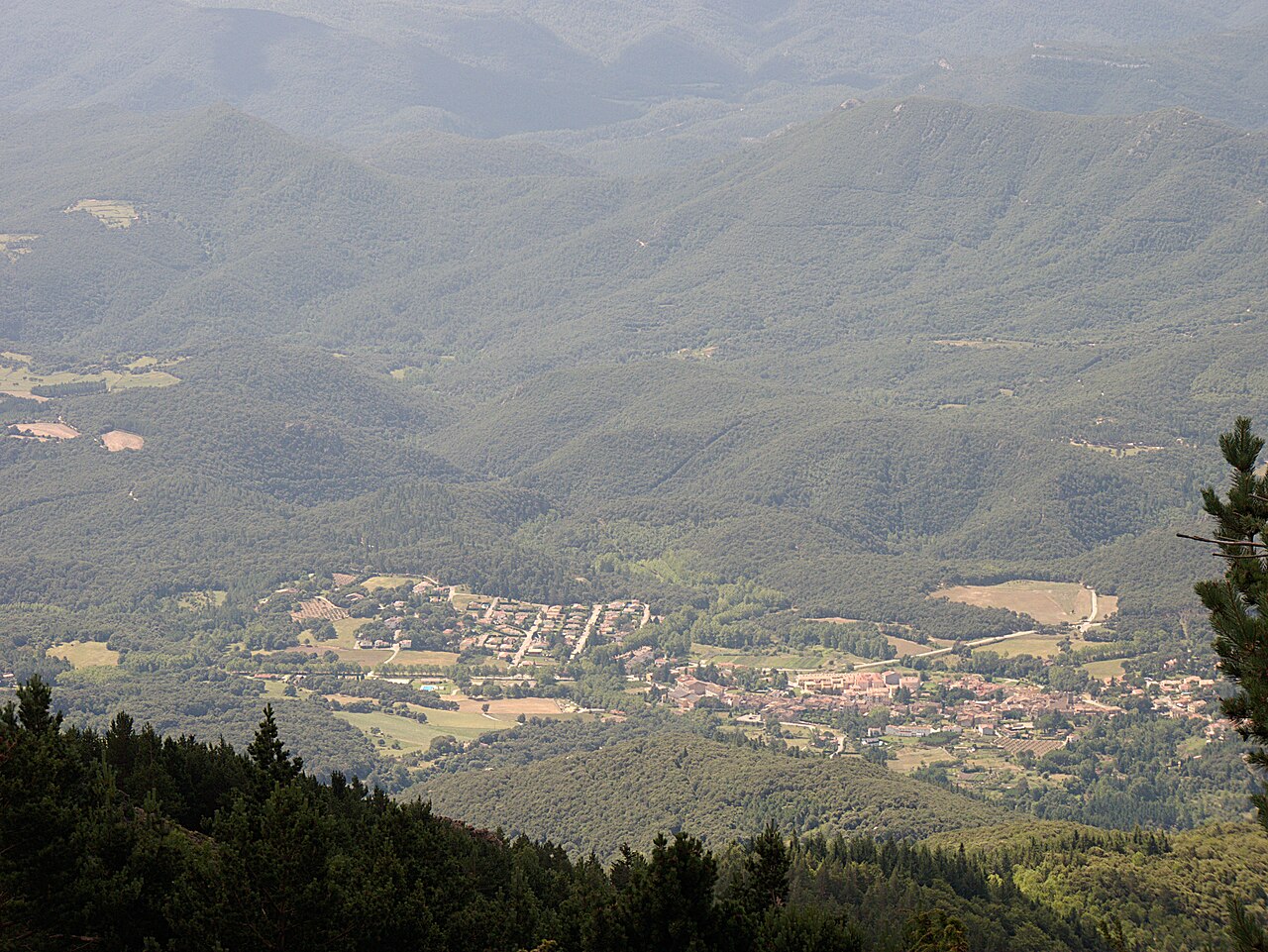
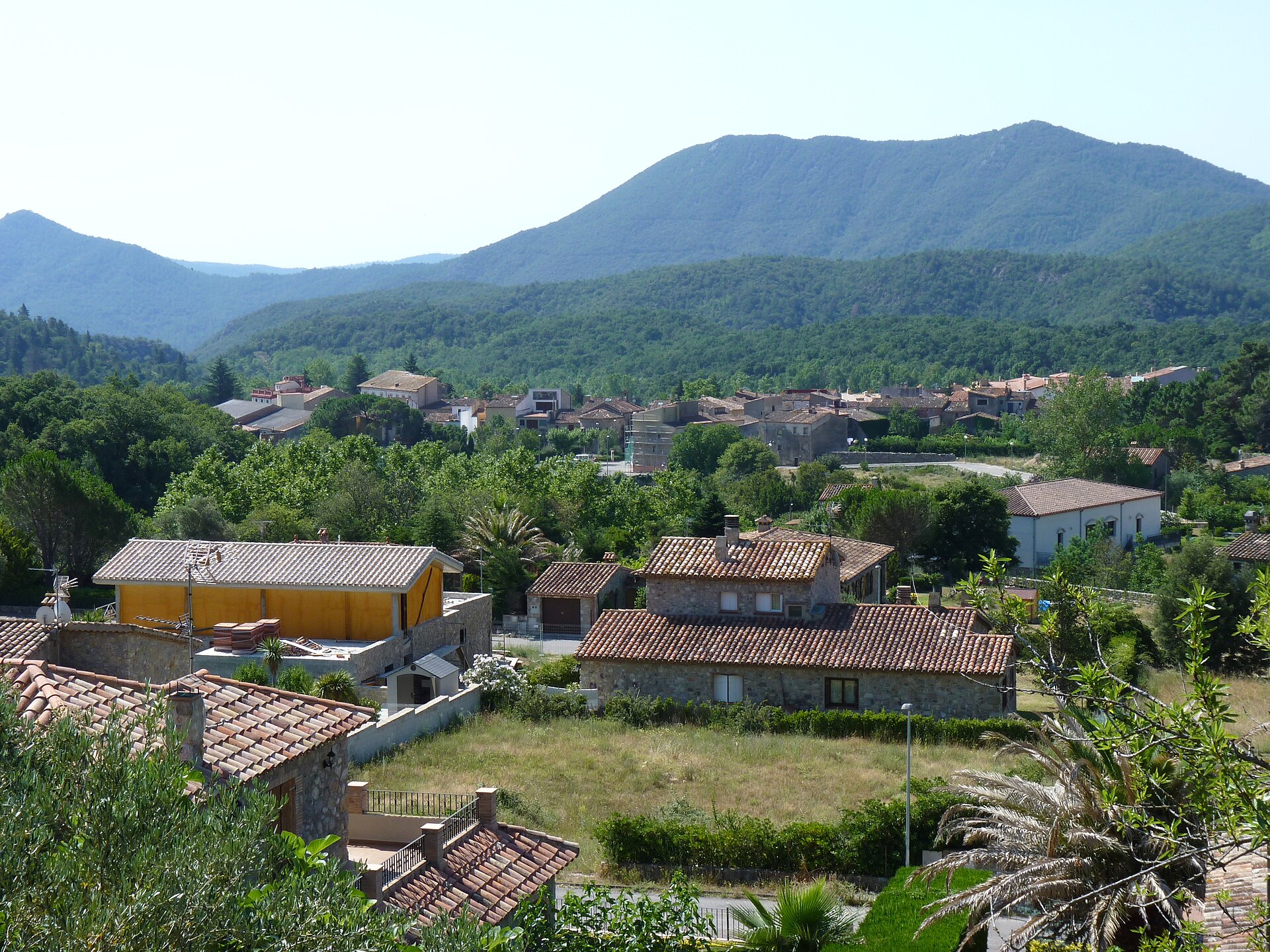
In the far northeastern corner of Alt Empordà, where the Mediterranean landscape begins to give way to the mountains, lies Maçanet de Cabrenys.
The municipality is surrounded by forests, streams, old farmhouses, mountain paths and peaks that form part of the landscape along the border with France. It is a territory where history and nature are constantly intertwined.
Here, you can walk through an ancient medieval settlement, discover the remains of fortifications, follow mountain paths that for centuries connected Catalonia with France, walk through forests of holm oaks, cork oaks, oaks, chestnut trees and beech trees, and climb to the Sanctuary of Mare de Déu de les Salines, located at approximately 1,080 metres above sea level.
Next to the sanctuary is one of the most curious places in the mountains: a small hikers’ refuge that originated in the place formerly occupied by the sanctuary’s chicken coop.
On 6 August 1967, Bishop Narcís Jubany inaugurated the refuge after converting the former space into accommodation for hikers. Since then, it has provided shelter for walkers crossing these mountains and for those following routes such as the Haute Route Pyrénéenne and the Camins de Tramuntana.
But to understand Les Salines, we have to go much further back in time.
Maçanet de Cabrenys, a Territory Shaped by History
Human presence in the area dates back thousands of years. Various sites within the municipality preserve prehistoric and megalithic remains, including standing stones and other archaeological evidence demonstrating that these mountains were inhabited long before the present-day settlement was established.
During the Middle Ages, Maçanet gained strategic importance because of its location between Alt Empordà and the Pyrenean lands.
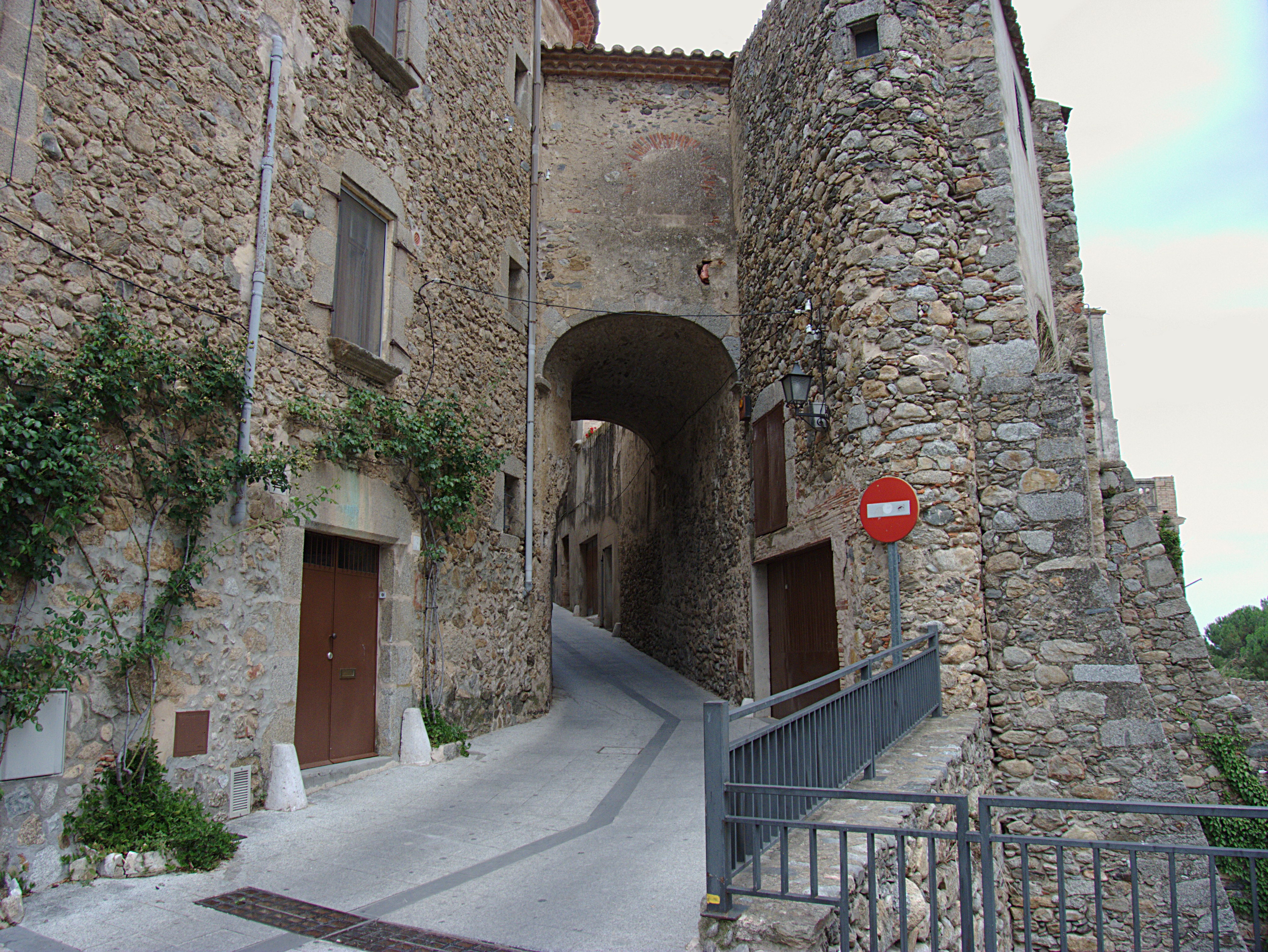
The historic centre developed around the church of Sant Martí and the former fortified enclosure known as la Força.
The mountains surrounding the municipality are not simply a natural environment. They have been communication routes, grazing areas, sources of forest resources and paths used to cross the border.
Maçanet’s proximity to France meant that the area experienced various military conflicts over the centuries.
One of the places that best illustrates this past is Castell de Cabrera, built on an elevated position from which much of the surrounding territory could be visually controlled.
The castle was destroyed in 1288 during the French invasion of Alt Empordà. Today, only the remains of the fortification survive, integrated into the rocks and forest.
That is precisely what makes the visit so appealing: this is not a reconstructed castle, but a set of ruins that allows visitors to imagine the strategic importance once held by this mountain.
A History Also Shaped by the Border
The border has influenced life in Maçanet for centuries.
Mountain paths were used by merchants, shepherds, smugglers, refugees and people who needed to cross from one side of the Pyrenees to the other.
During the Spanish Civil War, and particularly during the exodus of 1939, the mountains of Alt Empordà became escape routes into France.
After the war, the same paths acquired other users: people crossing the border clandestinely and networks involved in smuggling.
For this reason, when walking today along the paths leading towards Les Salines, it is easy to forget that these same routes had a much harsher purpose for a large part of the 20th century.
The mountains preserve that memory even though few visible traces remain.
The Architectural Heritage of Maçanet
The historic centre deserves to be explored before heading into the mountains.
The Church of Sant Martí is one of the municipality’s main heritage landmarks and is integrated into the former medieval settlement.
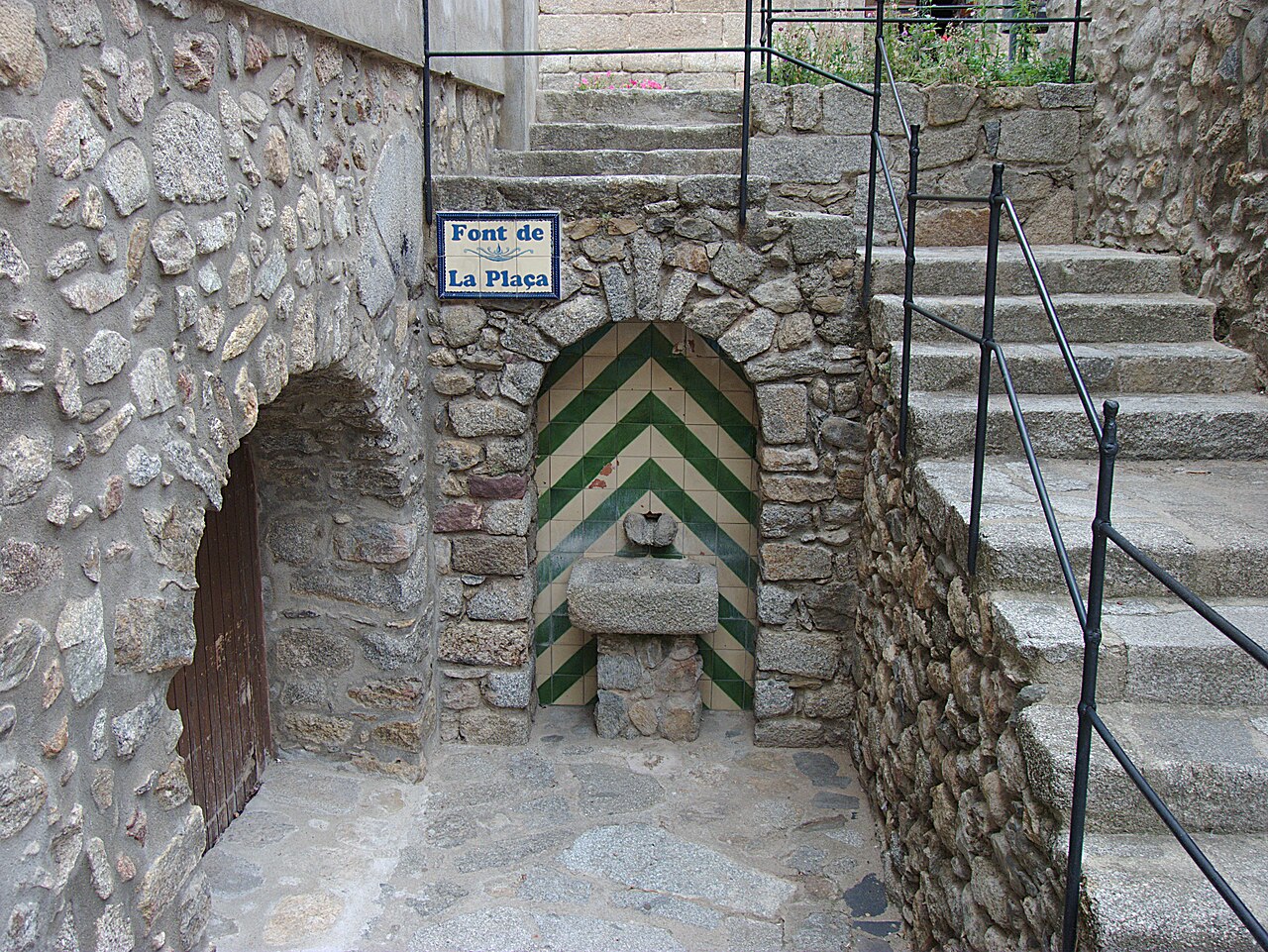
There are also various traditional houses and buildings reflecting the evolution of the village between the 17th, 18th and 19th centuries.
The Chapel of Sant Sebastià is also part of the municipality’s religious history.
Another curious element is the Maça d’en Rotllan, a large iron staff associated with the tradition of Roland and with the Carolingian legends that have survived in this part of the Pyrenees.
Within the municipality, Tapis is also worth visiting, a small mountain settlement where the church of Sant Briç is located, documented since the Middle Ages.
Tapis also helps us understand how these mountains were traditionally settled: small villages, farmhouses, churches and paths connected to one another across a landscape that today appears much wilder than it must have been in earlier periods.
The Main Character: The Forest
If there is one feature that currently defines the landscape of Maçanet de Cabrenys, it is the forest.
The area lies in a transition zone between Mediterranean and mountain environments.
This creates an extraordinary variety of vegetation.
At lower elevations, holm oak and cork oak forests predominate, while as the altitude increases, oak woods, chestnut forests and other deciduous species appear.
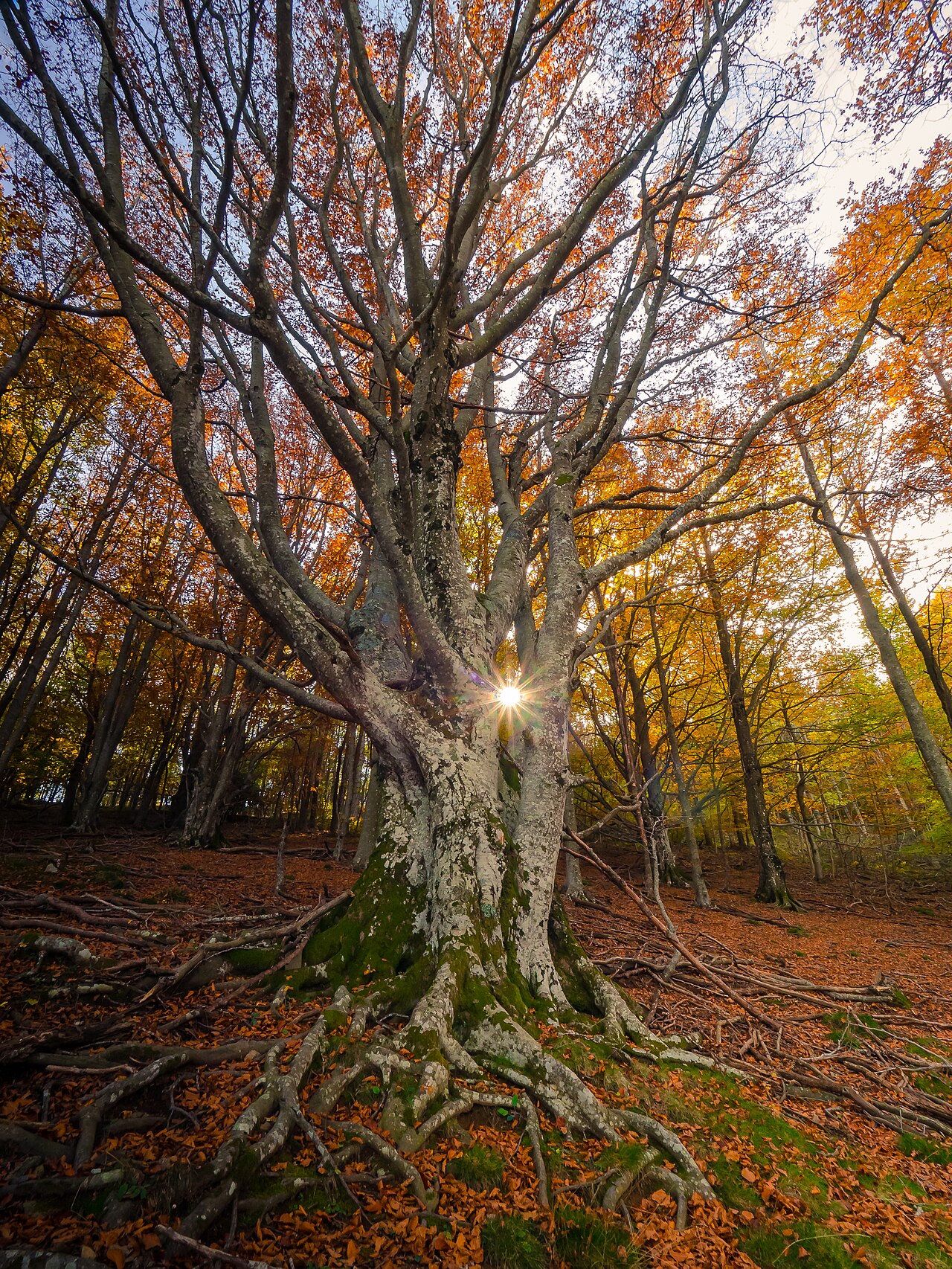
In cooler and more humid areas, beech forests can be found, particularly around Les Salines and in the higher areas.
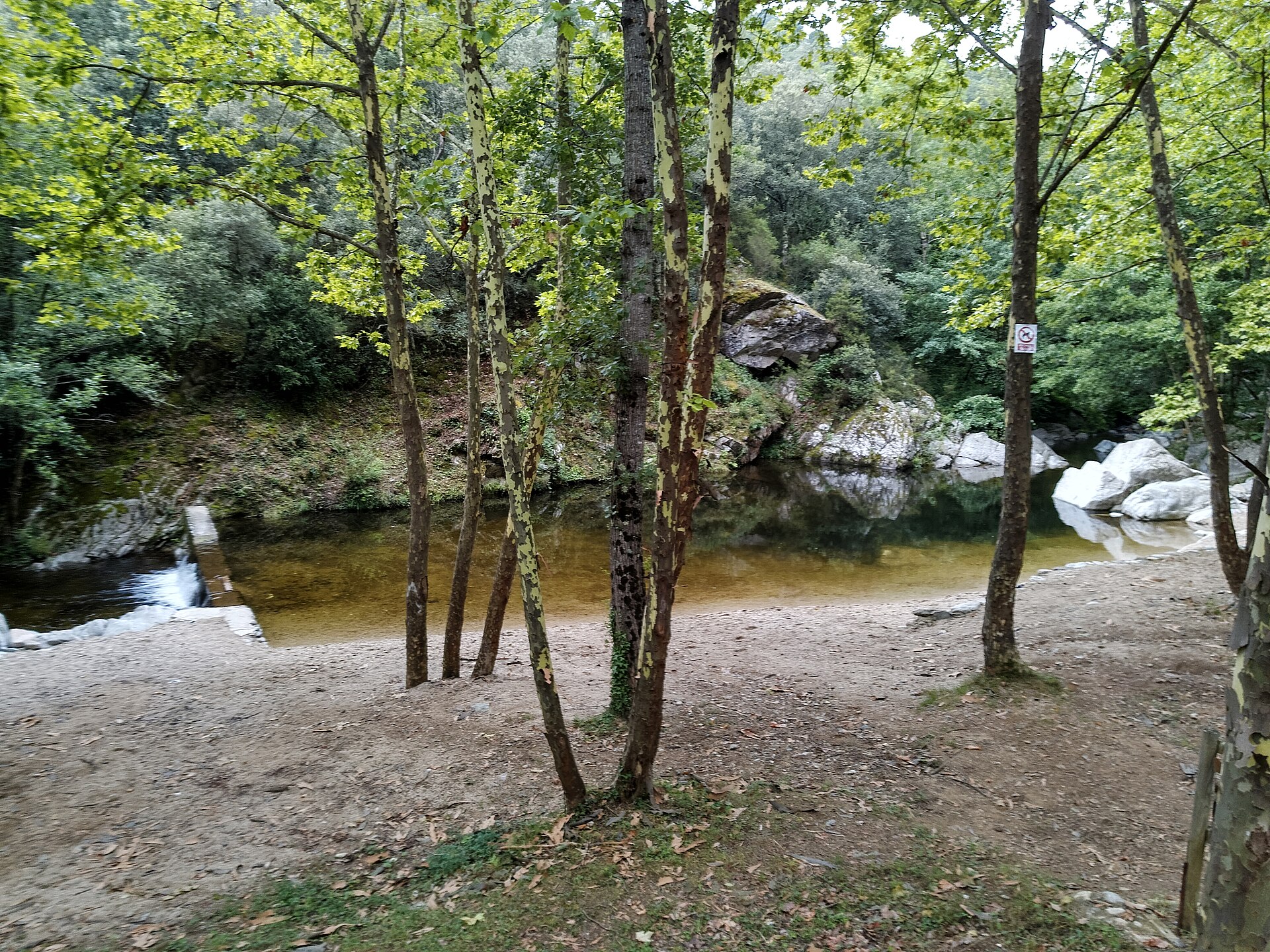
Along streams and watercourses, species associated with humid environments appear, including ash trees, hazels and poplars.
The result is a mosaic of habitats that changes continuously throughout a single hike.
There is no need to travel dozens of kilometres to observe different types of vegetation.
Sometimes, gaining just a few hundred metres in altitude is enough.
A Landscape That Changes with the Seasons
In spring, forest clearings fill with flowers and insect and bird activity increases.
Summer transforms the forest into a refuge from the heat of the more exposed areas of Alt Empordà.
Autumn is probably the most spectacular season for observing the changing colours of oaks, chestnut trees and beech trees.
And in winter, when deciduous trees have lost their leaves, views that remain hidden during the rest of the year become visible.
Each season offers a different experience.
That is why Les Salines is not a destination to visit just once.
The mountain changes.
Flora and Botany
The variety of vegetation makes this territory particularly interesting for botany.
Among the tree species that can be found are:
- holm oak;
- cork oak;
- oak;
- chestnut;
- beech;
- ash;
- hazel;
- aspen;
- pine;
- maple and other deciduous species.
At higher elevations, species characteristic of mountain environments can also be found.
One of the area’s particular features is the coexistence of Mediterranean species with others typical of Central European and Pyrenean environments.
In the higher areas, plants of particular interest can be found, including alpen rose or rusty-leaved rhododendron (Rhododendron ferrugineum), while different species of mountain grasses and flowers grow in meadows and clearings.
For anyone interested in botany, the route to Les Salines makes it possible to observe how vegetation changes almost step by step.
Aromatic Plants and Traditional Medicine
The paths and clearings of Maçanet are also an opportunity to discover countless aromatic plants and species that form part of Catalan ethnobotanical traditions.
These include familiar species such as:
thyme, rosemary, lavender, fennel, yarrow, nettle and various plants traditionally used to prepare infusions, season food or create folk remedies.
Traditional knowledge of these plants forms part of the rural culture of the region.
However, it is important to distinguish between knowing a plant and collecting it for consumption.
Identification must be absolutely certain, as some similar-looking species can be poisonous. In addition, certain wild plants may be protected or their collection may be restricted.
For this reason, a botanical experience is much more rewarding when it focuses on learning to identify species, understanding their traditional uses and appreciating the ecosystem without having to pick them.
Wildlife in the Forests
The variety of vegetation provides food and shelter for equally diverse wildlife.
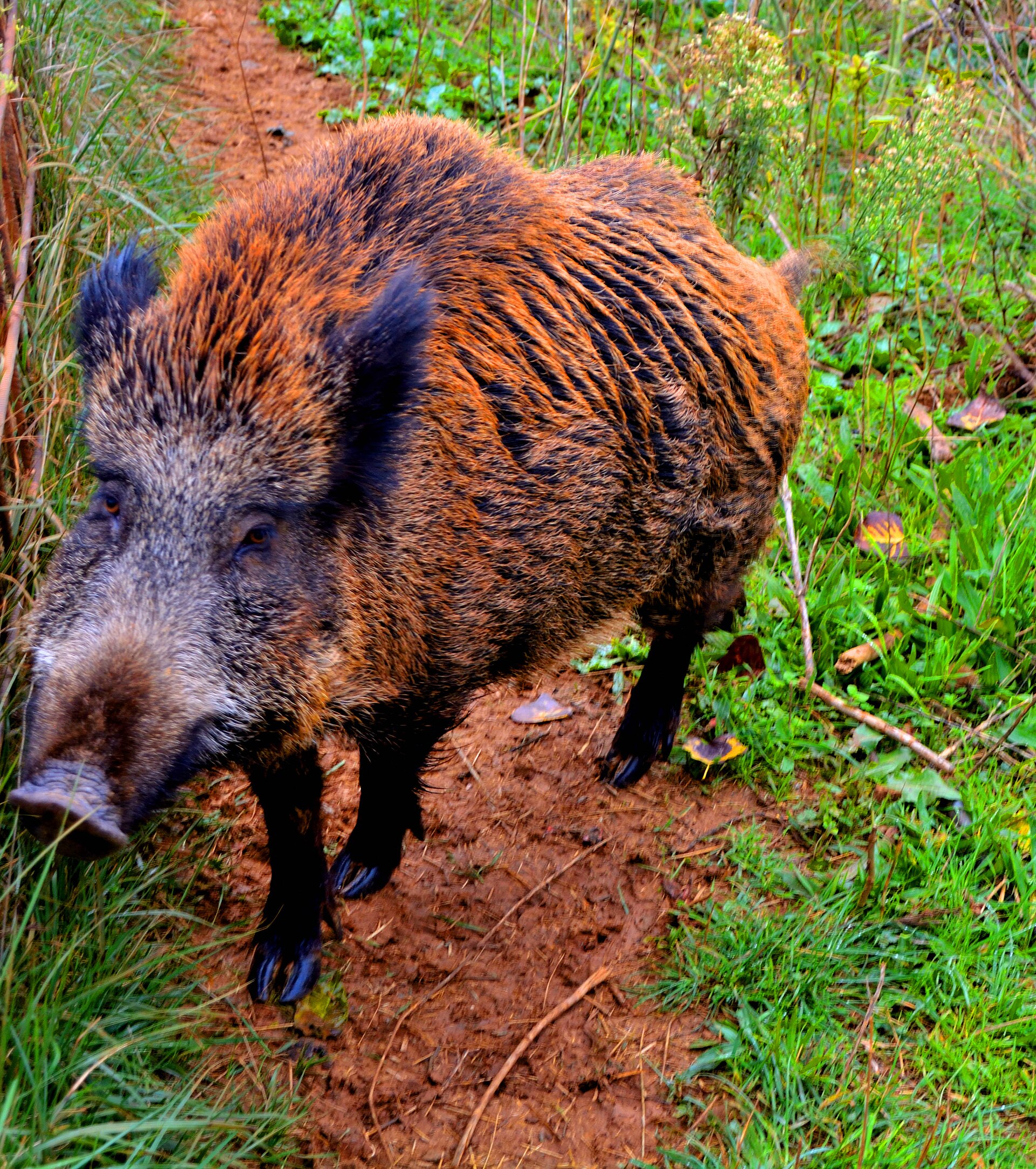
Mammals found in the area include roe deer, wild boar, foxes, genets, stone martens, badgers and squirrels, as well as various species of small mammals and bats.
The roe deer is one of the most interesting animals to observe along forest paths.
Wild boar are much more common, although they are usually detected through their tracks and signs rather than seen directly.
On the ground, you may find footprints, disturbed soil and other evidence of animal activity.
There are also various species of amphibians and reptiles.
In damp and shady areas, the salamander stands out, particularly associated with humid forest habitats and small streams.
Wildlife observation requires patience.
Often, we will not see the animal itself.
But we will see that it has been there.
Birds: A Destination for Ornithology
The forests of Maçanet and Les Salines offer excellent opportunities for birdwatching.
Forest species include the great spotted woodpecker, Eurasian nuthatch, Eurasian jay, coal tit, marsh tit, common chaffinch, cuckoo and Eurasian sparrowhawk, among others.
Open areas and large rocky walls also provide opportunities to observe different birds of prey.
Across these mountains, species such as the golden eagle, short-toed snake eagle, booted eagle, peregrine falcon, Eurasian eagle-owl, red kite and European honey buzzard can be found.
Birdwatching in this area has one particular feature: it is not only about looking up into the sky.
Sound is fundamental.
An early morning walk can allow you to identify species before you even see them.
For beginners, a specialised route can turn bird calls, flights and tracks into a genuine outdoor nature lesson.
Butterflies and Lepidoptera
During the spring and summer months, forest clearings and the edges of paths become some of the best places to observe butterflies and other Lepidoptera.
The variety of plants, flowers, elevations and habitats encourages the presence of countless species.
Among the species of conservation interest found in the massif is Euphydryas aurinia.
Different species belonging to the following groups can also be observed:
- swallowtails;
- whites and sulphurs;
- brush-footed butterflies;
- blues;
- skippers;
- browns.
The best period is generally spring and summer, depending on temperatures and weather conditions.
A lepidopterology walk requires a completely different pace from a conventional hike.
You have to stop.
Look for flowers.
Observe host plants.
Wait.
And learn to distinguish species by wing patterns, flight and behaviour.
Mushrooms in the Forests of Alt Empordà
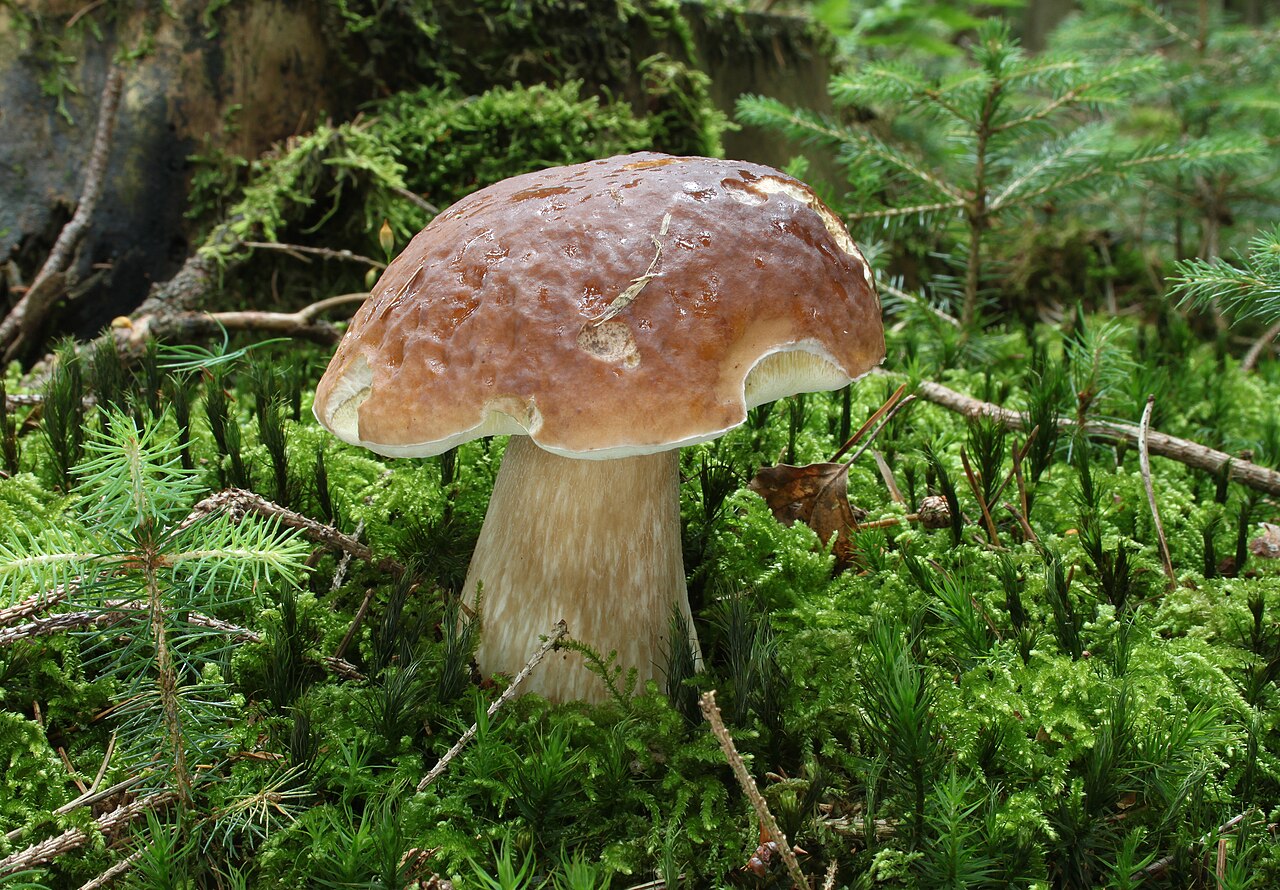
When the rains arrive in late summer and autumn, the forests can also become a mushroom-hunting destination.
The area has an important mycological tradition and, depending on the conditions in each season, highly sought-after species may appear.
Among the best-known are:
- ceps or boletes;
- rovellons;
- pinetells;
- chanterelles;
- black trumpets;
- slippery jacks and other boletus species;
- fredolics;
- scarlet waxcaps;
- different species of coral mushrooms.
The appearance of mushrooms does not depend on the calendar, but on a combination of rainfall, humidity and temperature.
For this reason, some years can be extraordinary while others are much poorer.
The most common collecting season is autumn, although certain species may appear earlier or remain available for longer.
Mushroom collecting should always be carried out responsibly, respecting land ownership and any restrictions that may apply in a particular area.
Above all, a mushroom should never be consumed unless its identification is absolutely certain.
For a mycological experience, the real interest lies not only in finding mushrooms but also in learning to recognise the forest, the trees they are associated with and the right conditions for each species.
Water and the Les Salines Spring
Water is another element that helps explain life in these mountains.
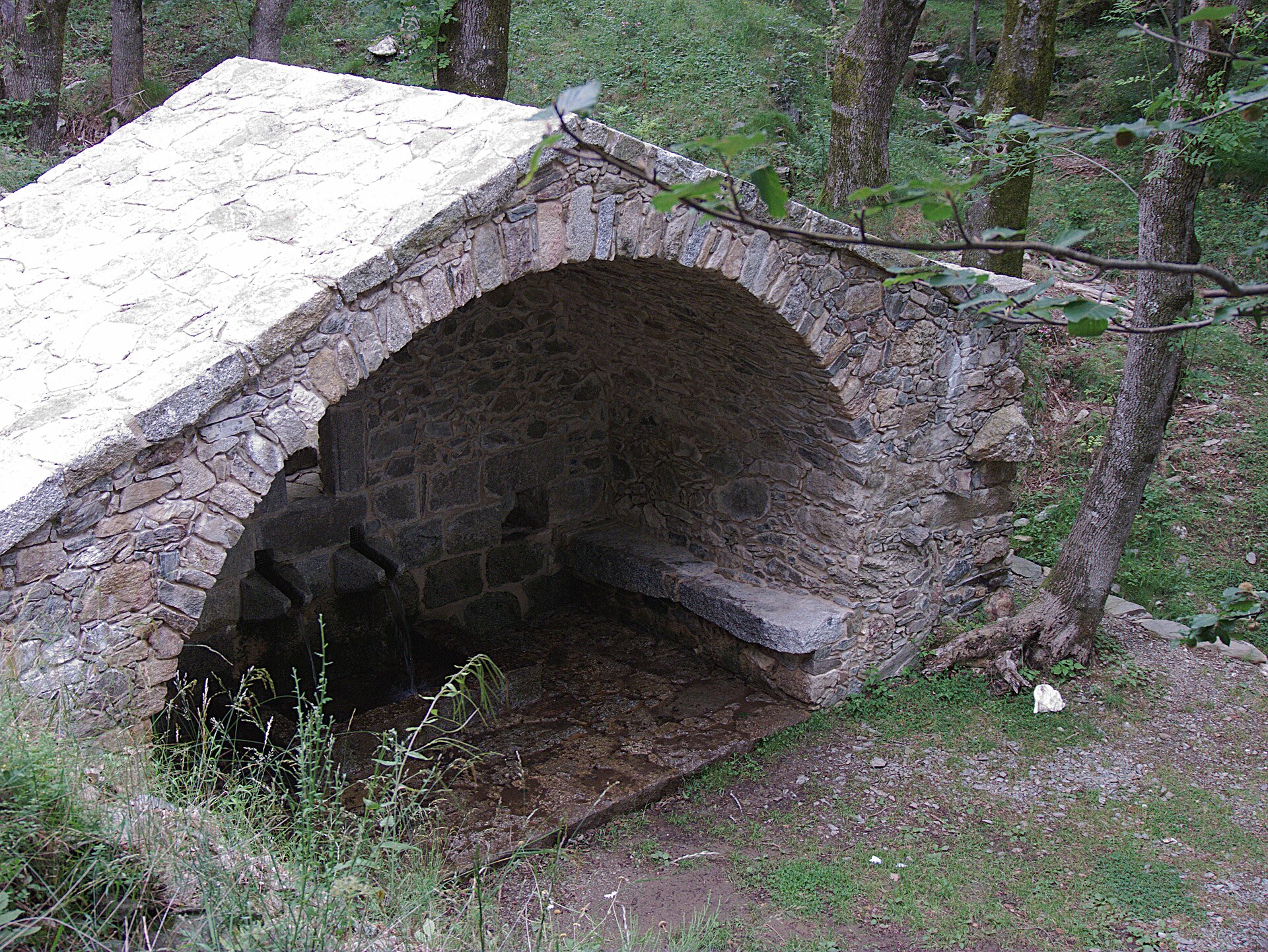
Next to the sanctuary there is a Les Salines spring, a particularly appreciated stopping point for those arriving on foot.
Springs, streams and small watercourses are essential for maintaining the forest’s humid habitats and encourage the presence of ferns, mosses, amphibians and riverside vegetation.
For hikers, the spring is also a useful reference point during the excursion.
Before drinking from any natural spring, always check that the water is safe to drink and that there are no signs indicating otherwise.
The Sanctuary of Mare de Déu de les Salines
After passing through the forest, one of the most unique architectural complexes in the mountains comes into view.
The Sanctuary of Mare de Déu de les Salines is located at approximately 1,080 metres above sea level.
Its history dates back to the Middle Ages, and the present building preserves evidence of different construction phases.
The church has simple architecture typical of a mountain sanctuary, with a single nave and semicircular apse.
Next to the church are other buildings historically associated with the sanctuary, including the former guesthouse and facilities intended for those who travelled to this remote location.
For centuries, Les Salines was a place of pilgrimage and hospitality.
And one of those facilities would eventually have a second life.
The Former Chicken Coop Turned into a Refuge
The Les Salines Refuge is probably one of the most curious features of the entire complex.
It was not originally built as a mountain refuge.
It was the sanctuary’s former chicken coop.
On 6 August 1967, Bishop Narcís Jubany inaugurated it as a refuge.
Since then, it has served as a resting place for hikers.
Today it is an unmanned, free-access refuge with 12 sleeping places. It has a cooking area, fireplace, outdoor water supply and bunk beds; there are no showers or blankets. It is free of charge and does not operate through conventional reservations.
It is a simple building.
There is no luxury.
There are no hotel rooms.
There are no services associated with tourist accommodation.
That is precisely why it retains the spirit of traditional mountain refuges.
A place to arrive after a day’s walk, rest, cook something and continue the following day.
A Refuge Connected to the Great Pyrenean Routes
Les Salines forms part of two major long-distance routes.
On the one hand, it is a stage of the Haute Route Pyrénéenne, which crosses the Pyrenees.
On the other, it forms part of the Camins de Tramuntana, a route connecting four refuges operated by the Centre Excursionista Empordanès.
From the refuge, excursions can be planned towards Fontfreda, Roc de Fraussa, Castell de Cabrera and Pic de les Salines.
The four-refuge route crosses a great variety of landscapes and has Roses and Albanyà as its endpoints, passing through Albera, Requesens, Les Salines and Bassegoda.
The complete route is approximately 121 kilometres long and is designed to be completed in stages.
The Four Refuges of Camins de Tramuntana
The four refuges associated with this crossing are:
Coll de Banyuls Refuge
This is the refuge located closest to the Mediterranean.
It is situated around Coll de Banyuls, within the border area of Albera.
It represents the beginning of a mountain crossing that gradually leaves the Mediterranean environment behind and enters higher-altitude landscapes.
Forn de Calç Refuge
Located in the area of Requesens, north of the castle.
It has accommodation for approximately 12 people, is an unmanned refuge and has a fireplace suitable for cooking. It is surrounded by forest, and there is a nearby spring with iron-rich water.
Its most interesting architectural feature is its origin: it is a former lime kiln that was converted into a mountain refuge.
In other words, two of the four refuges on the route share something with Les Salines: both make use of buildings that originally served a different purpose.
Les Salines Refuge
This is the mountain refuge of Maçanet de Cabrenys.
It is located next to the sanctuary, at approximately 1,080 metres above sea level.
It has 12 sleeping places, a fireplace, cooking facilities and outdoor water. It is free-access and unmanned.
Its most distinctive feature is, naturally, its history as the sanctuary’s former chicken coop.
Bassegoda – Can Galan Refuge
The final refuge on the crossing is Bassegoda, also known as Can Galan.
It is located at the foot of Puig de Bassegoda and also has a strong connection to rural life.
The building was originally a school serving the former settlement of Bassegoda and was later converted into a mountain refuge.
It has around 20 sleeping places, cooking facilities, a fireplace and a nearby spring. From there, you can climb towards Puig de Bassegoda, approximately 1,374 metres high, in around one and a half hours. The hiking connection between Les Salines and Bassegoda takes approximately eight and a half hours.
The Complete Crossing
The four refuges make it possible to undertake a crossing of great landscape and cultural interest.
The route connects:
Coll de Banyuls – Forn de Calç de Requesens – Les Salines – Bassegoda.
Along the way, you encounter Mediterranean forests, beech woods, mountain landscapes, megalithic heritage, ancient border paths, the sanctuary of Les Salines and the mountains around Puig de Bassegoda.
The stage between Les Salines and Bassegoda is particularly mountainous: it crosses the Moixer and Roc de Fraussa area before continuing westwards. The route from Les Salines to Bassegoda is more than 30 kilometres long, with over 1,300 metres of positive elevation gain, making it a demanding route rather than a conventional excursion.
Roc de Fraussa and Pic de les Salines
From Les Salines, there are countless possibilities for continuing your hike.
One option leads towards Roc de Fraussa, one of the major elevations in this border mountain area.
You can also continue towards Pic de les Salines.
These routes are ideal for those who want to extend their excursion and enjoy panoramic views over the Albera mountains, Alt Empordà and the eastern Pyrenees.
The area makes it possible to combine hiking, landscape and nature observation perfectly.
Castell de Cabrera: Ruins Watching over the Forest
Castell de Cabrera is another of the great historical landmarks of these mountains.
Its elevated position allowed the surrounding territory and routes through the area to be controlled.
Today, only sections of its walls and other structures remain.
The visit is particularly fascinating because the forest has gradually reclaimed the site.
The stones appear among trees and rocks, and visitors have to reconstruct the fortification in their imagination.
It is one of those places where architecture cannot be separated from the landscape.
Can You Reach Les Salines by Car?
Yes.
From Maçanet de Cabrenys, you can reach the sanctuary via an approximately 12-kilometre forest track.
It is important to remember that this is a forest track and that its conditions can change depending on the weather and any traffic restrictions that may be in force.
Those who prefer to walk can start directly from Maçanet.
The estimated walking time is around two and a half hours, although this depends on the route and each person’s pace. There is also access on foot from La Vajol, taking around two hours and fifteen minutes, and from Céret, approximately four and a half hours.
From Barcelona to Maçanet de Cabrenys
Maçanet de Cabrenys is approximately 170–180 kilometres from Barcelona, depending on the route chosen.
Under normal conditions, the journey by car takes around two hours and fifteen minutes to two and a half hours, although actual travel time will depend on traffic and stops.
From the village, the climb towards Les Salines begins.
The sanctuary area can be reached by road and forest track; on foot, however, the ascent allows you to experience the changes in vegetation and landscape much more closely.
Maçanet Is Also Best Enjoyed Around the Table
After a day in the mountains, the village and its surroundings offer the opportunity to complete the experience with local gastronomy.
The cuisine of Alt Empordà is shaped by a combination of mountain produce, vegetables, meat, mushrooms, cured meats, cheeses and seasonal ingredients.
During mushroom season, the natural landscape also finds its way onto the table.
And in autumn, products from the forest take on particular importance.
Gastronomy can be incorporated into a nature getaway, a multi-day hiking trip or a private experience designed specifically for each visitor.
Nature, History and a Completely Personalised Experience
Maçanet de Cabrenys and Les Salines make it possible to create a much broader experience than a simple sightseeing visit.
For those who want to discover the area in a private, personal and fully customised way, we offer the possibility of designing the entire experience according to the interests of each group.
Groups are limited to a maximum of four people, allowing the route, pace and content of each day to be adapted.
It can be a one-day excursion or a multi-day stay.
Specialist Guides
Experiences can focus particularly on:
- history;
- architecture;
- art;
- botany;
- ornithology;
- butterflies and Lepidoptera;
- nature and biodiversity;
- rural heritage;
- interpretive hiking.
Tours can be conducted in Spanish, Catalan and English, and other languages can be requested.
The aim is not simply to accompany visitors along a path.
The idea is to interpret the landscape and adapt the experience to what genuinely interests each person.
Someone passionate about butterflies will have a completely different excursion from someone interested in medieval architecture.
A birdwatcher will need a different pace.
And someone interested in history can focus the day on castles, border paths, refuges, churches and the historical events that shaped the area.
Rural Accommodation and Private Gastronomy
The experience can include rural accommodation and full organisation of the stay.
We can also arrange private dining reservations or create special culinary experiences at the accommodation itself.
There is also the possibility of arranging a private chef, offering local or international cuisine and menus specifically designed for the occasion.
Gastronomic proposals can also be themed and adapted to celebrations, anniversaries, romantic getaways or private experiences.
Romantic Dinners and Experiences for Couples
For a romantic getaway, a complete experience can be designed around the accommodation and the surrounding landscape.
It can include:
- private dinner;
- private chef;
- personalised menu;
- special decoration and ambience;
- flowers;
- live music;
- professional photography;
- gifts;
- private activities;
- wellness treatments.
Everything is designed so that the couple does not have to worry about the organisation.
Live Music
The stay can also include live music, with options such as piano or violin.
Music can form part of a private dinner, celebration, romantic evening or themed experience.
The aim is for every element to have a purpose within the overall experience rather than simply being an additional service.
Professional Photography
There is also the possibility of arranging a professional photography session during the getaway.
Photographs can be taken during the hike, in the forest, at the sanctuary, at the accommodation or at the area’s various heritage sites.
This is particularly interesting for couples, anniversaries, celebrations or simply for those who want to preserve a professional record of their experience.
Handcraft and Creative Experiences
The stay can be complemented with hands-on and creative activities, designed according to the season and the participants’ interests.
The idea is to incorporate activities that allow visitors to discover the area in a participatory way, rather than simply observing it.
Wellbeing in Nature
Wellness experiences can also be incorporated, including:
- spa treatments;
- massages;
- guided meditation;
- prayer in natural surroundings;
- relaxation sessions;
- nature-connection activities.
The experience can conclude with a basket of fruit specially prepared for the participants.
All Logistics Organised
We can also take care of the logistics of the getaway.
There is the possibility of arranging a private car with chauffeur, including return transfers, transportation during the experience and all necessary journeys.
Additional services can also be requested, such as:
- a florist at the accommodation;
- decoration;
- flowers;
- gifts;
- personalised details;
- surprises for celebrations;
- organisation of special activities.
The proposal can be fully adapted to each group.
Discover Maçanet in a Different Way
Maçanet de Cabrenys makes it possible to combine history, architecture, forest, mountains, wildlife, flora, gastronomy and culture in a single destination.
You can climb to Les Salines on foot, arrive by private vehicle, explore the forests, study butterflies, observe birds, discover the local botany, look for mushrooms in season, visit the sanctuary, learn about the history of the former chicken coop turned refuge, or continue towards Roc de Fraussa, Pic de les Salines and Castell de Cabrera.
And it is also possible to turn all of this into a completely private experience.
Groups of up to four people, a tailor-made programme and the possibility of combining specialist guiding, rural accommodation, gastronomy, nature, culture, wellness, private transportation and special experiences.
Whether for a one-day excursion or several days, we can take care of designing the complete experience from beginning to end, adapting it to each visitor’s interests, pace and preferences.







Copyright © 2016-2026 Magic Dreams Barcelona.