Empúries: Where Greece and Rome Meet the Mediterranean.
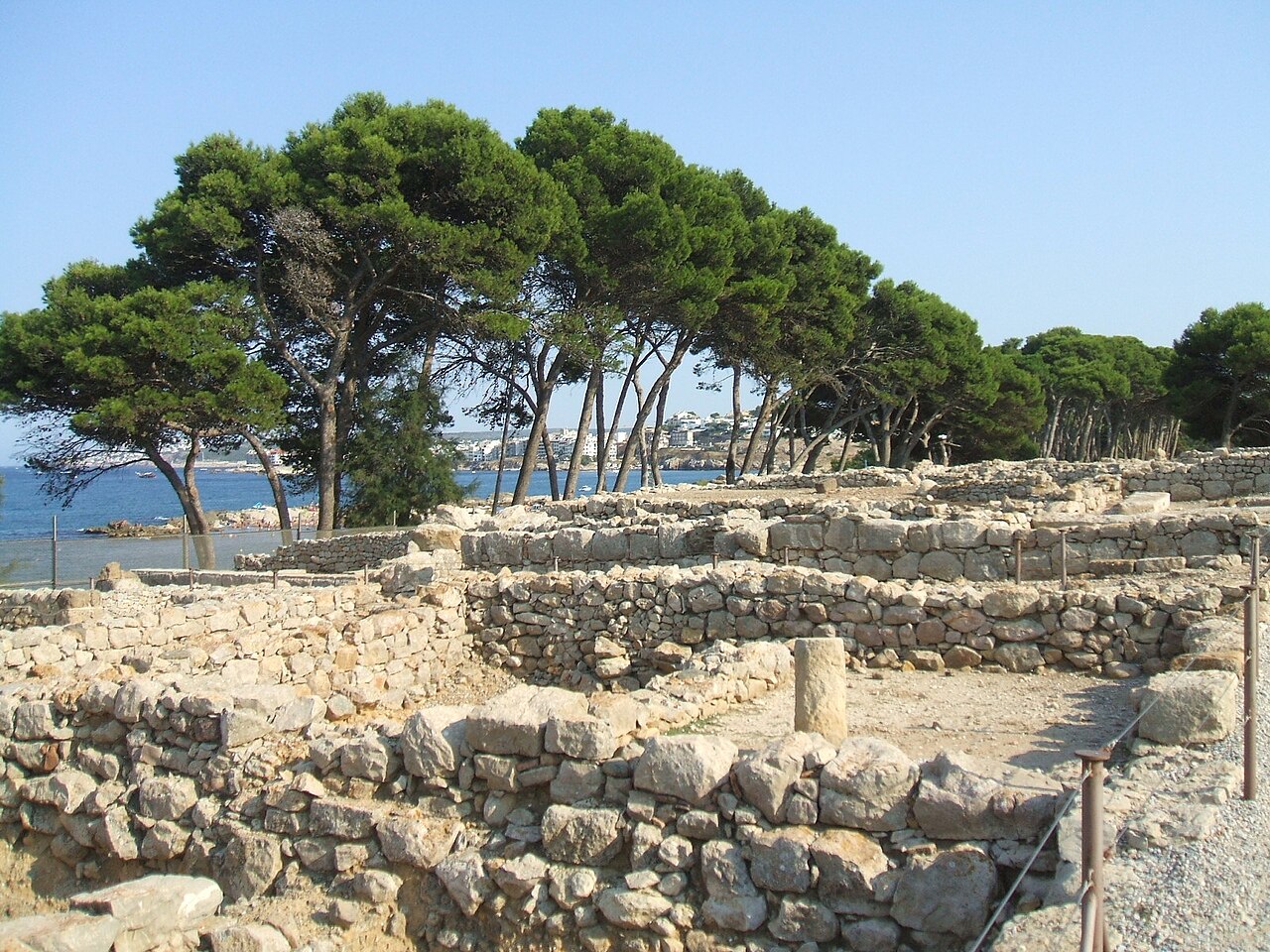
There are places where history is not simply told — it is felt.
On the Costa Brava, overlooking the Mediterranean, the archaeological site of Empúries offers an extraordinary journey through more than two thousand years of history. Here, the remains of an ancient Greek settlement stand alongside those of a Roman city, creating one of the most fascinating cultural landscapes in Catalonia.
Surrounded by pine trees, Mediterranean vegetation and the blue horizon, Empúries is much more than an archaeological site. It is a place where civilizations, landscapes and the Mediterranean way of life come together.
A Greek gateway to the Iberian Peninsula
The story of Empúries begins with the arrival of Greek settlers from Phocaea, who established a trading settlement here around the beginning of the 6th century BC.
Known as Emporion, the settlement became an important commercial centre thanks to its strategic position on the Mediterranean coast. Its location allowed it to connect the Greek world with the communities of the Iberian Peninsula, creating a vibrant meeting point between different cultures.
Walking among the ancient remains today, it is easy to imagine merchants, sailors and travellers arriving from across the Mediterranean, bringing with them products, ideas, beliefs and traditions.
The sanctuary of Asclepius
One of the most remarkable discoveries at Empúries is the marble statue traditionally identified as Asclepius, the Greek god associated with medicine and healing.
Discovered during the early excavations of the site, the sculpture has become one of the most recognisable symbols of Empúries. Its presence offers a glimpse into the religious world of the ancient Greek community and the importance of sanctuaries within the city.
The surrounding archaeological remains reveal how religion, commerce and everyday life were closely connected in the ancient Mediterranean world.
The arrival of Rome
In 218 BC, during the Second Punic War, Roman troops landed at Emporion. This marked the beginning of a new chapter in the history of the settlement.
Over time, Roman influence grew and a Roman city developed alongside the existing Greek settlement. The two urban worlds evolved side by side, transforming Empúries into a remarkable meeting point between Greek and Roman cultures.
The Roman remains reveal a very different urban landscape, with streets, houses, public spaces, mosaics and architectural elements that provide an extraordinary insight into life during the Roman period.
Mosaics, streets and everyday life
Among the most fascinating features of the Roman city are its mosaics.
Their geometric patterns and decorative details offer a glimpse into the homes and lifestyles of the people who lived here centuries ago. Walking through the ancient streets, visitors can also identify the remains of houses, public buildings and other spaces that formed part of the Roman urban landscape.
Empúries allows history to be experienced at a human scale. Rather than simply observing isolated ruins, you can walk through the streets of an ancient city and imagine how people once lived, worked, worshipped and traded here.
A landscape shaped by the Mediterranean
Part of the magic of Empúries lies in its setting.
The archaeological remains extend towards the Mediterranean, surrounded by pine trees, coastal vegetation and the characteristic light of the Costa Brava.
Nearby, the ancient harbour area and the remains traditionally associated with the Moll Grec remind us of the fundamental role that the sea played in the history of Empúries.
The coastline, the ancient ruins and the Mediterranean horizon create a landscape where archaeology and nature exist side by side.
Sant Martí d’Empúries
Just above the ancient archaeological area lies Sant Martí d’Empúries, a charming medieval village with a long history of its own.
Its origins are connected to the ancient settlement known as the Palaiapolis, while its medieval character can still be appreciated in its streets, stone buildings and historic atmosphere.
From here, the Mediterranean landscape opens towards the coast, creating one of the most beautiful combinations of history and scenery in the area.
The coastal route connecting Sant Martí d’Empúries with L’Escala is another wonderful way to experience this landscape, with the sea constantly accompanying the journey.
Beaches and ancient history
The coastline surrounding Empúries is home to some of the most evocative corners of this part of the Costa Brava.
Portitxol and Les Muscleres offer Mediterranean scenery framed by rocks, pine trees and clear waters. Nearby, the ancient harbour area creates a particularly atmospheric setting where the remains of the past meet the sea.
Here, a day beside the Mediterranean can become something much more meaningful: a journey through landscapes that have attracted travellers, sailors and different civilizations for more than two millennia.
The archaeology of Empúries
Modern archaeological excavations at Empúries began in 1908 and have continued to reveal new information about the ancient settlements.
The archaeological site and the Archaeology Museum of Catalonia – Empúries preserve and interpret an extraordinary collection of remains, objects and discoveries connected with the Greek and Roman presence in the area.
Together, they provide a fascinating insight into the evolution of the site and into the cultural exchanges that shaped this part of the Mediterranean.
Empúries: an experience beyond history
Visiting Empúries is not simply about seeing ancient ruins.
It is about walking through a landscape where Greek merchants once arrived by sea, where Roman streets once filled with daily life and where the Mediterranean continues to define the character of the region.
The combination of archaeology, nature, sea and light makes Empúries one of those places that stays with you long after you leave.
For travellers looking to discover a more cultural and authentic side of the Costa Brava, this extraordinary archaeological landscape offers a different perspective on Catalonia — one where the past and present meet beside the Mediterranean.
Empúries at the Golden Hour
There is something particularly special about experiencing Empúries when the afternoon light begins to soften.
The ancient stones take on warmer tones, the Mediterranean becomes almost golden and the surrounding landscape acquires an atmosphere that feels timeless.
It is the perfect moment to pause, look towards the sea and imagine the thousands of years of history that unfolded on this extraordinary coast.
Empúries is not simply a place to visit. It is a place to travel through time.
From ancient Greece to Rome, from archaeological remains to Mediterranean landscapes, this corner of the Costa Brava reveals a side of Catalonia where history, culture and beauty come together.
And perhaps that is the true magic of Empúries: standing beside the Mediterranean and realizing that, more than two thousand years later, the sea is still telling the same story.


Copyright © 2016-2026 Magic Dreams Barcelona.