Route guide for visitors throughout Catalonia – Barcelona – Costa Brava – Catalan Pyrenees – Personalized experiences – Customized tour guide services – A small tribute to the wonderful city and land that saw us born – Transforming experiences into unforgettable memories - Magic Dreams Collection: exclusive universes inspired by Salvador Dalí and Gaudí. Niche perfumes, jewelry, lithographs, and collectible items celebrating the Mediterranean spirit.
In the heart of Sant Gervasi, at 282 Muntaner Street, lies a green treasure of the city of Barcelona: the gardens of the Fundación Julio Muñoz Ramonet. Originally designed in 1916 by the French landscape architect Jean-Claude Nicolas Forestier, who introduced the concept of the …
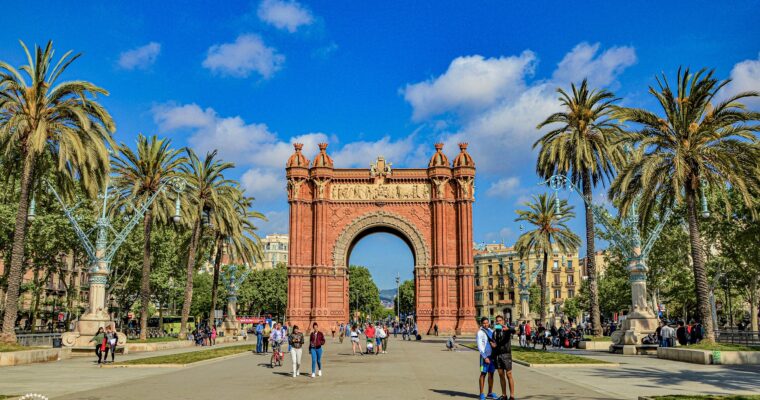
The Arc de Triomf of Barcelona is one of the city’s great monumental landmarks and one of the most important witnesses to the Barcelona that, at the end of the 19th century, was beginning to transform itself into a major European capital. Built in 1888 …
Casa Batlló is one of the masterpieces of Antoni Gaudí and one of Barcelona’s most famous buildings. Located on Passeig de Gràcia, in the heart of the Eixample district, this extraordinary building is one of the great landmarks of Catalan Modernism and forms part of the group of Gaudí’s works declared UNESCO World Heritage Sites.
More than just a building, Casa Batlló is an architectural experience in which light, color, nature, geometry and imagination come together to create a unique space.
Its façade seems to change depending on the daylight, while the interior introduces us to a universe of curved shapes, ceramics, wood, glass and details inspired by nature.
Although Casa Batlló is often referred to as the house of the dragon, its architecture is much more complex. Gaudí transformed an existing building into a true work of art without neglecting essential aspects such as lighting, ventilation and functionality.
Where is Casa Batlló?
Casa Batlló is located at 43 Passeig de Gràcia, one of Barcelona’s most important and elegant avenues.
Its location is particularly interesting because it forms part of the famous Block of Discord, a section of Passeig de Gràcia where several outstanding examples of Catalan Modernist architecture can be found.
Within just a few metres, we can see buildings designed by some of the most important architects of the period:
Casa Batlló, by Antoni Gaudí.
Casa Amatller, by Josep Puig i Cadafalch.
Casa Lleó Morera, by Lluís Domènech i Montaner.
Casa Mulleras, by Enric Sagnier.
Casa Josefina Bonet, by Marcel·lí Coquillat.
The result is one of Barcelona’s most remarkable architectural ensembles.
The History of Casa Batlló
Although we know the building today as Casa Batlló, its history began before Gaudí’s intervention.
The original building was constructed in 1877 by architect Emili Sala Cortés, who had also been one of Gaudí’s architecture professors. At the time, Passeig de Gràcia was still developing into one of the major urban avenues of modern Barcelona.
In 1903, textile entrepreneur Josep Batlló i Casanovas acquired the building.
The original plan even contemplated demolishing the building and constructing an entirely new one. However, Gaudí succeeded in completely transforming the existing structure, and the decision was ultimately made to carry out a major renovation, undertaken between 1904 and 1906.
Josep Batlló gave Gaudí considerable creative freedom, allowing the architect to transform virtually every essential aspect of the property.
Gaudí modified the façade, reorganized the interior spaces, enlarged the light well and transformed functional elements of the residence into authentic architectural features.
Gaudí and the Transformation of the Building
One of the most fascinating aspects of Casa Batlló is that Gaudí did not start with an empty site.
He worked on an existing structure and succeeded in giving it an entirely new identity.
The intervention particularly affected:
the main façade;
the main floor;
the light well;
the staircases;
the interior spaces;
the attic;
and the rooftop.
The result demonstrates one of the fundamental characteristics of Gaudí’s architecture: decoration and functionality do not have to be separate.
At Casa Batlló, elements that serve a practical purpose also form part of the building’s artistic composition.
Ventilation, the entry of natural light, circulation between the different floors and the distribution of spaces were all carefully considered.
Architecture Inspired by Nature
Nature is one of the great protagonists of Casa Batlló.
Gaudí rejected rigid lines and sought inspiration in the forms he encountered in the natural world.
This is why we find curves, organic shapes, botanical elements, marine references and structures reminiscent of bones, scales and shells.
The architecture seems alive.
There are hardly any surfaces that feel completely conventional.
The walls undulate, the ceilings take on sinuous forms and the decorative elements seem to be part of a single organism.
This approach makes visiting Casa Batlló a very different experience from visiting a traditional historic building.
The Spectacular Façade of Casa Batlló
The façade is probably the building’s best-known feature.
Gaudí used different materials and techniques to create an extraordinarily dynamic surface.
We find sandstone, ceramics, glass and iron, combined to create a composition full of movement.
The surface seems to change depending on how the light falls upon it.
Fragments of ceramic and glass create reflections and colors reminiscent of water and the Mediterranean.
The balconies, meanwhile, have shapes that have inspired countless interpretations.
Some resemble masks, others skulls, while others suggest marine forms.
The columns on the ground floor and the main gallery also feature organic shapes that reinforce the impression that the building belongs to a natural world.
The House of Bones
One of Casa Batlló’s best-known nicknames is Casa dels Ossos, or House of Bones.
The name refers to the appearance of some of the elements on the façade.
The columns resemble skeletal structures, while the balconies have been interpreted by some as masks or skulls.
This fantastical appearance has helped make Casa Batlló one of the most photographed buildings in Barcelona.
However, it is important to understand that many of the symbolic interpretations of the façade are later readings and cannot always be documented as specific intentions on Gaudí’s part.
The Dragon of Saint George
The image of the dragon is one of the most popular interpretations of Casa Batlló.
The roof resembles the back of a huge animal covered in scales.
Ceramic pieces in different shades create an effect that makes the roof appear almost alive.
According to the traditional interpretation, the roof represents the dragon of Saint George, while the cross at the top symbolizes the saint’s sword.
This interpretation connects Gaudí’s architecture with one of Catalonia’s best-known legends: the story of Saint George and the dragon.
It is precisely this combination of architecture, tradition and symbolism that has made Casa Batlló one of Barcelona’s great cultural icons.
The Four-Armed Cross
At the top of the building we find one of Casa Batlló’s most recognizable features: the four-armed cross.
The cross crowns a small tower and becomes one of the most important visual elements of the façade.
The placement of this feature was also influenced by the architectural context of the Block of Discord and the presence of Casa Amatller, designed by Josep Puig i Cadafalch.
In this way, Gaudí did not design Casa Batlló in isolation, but took the surrounding buildings into consideration.
The Light Well: A Lesson in Light and Color
One of the most interesting spaces inside the building is the light well.
Gaudí designed it to improve the distribution of natural light and ventilation throughout the building.
The ceramic tiles feature different shades of blue, becoming more intense toward the upper floors and progressively lighter toward the lower levels.
This creates a sense of continuity and depth.
The distribution of color is not merely decorative: it forms part of the architectural strategy for making the most of natural light.
It is one of the finest examples of how Gaudí combined aesthetics and functionality.
The Main Floor
The main floor was the principal living space of the Batlló family.
Here we find some of the most spectacular interior elements, including large windows, curved forms, finely crafted woodwork and decorative details specifically designed for the building.
The main rooms were conceived to make the most of the incoming light and to create a continuous relationship between architecture and furniture.
The experience is very different from that of a traditional early twentieth-century residence.
The Attic and Gaudí’s Arches
The attic is another essential part of the visit.
Here we find the famous catenary arches, a structural solution characteristic of Gaudí.
Their forms resemble the ribs of a huge animal and have also helped reinforce the interpretation of Casa Batlló as a kind of living organism.
The attic itself creates an experience very different from that of the main living floors.
It is more restrained, yet at the same time deeply expressive.
Today, visitors can explore this space and experience Gaudí’s architecture at particularly close range.
The Rooftop and Chimneys
The rooftop is one of the most photographed areas of Casa Batlló.
Here we find the famous dragon-like roof, together with a collection of chimneys and architectural elements that Gaudí turned into a fundamental part of the overall composition.
The chimneys were not treated simply as technical elements.
Gaudí grouped them together and designed them so that they would contribute to creating a distinctive architectural landscape.
From the rooftop, visitors can also enjoy views across central Barcelona and observe details that are easy to miss from street level.
The current visitor experience includes access to the rooftop with certain ticket options.
Why Is Casa Batlló So Important?
Casa Batlló represents one of the most mature stages of Gaudí’s architecture.
It brings together several of his central preoccupations:
nature, light, color, geometry, structure and functionality.
But there is something that makes this work particularly distinctive: Gaudí’s ability to transform a private residence into a complete artistic experience.
He did not simply design rooms.
He designed doors, windows, ceilings, staircases, courtyards, chimneys, railings, lighting and decorative elements as parts of a single universe.
For this reason, walking through Casa Batlló allows us to better understand Gaudí’s idea that architecture should be a total experience.
Casa Batlló and UNESCO World Heritage
Casa Batlló forms part of the group of Antoni Gaudí’s works inscribed on the UNESCO World Heritage List.
This recognition includes other fundamental works by the architect, including Park Güell, Palau Güell, Casa Milà, Casa Vicens, the Nativity façade and crypt of the Colònia Güell.
The inscription recognizes the outstanding universal value of these works and their importance in the development of modern architecture.
Casa Batlló Today
The history of Casa Batlló did not end with Gaudí.
The building ceased to belong to the Batlló family during the 1950s and subsequently served different purposes.
Since the 1990s, the property has been owned by the Bernat family, which undertook an important restoration process.
In 1995, the house opened its doors to the public and began a new chapter as a cultural space. Since 2002, cultural visits have also been offered, and these experiences have continued to evolve over time.
Today, Casa Batlló combines heritage, architecture, technology, art and immersive experiences.
A Visit That Goes Beyond Architecture
The current visitor experience is designed to bring Gaudí’s work closer to visitors through a variety of resources.
The general experience includes an audio guide available in 15 languages and access to different areas of the building, including the main floor, courtyard, attic, staircases, atrium and rooftop, depending on the ticket type.
There are also technological resources that allow visitors to discover Gaudí’s creative universe from a contemporary perspective.
Among them is the Gaudí Cube, a 360-degree audiovisual experience created by digital artist Refik Anadol, as well as augmented-reality experiences available with certain visit options.
Casa Batlló at Night
The experience can also be enjoyed at night.
Evening visits incorporate special lighting that transforms the perception of the interior spaces.
Depending on the available experience, the visit may also include a welcome drink and other special elements. The programme and opening times may vary, so it is advisable to check the official information before planning your visit.
Art, Music and New Experiences
Casa Batlló also functions as a cultural venue and hosts different programmes throughout the year.
These include musical experiences, temporary exhibitions and special activities.
In 2026, for example, the official programme includes Magical Nights, featuring a visit, a drink and a concert, as well as new exhibition proposals.
The exhibition “Gaudí-Miró-Gomis: Deconstructed” can also currently be visited. It connects the work of Gaudí with Joan Miró and Josep Gomis through original pieces and digital interventions.
How Long Does the Visit Take?
The general visit lasts approximately 1 hour and 15 minutes.
If you choose an experience that includes additional exhibitions, the visit may take longer. For example, the combined visit with the exhibition “Gaudí-Miró-Gomis: Deconstructed” lasts approximately 1 hour and 45 minutes.
We recommend allowing at least an hour and a half if you want to explore Casa Batlló at a relaxed pace and take time to appreciate the details.
When Should You Visit Casa Batlló?
Casa Batlló is open throughout the year, although opening hours may vary depending on the experience selected.
General visiting hours currently run from 9:00 a.m. to 7:15 p.m., while the last admission time may vary depending on the type of visit.
If you want to see the façade under different lighting conditions, the morning and the final hours of the afternoon offer very different visual experiences.
For a special experience, you can also check the evening visits and cultural programme.
How Much Does It Cost to Visit Casa Batlló?
The price depends on the type of ticket and the experience selected.
The official website currently offers different options, with general admission starting at €29, while certain experiences have higher prices. Children aged 0 to 12 enter free of charge under the ticket options specified by the official website.
As prices, discounts and experiences may change, we recommend checking the official website before purchasing tickets.
How to Get to Casa Batlló
Casa Batlló’s location makes it easy to reach by public transport.
Metro
The nearest stations are:
Passeig de Gràcia, served by lines L2, L3 and L4.
Diagonal, served by lines L3 and L5.
Train
Passeig de Gràcia Station provides connections with various railway and commuter services.
Bus
Numerous bus routes run along Passeig de Gràcia and the surrounding streets.
The exact address is:
Passeig de Gràcia, 43 08007 Barcelona
Casa Batlló and Passeig de Gràcia
A visit to Casa Batlló can easily be combined with a walk along Passeig de Gràcia.
This avenue is one of the best areas in Barcelona for discovering Catalan Modernist architecture.
You can begin at Casa Batlló and continue towards Casa Amatller, Casa Lleó Morera and other Modernist works.
You can also continue towards La Pedrera – Casa Milà, another of Gaudí’s great masterpieces.
This makes it possible to spend several hours exploring one of Barcelona’s most important concentrations of Modernist architecture.
Tips for Visiting Casa Batlló
If this is your first visit, we recommend:
Buying your tickets in advance.
Allowing approximately 1–1.5 hours for the visit.
Not limiting yourself to photographing the façade: the interior is an essential part of the experience.
Paying particular attention to the light well, attic and rooftop.
Comparing Casa Batlló with Casa Amatller and Casa Lleó Morera.
Checking the special experiences available on your chosen date.
Reviewing the official opening hours and prices before visiting.
Magic Dreams Barcelona: Discover Casa Batlló in a Different Way
At Magic Dreams Barcelona, we believe that Barcelona is not discovered simply by visiting monuments.
It is discovered by understanding their stories, observing their details and connecting each place with the city’s culture, architecture and way of life.
That is why we can design personalized experiences around Casa Batlló and Gaudí’s universe.
Our services include:
Personalized organization and logistics.
Architectural and cultural itineraries.
Modernist architecture tours of Barcelona.
Private and exclusive experiences.
Botanical and nature tours connected to Gaudí’s universe.
Private gastronomy and culinary experiences.
Concerts and cultural experiences.
A selection of accommodation and personalized services.
Our team works in Spanish, Catalan and English, with other languages available upon prior request.
The idea is simple: to turn a sightseeing visit into a deeper, carefully curated and personalized experience.
Casa Batlló: A Work of Art That Deserves a Second Look
Perhaps one of the best ways to understand Casa Batlló is to see it first from the street and then step inside.
From the outside, we discover the dragon, the balconies, the colors and the undulating forms.
But once inside, we discover another Casa Batlló.
We encounter light, courtyards, doors, arches, textures, curves and all those small details that demonstrate the extent to which Gaudí designed the building as a unified whole.
Casa Batlló is not simply one of the most photographed places in Barcelona.
It is a work that allows us to understand the way Antoni Gaudí transformed architecture and turned an Eixample residence into one of the city’s great symbols.
And precisely for that reason, when walking along Passeig de Gràcia, it is worth stopping at number 43 and looking up.
Detalle exterior de Casa Batlló diseñada por el arquitecto Barcelonés Antoni Gaudí.
Perspectiva a pie de parte de Casa Amatller proyectada por el arquitecto Josep Puig i Cadafalch junto a la Casa Batlló de Antoni Gaudí.
Detalle interior de la Casa Batlló de Antoni Gaudí.
Detalle exterior de Casa Batlló de Antoni Gaudí.
Detalle mosaico diseño «Trencadís» terraza Casa Batlló de Antoni Gaudí.
Detalle exterior de Casa Batlló de Antoni Gaudí.
Detalle interior de la Casa Batlló de Antoni Gaudí.
Perspectiva exterior de Casa Batlló de Antoni Gaudí.
Detalle mosaico diseño «Trencadís» terraza Casa Batlló de Antoni Gaudí.
Detalle exterior de Casa Batlló diseñada por el arquitecto Barcelonés Antoni Gaudí.
Detalle exterior de Casa Batlló diseñada por el arquitecto Barcelonés Antoni Gaudí.
Detalle exterior de Casa Batlló diseñada por el arquitecto Barcelonés Antoni Gaudí.
Perspectiva a pie de la fachada de Casa Batlló de Antoni Gaudí.
Detalle mosaico diseño «Trencadís» terraza Casa Batlló de Antoni Gaudí.
Cruz Gaudí de Casa Batlló
Detalle exterior de Casa Batlló de Antoni Gaudí.
Detalle interior de la Casa Batlló de Antoni Gaudí.
Detalle interior de la Casa Batlló de Antoni Gaudí.
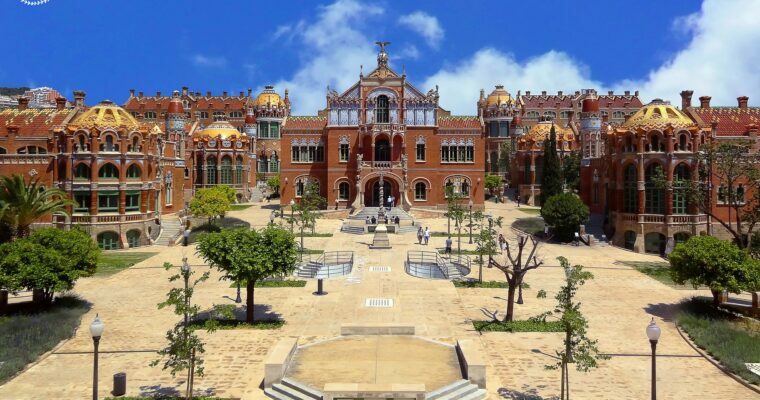
Located in the heart of Barcelona, next to Avinguda de Gaudí and just a few minutes from the Sagrada Família, this extraordinary architectural complex was conceived as a hospital, but also as a genuine city within the city. Pavilions made of exposed brick, mosaics, ceramics, …