CASA SAYRACH: A GEM OF CATALAN MODERNISM.
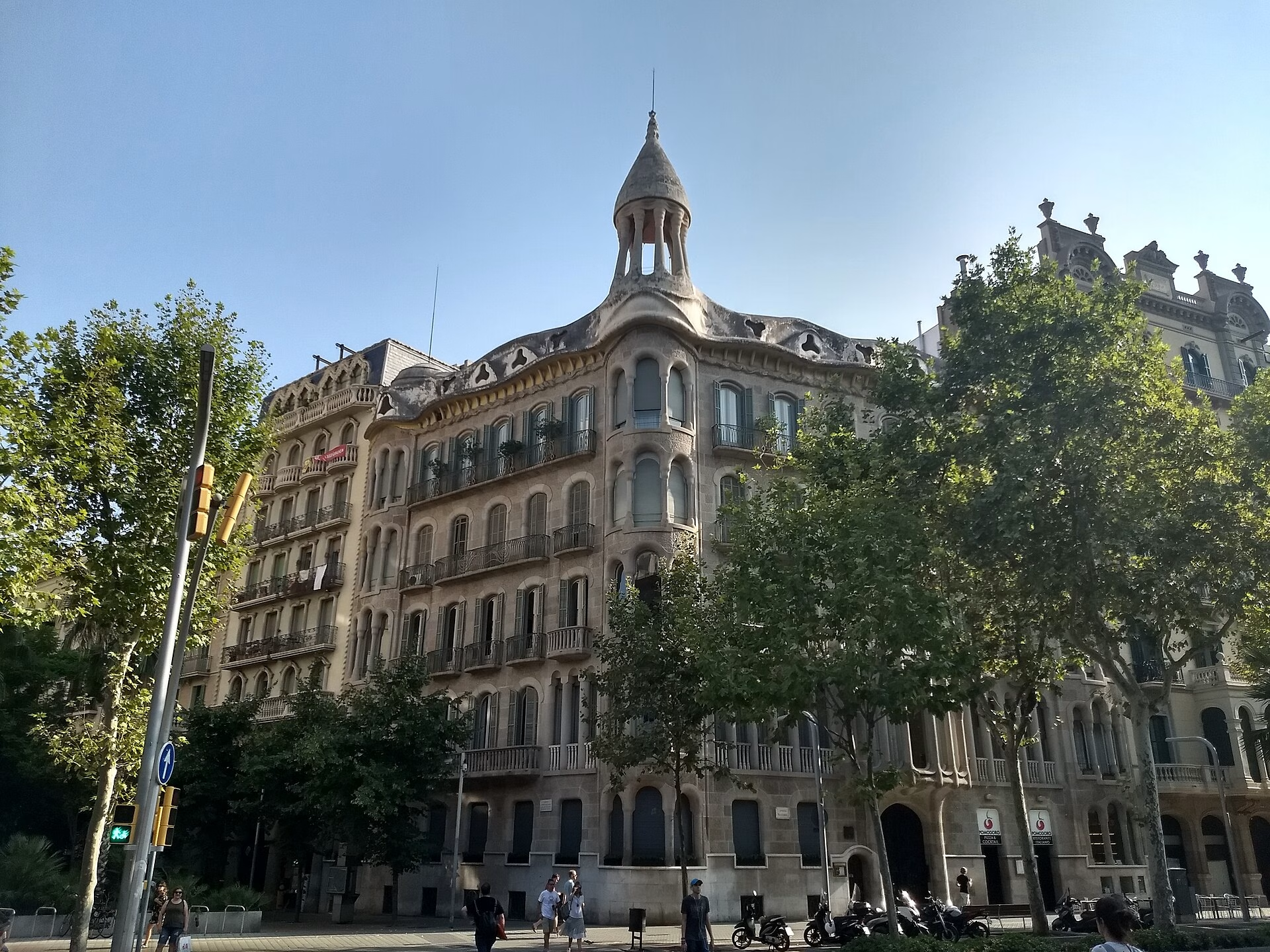
Architecture, history, organic forms and the legacy of Manuel Sayrach in one of the most original buildings in Barcelona’s Eixample district.
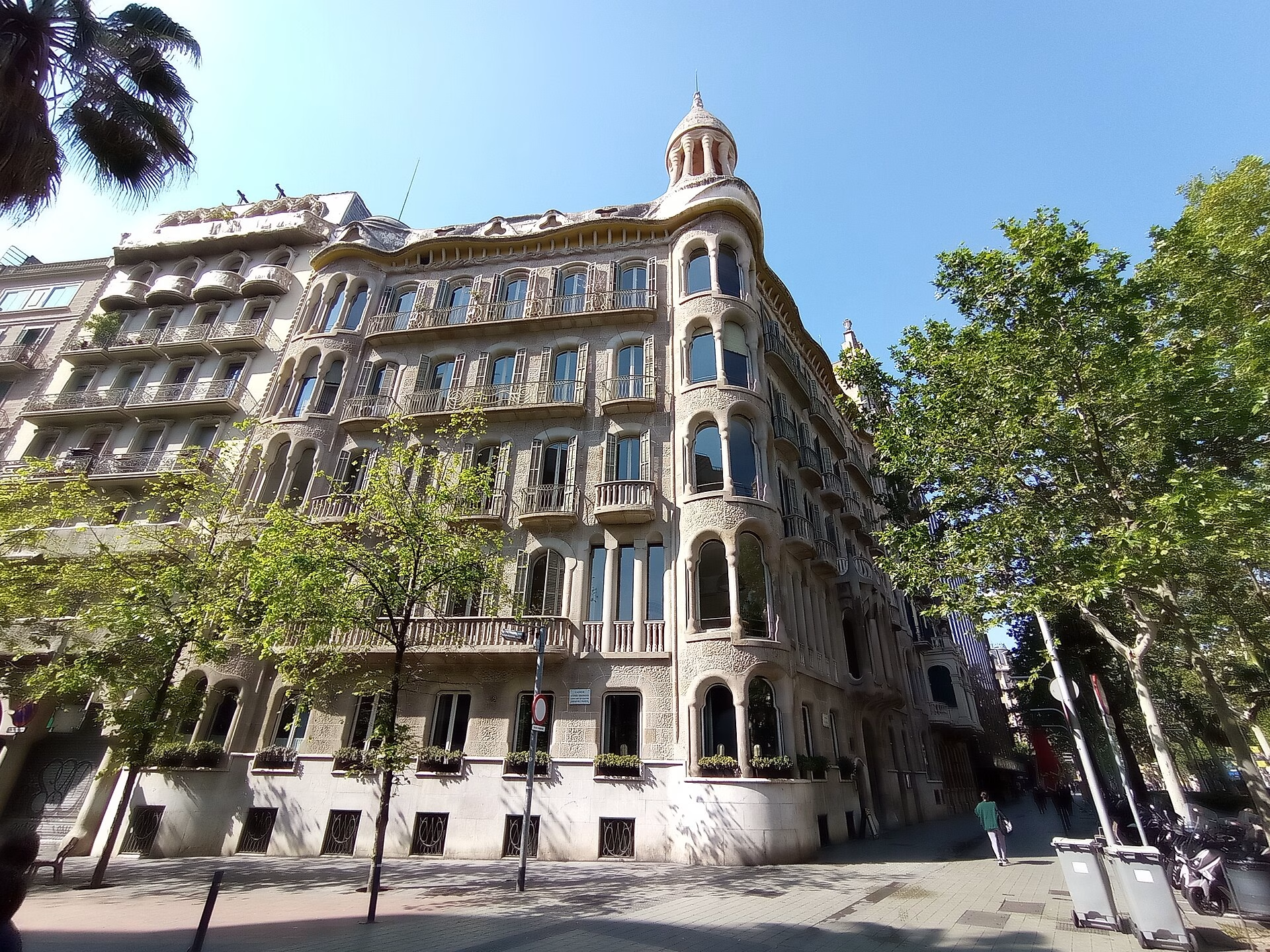
On one of the most interesting corners of Barcelona’s Eixample district, where Avinguda Diagonal meets Carrer d’Enric Granados, stands Casa Sayrach, one of the most distinctive and unconventional buildings of Catalan Modernism.
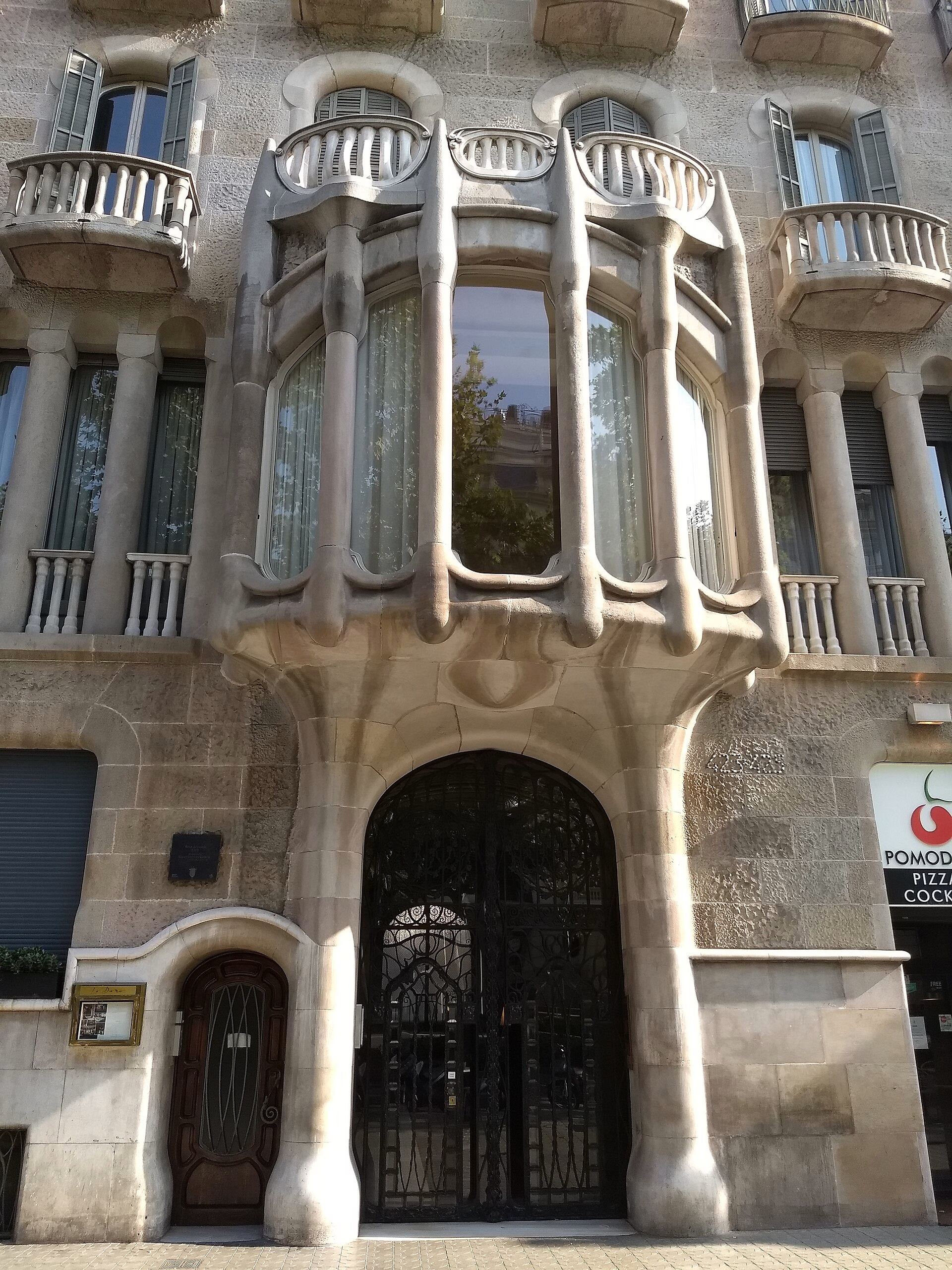
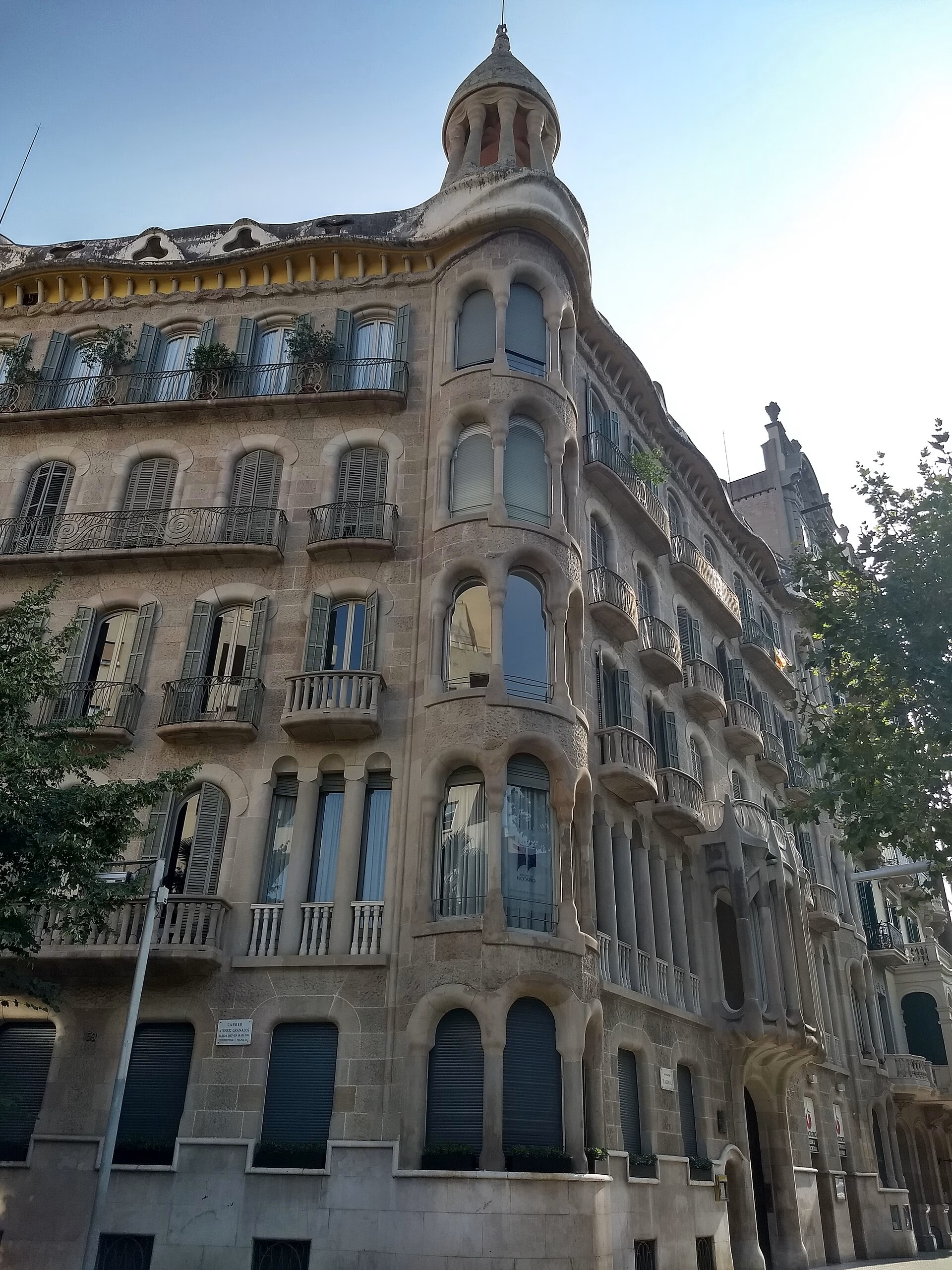
Its façade, characterised by curved lines, undulating volumes and an extraordinary inspiration drawn from natural forms, is a statement of architectural creativity. The building appears to move away from the geometric rigidity of traditional architecture, embracing a freer, more sculptural and organic language reminiscent of some of Antoni Gaudí’s most personal works.
An elegant corner tower rises above the building, enhancing its presence in the urban landscape and making it a particularly striking feature of the Eixample’s architectural heritage.
Built between 1915 and 1918, Casa Sayrach was designed by architect Manuel Sayrach i Carreras for his father, the physician Miquel Sayrach i Carabassa. The building represents one of the last significant expressions of Barcelona Modernism, at a time when the movement was beginning to coexist with new architectural trends.
Its distinctive character, formal richness and heritage value were officially recognised in 2024, when the Government of Catalonia declared it a Cultural Asset of National Interest (BCIN), in the category of Historic Monument.
Today, Casa Sayrach remains part of Barcelona’s architectural heritage. Although it is privately owned and does not offer general public visiting hours, it houses the La Dama restaurant, which provides access to certain interior spaces and allows visitors to discover part of the decorative richness of this extraordinary building.
THE ORIGINS OF CASA SAYRACH
A family residence conceived as a work of art
The history of Casa Sayrach dates back to the early years of the 20th century, during a period of profound urban and cultural transformation in Barcelona. The Eixample had become the new residential district of the bourgeoisie, whose broad avenues and corner plots provided the ideal setting for buildings designed to reflect their social standing and embrace the latest artistic trends.
It was in this context that the physician Miquel Sayrach i Carabassa commissioned the construction of the building for his family. The project was developed by his son, Manuel Sayrach i Carreras, an architect, writer and thinker with extraordinary artistic sensitivity.
Construction began in 1915, and the building was inaugurated in 1918. Although the project was officially signed by Gabriel Borrell i Cardona, as Manuel Sayrach had not yet completed his architectural studies, its intellectual and artistic authorship is attributed to the latter.
Casa Sayrach is his most representative architectural work and reflects a highly personal understanding of architecture: not simply as a combination of volumes and materials, but as an artistic creation connected with nature, light, symbolism and Catalan cultural identity.
One particularly interesting aspect is that Sayrach conceived the building as a symbolic representation of Catalonia. The stone façade evoked the mountains, with a particular reference to Montserrat, while the interior spaces represented the Mediterranean Sea. This interpretation transforms the house into something more than a Modernist residence: it is a work conceived with a poetic and philosophical dimension.
THE ARCHITECT: MANUEL SAYRACH I CARRERAS
A Renaissance-minded creator influenced by Antoni Gaudí
Manuel Sayrach i Carreras (Barcelona, 1886 – Sant Feliu de Llobregat, 1937) was a distinctive figure in the Catalan cultural landscape of the early 20th century.
His artistic personality extended far beyond architecture. He also explored writing, poetry, theatre, philosophy, design and reflections on Catalan cultural identity.
He deeply admired Antoni Gaudí and shared his vision of architecture as something closely connected with natural forms, movement and spirituality.
Nevertheless, Sayrach developed his own distinctive language, combining Gaudí’s influence with a highly personal ornamental sensibility.
His principal architectural works include:
- Casa Sayrach (1915–1918): his most emblematic creation, located on Avinguda Diagonal.
- Casa Montserrat Fatjó dels Xiprers (1926): another building designed by Sayrach, located on Carrer d’Enric Granados, which offers an insight into the evolution of his architectural language.
Casa Sayrach particularly reflects his artistic philosophy and his desire to integrate architecture, symbolism and nature into a single creation.
THE ARCHITECTURAL STYLE OF CASA SAYRACH
Late Modernism, Gaudí-inspired forms and the transition towards Noucentisme
Casa Sayrach belongs to the late period of Catalan Modernism, although it possesses distinctive characteristics that set it apart from other buildings of the same period.
Its construction took place at a time when Modernism was beginning to lose prominence to Noucentisme, a movement that championed a more classical and orderly aesthetic, closely associated with Mediterranean ideals.
Precisely because it emerged during this transitional period, Casa Sayrach is a particularly interesting example of Barcelona’s architectural evolution.
Its main architectural features include:
1. Curved and undulating façades
The façade avoids the rigidity of traditional compositions and develops sinuous surfaces that appear to draw inspiration from the movements of nature. Curves extend across the different levels of the building, creating a sense of visual continuity.
2. Inspiration from Antoni Gaudí
The use of organic forms, freedom of composition and naturalistic interpretation of architectural elements reflect Sayrach’s admiration for Gaudí. Nevertheless, Casa Sayrach retains its own distinctive personality and architectural language.
3. The corner tower
One of the building’s most striking features is its semi-cylindrical corner structure, which culminates in an elegant, slender tower. This architectural solution enhances its urban presence and allows the building to be admired from different perspectives.
4. Galleries and balconies
Glazed galleries, balconies and columns add depth and movement to the façades. The decorative elements are integrated into the overall structure without disrupting the harmony of the composition.
5. Nature-inspired decoration
The ornamentation incorporates botanical references and sinuous forms, helping to create an almost sculptural atmosphere.
Casa Sayrach does not seek to reproduce Gaudí’s architecture directly, but rather to reinterpret his principles through its own distinctive artistic sensibility.
THE INTERIOR OF CASA SAYRACH
A Modernist world of light, shapes and ornamental details
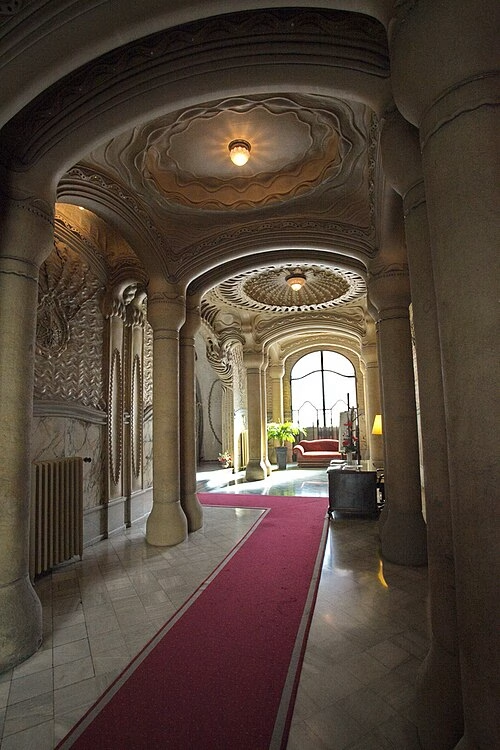
Although the façade is the building’s most visible feature, its interior is an essential part of its architectural value.
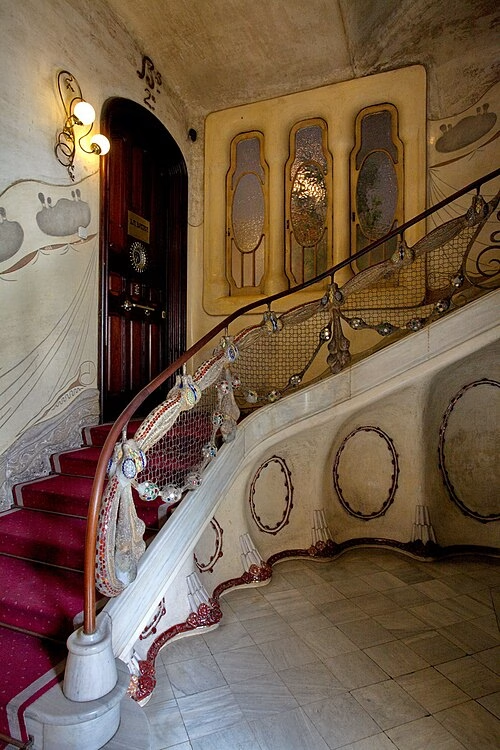
The entrance hall and main staircase were conceived as representative spaces, where decoration is as important as the architectural structure itself.
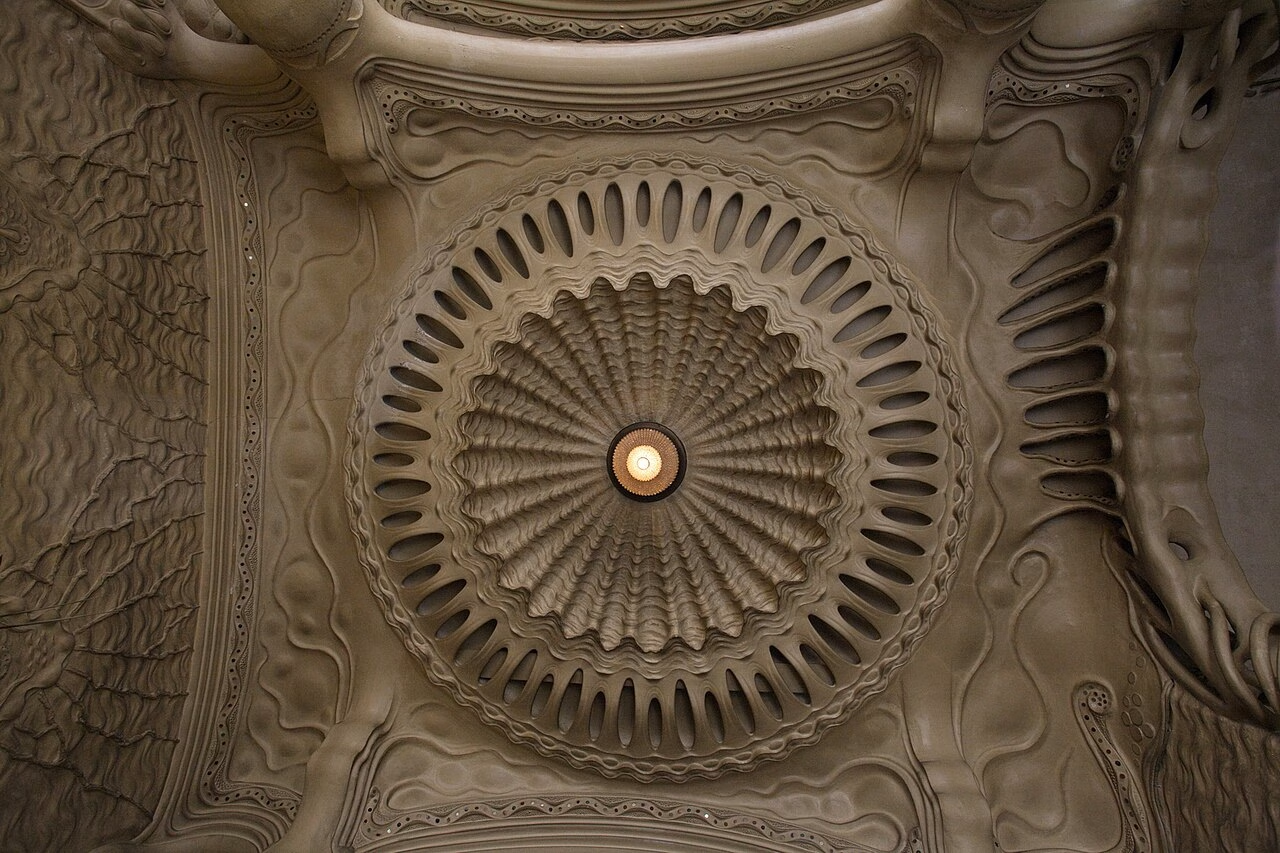
The ornamental elements, finishes, curved forms and design of the communal areas create a visual experience that extends the organic language of the façade into the interior.
The design of the lift cabin is also particularly noteworthy. It is one of the building’s distinctive features and reflects Sayrach’s attention to detail and his commitment to integrating applied arts into architecture.
The interior decoration follows the Modernist philosophy of creating a unified artistic vision in which architecture, furniture, lighting and ornamentation all form part of the same project.
The result is a building in which even functional elements were designed to maintain a coherent aesthetic identity.
CASA SAYRACH AND ITS DECLARATION AS A CULTURAL ASSET OF NATIONAL INTEREST
Recognition of an exceptional architectural heritage
One of the most important events in Casa Sayrach’s recent history took place in 2024, when the Government of Catalonia approved its designation as a Cultural Asset of National Interest (BCIN), in the category of Historic Monument.
This declaration recognises the building’s extraordinary architectural, artistic and historical value and also establishes a specific protected surrounding area.
The protection covers the entire building, including its different floors, façades, galleries, balconies, inner courtyard and roof structures, as well as the subsoil.
The immediate surroundings are also protected in order to preserve important views of the building and prevent urban developments that could compromise its appreciation as a monument.
With this recognition, Casa Sayrach joins the group of Barcelona’s major protected monuments.
CASA SAYRACH TODAY
A privately owned property that retains its residential and gastronomic functions
Unlike other Modernist buildings in Barcelona that have been converted into museums or tourist attractions, Casa Sayrach retains its status as a privately owned property.
For this reason, it does not have regular visiting hours, and unrestricted access to its residential areas and communal spaces is not permitted.
However, the building offers a particularly interesting opportunity for those wishing to discover its interior: the La Dama restaurant, which occupies part of the property.
The presence of this establishment allows visitors to discover some of the interior spaces and enjoy a dining experience in a historic architectural setting.
It is important to bear in mind that entering the restaurant does not mean having access to the entire monument. Access to communal areas and original architectural features may be subject to the restaurant’s activities and restrictions affecting private areas.
LA DAMA: DINING AND SOPHISTICATION INSIDE CASA SAYRACH
A restaurant located in one of Barcelona’s most distinctive buildings
One of Casa Sayrach’s main attractions today is La Dama, a restaurant that combines Mediterranean cuisine, cocktail culture and sophisticated interior design.
Originally founded in 1984, La Dama has established itself as a destination for those seeking a distinctive dining experience in an unusual setting.
Its interior design concept embraces an eclectic aesthetic, featuring residential-inspired lounges, mirrors, patterned wallpapers, velvet furnishings, elegant furniture and works of art.
The result is a space reminiscent of an aristocratic private residence, where each room has its own individual character.
The culinary offering
La Dama’s cuisine is Mediterranean in style, with influences from France, Italy and Spain, incorporating contemporary techniques and carefully presented dishes.
Its menu includes:
- Fish and seafood prepared using contemporary techniques.
- Selected meats and French-inspired dishes.
- Pasta and rice dishes with original preparations.
- Creative starters and seasonal ingredients.
- Homemade desserts.
- A selection of wines and signature cocktails.
One of the dishes that best represents the restaurant’s culinary identity is the Sayrach Squid Carbonara, a creation that establishes an interesting connection between the restaurant and the building that houses it.
Indicative prices at La Dama
The following prices are approximate menu references and may change.
| Food offering | Price |
|---|---|
| Oysters | From €6 per piece |
| Stracciatella | €19 |
| Sea bass crudo | €25 |
| Squid carbonara | €26 |
| Tuna tartare | €28 |
| Risotto | €30 |
| Lobster pasta | €38 |
| Entrecôte | €36 |
| Desserts | €6–€18 |
These prices place the restaurant in the medium-high to high-end dining category, in keeping with its location and concept.
Opening hours
Usual opening hours:
| Day | Dinner service |
|---|---|
| Monday | Closed |
| Tuesday and Wednesday | 6:00 pm–1:00 am |
| Thursday to Saturday | 6:00 pm–2:00 am |
| Sunday | Closed |
Lunch service is available for special occasions and selected dates. The restaurant also offers private hire options for events.
La Dama contact details
- Address: Avinguda Diagonal, 423–425, Barcelona.
- Telephone: +34 932 09 63 28.
- Website: https://la-dama.com/?lang=es
- Email: info@la-dama.com
Advance reservations are recommended, and it is advisable to confirm availability, particularly if you wish to explore the building’s interior spaces.
LOCATION OF CASA SAYRACH
A privileged location in Barcelona’s Eixample district
Casa Sayrach is situated in one of the most interesting areas of the Eixample, at the intersection of two of Barcelona’s main thoroughfares.
Address:
Casa Sayrach
Avinguda Diagonal, 423–425
08036 Barcelona, Spain.
Corner of Carrer d’Enric Granados.
Its location makes it easy to combine a visit to the building with a walk around some of the city’s most remarkable architectural, cultural and commercial areas.
Avinguda Diagonal is one of Barcelona’s main urban arteries, while Carrer d’Enric Granados is known for its quieter atmosphere, terraces, restaurants, galleries and specialist shops.
The area is particularly appealing for walking, as it contains an important concentration of the Eixample’s architectural heritage.
HOW TO GET TO CASA SAYRACH
Public transport, metro, FGC trains, buses and private vehicles
Casa Sayrach has excellent public transport connections and is easily accessible from different parts of Barcelona.
1. By metro
The nearest station is Diagonal, where two metro lines intersect:
- L3, the green line.
- L5, the blue line.
The building is just a few minutes’ walk from the station.
2. By Ferrocarrils de la Generalitat (FGC)
Another option is Provença station, located nearby.
Several FGC services stop there, including:
- L6.
- L7.
- S1.
- S2.
- S5.
- S6.
- S7.
From Provença station, the journey can be completed on foot.
3. By city bus
The area is served by several bus routes operating along Avinguda Diagonal and the surrounding streets.
The following routes provide access to the vicinity of the building:
- Route 6.
- Route 7.
- Route 22.
- Route 24.
- Route 33.
- Route 34.
- Route 54.
- Route H8.
- Route V13.
Specific stops and routes may vary depending on the direction of travel and service changes. It is advisable to check the TMB app before setting out.
4. By private vehicle
By car, the building can be reached via Avinguda Diagonal, Carrer de Balmes, Carrer d’Aribau or the inner streets of the Eixample, depending on your starting point.
From Josep Tarradellas Barcelona-El Prat Airport, the usual route is via Gran Via or Avinguda Diagonal, although journey times depend considerably on traffic conditions.
Barcelona-Sants railway station is also connected to the area via the main roads crossing the Eixample.
It is worth remembering that Casa Sayrach is located within Barcelona’s Low Emission Zone (LEZ). Vehicles that do not meet the environmental requirements should check the applicable traffic restrictions in advance.
WHERE TO PARK NEAR CASA SAYRACH
Public car parks and indicative prices
Although there are several underground car parks in the area, finding on-street parking can be difficult, particularly during business hours and at weekends.
For visitors arriving by private vehicle, the following options are available:
1. Parking Diagonal 403
Address: Avinguda Diagonal, 403.
Approximate distance: 280 metres.
- Open 24 hours.
- Covered parking.
- From €9.90 for up to 4 hours with an online reservation.
- €20 for 24 hours according to its online booking website.
Website: https://diagonal403.parkings.info/es
2. Parking Windsor
Address: Via Augusta, 2 bis.
Approximate distance: 280–300 metres.
- Open 24 hours.
- Underground parking.
- Indicative rates from €2.52 per hour for certain bookings.
- Daily rates from €15.
Website: https://windsor.parkings.info/es
3. Aparcament Graen
Address: Carrer d’Aribau, 82.
- Covered parking.
- Open 24 hours.
- Access via Carrer d’Aribau, with an access reference from Carrer d’Enric Granados.
It is advisable to confirm access arrangements and prices directly with the car park.
The prices listed above are indicative and may vary depending on the date, length of stay and booking option. In central Barcelona, reserving a parking space in advance is recommended.
PLACES OF INTEREST NEAR CASA SAYRACH
A route through Modernism, culture and elegant Barcelona
Casa Sayrach’s location makes it an excellent starting point for discovering some of the buildings and urban spaces that best represent the Eixample district.
A visit can easily become part of an architectural route combining Modernism, historical heritage, gastronomy and shopping.
1. Casa Milà – La Pedrera
Approximate walking distance: 8–10 minutes.
One of Antoni Gaudí’s masterpieces, declared a UNESCO World Heritage Site. Its highlights include its undulating façade, wrought-iron balconies, interior courtyards and extraordinary sculptural rooftop.
The building offers visits to its historic spaces, exhibitions and evening experiences. Ticket prices vary depending on the type of visit and the season.
Official website: https://www.lapedrera.com/
2. Palau Robert
Approximate walking distance: 5–7 minutes.
A historic Neoclassical building housing temporary exhibitions, cultural activities and tourist information facilities. Its gardens provide a pleasant place to relax.
Official website: https://palaurobert.gencat.cat/es/
3. Casa Batlló
Approximate walking distance: 15 minutes.
Another of Gaudí’s great creations. Its façade, inspired by the marine world and nature, features colourful mosaics, sculptural balconies and a roof reminiscent of a dragon’s back.
Visitors can enjoy immersive experiences and guided routes through its main architectural spaces.
Official website: https://www.casabatllo.es/
4. Casa Montserrat Fatjó dels Xiprers
Location: Carrer d’Enric Granados, 153–155.
Another work by Manuel Sayrach, built in 1926. It is particularly interesting because it offers an insight into the evolution of his architecture and his distinctive interpretation of the Modernist style.
5. Fundació Antoni Tàpies
Approximate walking distance: 15–20 minutes.
A cultural centre dedicated to modern and contemporary art, located in the former Montaner i Simón publishing house, designed by Lluís Domènech i Montaner.
It is an especially interesting visit for those wishing to complement their exploration of Modernist architecture with contemporary art.
Official website: https://fundaciotapies.org/
It is advisable to check its opening status, as a temporary closure for renovation works had been announced from October 2026.
WHAT THE AREA AROUND CASA SAYRACH HAS TO OFFER
Restaurants, terraces, shops and urban experiences
The surroundings of Casa Sayrach are among the most interesting areas in Barcelona for enjoying city life.
Carrer d’Enric Granados
This street is known for its restaurants, cafés and outdoor terraces. Its atmosphere combines tranquillity, residential architecture and a varied gastronomic offering.
It is an especially pleasant place to stroll, enjoy a coffee or have a meal outdoors.
Avinguda Diagonal
Avinguda Diagonal is home to shops, restaurants, hotels, offices and venues that represent contemporary Barcelona.
Its broad layout and transport connections make it easy to explore different parts of the Eixample and connect with other areas of tourist interest.
Passeig de Gràcia
Just a short distance away lies one of Spain’s most prestigious shopping avenues.
International fashion houses, jewellery stores, luxury hotels and some of the finest examples of Catalan Modernist architecture can all be found here.
Rambla de Catalunya
Another particularly appealing area, known for its terraces, restaurants, shops and lively commercial atmosphere. It is an ideal place to round off a day of cultural visits and gastronomic experiences.
CASA SAYRACH: AN EXPERIENCE THAT REVEALS ANOTHER SIDE OF BARCELONA
Casa Sayrach is much more than a distinctive building on a corner of Avinguda Diagonal. It is an expression of early 20th-century architectural creativity, the humanist philosophy of Manuel Sayrach and one of the most brilliant periods in Barcelona’s cultural history.
Its organic architecture, corner tower, ornamental details and symbolic conception make it an essential destination for anyone wishing to explore Catalan Modernism beyond its best-known monuments.
The opportunity to complement the visit with a dining experience at La Dama, discover Gaudí’s great architectural works and stroll along the Eixample’s most elegant streets makes this area a particularly attractive destination.
Casa Sayrach is undoubtedly one of those architectural gems that deserve to be discovered without rushing, taking the time to appreciate every detail and understand the history hidden behind its extraordinary forms.

Copyright © 2016-2026 Magic Dreams Barcelona.