Dalí Theatre-Museum in Figueres.
Salvador Dalí’s great surrealist universe
The Dalí Theatre-Museum in Figueres is one of the most extraordinary museums in Catalonia and one of the most iconic places associated with Salvador Dalí. Conceived as a total work of art, the museum invites visitors to enter the artist’s imagination through paintings, sculptures, installations, optical illusions and architectural elements.
More than a conventional museum, it is an artistic experience in which the building itself becomes part of Dalí’s work.
Located in the heart of Figueres, the museum was officially inaugurated on 28 September 1974, after several years of construction and artistic development under Dalí’s supervision.
A museum created by Dalí
The Dalí Theatre-Museum occupies the site of the former Municipal Theatre of Figueres, a building that had been severely damaged during the Spanish Civil War.
Dalí transformed the remains of the old theatre into an enormous surrealist composition. He personally supervised the creative process and the placement of many of the works, turning the building into what he considered a unique artistic creation.
The museum is today regarded by the Fundació Gala-Salvador Dalí as the largest surrealist object in the world.
Its collection includes more than 1,500 works and objects, covering different periods and artistic disciplines throughout Dalí’s career.
A collection spanning Dalí’s artistic life
Inside the museum, visitors can discover paintings, drawings, sculptures, jewellery, installations and other creations that reveal the extraordinary evolution of Dalí’s artistic language.
Among the works and spaces associated with the museum are iconic pieces such as:
- Self-Portrait with L’Humanité
- The Spectre of Sex-Appeal
- Galarina
- The Basket of Bread
- Gala Placidia
- Rainy Taxi
- The Mae West Room
- The Palace of the Wind
The museum also contains works that Dalí created specifically for this unique setting, making the relationship between the artist and the building especially important.
Gala-Salvador Dalí Square
The experience begins even before entering the museum.
The square in front of the building, officially named Gala-Salvador Dalí Square, forms part of the surrealist atmosphere of the complex.
Dalí designed several elements of the exterior, creating an unmistakable visual language that prepares visitors for what they will encounter inside.
The Galatea Tower
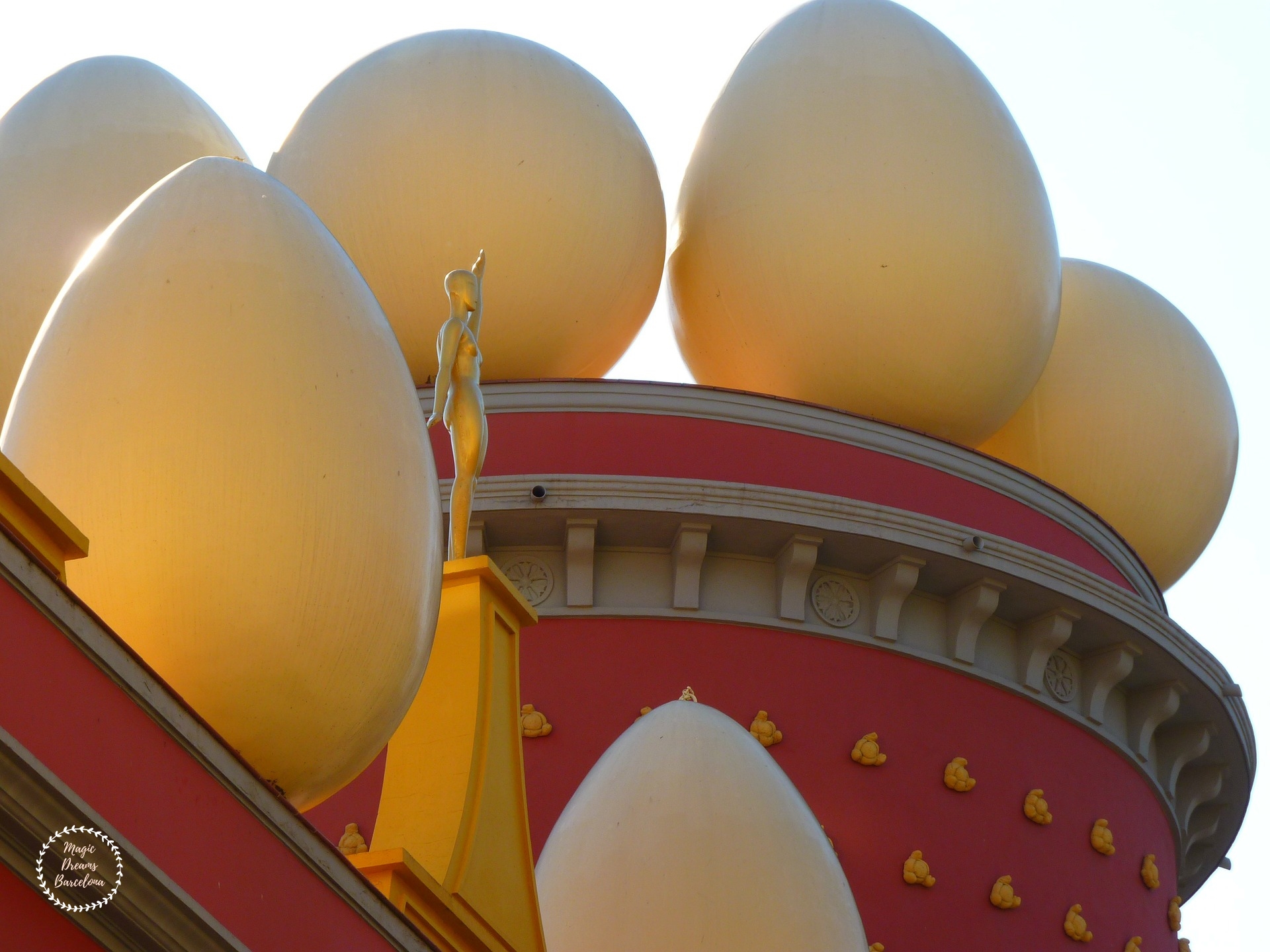
One of the most recognisable elements of the museum is the Galatea Tower, which rises above the building with its characteristic red façade covered with eggs, breads and other decorative elements.
The tower was formerly known as the Gorgot Tower. Dalí acquired it in 1981 and incorporated it into the museum complex.
Its unusual appearance perfectly reflects the artist’s fascination with transforming everyday objects into extraordinary images.
The geodesic dome
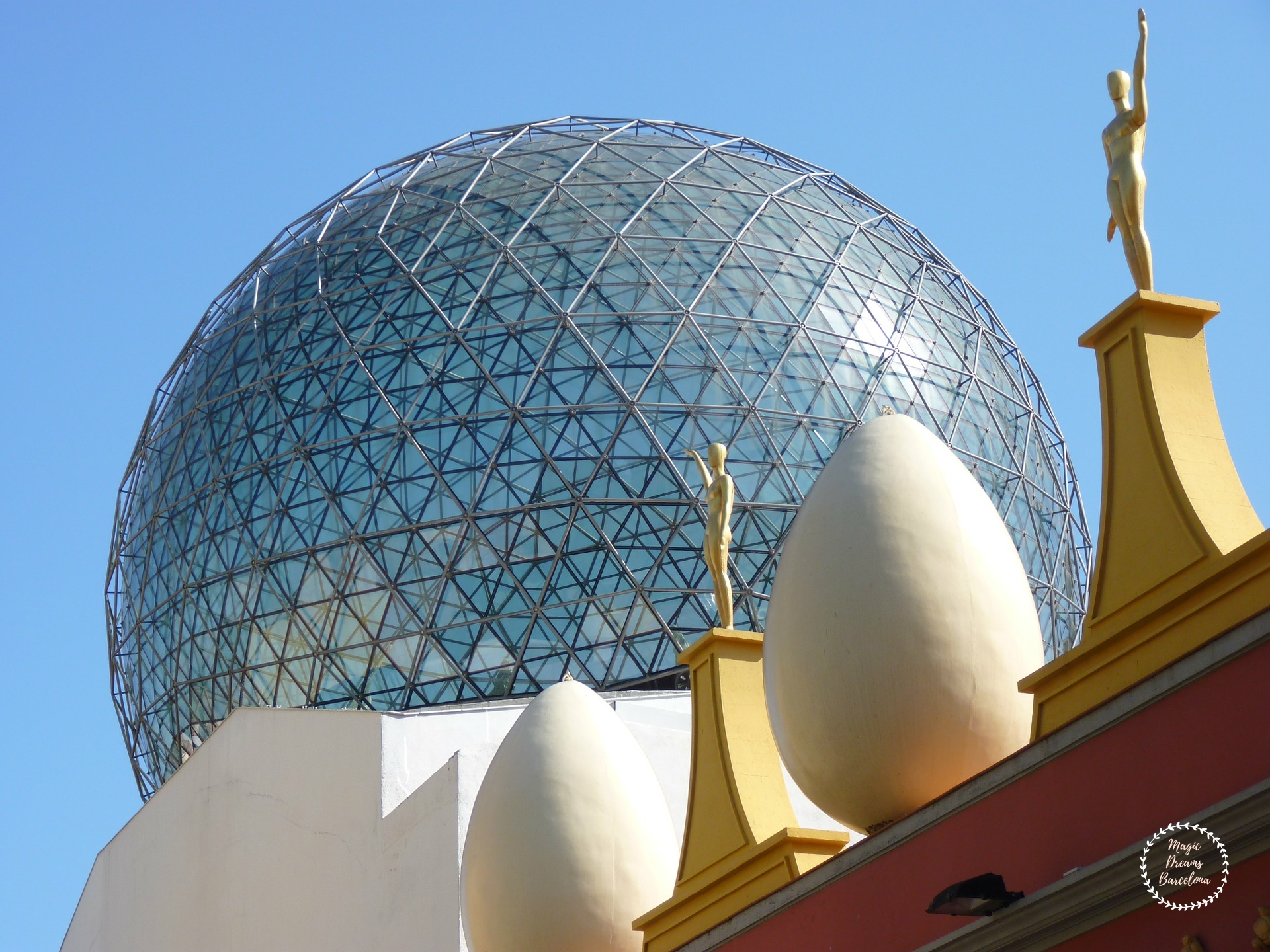
Perhaps the most recognisable symbol of the Dalí Theatre-Museum is its spectacular glass geodesic dome.
The dome became one of the defining architectural features of the museum and has made the building instantly recognisable around the world.
Dalí incorporated the dome into his artistic vision for the museum, while its construction was carried out by the Spanish architect and engineer Emilio Pérez Piñero.
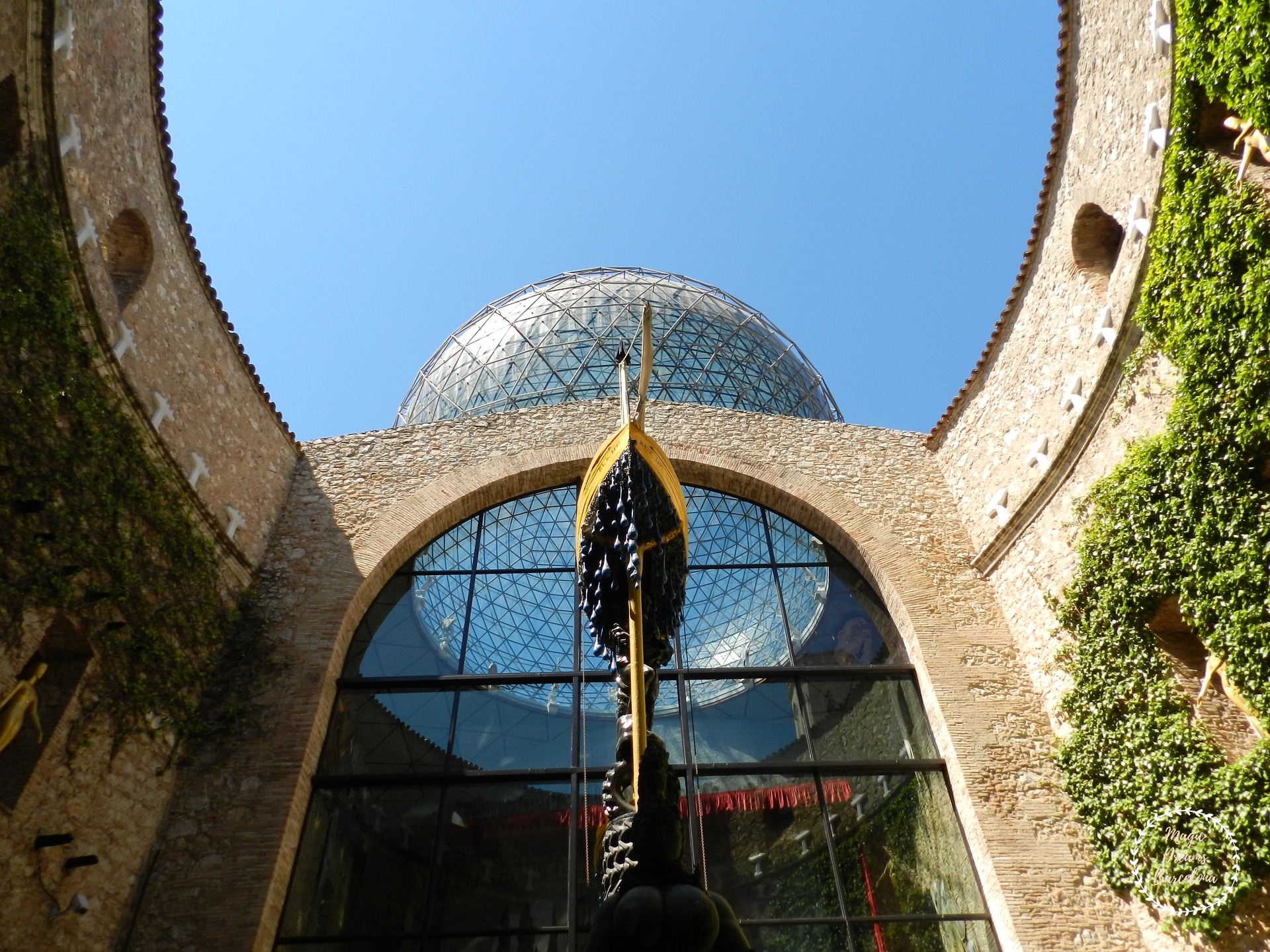
From outside, the dome gives the museum a distinctive silhouette against the Figueres skyline. From inside, it creates a dramatic architectural space filled with natural light.
The former auditorium and Rainy Taxi
One of the most striking spaces is the former auditorium, where visitors encounter one of Dalí’s best-known installations: Rainy Taxi.
A car stands in the centre of the courtyard, surrounded by surrealist elements that transform an ordinary vehicle into an extraordinary scene.
The installation is a perfect example of Dalí’s ability to combine objects, architecture and theatrical staging into a single work.
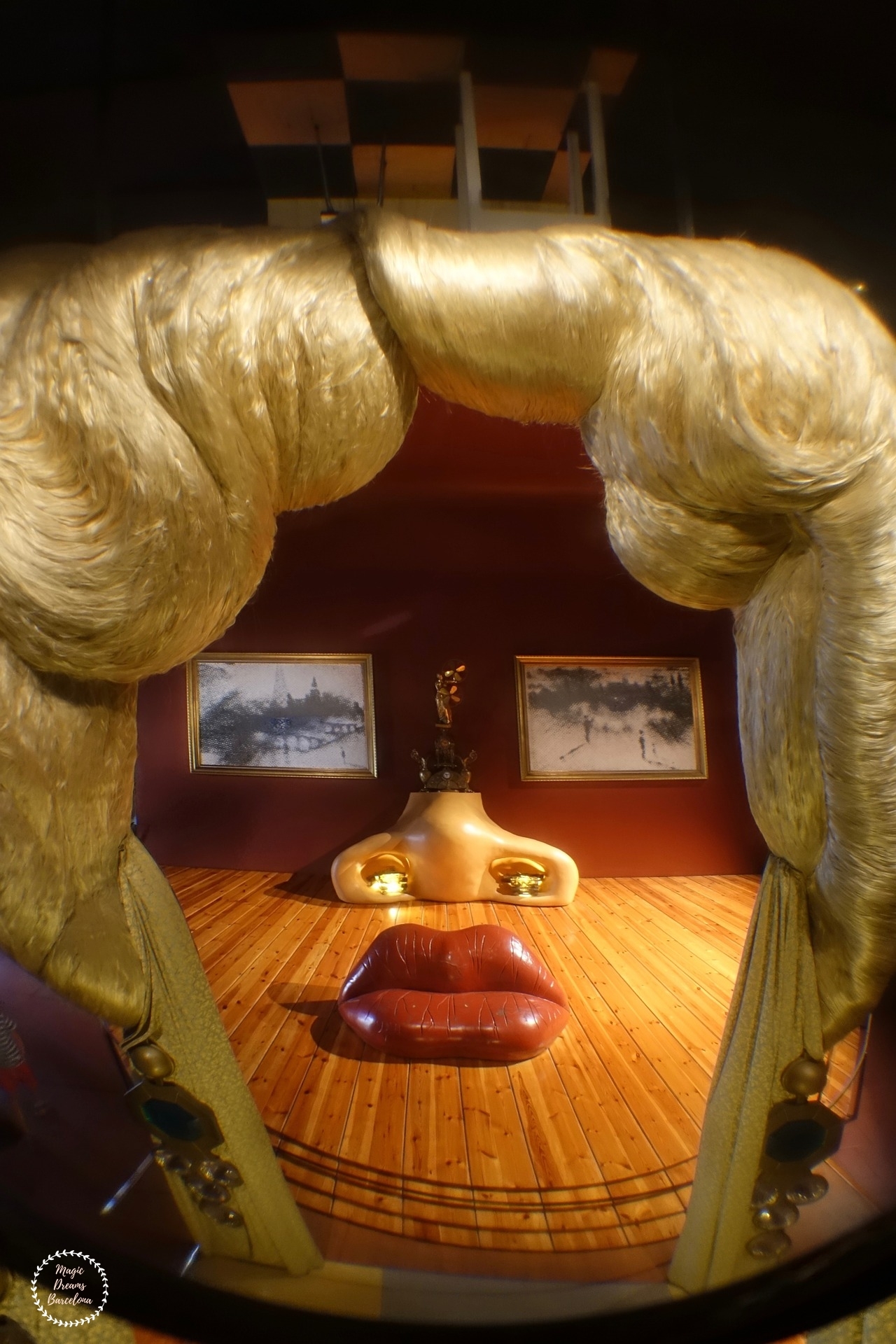
The Mae West Room
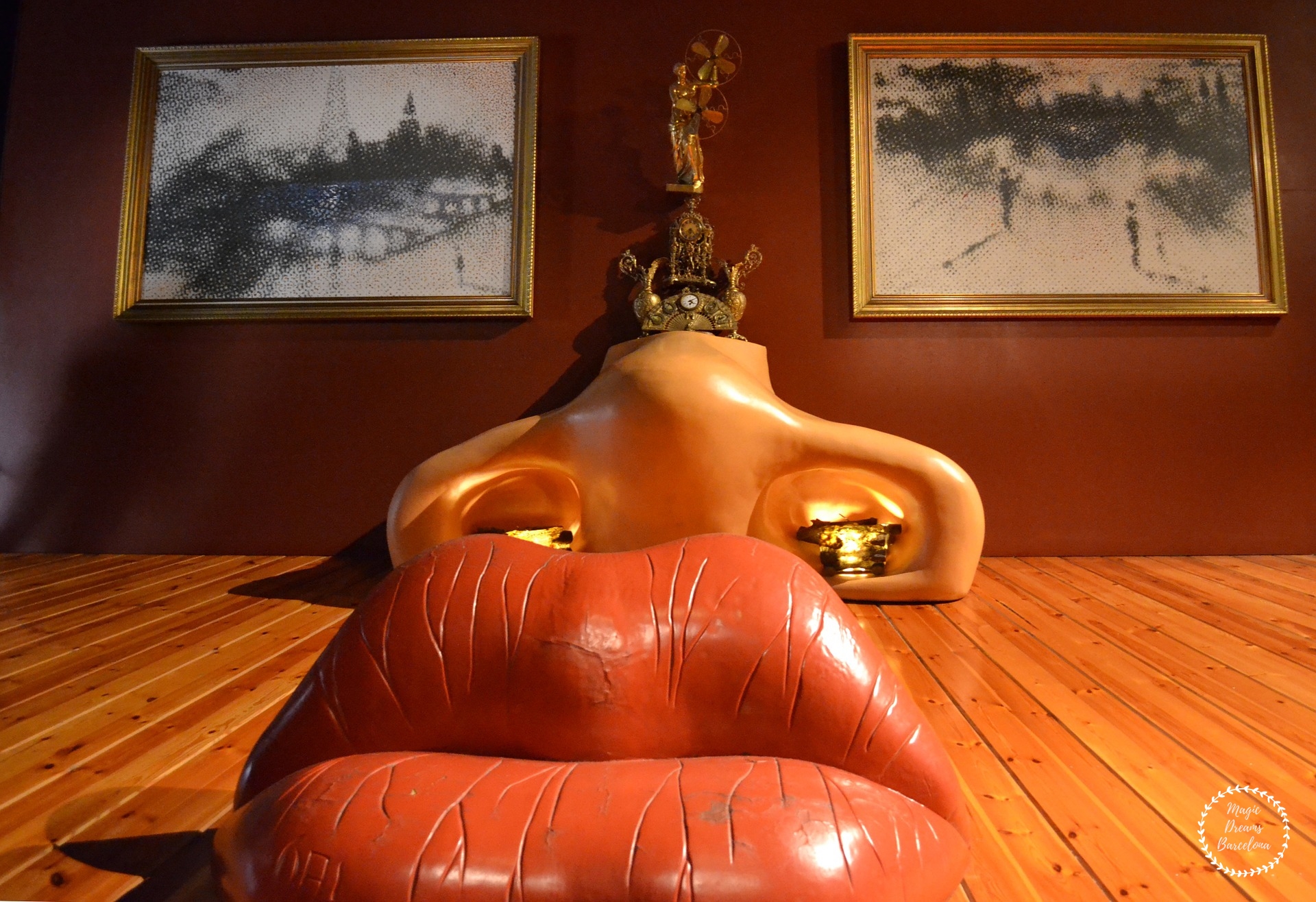
The Mae West Room is one of the museum’s most famous optical illusions.
Seen from a particular viewpoint, the furniture and architectural elements form the face of actress Mae West.
The work is based on Dalí’s fascination with double images, in which one visual composition can reveal another when viewed from the correct position.
The experience is playful, surprising and unmistakably Dalinian.
The Palace of the Wind
Another spectacular space is the Palace of the Wind, a monumental composition created between 1970 and 1973.
Originally conceived for the ceiling of the former theatre’s noble area, the work now dominates one of the museum’s most impressive rooms.
The composition combines figures, clouds, landscapes and symbolic elements in a vast visual universe inspired by Dalí’s imagination.
The stage and Labyrinth
The old theatre stage is another essential part of the museum.
Here, Dalí transformed the architecture into a theatrical and surrealist environment in which paintings, sculptures and installations interact with the original structure of the building.
The Labyrinth forms part of this extraordinary environment, inviting visitors to move through a space where reality and illusion continually overlap.
The crypt of Salvador Dalí
Salvador Dalí died on 23 January 1989 in Figueres.
His tomb is located beneath the museum, in the crypt of the former theatre.
The location connects the artist permanently with the city where he was born and with the building that became his most monumental artistic creation.
Dalí and Gala
Gala was one of the most important figures in Dalí’s life and artistic universe.
Her presence can be found throughout his work, and she also occupies a central place in the museum’s imagery.
The relationship between Dalí and Gala is essential to understanding many of the artist’s paintings, sculptures and symbolic compositions.
Works created specifically for the museum
One of the most fascinating aspects of the Dalí Theatre-Museum is that many of its elements were conceived specifically for the building.
This means that the museum should not simply be understood as a collection of works displayed in exhibition rooms.
The architecture, installations, paintings, sculptures and decorative elements were conceived to interact with one another.
The result is a genuine total work of art.
The grotesque monsters
The museum’s courtyard contains another distinctive example of Dalí’s imagination.
In 1975, Dalí and the artist Antoni Pitxot created a series of grotesque figures using branches, old gargoyles, shells and stones from Cap de Creus.
These strange creatures reinforce the surrealist atmosphere of the courtyard and demonstrate how Dalí transformed ordinary or discarded objects into artistic creations.
Dalí Jewels
The museum complex also houses the Dalí Jewels collection, presenting jewellery designed by the artist between 1941 and 1970.
Gold, precious stones and unusual forms become part of another dimension of Dalí’s artistic universe.
The jewellery reveals his interest in transforming traditional decorative arts through imagination, symbolism and surrealism.
The late-period rooms
The museum also allows visitors to explore works from Dalí’s later artistic periods.
These rooms demonstrate the artist’s continuing fascination with optical effects, classical references, science, mathematics and visual experimentation.
Rather than following a strictly chronological museum layout, the visit often feels like a journey through Dalí’s ideas and obsessions.
Dalí and science
Science played an increasingly important role in Dalí’s imagination.
Atomic physics, mathematics, optics and geometry became recurring references in his later work.
The museum reflects this fascination through paintings and compositions in which scientific concepts are transformed into artistic and symbolic images.
The obsession with geometry
Geometry is another recurring element throughout the museum.
Spheres, grids, symmetrical forms and mathematical structures appear repeatedly in Dalí’s work.
The artist used geometry not simply as a technical tool, but as a way of exploring space, perception and the relationship between order and imagination.
The dome as a universe
The geodesic dome has become an almost inseparable symbol of Figueres and Dalí.
From outside, it crowns the building like an enormous surrealist object. Inside, it changes the perception of space and reinforces the theatrical character of the museum.
Together with the former theatre structure, the dome creates an architectural environment that is unlike any conventional museum.
Figueres and Salvador Dalí
Figueres is inseparable from Salvador Dalí.
The artist was born in the city in 1904 and maintained a profound connection with it throughout his life.
The Theatre-Museum represents the culmination of that relationship, transforming the city’s former theatre into a landmark that attracts visitors from all over the world.
For anyone interested in Dalí, Figueres is therefore much more than the location of a museum: it is an essential part of his story.
The Dalinian Triangle
The Dalí Theatre-Museum forms part of the Dalinian Triangle, together with two other essential places connected with the artist:
- The Dalí Theatre-Museum in Figueres
- The Salvador Dalí House-Museum in Portlligat
- Gala Dalí Castle in Púbol
Together, these three sites offer a deeper understanding of Dalí’s life, artistic universe and relationship with Gala and the landscapes of Catalonia.
Dalí by Night
The museum also offers special evening opening programmes on selected dates, allowing visitors to experience the building from a completely different perspective.
At night, the lighting, architecture and surrealist installations create an especially atmospheric experience.
It is an excellent option for visitors looking for a different way to discover Dalí’s world.
How long does the visit take?
A visit to the Dalí Theatre-Museum generally requires around 1.5 to 2 hours, although visitors who want to explore the collection in greater detail may wish to allow additional time.
The museum is highly visual and contains a large number of details, so it is worth taking your time rather than rushing through the rooms.
Practical information
Location:
Plaça Gala i Salvador Dalí, 5
17600 Figueres, Girona, Spain
Tickets:
General admission is currently available online and at the museum ticket office, with reduced rates and guided-visit options also available.
Because visitor capacity is limited, advance booking is recommended, particularly during weekends, holidays and the high season.
Opening hours vary depending on the season, so checking the official schedule before travelling is advisable.
How to get to Figueres from Barcelona
Figueres is approximately 140 kilometres from Barcelona and is easily accessible by road and rail.
The fastest option is generally the high-speed train, which connects Barcelona Sants with Figueres-Vilafant in around one hour.
From Figueres-Vilafant station, visitors can continue to the city centre by taxi or local transport.
By car, the journey generally takes around 1 hour 45 minutes to 2 hours, depending on traffic.
An essential visit on the Costa Brava
The Dalí Theatre-Museum is much more than an art museum.
It is a journey into the mind of one of the most influential and imaginative artists of the 20th century.
Its architecture, optical illusions, monumental paintings, sculptures and unexpected installations make every room part of the experience.
For travellers exploring Catalonia, combining Figueres, the Dalinian Triangle and the Costa Brava is an exceptional way to discover the landscapes, culture and artistic heritage of the region.
Would you like to discover the Dalí Theatre-Museum with us?
At Magic Dreams Barcelona, we can help you organise your visit to Figueres and discover the world of Salvador Dalí, combining culture, history and some of the most fascinating destinations in Catalonia.
Magic Dreams Barcelona
Discover Catalonia. Live the experience.




Copyright © 2016-2026 Magic Dreams Barcelona.