Royal Monastery of Poblet.
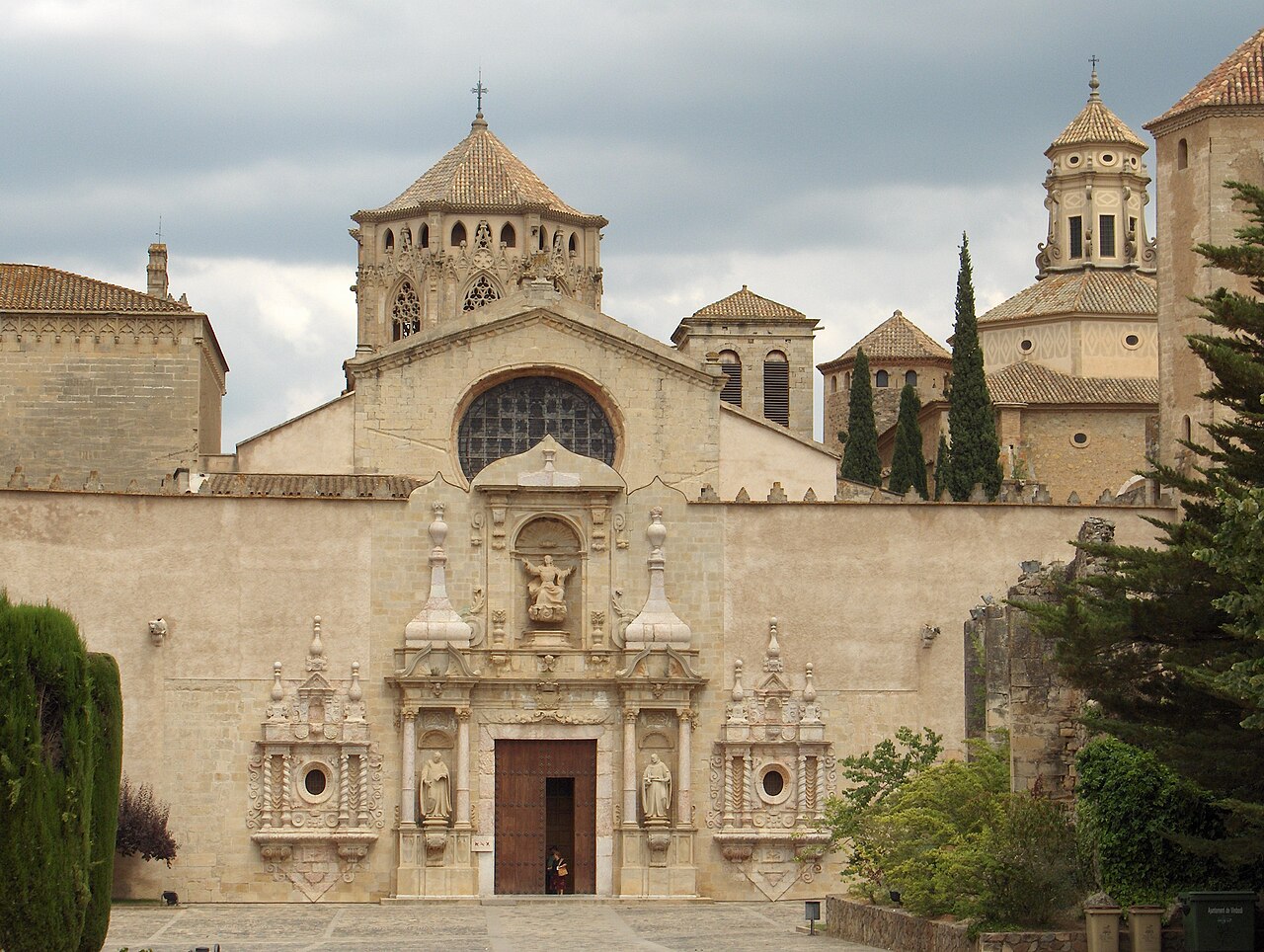
Hidden among the landscapes of the Conca de Barberà, in the province of Tarragona, stands one of Catalonia’s most extraordinary historical treasures: the Royal Monastery of Santa Maria de Poblet.
This impressive Cistercian monastery is much more than a beautiful medieval building. It is a place connected to the history of the Crown of Aragon, the Catalan royal dynasty, medieval monastic life and some of the most remarkable architectural traditions of Catalonia.
Declared a UNESCO World Heritage Site in 1991, Poblet is considered one of the largest and most complete Cistercian abbeys in the world.
If you are staying in Barcelona and would like to discover a different side of Catalonia, we highly recommend including Poblet in your itinerary.
Where is the Royal Monastery of Poblet?
The monastery is located in the municipality of Vimbodí i Poblet, in the Conca de Barberà region of Tarragona.
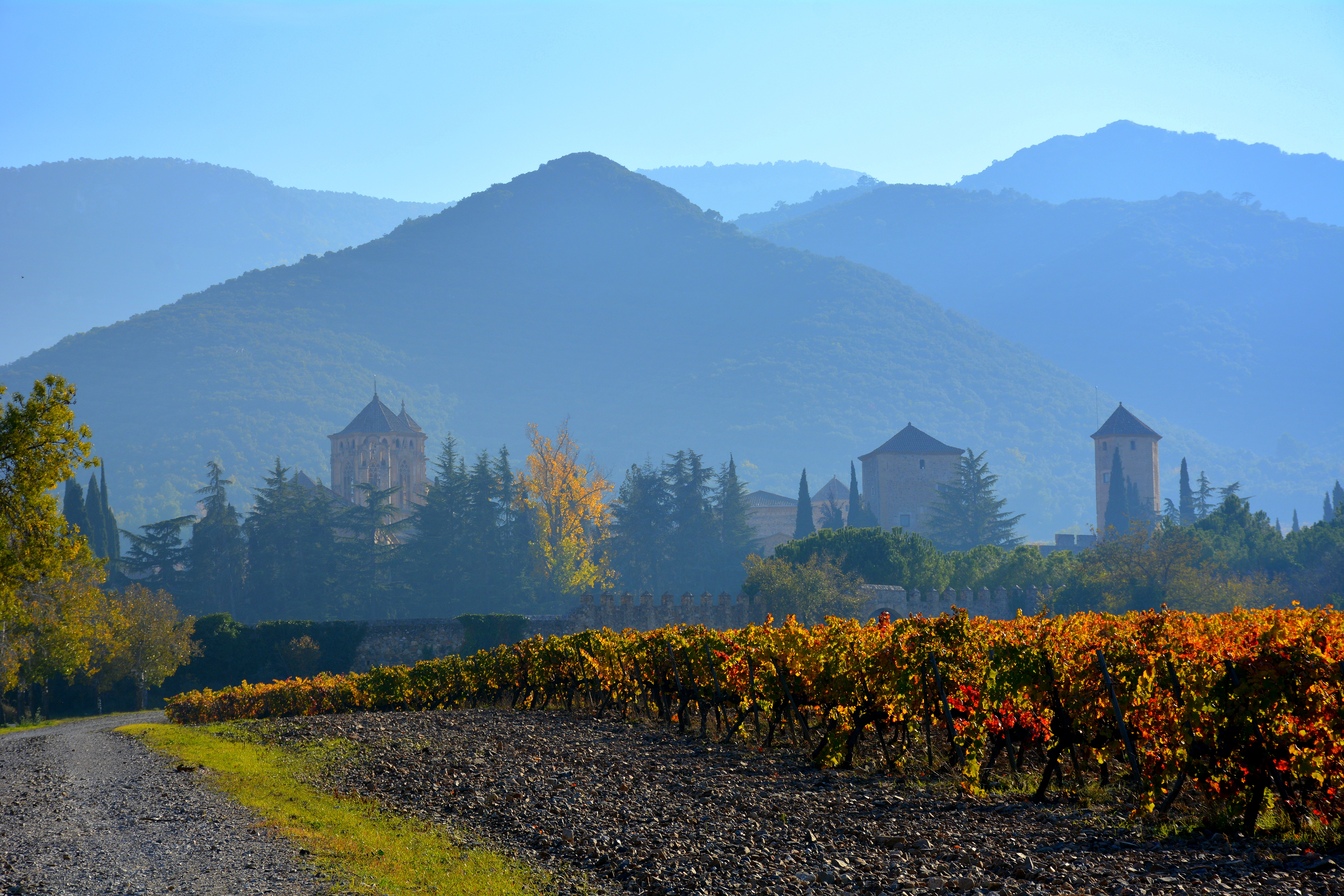
Its surroundings make the journey particularly attractive. The monastery is surrounded by forests, mountains and historic villages, creating an atmosphere that feels very different from the urban environment of Barcelona.
The location also makes Poblet an excellent destination for a cultural day trip from Barcelona.
How far is Poblet from Barcelona?
By car, the journey from Barcelona to Poblet is approximately 120 kilometres, depending on the exact route.
Under normal traffic conditions, the drive takes around 1 hour and 20 minutes to 1 hour and 30 minutes.
The usual route is via the AP-7 and AP-2, followed by the exit towards L’Espluga de Francolí and Poblet.
For visitors who prefer not to drive, there are also public transport options, although they require considerably more planning.
The nearest railway station is L’Espluga de Francolí, approximately 3 kilometres from the monastery.
A Brief History of Poblet
The history of Poblet begins in 1150, when the Cistercian monastery was founded in the context of the Christian expansion of the Crown of Aragon.
Over the following centuries, the monastery grew in importance and became one of the principal religious and political centres of the region.
Its relationship with the royal house became particularly significant.
Poblet eventually became the royal pantheon of the Crown of Aragon, and several kings and queens were buried here.
This royal connection transformed the monastery into much more than a religious institution. It became a powerful symbol of the medieval Crown of Aragon and an important centre of culture, administration and spirituality.
The Royal Pantheon
One of the most fascinating parts of Poblet is the Royal Pantheon, where members of the royal dynasties of Catalonia and Aragon were buried.
The tombs are located inside the monastery church, above the passageways between the columns.
Among the monarchs associated with the pantheon are Peter the Ceremonious, Martin the Humanist, Alfonso the Magnanimous and James II of Aragon, among others.
For visitors interested in medieval history, this is one of the most important highlights of the entire complex.
Walking through the church and seeing the royal tombs provides a direct connection with centuries of European history.
The Architecture of Poblet
Poblet is particularly interesting because it combines several architectural periods.
Its construction developed over centuries, and visitors can identify Romanesque, Gothic, Renaissance and Baroque elements throughout the complex.
However, Gothic architecture is particularly prominent in some of the monastery’s most important spaces.
The monastery was designed according to the principles of Cistercian architecture, which traditionally emphasized simplicity, functionality, light and spiritual contemplation.
At the same time, Poblet developed into an extraordinarily complex architectural ensemble.
The Three Enclosures of the Monastery
One of the most distinctive characteristics of Poblet is its organization into three main enclosures.
The complex is surrounded by defensive walls and towers, giving the monastery an imposing fortified appearance.
The First Enclosure
The first enclosure contains historic spaces that were connected with practical and everyday activities.
Among them are former stores, workshops and housing dating from later periods.
One of the most notable buildings is the Chapel of Saint George, a Gothic chapel dating from the 15th century.
This area provides an interesting introduction to the monastery before visitors reach its principal monumental spaces.
The Second Enclosure
The second enclosure leads visitors further into the historical heart of the complex.
Here you can find the Plaça Major, remains associated with the former hospital for the poor, the Romanesque Chapel of Santa Catherine and other historic spaces.
The architecture gradually becomes more monumental as you approach the main monastic enclosure.
The Third Enclosure
The third enclosure contains the heart of Poblet.
This is where visitors find the monastery church, the great cloister and many of the rooms associated with monastic life.
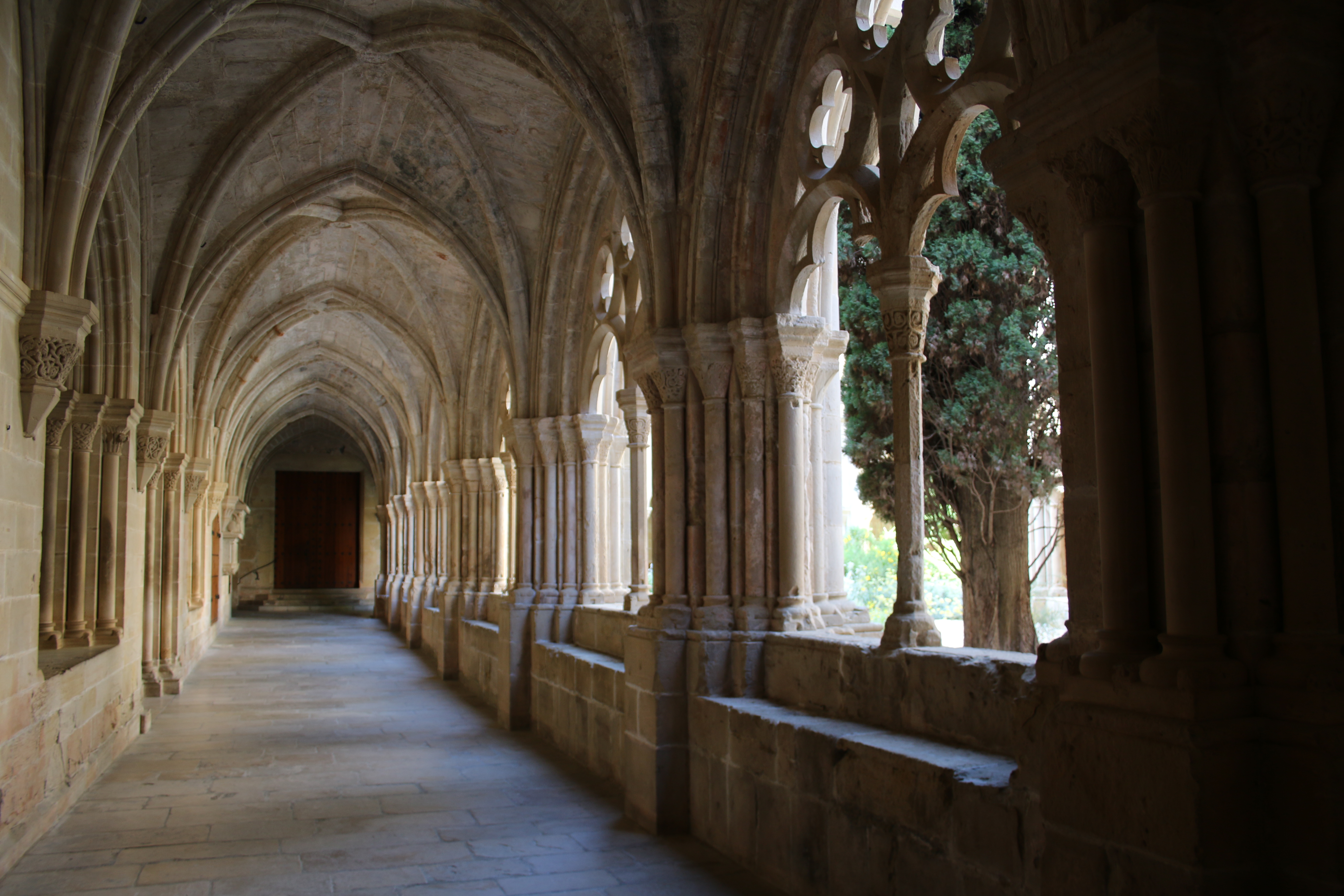
The cloister is particularly impressive and is one of the best places to appreciate the Gothic character of the monastery.
The Royal Gate and Defensive Walls
The monastery’s defensive character is impossible to miss.
The surrounding wall is approximately 11 metres high and extends for around 608 metres.
The fortifications were commissioned during the reign of Peter the Ceremonious, reflecting the political and strategic importance that Poblet had acquired.
The impressive Royal Gate was commissioned in the 14th century from the military engineer Guillem de Guimerà.
It is one of the most striking entrances to the monastery.
The Monastery Church
The church is at the centre of the monumental complex.
Its architecture follows the Cistercian tradition while incorporating Gothic elements.
The church has three naves, a transept and an ambulatory around the main altar.
The central nave is covered by a pointed vault, while the side aisles feature ribbed vaulting.
Inside, visitors can also admire the royal tombs and the impressive Renaissance alabaster altarpiece.
For many visitors, the combination of monumental architecture, royal history and religious symbolism makes the church one of the highlights of Poblet.
The Great Cloister
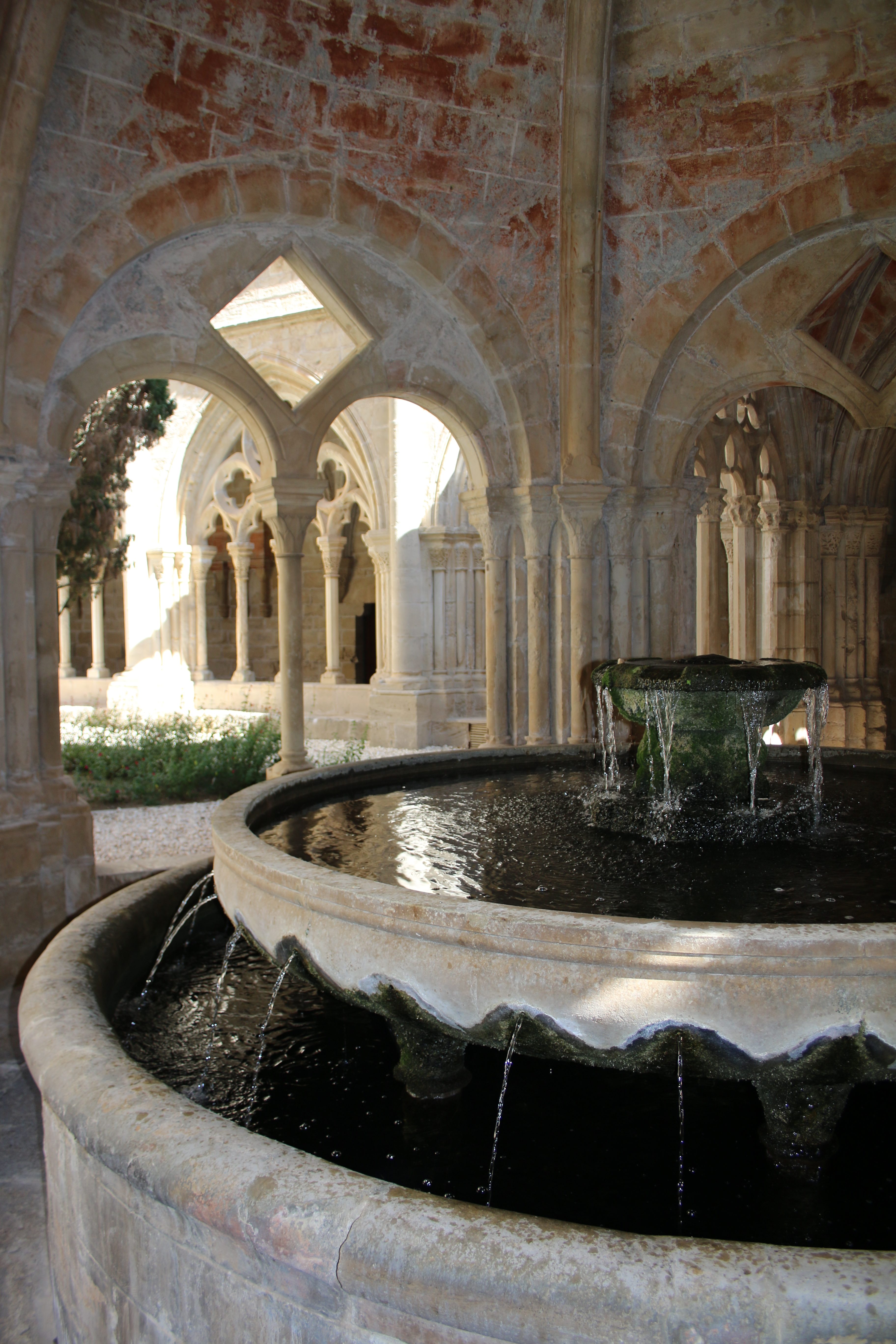
The great cloister is one of the most beautiful spaces in the monastery.
Its Gothic architecture creates a peaceful environment that contrasts with the defensive character of the exterior walls.
The cloister connected many of the monastery’s principal rooms and played an essential role in the daily life of the monks.
It is also one of the best places to appreciate the proportions, stonework and architectural details of Poblet.
The Chapter House
The Chapter House was one of the most important spaces in the daily life of the Cistercian community.
The monks gathered here to discuss matters concerning the monastery, listen to readings and deal with the administration of their community.
Its architecture reflects the importance of the space within monastic life.
The Refectory and Kitchen
The monastery also preserves spaces associated with the everyday life of the monks.
The refectory was where the community took its meals.
Nearby were the kitchen and other service areas required to support the monastic community.
These spaces help visitors understand that Poblet was not simply a monumental or religious building. It was a complete community designed around prayer, work, study and communal life.
The Scriptorium and Library
Poblet also became an important centre of learning.
The monastery had a library and scriptorium, where manuscripts were copied, preserved and studied.
The monks contributed to the transmission of knowledge, particularly in areas such as law and history.
This intellectual dimension is another reason why Poblet is so significant.
Its importance goes beyond architecture: it was also a centre of culture and knowledge.
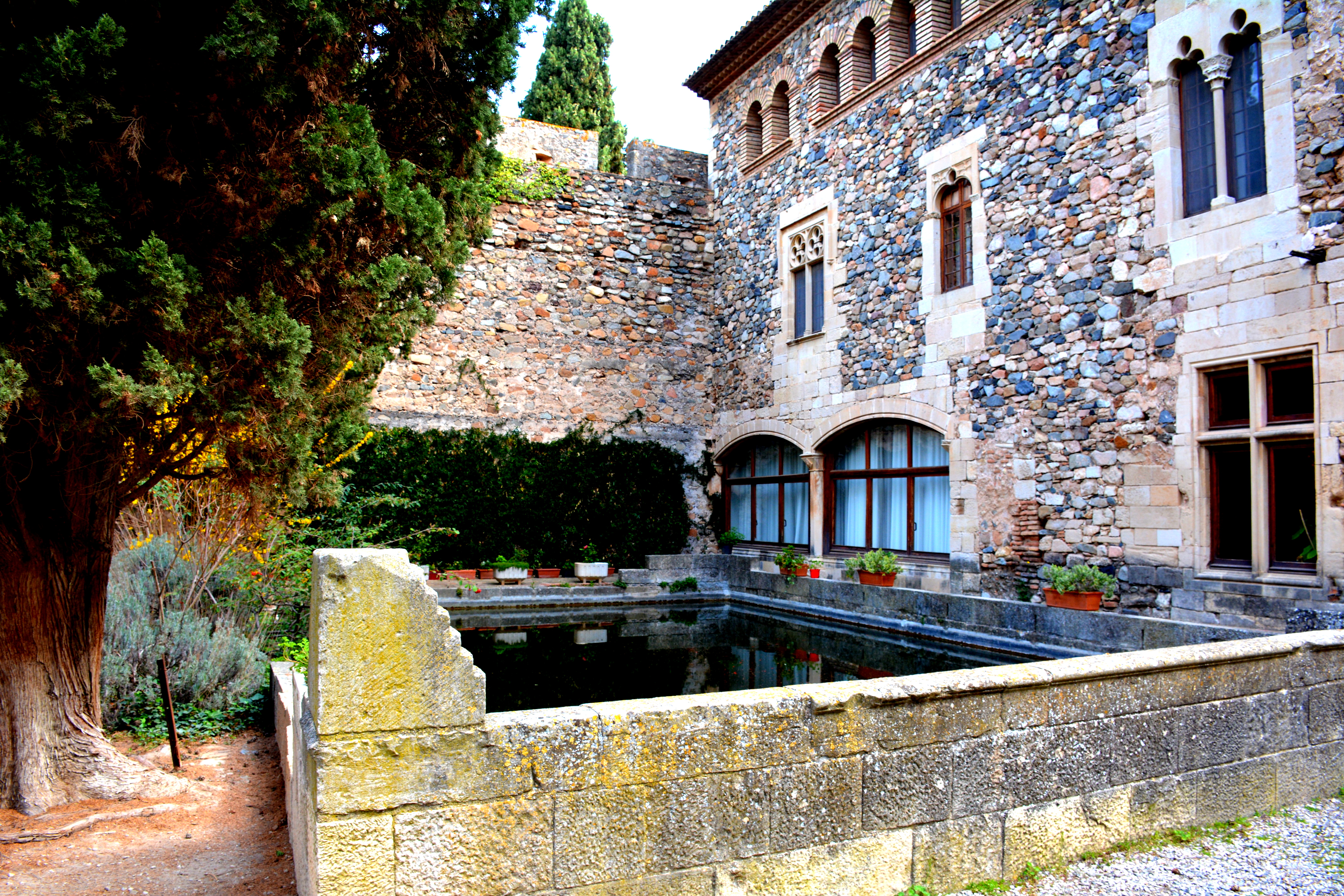
The Palace of King Martin
One of the most fascinating structures within the complex is the Palace of King Martin.
Construction began towards the end of the 14th century, although the building was never completely finished after the death of King Martin in 1410.
Its Gothic windows are particularly distinctive.
The interiors were later completed and reconstructed during the 20th century to accommodate historical collections.
The palace is an excellent example of the connection between the monastery and the royal court.
What Happened to Poblet?
The monastery experienced a dramatic period of decline during the 19th century.
In 1835, following the confiscation of church property in Spain, the monks were forced to leave Poblet.
The abandoned monastery suffered looting and deterioration, and many of its buildings were seriously damaged.
For decades, Poblet remained in a state of ruin.
Fortunately, restoration efforts eventually began, and monastic life returned in 1940.
The restoration of Poblet became one of the most important heritage projects in Catalonia.
Poblet and UNESCO
The Royal Monastery of Santa Maria de Poblet was declared a UNESCO World Heritage Site in 1991.
UNESCO recognizes Poblet as one of the largest and most complete Cistercian abbeys in the world.
Its importance lies not only in its architecture but also in its historical relationship with the Crown of Aragon, its royal pantheon and its extraordinary preservation as a complete monastic complex.
How Do You Visit the Monastery?
The tourist visit to Poblet can be completed independently using the official “Poblet, guía oficial” application.
We recommend bringing headphones so that you can comfortably follow the information during the visit.
In addition to the monumental area, the visit includes the museum and interpretation centre, providing further information about the history and significance of the monastery.
We recommend preparing your visit in advance and checking the opening times before travelling, particularly during public holidays and special dates.
Would you prefer to discover Poblet without worrying about the organization?
If you would like to experience the monastery in a more comfortable and personalized way, Magic Dreams Barcelona can organize the entire experience for you.
We can arrange a private excursion from Barcelona including private transportation, guide services, scheduling, gastronomy and all the essential details required for a relaxed and enjoyable day.
You will not have to worry about how to get there, where to park, how to organize your time or where to enjoy a good meal.
We take care of the logistics so that you can concentrate on discovering Poblet and enjoying its history.
For visitors looking for a private and carefully planned experience, we highly recommend combining culture, heritage, gastronomy and the beautiful landscapes surrounding the monastery.
If you are considering visiting the Royal Monastery of Poblet from Barcelona, Magic Dreams Barcelona can design the complete experience for you, adapting the itinerary to your interests, preferred pace and requirements.
Opening Hours
The official tourist opening hours vary according to the season.
Winter season
15 September – 14 June
- Monday to Saturday: 10:00–12:30 and 15:00–18:00
- Sundays and public holidays: 10:30–12:30 and 15:00–18:00
Summer season
15 June – 14 September
- Monday to Saturday: 10:00–12:30 and 15:00–18:30
- Sundays and public holidays: 10:30–12:30 and 15:00–18:30
Tickets are normally sold until 30 minutes before closing.
The monastery is closed all day on certain public holidays, including 1 January, 6 January, 25 December and 26 December.
We strongly recommend checking the official schedule before travelling because special opening times may apply on specific dates.
Ticket Prices
Current general admission prices include:
- General admission: €10.50
- Reduced admission: €7.50
- School and university groups: €6
- Combined Cistercian Route ticket: €18
The combined ticket includes Poblet, Santes Creus and Vallbona de les Monges.
Reduced admission applies to several categories, including seniors, children from 7 years old, students and certain other groups with the appropriate documentation.
How to Get to Poblet from Barcelona
By Car
Driving is the most convenient option, particularly if you would like to combine Poblet with other destinations in the area.
The journey from Barcelona takes approximately 1 hour and 20–30 minutes, depending on traffic and the route.
By Train
You can travel by train from Barcelona towards the Tarragona/Lleida area and reach L’Espluga de Francolí.
The station is approximately 3 kilometres from the monastery, meaning that you will need to arrange the final part of the journey.
By Bus
Bus connections are possible, but they generally require more planning and transfers.
For this reason, visitors who want to make the most of a single day often find private transportation considerably more comfortable.
Where to Eat Near Poblet
A visit to Poblet can easily be combined with lunch in the surrounding area.
Among the nearby options are:
- Restaurant Hostatgeria de Poblet — located very close to the monastery and a convenient option for combining the visit with lunch.
- Restaurant El Grèvol — located in Vimbodí and offering a more informal local dining option.
- Restaurant Dels Torrents — another nearby choice for enjoying a meal during your visit.
Opening times can change according to the season, so we recommend checking availability before travelling.
For a private excursion with Magic Dreams Barcelona, we can also help coordinate the gastronomic part of your experience so that your day is organized smoothly from beginning to end.
What Can You Do Around Poblet?
A visit to the monastery can be extended into a broader cultural excursion.
The surrounding area offers opportunities to discover:
- Historic villages in the Conca de Barberà
- The Cistercian heritage of Catalonia
- Forest landscapes surrounding Poblet
- L’Espluga de Francolí
- Montblanc and its medieval heritage
- Other historic monasteries in the region
- Local gastronomy and traditional Catalan cuisine
One particularly interesting option is the Cistercian Route, which connects Poblet with the monasteries of Santes Creus and Vallbona de les Monges.
7 Fascinating Facts About Poblet
1. It is a royal burial place
Poblet became the royal pantheon of the Crown of Aragon, making it one of the most important royal burial sites in Catalonia.
2. It is a UNESCO World Heritage Site
Poblet has been recognized by UNESCO since 1991 because of its exceptional historical and architectural value.
3. It is a fortified monastery
Unlike many monasteries, Poblet has imposing defensive walls and towers, reflecting its historical importance.
4. It combines different architectural periods
Romanesque, Gothic, Renaissance and Baroque elements can all be found throughout the complex.
5. Monastic life returned in the 20th century
After decades of abandonment following the events of 1835, the monastic community returned in 1940.
6. It was an important centre of knowledge
The monastery developed an important library and scriptorium, contributing to the preservation and transmission of historical knowledge.
7. It remains one of Catalonia’s great historical landmarks
Today, Poblet is one of the most important examples of Cistercian heritage in Europe and one of the most remarkable cultural destinations in Catalonia.
Why Visit Poblet from Barcelona?
If you are staying in Barcelona, Poblet offers the opportunity to experience a completely different side of Catalonia.
Instead of focusing only on Barcelona’s urban attractions, you can discover medieval architecture, royal history, monastic traditions and spectacular landscapes in a single day.
We highly recommend Poblet for travelers interested in history, architecture, culture and authentic Catalan heritage.
And if you would rather enjoy the experience without worrying about transportation, reservations or logistics, Magic Dreams Barcelona can take care of the entire journey for you.
From the moment you leave Barcelona until your return, we can coordinate the vehicle, guide, itinerary, gastronomy and the details that make the difference between simply visiting a monument and enjoying a truly memorable cultural experience.
We invite you to discover the Royal Monastery of Poblet and experience one of Catalonia’s most fascinating historical treasures.



Copyright © 2016-2026 Magic Dreams Barcelona.